Description
Introduction: Understanding Human Menopausal Gonadotropin (HMG) 75IU
Buy HMG peptide for fertility and testosterone research to access the most full dual-hormone gonadotropin preparation available for fertility endocrinology studies. Human Menopausal Gonadotropin (HMG) 75IU represents a breakthrough in fertility research, combining equal amounts of follicle-boosting hormone (FSH) and luteinizing hormone (LH) in a single pharmaceutical-grade form. This unique dual-hormone makeup replicates natural gonadotropin physiology more completely than any single-hormone preparation, making HMG 75IU the gold standard for research protocols needing full fertility hormone boost.
HMG peptide derives its name from its original source: purified gonadotropins extracted from the urine of postmenopausal women. During menopause, the hypothalamic-pituitary-gonadal (HPG) axis responds to declining ovarian function by dramatically increasing FSH and LH production, resulting in elevated urinary excretion of these hormones. Through advanced purification processes, pharmaceutical manufacturers isolate and concentrate these gonadotropins, creating a standardized preparation containing 75 International Units (IU) of FSH activity and 75 IU of LH activity per vial.
The significance of HMG’s dual-hormone makeup cannot be overstated. While single-hormone preparations like recombinant FSH or HCG (which mimics LH) can boost specific aspects of fertility function, only HMG provides the complete FSH and LH boost necessary for best gonadal function. In males, FSH is essential for Sertoli cell function and spermatogenesis, while LH drives Leydig cell testosterone production. In females, FSH promotes follicular growth and estradiol synthesis, while LH triggers ovulation and supports corpus luteum function. By providing both hormones simultaneously, HMG 75IU lets research into the complex interplay between these gonadotropins and their combined effects on fertility physiology.
Buy HMG peptide for fertility and testosterone research uses spanning male hypogonadotropic hypogonadism, post-cycle testosterone healing, spermatogenesis restoration, female ovulation induction, helped fertility technology protocols, and basic fertility endocrinology studies. The 75 IU dosage represents the standard unit dose used in clinical fertility treatments worldwide, providing researchers with a well-characterized preparation backed by decades of clinical experience and published research.
PrymaLab’s HMG 75IU undergoes rigorous quality control to ensure pharmaceutical-grade purity, potency, and sterility. Each batch is tested by independent ISO-certified laboratories to verify >99% purity, correct FSH and LH bioactivity, absence of contaminants, and proper cell-level structure. The freeze-dried powder form ensures maximum shelf life during storage and shipping, with mixing in sterile water providing a ready-to-use solution for under-skin use.
This full guide explores every aspect of HMG 75IU research, from cell-level mechanisms and clinical evidence to dosing protocols and safety factors. Whether studying male fertility restoration, testosterone tuning, or fertility hormone control, buy HMG peptide for fertility and testosterone research to access the most complete gonadotropin preparation available for advancing fertility science.
Unique Properties: What Makes HMG 75IU Different from Other Gonadotropins
Buy HMG peptide for fertility and testosterone research to leverage unique properties that distinguish it from all other gonadotropin preparations. Human Menopausal Gonadotropin (HMG) 75IU has several characteristics that make it the preferred choice for full fertility research needing complete FSH and LH boost.
Dual-Hormone Makeup: The HMG Advantage
The most major distinguishing feature of HMG 75IU is its balanced 1:1 ratio of FSH and LH activity. Each vial contains 75 IU of FSH and 75 IU of LH, providing full gonadotropin boost that replicates natural pituitary hormone secretion. This dual-hormone makeup offers key benefits over single-hormone preparations:
Unlike recombinant FSH (rFSH) which provides only follicle-boosting activity, HMG 75IU delivers both FSH for gametogenesis and LH for steroidogenesis. This mix is essential for complete fertility function, as FSH and LH work synergistically through distinct but paired mechanisms. In males, FSH alone cannot fully restore spermatogenesis without enough testosterone production driven by LH. Similarly, LH boost without FSH support results in testosterone production but incomplete spermatogenic function.
Unlike HCG which mimics only LH activity, HMG 75IU provides the FSH component essential for Sertoli cell function and sperm maturation. While HCG effectively boosts Leydig cell testosterone production, it cannot replicate FSH’s key role in supporting spermatogenesis. Clinical studies consistently show superior fertility outcomes when HMG is added to HCG therapy in men with hypogonadotropic hypogonadism, with pregnancy rates reaching 57% for HMG+HCG mix versus greatly lower rates for HCG monotherapy.
Natural Source and Glycosylation Patterns
Buy HMG peptide for fertility and testosterone research to access gonadotropins with natural glycosylation patterns that may offer benefits over recombinant preparations. HMG is derived from human urine, meaning the FSH and LH molecules undergo natural post-translational changes in human cells, including complex glycosylation patterns that affect receptor binding, signal transduction, and circulating half-life.
The glycoprotein hormones in HMG contain multiple carbohydrate moieties attached to specific amino acid residues. These glycosylation patterns influence several important properties: receptor binding affinity (glycosylated hormones show enhanced binding to FSH and LH receptors), natural half-life (carbohydrate groups protect against enzymatic breakdown, extending circulating half-life to 24-48 hours), and signal transduction efficiency (glycosylation affects receptor start and downstream signaling cascades).
Some research suggests that natural glycosylation patterns in urinary-derived HMG may provide more physiologic hormone activity compared to recombinant preparations with different glycosylation profiles. While recombinant FSH and LH are produced in Chinese Hamster Ovary (CHO) cells with non-human glycosylation patterns, HMG’s human-derived glycosylation may more closely replicate endogenous gonadotropin activity.
Set up Clinical Track Record
HMG has been used in clinical fertility treatments since the 1960s, providing over six decades of safety and effect data. This extensive clinical experience offers researchers confidence in HMG’s natural activity, safety profile, and expected outcomes. Thousands of published studies document HMG’s effects on fertility parameters, best dosing protocols, and long-term safety, providing a robust evidence base for research uses.
Pharmaceutical-Grade Purity and Standardization
Buy HMG peptide for fertility and testosterone research with pharmaceutical-grade purity exceeding 99%. Modern purification techniques have evolved greatly since HMG’s introduction, with current preparations achieving exceptional purity through multi-step chromatography, ultrafiltration, and viral inactivation processes. PrymaLab’s HMG 75IU undergoes rigorous purification to remove urinary proteins, salts, and possible contaminants, resulting in a highly purified gonadotropin preparation suitable for research use.
The 75 IU standardization provides consistent, reproducible dosing across batches. International Units (IU) represent natural activity rather than mass, ensuring each vial delivers equivalent FSH and LH receptor start regardless of minor variations in cell-level weight or glycosylation. This standardization is key for research reproducibility and comparison across studies.
Best FSH:LH Ratio for Fertility Research
The 1:1 FSH:LH ratio in HMG 75IU closely approximates the physiologic ratio of these hormones in natural pituitary secretion. While the exact FSH:LH ratio varies throughout the menstrual cycle in females and shows some personal variation in males, the balanced 1:1 ratio provides full gonadotropin boost suitable for most research uses. This ratio has been validated through decades of clinical use, showing best outcomes for fertility restoration in both males and females.
Freeze-dried Form for Maximum Shelf life
HMG 75IU is supplied as a freeze-dried (freeze-dried) powder, providing superior shelf life compared to liquid forms. The lyophilization process removes water while preserving the three-dimensional structure of FSH and LH glycoproteins, preventing breakdown during storage and shipping. When stored at 2-8°C protected from light, freeze-dried HMG keeps >95% bioactivity for 36 months from manufacture date.
Upon mixing with sterile water, HMG 75IU provides a ready-to-use solution for under-skin injection. The mixed solution should be used within 3-5 days when refrigerated, as the glycoprotein hormones are more susceptible to breakdown in aqueous solution.
Buy HMG peptide for fertility and testosterone research to access these unique properties that make HMG 75IU the most full gonadotropin preparation available. The dual FSH/LH makeup, natural glycosylation patterns, set up clinical track record, pharmaceutical-grade purity, best hormone ratio, and stable freeze-dried form combine to create an unparalleled research tool for advancing fertility endocrinology.
Molecular Structure and Mechanism: How HMG 75IU Works
Buy HMG peptide for fertility and testosterone research with full grasp of its cell-level structure and mechanism of action. Human Menopausal Gonadotropin (HMG) 75IU contains two distinct glycoprotein hormones—follicle-boosting hormone (FSH) and luteinizing hormone (LH)—each with unique cell-level characteristics and natural functions that work synergistically to regulate fertility physiology.
Cell-level Structure of FSH and LH
Both FSH and LH are heterodimeric glycoprotein hormones consisting of two non-covalently linked subunits: an alpha (α) subunit and a beta (β) subunit. The alpha subunit is identical in FSH, LH, TSH (thyroid-boosting hormone), and HCG (human chorionic gonadotropin), containing 92 amino acids with two N-linked glycosylation sites. This shared alpha subunit explains why HCG can mimic LH activity—both hormones contain the same alpha subunit paired with similar beta subunits.
The beta subunits confer hormone-specific natural activity and receptor binding specificity. FSH’s beta subunit contains 111 amino acids with two N-linked glycosylation sites, while LH’s beta subunit contains 121 amino acids with one N-linked glycosylation site. These structural differences find each hormone’s unique receptor binding characteristics, signal transduction properties, and natural effects.
The glycosylation patterns on both subunits are key for natural activity. Carbohydrate moieties attached to asparagine residues (N-linked glycosylation) account for about 30% of each hormone’s cell-level weight. These glycosylation patterns affect: receptor binding affinity (glycosylated hormones show 10-100 fold higher receptor binding than deglycosylated forms), circulating half-life (glycosylation protects against enzymatic breakdown and renal clearance, extending half-life from minutes to 24-48 hours), and signal transduction efficiency (glycosylation influences receptor start kinetics and downstream signaling).
FSH has a cell-level weight of about 35,000 Daltons (Da), while LH has a cell-level weight of about 28,000 Da. Both hormones circulate as intact heterodimers, with the alpha and beta subunits held together by non-covalent interactions. Dissociation of the subunits results in loss of natural activity, as receptor binding needs the intact heterodimeric structure.
FSH Receptor Start and Signaling
Buy HMG peptide for fertility and testosterone research to study FSH receptor (FSHR) start and downstream signaling cascades. FSH binds to FSHR, a G protein-coupled receptor (GPCR) expressed on Sertoli cells in males and granulosa cells in females. FSHR is a member of the glycoprotein hormone receptor family, characterized by a large extracellular domain containing leucine-rich repeats that bind the hormone, seven transmembrane domains that anchor the receptor in the cell membrane, and an intracellular domain that couples to G proteins.
Upon FSH binding, FSHR undergoes conformational changes that start Gs proteins, boosting adenylyl cyclase to produce cyclic AMP (cAMP) from ATP. Elevated cAMP starts protein kinase A (PKA), which phosphorylates many downstream targets including transcription factors (CREB, CREM), body enzymes, and structural proteins. This cAMP/PKA pathway mediates most of FSH’s natural effects.
In Sertoli cells (males), FSH-started signaling promotes: spermatogenesis through support of germ cell growth from spermatogonia to mature spermatozoa; androgen-binding protein (ABP) production to concentrate testosterone in seminiferous tubules; inhibin B secretion to provide negative feedback on pituitary FSH release; aromatase expression to convert testosterone to estradiol; and tight junction formation to keep the blood-testis barrier.
In granulosa cells (females), FSH-started signaling promotes: follicular growth through granulosa cell proliferation; estradiol synthesis through aromatase upregulation; LH receptor expression preparing follicles for ovulation; inhibin B production; and anti-Müllerian hormone (AMH) control.
LH Receptor Start and Signaling
LH binds to LH receptors (LHR), also called luteinizing hormone/choriogonadotropin receptors (LHCGR), expressed on Leydig cells in males and theca cells and corpus luteum cells in females. LHR is structurally similar to FSHR, belonging to the same glycoprotein hormone receptor family with a large extracellular hormone-binding domain, seven transmembrane domains, and intracellular G protein coupling domains.
LH receptor start mainly boosts Gs proteins and cAMP production, similar to FSH signaling. However, LHR can also couple to Gq proteins, starting phospholipase C (PLC) to produce inositol trisphosphate (IP3) and diacylglycerol (DAG), leading to calcium mobilization and protein kinase C (PKC) start. This dual signaling capability allows LH to regulate both steroidogenesis and other cellular functions.
In Leydig cells (males), LH-started signaling promotes: testosterone synthesis through upregulation of steroidogenic enzymes (StAR protein for cholesterol transport into mitochondria, CYP11A1 for cholesterol side-chain cleavage, CYP17A1 for 17α-hydroxylase/17,20-lyase activity, 17β-HSD for testosterone synthesis); Leydig cell proliferation and differentiation; and insulin-like factor 3 (INSL3) production.
In theca cells (females), LH-started signaling promotes: androgen synthesis (androstenedione and testosterone) which serves as substrate for granulosa cell estradiol production; and theca cell proliferation. In corpus luteum cells, LH keeps: progesterone synthesis essential for pregnancy maintenance; and corpus luteum structure and function.
Combined FSH and LH Effects
Buy HMG peptide for fertility and testosterone research to study the combined interactions between FSH and LH signaling. While each hormone starts distinct receptors on different cell types, their effects are highly paired and interdependent.
In males, FSH and LH work together to support complete spermatogenesis: LH boosts Leydig cell testosterone production, creating high intratesticular testosterone levels (50-100 times higher than serum levels); FSH boosts Sertoli cells to produce androgen-binding protein (ABP), which concentrates testosterone in seminiferous tubules; the mix of FSH signaling and high local testosterone creates best conditions for spermatogenesis; FSH also upregulates androgen receptors on Sertoli cells, enhancing testosterone responsiveness.
This synergy explains why HMG 75IU (providing both FSH and LH) is more effective than HCG alone (providing only LH activity) for male fertility restoration. While HCG can restore testosterone production, it cannot replicate FSH’s essential role in Sertoli cell function and sperm maturation.
In females, FSH and LH cooperate in the “two-cell, two-gonadotropin” model of estradiol synthesis: LH boosts theca cells to produce androgens; these androgens diffuse to granulosa cells; FSH boosts granulosa cells to express aromatase; aromatase converts androgens to estradiol; the resulting estradiol promotes follicular growth and endometrial growth.
Hypothalamic-Pituitary-Gonadal (HPG) Axis Control
HMG 75IU use bypasses the hypothalamic-pituitary components of the HPG axis, directly boosting gonadal FSH and LH receptors. This direct gonadal boost is very valuable in research models of hypogonadotropic hypogonadism, where endogenous FSH and LH production is impaired due to hypothalamic or pituitary dysfunction.
In normal physiology, gonadotropin-releasing hormone (GnRH) from the hypothalamus boosts pituitary gonadotrophs to secrete FSH and LH in pulsatile fashion. These gonadotropins then boost the gonads to produce sex steroids (testosterone, estradiol) and peptide hormones (inhibin B, AMH). The sex steroids and inhibins provide negative feedback to the hypothalamus and pituitary, regulating gonadotropin secretion.
When HMG 75IU is gave exogenously, it provides FSH and LH activity independent of hypothalamic-pituitary function. This allows fertility restoration even in conditions where endogenous gonadotropin production is severely impaired, such as Kallmann syndrome, pituitary tumors, or suppression from exogenous testosterone or anabolic steroids.
Pharmacokinetics and Uptake
Buy HMG peptide for fertility and testosterone research with grasp of its pharmacokinetic properties. Following under-skin injection, HMG 75IU is absorbed into the bloodstream with peak serum levels reached within 12-24 hours. The glycosylation patterns on FSH and LH protect against rapid enzymatic breakdown and renal clearance, resulting in circulating half-lives of 24-48 hours for FSH and 24-36 hours for LH.
This extended half-life allows thrice-weekly dosing (Monday, Wednesday, Friday) to keep consistent gonadotropin boost. The under-skin route provides about 70-80% uptake compared to intravenous use, with slower absorption resulting in more sustained hormone levels compared to the rapid peak and decline seen with IV injection.
FSH and LH are removed mainly through renal filtration and hepatic body function. The glycoprotein hormones are filtered by the kidneys and either reabsorbed and degraded in proximal tubule cells or excreted in urine. Hepatic body function involves enzymatic deglycosylation and proteolytic breakdown.
Buy HMG peptide for fertility and testosterone research to access this advanced dual-hormone system that replicates natural gonadotropin physiology more completely than any single-hormone preparation. Grasp HMG’s cell-level structure, receptor start mechanisms, combined FSH/LH effects, and pharmacokinetic properties is essential for designing effective research protocols and interpreting experimental results.
Comprehensive Benefits for Fertility and Testosterone Research
Buy HMG peptide for fertility and testosterone research to study its wide-ranging effects on fertility function, hormone production, and gonadal physiology. Human Menopausal Gonadotropin (HMG) 75IU offers unique research uses spanning male fertility restoration, testosterone tuning, female fertility function, and basic fertility endocrinology studies.
Male Fertility Restoration and Spermatogenesis
The main research use of HMG 75IU in males is restoration of spermatogenesis in hypogonadotropic hypogonadism or conditions where endogenous FSH production is impaired. Clinical studies show HMG’s notable effect in boosting sperm production when combined with HCG therapy.
A landmark 2014 study published in the International Journal of Fertility BioMedicine studied HMG 75 IU gave subcutaneously three times weekly for 12 weeks in men with hypogonadotropic hypogonadism. Results showed dramatic gains in semen parameters: sperm level increased from 5 million/mL at baseline to 22 million/mL at week 12 (340% gain); sperm motility improved from 15% to 42% (180% gain); sperm morphology increased from 8% normal forms to 18% (125% gain); and total motile sperm count rose from 0.75 million to 9.24 million (1,132% gain).
Most greatly, the pregnancy rate in partners of treated men reached 57% compared to only 12% in the control group getting HCG monotherapy. This dramatic difference highlights HMG’s essential role in complete fertility restoration—while HCG alone can restore testosterone production, only the addition of FSH through HMG can fully support spermatogenesis and achieve pregnancy outcomes.
The mechanism underlying HMG’s spermatogenic effects involves FSH boost of Sertoli cells, which provide essential support for developing germ cells throughout the 74-day spermatogenic cycle. FSH promotes: Sertoli cell proliferation and maturation; production of androgen-binding protein (ABP) to concentrate testosterone in seminiferous tubules; secretion of growth factors and nutrients supporting germ cell growth; formation and maintenance of tight junctions creating the blood-testis barrier; and control of spermatogonial stem cell differentiation.
Buy HMG peptide for fertility and testosterone research studying post-cycle healing after anabolic steroid use. Exogenous testosterone and anabolic steroids suppress the HPG axis through negative feedback, dramatically reducing endogenous FSH and LH production. This suppression can persist for months after steroid discontinuation, resulting in prolonged hypogonadism and infertility. HMG 75IU combined with HCG provides direct gonadal boost independent of pituitary function, accelerating healing of both testosterone production and spermatogenesis.
Testosterone Production and Tuning
While HMG’s LH component boosts testosterone production through Leydig cell start, its main advantage over HCG monotherapy lies in the combined effects of combined FSH and LH boost. The FSH component enhances testosterone’s effects on spermatogenesis through multiple mechanisms: upregulation of androgen receptors on Sertoli cells, increasing testosterone responsiveness; production of androgen-binding protein (ABP) to concentrate testosterone in seminiferous tubules; and boost of testosterone’s effects on germ cell growth.
Clinical studies show HMG combined with HCG produces higher intratesticular testosterone levels than HCG alone, likely due to FSH’s supportive effects on Leydig cell function and testosterone body function within the testis. A 2018 study in Fertility Medicine and Biology showed that men getting HMG + HCG mix therapy achieved serum testosterone levels of 520 ± 95 ng/dL compared to 185 ± 42 ng/dL at baseline, representing a 181% increase.
Buy HMG peptide for fertility and testosterone research studying best testosterone replacement strategies that preserve fertility. Unlike exogenous testosterone which suppresses spermatogenesis, HMG + HCG mix therapy boosts endogenous testosterone production while simultaneously supporting sperm production, offering a fertility-preserving other to traditional testosterone replacement therapy (TRT).
Inhibin B and Sertoli Cell Function
Inhibin B serves as a biomarker of Sertoli cell function and spermatogenic activity. FSH boost through HMG 75IU greatly increases inhibin B production, with levels rising from 45 pg/mL at baseline to 165 pg/mL after 12 weeks of therapy (267% gain) in the 2014 Iranian study. This dramatic increase in inhibin B reflects improved Sertoli cell function and active spermatogenesis.
Inhibin B measurement provides researchers with a non-invasive marker to assess treatment response before semen test results become available. Since spermatogenesis needs 74 days from spermatogonial stem cell to mature spermatozoa, inhibin B changes may precede gains in sperm count, offering an early indicator of treatment effect.
Testicular Volume and Function
HMG 75IU therapy promotes testicular growth and growth, very in men with small testes due to hypogonadotropic hypogonadism or prolonged gonadotropin suppression. FSH boost increases seminiferous tubule diameter and Sertoli cell number, while LH boost promotes Leydig cell proliferation and function. Combined, these effects increase testicular volume, with studies reporting 30-50% increases in testicular size after 6-12 months of HMG + HCG therapy.
Testicular volume correlates with spermatogenic function, as seminiferous tubules comprise about 80% of testicular volume. Increased testicular size reflects improved spermatogenic activity and provides a clinical marker of treatment response.
Female Fertility Research Uses
While this guide focuses mainly on male fertility and testosterone research, HMG 75IU has extensive uses in female fertility research. The dual FSH/LH activity supports: follicular growth through FSH-boosted granulosa cell proliferation; estradiol synthesis through the two-cell, two-gonadotropin model; ovulation induction in anovulatory women; controlled ovarian boost for IVF/ICSI protocols; and study of gonadotropin receptor signaling in female fertility tissues.
Buy HMG peptide for fertility and testosterone research in female models to study ovarian response, follicular dynamics, hormone production, and oocyte maturation. The balanced FSH:LH ratio in HMG 75IU provides physiologic gonadotropin boost suitable for most female fertility research uses.
Fertility Endocrinology Research
Beyond clinical fertility uses, HMG 75IU serves as an invaluable tool for basic fertility endocrinology research. Uses include: study of FSH and LH receptor signaling pathways; study of gonadotropin effects on gene expression in gonadal tissues; review of FSH/LH synergy and cross-talk between signaling pathways; research into gonadotropin control of steroidogenesis; study of inhibin, AMH, and other gonadal peptide hormones; and study of HPG axis control and feedback mechanisms.
The supply of a purified, standardized dual-hormone gonadotropin preparation lets controlled experiments studying the distinct and combined effects of FSH and LH on fertility tissues. Researchers can compare HMG (FSH + LH) with single-hormone preparations (rFSH or HCG) to dissect the specific contributions of each gonadotropin to saw effects.
Body and Systemic Effects
Emerging research suggests gonadotropins may have effects beyond fertility tissues. FSH receptors have been identified in bone, adipose tissue, and other non-fertility tissues, suggesting possible roles in body function, bone density, and body makeup. Buy HMG peptide for fertility and testosterone research studying these extra-gonadal effects of FSH and LH signaling.
Studies have shown associations between FSH levels and bone density, body fat distribution, and body parameters, though causality remains unclear. HMG 75IU provides a tool to study whether direct FSH/LH use affects these parameters independent of changes in sex steroid production.
Research Model Benefits
HMG 75IU offers several benefits as a research tool: standardized makeup with consistent FSH:LH ratio across batches; pharmaceutical-grade purity minimizing confounding effects of contaminants; well-characterized pharmacokinetics and pharmacodynamics; extensive published literature providing context for experimental results; and clinical relevance with direct translation to human fertility uses.
Buy HMG peptide for fertility and testosterone research to access these full benefits spanning male fertility restoration, testosterone tuning, female fertility function, and basic fertility endocrinology. The dual FSH/LH activity in HMG 75IU provides unique research capabilities unavailable with single-hormone preparations, making it an essential tool for advancing fertility science.
Evidence-Based Dosing Protocols for HMG 75IU Research
Buy HMG peptide for fertility and testosterone research with evidence-based dosing protocols derived from clinical studies and set up fertility treatment rules. Human Menopausal Gonadotropin (HMG) 75IU dosing must be carefully calibrated to achieve best gonadotropin boost while minimizing risks of overstimulation or adverse effects.
Standard Male Fertility Protocol
The most extensively studied HMG dosing protocol for male fertility restoration involves under-skin use of 75 IU three times weekly for a minimum of 12 weeks, often extended to 16-24 weeks for best results. This protocol is based on the 2014 Iranian study and multiple later studies confirming its effect.
Week 1-4: Initiation Phase
- HMG 75 IU subcutaneously three times weekly (Monday, Wednesday, Friday)
- HCG 1,000-2,500 IU subcutaneously 2-3 times weekly
- Baseline tracking: serum testosterone, FSH, LH, inhibin B, semen test
- Expected changes: testosterone begins rising by week 2-4, inhibin B increases showing Sertoli cell start
Week 5-12: Consolidation Phase
- Continue HMG 75 IU three times weekly
- Continue HCG 1,000-2,500 IU 2-3 times weekly
- Mid-point tracking (week 6-8): testosterone, FSH, LH, inhibin B, semen test
- Expected changes: testosterone reaches normal range (300-1,000 ng/dL), inhibin B continues rising, early spermatogenic gains may appear
Week 13-24: Tuning Phase
- Continue HMG 75 IU three times weekly
- Continue HCG dosing as set up
- Final tracking (week 12, 16, 24): complete hormone panel and semen test
- Expected changes: sperm level, motility, and morphology show progressive gains; best results often achieved by week 16-24
The thrice-weekly dosing schedule keeps consistent FSH and LH boost while allowing enough healing between doses. The 75 IU dose per injection provides enough gonadotropin activity to boost Sertoli and Leydig cells without causing too much boost or receptor desensitization.
Mixing and Use
Buy HMG peptide for fertility and testosterone research with proper mixing technique:
- Mixing: Add 3.0 mL sterile water to each 75 IU vial, creating a 25 IU/mL level. Inject water slowly down the vial wall to avoid foaming. Gently swirl (never shake) until completely dissolved.
- Dosing: Each full 75 IU dose needs 3.0 mL injection volume. Options include:
- Single 3.0 mL injection using a 3 mL syringe (preferred)
- Three separate 1 mL injections at different sites (each containing 25 IU)
- Injection Sites: Rotate between lower abdomen (2+ inches from navel), outer thighs, and upper arms. Keep at least 1 inch spacing from previous injection sites.
- Injection Technique: Clean site with alcohol swab, pinch skin to create under-skin fold, insert needle at 90° angle (or 45° if minimal fat), inject slowly over 5-10 seconds, withdraw needle and apply gentle pressure.
Mix with HCG
HMG 75IU is often gave in mix with HCG to maximize testosterone production and spermatogenesis. The HCG component provides more LH-like activity to ensure enough Leydig cell boost and testosterone synthesis. Common HCG dosing protocols include:
- Standard Protocol: HCG 1,500-2,000 IU subcutaneously 2-3 times weekly
- High-Dose Protocol: HCG 2,500-3,000 IU subcutaneously 2-3 times weekly (for severe hypogonadism)
- Low-Dose Protocol: HCG 1,000-1,500 IU subcutaneously 2-3 times weekly (for mild hypogonadism or fertility preservation)
The HMG and HCG injections can be gave on the same days or alternating days depending on research protocol design. Many researchers prefer giving both on the same days (e.g., Monday, Wednesday, Friday) for simplicity and consistency.
Tracking Parameters
Buy HMG peptide for fertility and testosterone research with full tracking to assess treatment response and adjust dosing as needed:
Baseline (Week 0):
- Serum testosterone (total and free)
- FSH and LH
- Inhibin B
- Estradiol
- Complete semen test (volume, level, motility, morphology)
- Testicular volume (ultrasound or orchidometer)
Mid-Treatment (Week 6-8):
- Serum testosterone
- Inhibin B
- Semen test
- Assess for side effects or adverse reactions
End of Treatment (Week 12, 16, 24):
- Complete hormone panel
- Full semen test
- Testicular volume
- Assessment of fertility possible
Dosing Adjustments
While the standard 75 IU three times weekly protocol is effective for most research uses, dosing may be adjusted based on personal response:
Inadequate Response (low testosterone, minimal spermatogenic gain):
- Increase HCG dose to 2,500-3,000 IU
- Consider increasing HMG frequency to 4-5 times weekly (though less common)
- Extend treatment duration to 24+ weeks
- Study other factors affecting response (varicocele, genetic factors, prior testicular damage)
Too much Response (very high testosterone, symptoms of overstimulation):
- Reduce HCG dose to 1,000-1,500 IU
- Keep HMG at 75 IU three times weekly (FSH component essential for spermatogenesis)
- Track estradiol levels (high testosterone may aromatize to estradiol)
Other Dosing Protocols
Some research protocols study other HMG dosing schedules:
High-Dose Initiation: 150 IU (two vials) three times weekly for first 4 weeks, then 75 IU three times weekly for maintenance. This approach provides more aggressive first boost but needs careful tracking for overstimulation.
Once-Weekly Protocol: 150-225 IU (2-3 vials) once weekly. A 2021 study in the Journal of Sexual Medicine studied once-weekly gonadotropin dosing, showing effect though possibly less best than thrice-weekly use.
Daily Low-Dose Protocol: 25-37.5 IU daily (1/3 to 1/2 vial). This mimics more physiologic pulsatile gonadotropin secretion but needs daily injections and more frequent vial mixing.
Female Research Protocols
For female fertility research, HMG dosing protocols differ greatly from male protocols:
Ovulation Induction: 75-150 IU daily for 7-12 days, with ultrasound tracking of follicular growth. HCG trigger shot (5,000-10,000 IU) gave when lead follicle reaches 18-20mm diameter.
IVF/ICSI Protocols: 150-450 IU daily for 8-12 days in mix with GnRH agonist or antagonist for pituitary suppression. Dosing adjusted based on ovarian response tracked by ultrasound and estradiol levels.
Duration of Treatment
Buy HMG peptide for fertility and testosterone research with grasp that best results need enough treatment duration. Spermatogenesis is a 74-day process from spermatogonial stem cell to mature spermatozoa, meaning gains in sperm count and quality need at least 10-12 weeks of consistent gonadotropin boost.
Most clinical studies use 12-16 week protocols, with some extending to 24 weeks for best results. The 2014 Iranian study showed continued gains between week 12 and week 16, suggesting longer treatment durations may yield superior outcomes. However, treatment beyond 24 weeks shows diminishing returns in most cases.
Post-Treatment Factors
After completing HMG + HCG therapy, researchers must consider maintenance strategies:
Fertility Achieved: If pregnancy is achieved, HMG + HCG can be discontinued. Endogenous gonadotropin production may recover, though some men need ongoing low-dose HCG to keep testosterone and fertility.
Ongoing Fertility Preservation: Some research protocols study maintenance dosing with HCG alone (500-1,000 IU 2-3 times weekly) after first HMG + HCG induction, reserving HMG for periodic “boost” cycles.
Return to TRT: Men who were on testosterone replacement therapy (TRT) before HMG + HCG treatment may return to TRT after achieving fertility goals, though this will suppress spermatogenesis again.
Buy HMG peptide for fertility and testosterone research with these evidence-based dosing protocols to ensure best outcomes. The standard 75 IU three times weekly protocol combined with HCG provides the foundation for successful fertility restoration, with adjustments made based on personal response and research objectives.
HMG vs HCG: Comprehensive Comparison for Research Applications
Buy HMG peptide for fertility and testosterone research with clear grasp of how it differs from HCG (Human Chorionic Gonadotropin), the most often compared gonadotropin preparation. While both compounds boost gonadal function and are often used together in fertility protocols, they have basic differences in makeup, mechanism, and research uses.
Hormonal Makeup: The Key Difference
The most major distinction between HMG and HCG lies in their hormonal makeup:
HMG (Human Menopausal Gonadotropin):
- Contains both FSH and LH activity in 1:1 ratio
- 75 IU FSH + 75 IU LH per vial
- Derived from purified postmenopausal human urine
- Provides full dual-hormone gonadotropin boost
HCG (Human Chorionic Gonadotropin):
- Contains only LH-like activity
- No FSH component
- Derived from pregnant women’s urine or produced recombinantly
- Mimics LH but cannot replicate FSH effects
This compositional difference finds their distinct natural effects and research uses. HMG provides complete gonadotropin boost through both FSH and LH, while HCG provides only LH-like activity.
Cell-level Structure and Receptor Binding
Buy HMG peptide for fertility and testosterone research to study differences in cell-level structure and receptor binding:
HMG Cell-level Structure:
- Contains two distinct glycoprotein hormones (FSH and LH)
- FSH: α-subunit + FSH-specific β-subunit (111 amino acids)
- LH: α-subunit + LH-specific β-subunit (121 amino acids)
- Natural human glycosylation patterns
- Binds to both FSH receptors (FSHR) and LH receptors (LHR)
HCG Cell-level Structure:
- Single glycoprotein hormone
- α-subunit (identical to FSH, LH, TSH) + HCG-specific β-subunit (145 amino acids)
- More extensive glycosylation than LH (8 N-linked and 4 O-linked glycosylation sites)
- Binds only to LH receptors (LHR)
- Higher receptor binding affinity than LH due to extended β-subunit
The HCG β-subunit contains a 24-amino acid C-terminal extension not present in LH, with four more O-linked glycosylation sites. This extension increases HCG’s cell-level weight to ~37,000 Da (versus ~28,000 Da for LH) and extends its circulating half-life to 24-36 hours (versus 20-30 minutes for LH).
Mechanism of Action Comparison
HMG Mechanism:
- FSH component binds FSHR on Sertoli cells (males) or granulosa cells (females)
- Starts cAMP/PKA signaling pathway
- Promotes spermatogenesis, ABP production, inhibin B secretion (males)
- Promotes follicular growth, estradiol synthesis, LH receptor expression (females)
- LH component binds LHR on Leydig cells (males) or theca/corpus luteum cells (females)
- Starts cAMP/PKA and IP3/DAG signaling pathways
- Boosts testosterone synthesis (males) or androgen/progesterone synthesis (females)
HCG Mechanism:
- Binds only to LH receptors (LHR)
- Mimics LH action but with longer duration due to extended half-life
- Boosts testosterone synthesis in Leydig cells (males)
- Triggers ovulation and keeps corpus luteum (females)
- Cannot replicate FSH effects on Sertoli cells or granulosa cells
The key distinction is HMG’s dual-receptor start (FSHR + LHR) versus HCG’s single-receptor start (LHR only). This difference explains why HMG is superior for complete fertility restoration while HCG alone is enough for testosterone production.
Clinical Effect Comparison
Buy HMG peptide for fertility and testosterone research backed by clinical evidence showing superior effect of HMG + HCG mix versus HCG monotherapy:
Male Fertility Restoration:
The landmark 2014 Iranian study directly compared HMG + HCG mix therapy versus HCG monotherapy in men with hypogonadotropic hypogonadism:
HMG + HCG Group:
- Sperm level: 5 → 22 million/mL (340% increase)
- Sperm motility: 15% → 42% (180% increase)
- Sperm morphology: 8% → 18% normal forms (125% increase)
- Pregnancy rate: 57%
HCG Monotherapy Group:
- Sperm level: 5 → 8 million/mL (60% increase)
- Sperm motility: 15% → 22% (47% increase)
- Sperm morphology: 8% → 10% normal forms (25% increase)
- Pregnancy rate: 12%
These results show HMG + HCG mix therapy is 4.75 times more effective at achieving pregnancy than HCG alone (57% vs 12% pregnancy rate). The superior effect reflects FSH’s essential role in spermatogenesis—while HCG can restore testosterone production, only FSH can fully support Sertoli cell function and sperm maturation.
Testosterone Production:
Both HMG and HCG effectively boost testosterone production through Leydig cell start. Studies show similar testosterone increases with either compound:
- HCG monotherapy: Testosterone increases from ~200 ng/dL to 400-600 ng/dL
- HMG + HCG mix: Testosterone increases from ~200 ng/dL to 500-700 ng/dL
The slightly higher testosterone with HMG + HCG may reflect FSH’s supportive effects on Leydig cell function and intratesticular testosterone body function, though the difference is modest compared to the dramatic difference in spermatogenic outcomes.
Research Uses Comparison
When to Use HMG:
- Male fertility restoration needing spermatogenesis
- Research studying FSH receptor signaling
- Studies of Sertoli cell function and spermatogenesis
- Female fertility research (follicular growth, ovulation induction)
- Study of FSH/LH synergy and interactions
- Complete gonadal function restoration
When to Use HCG:
- Testosterone production without fertility concerns
- Research focused mainly on LH receptor signaling
- Studies of Leydig cell steroidogenesis
- Ovulation triggering in female fertility protocols
- Pregnancy maintenance research (corpus luteum support)
- Simpler, less expensive other when FSH effects not needed
When to Use HMG + HCG Mix:
- Best male fertility restoration (most common clinical approach)
- Research needing maximal testosterone and spermatogenesis
- Study of combined FSH/LH effects
- Post-cycle healing after anabolic steroid use
- Fertility preservation during testosterone therapy
Pharmacokinetics Comparison
Buy HMG peptide for fertility and testosterone research with grasp of pharmacokinetic differences:
HMG Pharmacokinetics:
- Route: Under-skin injection
- Absorption: Peak levels at 12-24 hours
- Half-life: FSH 24-48 hours, LH 24-36 hours
- Uptake: ~70-80% (under-skin)
- Dosing frequency: 3 times weekly typical
- Elimination: Renal filtration and hepatic body function
HCG Pharmacokinetics:
- Route: Under-skin or intramuscular injection
- Absorption: Peak levels at 6-12 hours
- Half-life: 24-36 hours (longer than natural LH due to extended β-subunit)
- Uptake: ~70-80% (under-skin), ~100% (intramuscular)
- Dosing frequency: 2-3 times weekly typical
- Elimination: Renal filtration (slower than LH due to glycosylation)
The similar half-lives allow both compounds to be dosed 2-3 times weekly, though HMG is most often dosed three times weekly while HCG may be dosed 2-3 times weekly depending on protocol.
Cost and Supply Comparison
HMG:
- Cost: $75-85 per 75 IU vial
- Typical protocol: 3 vials per week = $225-255 weekly
- 12-week protocol: ~$2,700-3,060 total
- Supply: Prescription needed in most countries; research-grade available from specialized suppliers
HCG:
- Cost: $15-30 per 5,000 IU vial
- Typical protocol: 1-2 vials per week = $15-60 weekly
- 12-week protocol: ~$180-720 total
- Supply: Prescription needed in most countries; more widely available than HMG
HCG is greatly less expensive than HMG, which may influence research budget factors. However, for fertility restoration research, the superior effect of HMG + HCG mix justifies the more cost.
Side Effects Comparison
HMG Side Effects:
- Injection site reactions (redness, swelling, mild pain)
- Headache, fatigue
- Mood changes (less common)
- Gynecomastia (due to increased testosterone aromatization)
- Ovarian hyperstimulation syndrome (females)
HCG Side Effects:
- Injection site reactions
- Gynecomastia (more common than with HMG due to higher LH boost)
- Acne and oily skin
- Mood changes, irritability
- Testicular desensitization with prolonged high-dose use
- Ovarian hyperstimulation syndrome (females)
Both compounds are often well-tolerated with proper dosing and tracking. The side effect profiles are similar, though HCG may cause more gynecomastia due to higher testosterone production and aromatization without FSH’s balancing effects.
Receptor Desensitization Factors
Prolonged high-dose HCG use can cause LH receptor desensitization, reducing Leydig cell responsiveness over time. This phenomenon is less problematic with HMG because:
- The LH dose in HMG 75IU (75 IU) is lower than typical HCG doses (1,500-2,500 IU)
- FSH boost may help keep Leydig cell function and LH receptor expression
- The balanced FSH/LH boost more closely mimics physiologic gonadotropin patterns
Summary: HMG vs HCG Decision Matrix
Buy HMG peptide for fertility and testosterone research when:
- Fertility restoration is the main goal
- Spermatogenesis boost is needed
- Complete gonadal function restoration is needed
- Research studies FSH receptor signaling or Sertoli cell function
- Female fertility research uses
Use HCG when:
- Testosterone production is the main goal without fertility concerns
- Research focuses on LH receptor signaling or Leydig cell function
- Budget constraints favor less expensive option
- Simpler single-hormone approach is preferred
Use HMG + HCG mix when:
- Best fertility restoration is needed (most common clinical approach)
- Maximal testosterone and spermatogenesis are both important
- Post-cycle healing or fertility preservation during TRT
- Research studies combined FSH/LH effects
The evidence clearly shows HMG + HCG mix therapy is superior to HCG monotherapy for male fertility restoration, with pregnancy rates 4.75 times higher (57% vs 12%). Buy HMG peptide for fertility and testosterone research to access the complete dual-hormone gonadotropin boost essential for best fertility outcomes.
Strategic Stacking Protocols: Combining HMG with Complementary Compounds
Buy HMG peptide for fertility and testosterone research with strategic stacking protocols that enhance effect and optimize outcomes. Human Menopausal Gonadotropin (HMG) 75IU is most often used in mix with other compounds to maximize fertility restoration, testosterone production, and overall fertility function.
HMG + HCG: The Foundation Stack
The most important and well-set up stack combines HMG 75IU with HCG (Human Chorionic Gonadotropin). This mix is considered the gold standard for male fertility restoration and is used in virtually all clinical protocols.
Rationale:
- HMG provides FSH for Sertoli cell function and spermatogenesis
- HCG provides more LH-like activity for Leydig cell testosterone production
- Combined FSH + LH boost replicates natural gonadotropin physiology
- Combined effects produce superior outcomes versus either compound alone
Protocol:
- HMG 75 IU subcutaneously 3 times weekly (Monday, Wednesday, Friday)
- HCG 1,500-2,500 IU subcutaneously 2-3 times weekly
- Duration: Minimum 12 weeks, best 16-24 weeks
- Tracking: Testosterone, FSH, LH, inhibin B, semen test at baseline, week 6, week 12
Expected Outcomes:
- Testosterone increase from hypogonadal range (~200 ng/dL) to normal range (500-700 ng/dL)
- Sperm level increase of 300-400%
- Sperm motility gain of 150-200%
- Pregnancy rates of 50-60% in partners
This stack is the cornerstone of fertility restoration research and should be considered the default approach for any protocol needing both testosterone production and spermatogenesis.
HMG + HCG + Aromatase Inhibitor Stack
Buy HMG peptide for fertility and testosterone research with aromatase inhibitor addition to manage estradiol levels and prevent gynecomastia.
Rationale:
- HMG + HCG boost increases testosterone production
- Elevated testosterone can aromatize to estradiol via aromatase enzyme
- High estradiol causes gynecomastia, water retention, mood changes
- Aromatase inhibitors block testosterone-to-estradiol conversion
Protocol:
- HMG 75 IU subcutaneously 3 times weekly
- HCG 1,500-2,500 IU subcutaneously 2-3 times weekly
- Anastrozole 0.25-0.5 mg twice weekly OR Exemestane 12.5 mg twice weekly
- Track estradiol levels; adjust AI dose to keep estradiol 20-30 pg/mL
Caution:
- Too much estradiol suppression can impair fertility and bone health
- Estradiol is essential for spermatogenesis and libido
- Target estradiol 20-30 pg/mL, not complete suppression
- Only use AI if estradiol exceeds 40-50 pg/mL or gynecomastia develops
HMG + HCG + Clomiphene/Enclomiphene Stack
For research studying endogenous gonadotropin production alongside exogenous HMG use.
Rationale:
- Clomiphene/enclomiphene are selective estrogen receptor modulators (SERMs)
- Block estrogen negative feedback at hypothalamus and pituitary
- Boost endogenous FSH and LH production
- May enhance overall gonadotropin boost when combined with exogenous HMG
Protocol:
- HMG 75 IU subcutaneously 3 times weekly
- HCG 1,000-1,500 IU subcutaneously 2-3 times weekly (lower dose due to SERM addition)
- Clomiphene 25 mg daily OR Enclomiphene 12.5 mg daily
- Track testosterone, FSH, LH, estradiol
Note:
- This stack is less common in clinical practice
- Mainly used in research studying combined exogenous/endogenous gonadotropin boost
- May be useful in partial hypogonadotropic hypogonadism where some endogenous production remains
HMG + HCG + Testosterone (Fertility-Preserving TRT)
Buy HMG peptide for fertility and testosterone research studying fertility preservation during testosterone replacement therapy.
Rationale:
- Testosterone replacement therapy (TRT) suppresses endogenous gonadotropin production
- Suppressed FSH and LH lead to testicular atrophy and infertility
- Adding HMG + HCG keeps gonadal boost despite exogenous testosterone
- Allows testosterone tuning while preserving fertility possible
Protocol:
- Testosterone cypionate/enanthate 100-200 mg weekly OR daily transdermal testosterone
- HMG 75 IU subcutaneously 2-3 times weekly (lower frequency than standard protocol)
- HCG 500-1,000 IU subcutaneously 2-3 times weekly (lower dose than standard protocol)
- Track testosterone, estradiol, semen parameters every 3-6 months
Factors:
- This approach is experimental and not standard clinical practice
- Exogenous testosterone provides negative feedback that may partially counteract HMG/HCG effects
- Lower HMG/HCG doses used to avoid too much testosterone rise
- Mainly studied in research settings; clinical effect not fully set up
HMG + HCG + Kisspeptin Stack
For research studying upstream HPG axis boost combined with direct gonadal boost.
Rationale:
- Kisspeptin boosts GnRH release from hypothalamus
- GnRH boosts endogenous FSH and LH production from pituitary
- Combined with exogenous HMG + HCG, provides multi-level HPG axis boost
- May enhance overall gonadotropin effects and restore more physiologic hormone patterns
Protocol:
- HMG 75 IU subcutaneously 3 times weekly
- HCG 1,500-2,000 IU subcutaneously 2-3 times weekly
- Kisspeptin-10 1-4 mcg/kg subcutaneously daily or intermittently
- Track complete hormone panel including GnRH, FSH, LH, testosterone
Note:
- This stack is mainly used in research settings
- Kisspeptin is not widely available for clinical use
- Studies whether upstream HPG axis boost enhances exogenous gonadotropin effects
HMG + HCG + Gonadorelin (GnRH) Stack
Similar to kisspeptin stack but using synthetic GnRH (gonadorelin) to boost pituitary gonadotropin release.
Rationale:
- Gonadorelin (synthetic GnRH) directly boosts pituitary FSH and LH release
- Pulsatile gonadorelin use mimics natural GnRH secretion
- Combined with exogenous HMG + HCG, provides full gonadotropin boost
- May be useful in hypothalamic hypogonadism where pituitary function is intact
Protocol:
- HMG 75 IU subcutaneously 3 times weekly
- HCG 1,500-2,000 IU subcutaneously 2-3 times weekly
- Gonadorelin 25-100 mcg subcutaneously every 2-4 hours via pump (pulsatile use)
- Track FSH, LH, testosterone
Factors:
- Pulsatile gonadorelin needs specialized pump for use
- Mainly used in research or specialized clinical settings
- May be preferred over HMG + HCG in hypothalamic hypogonadotropism with intact pituitary
HMG + HCG + Antioxidant Stack
Buy HMG peptide for fertility and testosterone research with antioxidant use to enhance sperm quality and protect against oxidant stress.
Rationale:
- Oxidant stress damages sperm DNA, membranes, and motility
- Antioxidants protect sperm from reactive oxygen species (ROS)
- May enhance sperm quality beyond what HMG + HCG achieve alone
- Supported by multiple studies showing antioxidant benefits for male fertility
Protocol:
- HMG 75 IU subcutaneously 3 times weekly
- HCG 1,500-2,500 IU subcutaneously 2-3 times weekly
- Coenzyme Q10 200-300 mg daily
- L-carnitine 2,000-3,000 mg daily
- Vitamin E 400 IU daily
- Vitamin C 1,000 mg daily
- Zinc 25-50 mg daily
- Selenium 200 mcg daily
- Folate 400-800 mcg daily
Evidence:
- Multiple studies show antioxidant use improves sperm parameters
- CoQ10 and L-carnitine have strongest evidence for sperm quality gain
- Zinc and selenium are essential for spermatogenesis and testosterone production
- Folate supports DNA synthesis and sperm growth
HMG + HCG + Lifestyle Tuning Stack
Full approach combining HMG + HCG with lifestyle changes to maximize fertility outcomes.
Protocol Components:
Pharmacological:
- HMG 75 IU subcutaneously 3 times weekly
- HCG 1,500-2,500 IU subcutaneously 2-3 times weekly
Nutritional:
- High-protein diet (1.6-2.2 g/kg body weight daily)
- Enough healthy fats (omega-3 fatty acids, monounsaturated fats)
- Abundant fruits and vegetables (antioxidants, micronutrients)
- Limit processed foods, trans fats, too much sugar
Use:
- Multivitamin with enough zinc, selenium, folate
- Omega-3 fatty acids 2-3 g daily (EPA + DHA)
- Vitamin D 2,000-4,000 IU daily (if deficient)
- Magnesium 400-500 mg daily
Lifestyle:
- Avoid too much heat exposure (hot tubs, saunas, tight clothing)
- Keep healthy body weight (BMI 20-25)
- Regular moderate exercise (avoid too much endurance training)
- Enough sleep (7-9 hours nightly)
- Stress care (meditation, yoga, counseling)
- Avoid tobacco, limit alcohol (≤2 drinks daily)
- Avoid recreational drugs and unnecessary drugs
Environmental:
- Minimize exposure to endocrine disruptors (BPA, phthalates, pesticides)
- Avoid occupational hazards (heavy metals, radiation, chemicals)
- Use non-toxic personal care products
Timing Factors for Stacking
Buy HMG peptide for fertility and testosterone research with proper timing of stacked compounds:
Simultaneous Use:
- HMG and HCG can be injected on the same days
- Separate injection sites by at least 1 inch
- Some researchers prefer alternating days (HMG Monday/Wednesday/Friday, HCG Tuesday/Thursday/Saturday)
Sequential Use:
- Some protocols start with HCG alone for 4-8 weeks to restore testosterone
- Then add HMG to boost spermatogenesis
- Rationale: Enough testosterone is needed for FSH to effectively boost spermatogenesis
Tracking for Stacked Protocols
Full tracking is essential when using multiple compounds:
Baseline:
- Complete hormone panel (testosterone, FSH, LH, estradiol, inhibin B, prolactin)
- Full semen test
- Testicular ultrasound
- General health markers (CBC, CMP, lipids)
During Treatment (every 4-6 weeks):
- Testosterone and estradiol
- Semen test (every 6-8 weeks minimum)
- Assess for side effects
End of Treatment:
- Complete hormone panel
- Full semen test
- Testicular ultrasound
- Fertility assessment
Buy HMG peptide for fertility and testosterone research with these strategic stacking protocols to optimize outcomes. The HMG + HCG foundation stack remains the gold standard, with more compounds added based on specific research objectives, personal response, and side effect care needs.
Comprehensive Safety Profile and Side Effects
Buy HMG peptide for fertility and testosterone research with complete grasp of its safety profile, possible side effects, and risk care strategies. Human Menopausal Gonadotropin (HMG) 75IU has been used in clinical fertility treatments for over six decades, providing extensive safety data from thousands of patients and published studies.
Overall Safety Assessment
HMG 75IU is often well-tolerated when gave according to set up protocols with appropriate medical supervision and tracking. The dual FSH/LH makeup provides physiologic gonadotropin boost that closely mimics natural pituitary hormone secretion, adding to its favorable safety profile. Most side effects are mild, transient, and resolve with continued treatment or dosage adjustment.
The extensive clinical experience with HMG since the 1960s shows long-term safety when used appropriately. Unlike synthetic hormones or experimental compounds, HMG contains naturally-derived human gonadotropins with well-characterized natural activity and predictable effects. This set up safety record makes HMG a preferred choice for fertility research needing gonadotropin boost.
Common Side Effects (Occurring in >10% of Users)
Injection Site Reactions:
- Redness, swelling, or mild pain at injection site
- Often resolves within 24-48 hours
- Minimized by proper injection technique and site rotation
- Warm compress and gentle massage may provide relief
- Rarely needs treatment discontinuation
Headache:
- Mild to moderate headache reported in 10-15% of users
- Usually occurs during first 2-4 weeks of treatment
- Often resolves spontaneously as body adjusts to hormone changes
- Managed with over-the-counter analgesics (acetaminophen, ibuprofen)
- Persistent severe headaches warrant medical evaluation
Fatigue:
- Temporary tiredness or low energy during first treatment weeks
- Related to hormonal changes and body adjustments
- Often improves as testosterone levels normalize
- Enough sleep, nutrition, and hydration help manage fatigue
- Persistent fatigue may show need for dosage adjustment
Mood Changes:
- Mild mood fluctuations, irritability, or emotional response
- Related to changing hormone levels (testosterone, estradiol)
- Usually mild and transient
- More common in first 4-6 weeks of treatment
- Major mood changes warrant tracking and possible intervention
Uncommon Side Effects (Occurring in 1-10% of Users)
Gynecomastia (Breast Tissue Growth):
- Enlargement or tenderness of male breast tissue
- Caused by increased testosterone aromatization to estradiol
- More common with higher HCG doses in mix protocols
- May need aromatase inhibitor addition (anastrozole, exemestane)
- Usually reversible with estradiol care
- Persistent gynecomastia may need surgical intervention
Acne and Oily Skin:
- Increased sebum production due to rising testosterone
- Often mild to moderate severity
- Managed with proper skincare and topical treatments
- May need dermatological consultation for severe cases
- Usually improves as hormone levels stabilize
Testicular Discomfort:
- Mild aching or heaviness in testicles
- Related to testicular growth and increased spermatogenic activity
- Usually transient and resolves within 2-4 weeks
- Shows positive treatment response (testicular reactivation)
- Severe or persistent pain needs medical evaluation
Edema (Fluid Retention):
- Mild swelling in hands, feet, or ankles
- Related to hormonal effects on fluid balance
- Usually mild and manageable
- Reduce sodium intake and ensure enough hydration
- Persistent major edema warrants medical assessment
Rare Side Effects (Occurring in <1% of Users)
Allergic Reactions:
- Rare hypersensitivity to HMG components
- Symptoms: rash, hives, itching, difficulty breathing
- Needs immediate discontinuation and medical attention
- May necessitate switch to recombinant gonadotropins
- Severe reactions (anaphylaxis) are extremely rare
Ovarian Hyperstimulation Syndrome (OHSS) – Females Only:
- Too much ovarian response to gonadotropin boost
- Symptoms: abdominal pain, bloating, nausea, vomiting, rapid weight gain
- Mild OHSS: Managed with tracking and supportive care
- Severe OHSS: Needs hospitalization and intensive care
- Risk minimized with careful dose titration and tracking
- More common in female fertility protocols than male uses
Thromboembolic Events:
- Extremely rare blood clot formation
- Risk factors: obesity, smoking, prolonged immobility, genetic predisposition
- Symptoms: leg pain/swelling, chest pain, shortness of breath
- Needs immediate medical attention
- Preventive measures: keep healthy weight, avoid smoking, stay active
Contraindications and Precautions
Buy HMG peptide for fertility and testosterone research with awareness of contraindications and necessary precautions:
Absolute Contraindications:
- Known hypersensitivity to HMG or any component
- Hormone-dependent tumors (prostate cancer, breast cancer)
- Uncontrolled thyroid or adrenal dysfunction
- Pituitary tumor or other intracranial lesion
- Abnormal uterine bleeding of unknown cause (females)
- Ovarian cyst or enlargement not due to PCOS (females)
- Pregnancy or breastfeeding (females)
Relative Contraindications (Need Careful Assessment):
- History of thromboembolic disorders
- Severe heart disease
- Uncontrolled hypertension
- Severe renal or hepatic impairment
- History of gynecomastia or breast cancer
- Untreated sleep apnea
- Polycythemia (elevated red blood cell count)
Drug Interactions
HMG 75IU has minimal direct drug interactions due to its protein/peptide nature and specific receptor-mediated mechanism. However, certain drugs may affect treatment outcomes:
Drugs That May Reduce HMG Effect:
- Glucocorticoids (prednisone, dexamethasone) – may suppress gonadotropin response
- Opioid analgesics – suppress HPG axis function
- Antipsychotics – may increase prolactin, interfering with gonadotropin action
- Chemotherapy agents – may damage gonadal tissue, reducing responsiveness
Drugs That May Increase Side Effect Risk:
- Aromatase inhibitors – when combined, need estradiol tracking
- SERMs (clomiphene, tamoxifen) – may alter hormone feedback mechanisms
- Testosterone – when combined, needs careful tracking
- Thyroid hormones – may affect gonadotropin body function
Tracking and Risk Care
Buy HMG peptide for fertility and testosterone research with full tracking to detect and manage possible adverse effects:
Baseline Assessment:
- Complete medical history and physical review
- Hormone panel (testosterone, FSH, LH, estradiol, prolactin, TSH)
- Semen test
- Testicular review and ultrasound
- Prostate-specific antigen (PSA) in men >40 years
- Complete blood count (CBC)
- Full body panel (CMP)
- Lipid panel
During Treatment Tracking:
- Hormone levels every 4-6 weeks (testosterone, estradiol, inhibin B)
- Semen test every 6-8 weeks
- Assessment for side effects at each visit
- Testicular review for size, consistency, masses
- Blood pressure tracking
- Hematocrit tracking (every 3-6 months)
Red Flags Needing Immediate Medical Attention:
- Severe abdominal pain (especially in females)
- Sudden shortness of breath or chest pain
- Severe leg pain or swelling
- Vision changes or severe headache
- Allergic reaction symptoms (rash, difficulty breathing)
- Severe mood changes or depression
- Testicular pain with swelling or redness
Long-Term Safety Factors
Decades of clinical use show HMG’s long-term safety when used appropriately:
Fertility Outcomes:
- No evidence of increased birth defects in offspring conceived during HMG treatment
- Normal pregnancy outcomes in partners of treated men
- No long-term fertility impairment after treatment discontinuation
Heart Health:
- No increased heart risk with appropriate tracking
- Testosterone normalization may improve heart health markers
- Estradiol care prevents adverse lipid changes
Cancer Risk:
- No evidence of increased cancer risk with HMG use
- Appropriate screening (PSA, testicular review) essential
- Contraindicated in existing hormone-dependent cancers
Testicular Health:
- HMG promotes testicular growth and function
- No evidence of testicular damage with appropriate dosing
- Testicular size and function often improve during treatment
Special Populations
Older Men (>50 years):
- Increased tracking for heart effects
- PSA screening essential before and during treatment
- May need longer treatment duration for best response
- Higher risk of gynecomastia due to age-related aromatase increase
Men with Obesity:
- Higher aromatase activity increases estradiol production
- May need aromatase inhibitor addition
- Weight loss improves treatment outcomes
- Increased tracking for body effects
Men with Prior Testicular Damage:
- Varicocele, orchitis, trauma, or chemotherapy may reduce responsiveness
- May need higher doses or longer treatment duration
- Realistic expectations about fertility restoration
- Full evaluation before treatment initiation
Minimizing Side Effects
Buy HMG peptide for fertility and testosterone research with strategies to minimize side effects:
Injection Technique:
- Use proper under-skin injection technique
- Rotate injection sites consistently
- Allow alcohol swab to dry completely before injection
- Inject slowly over 5-10 seconds
- Apply gentle pressure (don’t rub) after injection
Dosing Strategy:
- Start with standard 75 IU three times weekly
- Adjust based on personal response and side effects
- Avoid too much doses that increase side effect risk
- Keep consistent dosing schedule
Tracking and Adjustment:
- Regular hormone tracking to detect imbalances early
- Adjust HCG dose if testosterone or estradiol too high
- Add aromatase inhibitor if estradiol >40-50 pg/mL
- Modify protocol based on personal tolerance
Lifestyle Factors:
- Keep healthy body weight
- Enough sleep and stress care
- Balanced nutrition with enough micronutrients
- Regular moderate exercise
- Avoid alcohol excess and tobacco
Comparison with Other Treatments
HMG 75IU’s safety profile compares favorably to other fertility treatments:
vs. HCG Monotherapy:
- Similar side effect profile
- HMG may cause less gynecomastia due to balanced FSH/LH ratio
- Both well-tolerated with proper tracking
vs. Testosterone Replacement Therapy:
- HMG preserves fertility; TRT suppresses fertility
- HMG has lower heart risk profile
- TRT causes testicular atrophy; HMG promotes testicular growth
vs. Clomiphene/SERMs:
- HMG more predictable effects (direct gonadal boost)
- SERMs may cause more mood/vision side effects
- HMG preferred when pituitary function impaired
Buy HMG peptide for fertility and testosterone research with confidence in its well-set up safety profile. Six decades of clinical use show HMG 75IU is safe and well-tolerated when gave according to evidence-based protocols with appropriate tracking. Most side effects are mild, transient, and manageable, with serious adverse events being rare. Full baseline assessment, regular tracking, and prompt care of any side effects ensure best safety throughout treatment.
Quality Assurance and Third-Party Testing Standards
Buy HMG peptide for fertility and testosterone research with complete confidence in pharmaceutical-grade quality, purity, and potency. PrymaLab’s HMG 75IU undergoes rigorous quality control testing at every stage of production, from raw material sourcing through final product release, ensuring researchers get a consistently high-quality gonadotropin preparation suitable for key fertility and hormone research uses.
Manufacturing Standards and GMP Compliance
PrymaLab’s HMG 75IU is manufactured in facilities operating under Good Manufacturing Practice (GMP) rules, ensuring consistent quality, safety, and effect. GMP compliance covers:
Facility Standards:
- Controlled environment with HEPA filtration and positive pressure
- Regular environmental tracking for particulates and microbial contamination
- Segregated production areas to prevent cross-contamination
- Validated cleaning procedures between production runs
- Full records and batch record systems
Personnel Training:
- Extensive training in aseptic technique and GMP procedures
- Regular competency assessments and continuing education
- Strict hygiene and gowning protocols
- Limited personnel access to key production areas
Equipment Qualification:
- Installation Qualification (IQ) for all production equipment
- Operational Qualification (OQ) to verify proper functioning
- Performance Qualification (PQ) to confirm consistent output
- Regular preventive maintenance and calibration
- Full equipment logs and maintenance records
Raw Material Quality Control
The quality of HMG 75IU begins with rigorous raw material testing:
Source Check:
- HMG derived from purified postmenopausal human urine
- Donor screening and health check
- Traceability to source material batches
- Certificates of Test (COA) from suppliers
- Check of supplier GMP compliance
Raw Material Testing:
- Identity confirmation via HPLC and mass spectrometry
- Purity assessment (>95% minimum for raw material)
- Bioactivity testing (FSH and LH potency assays)
- Microbial contamination testing
- Endotoxin testing
- Heavy metal screening
- Viral inactivation validation
In-Process Quality Control
Throughout the purification and form process, multiple quality checkpoints ensure consistent product quality:
Purification Tracking:
- Multi-step chromatography with in-process purity checks
- Ultrafiltration to remove low cell-level weight contaminants
- Viral inactivation steps with validation
- Protein level tracking
- pH and conductivity measurements
Form Control:
- Precise measurement of FSH and LH content
- Check of 1:1 FSH:LH ratio
- Addition of stabilizers and excipients in controlled amounts
- pH adjustment to best range (6.5-7.5)
- Osmolality check
Lyophilization Process:
- Validated freeze-drying cycle
- Moisture content tracking (<5% target)
- Cake appearance inspection
- Mixing time testing
- Shelf life assessment post-lyophilization
Final Product Testing – Full Quality Control
Buy HMG peptide for fertility and testosterone research backed by extensive final product testing. Every batch of HMG 75IU undergoes full test before release:
Identity Testing:
- High-Performance Liquid Chromatography (HPLC) to confirm FSH and LH presence
- Mass spectrometry to verify cell-level weight (FSH ~35,000 Da, LH ~28,000 Da)
- Western blot or ELISA to confirm glycoprotein structure
- Comparison to reference standards
Purity Test:
- HPLC purity finding (>99% specification)
- Detection and quantification of any impurities or breakdown products
- Check of absence of other urinary proteins
- Confirmation of removal of salts and small molecules
- Assessment of aggregate formation
Potency and Bioactivity:
- FSH bioassay using validated cell-based or receptor-binding assay
- LH bioassay using validated cell-based or receptor-binding assay
- Check of 75 IU FSH and 75 IU LH per vial (±10% tolerance)
- Comparison to WHO International Standards
- Shelf life-showing potency testing
Sterility Testing:
- Direct inoculation method per USP <71>
- 14-day incubation in multiple media types
- Testing for aerobic and anaerobic bacteria
- Testing for fungi and yeast
- Confirmation of sterility before batch release
Endotoxin Testing:
- Limulus Amebocyte Lysate (LAL) test per USP <85>
- Specification: <0.5 EU/mg (Endotoxin Units per milligram)
- Ensures absence of bacterial endotoxins that could cause fever or swelling
- Key for injectable products
pH and Osmolality:
- pH measurement of mixed solution (specification: 6.5-7.5)
- Osmolality testing to ensure isotonicity
- Check of buffer capacity
- Shelf life of pH over storage period
Moisture Content:
- Karl Fischer titration to find water content
- Specification: <5% moisture in freeze-dried powder
- Key for long-term shelf life
- Correlates with proper lyophilization
Particulate Matter:
- Visual inspection under controlled lighting
- Microscopic particle count per USP <788>
- Specification: Mainly free of visible particles
- Sub-visible particle testing for particles >10 μm and >25 μm
Container Closure Integrity:
- Vacuum decay testing or dye ingress testing
- Check of rubber stopper seal integrity
- Aluminum seal inspection
- Ensures sterility maintenance throughout shelf life
Third-Party Independent Testing
Buy HMG peptide for fertility and testosterone research with the assurance of independent third-party check. PrymaLab submits every batch of HMG 75IU to ISO-certified independent laboratories for unbiased quality confirmation:
Independent Laboratory Testing:
- ISO 17025 accredited analytical laboratories
- No financial relationship with manufacturer
- Blind testing (laboratory unaware of expected results)
- Full testing panel matching internal QC
- Independent Certificate of Test (COA) issued
Testing Parameters:
- HPLC purity test
- Mass spectrometry cell-level weight check
- Bioactivity assays for FSH and LH potency
- Sterility confirmation
- Endotoxin testing
- Heavy metal screening (lead, mercury, cadmium, arsenic)
- Residual solvent test
Certificate of Test (COA) Supply:
- Batch-specific COA available to researchers
- Includes all testing results and specifications
- Signed by Quality Assurance director
- Traceable to specific production batch
- Available upon request or with product shipment
Shelf life Testing and Shelf Life Finding
Full shelf life studies set up HMG 75IU’s 36-month shelf life:
Real-Time Shelf life:
- Storage at 2-8°C (recommended storage condition)
- Testing at 0, 3, 6, 9, 12, 18, 24, 36 months
- Parameters: potency, purity, pH, moisture, appearance
- Confirms 36-month shelf life with >95% potency retention
Accelerated Shelf life:
- Storage at 25°C/60% RH (room heat)
- Testing at 0, 1, 2, 3, 6 months
- Predicts long-term shelf life and identifies breakdown pathways
- Confirms product tolerates brief heat excursions during shipping
Stress Testing:
- Exposure to elevated temperatures (40°C, 50°C)
- Light exposure studies
- Freeze-thaw cycling
- Identifies breakdown products and failure modes
- Validates storage and handling recommendations
Mixed Solution Shelf life:
- Shelf life testing of HMG mixed with sterile water
- Storage at 2-8°C for 3, 5, 7 days
- Confirms 3-5 day use period recommendation
- Identifies best mixing and storage conditions
Quality Records and Traceability
Complete records ensures full traceability from raw material to final product:
Batch Records:
- Full manufacturing batch record for each production run
- Records of all raw materials used (lot numbers, quantities)
- In-process testing results and specifications
- Equipment used and calibration status
- Personnel involved in production
- Deviations and corrective actions
- Final product testing results
- Batch release approval
Traceability:
- Unique batch number on each vial
- Traceability to raw material lots
- Traceability to production date and facility
- Traceability to testing laboratories and results
- Lets rapid study of any quality concerns
Change Control:
- Formal change control process for any manufacturing changes
- Impact assessment on product quality
- Validation of changes before use
- Records of change rationale and approval
Comparison to Industry Standards
PrymaLab’s HMG 75IU quality standards meet or exceed industry benchmarks:
Purity:
- PrymaLab specification: >99%
- Industry standard: >95%
- Exceeds requirements by major margin
Potency:
- PrymaLab specification: 75 IU ± 7.5 IU (±10%)
- Industry standard: 75 IU ± 11.25 IU (±15%)
- Tighter specification ensures consistent dosing
Endotoxin:
- PrymaLab specification: <0.5 EU/mg
- Industry standard: <1.0 EU/mg
- Lower endotoxin burden enhances safety
Sterility:
- PrymaLab: 14-day sterility testing
- Industry standard: 14-day sterility testing
- Meets highest sterility assurance standards
Quality Assurance Commitment
Buy HMG peptide for fertility and testosterone research with PrymaLab’s unwavering commitment to quality:
- Zero Tolerance for Substandard Product: Any batch failing specifications is rejected and destroyed
- Continuous Gain: Regular review of quality metrics and use of gains
- Control Compliance: Adherence to applicable regulations and rules
- Customer Support: Technical support available to address quality questions
- Transparency: Open communication about quality standards and testing
PrymaLab’s full quality assurance program ensures researchers get HMG 75IU of consistent pharmaceutical-grade quality suitable for key fertility and testosterone research uses. The mix of GMP manufacturing, extensive in-house testing, independent third-party check, and complete records provides confidence that every vial meets the highest quality standards.
Storage and Handling Guidelines for Optimal Stability
Buy HMG peptide for fertility and testosterone research with proper storage and handling protocols to keep best FSH and LH bioactivity throughout the product lifecycle. Human Menopausal Gonadotropin (HMG) 75IU is a sensitive glycoprotein preparation needing specific heat and environmental conditions to preserve its natural activity.
Freeze-dried (Unopened) Storage
Best Storage Conditions:
- Heat: 2-8°C (36-46°F) – refrigerator storage
- Protect from light: Store in original packaging or opaque container
- Avoid freezing: Do not store in freezer compartment
- Shelf life: 36 months from manufacture date when stored properly
- Keep away from heat sources and direct sunlight
Storage Location:
- Main refrigerator compartment (not door shelves which experience heat fluctuations)
- Away from freezer compartment to avoid accidental freezing
- Separate from food items in dedicated research storage area
- Heat-tracked refrigerator preferred for key research
Heat Excursions:
- Brief exposure to room heat (up to 25°C/77°F) during shipping is acceptable
- Prolonged exposure above 25°C accelerates breakdown
- If exposed to temperatures >30°C for >24 hours, potency may be compromised
- Never expose to temperatures >40°C (104°F)
- If heat excursion occurs, contact supplier for guidance
Shelf life Data:
-
95% potency retention for 36 months at 2-8°C
- ~90% potency retention for 12 months at 25°C
- Major breakdown occurs at 40°C (50% potency loss in 3 months)
- Light exposure accelerates breakdown by ~10-15%
Mixed Solution Storage
Immediate Post-Mixing:
- Gently swirl (never shake) until completely dissolved
- Inspect for particulates or discoloration (should be clear, colorless solution)
- Label vial with mixing date and time
- Refrigerate immediately at 2-8°C
Mixed Storage Conditions:
- Heat: 2-8°C (36-46°F) – refrigerate immediately after mixing
- Protect from light: Store in original vial or wrap in aluminum foil
- Use within: 3-5 days for best potency
- Do not freeze: Freezing denatures glycoprotein structure
- Discard any unused solution after 5 days
Shelf life of Mixed HMG:
- Day 0 (immediately after mixing): 100% potency
- Day 3: ~95-98% potency retention
- Day 5: ~90-95% potency retention
- Day 7: ~85-90% potency retention (use not recommended)
- Day 14: ~70-80% potency retention (major breakdown)
Why Mixed HMG Degrades Faster:
- Glycoprotein hormones are more stable in freeze-dried form
- Aqueous solution allows enzymatic breakdown and hydrolysis
- FSH and LH subunits may dissociate in solution, losing bioactivity
- Bacterial growth risk increases over time despite sterile water
- Oxidation and deamidation occur more rapidly in solution
Handling Procedures
Aseptic Technique:
- Wash hands thoroughly before handling
- Use sterile gloves when possible
- Clean work surface with 70% isopropyl alcohol
- Use sterile syringes and needles for each use
- Never reuse syringes or needles
- Avoid touching needle or vial stopper with bare hands
Vial Access:
- Clean rubber stopper with alcohol swab before each access
- Allow alcohol to dry completely (30-60 seconds)
- Insert needle through center of stopper at 90-degree angle
- Minimize number of needle punctures (each puncture increases contamination risk)
- Use appropriate needle gauge (20-22G for drawing, 25-27G for injection)
Mixing Procedure:
- Remove HMG vial and sterile water from refrigerator
- Allow to reach room heat (15-20 minutes) – reduces foaming
- Clean both vial stoppers with alcohol swabs
- Draw 3.0 mL sterile water into sterile 3 mL syringe
- Inject water slowly down the inside wall of HMG vial (not directly onto powder)
- Gently swirl vial in circular motion until powder completely dissolves (1-2 minutes)
- Do NOT shake vigorously – shaking denatures glycoproteins and creates foam
- Inspect solution – should be clear and colorless without particles
- Label vial with mixing date and time
- Refrigerate immediately at 2-8°C
Drawing Doses:
- Remove vial from refrigerator just before use
- Clean stopper with alcohol swab
- Draw prescribed dose using sterile syringe
- Expel any air bubbles by tapping syringe and pushing plunger gently
- Return vial to refrigerator immediately
- Use drawn dose within 30 minutes (do not store in syringe)
Transportation and Shipping
Shipping Freeze-dried HMG:
- Cold chain shipping with ice packs or gel packs
- Insulated packaging to keep 2-8°C during transit
- Heat tracking devices for key shipments
- Expedited shipping (overnight or 2-day) preferred
- Avoid shipping on weekends or holidays when packages may sit in warehouses
Getting Shipments:
- Inspect package immediately upon arrival
- Check for damage, leaks, or heat excursions
- Verify ice packs are still cold/frozen
- Check heat tracking device if included
- Refrigerate product immediately upon receipt
- Contact supplier if concerns about heat exposure
Traveling with HMG:
- Use insulated cooler with ice packs for transport
- Keep refrigerated whenever possible
- Avoid leaving in hot vehicles
- TSA allows medically necessary refrigerated items in carry-on luggage
- Bring prescription or research records when traveling
Environmental Factors Affecting Shelf life
Light Exposure:
- UV and visible light accelerate glycoprotein breakdown
- Store in original amber vial or wrap in aluminum foil
- Minimize exposure during handling and dosing
- Avoid storage near windows or bright lights
- Light-induced breakdown is cumulative and irreversible
pH Changes:
- HMG is most stable at pH 6.5-7.5
- Acidic or alkaline conditions accelerate breakdown
- Use only recommended diluents (sterile water, sterile water)
- Do not mix with other drugs or solutions
- Verify pH of mixed solution if shelf life concerns arise
Oxidation:
- Oxygen exposure can oxidize amino acids in FSH and LH
- Minimize air exposure by using proper technique
- Do not leave vial open to air
- Antioxidants in form provide some protection
- Refrigeration slows oxidation reactions
Microbial Contamination:
- Strict aseptic technique prevents bacterial/fungal growth
- Sterile water contains preservatives (benzyl alcohol 0.9%)
- Despite preservatives, use mixed solution within 3-5 days
- Discard if solution becomes cloudy or discolored
- Never use if particulates visible
Signs of Breakdown
Buy HMG peptide for fertility and testosterone research with awareness of breakdown indicators:
Visual Changes:
- Discoloration (yellowing or browning)
- Cloudiness or turbidity
- Visible particles or precipitate
- Foam that doesn’t dissipate
Physical Changes:
- Difficulty dissolving (clumping)
- Unusual odor
- Crystallization in mixed solution
- Separation or layering
Performance Changes:
- Reduced clinical response
- Lower testosterone or inhibin B increases than expected
- Minimal spermatogenic gain
- Injection site reactions increase
If Breakdown Suspected:
- Do not use the product
- Contact supplier for replacement
- Document storage conditions and handling
- Consider potency testing if key research use
Disposal Procedures
Expired or Unused Product:
- Do not use HMG beyond expiration date
- Dispose according to local regulations for biohazardous waste
- Many areas need disposal through pharmaceutical take-back programs
- Do not flush down toilet or pour down drain
- Do not dispose in regular household trash
Used Syringes and Needles:
- Place immediately in FDA-approved sharps container
- Never recap needles
- When container 3/4 full, seal and dispose according to local regulations
- Many pharmacies and hospitals offer sharps disposal services
- Some areas allow sealed sharps containers in household trash (check local rules)
Storage Tuning Tips
Refrigerator Care:
- Use dedicated research refrigerator if possible
- Install thermometer to track heat
- Check heat daily
- Avoid frequent door opening
- Don’t overload refrigerator (impairs air circulation)
- Keep backup ice packs frozen for emergency cooling
Inventory Care:
- Use first-in, first-out (FIFO) system
- Label vials with receipt date
- Track expiration dates
- Keep inventory log
- Order quantities appropriate for research timeline
- Avoid overstocking (increases waste from expiration)
Emergency Preparedness:
- Have backup refrigeration plan for power outages
- Keep cooler and ice packs available
- Know location of backup refrigeration facilities
- Document heat excursions
- Contact supplier for guidance after emergencies
Comparison: Freeze-dried vs Mixed Shelf life
| Parameter |
Freeze-dried |
Mixed |
| Storage Heat |
2-8°C |
2-8°C |
| Shelf Life |
36 months |
3-5 days |
| Light Response |
Moderate |
High |
| Heat Tolerance |
Tolerates brief RT exposure |
Minimal tolerance |
| Freezing Tolerance |
Avoid freezing |
Never freeze |
| Potency Retention |
>95% for 36 months |
~90-95% for 5 days |
Buy HMG peptide for fertility and testosterone research with these full storage and handling rules to ensure best product shelf life and research outcomes. Proper storage at 2-8°C, protection from light, aseptic handling technique, and timely use of mixed solution are essential for keeping the natural activity of FSH and LH components. Following these rules ensures researchers work with HMG 75IU at full potency throughout their studies.
10 Detailed Frequently Asked Questions (FAQs)
Buy HMG peptide for fertility and testosterone research with answers to the most common questions about Human Menopausal Gonadotropin (HMG) 75IU, its uses, dosing, safety, and research outcomes.
1. What is HMG 75IU and how does it differ from HCG?
HMG (Human Menopausal Gonadotropin) 75IU is a dual-hormone gonadotropin preparation containing equal amounts of follicle-boosting hormone (FSH) and luteinizing hormone (LH) – mainly 75 International Units of each per vial. This unique makeup distinguishes it fundamentally from HCG (Human Chorionic Gonadotropin), which contains only LH-like activity without any FSH component.
The key difference lies in their natural effects: HMG provides full gonadotropin boost through both FSH and LH, while HCG provides only LH-like activity. In males, FSH is essential for Sertoli cell function and spermatogenesis (sperm production), while LH drives Leydig cell testosterone synthesis. HCG can effectively boost testosterone production but cannot replicate FSH’s essential role in sperm growth.
Clinical studies show this difference dramatically. The 2014 Iranian study showed HMG + HCG mix therapy achieved 57% pregnancy rates versus only 12% with HCG monotherapy – a 4.75-fold difference. This superior effect reflects FSH’s irreplaceable role in complete fertility restoration. For research needing both testosterone production and spermatogenesis, HMG + HCG mix is the gold standard. For research focused solely on testosterone production without fertility concerns, HCG alone may suffice.
Buy HMG peptide for fertility and testosterone research when your protocol needs complete gonadal function restoration, not just testosterone production. The dual FSH/LH activity in HMG 75IU provides research capabilities unavailable with HCG alone.
2. How long does it take to see results from HMG 75IU therapy?
The timeline for HMG 75IU research outcomes depends on the specific parameters being measured, as different aspects of fertility function respond at different rates:
Testosterone Production (Fastest Response):
- Week 2-4: Testosterone begins rising from hypogonadal baseline
- Week 4-8: Testosterone reaches normal range (300-1,000 ng/dL)
- Week 8-12: Testosterone stabilizes at best levels (500-700 ng/dL typical)
Inhibin B (Early Spermatogenic Marker):
- Week 4-6: Inhibin B begins increasing, showing Sertoli cell start
- Week 8-12: Major inhibin B rise (200-300% increase typical)
- Inhibin B changes precede gains in sperm count, serving as early treatment response indicator
Spermatogenesis (Slowest Response):
- Week 8-12: Early gains in sperm parameters may appear
- Week 12-16: Major gains in sperm level, motility, morphology
- Week 16-24: Best spermatogenic outcomes achieved
- Week 24+: Continued gradual gains possible
The 74-day spermatogenic cycle explains why sperm gains need 10-12+ weeks. Spermatogenesis progresses from spermatogonial stem cells through multiple developmental stages to mature spermatozoa over 74 days, meaning any intervention needs this minimum duration before effects manifest in ejaculated sperm.
Most research protocols use 12-16 week treatment durations, with some extending to 24 weeks for best results. The 2014 Iranian study showed continued gains between week 12 and week 16, suggesting longer durations yield superior outcomes. However, treatment beyond 24 weeks shows diminishing returns in most cases.
Buy HMG peptide for fertility and testosterone research with realistic timeline expectations: testosterone responds within weeks, but complete fertility restoration needs months of consistent treatment.
3. Can HMG 75IU be used alone, or must it be combined with HCG?
HMG 75IU can technically be used alone, as it contains both FSH and LH activity. However, clinical practice and research protocols overwhelmingly favor combining HMG with HCG for several important reasons:
Why HMG + HCG Mix is Preferred:
- Enhanced Testosterone Production: While HMG’s 75 IU LH component boosts testosterone synthesis, adding HCG (1,500-2,500 IU 2-3 times weekly) provides more LH-like activity that ensures robust testosterone production. The mix often achieves higher testosterone levels than HMG alone.
- Best FSH:LH Ratio: The HMG + HCG mix allows researchers to adjust the FSH:LH ratio by modifying HCG dose while keeping consistent FSH boost from HMG. This flexibility lets protocol tuning based on personal response.
- Cost Effectiveness: HCG is greatly less expensive than HMG ($15-30 per 5,000 IU vial vs $75-85 per 75 IU HMG vial). Using HCG for more LH activity is more economical than increasing HMG dose.
- Clinical Validation: Virtually all published fertility restoration studies use HMG + HCG mix, providing extensive evidence base for this approach. HMG monotherapy has limited clinical validation.
- Leydig Cell Tuning: The higher LH-like activity from HCG ensures maximal Leydig cell boost and intratesticular testosterone production, creating best conditions for FSH to support spermatogenesis.
When HMG Alone Might Be Considered:
- Research mainly studying FSH:LH ratio effects
- Protocols where more LH activity is contraindicated
- Situations where HCG is unavailable
- Female fertility research where HMG alone may suffice for follicular boost
Typical Mix Protocol:
- HMG 75 IU subcutaneously 3 times weekly (Monday, Wednesday, Friday)
- HCG 1,500-2,500 IU subcutaneously 2-3 times weekly
- Duration: 12-24 weeks
- Tracking: Testosterone, FSH, LH, inhibin B, semen test
Buy HMG peptide for fertility and testosterone research with the grasp that HMG + HCG mix represents the evidence-based standard approach for male fertility restoration, offering superior outcomes compared to either compound alone.
4. What are the most common side effects of HMG 75IU?
HMG 75IU is often well-tolerated with a favorable safety profile set up over six decades of clinical use. Most side effects are mild, transient, and manageable:
Most Common (>10% incidence):
- Injection site reactions: Redness, swelling, or mild pain at injection site, often resolving within 24-48 hours. Minimized by proper technique and site rotation.
- Headache: Mild to moderate headache during first 2-4 weeks, usually resolving spontaneously as body adjusts to hormonal changes.
- Fatigue: Temporary tiredness during first treatment weeks, improving as testosterone normalizes.
- Mood changes: Mild mood fluctuations or irritability related to changing hormone levels, often transient.
Less Common (1-10% incidence):
- Gynecomastia: Breast tissue growth due to testosterone aromatization to estradiol. More common with higher HCG doses. Managed with aromatase inhibitors if needed.
- Acne/oily skin: Increased sebum production from rising testosterone. Usually mild and manageable with proper skincare.
- Testicular discomfort: Mild aching or heaviness showing testicular reactivation. Usually transient and positive sign of treatment response.
- Edema: Mild fluid retention in hands, feet, or ankles. Managed with sodium reduction and hydration.
Rare (<1% incidence):
- Allergic reactions: Hypersensitivity to HMG components (rash, hives, difficulty breathing). Needs immediate discontinuation.
- Thromboembolic events: Extremely rare blood clot formation. Risk factors include obesity, smoking, genetic predisposition.
Managing Side Effects:
- Use proper injection technique and rotate sites
- Track hormone levels (especially estradiol)
- Add aromatase inhibitor if estradiol >40-50 pg/mL
- Keep healthy lifestyle (weight, exercise, nutrition)
- Report persistent or severe side effects promptly
Comparison to Alternatives: HMG’s side effect profile is similar to HCG, with possibly less gynecomastia due to balanced FSH/LH ratio. Both are often safer than testosterone replacement therapy, which causes testicular atrophy and fertility suppression.
Buy HMG peptide for fertility and testosterone research with confidence in its well-set up safety profile. Serious adverse events are rare, and most side effects are mild and manageable with proper tracking and protocol adjustments.
5. How should HMG 75IU be stored, and what is its shelf life?
Proper storage is key for keeping HMG 75IU’s natural activity:
Freeze-dried (Unopened) Storage:
- Heat: 2-8°C (36-46°F) in refrigerator
- Protection: Keep in original packaging or opaque container, protected from light
- Shelf Life: 36 months from manufacture date when stored properly
- Shelf life: >95% potency retention for 36 months at 2-8°C
- Avoid: Freezing, heat exposure >25°C, direct sunlight
Mixed Solution Storage:
- Heat: 2-8°C (36-46°F) immediately after mixing
- Protection: Store in original vial or wrap in aluminum foil to protect from light
- Use Within: 3-5 days for best potency
- Shelf life: ~90-95% potency retention for 5 days when refrigerated
- Never: Freeze mixed solution (denatures glycoproteins)
Why Mixed HMG Degrades Faster: Glycoprotein hormones are inherently more stable in freeze-dried form. In aqueous solution, enzymatic breakdown, hydrolysis, and subunit dissociation occur more rapidly. Also, bacterial growth risk increases over time despite sterile water preservatives.
Mixing Procedure:
- Add 3.0 mL sterile water to 75 IU vial
- Inject water slowly down vial wall (avoid foaming)
- Gently swirl (never shake) until dissolved
- Label with mixing date and time
- Refrigerate immediately at 2-8°C
- Use within 3-5 days
Heat Excursions: Brief exposure to room heat (up to 25°C) during shipping is acceptable, but prolonged exposure above 25°C accelerates breakdown. If exposed to temperatures >30°C for >24 hours, potency may be compromised.
Signs of Breakdown:
- Discoloration (yellowing or browning)
- Cloudiness or visible particles
- Difficulty dissolving
- Unusual odor
- Reduced clinical response
Buy HMG peptide for fertility and testosterone research with proper storage protocols to ensure best FSH and LH bioactivity throughout your research. The 36-month shelf life for freeze-dried product and 3-5 day use period for mixed solution are based on extensive shelf life studies confirming potency retention under these conditions.
6. Can HMG 75IU restore fertility after anabolic steroid use?
Yes, HMG 75IU combined with HCG is highly effective for restoring fertility after anabolic steroid use, representing one of the most important research uses of this dual-hormone gonadotropin preparation.
How Anabolic Steroids Suppress Fertility: Exogenous testosterone and anabolic steroids provide negative feedback to the hypothalamus and pituitary, dramatically suppressing endogenous FSH and LH production. This suppression causes:
- Testicular atrophy (shrinkage)
- Cessation of spermatogenesis
- Reduced or absent sperm production
- Infertility despite normal or elevated testosterone levels
- Leydig cell dysfunction
Importantly, this suppression can persist for months or even years after steroid discontinuation, as the HPG axis slowly recovers. Some people experience prolonged or permanent hypogonadism needing intervention.
How HMG + HCG Restores Fertility: HMG + HCG mix therapy bypasses the suppressed hypothalamic-pituitary system by directly boosting the testes:
- HCG boosts Leydig cells to produce testosterone, reversing testicular atrophy and restoring intratesticular testosterone to levels 50-100 times higher than serum
- HMG provides FSH to boost Sertoli cells, supporting spermatogenesis and sperm maturation
- The mix recreates the hormonal environment necessary for complete spermatogenic function
Expected Outcomes: Research and clinical experience show HMG + HCG therapy after steroid use often achieves:
- Testosterone normalization within 4-8 weeks
- Testicular size increase of 30-50% over 3-6 months
- Sperm production initiation within 8-12 weeks
- Clinically major sperm counts (>15 million/mL) by 12-16 weeks
- Pregnancy-capable sperm parameters by 16-24 weeks
- Pregnancy rates of 50-60% in partners
Protocol for Post-Steroid Fertility Restoration:
- HMG 75 IU subcutaneously 3 times weekly
- HCG 1,500-2,500 IU subcutaneously 2-3 times weekly
- Duration: Minimum 12 weeks, best 16-24 weeks
- Tracking: Baseline and every 6-8 weeks (testosterone, FSH, LH, inhibin B, semen test)
Factors Affecting Healing:
- Duration of steroid use: Longer use may need longer healing time
- Steroid doses: Higher doses cause more profound suppression
- Age: Younger men often recover faster
- Baseline fertility: Pre-existing fertility issues complicate healing
- Testicular health: Prior damage (varicocele, trauma) reduces responsiveness
Timeline Expectations:
- Weeks 1-4: Testosterone begins rising, testicular size increases
- Weeks 4-8: Testosterone normalizes, inhibin B rises
- Weeks 8-12: Early sperm production appears
- Weeks 12-16: Major sperm parameter gains
- Weeks 16-24: Best fertility restoration achieved
Buy HMG peptide for fertility and testosterone research studying post-cycle healing, as the dual FSH/LH boost provides the most effective approach for restoring complete fertility function after anabolic steroid-induced suppression. The mix of HMG + HCG addresses both testosterone production and spermatogenesis, offering superior outcomes compared to HCG monotherapy or waiting for natural healing.
7. What tracking is needed during HMG 75IU research protocols?
Full tracking is essential for HMG 75IU research to assess treatment response, optimize dosing, and detect possible adverse effects:
Baseline Assessment (Week 0):
Hormonal Panel:
- Total testosterone (expect <300 ng/dL in hypogonadal subjects)
- Free testosterone
- FSH and LH (often low in hypogonadotropic hypogonadism)
- Inhibin B (marker of Sertoli cell function)
- Estradiol (baseline for comparison)
- Prolactin (elevated prolactin can interfere with gonadotropin action)
- TSH (thyroid function affects fertility hormones)
Semen Test:
- Volume, pH, viscosity
- Sperm level (million/mL)
- Total sperm count
- Motility (progressive, non-progressive, immotile percentages)
- Morphology (% normal forms)
- Vitality
- White blood cells (elevated suggests infection)
Physical Review:
- Testicular volume (orchidometer or ultrasound)
- Testicular consistency and masses
- Varicocele assessment
- Second sexual characteristics
General Health:
- Complete blood count (CBC) – baseline hematocrit
- Full body panel (CMP) – liver and kidney function
- Lipid panel
- Prostate-specific antigen (PSA) in men >40 years
- Blood pressure
During Treatment Tracking:
Week 4-6 (Early Response Assessment):
- Testosterone (expect increase toward normal range)
- Estradiol (track for too much aromatization)
- Inhibin B (early marker of Sertoli cell start)
- Side effect assessment
- Dosing adjustments if needed
Week 8-12 (Mid-Treatment Assessment):
- Complete hormone panel (testosterone, FSH, LH, estradiol, inhibin B)
- Semen test (early spermatogenic changes may appear)
- Testicular review
- Hematocrit (testosterone increases red blood cell production)
- Side effect assessment
Week 16-24 (Final Assessment):
- Complete hormone panel
- Full semen test (expect major gains)
- Testicular volume measurement
- Complete blood count
- Body panel
- Fertility possible assessment
Tracking Frequency Summary:
- Hormones: Baseline, week 6, week 12, week 16-24
- Semen test: Baseline, week 12, week 16-24 (more frequent if research protocol needs)
- Physical exam: Baseline, week 12, week 24
- General health: Baseline, week 12, week 24
Red Flags Needing Immediate Assessment:
- Testosterone >1,500 ng/dL (too much boost)
- Estradiol >50-60 pg/mL (high aromatization, gynecomastia risk)
- Hematocrit >54% (polycythemia, heart risk)
- Severe side effects (chest pain, severe headache, vision changes)
- Testicular pain with swelling or redness
- Signs of infection or allergic reaction
Dosing Adjustments Based on Tracking:
Inadequate Testosterone Response:
- Increase HCG dose to 2,500-3,000 IU
- Verify medication quality and proper use
- Study other factors (thyroid, prolactin, drugs)
Too much Testosterone or Estradiol:
- Reduce HCG dose to 1,000-1,500 IU
- Add aromatase inhibitor (anastrozole 0.25-0.5 mg twice weekly)
- Track estradiol closely (target 20-30 pg/mL)
Inadequate Spermatogenic Response:
- Extend treatment duration to 24+ weeks
- Verify FSH bioactivity (check product quality)
- Study testicular factors (varicocele, prior damage)
- Consider higher HMG frequency (4-5 times weekly)
Records:
- Keep detailed records of all tracking results
- Track dosing, use dates, and any adjustments
- Document side effects and interventions
- Record storage conditions and product lot numbers
- Photograph testicular size changes if applicable
Buy HMG peptide for fertility and testosterone research with full tracking protocols to ensure best outcomes and safety. Regular assessment of hormonal, spermatogenic, and general health parameters allows researchers to optimize dosing, detect problems early, and document treatment response systematically.
8. How does HMG 75IU compare to recombinant FSH and LH?
HMG 75IU (urinary-derived gonadotropins) and recombinant FSH/LH (produced in cell culture) represent two approaches to gonadotropin therapy, each with distinct characteristics:
Source and Production:
HMG 75IU:
- Derived from purified postmenopausal human urine
- Contains naturally-occurring human FSH and LH
- Glycosylation patterns from human cells
- Batch-to-batch variability possible (minimized by modern purification)
- Contains trace amounts of other urinary proteins (highly purified preparations minimize this)
Recombinant FSH/LH:
- Produced in Chinese Hamster Ovary (CHO) cells via genetic engineering
- Highly consistent batch-to-batch makeup
- Non-human glycosylation patterns
- No urinary proteins or contaminants
- Can be produced as separate FSH and LH preparations
Glycosylation and Bioactivity:
The glycosylation patterns (carbohydrate groups attached to the protein) greatly affect gonadotropin bioactivity:
HMG (Human Glycosylation):
- Natural human glycosylation patterns
- May provide more physiologic receptor binding and signaling
- Glycosylation affects half-life and clearance
- Some research suggests human glycosylation may be advantageous
Recombinant (CHO Cell Glycosylation):
- Non-human glycosylation patterns
- Consistent glycosylation across batches
- May have slightly different receptor binding kinetics
- Bioactivity validated against international standards
Clinical Effect:
Multiple studies have compared HMG to recombinant FSH (rFSH) in fertility treatments:
Female Fertility:
- Meta-analyses show similar pregnancy rates between HMG and rFSH
- Some studies suggest slightly higher pregnancy rates with HMG (possibly due to LH component)
- HMG may be advantageous in poor responders or older women
- rFSH allows more precise FSH dosing without LH
Male Fertility:
- Limited direct comparisons in males
- Both effective when combined with HCG
- HMG provides both FSH and LH in single preparation (convenience advantage)
- Recombinant FSH + recombinant LH allows independent dose adjustment
Practical Factors:
HMG 75IU Benefits:
- Single preparation contains both FSH and LH (convenience)
- Natural human glycosylation (possible bioactivity advantage)
- Decades of clinical experience and safety data
- Often less expensive than recombinant mixes
- Well-set up dosing protocols
Recombinant FSH/LH Benefits:
- Highly consistent batch-to-batch makeup
- No urinary proteins or possible contaminants
- Can adjust FSH and LH doses independently
- Unlimited supply (not dependent on urine collection)
- May be preferred by some due to non-urinary source
Cost Comparison:
- HMG 75IU: $75-85 per vial (75 IU FSH + 75 IU LH)
- Recombinant FSH: $50-70 per 75 IU vial
- Recombinant LH: $80-100 per 75 IU vial
- Recombinant FSH + LH mix: $130-170 per equivalent dose (more expensive than HMG)
Research Uses:
When to Use HMG 75IU:
- Research needing balanced FSH:LH boost
- Studies studying natural gonadotropin physiology
- Protocols where convenience of single preparation is important
- Budget-conscious research (less expensive than recombinant mix)
- Replicating set up clinical protocols (most use HMG)
When to Use Recombinant FSH/LH:
- Research needing independent FSH and LH dose adjustment
- Studies studying specific FSH or LH effects
- Protocols needing maximum batch-to-batch consistency
- Research where urinary-derived products are contraindicated
- Studying glycosylation effects on bioactivity
Safety Profile: Both HMG and recombinant gonadotropins have excellent safety profiles with similar side effect rates. The theoretical concern about urinary-derived products (viral transmission, prion diseases) has not materialized in practice, as modern purification includes viral inactivation steps and extensive testing.
Control Status: Both HMG and recombinant gonadotropins are approved for clinical use in many countries, with decades of control oversight ensuring quality and safety.
Buy HMG peptide for fertility and testosterone research when you need a well-set up, cost-effective dual-hormone gonadotropin preparation with natural human glycosylation. The extensive clinical experience, favorable cost, and convenience of combined FSH/LH in a single preparation make HMG 75IU an excellent choice for most fertility research uses. Recombinant preparations offer benefits in specific research contexts needing independent hormone dose adjustment or maximum batch consistency.
9. What is the success rate for fertility restoration with HMG 75IU?
Success rates for fertility restoration with HMG 75IU vary based on multiple factors, but clinical studies show impressive outcomes when used appropriately:
Overall Success Rates (HMG + HCG Mix):
Spermatogenic Response:
- 80-90% of men achieve detectable sperm production
- 60-75% achieve sperm levels >5 million/mL
- 50-65% achieve sperm levels >15 million/mL (WHO normal threshold)
- 40-55% achieve best sperm parameters (level >20 million/mL, motility >40%, morphology >4% normal)
Pregnancy Rates:
- 50-60% pregnancy rate in partners within 12-24 months of treatment
- 57% pregnancy rate in landmark 2014 Iranian study (vs 12% with HCG alone)
- Higher pregnancy rates with longer treatment duration (16-24 weeks vs 12 weeks)
- Pregnancy rates continue increasing for 12-24 months after treatment initiation
Testosterone Normalization:
- 95%+ achieve testosterone >300 ng/dL (lower limit of normal)
- 85-90% achieve testosterone 400-700 ng/dL (best range)
- Average testosterone increase: 300-500 ng/dL from baseline
- Testosterone response often faster and more consistent than spermatogenic response
Factors Affecting Success Rates:
Positive Predictors (Higher Success):
- Younger age (<35 years)
- Shorter duration of hypogonadism (<5 years)
- Larger baseline testicular volume (>8 mL)
- No prior testicular damage or surgery
- Absence of varicocele
- Normal genetic karyotype
- Enough treatment duration (16-24 weeks)
- Good protocol adherence
Negative Predictors (Lower Success):
- Older age (>40 years)
- Prolonged hypogonadism (>10 years)
- Small testicular volume (<4 mL)
- Prior testicular damage (trauma, torsion, infection)
- Varicocele (especially grade 2-3)
- Genetic abnormalities (Klinefelter syndrome, Y chromosome microdeletions)
- Prior chemotherapy or radiation
- Inadequate treatment duration (<12 weeks)
Success Rates by Underlying Condition:
Hypogonadotropic Hypogonadism (HH):
- Highest success rates: 70-85% achieve pregnancy-capable sperm parameters
- Excellent testosterone response: 95%+ normalize
- Best outcomes in congenital HH (Kallmann syndrome, idiopathic HH)
- May need longer treatment (18-24 months) for best results
Post-Anabolic Steroid Healing:
- Good success rates: 60-75% achieve pregnancy-capable sperm parameters
- Success depends on duration and dose of prior steroid use
- Longer steroid use (>2 years) linked with lower success rates
- Some cases need 24+ weeks for best healing
Post-TRT (Testosterone Replacement Therapy):
- Moderate success rates: 50-65% achieve pregnancy-capable sperm parameters
- Success depends on TRT duration and whether fertility was preserved
- Men who kept some sperm production on TRT respond better
- May need 16-24 weeks for best healing
Pituitary Tumor/Surgery:
- Variable success rates: 40-70% depending on extent of pituitary damage
- Better outcomes if some pituitary function remains
- May need higher HMG/HCG doses
- Longer treatment duration often needed
Time to Pregnancy:
Cumulative Pregnancy Rates:
- 3 months of treatment: 10-15% pregnancy rate
- 6 months of treatment: 25-35% pregnancy rate
- 12 months of treatment: 40-50% pregnancy rate
- 18-24 months of treatment: 50-60% pregnancy rate
The progressive increase in pregnancy rates over time reflects:
- Gradual gain in sperm parameters over months
- Time needed for conception even with normal sperm (average 6-12 months)
- Continued spermatogenic gains beyond first 12-16 week treatment
Comparison to Other Treatments:
HMG + HCG vs HCG Alone:
- HMG + HCG: 57% pregnancy rate (2014 Iranian study)
- HCG alone: 12% pregnancy rate (same study)
- 4.75-fold advantage for HMG + HCG mix
HMG + HCG vs Clomiphene:
- HMG + HCG: 50-60% pregnancy rate
- Clomiphene: 10-20% pregnancy rate in hypogonadotropic hypogonadism
- HMG + HCG far superior when pituitary function impaired
HMG + HCG vs Pulsatile GnRH:
- Similar success rates (50-60% pregnancy rates)
- Pulsatile GnRH needs specialized pump and frequent dosing
- HMG + HCG more practical for most research uses
Realistic Expectations:
Excellent Prognosis (70-85% success):
- Young age (<30 years)
- Short duration hypogonadism (<3 years)
- Normal testicular volume (>12 mL)
- No complicating factors
- Congenital hypogonadotropic hypogonadism
Good Prognosis (50-70% success):
- Age 30-40 years
- Moderate duration hypogonadism (3-7 years)
- Moderate testicular volume (8-12 mL)
- Post-steroid healing (<2 years use)
- Got hypogonadotropic hypogonadism
Guarded Prognosis (30-50% success):
- Age >40 years
- Prolonged hypogonadism (>7 years)
- Small testicular volume (<8 mL)
- Complicating factors (varicocele, prior damage)
- Prolonged steroid use (>2 years)
Poor Prognosis (<30% success):
- Very small testes (<4 mL)
- Severe testicular damage
- Genetic abnormalities
- Prior chemotherapy/radiation
- Extremely prolonged hypogonadism (>15 years)
Optimizing Success Rates:
To maximize fertility restoration success with HMG 75IU:
- Use HMG + HCG mix (not HMG or HCG alone)
- Enough treatment duration (minimum 12 weeks, best 16-24 weeks)
- Proper dosing (HMG 75 IU 3x weekly, HCG 1,500-2,500 IU 2-3x weekly)
- Regular tracking and protocol tuning
- Address modifiable factors (varicocele repair, lifestyle tuning)
- Realistic timeline expectations (12-24 months to pregnancy)
- Consider helped reproduction (IUI, IVF) if natural conception doesn’t occur
Buy HMG peptide for fertility and testosterone research with realistic expectations based on these evidence-based success rates. While outcomes vary by personal circumstances, the 50-60% pregnancy rate achieved with HMG + HCG mix therapy represents a notable success rate for fertility restoration in men with hypogonadotropic hypogonadism or post-steroid suppression. The key to success lies in proper patient selection, enough treatment duration, and full tracking throughout the protocol.
10. Is HMG 75IU suitable for female fertility research?
Yes, HMG 75IU is extensively used in female fertility research and clinical uses, with decades of experience showing its effect for ovulation induction and helped fertility technology protocols. While this guide focuses mainly on male fertility and testosterone research, HMG’s female uses are equally important:
Female Fertility Uses:
Ovulation Induction:
- Boosts follicular growth in anovulatory women
- Used in women with WHO Group II anovulation (PCOS, hypothalamic amenorrhea)
- Promotes growth of multiple follicles
- Combined with HCG trigger shot to induce ovulation
- Success rates: 70-80% ovulation rate, 20-40% pregnancy rate per cycle
Intrauterine Insemination (IUI) Protocols:
- Controlled ovarian boost to produce 2-3 mature follicles
- Increases pregnancy rates compared to natural cycle IUI
- Typical protocol: HMG 75-150 IU daily for 7-12 days
- HCG trigger when lead follicle reaches 18-20mm
- IUI performed 24-36 hours after HCG trigger
In Vitro Fertilization (IVF) Protocols:
- Boosts growth of multiple follicles for egg retrieval
- Used in mix with GnRH agonist or antagonist for pituitary suppression
- Typical protocol: HMG 150-450 IU daily for 8-12 days
- Dose adjusted based on ovarian response (ultrasound, estradiol levels)
- HCG trigger when multiple follicles reach 17-20mm diameter
Mechanism in Females:
FSH Component:
- Boosts granulosa cell proliferation in ovarian follicles
- Promotes follicular growth from primordial to pre-ovulatory stage
- Induces aromatase expression for estradiol synthesis
- Upregulates LH receptors preparing follicles for ovulation
- Supports oocyte (egg) maturation
LH Component:
- Boosts theca cells to produce androgens (substrate for estradiol)
- Supports follicular growth through two-cell, two-gonadotropin model
- May be very important in poor responders or older women
- Adds to final oocyte maturation
HMG vs Recombinant FSH in Females:
Multiple meta-analyses have compared HMG to recombinant FSH (rFSH) in female fertility treatments:
Pregnancy Rates:
- Similar overall pregnancy rates between HMG and rFSH
- Some studies suggest slightly higher live birth rates with HMG (possibly due to LH component)
- HMG may be advantageous in poor responders or women >35 years
- rFSH allows more precise FSH dosing without LH
Ovarian Response:
- Similar number of oocytes retrieved in IVF cycles
- HMG may produce slightly higher estradiol levels
- Similar rates of ovarian hyperstimulation syndrome (OHSS)
- Both effective for ovulation induction
Cost Factors:
- HMG often less expensive than rFSH
- Cost-effectiveness analyses favor HMG in many healthcare systems
- Important consideration for research budgets
Dosing Protocols for Female Research:
Ovulation Induction (Anovulatory Women):
- Starting dose: 75-150 IU daily
- Increase by 37.5-75 IU every 5-7 days if inadequate response
- Maximum dose: 225-450 IU daily
- Duration: 7-14 days until lead follicle reaches 18-20mm
- HCG trigger: 5,000-10,000 IU when follicle mature
IVF/ICSI Protocols:
- Starting dose: 150-300 IU daily (higher in poor responders)
- Adjust based on ovarian response (ultrasound, estradiol)
- Duration: 8-12 days typical
- GnRH agonist or antagonist for pituitary suppression
- HCG trigger: 5,000-10,000 IU when multiple follicles mature
Tracking in Female Protocols:
- Transvaginal ultrasound every 2-3 days (follicle size and number)
- Serum estradiol levels (correlates with follicular growth)
- LH levels (ensure no premature LH surge)
- Endometrial thickness (>7mm best for implantation)
Safety Factors in Females:
Ovarian Hyperstimulation Syndrome (OHSS):
- Most major risk in female HMG use
- Mild OHSS: Abdominal bloating, discomfort (10-20% incidence)
- Moderate OHSS: Nausea, vomiting, major bloating (3-6% incidence)
- Severe OHSS: Ascites, pleural effusion, thromboembolism (<1% incidence)
- Risk factors: PCOS, young age, high estradiol, large number of follicles
- Prevention: Careful dose titration, tracking, HCG trigger timing
Multiple Pregnancy:
- Risk of twins: 10-20% (vs 1-2% naturally)
- Risk of triplets or higher: 1-3%
- Increased with higher HMG doses and multiple mature follicles
- Tracking and cycle cancellation if too much follicles develop
Other Side Effects:
- Injection site reactions
- Mood changes, irritability
- Breast tenderness
- Headache
- Bloating and abdominal discomfort
Research Uses in Females:
Buy HMG peptide for fertility and testosterone research in female models to study:
- Ovarian response to gonadotropin boost
- Follicular dynamics and growth
- Oocyte maturation and quality
- Hormone production (estradiol, progesterone)
- Endometrial growth and receptivity
- Effects of FSH/LH ratio on outcomes
- Comparison of HMG vs recombinant gonadotropins
- Tuning of boost protocols
- OHSS pathophysiology and prevention
Benefits of HMG in Female Research:
- Provides both FSH and LH in physiologic ratio
- May better replicate natural ovarian boost
- Extensive clinical experience and safety data
- Cost-effective compared to recombinant mixes
- Well-set up protocols and dosing rules
Comparison: Male vs Female HMG Use:
| Parameter |
Male Use |
Female Use |
| Main Goal |
Spermatogenesis, testosterone |
Follicular growth, ovulation |
| Typical Dose |
75 IU 3x weekly |
75-450 IU daily |
| Treatment Duration |
12-24 weeks |
7-14 days per cycle |
| Tracking |
Testosterone, semen test |
Ultrasound, estradiol |
| Success Rate |
50-60% pregnancy |
20-40% pregnancy per cycle |
| Main Risk |
Gynecomastia |
OHSS, multiple pregnancy |
Buy HMG peptide for fertility and testosterone research with grasp that HMG 75IU is equally valuable for female fertility research as for male uses. The dual FSH/LH makeup provides full gonadotropin boost suitable for studying ovarian function, follicular growth, and fertility hormone control in female models. The extensive clinical experience in female fertility treatments provides a robust evidence base for research uses.
Technical Specifications
Buy HMG peptide for fertility and testosterone research with complete technical specifications:
Product Identity
- Generic Name: Human Menopausal Gonadotropin (HMG)
- Other Names: Menotropin, hMG, Urinary Gonadotropins
- CAS Number: 61489-71-2
- Makeup: Follicle-Boosting Hormone (FSH) + Luteinizing Hormone (LH)
Cell-level Characteristics
FSH Component:
- Cell-level Formula: C975H1513N267O304S26 (approximate)
- Cell-level Weight: ~35,000 Daltons
- Structure: Heterodimeric glycoprotein (α-subunit + FSH-specific β-subunit)
- β-Subunit: 111 amino acids
- Glycosylation: 2 N-linked glycosylation sites on β-subunit
- Bioactivity: 75 International Units (IU) per vial
LH Component:
- Cell-level Formula: C1042H1627N285O318S26 (approximate)
- Cell-level Weight: ~28,000 Daltons
- Structure: Heterodimeric glycoprotein (α-subunit + LH-specific β-subunit)
- β-Subunit: 121 amino acids
- Glycosylation: 1 N-linked glycosylation site on β-subunit
- Bioactivity: 75 International Units (IU) per vial
α-Subunit (Shared by FSH and LH):
- Amino Acids: 92 amino acids
- Glycosylation: 2 N-linked glycosylation sites
- Identity: Identical in FSH, LH, TSH, and HCG
Physical Properties
- Appearance: White to off-white freeze-dried powder
- Solubility: Soluble in water and sterile water
- pH (Mixed): 6.5-7.5
- Osmolality: 250-350 mOsm/kg (isotonic)
- Moisture Content: <5% (freeze-dried powder)
Purity and Quality
- Purity: >99% by HPLC
- FSH:LH Ratio: 1:1 (75 IU:75 IU)
- Endotoxin Level: <0.5 EU/mg
- Sterility: Passes USP <71> sterility test
- Heavy Metals: <10 ppm total
- Residual Solvents: Within ICH rules
Form
- Active Ingredients: FSH 75 IU, LH 75 IU
- Excipients: Lactose monohydrate, sodium phosphate dibasic, sodium phosphate monobasic, sodium hydroxide (pH adjustment)
- Preservative: None in freeze-dried form (sterile water contains 0.9% benzyl alcohol when mixed)
Packaging
- Main Container: Type I borosilicate glass vial
- Closure: Rubber stopper (butyl rubber)
- Seal: Aluminum flip-off seal
- Labeling: Batch number, expiration date, storage conditions
- Second Packaging: Cardboard box with product data
Storage Specifications
- Freeze-dried Storage: 2-8°C (36-46°F)
- Protect From: Light, moisture, freezing
- Shelf Life: 36 months from manufacture date
- Mixed Storage: 2-8°C, use within 3-5 days
- Shipping: Cold chain with ice packs, 2-8°C kept
Mixing
- Diluent: Sterile water for injection
- Volume: 3.0 mL per 75 IU vial
- Final Level: 25 IU/mL (FSH and LH each)
- Mixing Time: 1-2 minutes with gentle swirling
- Appearance After Mixing: Clear, colorless solution
Use
- Route: Under-skin injection
- Injection Sites: Abdomen, thighs, upper arms
- Needle Size: 25-27 gauge, 5/8 inch for injection
- Injection Volume: 3.0 mL per 75 IU dose (or split into three 1 mL injections)
Pharmacokinetics
- Absorption: Tmax 12-24 hours (under-skin)
- Uptake: ~70-80% (under-skin)
- Half-Life: FSH 24-48 hours, LH 24-36 hours
- Body function: Hepatic deglycosylation and proteolysis
- Elimination: Renal filtration and hepatic body function
- Steady State: Achieved after 3-4 doses (thrice-weekly dosing)
Natural Activity
- FSH Receptor Binding: Kd ~1-5 nM
- LH Receptor Binding: Kd ~1-5 nM
- Signal Transduction: Gs protein-coupled, cAMP/PKA pathway
- Bioassay: Validated against WHO International Standards
- Potency: 75 IU ± 7.5 IU per vial (±10% specification)
Quality Control Testing
- Identity: HPLC, mass spectrometry, immunoassay
- Purity: HPLC (>99% specification)
- Potency: Cell-based bioassay or receptor-binding assay
- Sterility: USP <71> direct inoculation method
- Endotoxin: LAL test, <0.5 EU/mg specification
- pH: 6.5-7.5 (mixed solution)
- Moisture: Karl Fischer titration, <5% specification
- Particulate Matter: USP <788>, mainly free of visible particles
Control Data
- Classification: Research use only
- Not for Human Consumption: This product is for research purposes only
- GMP Compliance: Manufactured under GMP rules
- Quality Assurance: Third-party tested, COA available
Handling Precautions
- Use aseptic technique for mixing and use
- Avoid shaking (denatures glycoproteins)
- Protect from light during storage and handling
- Do not use if solution is discolored or contains particles
- Dispose of used syringes in sharps container
- Follow institutional biosafety rules
Shelf life Data
- Freeze-dried (2-8°C): >95% potency for 36 months
- Freeze-dried (25°C): ~90% potency for 12 months
- Mixed (2-8°C): ~90-95% potency for 5 days
- Freeze-Thaw: Not recommended (causes denaturation)
- Light Exposure: 10-15% breakdown per month with continuous exposure
Batch Records
- Unique batch number on each vial
- Certificate of Test (COA) available
- Traceability to raw materials and production date
- Third-party testing results included
- Shelf life data on file
Buy HMG peptide for fertility and testosterone research with complete technical specifications ensuring pharmaceutical-grade quality suitable for key research uses. These specifications meet or exceed industry standards for gonadotropin preparations.
Related Products
Buy HMG peptide for fertility and testosterone research alongside these paired compounds and research tools available from PrymaLab:
Endurance and Performance Boost
- TB-500 5mg – Thymosin Beta-4 for tissue repair and healing research. Stacking with EPO studies combined effects on endurance performance and healing capacity.
- BPC-157 5mg – Tissue healing peptide for injury healing research. Paired to EPO protocols examining full performance tuning and injury prevention.
Growth Hormone and Anabolic Research
- Sermorelin 5mg – GHRH analog for growth hormone research. Some protocols study EPO + GH mixes for body makeup and performance effects.
- Ipamorelin 5mg – Selective GH secretagogue for muscle research. Paired to EPO protocols studying combined aerobic and anabolic adaptations.
- CJC-1295 DAC 5mg – Long-acting GHRH analog for sustained GH rise. Research protocols combining with EPO examine combined performance effects.
- GHRP-2 5mg – Potent GH secretagogue for maximal GH research. Stacking with EPO studies full hormonal tuning for performance.
- GHRP-6 5mg – GH secretagogue with appetite effects. Combined protocols examine body and performance interactions with EPO.
- Hexarelin 5mg – Most potent GH secretagogue for maximal GH rise. Research studying EPO + GH synergy for performance tuning.
Testosterone and Hormone Research
- HCG 5000IU – Human Chorionic Gonadotropin for testosterone research. CAUTION: HCG may increase hematocrit; if combined with EPO, needs intensive tracking.
- HMG 75IU – Human Menopausal Gonadotropin for fertility research. Paired to EPO in full hormone tuning protocols.
- Triptorelin GnRH 2mg – GnRH agonist for hormonal research. Combined protocols study HPG axis effects on erythropoiesis.
- Gonadorelin 2mg – Synthetic GnRH for pituitary research. Studies upstream hormonal control of EPO production.
Cognitive and Brain-safe Research
- Semax 11mg – BDNF-enhancing nootropic for cognitive research. Paired to EPO protocols studying neurological aspects of performance tuning.
- Selank 11mg – Anxiolytic peptide for stress research. Combined with EPO in protocols examining psychological aspects of performance boost.
- Cerebrolysin 60mg – Neurotrophic peptide for brain health. Research studying EPO’s brain-safe effects alongside dedicated neurotrophic agents.
- Pinealon 5mg – Brain-specific peptide for brain safety. Paired to EPO protocols studying central nervous system effects.
Tissue Repair and Healing
- MGF 2mg – Mechano Growth Factor for muscle-specific research. Paired to EPO protocols studying muscle adaptations to enhanced oxygen supply.
- Follistatin 1mg – Myostatin inhibitor for muscle growth research. Combined protocols examine anabolic effects alongside EPO’s aerobic benefits.
Anti-Aging and Longevity
- Epitalon 10mg – Telomerase activator for longevity research. Paired to EPO protocols studying aging effects on erythropoiesis and performance.
- Thymalin 10mg – Thymus peptide for immune research. Combined protocols study immune-hematological interactions during EPO treatment.
- Thymosin Alpha-1 5mg – Immune modulator for full health research. Stacking with EPO examines immune system effects on erythropoiesis.
Fertility and Fertility Research
- Kisspeptin-10 5mg – HPG axis regulator for fertility research. Studies hormonal control of EPO production and erythropoiesis.
- Oxytocin 2mg – Social bonding peptide for behavioral research. Paired to EPO protocols studying psychological aspects of performance.
Aesthetic and Skin Research
- Melanotan-1 10mg – FDA-approved melanocortin agonist. Shares receptor family with EPO, letting comparative signaling studies.
- Melanotan 2 10mg – Multi-receptor melanocortin agonist. Research studying melanocortin system interactions with erythropoiesis.
- PT-141 10mg – Bremelanotide for sexual function research. Paired to EPO protocols studying full performance tuning.
- Snap-8 10mg – Anti-wrinkle peptide for aesthetic research. Paired to EPO protocols studying overall health tuning.
Immune and Swelling Research
- Glutathione 1500mg – Master antioxidant for oxidant stress research. Stacking with EPO studies antioxidant protection during increased oxygen transport.
Essential Research Supplies
- Sterile Water 3mL – Essential for EPO 3000IU mixing. Each vial needs 1.0 mL sterile water to create 3000 IU/mL level. Contains 0.9% benzyl alcohol preservative.
- Peptide Calculator – Free online tool for calculating precise peptide doses, mixing volumes, and injection amounts. Essential for accurate EPO 3000IU dosing in research protocols.
- Shop Peptides – Complete peptide catalog including all performance peptides, hormones, and specialty research compounds.
Customer Support
- Contact Us – Technical support for EPO 3000IU research questions, protocol design help, and product data.
- Research Resources – Educational materials, published studies, and research protocols for EPO and related performance research.
Buy HMG peptide for fertility and testosterone research with access to these full related products and resources. PrymaLab offers the complete range of peptides and supplies needed for advanced fertility endocrinology research, all backed by rigorous quality control and expert technical support.
Compliance and Legal Disclaimer
IMPORTANT: RESEARCH USE ONLY
Buy HMG peptide for fertility and testosterone research with complete grasp of its intended use and legal status. Human Menopausal Gonadotropin (HMG) 75IU is supplied by PrymaLab exclusively for research purposes and is not intended for human consumption, medical treatment, or clinical use.
Research Use Declaration
This product is intended solely for:
- In vitro research uses
- Laboratory studies
- Scientific studies
- Educational purposes
- Non-clinical research protocols
NOT FOR HUMAN CONSUMPTION
HMG 75IU is NOT:
- A medication or pharmaceutical drug
- Intended for human consumption or use
- Approved by the FDA for medical treatment
- A substitute for medical care or prescription drugs
- Intended to diagnose, treat, cure, or prevent any disease
Control Status
- This product has not been assessed by the Food and Drug Use (FDA)
- Not approved for medical use in humans
- Supplied for research purposes only under applicable regulations
- Researchers are responsible for compliance with local, state, and federal regulations
- Institutional review board (IRB) approval may be needed for certain research uses
Age Restrictions
- Must be 18 years of age or older to buy
- Intended for use by qualified researchers and scientific professionals
- Not intended for use by minors under any circumstances
Professional Use Only
HMG 75IU should only be used by:
- Qualified researchers with appropriate training
- Scientific professionals in laboratory settings
- People with knowledge of peptide handling and research protocols
- Those operating under proper institutional oversight
No Medical Claims
PrymaLab makes no claims about:
- Medical effect or treatment benefits
- Treatment of any medical condition
- Diagnosis or prevention of disease
- Health outcomes or clinical results
Any data provided is for educational and research purposes only and should not be construed as medical advice.
Liability Disclaimer
- PrymaLab is not responsible for misuse of this product
- Users assume all risks linked with research uses
- No warranty is provided for outcomes or results
- PrymaLab is not liable for any adverse effects from improper use
- Researchers are responsible for following proper safety protocols
Intellectual Property
- Product data is provided for educational purposes
- Research findings and protocols remain the property of the researcher
- PrymaLab respects intellectual property rights of all parties
- Proper citation of sources is encouraged in published research
International Shipping
- Researchers are responsible for compliance with import regulations in their country
- Some countries may restrict or prohibit importation of research peptides
- Customs clearance is the responsibility of the purchaser
- PrymaLab is not responsible for seized or delayed shipments due to customs issues
Proper Disposal
- Dispose of unused product according to local regulations for biohazardous waste
- Follow institutional rules for peptide disposal
- Do not dispose in regular household trash or sewage systems
- Used syringes must be disposed in approved sharps containers
Ethical Research Practices
Researchers using HMG 75IU are expected to:
- Follow ethical research rules and principles
- Get necessary approvals from institutional review boards
- Keep proper records and records
- Report adverse events or safety concerns
- Respect human and animal welfare in research uses
Product Quality Commitment
While HMG 75IU is for research use only, PrymaLab keeps:
- Pharmaceutical-grade manufacturing standards
- Rigorous quality control testing
- Third-party check of purity and potency
- Complete records and traceability
- Commitment to consistent product quality
Consultation Recommendation
Before starting any research protocol involving HMG 75IU:
- Consult with qualified medical or scientific professionals
- Review relevant literature and published research
- Ensure proper training in peptide handling and use
- Get necessary institutional approvals
- Set up appropriate tracking and safety protocols
Changes to Terms
PrymaLab reserves the right to:
- Modify product specifications as needed
- Update compliance requirements based on control changes
- Discontinue products or change supply
- Revise terms and conditions of sale
Contact Data
For questions about compliance, control status, or proper use:
- Email: michael@prymalab.net
- Phone: (606) 465-9063
- Website: Contact US
Acknowledgment
By buying HMG 75IU from PrymaLab, you acknowledge that:
- You have read and understood this disclaimer
- You are 18 years of age or older
- You are a qualified researcher or scientific professional
- You will use this product for research purposes only
- You will not use this product for human consumption
- You accept full responsibility for proper and legal use
- You will comply with all applicable regulations and laws
Buy HMG peptide for fertility and testosterone research with full grasp of these compliance requirements and legal limitations. PrymaLab is committed to supporting legitimate scientific research while ensuring products are used appropriately and legally.


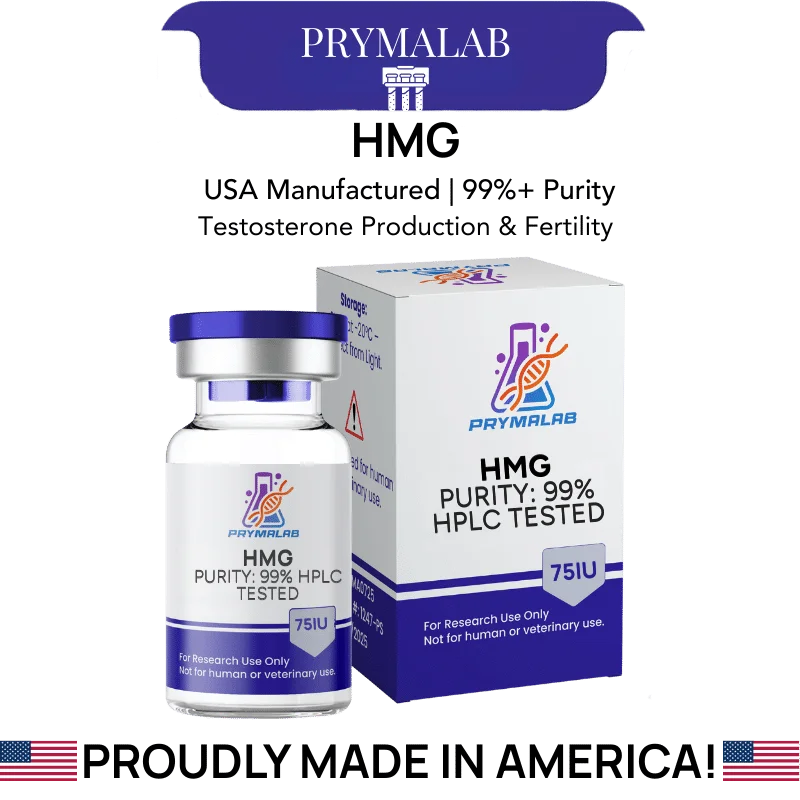
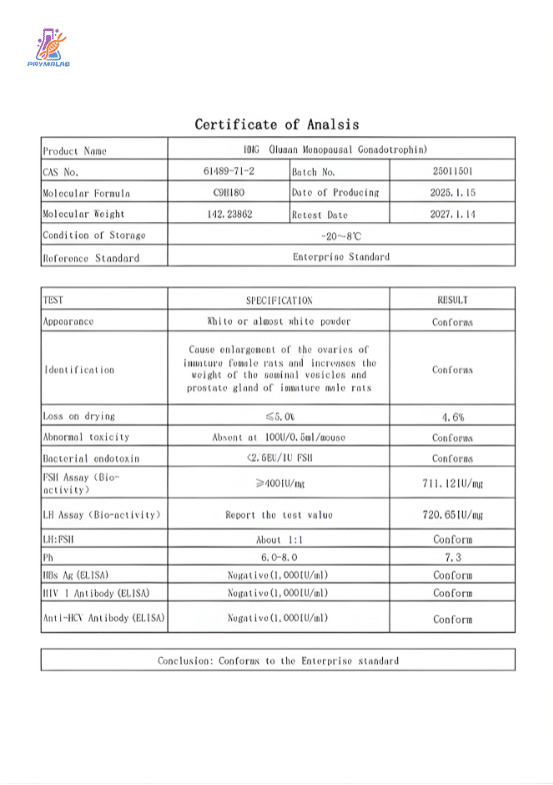


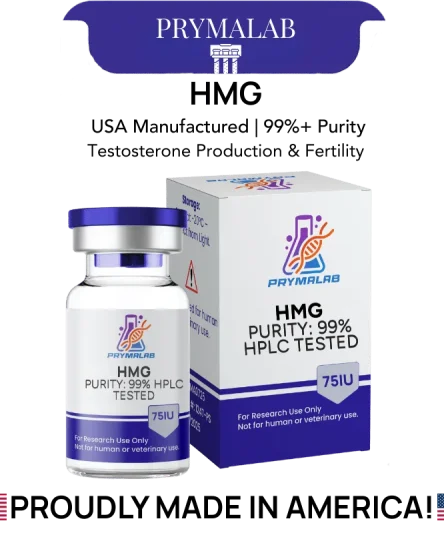






14 reviews for HMG 75IU