-
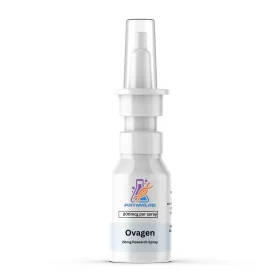
Ovagen 20mg Nasal Spray
$119.99 or subscribe for $101.99/mo This product has multiple variants. The options may be chosen on the product page -

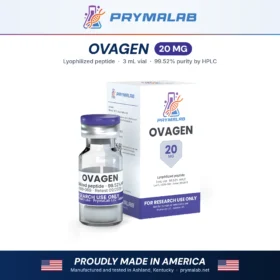
Ovagen Peptide 20mg
$49.99 or subscribe for $41.99/mo This product has multiple variants. The options may be chosen on the product page -
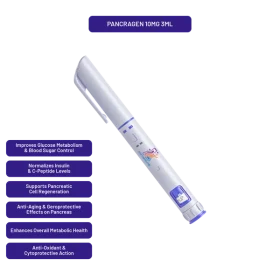
Preloaded Autoinjector | Pancragen | 3ml Pen | 20mg
$89.99 or subscribe for $75.99/mo This product has multiple variants. The options may be chosen on the product page -
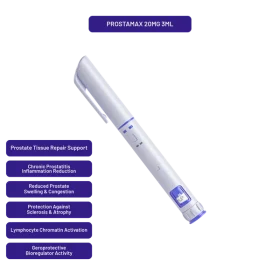
Preloaded Autoinjector | Prostamax | 3ml Pen | 20mg
$89.99 or subscribe for $75.99/mo This product has multiple variants. The options may be chosen on the product page -
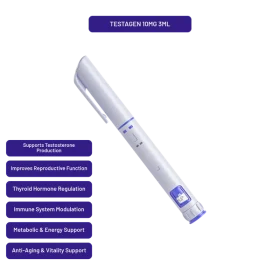
Preloaded Autoinjector | Testagen | 3ml Pen | 10mg
$69.99 or subscribe for $59.49/mo This product has multiple variants. The options may be chosen on the product page -
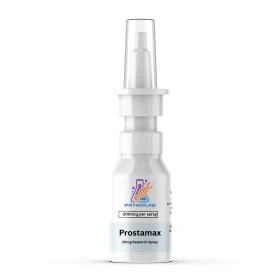
Prostamax 20mg Nasal Spray
$119.99 or subscribe for $101.99/mo This product has multiple variants. The options may be chosen on the product page -
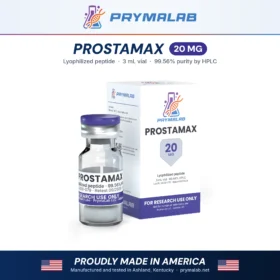
Prostamax Peptide 20mg
$54.99 or subscribe for $45.99/mo This product has multiple variants. The options may be chosen on the product page -
Testagen 20mg Nasal Spray
$119.99 or subscribe for $101.99/mo This product has multiple variants. The options may be chosen on the product page -
Testagen Peptide 20mg
$39.99 or subscribe for $33.99/mo This product has multiple variants. The options may be chosen on the product page -
Vesilute Peptide 20mg
$54.99 or subscribe for $45.99/mo This product has multiple variants. The options may be chosen on the product page

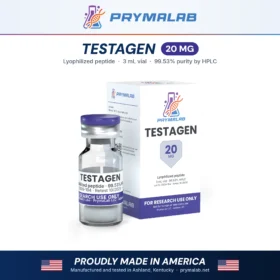
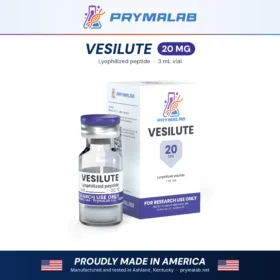
3 compounds · one shared backbone · one residue apart
Every compound in this range opens Lys-Glu-Asp and differs only in the residue that closes it. Glycine gives Testagen, proline gives Prostamax, tryptophan gives Pancragen. Three tissues, three terminal residues, and nothing else changed, which makes this the sharpest test of the tissue-assignment claim anywhere in the programme.
Specification Table
| Property | Value |
|---|---|
| Listings in this range | 4 across vial and metered spray |
| Distinct compounds | 3 |
| Shared opening | Lys-Glu-Asp in all three |
| Testagen | Lys-Glu-Asp-Gly, 447.5 g/mol, assigned to reproductive tissue |
| Prostamax | Lys-Glu-Asp-Pro, 487.5 g/mol, assigned to prostate |
| Pancragen | Lys-Glu-Asp-Trp, 561.6 g/mol, assigned to pancreas |
| Mass span | 447.5 to 561.6 g/mol |
| What separates them | One residue, at one position, at the C-terminus |
| Storage | 2-8°C, protected from light. Do not freeze |
| Page type | Category hub, not a product page |
| Schema page type | CollectionPage |
| Meta robots | index, follow |
| Regulatory status | No approved human formulation for any compound in this range |
What Does One Terminal Residue Actually Change?
Chemically, quite a lot. Glycine has no side chain at all, so Testagen ends in the most flexible residue available. Proline loops back onto its own backbone, so Prostamax ends in the most constrained one. Tryptophan carries a large aromatic indole ring, so Pancragen ends in the bulkiest and most hydrophobic of the three, and it is 114 daltons heavier than Testagen as a result.
Those three terminal residues cover most of the property space a single position can express: flexible, rigid and bulky. If tissue assignment is real, this is where it should show up. If the three behave alike in a shared assay, the claim has a problem, and it is a cheap problem to look for.
What Is a Prostate Bioregulator?
In the Khavinson framework a prostate bioregulator is a short peptide recovered from, or designed to match, sequences found in prostate tissue, on the premise that the tissue of origin carries regulatory information specific to it. Prostamax is that compound in this range, at Lys-Glu-Asp-Pro and 487.5 g/mol.
The premise is worth stating plainly because it is doing a lot of work. It holds that a four-residue sequence carries enough information to address one organ preferentially. That is a strong claim, and the fact that Prostamax and Pancragen differ by a single residue while being assigned to entirely different organs is exactly what makes it testable.
What Should the Certificate Show?
Purity by reversed-phase HPLC with the chromatogram, not a bare percentage. Identity by mass spectrometry against the calculated mass: 447.5 for Testagen, 487.5 for Prostamax, 561.6 for Pancragen. Those three numbers are far enough apart that a mass spectrum distinguishes them cleanly, which is not true everywhere in this family.
Water content matters for the lyophilised vials, since powder that has taken on moisture is not delivering the stated mass of peptide. For the metered spray, the fill date carries more information than the purity figure once the material has been sitting in aqueous buffer.
Which Formats Are Stocked?
Testagen, Prostamax and Pancragen are all available as 20mg lyophilised vials. Prostamax is also stocked as a metered nasal spray, and all three sit well under the rough 1,000 dalton ceiling where nasal transport falls away, so the format split reflects stocking rather than chemistry. The wider family sits under peptide bioregulators, and the format question is covered across thirty-seven products in the peptide nasal spray range.
Frequently Asked Questions
What is Testagen peptide?
Testagen is a synthetic tetrapeptide with the sequence Lys-Glu-Asp-Gly and a molecular mass of roughly 447.5 g/mol. It is assigned to reproductive tissue in the Khavinson bioregulator programme and ships here as a 20mg lyophilised vial.
What is the difference between Prostamax and Pancragen?
One residue. Prostamax is Lys-Glu-Asp-Pro at 487.5 g/mol and Pancragen is Lys-Glu-Asp-Trp at 561.6 g/mol. They share the first three residues and differ only at the C-terminus, where proline is rigid and tryptophan is bulky and aromatic.
Are bioregulators for prostate the same as prostate supplements?
No. A prostate supplement is usually a botanical or mineral blend. Prostamax is a single defined tetrapeptide with one sequence and one molecular mass, which is why a certificate of analysis can confirm what is in the vial and a supplement label generally cannot.
What Prostamax peptide dosage is published?
Published figures come from the Russian preclinical literature and are reported per course in animal models. No controlled human dosing study establishes a figure, so any human dose quoted online is an extrapolation.
Do these require reconstitution?
The 20mg vials do, since they ship as lyophilised powder. The Prostamax metered spray arrives in solution at a concentration fixed at manufacture and does not.
Are these approved for human use?
No. No compound in this range holds an approved human formulation in the United States. All are supplied for laboratory research only.
Compliance Statement
Every product in this range is supplied for laboratory research use only. None is a drug, a supplement or a food, none is intended for human or veterinary consumption, and none may be used for diagnostic or therapeutic purposes. No compound listed here holds an approved human formulation. Purchasers are responsible for handling these materials in an appropriate research setting and in accordance with the regulations that apply to them.
All 10 products in the Metabolic, Endocrine & Reproductive Bioregulators range
Every listing states its quantity, concentration and format and carries a batch certificate of analysis. Products are supplied for laboratory research only.