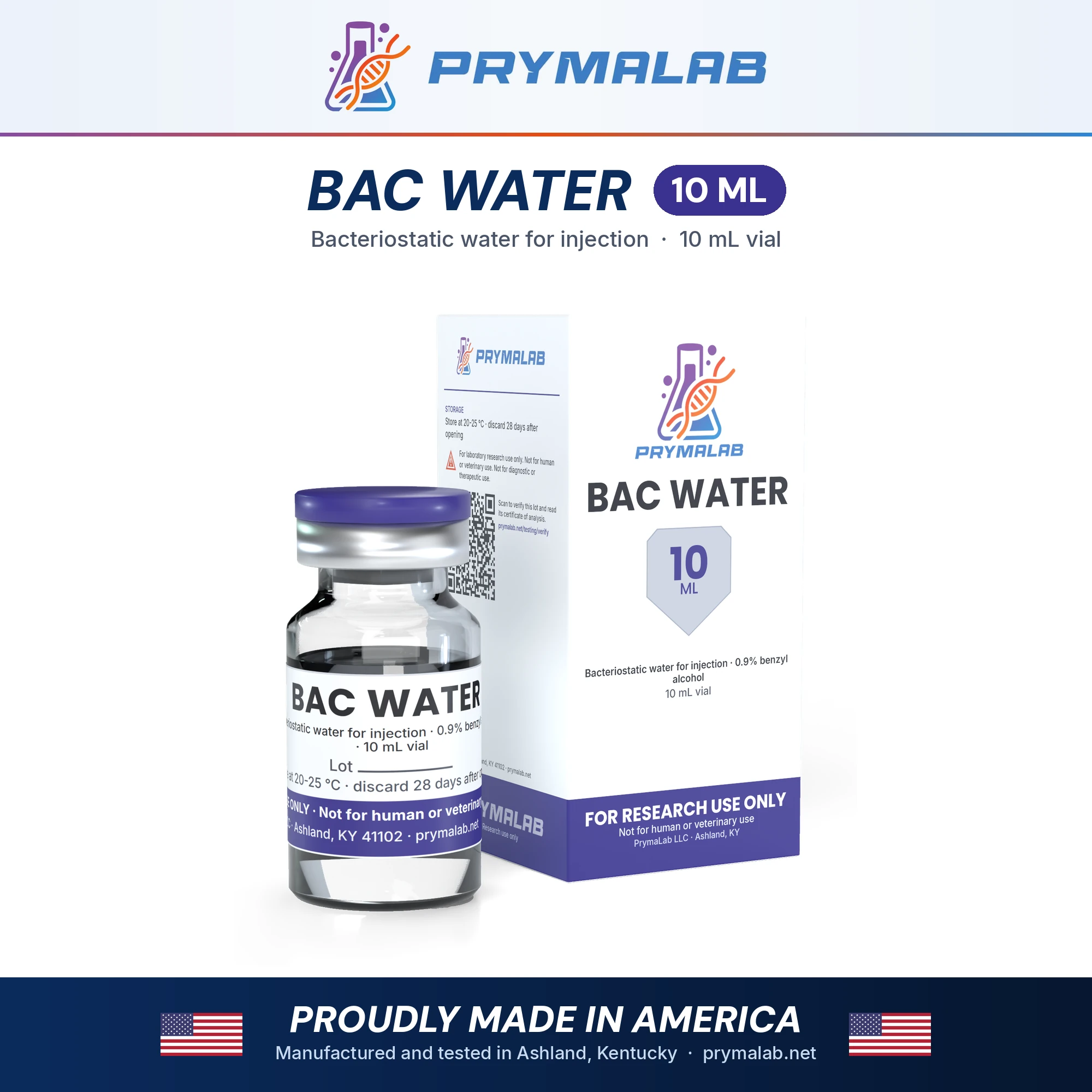
Description
What is Bacteriostatic Water for Peptides?
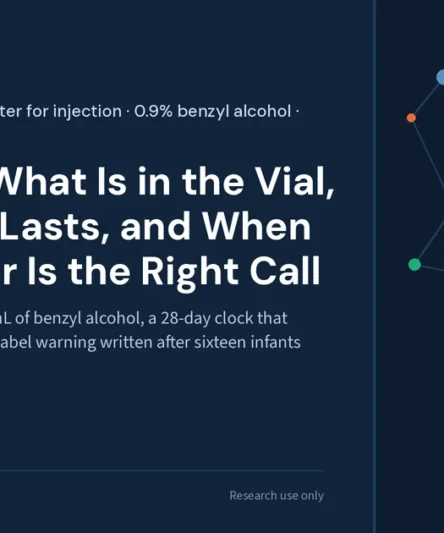
Sterile water peptides solution represents the gold standard for peptide mixing in research and pharmaceutical uses. PrymaLab’s sterile water for injection contains pharmaceutical-grade sterile water combined with 0.9% benzyl alcohol as a sterile preservative. This precise form of bac water for peptides lets researchers to safely reconstitute freeze-dried peptides while keeping solution sterility for up to 28 days after opening. Unlike sterile water which must be discarded after single use, sterile water provides cost-effective multi-dose capability essential for extended research protocols.
The sterile water mechanism relies on benzyl alcohol’s antimicrobial properties to block bacterial growth without killing existing microorganisms. This sterile action creates an environment where bacteria cannot reproduce, effectively preventing contamination during repeated withdrawals from the same vial. Each 10ML vial of bac water keeps a carefully controlled pH range between 4.5 and 7.0, with an average of 5.7, ensuring best compatibility with sensitive peptide compounds. The pharmaceutical-grade rubber stopper allows for multiple needle penetrations while keeping the sterile barrier that protects your valuable research materials.
Researchers choose sterile water for peptides because it offers unmatched convenience and reliability for mixing protocols. The 10ML volume provides enough bac water for multiple peptide vials while remaining compact for efficient storage. Whether mixing growth hormone peptides, healing peptides like BPC-157, or body peptides such as semaglutide, sterile water for injection delivers consistent results. The benzyl alcohol preservative ensures that each withdrawal from day one through day 28 keeps the same sterile quality, removing concerns about bacterial contamination that plague sterile water after opening.
Composition and Pharmaceutical Standards
PrymaLab’s sterile water peptides form adheres to strict USP (United States Pharmacopeia) standards for pharmaceutical-grade mixing solutions. Each milliliter contains precisely 0.9% benzyl alcohol (9mg/mL) dissolved in sterile water for injection. This level represents the best balance between effective sterile action and minimal tissue irritation. The bac water undergoes rigorous sterility testing, endotoxin test, and pH check before packaging to ensure compliance with pharmaceutical manufacturing standards.
The sterile water base used in sterile water for injection originates from highly purified water that meets or exceeds USP specifications for Water for Injection (WFI). Multiple distillation and filtration stages remove all particulates, pyrogens, and microbial contaminants. The addition of pharmaceutical-grade benzyl alcohol occurs under strictly controlled aseptic conditions in ISO-certified clean rooms. Each batch of bac water for peptides gets full quality control testing including sterility assurance, particulate matter test, and chemical makeup check.
The 10ML vial design incorporates pharmaceutical-grade Type I borosilicate glass that prevents chemical interactions with the sterile water contents. The rubber stopper consists of specially formulated elastomer that keeps integrity through multiple needle penetrations while preventing bacterial ingress. An aluminum crimp seal secures the stopper and provides tamper-evident protection. This packaging system ensures that sterile water peptides solution keeps its sterile, preservative-protected state from manufacturing through the entire 28-day usage period after opening.
How Bacteriostatic Water Works
The sterile mechanism of bac water relies on benzyl alcohol’s unique antimicrobial properties that block bacterial reproduction without causing immediate cell death. When bacteria meet the 0.9% benzyl alcohol level in sterile water for peptides, the alcohol molecules disrupt bacterial cell membrane integrity and interfere with essential body processes. This disruption prevents bacteria from dividing and multiplying, effectively keeping a static bacterial population that cannot set up infection or contamination. Unlike bactericidal agents that kill bacteria outright, the sterile action of bac water creates a hostile environment for growth while allowing any existing organisms to remain dormant.
The benzyl alcohol in sterile water for injection penetrates bacterial cell walls and interferes with protein synthesis mechanisms essential for reproduction. This interference occurs at multiple cellular levels, affecting ribosomal function, enzyme activity, and membrane transport systems. The cumulative effect prevents bacterial cells from completing their fertility cycle, keeping the sterile integrity of mixed peptide solutions. The 0.9% level provides enough antimicrobial activity to protect against common laboratory contaminants while remaining safe for injection when properly diluted with peptide compounds.
Sterile water peptides solutions keep their protective properties throughout the 28-day usage period because benzyl alcohol remains stable and active in aqueous solution. The preservative does not degrade greatly under proper storage conditions, ensuring consistent antimicrobial protection from first use to final withdrawal. This sustained activity distinguishes bac water from sterile water, which offers no protection against contamination after the seal breaks. Researchers can confidently perform multiple reconstitutions from a single sterile water vial, knowing that each withdrawal gets the same level of contamination protection.
Bacteriostatic Water vs Sterile Water
Grasp the key differences between sterile water for peptides and sterile water helps researchers select the appropriate mixing solution for their protocols. Sterile water contains only purified water that has undergone sterilization to remove all viable microorganisms. Once opened, sterile water vials must be used immediately and discarded, as they contain no preservative to prevent bacterial growth. In contrast, sterile water for injection contains 0.9% benzyl alcohol preservative that blocks bacterial reproduction, letting safe multi-dose use over 28 days. This basic difference makes bac water the preferred choice for research protocols needing multiple peptide reconstitutions.
The cost-effectiveness of sterile water versus sterile water becomes apparent in extended research projects. A single 10ML vial of bac water for peptides can reconstitute multiple peptide vials over nearly a month, while sterile water needs a fresh vial for each mixing. This multi-dose capability reduces both material costs and storage requirements. Researchers working with expensive peptide compounds very value sterile water’s power to keep sterility between uses, removing waste from partially used sterile water vials that must be discarded.
Safety profiles differ greatly between sterile water peptides solutions and sterile water. The benzyl alcohol in bac water provides continuous antimicrobial protection that guards against contamination from repeated needle insertions. Sterile water offers no such protection, making it vulnerable to bacterial introduction with each vial access. However, sterile water for injection should not be used in neonates or infants due to benzyl alcohol toxicity concerns in this population. For adult research uses and peptide mixing, bac water delivers superior contamination protection and practical convenience compared to sterile water’s single-use limitation.
PEPTIDE RECONSTITUTION PROTOCOLS
Step-by-Step Bacteriostatic Water Reconstitution Guide
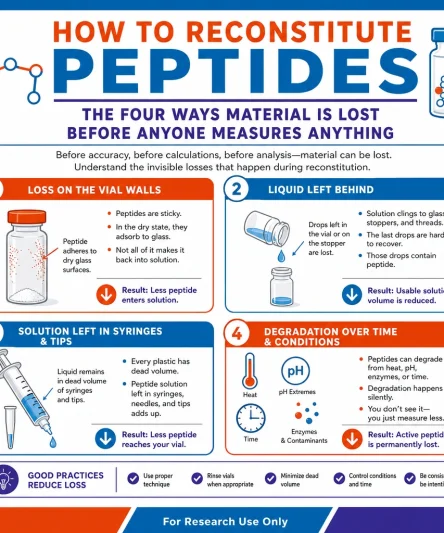
Proper peptide mixing using sterile water for peptides needs meticulous attention to sterile technique and precise volume measurements. Begin by assembling all necessary materials in a clean workspace: your freeze-dried peptide vial, sterile water for injection, sterile insulin syringes (often 1mL with 100 unit markings), alcohol prep pads, and a peptide calculator for dosing check. Allow refrigerated bac water to reach room heat before use, as cold solution can cause peptide precipitation. This preparation ensures best mixing conditions for your valuable peptide compounds.
The mixing process starts with thorough hand washing and workspace disinfection. Remove the plastic caps from both the peptide vial and sterile water vial, then swab both rubber stoppers with alcohol prep pads and allow them to air dry completely. Draw the calculated volume of bac water for peptides into your sterile syringe, being careful to remove any air bubbles that could affect measurement accuracy. Insert the needle through the peptide vial’s rubber stopper at a slight angle, directing the sterile water stream against the inside wall of the vial rather than directly onto the freeze-dried powder. This gentle technique prevents peptide breakdown from forceful impact.
After injecting the sterile water for injection into the peptide vial, remove the syringe and allow the solution to sit undisturbed for several minutes. The bac water will gradually dissolve the freeze-dried peptide without agitation. Avoid shaking or vigorous swirling, as these actions can denature sensitive peptide bonds. Instead, gently roll the vial between your palms if needed to encourage complete dissolution. The mixed peptide solution should appear clear and free of particulates. Once fully dissolved, your peptide is ready for use, and the sterile water preservative will keep sterility for later withdrawals over the next 28 days.
Calculating Bacteriostatic Water Volumes
Accurate sterile water peptides volume calculations ensure precise dosing and best peptide level. The basic formula divides the total peptide amount (in milligrams) by the desired level (in mg/mL) to find the needed bac water volume. For example, mixing a 5mg peptide vial to achieve a 1mg/mL level needs 5mL of sterile water for injection. However, practical factors often favor higher levels to minimize injection volumes and preserve peptide shelf life.
Common peptide mixing ratios using sterile water for peptides include 2mg peptide with 2mL bac water (1mg/mL), 5mg peptide with 2.5mL bac water (2mg/mL), and 10mg peptide with 2mL bac water (5mg/mL). These levels balance ease of measurement with practical injection volumes. A bac water calculator simplifies these computations, allowing researchers to input their peptide amount and desired dose to get exact mixing volumes and corresponding syringe measurements. Most insulin syringes display 100 units per mL, so a 0.1mL dose equals 10 units on the syringe scale.
The 10ML volume of PrymaLab’s sterile water vial provides enough capacity for multiple peptide reconstitutions while keeping compact storage. Researchers can reconstitute one large peptide vial (10mg with 2-3mL bac water) or multiple smaller vials (three 5mg vials with 1mL each). The multi-dose capability of sterile water for injection means a single 10ML vial serves extended research protocols without waste. Always document your mixing date and level on the peptide vial label to ensure accurate dosing throughout the 28-day usage period.
Common Peptide Applications
Sterile water for peptides serves as the universal mixing solution for diverse peptide classes used in research uses. Growth hormone releasing peptides (GHRPs) including GHRP-2, GHRP-6, and Ipamorelin need bac water for proper dissolution and multi-dose storage. These peptides often come in 5mg vials and reconstitute well with 2-2.5mL of sterile water for injection, creating levels suitable for precise microgram dosing. The sterile preservative keeps peptide shelf life between doses, essential for protocols spanning several weeks.
Healing and healing peptides like BPC-157 and TB-500 benefit greatly from sterile water peptides mixing. BPC-157 often arrives in 5mg vials that researchers reconstitute with 2.5mL bac water, yielding a 2mg/mL level ideal for the typical 250-500mcg research doses. TB-500, often supplied in 5mg vials, reconstitutes effectively with 2mL sterile water for injection to create a 2.5mg/mL solution. The 28-day shelf life of bac water perfectly accommodates the extended use schedules these healing peptides need for best tissue repair research.
Body peptides including semaglutide, tirzepatide, and other GLP-1 analogs need careful mixing with sterile water for peptides to keep their complex cell-level structures. These peptides often come in larger vial sizes (5-10mg) and benefit from the precise pH control that bac water provides. Researchers mixing semaglutide often use 2-10ML of sterile water for injection per 5mg vial, creating levels that allow accurate measurement of the small doses these potent compounds need. The benzyl alcohol preservative in bac water ensures these expensive peptides remain uncontaminated throughout multi-week research protocols.
Reconstitution Best Practices
Keeping strict aseptic technique throughout the sterile water for peptides mixing process prevents contamination and ensures research integrity. Always work in a clean, draft-free environment to minimize airborne particle introduction. Use fresh alcohol prep pads for each rubber stopper access, allowing complete evaporation before needle insertion. Never reuse syringes or needles, as this practice introduces contamination risk that even sterile water cannot overcome. Store mixed peptides in the refrigerator at 36-46°F, protecting them from light and heat fluctuations that accelerate breakdown.
The angle and speed of sterile water injection greatly impact peptide integrity during mixing. Insert the needle through the rubber stopper at about a 45-degree angle, directing the bac water stream against the vial wall rather than directly onto the freeze-dried peptide cake. Inject slowly and steadily, allowing the sterile water for injection to gently cascade down the wall and gradually dissolve the peptide. Rapid injection or direct impact can cause foaming and peptide denaturation, reducing potency and creating measurement difficulties. Patience during this key step preserves your valuable peptide compounds.
Records practices enhance safety and accuracy when using sterile water peptides solutions. Label each mixed vial with the mixing date, peptide level, and expiration date (28 days from opening for bac water). Keep a research log recording peptide batch numbers, sterile water lot numbers, mixing volumes, and storage conditions. This records lets troubleshooting if unexpected results occur and ensures compliance with laboratory protocols. Track the number of withdrawals from each sterile water for injection vial to track contamination risk and plan timely replacement before the 28-day limit expires.
STORAGE AND HANDLING GUIDELINES
Proper Storage Conditions
Sterile water for peptides needs specific storage conditions to keep its sterile, preservative-protected properties throughout its shelf life. Unopened vials of bac water should be stored at controlled room heat between 59-86°F (15-30°C), protected from direct sunlight and extreme heat fluctuations. A dark cabinet or drawer away from heat sources provides ideal storage conditions. The pharmaceutical-grade glass vial and rubber stopper protect sterile water for injection from environmental contamination, but proper storage prevents breakdown of the benzyl alcohol preservative that could compromise antimicrobial effectiveness.
Once opened, sterile water peptides solutions benefit from refrigeration at 36-46°F (2-8°C), though this is not strictly needed. Refrigeration extends the effective life of the benzyl alcohol preservative and provides more protection against bacterial growth. Store opened bac water vials upright to prevent rubber stopper contact with the liquid, which could cause extractables to leach into the solution. Never freeze sterile water for injection, as freezing can damage the vial, compromise the rubber stopper seal, and possibly alter the preservative level through ice crystal formation.
The storage environment for sterile water for peptides should remain clean, dry, and free from possible contaminants. Avoid storing bac water near chemicals, cleaning agents, or other substances that could create vapors or particulates. Keep sterile water vials in their original packaging until use to protect against light exposure and physical damage. Inspect vials before each use for cracks, cloudiness, or particulate matter. Any sterile water for injection showing signs of contamination or damage should be discarded immediately, regardless of the expiration date or time since opening.
Shelf Life and Expiration
Grasp sterile water shelf life ensures best performance and safety in peptide mixing uses. Unopened vials of bac water for peptides often keep full potency for 24-36 months from the manufacturing date when stored under proper conditions. The expiration date printed on each vial reflects the manufacturer’s guarantee of sterility, preservative effectiveness, and pH shelf life. PrymaLab’s sterile water for injection undergoes accelerated shelf life testing to verify that benzyl alcohol level and antimicrobial activity remain within specifications throughout the labeled shelf life.
The key shelf life consideration for sterile water peptides involves the 28-day usage period after first opening. Once the rubber stopper is punctured, the vial’s sterile integrity depends entirely on the benzyl alcohol preservative to prevent bacterial growth. The 0.9% benzyl alcohol level in bac water keeps effective sterile activity for 28 days under proper storage and handling conditions. After this period, preservative effectiveness may decline, and contamination risk increases. Mark the opening date on each sterile water for injection vial and discard any remaining solution after 28 days, even if the vial appears clear and uncontaminated.
Several factors can shorten the effective shelf life of sterile water for peptides after opening. Frequent access increases contamination risk, as each needle insertion introduces possible bacterial introduction. Poor storage conditions, very exposure to heat or direct sunlight, accelerate benzyl alcohol breakdown and reduce preservative effectiveness. Contaminated needles or syringes can overwhelm the sterile protection that bac water provides. To maximize the 28-day usage period, keep strict aseptic technique, store opened vials in the refrigerator, and minimize unnecessary access. These practices ensure that sterile water for injection keeps its protective properties throughout the entire usage period.
Handling and Safety Precautions
Safe handling of sterile water for peptides begins with grasp proper aseptic technique and contamination prevention. Always wash hands thoroughly before handling bac water vials, and consider wearing clean gloves for more protection. Use fresh alcohol prep pads to disinfect the rubber stopper before each access, allowing complete alcohol evaporation before needle insertion. This simple practice removes surface contaminants that could be introduced into the sterile water for injection during withdrawal. Never touch the needle tip or allow it to contact non-sterile surfaces, as this compromises the sterile barrier that protects your mixed peptides.
The benzyl alcohol preservative in sterile water peptides solutions needs specific safety factors. While the 0.9% level is safe for adult use in research uses, bac water should never be used in neonates, infants, or pregnant women due to benzyl alcohol toxicity concerns. The preservative can cause serious adverse effects including body acidosis and neurological complications in these vulnerable populations. For adult research uses, sterile water for injection poses minimal risk when used as directed. However, people with known benzyl alcohol response should avoid bac water and use sterile water for single-dose uses instead.
Disposal of used sterile water for peptides follows standard laboratory waste protocols. Expired or contaminated bac water vials should be discarded in appropriate pharmaceutical waste containers, not poured down drains or disposed of in regular trash. Used syringes and needles must go into puncture-resistant sharps containers to prevent injury and disease transmission. Never recap needles after use, as this practice causes most needle-stick injuries. Keep a clean workspace by immediately disposing of used materials and wiping surfaces with appropriate disinfectants. These safety practices protect both researchers and the environment from possible hazards linked with sterile water for injection and mixed peptides.
Temperature Control and Monitoring
Keeping proper heat control for sterile water peptides ensures preservative effectiveness and solution shelf life throughout the usage period. Room heat storage (59-86°F) suffices for unopened bac water vials, but refrigeration at 36-46°F provides best conditions for opened vials. Use a dedicated laboratory refrigerator with accurate heat tracking rather than a standard household refrigerator that experiences frequent heat fluctuations from door openings. Place sterile water for injection vials in the main refrigerator compartment, avoiding the door shelves where heat varies most greatly.
Heat extremes pose serious risks to sterile water for peptides integrity. Heat exposure above 86°F accelerates benzyl alcohol breakdown, reducing the preservative’s antimicrobial effectiveness and possibly shortening the 28-day usage period. Prolonged heat exposure can also alter the pH of bac water, affecting compatibility with sensitive peptide compounds. Conversely, freezing sterile water for injection causes ice crystal formation that can crack the glass vial, compromise the rubber stopper seal, and create level gradients as water freezes before benzyl alcohol. Never store bac water in freezers or allow it to freeze during shipping or storage.
Heat tracking systems help ensure sterile water peptides keep best storage conditions. Digital thermometers with min/max memory functions track heat excursions that could compromise bac water quality. For key research uses, consider refrigerators with alarm systems that alert users to heat deviations. When transporting sterile water for injection between locations, use insulated containers with ice packs to keep stable temperatures. Allow transported bac water to equilibrate to room heat before use to prevent condensation inside the vial and ensure accurate volume measurements during peptide mixing.
QUALITY ASSURANCE AND COMPLIANCE
USP Standards and Testing
PrymaLab’s sterile water for peptides meets or exceeds all United States Pharmacopeia (USP) standards for Sterile Water for Injection. Each production batch undergoes full testing to verify compliance with USP monograph specifications including sterility assurance, bacterial endotoxin limits, particulate matter test, and pH check. The bac water manufacturing process follows Current Good Manufacturing Practices (cGMP) in FDA-registered facilities with full environmental tracking and quality control records. This rigorous approach ensures that every vial of sterile water for injection delivers pharmaceutical-grade quality for key peptide mixing uses.
Sterility testing of sterile water peptides solutions employs both direct inoculation and membrane filtration methods to detect any viable microorganisms. Samples from each production batch undergo 14-day incubation in multiple growth media designed to support diverse bacterial and fungal species. Only batches showing no growth in any test sample get approval for distribution. Bacterial endotoxin testing using the Limulus Amebocyte Lysate (LAL) assay verifies that bac water contains less than 0.5 EU/mL, well below the USP limit. These stringent sterility standards ensure that sterile water for injection introduces no contamination into valuable peptide research materials.
Chemical test of sterile water for peptides confirms precise benzyl alcohol level and best pH range. High-performance liquid chromatography (HPLC) measures benzyl alcohol content, verifying the 0.9% (9mg/mL) specification with tight tolerances. pH testing ensures each batch falls within the 4.5-7.0 range, with target pH of 5.7 for best peptide compatibility. Particulate matter test using light obscuration and microscopic review confirms that bac water meets USP limits for subvisible particles. Certificate of Test (CoA) documents accompany each lot, providing complete testing results and traceability for sterile water for injection used in research uses.
Manufacturing Standards
The production of sterile water peptides occurs in state-of-the-art facilities designed mainly for sterile pharmaceutical manufacturing. ISO Class 7 cleanrooms with ISO Class 5 laminar flow hoods provide the controlled environment necessary for aseptic processing. All personnel undergo extensive training in aseptic technique, gowning procedures, and contamination control. Environmental tracking programs continuously track airborne particles, surface contamination, and personnel hygiene to ensure bac water manufacturing keeps the highest sterility standards. These controlled conditions prevent contamination during the key steps of sterile water for injection production.
Raw material qualification ensures that every component of sterile water for peptides meets pharmaceutical-grade specifications. The sterile water base originates from multi-stage purification systems producing Water for Injection (WFI) quality. Benzyl alcohol undergoes rigorous testing for purity, with specifications needing minimum 99% purity and strict limits on possible contaminants. Type I borosilicate glass vials get inspection for defects, dimensional accuracy, and chemical resistance. Rubber stoppers undergo extractables testing to verify they won’t leach compounds into bac water during storage. Only materials meeting these stringent specifications enter sterile water for injection production.
Process validation shows that sterile water peptides manufacturing consistently produces products meeting all quality specifications. Three consecutive validation batches undergo intensive testing and tracking to verify that every process parameter remains within acceptable ranges. Ongoing process check continues throughout commercial production, with regular testing confirming that bac water keeps its sterile, preservative-protected properties. Equipment qualification programs ensure that filling machines, autoclaves, and other key equipment operate correctly. This full validation approach guarantees that every vial of sterile water for injection delivers the quality researchers depend on for peptide mixing.
Batch Tracking and Traceability
Complete traceability systems track sterile water for peptides from raw material receipt through final distribution. Each production batch gets a unique lot number that links to full manufacturing records documenting every step of the production process. These records include raw material lot numbers, equipment used, personnel involved, environmental tracking data, and all quality control test results. When researchers buy bac water from PrymaLab, the lot number on their vial connects to this complete manufacturing history, letting rapid study if any quality concerns arise.
Certificate of Test (CoA) documents provide detailed quality data for each sterile water peptides batch. These certificates list all testing performed, including sterility results, endotoxin levels, pH measurements, benzyl alcohol level, and particulate matter test. The CoA also includes manufacturing and expiration dates, storage recommendations, and control compliance statements. Researchers can request CoAs for their specific bac water lot numbers to verify that their sterile water for injection meets all specifications. This transparency ensures confidence in product quality for key peptide mixing uses.
Shelf life testing programs track sterile water for peptides throughout its shelf life to verify that quality attributes remain within specifications. Real-time shelf life studies store bac water samples under recommended conditions and test them at regular intervals throughout the labeled shelf life. Accelerated shelf life studies expose samples to elevated temperatures to predict long-term shelf life and identify possible breakdown pathways. These studies confirm that benzyl alcohol level, pH, sterility, and other key parameters remain stable, supporting the labeled expiration date for sterile water for injection. Ongoing shelf life tracking ensures that quality claims remain valid throughout the product lifecycle.
FREQUENTLY ASKED QUESTIONS
General Questions About Bacteriostatic Water
What is sterile water used for?
Sterile water for peptides serves as the preferred mixing solution for freeze-dried peptide compounds in research uses. The 0.9% benzyl alcohol preservative in bac water blocks bacterial growth, letting safe multi-dose use over 28 days. Researchers use sterile water for injection to dissolve peptide powders, creating solutions suitable for precise dosing in many research protocols. The multi-dose capability makes bac water more cost-effective and convenient than single-use sterile water for extended research projects.
How long does sterile water last after opening?
Opened sterile water peptides solutions keep their sterile, preservative-protected properties for 28 days when stored properly. The benzyl alcohol preservative in bac water provides effective antimicrobial protection throughout this period, preventing bacterial growth from repeated needle insertions. After 28 days, preservative effectiveness may decline, and contamination risk increases. Always mark the opening date on your sterile water for injection vial and discard any remaining solution after 28 days, even if it appears clear and uncontaminated.
Does sterile water need to be refrigerated?
Unopened sterile water for peptides can be stored at room heat (59-86°F) until the expiration date. Once opened, bac water benefits from refrigeration at 36-46°F, though this is not strictly needed. Refrigeration helps preserve benzyl alcohol effectiveness and provides more protection against bacterial growth during the 28-day usage period. Never freeze sterile water for injection, as freezing can damage the vial and compromise the rubber stopper seal. Store opened bac water upright in the refrigerator, protected from light and heat fluctuations.
Is sterile water the same as sterile water?
No, sterile water peptides solutions differ greatly from sterile water. Sterile water contains only purified water with no preservatives, needing single-use and immediate discard after opening. Sterile water for injection contains 0.9% benzyl alcohol preservative that blocks bacterial growth, letting safe multi-dose use for 28 days. This basic difference makes bac water more practical and cost-effective for research protocols needing multiple peptide reconstitutions. However, sterile water should not be used in neonates or infants due to benzyl alcohol toxicity concerns in these populations.
Where can I buy sterile water?
PrymaLab offers pharmaceutical-grade sterile water for peptides in convenient 10ML vials. Our bac water meets all USP standards for Sterile Water for Injection, with complete testing records and lot-specific Certificates of Test available. Buy sterile water for injection directly from PrymaLab to ensure you get authentic, properly stored product with full traceability. We ship bac water with appropriate heat control to keep quality during transit, and our customer service team can answer questions about proper storage and handling.
Reconstitution and Usage Questions
How much sterile water should I add to peptides?
The volume of sterile water for peptides depends on your peptide amount and desired level. Common ratios include 2mL bac water for 5mg peptide (2.5mg/mL level) or 2mL sterile water for injection for 10mg peptide (5mg/mL level). Use a peptide calculator to find exact volumes based on your specific peptide amount and target dose. Higher levels minimize injection volumes but need more precise measurement, while lower levels offer easier dosing but larger injection volumes. The 10ML volume of PrymaLab’s bac water accommodates many mixing needs.
Can I use sterile water for all peptides?
Most research peptides reconstitute effectively with sterile water for peptides. Growth hormone peptides, healing peptides like BPC-157 and TB-500, and body peptides including GLP-1 analogs all work well with bac water. The 0.9% benzyl alcohol preservative and pH range of 4.5-7.0 provide compatibility with most peptide structures. However, some specialized peptides may need specific mixing solutions or pH adjustments. Always consult your peptide supplier’s mixing recommendations and consider peptide shelf life requirements when selecting sterile water for injection versus other solutions.
How do I know if my sterile water is contaminated?
Contaminated sterile water peptides solutions often show visible signs including cloudiness, color change, or particulate matter floating in the liquid. Fresh bac water should appear crystal clear with no visible particles or discoloration. If your sterile water for injection develops any of these signs, discard it immediately regardless of the time since opening. Also discard bac water that has been open longer than 28 days, even if it appears clear, as preservative effectiveness declines after this period. Keeping strict aseptic technique during each access minimizes contamination risk.
Can I mix different peptides in the same sterile water?
No, never mix different peptides in the same sterile water for peptides solution. Each peptide should be mixed in its own vial to prevent chemical interactions, keep accurate dosing, and preserve peptide shelf life. Different peptides have varying shelf life profiles, best pH ranges, and storage requirements that may be incompatible. Use separate syringes for each peptide to avoid cross-contamination. If your research protocol needs multiple peptides, reconstitute each separately with bac water and give them individually. This practice ensures best potency and prevents unexpected interactions between peptide compounds.
What syringe size should I use with sterile water?
Insulin syringes (1mL capacity with 100 unit markings) work best for sterile water for peptides mixing and dosing. These syringes provide precise measurement capability essential for accurate peptide dosing, with each unit representing 0.01mL. The fine needle (often 29-31 gauge) minimizes rubber stopper damage during repeated bac water withdrawals. For larger volume transfers, 10ML syringes with 0.1mL graduations offer enough precision. Always use fresh, sterile syringes for each sterile water for injection access to keep sterility and prevent contamination of your valuable peptide solutions.
Storage and Safety Questions
What happens if sterile water freezes?
Freezing sterile water for peptides can cause serious quality problems. Ice crystal formation may crack the glass vial, compromise the rubber stopper seal, and create level gradients as water freezes before benzyl alcohol. Frozen and thawed bac water may show altered pH, reduced preservative effectiveness, and possible contamination from seal compromise. Never intentionally freeze sterile water for injection, and discard any bac water that has accidentally frozen. Protect bac water from freezing during winter shipping by using insulated packaging and tracking supply conditions.
Can I use expired sterile water?
No, never use expired sterile water for peptides. The expiration date reflects the manufacturer’s guarantee of sterility, preservative effectiveness, and pH shelf life. After expiration, benzyl alcohol level may decline, reducing antimicrobial protection and increasing contamination risk. The pH may drift outside the best range, possibly affecting peptide shelf life after mixing. Expired bac water may also develop particulate matter or microbial growth. Always check expiration dates before using sterile water for injection, and keep proper inventory rotation to use oldest stock first.
Is sterile water safe for injection?
Yes, sterile water for peptides is safe for injection when used properly in adult research uses. The 0.9% benzyl alcohol level provides effective antimicrobial protection without causing tissue irritation at typical injection sites. However, bac water should never be used in neonates, infants, or pregnant women due to benzyl alcohol toxicity concerns. For adult use, sterile water for injection poses minimal risk when gave according to proper protocols. Always use sterile technique, verify product quality, and follow appropriate dosing rules for your specific research use.
How should I dispose of used sterile water?
Dispose of expired or contaminated sterile water for peptides according to pharmaceutical waste protocols. Pour unused bac water down the drain with plenty of water, as the dilute benzyl alcohol level poses no environmental hazard. Discard empty vials in appropriate pharmaceutical waste containers, not regular trash. Used syringes and needles must go into puncture-resistant sharps containers to prevent injury. Never recap needles after use. Follow your institution’s waste disposal rules for sterile water for injection and linked materials to ensure safe, compliant disposal practices.
Can I travel with sterile water?
Yes, you can travel with sterile water for peptides, but take precautions to keep proper storage conditions. Pack bac water in insulated containers with ice packs to prevent heat extremes during transit. Keep sterile water for injection in carry-on luggage when flying to avoid cargo hold heat fluctuations and possible freezing. Ensure vials are well-protected against breakage with bubble wrap or foam padding. Check destination regulations about sterile water transport, as some locations may have restrictions. Upon arrival, immediately transfer bac water to appropriate storage conditions to keep quality throughout your research period.
TECHNICAL SPECIFICATIONS
Product Specifications
Product Name: Sterile Water for Injection, USP
Brand: PrymaLab
Volume: 10ML per vial
Active Ingredient: Benzyl Alcohol 0.9% (9mg/mL)
Base Solution: Sterile Water for Injection, USP
pH Range: 4.5 – 7.0 (target 5.7)
Osmolality: Hypotonic
Appearance: Clear, colorless liquid
Particulate Matter: Meets USP <788> requirements
Bacterial Endotoxins: <0.5 EU/mL
Sterility: Meets USP <71> sterility requirements
Packaging Specifications
Main Container: Type I Borosilicate Glass Vial
Closure System: Pharmaceutical-grade Rubber Stopper
Seal: Aluminum Crimp with Flip-off Cap
Labeling: Lot number, expiration date, storage conditions
Package Insert: Complete usage and safety data
Second Packaging: Protective carton with product data
Storage and Handling Specifications
Unopened Storage: 59-86°F (15-30°C)
Opened Storage: 36-46°F (2-8°C) recommended
Shelf Life (Unopened): 24-36 months from manufacture
Shelf Life (Opened): 28 days maximum
Light Protection: Store in original carton until use
Freezing: Do not freeze
Transportation: Keep 36-77°F (2-25°C) during shipping
Regulatory and Quality Specifications
Control Status: USP Monograph Compliant
Manufacturing: cGMP Certified Facility
Quality System: ISO 13485 Certified
Testing: Batch-specific Certificate of Test
Traceability: Complete lot tracking system
Shelf life: Validated through expiration date
Records: Full manufacturing records available
RELATED PRODUCTS AND ACCESSORIES
Complementary PrymaLab Products
Sterile Water for Injection 10ML
Single-use sterile water for uses needing preservative-free mixing. Ideal for neonatal use or when benzyl alcohol response is a concern. Meets USP standards for Water for Injection.
Insulin Syringes 1mL (100 pack)
Precision syringes with 100 unit markings for accurate sterile water and peptide dosing. 29-gauge needles minimize rubber stopper damage. Sterile, single-use design ensures contamination prevention.
Alcohol Prep Pads (200 pack)
Sterile 70% isopropyl alcohol pads for disinfecting vial stoppers before sterile water withdrawal. Personal packaging keeps sterility. Essential for keeping aseptic technique.
Sharps Container 1 Quart
Puncture-resistant disposal container for used syringes and needles. Meets OSHA standards for safe sharps disposal. Prevents needle-stick injuries and ensures proper waste care.
Digital Refrigerator Thermometer
Accurate heat tracking for sterile water storage. Min/max memory tracks heat excursions. Alarm function alerts to heat deviations that could compromise product quality.
Popular Peptide Products
BPC-157 5mg
Healing peptide for tissue repair research. Reconstitutes with 2-2.5mL sterile water for best level. Stable for 28 days when stored properly with bac water preservative protection.
TB-500 5mg
Healing peptide for swelling and healing research. Compatible with sterile water mixing. Extended research protocols benefit from bac water’s multi-dose capability.
Ipamorelin 5mg
Growth hormone releasing peptide for body research. Needs precise dosing let by sterile water mixing. Multi-week protocols use bac water’s 28-day shelf life.
Semaglutide 5mg
GLP-1 analog for body research uses. Sensitive peptide structure benefits from sterile water’s controlled pH. Extended dosing schedules need bac water’s preservative protection.
Melanotan 2 10mg
Peptide for pigmentation research. Higher level vials work well with 2-3mL sterile water. Cost-effective research let by bac water’s multi-dose capability.
COMPLIANCE AND REGULATORY INFORMATION
Intended Use Statement
PrymaLab Sterile Water for Injection is intended for use as a sterile, preservative-containing diluent for mixing of freeze-dried peptides and other compounds in research uses. This product is manufactured in accordance with USP standards for Sterile Water for Injection and complies with all applicable FDA regulations for pharmaceutical-grade mixing solutions. Sterile water for peptides is designed for multi-dose use over a 28-day period when proper aseptic technique and storage conditions are kept.
Contraindications and Warnings
CONTRAINDICATIONS:
- Do not use in neonates or infants
- Do not use in pregnant or nursing women
- Do not use in people with known benzyl alcohol response
- Do not use for epidural or intrathecal injection
- Do not use after 28 days from first opening
- Do not use if solution is cloudy or contains particulates
WARNINGS:
- Benzyl alcohol has been linked with serious adverse events and death in neonates
- Use only with proper aseptic technique to prevent contamination
- Discard unused portion after 28 days from first opening
- Do not freeze – freezing may compromise container integrity
- Inspect visually for particulate matter and discoloration before each use
- For research use only – not for human treatment use
Quality Certifications
PrymaLab keeps full quality care systems ensuring sterile water for peptides meets the highest pharmaceutical standards. Our manufacturing facilities hold current Good Manufacturing Practice (cGMP) certification from the FDA, showing compliance with federal regulations for pharmaceutical production. ISO 13485 certification verifies our quality care system meets international standards for medical device and pharmaceutical manufacturing. These certifications need regular audits and continuous gain programs that ensure consistent product quality.
All sterile water for injection batches undergo testing in accordance with USP monograph specifications. Our quality control laboratory keeps ISO/IEC 17025 accreditation, confirming technical competence for all analytical testing procedures. Third-party testing laboratories provide independent check of key quality attributes including sterility, endotoxin levels, and preservative level. This multi-layered testing approach ensures that every vial of bac water meets or exceeds all quality specifications before release for distribution.
Legal and Regulatory Compliance
PrymaLab Sterile Water for Peptides is manufactured in FDA-registered facilities operating under current Good Manufacturing Practices (cGMP). All production processes, quality control procedures, and records systems comply with 21 CFR Part 211 regulations for pharmaceutical manufacturing. Our bac water meets USP monograph specifications for Sterile Water for Injection, ensuring consistency with recognized pharmaceutical standards. Complete batch records and Certificates of Test provide full traceability and control compliance records.
This product is intended for research uses only and is not approved for human treatment use. Researchers must comply with all applicable local, state, and federal regulations governing the use of sterile water for injection in their specific uses. Proper handling, storage, and disposal procedures must follow institutional rules and control requirements. PrymaLab provides complete product data, safety data sheets, and technical support to help researchers in keeping control compliance throughout their research protocols.
CONCLUSION
PrymaLab’s Sterile Water for Peptides 10ML represents the gold standard for peptide mixing in research uses. The pharmaceutical-grade form containing 0.9% benzyl alcohol preservative lets safe, cost-effective multi-dose use over 28 days, distinguishing bac water from single-use sterile water alternatives. Rigorous USP compliance, full quality testing, and cGMP manufacturing ensure consistent product quality that researchers depend on for key peptide research protocols.
The 10ML volume provides best capacity for multiple peptide reconstitutions while keeping compact storage requirements. Whether working with growth hormone peptides, healing compounds like BPC-157, or body peptides such as GLP-1 analogs, sterile water for injection delivers reliable performance across diverse research uses. The controlled pH range, sterile form, and proven shelf life profile make bac water the preferred choice for researchers who demand pharmaceutical-grade quality in their mixing solutions.
Proper storage, handling, and aseptic technique maximize the benefits of sterile water peptides solutions. Following the rules in this document ensures best product performance, keeps sterility throughout the 28-day usage period, and supports accurate, reproducible research results. PrymaLab stands behind every vial of sterile water for injection with complete quality records, technical support, and commitment to pharmaceutical excellence that researchers trust for their most important peptide research projects.


Reviews
There are no reviews yet.