-
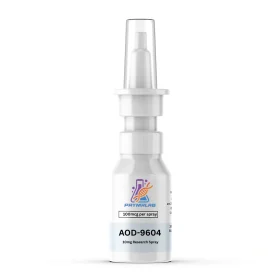
AOD9604 10mg Nasal Spray
$119.99 or subscribe for $101.99/mo This product has multiple variants. The options may be chosen on the product page -

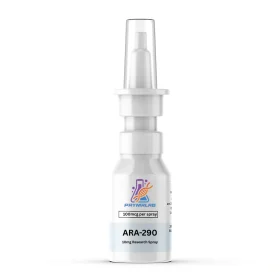
ARA-290 10mg Nasal Spray
$79.99 or subscribe for $67.99/mo This product has multiple variants. The options may be chosen on the product page -
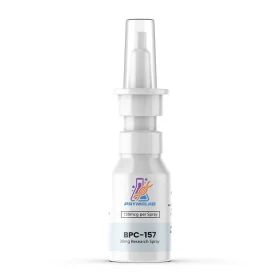
BPC-157 Peptide Nasal Spray
$119.99 or subscribe for $99.99/mo This product has multiple variants. The options may be chosen on the product page -
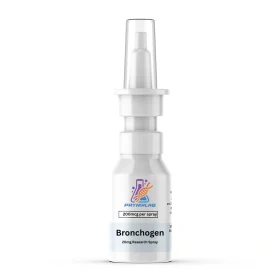
Bronchogen 20mg Nasal Spray
$119.99 or subscribe for $101.99/mo This product has multiple variants. The options may be chosen on the product page -
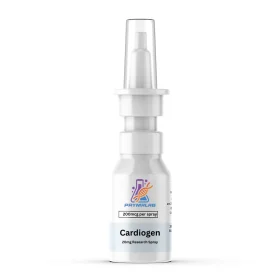
Cardiogen 20mg Nasal Spray
$119.99 or subscribe for $101.99/mo This product has multiple variants. The options may be chosen on the product page -
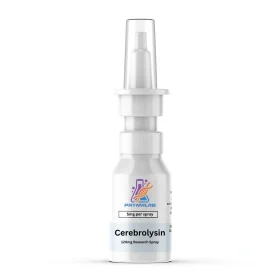
Cerebrolysin 120mg Nasal Spray
$219.99 or subscribe for $186.99/mo This product has multiple variants. The options may be chosen on the product page -
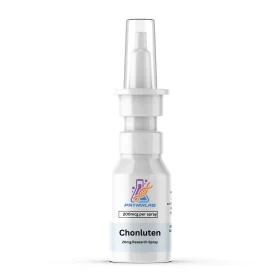
Chonluten 20mg Nasal Spray
$119.99 or subscribe for $101.99/mo This product has multiple variants. The options may be chosen on the product page -
Cortagen 20mg Nasal Spray
$119.99 or subscribe for $101.99/mo This product has multiple variants. The options may be chosen on the product page -
DSIP 10mg Nasal Spray
$59.99 or subscribe for $49.99/mo This product has multiple variants. The options may be chosen on the product page -
Epitalon 10mg Nasal Spray
$89.99 or subscribe for $75.99/mo This product has multiple variants. The options may be chosen on the product page -
GHK-Cu Nasal Spray
$59.99 or subscribe for $49.99/mo This product has multiple variants. The options may be chosen on the product page -
GHRP-2 Nasal Spray
$59.99 or subscribe for $49.99/mo This product has multiple variants. The options may be chosen on the product page -
GHRP-6 10mg Nasal Spray
$54.99 or subscribe for $45.99/mo This product has multiple variants. The options may be chosen on the product page -
Glutathione 250mg Nasal Spray
$89.99 or subscribe for $75.99/mo This product has multiple variants. The options may be chosen on the product page -
Gonadorelin 10mg Nasal Spray
$119.99 or subscribe for $101.99/mo This product has multiple variants. The options may be chosen on the product page -
Hexarelin 5mg Nasal Spray
$59.99 or subscribe for $50.99/mo This product has multiple variants. The options may be chosen on the product page -
IGF-1 DES Nasal Spray
$219.99 or subscribe for $186.99/mo This product has multiple variants. The options may be chosen on the product page -
IGF-1 LR3 Nasal Spray
$89.99 or subscribe for $75.99/mo This product has multiple variants. The options may be chosen on the product page -
Ipamorelin 10mg Nasal Spray
$59.99 or subscribe for $49.99/mo This product has multiple variants. The options may be chosen on the product page -
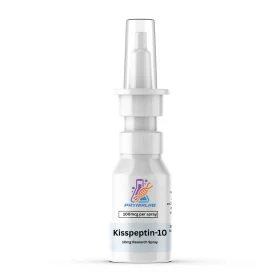
Kisspeptin-10 10mg Nasal Spray
$89.99 or subscribe for $75.99/mo This product has multiple variants. The options may be chosen on the product page -
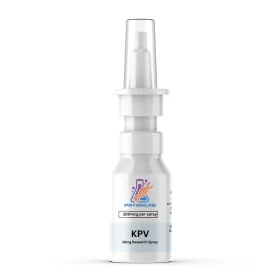
KPV 10mg Nasal Spray
$89.99 or subscribe for $75.99/mo This product has multiple variants. The options may be chosen on the product page -
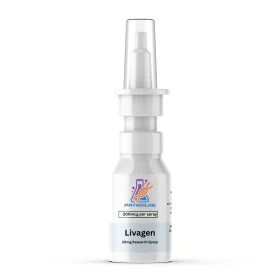
Livagen 20mg Nasal Spray
$119.99 or subscribe for $101.99/mo This product has multiple variants. The options may be chosen on the product page -
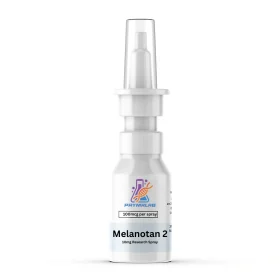
Melanotan II 10mg Nasal Spray
$89.99 or subscribe for $75.99/mo This product has multiple variants. The options may be chosen on the product page -
NAD+ Nasal Spray
$119.99 or subscribe for $99.99/mo This product has multiple variants. The options may be chosen on the product page -
Ovagen 20mg Nasal Spray
$119.99 or subscribe for $101.99/mo This product has multiple variants. The options may be chosen on the product page -
Oxytocin 2mg Nasal Spray
$89.99 or subscribe for $74.99/mo This product has multiple variants. The options may be chosen on the product page -
Pinealon 10mg Nasal Spray
$59.99 or subscribe for $50.99/mo This product has multiple variants. The options may be chosen on the product page -
Prostamax 20mg Nasal Spray
$119.99 or subscribe for $101.99/mo This product has multiple variants. The options may be chosen on the product page -
PT-141 Peptide Nasal Spray
$119.99 or subscribe for $99.99/mo This product has multiple variants. The options may be chosen on the product page -
Selank 10mg Nasal Spray
$119.99 or subscribe for $99.99/mo This product has multiple variants. The options may be chosen on the product page
37 metered solution products · 246 to 9,111 daltons
This range holds thirty-seven peptide nasal sprays spanning a forty-fold mass range, from a dipeptide at roughly 246 daltons to a folded protein at roughly 9,111. Molecular weight is the single strongest predictor of whether the nasal route works, so that spread means the format suits some of these products far better than others. This page says which.
Specification Table
| Property | Value |
|---|---|
| Products in this range | 37 |
| Mass span | Roughly 246.3 to 9,111 g/mol |
| Smallest | Vilon, a dipeptide at roughly 246.3 |
| Largest | IGF-1 LR3, an 83-residue folded protein at roughly 9,111 |
| Practical transport threshold | Roughly 1,000 daltons, where paracellular passage becomes inefficient |
| Products below that threshold | 28 of 37 |
| Products above it | 9, including two protein analogues an order of magnitude above |
| Format | Metered aqueous solution, supplied ready to use |
| Concentration | Set at manufacture. Not adjustable by the buyer |
| Storage | 2-8°C, protected from light. Do not freeze |
| Principal format limitation | Every identity and purity question resolves to a single measurement taken at fill |
| Page type | Category hub, not a product page |
| Schema page type | CollectionPage |
| Cornerstone content | Yes |
| Meta robots | index, follow |
| Regulatory status | No approved human nasal formulation for any compound in this range |
Does Molecular Weight Predict Whether a Peptide Nasal Spray Works?
More reliably than any other single variable, and the relationship is steep enough to sort this range into two groups.
Transport across the nasal epithelium happens mainly between cells rather than through them, and the tight junctions between those cells impose a size limit.
Published work places the practical transition near 1,000 daltons. Below it, paracellular passage carries useful quantities. Above it, the fraction crossing falls away sharply.
Twenty-eight of the thirty-seven products here sit below that line, most of them well below.
Nine sit above it, and two of those are folded proteins at roughly 7,371 and 9,111 daltons. That is seven to nine times the threshold.
For those two, reported nasal bioavailability for proteins of that size is generally well under one percent without an absorption enhancer.
That does not make the format useless for them, but it does mean delivered amount has to be measured rather than assumed from the metered volume.
Stating that on the product pages themselves rather than only here is the approach taken throughout this catalogue, and it is why those pages open with the limitation.
What Else Determines Whether the Route Works?
Size is necessary and not sufficient, and three further properties shape what happens at the mucosal surface.
Charge is the first. Mucosal surfaces carry a net negative charge from sialic acid residues and sulfated glycans in the mucus layer.
A cationic peptide binds that layer electrostatically, which increases residence time and also means bound material is not crossing. Mucociliary clearance then carries the mucus toward the throat over roughly fifteen to twenty minutes.
An anionic peptide is repelled and passes on without binding, gaining no extra residence time and suffering no obstruction.
A near-neutral peptide gets neither, and it is also the charge state most prone to adsorbing onto container walls before it ever reaches the nozzle.
Hydrophobicity is the second. A peptide with aromatic or aliphatic bulk can cross the lipid membrane transcellularly, which is a second route unavailable to fully polar compounds.
Enzymatic activity at the mucosal surface is the third, and it is compound-specific. Glutathione, for instance, meets a dedicated gamma-glutamyl transferase concentrated at exactly the surface a spray deposits it on.
Which of those dominates varies by compound, which is why each product page in this range carries its own analysis rather than a shared paragraph.
The small end of the range is where the route has the least working against it. KPV nasal spray is a tripeptide, DSIP nasal spray a nonapeptide, and Thymogen nasal spray a dipeptide, so all three sit far below the transport ceiling.
Further up, mass starts to compete with other properties. Ipamorelin nasal spray and Epitalon nasal spray remain small enough for paracellular passage, while ARA-290 nasal spray and Oxytocin nasal spray sit near or above 1,000 daltons and depend on compactness and formulation rather than size alone.
The growth hormone secretagogues cluster in the middle of the range: GHRP-6 nasal spray, Hexarelin nasal spray and IGF-1 DES nasal spray. Two products sit outside the peptide logic entirely, since Glutathione nasal spray is a tripeptide antioxidant at 307 daltons and Melanotan II nasal spray is a cyclic analogue closer in behaviour to the melanocortin group.
What Does a Solution-State Format Change?
The chemistry does not change. What changes is who controls the clock and what the buyer can independently check.
A lyophilized powder is dry, and most degradation routes need water, and a sealed vial at refrigerator temperature is close to chemically quiet.
A spray is aqueous from the fill line onward, which means hydrolysis, deamidation, isomerisation, disulfide exchange and oxidation all proceed from the day of manufacture rather than from the day of reconstitution.
The buyer inherits an unknown elapsed time, since the fill date is rarely stated and the purchase date says nothing about it.
More consequentially, every identity and purity question resolves to a single measurement taken before the bottle shipped.
With a powder a researcher can weigh out material, split a sample and run their own analysis on material they control. With a solution they cannot easily do the quantitative half of that.
Identity remains checkable, since electrospray mass spectrometry handles aqueous samples without difficulty. Purity does not, because it needs a known injected amount and concentration is the uncertain quantity.
That distinction between checkable identity and uncheckable purity is the accurate summary of the format, and it is more useful than a general warning.
Which Compounds in This Range Degrade Silently?
Several failure modes produce no visible change and no shift in nominal mass, which makes them worth naming as a group.
Asparagine and aspartate rearrangement is the most common. Asn deamidates to Asp adding one dalton, and Asp adjacent to glycine forms a succinimide that reopens to isoaspartate at identical mass.
Isoaspartate cannot be distinguished from aspartate by mass spectrometry at any resolution, since the two are isomers.
Kisspeptin-10 carries two asparagines plus a C-terminal amide, giving three sites that each add one dalton. Chonluten, Epitalon and Testagen each carry an Asp-Gly motif.
For those compounds, elapsed time in solution is the practical proxy for degradation, and the fill date carries more information than the purity figure.
Thiol oxidation is the second silent route. Glutathione converts to its disulfide with no change in appearance, and the reduced fraction has to be measured by DTNB rather than inferred.
Tryptophan oxidation is the third, though it is at least detectable by a mass shift of 16 daltons per oxygen. GHRP-6 and Triptorelin each carry two tryptophans.
A buyer holding any of those products should ask for a fill date, which is a question that has an answer and is almost never volunteered.
How Does the Spray Compare With a Vial?
The comparison comes down to which uncertainty a given experiment can tolerate.
A vial requires weighing, which at low-milligram masses carries real error. A four-place balance with plus or minus 0.2 milligrams of practical uncertainty puts ten percent error on a two milligram sample.
It also requires the researcher to apply the counterion correction themselves, which is at least a correction they can see and choose.
A spray removes the weighing entirely, since it was done once at scale by the manufacturer, and delivers a metered volume that removes pipetting variability from the delivery step.
What it does not remove is the gap between what leaves the nozzle and what crosses the mucosa, which depends on plume geometry, application angle and drainage to the throat.
For a compound with no established intranasal pharmacokinetics, and that describes nearly everything in this range, that gap is the dominant uncertainty.
So the spray simplifies delivery and the vial simplifies concentration control, and which matters more depends entirely on whether the experiment needs a known amount or a consistent one.
Where a study needs both, the vial plus a calibrated delivery device is the more defensible arrangement even though it is more work.
What Should a Nasal Spray Certificate Show?
Six fields, and most certificates in this market supply two of them.
Measured mass with the instrument resolution stated, since several compounds in this range have degradation products one or two daltons away.
Purity by chromatography with the gradient and the detection wavelength stated. Compounds without an aromatic residue must be detected at 214 nanometres, and a certificate quoting 280 for one of those has a problem.
The explicit sequence, since trade names carry no chemical information and this range contains several near-isobaric pairs.
Counterion identity with net peptide content. At the small end of this range that correction exceeds thirty percent of the associated mass.
The fill concentration and whether it was calculated on gross weighed mass or on net peptide content, which the buyer cannot otherwise determine.
The fill date, which is the field that converts an uninterpretable purity figure into an interpretable one for the silently degrading compounds.
Asking for the last two costs nothing and separates suppliers who have thought about solution-state products from those who have not.
How Should Peptide Nasal Sprays Be Stored?
Storage rules are consistent across the range with three compound-specific exceptions worth knowing.
Refrigerate at 2 to 8 degrees Celsius, protect from light, and never freeze. Freezing concentrates solutes at the ice boundary, which accelerates several degradation routes and drives protein aggregation.
Minimise the number of times a bottle is opened. Each opening admits fresh oxygen, and headspace grows as the contents fall, so exposure per unit volume rises over the working life.
The first exception is light. Compounds carrying tryptophan photodegrade genuinely rather than theoretically, and for those an amber bottle or opaque carton is a requirement rather than a precaution.
The second is metal contact. Trace copper and iron catalyse thiol and aromatic oxidation. So glutathione and the tryptophan-containing compounds keep longer away from it.
The third is container material, which matters for the cationic and near-neutral compounds where adsorption changes the delivered amount rather than merely documenting it.
Record the lot, the stated concentration, the fill date where available, the date first opened, the container material and the actuation count.
Those six fields cover essentially every failure mode this format has, and five of them cost nothing but attention.
Which Peptide Nasal Sprays Are Actually Approved?
The honest starting point for this category is that the nasal route works for peptides, and that the compounds proving it are not the ones sold here.
Nafarelin, a GnRH analogue marketed as Synarel, is an approved nasal spray. So is desmopressin, and oxytocin was long marketed for nasal administration as Syntocinon.
Bremelanotide reached approval by a different route after its intranasal programme was discontinued over blood pressure effects, which is instructive in the other direction.
Those approvals establish that a peptide can be delivered intranasally at a therapeutic dose. They establish nothing about any research compound sold in the same format.
Intranasal insulin is the most studied case in the research literature, and vasopressin and oxytocin between them account for most of the published nose-to-brain work.
Semax and Selank are the two research peptides with the strongest intranasal precedent, both registered in Russia as nasal sprays, and a Semax nasal spray is the standard formulation there rather than an improvised one.
For everything else in this range, including BPC-157, GHK-Cu, NAD and the bioregulators, no published study characterises the compound given intranasally.
A BPC-157 nasal spray is among the most searched of those, and the rodent literature behind BPC-157 used intraperitoneal and intragastric routes rather than the nose.
Where a compound reaches the CNS at all by this route, it does so across the nasal mucosa and then along nerve rather than through blood, and CNS delivery of that kind has been demonstrated for a handful of molecules and assumed for many more.
How Does the Nose-to-Brain Argument Work?
This is the mechanism the whole category is sold on, so it is worth setting out properly rather than gesturing at.
The nasal cavity has two distinct regions and only one of them matters for the brain claim.
The respiratory region covers most of the surface, is richly vascularised, and delivers systemic absorption into the bloodstream much as an injection would.
The olfactory region is a small patch high in the nasal cavity, near the septum and roof, where the olfactory epithelium sits.
Nerve endings there project directly through the cribriform plate into the brain, and the olfactory nerve pathway is what permits transport bypassing the blood-brain barrier.
A parallel trigeminal route contributes as well, reaching the brainstem rather than the forebrain.
The practical problem is geometry. Most of a spray deposits on the respiratory region, and the olfactory region receives a small fraction of any dose from a conventional nasal spray bottle.
Atomizers and delivery devices designed to reach the olfactory region exist and are not what a standard bottle provides.
So nasal administration reliably achieves systemic absorption and unreliably achieves nose-to-brain delivery, and conflating the two is the most common error in this category.
Molecular size governs both. Passage across the mucous membranes falls away sharply as molecules grow, with the practical transition near 1,000 daltons.
Below that a peptide crosses the mucosal membrane readily; above it the delivered fraction shrinks and the variance between applications widens.
Charge and mucoadhesion matter too, since a cationic peptide binds the negatively charged mucosa where an anionic one passes by.
Half-life at the surface is set by mucociliary clearance rather than by plasma chemistry, and material is swept toward the throat within roughly fifteen to twenty minutes regardless of what it is.
What Should Be Understood Before Buying?
Several practical points apply across the whole range and none is specific to one compound.
Dosing by this route cannot be inferred from an injectable figure. A subcutaneous dose and a nasal dose are not interchangeable, and no conversion factor exists without a measured bioavailability figure.
Where dosing guidance circulates for a research peptide nasal spray, it comes from vendor sheets rather than from published pharmacokinetics.
Sterility is a real consideration for an opened aqueous container used repeatedly against a mucosal surface, and preservative choice is the formulation decision that governs it.
Nasal irritation is the effect reported most often across the format, and it usually reflects pH, tonicity or preservative rather than the active compound.
This format does nothing for nasal congestion and none of these products is a decongestant.
Compounding pharmacies prepared peptide nasal sprays for named patients under prescription, which is a different regulatory category from anything sold here.
Claims about brain health, cognitive function, mental performance, systemic inflammation, tissue repair and social behaviour attach to individual compounds in this range and are addressed on their own pages rather than here.
Nootropic framing, delta sleep-inducing peptide listings, vasoactive intestinal peptide preparations, copper peptide sprays sold for fine lines, and semaglutide comparisons all appear in this search space and none belongs to a single coherent category.
N-Acetyl Semax Amidate is the modified form most often sold as a spray, and comparative data against the parent is thin.
Which Peptides Come as a Nasal Spray?
Thirty-seven compounds are stocked as a metered nasal spray as of September 2026. The quantity shown is the total peptide content per bottle; sprays without a figure are listed by compound only, and the exact content is stated on the product page.
Repair and recovery: BPC-157, TB-500, KPV at 10mg, ARA-290 at 10mg, VIP at 10mg, and GHK-Cu.
Growth hormone axis: GHRP-2, GHRP-6 at 10mg, hexarelin at 5mg, ipamorelin at 10mg, IGF-1 LR3, and IGF-1 DES.
Metabolic and antioxidant research: AOD9604 at 10mg, NAD+, and glutathione at 250mg.
Bioregulators: Vilon 10mg, Thymogen 10mg, Testagen 20mg, Prostamax 20mg, Pinealon 10mg, Ovagen 20mg, Livagen 20mg, Epitalon 10mg, Cortagen 20mg, Chonluten 20mg, Cardiogen 20mg, and Bronchogen 20mg.
Cognition, sleep and mood: DSIP at 10mg, oxytocin at 2mg, Selank and Semax at 10mg each, and cerebrolysin at 120mg.
Pigmentation research: Melanotan II at 10mg.
Reproductive and hormone signalling: PT-141, Kisspeptin-10 at 10mg, triptorelin at 2mg, and gonadorelin at 10mg.
Each spray page links to the lyophilized vial of the same compound and, where one exists, the preloaded pen, so the three formats can be compared on the same compound.
Published Literature
Selected references on nasal delivery and on the degradation routes relevant to solution-state peptide products.
- Illum L. Nasal drug delivery: new developments and strategies. Drug Discov Today. 2002;7(23):1184-1189. https://doi.org/10.1016/S1359-6446(02)02529-1
- Ugwoke MI, Agu RU, Verbeke N, Kinget R. Nasal mucoadhesive drug delivery: background, applications, trends and future perspectives. Adv Drug Deliv Rev. 2005;57(11):1640-1665. https://doi.org/10.1016/j.addr.2005.07.009
- Geiger T, Clarke S. Deamidation, isomerization, and racemization at asparaginyl and aspartyl residues in peptides. J Biol Chem. 1987;262(2):785-794. https://doi.org/10.1016/S0021-9258(19)75855-4
- Manning MC, Chou DK, Murphy BM, et al. Stability of protein pharmaceuticals: an update. Pharm Res. 2010;27(4):544-575. https://doi.org/10.1007/s11095-009-0045-6
Frequently Asked Questions
What is in this peptide nasal spray range?
Thirty-seven metered solution products spanning roughly 246 to 9,111 daltons, from a dipeptide to an 83-residue folded protein. All are supplied for laboratory research only.
Does molecular weight predict whether the route works?
More reliably than any other single variable. Published work places the practical transition near 1,000 daltons, and 28 of the 37 products here sit below it.
What about the nine above it?
The fraction crossing falls away sharply. Two are folded proteins at roughly 7,371 and 9,111 daltons, where reported nasal bioavailability for proteins that size is generally well under one percent.
What else determines whether the route works?
Charge, hydrophobicity and compound-specific enzymatic activity at the mucosal surface. Cationic peptides bind the mucus layer, anionic ones pass on, and near-neutral ones get neither effect.
What does a solution-state format change?
Who controls the clock. A spray is aqueous from the fill line onward, so hydrolysis, deamidation, isomerisation and oxidation proceed from manufacture rather than from reconstitution.
Can a buyer verify a spray independently?
Identity yes, purity not easily. Electrospray mass spectrometry handles aqueous samples without difficulty, but a quantitative purity determination needs a known injected amount and concentration is the uncertain quantity.
Which compounds degrade silently?
Those with asparagine or Asp-Gly motifs, where rearrangement produces mass-identical isoaspartate. Kisspeptin-10 has three plus-one-dalton sites; Chonluten, Epitalon and Testagen each carry an Asp-Gly.
Is glutathione in that group?
By a different route. It converts to its disulfide with no visible change, and the reduced fraction has to be measured by DTNB rather than inferred from a chromatographic purity figure.
How does a spray compare with a vial?
The spray removes weighing error, which is real at low-milligram masses, and the vial gives concentration control and lets the researcher apply the counterion correction themselves.
Which should be chosen?
Depends on whether the experiment needs a known amount or a consistent one. Where it needs both, a vial plus a calibrated delivery device is more defensible despite being more work.
What should a certificate show?
Measured mass with resolution stated, purity with gradient and detection wavelength, the explicit sequence, counterion with net peptide content, the fill concentration basis, and the fill date.
Which of those is most often missing?
The fill date and the fill concentration basis. Both cost nothing to state and both separate suppliers who have thought about solution-state products from those who have not.
Which peptide nasal sprays are approved?
Nafarelin, marketed as Synarel, desmopressin, and oxytocin as Syntocinon. Those approvals prove the nasal route can deliver a peptide at a therapeutic dose. They establish nothing about a research compound sold in the same format.
How does nose-to-brain delivery work?
Through the olfactory region, a small patch high in the nasal cavity where nerve endings project through the cribriform plate. That olfactory nerve pathway bypasses the blood-brain barrier and reaches the CNS. A parallel trigeminal route reaches the brainstem.
Does a standard spray actually reach the brain?
Mostly not. Most of a spray deposits on the respiratory region, giving systemic absorption into blood, and the olfactory region receives a small fraction from a conventional bottle. Nasal delivery reliably achieves the first and unreliably achieves the second.
Which compounds here have intranasal evidence?
Semax and Selank have the strongest precedent, both registered in Russia as nasal sprays, so a Semax nasal spray is the standard formulation there. Intranasal insulin, vasopressin and oxytocin account for most published nose-to-brain work. BPC-157, GHK-Cu and NAD have none by this route.
Can injectable dosing be converted to nasal dosing?
No. A subcutaneous injection dose and a nasal dose are not interchangeable, and no conversion exists without a measured bioavailability figure. Circulating guidance for nasal spray peptides comes from vendor sheets rather than pharmacokinetics.
What determines whether the route works at all?
Molecular size first, with the practical transition near 1,000 daltons, then charge and mucoadhesion at the nasal mucosa. Half-life at the surface is set by mucociliary clearance, which sweeps material toward the throat within roughly fifteen to twenty minutes.
Do these sprays help nasal congestion?
No. Nothing in this range is a decongestant. Nasal irritation is the effect reported most often across the format and usually reflects pH, tonicity or preservative rather than the active compound. Sterility matters for any opened aqueous container.
Is compounded intranasal administration the same thing?
No. Compounding pharmacies prepared peptide nasal sprays for named patients under prescription, which is a different regulatory category. Peptide therapy delivered that way and a research compound bought online are not comparable, whatever the shared format.
Why does oxytocin dominate the research literature?
Because intranasal oxytocin was studied extensively for effects on social behavior, which produced the largest body of nose-to-brain data for any peptide. That work belongs to oxytocin, and its intranasal delivery findings do not transfer to unrelated compounds.
Compliance Statement
Peptide nasal sprays are sold exclusively for laboratory research use. They are not a drug, food, or cosmetic product, and they are not a dietary product of any kind. They are not approved by the FDA or any comparable authority for human or veterinary use, no compound in this range holds an approved human nasal formulation in any jurisdiction, intranasal pharmacokinetics are not established for nearly all of them, and delivered amount should be measured rather than inferred from metered volume. These products are not intended to diagnose, treat, cure, or prevent any disease. They must not be given to humans or animals. Purchase is restricted to qualified researchers and institutions operating within applicable laws. All handling is the responsibility of the purchasing laboratory.
The full range of metered sprays includes GHK-Cu, IGF-1 LR3 and IGF-1 DES, the growth hormone secretagogues GHRP-6, hexarelin and ipamorelin, the tripeptide KPV, glutathione at 250mg, and the bioregulators Testagen and Thymogen.