

KLOW peptide blend: what is in it and what the research shows
KLOW is a four-peptide research blend (KLOW Blend (80mg): GHK-Cu 50 mg, BPC-157 10 mg, TB-500 10 mg and KPV 10 mg per vial) with components studied separately for matrix remodeling, tissue repair in rodent injury models and NF-kB signaling. PrymaLab supplies it as the 80 mg vial and a preloaded KLOW Blend pen (80mg/ml) for research use.
- Composition: GHK-Cu 50 mg, BPC-157 10 mg, TB-500 10 mg, KPV 10 mg; 80 mg per vial (KLOW80).
- Class: combined blend of a copper tripeptide, a gastric pentadecapeptide, a thymosin beta-4-derived peptide and an alpha-MSH tripeptide.
- Studied for: component-level work on wound healing, tendon and gut repair, actin-dependent cell migration and NF-kB signaling.
- Typical figures in the literature: none for the blend itself; every figure comes from separate component papers.
- Storage: lyophilized vial refrigerated and protected from light; reconstituted solution refrigerated.
- Forms and sizes at PrymaLab: KLOW Blend (80mg) vial and the KLOW Blend 3ml pen (80mg/ml).
| Feature | GLOW | KLOW |
|---|---|---|
| Components | GHK-Cu, BPC-157, TB-500 | GHK-Cu, BPC-157, TB-500, KPV |
| Fourth component | None | KPV 10 mg (alpha-MSH tripeptide Lys-Pro-Val) |
| Total peptide per vial | 50 mg or 70 mg | 80 mg |
| Published studies of the blend | None; component studies only | None; component studies only |
| Forms at PrymaLab | GLOW BLEND 50MG, GLOW BLEND 70MG, GLOW pen (50mg/ml) | KLOW Blend (80mg), KLOW pen (80mg/ml) |
The peptide reconstitution calculator converts the 80 mg vial and a chosen volume of bacteriostatic water into a working concentration. The three-part version is covered in the GLOW peptide guide.
Also known as: KLOW80, KLOW Blend

KLOW is sold as KLOW80 because the vial holds 80 mg of peptide in total: GHK-Cu 50 mg, BPC-157 10 mg, TB-500 10 mg and KPV 10 mg. It is the GLOW blend (GHK-Cu, BPC-157 and TB-500) with KPV added, so most of what can be said about it comes from the separate literature on each component. This guide works through the four parts, the pathways each one is studied in, and the figures published for each. PrymaLab supplies the KLOW Blend (80mg) vial and the KLOW Blend 3ml pen for research use only.
- What is KLOW peptide?
- What is the difference between KLOW and GLOW peptide?
- KLOW blend composition: the four component peptides
- GHK-Cu: the gene-modulating copper peptide
- BPC-157: the body protection compound
- TB-500: the actin-sequestering peptide
- KPV: the anti-inflammatory tripeptide
- KPV in intestinal cells and mouse colitis models
- How the four peptides are thought to work together
- What the component research shows
- Handling KLOW in the lab
- What are the side effects of KLOW peptide?
- Buying KLOW peptide for research: quality indicators
- Frequently asked questions about KLOW peptide
- Key Takeaways
- References
What is KLOW peptide?
Klow peptide is not a single peptide but a four-peptide combined blend designed to combine regrowth, anti-swelling, and wound-healing compounds into one convenient research form. Each vial contains a total of 80 mg of freeze-dried peptide powder—also referred to by the product designation KLOW80—distributed across four carefully selected components: GHK-Cu at 50 mg, BPC-157 at 10 mg, TB-500 at 10 mg, and KPV at 10 mg.
The name “Klow” itself is derived from the mix of its sister product, the Glow blend, with the addition of the KPV tripeptide—so KPV + Glow = Klow. This naming convention highlights the main differentiator between the two products: the inclusion of KPV, an alpha-melanocyte-stimulating hormone fragment that provides potent anti-swelling activity through a unique NF-κB blocking mechanism that operates independently of melanocortin receptors.
Grasp what Klow peptide actually contains is essential because the product has historically been described in vague terms. Some sources list generic amino acids such as L-Glutamine, L-Arginine, and Glycine as its ingredients, but this is inaccurate. Klow is a precisely formulated blend of four specific bioactive peptides, each with distinct cell-level identities, CAS numbers, published research profiles, and well-characterized mechanisms of action.
The confusion likely arises because peptides are themselves composed of amino acids—but the personal amino acids and the assembled peptide sequences have fundamentally different natural activities, just as personal letters differ from the words they form.
The klow peptide blend targets what researchers describe as the four pillars of tissue regrowth and cellular repair: extracellular matrix synthesis (GHK-Cu), cytoprotective signaling and angiogenesis (BPC-157), cytoskeletal-dependent cell motility (TB-500), and immune control (KPV). Each peptide addresses a different bottleneck in the repair process, and no published study has tested whether the four together do more than any one of them alone.
What is the difference between KLOW and GLOW peptide?
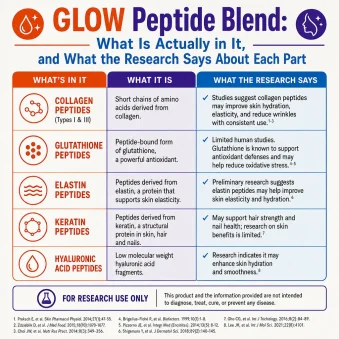
The relationship between Klow peptide and Glow peptide is one of the most often asked questions in the peptide research community, and the answer is straightforward once you understand the forms. Glow peptide (sometimes called the Glow blend or Glow blend peptide) contains three components: GHK-Cu, BPC-157, and TB-500 in the same ratios as Klow. The Klow blend adds a fourth component—KPV—making it a more full form. In the simplest terms, Klow = Glow + KPV.
This distinction matters more than a simple ingredient addition might suggest. KPV is a tripeptide fragment of alpha-melanocyte-stimulating hormone (α-MSH, amino acids 11–13) that provides anti-swelling activity through a mechanism entirely different from the other three components. While GHK-Cu, BPC-157, and TB-500 all have some anti-swelling properties, they achieve these effects mainly through tissue repair and regrowth pathways.
KPV, by contrast, directly blocks NF-κB start—the master transcription factor controlling swelling gene expression—at nanomolar levels, entering cells via the PepT1 transporter without needing melanocortin receptor binding (Dalmasso et al., Gastroenterology, 2008).
The practical implication is that researchers studying swelling-heavy conditions—very gut swelling, gut issues, skin swelling conditions, or autoimmune-related tissue damage—may find the Klow form more relevant than Glow, because KPV adds a dedicated immune-tuning pathway that the other three peptides do not fully cover. Conversely, researchers focused purely on wound healing, skin rejuvenation, or musculoskeletal repair without a major swelling component may find the Glow blend enough for their purposes.
| Feature | Klow Peptide (KLOW80) | Glow Peptide |
|---|---|---|
| GHK-Cu | 50 mg ✓ | 50 mg ✓ |
| BPC-157 | 10 mg ✓ | 10 mg ✓ |
| TB-500 | 10 mg ✓ | 10 mg ✓ |
| KPV | 10 mg ✓ | Not included |
| Total Content | 80 mg | 70 mg |
| NF-κB Inhibition | Direct (via KPV) | Indirect only |
| Gut-Specific Research | BPC-157 + KPV | BPC-157 only |
| Primary Use Cases | Regeneration + anti-inflammation | Regeneration + repair |
KLOW blend composition: the four component peptides
Grasp the Klow blend needs examining each component peptide individually, because the blend’s effect depends entirely on the specific natural activities of its four constituents. Unlike single-compound products where one mechanism drives all effects, the klow peptide blend operates through four distinct but paired cell-level pathways that converge on the common goal of tissue regrowth and swelling resolution. Below is a detailed overview of each component’s cell-level profile, followed by in-depth sections on their personal mechanisms and research evidence.
| Component | Amount | Type | CAS Number | MW (g/mol) | Primary Pathway |
|---|---|---|---|---|---|
| GHK-Cu | 50 mg | Tripeptide-copper complex | 89030-95-5 | 401.91 | Gene expression & ECM remodeling |
| BPC-157 | 10 mg | 15-amino acid peptide | 137525-51-0 | 1,419.50 | VEGFR2-Akt-eNOS angiogenesis |
| TB-500 | 10 mg | 43-amino acid peptide | 77591-33-4 | 4,963.55 | G-actin sequestration & cell migration |
| KPV | 10 mg | Tripeptide (α-MSH fragment) | 67727-97-3 | 384.48 | NF-κB inhibition & immune modulation |
The ratio of components is notable: GHK-Cu constitutes 62.5% of the total blend by weight, and BPC-157, TB-500 and KPV each comprise 12.5% at 10 mg.
GHK-Cu: the gene-modulating copper peptide
GHK-Cu (glycyl-L-histidyl-L-lysine copper complex) is the largest component in the Klow blend at 50 mg, and it is arguably the most extensively researched peptide in the form. Originally discovered in human plasma in 1973, GHK-Cu is a naturally occurring tripeptide that binds copper(II) ions with high affinity. Its level in human blood plasma declines greatly with age, dropping from about 200 ng/mL at age 20 to about 80 ng/mL by age 60—a reduction of roughly 60% that correlates temporally with visible signs of aging such as fine lines, slower wound healing, and diminished tissue repair capacity.
How Does GHK-Cu Modulate Gene Expression?
The most notable finding about GHK-Cu emerged from the Broad Institute’s Connectivity Map gene expression database. Test revealed that GHK-Cu tunes the expression of 4,192 human genes—representing about 31.2% of the entire human genome—with expression changes of 50% or greater (Pickart & Margolina, Int J Mol Sci, 2018).
This is an extraordinarily broad range of influence for a simple tripeptide, and it explains why GHK-Cu has been linked with such diverse natural effects ranging from wound healing to neurogenesis to cancer suppression.
Mainly, GHK-Cu upregulates 59 genes involved in collagen and elastin synthesis and collagen production, including genes encoding type I, type III, type V, and type VII collagens, as well as genes for elastin, proteoglycans, and glycosaminoglycans. It boosts decorin production by 302% above baseline levels in dermal fibroblasts—decorin being a proteoglycan essential for organized collagen fibril assembly.
This is not a marginal boost; a three-fold increase in decorin fundamentally shifts the quality of extracellular matrix being produced, favoring organized, functional tissue over the disorganized scar tissue that often results from injury or aging.
GHK-Cu and Angiogenesis
Beyond matrix remodeling, GHK-Cu exerts major effects on blood vessel formation. Research by Dou et al. (2020) showed that GHK-Cu increased the expression of vascular endothelial growth factor (VEGF) and basic fibroblast growth factor (bFGF) by 230% in irradiated dermal fibroblasts. This angiogenic activity is essential for tissue repair because new blood vessels are needed to deliver oxygen and nutrients to healing tissue.
The dual promotion of both matrix production and vascularization positions GHK-Cu as a full wound-healing agent that addresses multiple bottlenecks in the cellular repair process simultaneously.
Anti-Inflammatory and Antioxidant Properties
GHK-Cu also shows potent anti-swelling activity by blocking both the NF-κB p65 and p38 MAPK signaling pathways, leading to reduced expression of pro-swelling cytokines TNF-α and IL-6. Its antioxidant capacity is notable as well: GHK-Cu increases glutathione and superoxide dismutase (SOD) activity and directly quenches both hydroxyl and peroxyl radicals. Also, it promotes the production of neurotrophic factors including nerve growth factor (NGF), neurotrophin-3 (NT-3), and neurotrophin-4 (NT-4), suggesting brain-safe uses that extend beyond skin and musculoskeletal tissues.
BPC-157: the body protection compound
BPC-157 (Body Protection Compound-157) is a synthetic 15-amino acid peptide derived from a naturally occurring protein found in human gastric juice. At 10 mg in the Klow blend, it serves as the main cytoprotective and tissue-repair component. With over 100 published lab studies spanning gut healing, tendon repair, bone regrowth, and neurotransmitter tuning, BPC-157 is one of the most extensively studied peptides in the regrowth medicine research space.
VEGFR2-Akt-eNOS Angiogenic Signaling
The main mechanism of BPC-157’s tissue repair activity involves upregulation of VEGFR2 expression, which starts the VEGFR2–Akt–eNOS signaling cascade (Hsieh et al., J Mol Med, 2017). This pathway promotes the formation of new blood vessels (angiogenesis) and increases nitric oxide production, which enhances blood flow to damaged tissues.
In experimental models, BPC-157 greatly accelerated the healing of blood vessel injuries, restored blood flow through damaged vasculature, and promoted the formation of collateral circulation when main vessels were occluded.
Tissue Repair and the FAK-Paxillin Pathway
In addition to angiogenesis, BPC-157 promotes tissue repair through start of the focal adhesion kinase (FAK)–paxillin pathway (Chang et al., J Appl Physiol, 2011). FAK and paxillin are structural proteins at focal adhesion sites where cells attach to the extracellular matrix, and their start promotes cell spreading, migration, and differentiation—all essential steps in wound closure and tissue remodeling.
Studies on tendon healing mainly showed that BPC-157 enhanced the organization of collagen fibers, increased reticulin fiber formation, and accelerated the mechanical healing of injured tendons. A full review by Seiwerth et al. (Front Pharmacol, 2021) documented BPC-157’s wound healing effects across multiple tissue types, confirming enhanced collagen deposition, blood vessel formation, and granulation tissue growth.
Gastroprotective and Neurotransmitter Effects
BPC-157’s origin in human gastric juice is reflected in its extensive gastro-protective research profile. It has showed protective effects against gastric ulcers, esophageal lesions, and gut damage caused by NSAIDs, alcohol, and stress in many lab models. Also, BPC-157 interacts with multiple neurotransmitter systems—including dopaminergic, serotonergic, GABAergic, and nitric oxide pathways (Vukojevic et al., 2022)—suggesting broad neuromodulatory possible.
The peptide also functions as a free radical scavenger, normalizing nitric oxide (NO) and malondialdehyde (MDA) levels in damaged tissues, which adds an antioxidant dimension to its cytoprotective profile.
TB-500: the actin-sequestering peptide
TB-500 is a synthetic peptide based on Thymosin Beta-4 (Tβ4), a naturally occurring 43-amino acid polypeptide found in virtually all mammalian cells. At 10 mg in the Klow blend, TB-500 provides the cell migration and wound healing component that complements GHK-Cu’s matrix remodeling and BPC-157’s angiogenic activity.
The key active sequence within TB-500 is the LKKTET motif (Leu-Lys-Lys-Thr-Glu-Thr), a six-amino acid segment responsible for the peptide’s actin-binding and cell-motility effects.
G-Actin Sequestration and Cell Migration
TB-500’s main mechanism involves sequestering G-actin monomers in a 1:1 stoichiometric ratio, which regulates the polymerization of actin filaments (F-actin) within cells (Xue et al., PNAS, 2014). Actin dynamics are basic to cell movement: cells must continuously assemble and disassemble actin filaments at their leading edges to crawl toward injury sites.
By binding free G-actin, TB-500 creates a reservoir of monomers available for rapid filament assembly when migration signals are got, effectively priming cells for accelerated movement toward damaged tissue.
The practical result of this mechanism is dramatic. In vitro studies by Malinda et al. (1997) showed that TB-500 increased human umbilical vein endothelial cell (HUVEC) migration by 4–6-fold compared to untreated controls. In full-thickness wound models, TB-500 increased reepithelialization by 42–61% (Malinda et al., J Invest Dermatol, 1999), meaning that the wound surface was covered by new epithelial cells at nearly double the normal rate. This acceleration of wound closure is a direct result of enhanced cell migration driven by TB-500’s actin-sequestering activity.
Anti-Fibrotic and Anti-Inflammatory Properties
Beyond cell migration, TB-500 shows important anti-fibrotic properties. In cardiac injury models, TB-500 promoted organized collagen deposition with reduced myofibroblast formation, meaning that healed tissue kept a more normal architecture rather than forming dense scar tissue. Evans et al. (Nat Commun, 2013) showed that Thymosin β4-sulfoxide (a metabolite of Tβ4) showed biphasic swelling control: it reduced pro-swelling TNF-α by 6.2-fold and IL-6 by 4.1-fold while simultaneously increasing anti-swelling IL-10 by 8.1-fold. This biphasic tuning—suppressing harmful swelling while amplifying resolution signals—represents a advanced anti-swelling mechanism that differs from simple suppression.
TB-500 also shows brain-safe activity, mainly through blocking of caspase-3, the executioner enzyme in the apoptotic cell death pathway. In models of traumatic brain injury and stroke, Thymosin β4 reduced neuronal apoptosis and improved functional recovery in those models.
KPV: the anti-inflammatory tripeptide
KPV (Lys-Pro-Val) is the component that distinguishes Klow from the Glow blend, and it represents one of the most elegant examples of peptide pharmacology in the research literature. This tripeptide corresponds to amino acids 11–13 of alpha-melanocyte-stimulating hormone (α-MSH) and retains the full anti-swelling activity of the parent hormone while lacking its melanogenic (skin-darkening) effects. At 10 mg in the Klow blend, KPV provides dedicated immune tuning through a mechanism that operates independently of melanocortin receptors.
How Does KPV Inhibit NF-κB?
The central mechanism of KPV’s anti-swelling action is direct blocking of NF-κB start at nanomolar levels (Dalmasso et al., Gastroenterology, 2008). NF-κB is the master transcription factor that controls the expression of hundreds of pro-swelling genes, including those encoding TNF-α, IL-1β, IL-6, COX-2, and iNOS. When NF-κB is blocked, the entire downstream cascade of swelling mediator production is attenuated.
What makes KPV unique is that it achieves this blocking after entering cells directly via the PepT1 transporter—a peptide transporter expressed on gut epithelial cells, immune cells, and other tissues—rather than through cell-surface melanocortin receptor signaling.
This intracellular mechanism of action has major implications for targeted inflammation control. Because KPV does not need melanocortin receptor binding, it avoids the melanogenic side effects (skin tanning, darkening) linked with α-MSH and its analogs such as melanotan. It also means that KPV can act in tissues and cell types that do not express melanocortin receptors.
KPV and Gastrointestinal Inflammation
Some of the most compelling KPV research focuses on gut swelling. Xiao et al. (Mol Ther, 2017) showed that orally delivered KPV encapsulated in nanoparticles greatly alleviated ulcerative colitis in mouse models, reducing swelling markers, restoring gut lining integrity, and improving histological scores.
Skin and Wound Applications
KPV also promotes keratinocyte and fibroblast migration—key cell types in skin repair—and blocks reactive oxygen species (ROS) production in keratinocytes (Sung et al., 2025).
KPV in intestinal cells and mouse colitis models
Two 2008 papers form the core of the KPV inflammation literature. Dalmasso and colleagues set out to explain how KPV acts, since its mechanism was unknown (Dalmasso et al. 2008). In human intestinal epithelial cell lines and Jurkat T cells stimulated with pro-inflammatory cytokines, nanomolar KPV inhibited NF-κB and MAP kinase signalling and reduced cytokine secretion (Dalmasso et al. 2008). The study used uptake experiments to test the role of PepT1, a di- and tripeptide transporter normally expressed in the small intestine and induced in the colon in inflammatory bowel disease (Dalmasso et al. 2008).
Kannengiesser and colleagues tested KPV, which corresponds to residues 11 to 13 of alpha-MSH, in two mouse colitis models (Kannengiesser et al. 2008). In dextran sodium sulfate colitis, KPV-treated mice recovered earlier and regained more body weight, with fewer inflammatory infiltrates on histology and lower colonic myeloperoxidase activity (Kannengiesser et al. 2008). Mice with CD45RB-high T-cell transfer colitis also recovered under KPV (Kannengiesser et al. 2008). The same paper describes a dextran sodium sulfate experiment in mice with a non-functional melanocortin-1 receptor, designed to test whether that receptor is needed for the effect (Kannengiesser et al. 2008). Both studies are in cell lines and mice, and neither combined KPV with GHK-Cu, BPC-157 or thymosin beta-4.
How the four peptides are thought to work together
The rationale for combining GHK-Cu, BPC-157, TB-500, and KPV into a single blend is rooted in the biology of tissue regeneration and repair, which is not a single-pathway process but rather a coordinated cascade involving swelling resolution, cell recruitment, matrix synthesis, and vascular remodeling. Each phase creates the conditions necessary for the next, and bottlenecks at any stage can impair the entire process. Each component was studied at a different phase; no study has tested whether the blend acts on all four together.
Phase 1: Inflammatory Resolution (KPV + GHK-Cu)
Tissue damage triggers an acute swelling response mediated by NF-κB start, pro-inflammatory cytokines (TNF-α, IL-6, IL-1β), and reactive oxygen species. While swelling is necessary to clear debris and pathogens, prolonged or too much swelling damages surrounding healthy tissue and delays healing. KPV provides rapid NF-κB blocking at nanomolar levels, while GHK-Cu suppresses the same pathway through p65 and p38 MAPK blocking and provides antioxidant protection via SOD upregulation. Whether the two together shift the inflammatory balance without suppressing the immune response has not been tested.
Phase 2: Cell Recruitment and Migration (TB-500 + BPC-157)
Once swelling begins to resolve, fibroblasts, endothelial cells, and epithelial cells must migrate to the injury site to begin repair. TB-500’s G-actin sequestration primes cells for rapid migration (4–6-fold increase in endothelial cell motility), while BPC-157’s FAK-paxillin pathway start enhances cell adhesion and spreading at the wound site. BPC-157 simultaneously promotes angiogenesis through VEGFR2-Akt-eNOS signaling, ensuring that migrating cells get enough oxygen and nutrient supply through newly formed blood vessels.
Phase 3: Matrix Synthesis and Tissue Remodeling (GHK-Cu + TB-500)
After cells arrive at the injury site, they must produce new extracellular matrix to restore tissue structure. GHK-Cu drives this process by upregulating collagen types I, III, V, and VII, elastin, and decorin (302% increase), creating organized matrix rather than disorganized scar tissue. TB-500 adds anti-fibrotic activity by reducing myofibroblast formation, ensuring that the newly deposited matrix keeps functional architecture.
Phase 4: Sustained Protection and Long-Term Remodeling (All Four)
The final phase of repair involves long-term matrix remodeling, vascular maturation, and immune surveillance. Each component has been studied for part of this in cell or animal models: GHK-Cu for gene expression, BPC-157 for neurotransmitter systems, KPV for chronic inflammation and low-grade swelling, and TB-500 for caspase-3 in neural injury. None has been studied over this phase as part of the blend.
What the component research shows
No peer-reviewed study has tested the combined KLOW80 formulation, so everything below comes from separate research on each component, grouped by the tissue or pathway studied.
Skin and collagen research
Skin is the best-documented research area for the components, mainly through GHK-Cu’s dermatological literature. GHK-Cu stimulated collagen synthesis at picomolar to nanomolar levels (Maquart et al., FEBS Lett, 1988), increases decorin production by 302% for improved collagen fibril organization, and upregulates both VEGF and bFGF by 230% to enhance dermal vascularization and nutrient supply.
Wound repair models
Each component was studied at a different step of wound repair: TB-500 for cell migration (4–6-fold increase in HUVEC migration), BPC-157 for angiogenesis and tissue-specific pathways (VEGFR2-Akt-eNOS and FAK-paxillin), GHK-Cu for extracellular matrix synthesis and growth factor production, and KPV for inflammatory signaling.
Lab evidence for personal components includes TB-500’s 42–61% reepithelialization acceleration, BPC-157’s documented healing of tendons, ligaments, muscles, and gut tissues, and GHK-Cu’s collagen and elastin boost across multiple tissue types.
Inflammation signaling
Each component was studied for anti-inflammatory activity through a different mechanism. KPV blocks NF-κB at nanomolar levels via intracellular PepT1-mediated uptake, directly suppressing the master swelling transcription factor. GHK-Cu blocks both NF-κB p65 and p38 MAPK pathways while providing antioxidant protection through SOD start. TB-500 produces biphasic swelling tuning, reducing TNF-α by 6.2-fold and IL-6 by 4.1-fold while increasing anti-swelling IL-10 by 8.1-fold (Evans et al., Nat Commun, 2013).
BPC-157 acts as a free radical scavenger that normalizes NO and MDA levels in damaged tissues.
Tendon, ligament and bone models
BPC-157’s tissue-repair activity is very well-documented for musculoskeletal tissues, with lab studies showing accelerated recovery from injuries, muscle recovery, and healing of tendons, ligaments, and even bone in many animal models. TB-500 reduced myofibroblast formation in cardiac injury models, and GHK-Cu raised expression of collagen types found in connective tissue; neither was tested in joints as part of the blend.
Gut injury and colitis models
Gut research relevant to Klow comes from two components. BPC-157, originally isolated from human gastric juice, has showed protective and healing effects against gastric ulcers, esophageal damage, swelling bowel lesions, leaky gut, and various gut issues like NSAID-induced injury across dozens of lab studies. KPV alleviated ulcerative colitis in mouse models when delivered orally via nanoparticles, reducing mucosal swelling and restoring gut barrier function (Xiao et al., Mol Ther, 2017).
Of the two blends, only Klow contains KPV; no study has tested BPC-157 and KPV together.
Neural research
While less often discussed, three of Klow’s four components have documented brain-safe research. GHK-Cu increases production of nerve growth factor (NGF), neurotrophin-3 (NT-3), and neurotrophin-4 (NT-4), which are essential for neuronal survival and synaptic plasticity. BPC-157 tunes multiple neurotransmitter systems including dopaminergic, serotonergic, and GABAergic pathways. TB-500 provides brain safety through caspase-3 blocking, reducing apoptotic neuronal death.
None of this work used the blend.
| Research area | Main component | Supporting Components | Key Evidence |
|---|---|---|---|
| Skin and collagen | GHK-Cu | TB-500, KPV, BPC-157 | 302% decorin increase, 230% VEGF/bFGF increase, 42–61% reepithelialization |
| Wound repair | BPC-157 + TB-500 | GHK-Cu, KPV | VEGFR2-Akt-eNOS activation, 4–6x cell migration, FAK-paxillin signaling |
| Anti-Inflammation | KPV | GHK-Cu, TB-500, BPC-157 | NF-κB inhibition at nanomolar levels, IL-10 ↑8.1-fold, TNF-α ↓6.2-fold |
| Tendon and ligament models | BPC-157 | TB-500, GHK-Cu, KPV | Tendon/ligament healing in animals, anti-fibrotic collagen |
| Gut models | BPC-157 + KPV | GHK-Cu | Gastroprotection, colitis alleviation, PepT1-mediated intestinal uptake |
| Neural models | GHK-Cu | BPC-157, TB-500 | NGF/NT-3/NT-4 production, caspase-3 inhibition, neurotransmitter modulation |
Handling KLOW in the lab
No study has tested the KLOW blend in any species, and this guide gives no dosing or administration information. PrymaLab supplies KLOW for laboratory research only.
Dissolving the lyophilized powder
Klow peptide is supplied as a freeze-dried powder containing 80 mg of total peptide content. In the lab it is dissolved in a diluent suited to the experiment, added slowly down the inside wall of the vial so the cake is not disturbed, then swirled gently (not shaken) until the powder is fully dissolved. The resulting solution should be clear and free of visible particles. Concentration is the peptide mass divided by the volume added: 2 mL gives 40 mg/mL, 4 mL gives 20 mg/mL and 8 mL gives 10 mg/mL.
Storage and Handling
Proper storage is key for keeping peptide shelf life and potency. Unreconstituted freeze-dried Klow should be stored at -20°C (freezer) for long-term storage. Once mixed, the solution should be refrigerated at 2–8°C. Mixed vials should never be frozen, as freeze-thaw cycles can denature the peptide components and compromise structural integrity. Protect the vial from direct light and too much heat, and always use sterile technique during mixing and withdrawal to prevent bacterial contamination.
What are the side effects of KLOW peptide?
The side effect profile of the combined Klow blend has not been assessed in human clinical trials, and all available safety data is derived from personal component research (mainly lab animal studies) combined with anecdotal user reports. This is an important limitation: the interaction effects of combining four peptides into a single form may produce side effects not predicted by studying each component in isolation. The data below should be interpreted with this caveat firmly in mind.
What has been reported
No adverse-event data exist for the blend. The reports that circulate come from community sources rather than studies, and they are not a safety record.
Component-Specific Safety Considerations
GHK-Cu: The copper in GHK-Cu raises theoretical concerns about copper buildup. No major adverse effects have been reported in the published lab literature.
BPC-157: While often well-tolerated in extensive lab research, BPC-157’s potent angiogenic activity has raised theoretical concerns about promoting blood vessel growth in existing tumors. No published evidence directly supports this concern, but as a precautionary principle, researchers often exclude subjects with active malignancies from BPC-157 studies. BPC-157’s complex neurotransmitter tuning also creates the theoretical possibility of interactions with psychiatric drugs that affect dopaminergic or serotonergic systems.
TB-500: Thymosin Beta-4 research has not revealed major adverse effects in published studies. Theoretical concerns parallel those of BPC-157 about angiogenesis promotion in tumor-bearing subjects. TB-500’s effects on immune cell function (it is derived from a thymic protein) create theoretical factors for people with autoimmune conditions, though no published evidence mainly documents adverse immune effects.
KPV: KPV has showed a favorable safety profile in the available lab literature. Its lack of melanocortin receptor binding removes the melanogenic side effects (skin darkening) linked with other α-MSH fragments. Because KPV suppresses NF-κB-mediated immune signaling, theoretical concerns include possible immune suppression at very high doses, though this has not been showed in published studies.
Buying KLOW peptide for research: quality indicators
The quality of multi-peptide blends varies greatly across suppliers, and buying a product like Klow needs specific diligence because the complexity of verifying a four-component blend is inherently greater than verifying a single-peptide product. Researchers should assess possible suppliers based on several key quality indicators that help distinguish legitimate, high-purity research products from lower-quality alternatives.
PrymaLab stocks the blend in two formats. The KLOW Blend 80mg vial is the lyophilised version this section describes, and it needs the reconstitution step above. The KLOW peptide pen arrives as a preloaded 3ml autoinjector at 80mg/ml, which removes the mixing arithmetic and fixes the concentration at manufacture.
Testing and certificates of analysis
A certificate of analysis (CoA) that matches the lot number on your vial and can be verified is the single most important quality indicator for any research peptide. PrymaLab tests every lot in its own laboratory (RP-HPLC purity, LC-MS identity), certificates can be checked at https://prymalab.net/testing/verify/, and the third-party testing guarantee refunds the order and reimburses the test if any independent laboratory finds the wrong compound or less than the stated purity or amount. For a multi-peptide blend like Klow, the CoA should ideally verify the identity and quantity of each personal component (GHK-Cu, BPC-157, TB-500, KPV) rather than just the total peptide content.
High-performance liquid chromatography (HPLC) testing should confirm a purity of 98% or higher for each component. Mass spectrometry (MS) should verify the correct cell-level weight for each peptide in the blend. Endotoxin testing (often via the Limulus Amebocyte Lysate or LAL assay) should confirm that bacterial endotoxin levels fall below acceptable limits for research-grade materials.
Supplier Transparency and Reputation
Reputable suppliers clearly identify all components and their quantities on product labeling, provide batch-specific CoAs upon request, and keep consistent manufacturing practices across production runs. Look for suppliers that clearly state “for research purposes only” and “not for human consumption” on their labeling, as these disclaimers show compliance with the control framework governing research chemicals.
Avoid suppliers that make specific treatment claims, suggest unapproved medical uses, or fail to disclose the exact makeup of their blends. Review-based reputation, longevity in the market, and active engagement with the research community are more positive indicators.
Storage and Shipping Conditions
Peptide shelf life is sensitive to heat, so proper cold-chain shipping is essential. Reputable suppliers ship freeze-dried peptides with ice packs or dry ice during warm weather months and use insulated packaging year-round. The product should arrive as a dry, intact freeze-dried cake or powder, not as a liquid or a collapsed, discolored mass. Any deviation from expected appearance upon arrival should prompt contacting the supplier for a replacement.
Frequently asked questions about KLOW peptide
What is in KLOW peptide?
KLOW is a four-part blend: GHK-Cu 50 mg, BPC-157 10 mg, TB-500 10 mg and KPV 10 mg, which is 80 mg of peptide per vial and the reason it is also labelled KLOW80. Each component has its own literature; there is no published study of the four together. PrymaLab supplies it as the KLOW Blend (80mg) vial and a preloaded pen for research use.
What is the difference between GLOW and KLOW?
GLOW contains three peptides (GHK-Cu, BPC-157 and TB-500) and comes in 50 mg and 70 mg vials. KLOW adds a fourth, the alpha-MSH tripeptide KPV, for 80 mg per vial. KPV is the component studied for NF-kB inflammation signaling; the other three are shared. Neither blend has been tested as a blend in a published study, so the comparison rests on component data.
Has KLOW been studied as a blend?
No. There is no study of the blend in any species. The component literature is separate: GHK-Cu, BPC-157, TB-500 and KPV each have their own animal and cell studies, covered in the sections above.
How is KLOW reconstituted?
The 80 mg vial is a lyophilized powder. In the lab it is dissolved in a suitable diluent, and concentration is the peptide mass divided by the volume added. The preloaded KLOW Blend pen is already in solution at 80mg/ml, so no mixing step applies. Reconstituted solution is kept refrigerated and protected from light.
Is KLOW peptide the same as the Wolverine blend?
No. The Wolverine blend is BPC-157 plus TB-500 only, supplied by PrymaLab as the BPC-157 + TB500 (10mg/10mg) Wolverine Blend. KLOW keeps those two at 10 mg each and adds GHK-Cu 50 mg and KPV 10 mg. The KPV peptide guide covers the tripeptide on its own, and the copper peptide is covered in the GHK-Cu guide.
Key takeaways: KLOW peptide
- Klow is a 4-peptide blend, not a single peptide. It contains GHK-Cu (50 mg), BPC-157 (10 mg), TB-500 (10 mg), and KPV (10 mg) totaling 80 mg per vial.
- Klow = Glow + KPV. The Glow blend contains the same first three components. The addition of KPV provides dedicated NF-κB-mediated anti-inflammatory activity.
- GHK-Cu modulates 4,192 human genes (31.2% of the genome), stimulates collagen and decorin, and declines approximately 60% in human plasma between ages 20 and 60.
- BPC-157 activates VEGFR2-Akt-eNOS angiogenesis and FAK-paxillin tissue repair pathways, with extensive preclinical evidence for tendon, ligament, muscle, and gastrointestinal healing.
- TB-500 increases cell migration 4–6-fold through G-actin sequestration and provides anti-fibrotic, anti-inflammatory (IL-10 ↑8.1-fold), and neuroprotective activity.
- KPV inhibits NF-κB at nanomolar concentrations via intracellular PepT1-mediated uptake, providing anti-inflammation without melanocortin receptor binding or skin-darkening effects.
- The components were studied at different phases of tissue repair: inflammatory resolution, cell recruitment, matrix synthesis, and long-term remodeling. The blend itself has not been studied.
- No human clinical trials exist for Klow or any of its individual components as injectable therapeutics. All evidence is preclinical.
- Not FDA-approved. BPC-157 was placed on the FDA’s compounding restriction list in 2023. Klow is sold for research purposes only.
Related reading
References
- Pickart L, Margolina A. “Regenerative and Protective Actions of the GHK-Cu Peptide in the Light of the New Gene Data.” Int J Mol Sci. 2018;19(7):1987. doi:10.3390/ijms19071987. PMC6073405.
- Dou Y, et al. “The potential of GHK as an anti-aging peptide.” Aging Pathobiol Ther. 2020. doi:10.31491/apt.2020.03.014.
- Maquart FX, et al. “Stimulation of collagen synthesis in fibroblast cultures by the tripeptide-copper complex glycyl-L-histidyl-L-lysine-Cu(2+).” FEBS Lett. 1988;238(2):343–346. doi:10.1016/0014-5793(88)80509-x.
- Hsieh MJ, et al. “Therapeutic potential of pro-angiogenic BPC157 is associated with VEGFR2 activation and up-regulation.” J Mol Med. 2017;95:323–333. doi:10.1007/s00109-016-1488-y.
- Chang CH, et al. “The promoting effect of pentadecapeptide BPC 157 on tendon healing involves tendon outgrowth, cell survival, and cell migration.” J Appl Physiol. 2011;110(3):774–780. doi:10.1152/japplphysiol.00945.2010.
- Seiwerth S, et al. “Stable Gastric Pentadecapeptide BPC 157 and Wound Healing.” Front Pharmacol. 2021;12:627533. doi:10.3389/fphar.2021.627533.
- Xue B, et al. “Structural basis of thymosin-β4/profilin exchange leading to actin filament polymerization.” PNAS. 2014;111(43):E4596–E4605. doi:10.1073/pnas.1412271111.
- Malinda KM, et al. “Thymosin β4 accelerates wound healing.” J Invest Dermatol. 1999;113(3):364–368. doi:10.1046/j.1523-1747.1999.00708.x.
- Evans MA, et al. “Thymosin β4-sulfoxide attenuates inflammatory cell infiltration and promotes cardiac wound healing.” Nat Commun. 2013;4:2081. doi:10.1038/ncomms3081.
- Dalmasso G, et al. “PepT1-Mediated Tripeptide KPV Uptake Reduces Intestinal Inflammation.” Gastroenterology. 2008;134(1):166–178. doi:10.1053/j.gastro.2007.10.026.
- Xiao B, et al. “Orally Targeted Delivery of Tripeptide KPV via Hyaluronic Acid-Functionalized Nanoparticles Efficiently Alleviates Ulcerative Colitis.” Mol Ther. 2017;25(7):1628–1640. doi:10.1016/j.ymthe.2016.11.020.
- Pickart L, et al. “GHK Peptide as a Natural Modulator of Multiple Cellular Pathways in Skin Regeneration.” Biomed Res Int. 2015;2015:648108. doi:10.1155/2015/648108.
- Vukojevic J, et al. “Pentadecapeptide BPC 157 and the central nervous system.” Neural Regen Res. 2022;17(3):482–487. doi:10.4103/1673-5374.320969.
- Sung YK, et al. “The anti-inflammatory and skin barrier repair effects of KPV on keratinocytes.” J Cosmet Dermatol. 2025. [Epub ahead of print].
Formats stocked for the compounds in this article
GKP BLEND: GKP BLEND 70MG and GKP BLEND 70mg/ml preloaded 3ml pen. Every listing is supplied for laboratory research use with a batch certificate of analysis.