
-
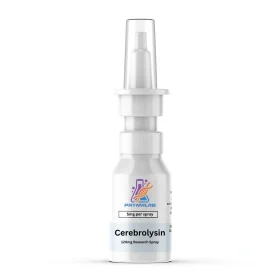
Cerebrolysin 120mg Nasal Spray
$219.99 or subscribe for $186.99/mo This product has multiple variants. The options may be chosen on the product page -

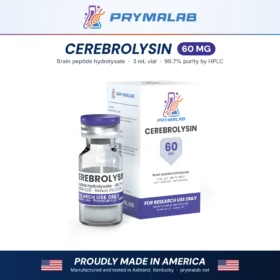
Cerebrolysin 60mg
$49.99 or subscribe for $41.99/mo This product has multiple variants. The options may be chosen on the product page -
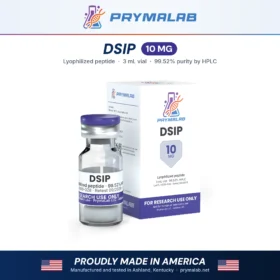
DSIP 10MG
$29.99 or subscribe for $24.99/mo This product has multiple variants. The options may be chosen on the product page -
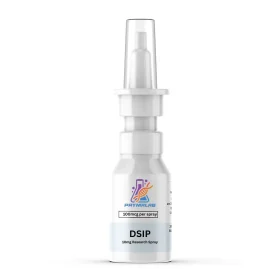
DSIP 10mg Nasal Spray
$59.99 or subscribe for $49.99/mo This product has multiple variants. The options may be chosen on the product page -
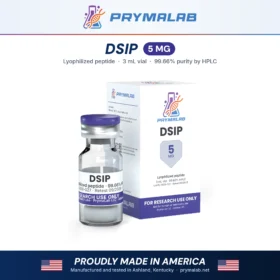
DSIP 5MG
$14.99 or subscribe for $11.99/mo This product has multiple variants. The options may be chosen on the product page -
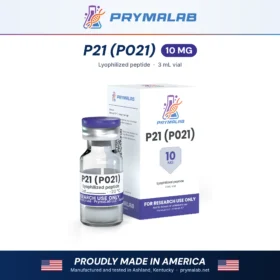
P21 (P021) 10mg
$119.99 or subscribe for $101.99/mo This product has multiple variants. The options may be chosen on the product page -
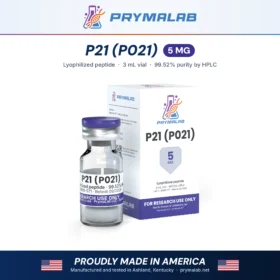
P21 (P021) 5mg
$89.99 or subscribe for $75.99/mo This product has multiple variants. The options may be chosen on the product page -
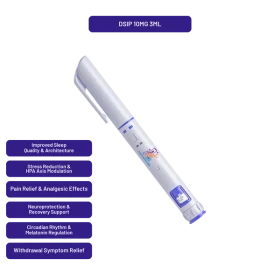
Preloaded Autoinjector | DSIP | 3ml Pen | 10mg
$59.99 or subscribe for $49.99/mo This product has multiple variants. The options may be chosen on the product page -
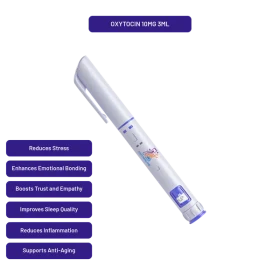
Preloaded Autoinjector | Oxytocin | 3ml Pen | 10mg
$99.99 or subscribe for $84.99/mo This product has multiple variants. The options may be chosen on the product page -
Sale!
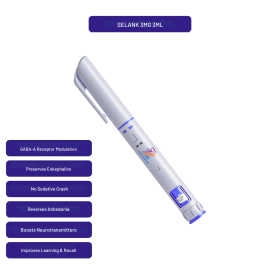
Preloaded Autoinjector | Selank | 3ml Pen | 1mg/ml
Original price was: $54.99.$39.99Current price is: $39.99. -
Sale!
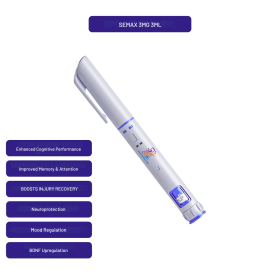
Preloaded Autoinjector | Semax | 3ml Pen | 1mg/ml
Original price was: $54.99.$39.99Current price is: $39.99. -
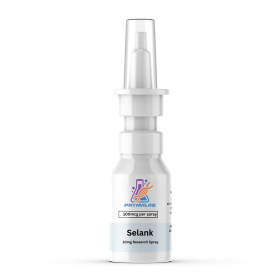
Selank 10mg Nasal Spray
$119.99 or subscribe for $99.99/mo This product has multiple variants. The options may be chosen on the product page -
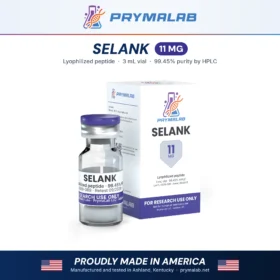
Selank 11mg
$49.99 or subscribe for $41.99/mo This product has multiple variants. The options may be chosen on the product page -
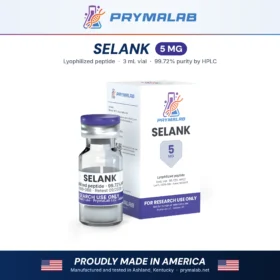
Selank 5mg
$29.99 or subscribe for $25.49/mo This product has multiple variants. The options may be chosen on the product page -
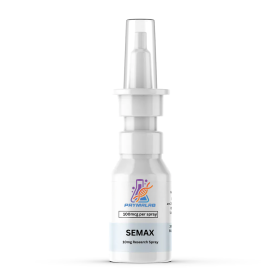
Semax 10mg Nasal Spray
$39.99 or subscribe for $33.99/mo This product has multiple variants. The options may be chosen on the product page -
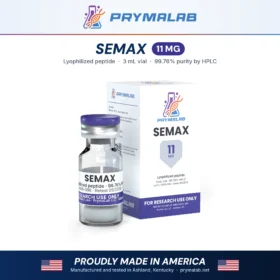
Semax 11mg
$39.99 or subscribe for $33.99/mo This product has multiple variants. The options may be chosen on the product page -
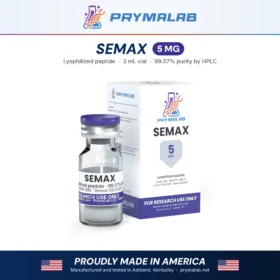
Semax 5mg
$19.99 or subscribe for $16.99/mo This product has multiple variants. The options may be chosen on the product page
The blood-brain barrier problem · and the three ways around itPeptides for sleep and for cognition face a problem no other category in this catalogue has to solve. The target sits behind the blood-brain barrier, an endothelium with tight junctions and active efflux pumps whose function is to keep circulating molecules out. Three routes across it exist, this range uses all three, and which route a compound depends on determines what its published data can and cannot show.Specification TableBarrier access and measurement at a glancePropertyValuePrincipal obstacleThe blood-brain barrier, a continuous endothelium with tight junctions and efflux transportersRoute 1Passive diffusion, available to small and sufficiently lipophilic moleculesRoute 2Saturable transporter-mediated transport, which is sequence-specific and capacity-limitedRoute 3Nose-to-brain transport along olfactory and trigeminal pathways, bypassing circulationWhy route 3 is used hereIt removes the barrier from the problem, which is why several compounds in this range are stocked as spraysEfflux pumpsP-glycoprotein and related transporters actively remove some compounds that do crossCompounds in this rangeDSIP, Selank, Semax, Epitalon, Pinealon, Cerebrolysin, P21, Dihexa, NoopeptSleep endpoint problemSelf-reported sleep and polysomnographic sleep architecture are different measurementsCognition endpoint problemTask-specific results generalise poorly, and practice effects confound repeat testingSpecies caveatRodent sleep is polyphasic and human sleep is consolidated, so timing does not transferPage typeCategory hub, not a product pageSchema page typeCollectionPageCornerstone contentYesMeta robotsindex, followRegulatory statusCerebrolysin holds approved formulations in several jurisdictions outside the United States. No other compound here holds approvalHow Do Peptides for Sleep Reach the Brain at All?The barrier is the first question and most product listings in this category skip it entirely.Brain capillary endothelial cells are joined by tight junctions that eliminate the gaps other capillary beds have, so the paracellular route available elsewhere in the body is closed here.Passive diffusion across the cell membrane remains open, and it favours small lipophilic molecules. Most peptides are neither, being polar and larger than the practical ceiling.Saturable transport systems are the second route. Published work describes carriers that move specific peptides across in both directions, and these are sequence-specific rather than general.Being saturable, they impose a ceiling. Raising the circulating concentration past the transporter capacity does not raise the amount arriving, which is a fact that breaks the intuition that more is more.The third route avoids the barrier rather than crossing it. Material deposited on the olfactory epithelium can move along olfactory and trigeminal nerve pathways directly into the cranial compartment.That is why several compounds in this range are stocked as nasal sprays, and it is a design choice rather than a convenience.Efflux is the complication on all three. P-glycoprotein and related pumps remove some compounds that have already crossed, which means measured brain concentration reflects a balance rather than an arrival rate.Why Are Sleep Endpoints Harder Than They Look?Sleep is measured two different ways and the two frequently disagree, which is the source of most confusion in this literature.Self-reported sleep captures perceived quality, latency and continuity. It is cheap, it is what most informal reports use, and it is subject to expectation effects in both directions.Polysomnography records electroencephalography, eye movement and muscle tone, and it yields sleep architecture: how much slow-wave sleep, how much rapid eye movement sleep, how many transitions.A compound can shift architecture without changing perceived quality, and it can change perceived quality without touching architecture. Both results are real and they answer different questions.Delta-sleep-inducing peptide is the instructive case. It was named for an effect on slow-wave activity reported in early work, and the replication record that followed is considerably more mixed than the name implies.A name assigned from a first observation becomes a claim once it is printed on a label, which is worth holding in mind for any compound whose name describes an effect.Species adds a further layer. Rodent sleep is polyphasic, distributed across many short bouts, while human sleep is consolidated into one long period with a characteristic architecture.A rodent result therefore transfers on mechanism far better than it transfers on timing, and a figure reported without the species and the measurement method attached is not interpretable.One consequence for anyone reading supplier material on peptides for sleep is worth drawing out. A claim phrased around subjective quality and a claim phrased around architecture are not interchangeable, and the same study rarely supports both.Where a listing cites a study without naming the measurement method, the citation cannot be checked against the claim it is attached to.What Distinguishes the Compounds in This Range?The compounds here reach the same organ by different routes and from different design origins, and grouping them by application hides that.Selank and Semax both come from a Russian programme that took endogenous sequences and modified them for stability. Semax derives from a fragment of adrenocorticotropic hormone with a stabilising tripeptide added at the carboxy terminus.Published work on Semax describes activation of brain-derived neurotrophic factor signalling, which is a specific mechanistic claim rather than a general one.Selank derives from tuftsin, an immunologically active tetrapeptide, extended with the same stabilising tripeptide. Its published record centres on anxiolytic-type endpoints in animal models.Epitalon and Pinealon come from the Khavinson bioregulator programme and are two to four residues, which puts them in a different size class entirely and gives them a different barrier argument.Cerebrolysin is not a defined molecule at all. It is a porcine brain-derived peptide and amino acid mixture, which means it has no sequence, no molecular weight and no CAS number, and its verification is a process question rather than a structural one.Noopept is a small molecule rather than a peptide, despite a dipeptide-derived structure, and it crosses by a different route from any of the above.Reading the specific literature for the specific compound is therefore not optional here. The category shares an organ and very little else.Cost per experiment varies across this range by more than an order of magnitude, and it tracks synthesis difficulty rather than evidence quality.The short bioregulator compounds are among the cheapest articles in the catalogue and carry the thinnest mechanistic record. The seven-residue compounds cost more and are better characterised.Those two facts are unrelated, and reading price as a proxy for evidence would invert the actual position.What Does the Nasal Route Change for This Category?Several compounds here are stocked as sprays specifically to address the barrier, and the format deserves an honest account.Nose-to-brain transport is real and documented, moving material along olfactory and trigeminal nerve pathways into the cranial compartment without passing through systemic circulation.The fraction taking that route is small. Most of what is deposited drains to the throat, is cleared by mucociliary action within roughly fifteen to twenty minutes, or is absorbed systemically and then faces the barrier anyway.What the route offers is not efficiency but access, since a compound that cannot cross the barrier from circulation at any concentration may still arrive by this path.The trade is that delivered amount becomes very difficult to quantify. Plume geometry, head angle and deposition site all vary, and none of them is controlled by the metered volume.For a study needing a known quantity in the cranial compartment, that variability is disqualifying. For a study asking whether a compound reaches the target at all, it may be the only available route.Published intranasal pharmacokinetics exist for very few compounds in this range, which means the route is frequently used on the strength of a general principle rather than compound-specific data.Stating that plainly is more useful than implying the format solves a problem it only partially addresses.What Should Be Verified Before Ordering?Five checks apply across this category and two are specific to it.For Semax and Selank, whether the stabilising carboxy-terminal tripeptide is present, since the unmodified parent fragments are different compounds with much shorter half-lives.For Cerebrolysin, the manufacturing process rather than a structure, because there is no sequence to confirm and no molecular weight to match. Batch-to-batch consistency is the only meaningful question.For any spray in this range, the fill date, since solution-state material has been degrading since manufacture and the buyer cannot otherwise establish elapsed time.Measured mass against calculated mass for the defined peptides, checked by the buyer rather than accepted from a summary line.Counterion identity and net peptide content, which for the short compounds in this range represent a large proportional correction.Storage for the defined peptides is unremarkable in lyophilized form and consequential in solution, with the usual aggregation and adsorption routes open.Where a compound is described as nootropic or neuroprotective, ask which published work supports that for the compound rather than for the class, since the class summary and the compound record diverge sharply here.The category-level caution is worth repeating in the specific. Peptides for sleep and for cognition are grouped by the organ they target, and that grouping tells you nothing about mechanism, size class, barrier route or evidence quality.Four of those five vary across this range, and the fifth varies most of all.Published LiteratureSelected references on barrier transport, on nose-to-brain delivery and on two of the compounds in this range.Banks WA. Peptides and the blood-brain barrier. Peptides. 2015;72:16-19. DOI: 10.1016/j.peptides.2015.03.010Graf MV, Kastin AJ. Delta-sleep-inducing peptide (DSIP): a review. Neurosci Biobehav Rev. 1984;8(1):83-93. DOI: 10.1016/0149-7634(84)90022-8Dolotov OV, Karpenko EA, Inozemtseva LS, et al. Semax, an ACTH(4-10) analogue with nootropic properties, activates hippocampal BDNF/trkB system. Neurochem Int. 2006;48(6-7):709-712. DOI: 10.1016/j.neuint.2005.12.007Lochhead JJ, Thorne RG. Intranasal delivery of biologics to the central nervous system. Adv Drug Deliv Rev. 2012;64(7):614-628. DOI: 10.1016/j.addr.2011.11.002Frequently Asked QuestionsWhat is the main obstacle for peptides for sleep and cognition?The blood-brain barrier. Brain capillary endothelial cells are joined by tight junctions that close the paracellular route available elsewhere in the body, and efflux transporters actively remove some compounds that do cross.What routes across the barrier exist?Three. Passive diffusion, which favours small lipophilic molecules. Saturable transporter-mediated transport, which is sequence-specific. And nose-to-brain transport along olfactory and trigeminal pathways, which bypasses circulation entirely.Why does saturable transport impose a ceiling?Because the carriers have finite capacity. Raising the circulating concentration past that capacity does not raise the amount arriving, which breaks the intuition that a higher concentration delivers proportionally more.Why are several compounds here sold as nasal sprays?To use the third route. A compound that cannot cross from circulation at any concentration may still reach the cranial compartment along olfactory and trigeminal nerve pathways.Is the nasal route efficient?No. Most deposited material drains to the throat, is cleared by mucociliary action within roughly fifteen to twenty minutes, or is absorbed systemically and then faces the barrier anyway. What the route offers is access rather than efficiency.Why are sleep endpoints difficult to interpret?Self-reported sleep and polysomnographic architecture are different measurements that frequently disagree. A compound can shift architecture without changing perceived quality, or the reverse, and both findings are real.What is the lesson from delta-sleep-inducing peptide?It was named for an effect on slow-wave activity reported in early work, and the replication record that followed is considerably more mixed than the name implies. A name assigned from a first observation becomes a claim once printed on a label.Do rodent sleep results transfer to humans?On mechanism far better than on timing. Rodent sleep is polyphasic, distributed across many short bouts, while human sleep is consolidated into one long period with a characteristic architecture.How do Semax and Selank differ?By origin. Semax derives from a fragment of adrenocorticotropic hormone and its published work describes activation of brain-derived neurotrophic factor signalling. Selank derives from tuftsin, an immunologically active tetrapeptide. Both carry the same stabilising carboxy-terminal tripeptide.Why is Cerebrolysin different from everything else here?It is not a defined molecule. It is a porcine brain-derived peptide and amino acid mixture with no sequence, no molecular weight and no CAS number, so verification is a manufacturing process question rather than a structural one.Is Noopept a peptide?No, despite a dipeptide-derived structure it is a small molecule, and it crosses the barrier by a different route from the peptides in this range.What is the most useful question to ask about a compound here?Which published work supports the described effect for that specific compound rather than for the class. The class summary and the individual compound record diverge sharply in this category.Compliance StatementPeptides for sleep and cognition are sold exclusively for laboratory research use. They are not a drug, food, or cosmetic product, and they are not a dietary product of any kind. They are not approved by the FDA or any comparable authority for human or veterinary use, Cerebrolysin holds approved formulations in several jurisdictions outside the United States but material supplied here is not that product, published intranasal pharmacokinetics exist for very few compounds in this range, and the class-level literature and the compound-level record diverge substantially. These products are not intended to diagnose, treat, cure, or prevent any disease. They must not be given to humans or animals. Purchase is restricted to qualified researchers and institutions operating within applicable laws. All handling is the responsibility of the purchasing laboratory.
All 17 products in the Cognitive, Sleep & Mood Peptides range
Every listing states its quantity, concentration and format and carries a batch certificate of analysis. Products are supplied for laboratory research only.
- Cerebrolysin 60mg
- Cerebrolysin 120mg Nasal Spray
- DSIP 5MG
- DSIP 10MG
- DSIP 10mg Nasal Spray
- DSIP 10mg preloaded 3ml pen
- Oxytocin 10mg preloaded 3ml pen
- P21 (P021) 5mg
- P21 (P021) 10mg
- Selank 1mg/ml preloaded 3ml pen
- Selank 5mg
- Selank 10mg Nasal Spray
- Selank 11mg
- Semax 1mg/ml preloaded 3ml pen
- Semax 5mg
- Semax 10mg Nasal Spray
- Semax 11mg