
-
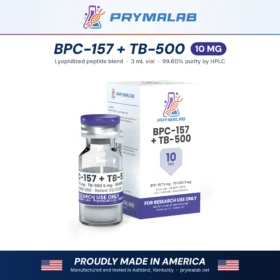
BPC 157 5mg + TB500 5mg
$39.99 or subscribe for $33.99/mo This product has multiple variants. The options may be chosen on the product page -

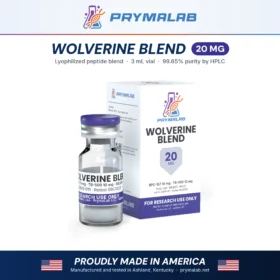
BPC-157 + TB500 (10mg/10mg) “Wolverine Blend”
$63.99 or subscribe for $54.39/mo This product has multiple variants. The options may be chosen on the product page -
cagrilintide 2.5mg + semaglutide 2.5mg
$49.99 or subscribe for $39.99/mo This product has multiple variants. The options may be chosen on the product page -
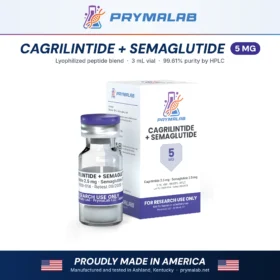
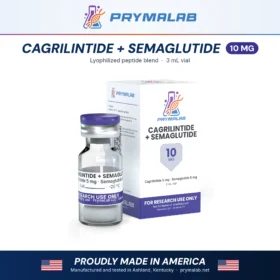
Cagrilintide 5mg + Semaglutide 5mg
$69.99 or subscribe for $59.49/mo This product has multiple variants. The options may be chosen on the product page -
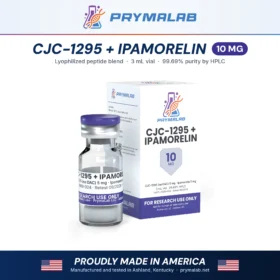
CJC-1295 (no DAC), Ipamorelin 10mg (Blend)
$59.99 or subscribe for $49.99/mo This product has multiple variants. The options may be chosen on the product page -
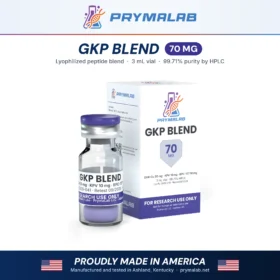
GKP BLEND 70MG
$109.99 or subscribe for $92.99/mo This product has multiple variants. The options may be chosen on the product page -
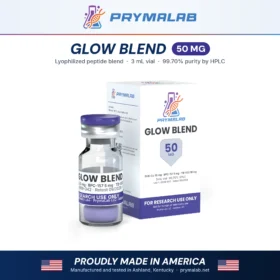
GLOW BLEND 50MG
$69.99 or subscribe for $59.49/mo This product has multiple variants. The options may be chosen on the product page -
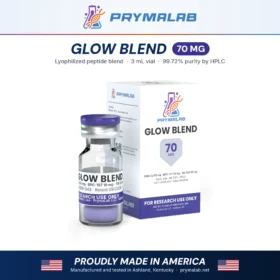
GLOW BLEND 70MG
$79.99 or subscribe for $67.99/mo This product has multiple variants. The options may be chosen on the product page -
Sale!
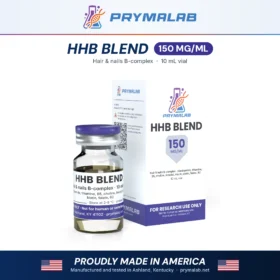
HHB Peptide 10 mL (B-vitamin and lipotropic research blend)
$34.95 or subscribe for $24.99/mo This product has multiple variants. The options may be chosen on the product page -
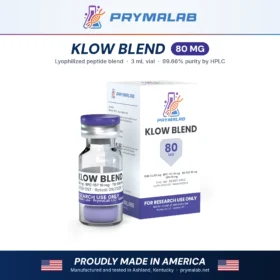
KLOW Blend (80mg)
$119.99 or subscribe for $99.99/mo This product has multiple variants. The options may be chosen on the product page -
Sale!
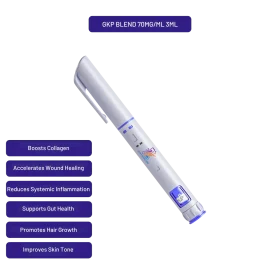
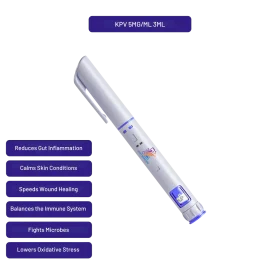
Preloaded Autoinjector | GKP BLEND | 3ml Pen | 70mg/ml
Original price was: $179.99.$159.99Current price is: $159.99. -
Sale!
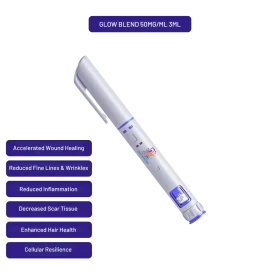
Preloaded Autoinjector | GLOW BLEND | 3ml Pen | 50mg/ml
Original price was: $199.99.$169.99Current price is: $169.99. -
Sale!
Preloaded Autoinjector | KLOW Blend | 3ml Pen | 80mg/ml
Original price was: $239.99.$199.99Current price is: $199.99. -
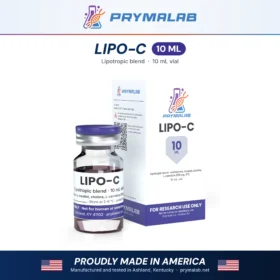
Pryma Lipo-C (FAT BLASTER)
$59.99 or subscribe for $49.99/mo This product has multiple variants. The options may be chosen on the product page -
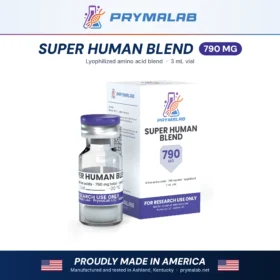
Pryma SUPER Human Blend
$89.99 or subscribe for $74.99/mo This product has multiple variants. The options may be chosen on the product page
Multi-compound vials · what a blend adds and what it costsPeptide blends put more than one compound into a single lyophilized vial. That is a convenience with real analytical consequences, and the consequences are rarely discussed. This page covers what a blend adds, what it takes away, and what a certificate for one actually has to show.Specification TablePeptide blend format at a glancePropertyValueFormatSingle lyophilized vial containing two or more distinct compoundsTypical component countTwo to fourRatioFixed at manufacture. Not adjustable by the buyerReconstitutionOne diluent volume for all components simultaneouslyConcentration controlComponent ratio is locked. Only total concentration varies with diluent volumeCertificate requirementMass and purity for each component separately, plus the ratio between themPrincipal analytical riskA single purity figure that describes the mixture rather than its componentsChromatographic requirementA method resolving every component from every otherStability considerationThe least stable component governs the shelf life of the whole vialPage typeCategory hub, not a product pageSchema page typeCollectionPageCornerstone contentYesMeta robotsindex, followRegulatory statusNo approved human or veterinary formulation for any compound in this categoryWhat Do Peptide Blends Actually Add?The case for peptide blends is practical rather than pharmacological, and it is worth separating those two things.A blend removes reconstitution steps. Two compounds in one vial need one diluent addition rather than two, one calculation rather than two, and one set of transfer operations.At the low masses typical of research peptides, each avoided weighing or transfer removes a source of error. So fewer operations is a genuine accuracy argument.It also removes the possibility of a mixing error between components, since the ratio was fixed by the manufacturer rather than assembled at the bench.What a blend does not do is create any interaction between the compounds while they sit as dry powder in a sealed vial.Lyophilized peptides in the same container are physically adjacent and chemically independent. Nothing happens between them until water is added.That is worth stating because blend marketing often implies a synergy conferred by the format itself, which is not a thing the format can do.Any interaction between the compounds occurs in the biological system, not in the vial, and it would occur equally if the two were dosed from separate vials.There is a second practical argument that is rarely stated and is probably the stronger one.Consistency between runs. A blend assembled once at manufacture has the same ratio in every vial, where manual combination reproduces that ratio afresh each time with whatever error the operator introduces.For work repeated over months by more than one person, that removes a source of variation that is hard to detect afterwards and impossible to correct.It is the strongest case for the format and it applies only where the ratio is already settled. That is the recurring condition on this page.What Does a Blend Cost Analytically?The convenience of peptide blends has a price, and it falls entirely on verification.A single-compound vial has one mass to confirm and one purity figure to interpret, and a three-component blend has three of each, plus the ratio between them.A certificate reporting one purity percentage for a blend has answered almost nothing. Ninety-eight percent pure describes what, exactly, when three compounds are present by design?The figure a buyer needs is per-component: measured mass for each, purity for each, and the molar or mass ratio between them.Producing that requires a chromatographic method that resolves every component from every other. That is harder than resolving one compound from its own impurities.Where two components in a blend sit close in mass or in hydrophobicity, that separation may not be achievable on a generic gradient at all.A supplier who has developed a resolving method and reports per-component figures has done real work. One reporting a single number has passed the problem to the buyer.Asking which components the purity figure refers to is the direct version of the question, and the answer is immediately informative.How Does the Ratio Constrain an Experiment?The fixed ratio is the defining limitation of the format and it deserves stating plainly rather than in a footnote.Adding more diluent to a blend increases the volume and lowers the concentration of every component together. It does not change their proportions.That means the ratio the manufacturer chose is the only ratio available, and any experiment needing a different one has to source the components separately.For a concentration-ranging design that varies one component against a fixed background, a blend is unusable.For a design testing the combination as a unit against its components individually, a blend supplies the combination arm and separate vials supply the others.So the honest position is that blends suit confirmation and routine work, and separate vials suit anything exploratory.A study that starts with a blend and later needs to vary a component finds itself buying the components anyway, having spent on both formats.Deciding which of those the work is before ordering saves that duplication, and it is a two-minute decision.Which Component Governs Shelf Life?Peptide blends carry one expiry, and it belongs to whichever component degrades first.Peptides differ substantially in stability, and a compound carrying a tryptophan photodegrades. One carrying a cysteine oxidises. One carrying an Asp-Gly motif rearranges in solution.Combine a stable compound with an unstable one and the vial inherits the unstable one shelf life, since the mixture is only as good as its weakest component.That is straightforward once stated and it is almost never stated on a blend product page.It has a practical consequence for storage. A blend containing a photolabile component needs light protection even if the other components do not.The same applies to temperature and to the number of times a reconstituted vial is opened.Reading the components individually and applying the strictest requirement among them is the correct approach, and it requires knowing what the components are.A blend sold without a full component list cannot be stored correctly by anyone, which is a reason to insist on one.One corollary is worth drawing out for anyone comparing blends across suppliers.Two blends with identical component lists can carry different expiry dates if one supplier assigned the date from the least stable component and the other from an average.The shorter date is the more honest one, which inverts the usual reading of an expiry comparison.Asking how the expiry was determined is therefore more informative than comparing the dates themselves.What Happens at Reconstitution?Adding water to a multi-component vial raises questions a single-compound vial does not.Solubility differs between compounds. The least soluble component sets the practical concentration limit for the whole vial.A blend containing one hydrophobic and one hydrophilic compound may not fully dissolve at a volume that would suffice for either alone.Incomplete dissolution is the failure mode, and it is not always visible. A faint haze may be one component remaining undissolved while the others are fully in solution.That produces a solution whose actual ratio differs from the labelled ratio, which is a silent error affecting exactly the property the format exists to guarantee.Adding diluent slowly down the vial wall and swirling rather than shaking is the standard technique. It matters more here than for a single compound.Allowing adequate time before use rather than assuming instant dissolution is the other half, since a slower-dissolving component may need minutes.Where a blend does not clear completely, the correct response is to stop rather than to proceed with a solution of unknown composition.How Should a Blend Certificate Be Read?Six fields separate a useful peptide blends certificate from a decorative one.Measured mass for each component, stated separately, confirming that every compound named is present.Purity for each component rather than a single figure for the mixture, with the chromatographic method stated.The ratio between components, expressed as molar or mass proportions. That is the property the format is sold on.Confirmation that the method resolves every component from every other, without which the per-component figures cannot be trusted.Counterion identity and net peptide content, which apply per component and can differ between them.A complete component list including anything present as an excipient, since a buyer cannot store a blend correctly without knowing what is in it.Most certificates in this market supply the first and none of the rest, which is worth knowing before a blend is committed to a study.What Is the Difference Between Peptide Blends and Peptide Stacks?The two words get used interchangeably across this market and they describe different things, which starts to matter the moment an experiment has to be reproduced.Peptide blends are compounds combined into one vial before it ever reaches a bench. The ratio is fixed at manufacture and the researcher receives the result as a single article with a single lot number.Peptide stacks are separate vials used together on a schedule the researcher sets. Nothing is combined until the point of use, and frequently nothing is combined at all.That difference decides who controls the ratio. In a blend the supplier does. In a stack the experimental design does, and it can be varied between arms without ordering fresh material.It also decides what a certificate is able to tell you, since each vial in a stack carries its own purity and identity data assayed against a single-component reference standard.A blend certificate has to resolve several compounds within one chromatogram, and co-elution is a live possibility whenever two components sit close together in size and charge.Neither format wins in the abstract. Blends cut handling steps and the transfer losses that come with them, while stacks preserve analytical resolution and design flexibility.The confusion becomes expensive in the literature. A published protocol describing peptide stacks cannot be reproduced with a blend unless the fixed ratio happens to match what the protocol used, and that is worth checking before ordering rather than after.When Is a Blend the Right Choice?The decision on peptide blends comes down to whether the ratio is a parameter or a given.If the combination is the thing being studied and the proportions are settled, a blend removes operations and reduces error. That is a real advantage.If the proportions are themselves in question, a blend cannot answer the question and separate vials are the only workable format.If the work is routine and repeated, a blend delivers consistency between runs that manual combination does not, since the ratio is fixed once at manufacture rather than reproduced each time.If the work spans months, the shelf life question becomes governing, and a blend containing one unstable component may need replacing sooner than separate vials would.Cost usually favours the blend per milligram and separate vials per experiment, which are different comparisons often conflated.Making the decision explicitly rather than by default is the point of this page, and it takes less time than the first reconstitution.One last consideration applies to anyone running the same work across more than one site or operator.A blend is a single catalogue number, so a collaborator ordering the same material receives the same ratio without anything having to be written down and passed along.Separate components require the ratio to be communicated and reproduced correctly at the other end, which is a step where errors enter quietly.For multi-site work with a settled combination, that reproducibility is probably the strongest argument the format has.Which Blends Are Actually Sold, and What Is in Them?A handful of named combinations account for most of this category, and knowing what each contains is the first step to reading any claim about it.KLOW is the four-component blend: KPV, GHK-Cu, BPC-157 and TB-500. A KLOW blend is the most widely sold of the repair combinations.GLOW drops the KPV, leaving GHK-Cu, BPC-157 and TB-500. A glow blend is marketed toward skin where KLOW is marketed toward systemic recovery, with the same components doing the work.GKP swaps again, pairing GHK-Cu with KPV and BPC-157 and leaving TB-500 out.Those three differ by one component each, and no study has tested any of them, so the differences between them were decided commercially.The growth hormone blends work differently. CJC-1295 (no DAC) paired with ipamorelin is the most common, combining a GHRH analogue with a ghrelin receptor agonist so that two receptors are engaged at once.Tesamorelin + ipamorelin is the same idea with a different GHRH analogue, and it is the one combination in this category with an approved component, since tesamorelin holds a US approval.Those pairings have a mechanistic rationale the repair blends lack. Growth hormone secretagogues acting on separate receptors do produce a larger response together than either alone, and that synergy is documented in the endocrine literature.Documented for the receptors is not the same as documented for the product, and no trial has tested a research-grade blend of them.Metabolic blends are the newest group, pairing GLP-1 compounds such as semaglutide or tirzepatide with 5-Amino-1MQ, NAD or other metabolic compounds.Those have no mechanistic rationale connecting the components at all, and the GLP-1 members have approved counterparts that a blend is not.Semax and Selank appear together in a nootropic blend on the reasoning that Semax is stimulating and the other calming. That pairing is common in the market and untested anywhere, and Dihexa is sometimes added on a cognitive enhancement argument. Selank on its own has more published work behind it than the combination does, and the Selank record is intranasal rather than injectable.A BPC-157 + TB-500 blend is the two-component version of the repair idea, sold as the wolverine pairing, and a BPC-157 + TB-500 preparation is the most searched combination in this whole category.Beyond those, most peptide combinations are assembled ad hoc. Neuropeptides such as oxytocin, DSIP and VIP appear in sleep and mood blends; kisspeptin, bremelanotide and Melanotan II in sexual health ones; epitalon and the bioregulators in longevity ones.Metabolic listings add L-carnitine and mitochondrial compounds to GLP-1 material, and GHRP-6 or a GHRH analog joins growth hormone pairings where CJC-1295 (no DAC) + ipamorelin is not the chosen combination.IGF-1 LR3 turns up in the same growth listings despite acting downstream of human growth hormone rather than on GH release at all.The synergistic effects claimed for blended peptides are documented for exactly one of these groups, the growth hormone secretagogues, and asserted for all of them.Synthesis of a blend is no harder than synthesis of its parts, since components are made separately and combined, so a blend existing says nothing about anyone having studied it.Single compounds remain the only way to attribute a result to a molecule, which is why a blend suits screening and single peptides suit mechanism.What Should Be Asked Before Buying Any Blend?Blends raise questions single peptides do not, and most of them are certificate questions.The individual concentration of each component is the figure that matters, stated separately. A total peptide figure divides in a way only the manufacturer knows.An HPLC trace should resolve one peak per component with an area for each, and mass confirmation should identify each peak rather than assuming it.Where components differ enough in mass, which is usually the case, this is the easy category of analytical question and there is no excuse for leaving it open.The ratio is the constraint the format imposes. A blend fixes the relationship between components, so an experiment cannot vary one without varying the others, and every result is a result about that ratio rather than about any component.Shelf life belongs to the least stable component. A blend degrades on the schedule of whichever peptide degrades fastest, and the others are along for the ride.Where a blend is supplied as lyophilized powder, bacteriostatic water reconstitutes the whole thing at once and the split cannot be apportioned by weighing.Anti-aging positioning is applied to most of these combinations, and it describes an aspiration rather than a measured endpoint in any of them.Research peptide blends sold this way are not compounded medications and not approved products, and peptide therapy clinics dispensing similar combinations are working from vendor guidance rather than from trials.Everything in this category is supplied for laboratory research only and is not for administration to humans or animals.Published LiteratureSelected references on peptide analysis and formulation relevant to multi-component preparations.Manning MC, Chou DK, Murphy BM, et al. Stability of protein pharmaceuticals: an update. Pharm Res. 2010;27(4):544-575. DOI: 10.1007/s11095-009-0045-6Geiger T, Clarke S. Deamidation, isomerization, and racemization at asparaginyl and aspartyl residues in peptides. J Biol Chem. 1987;262(2):785-794. DOI: 10.1016/S0021-9258(19)75855-4Simat TJ, Steinhart H. Oxidation of free tryptophan and tryptophan residues in peptides and proteins. J Agric Food Chem. 1998;46(2):490-498. DOI: 10.1021/jf970818cFrequently Asked QuestionsWhat are peptide blends?Single lyophilized vials containing two or more distinct compounds at a ratio fixed during manufacture. Supplied for laboratory research only, with no approved formulation for any compound in this category.What do they add?Fewer operations. One diluent addition rather than several, one calculation rather than several, and no possibility of a mixing error since the ratio was set by the manufacturer.Do the compounds interact in the vial?No. Lyophilized peptides in one container are physically adjacent and chemically independent. Nothing happens between them until water is added.So is there a synergy from the format?Not from the format itself. Any interaction occurs in the biological system and would occur equally if the compounds were dosed from separate vials.What does a blend cost analytically?Verification difficulty. A three-component blend needs three measured masses, three purity figures and the ratio between them, where a single-compound vial needs one of each.Is a single purity figure useful?Barely. Ninety-eight percent pure describes what, when three compounds are present by design? The figure a buyer needs is per component, with the chromatographic method stated.Can the ratio be changed?No. Adding diluent lowers the concentration of every component together without changing their proportions. The manufacturer ratio is the only one available.When does that matter?For any concentration-ranging design that varies one component against a fixed background. A blend cannot supply that, and separate vials are the only workable format.Which component sets the shelf life?Whichever degrades first. A stable compound combined with an unstable one gives a vial that inherits the unstable one shelf life, since the mixture is only as good as its weakest component.What goes wrong at reconstitution?Incomplete dissolution. The least soluble component sets the limit for the whole vial, and a faint haze may be one component undissolved while the others are fully in solution.Why is that serious?Because the resulting solution has a different ratio from the labelled one, which is a silent error affecting exactly the property the format exists to guarantee.When is a blend the right choice?When the combination is what is being studied and the proportions are settled. When the proportions are themselves in question, separate vials are the only format that can answer it.What is the difference between peptide blends and peptide stacks?A blend combines compounds in one vial at a ratio fixed during manufacture. A stack keeps compounds in separate vials that are used together on a schedule the researcher controls. Blends reduce handling steps. Stacks preserve per-compound certificates and let the ratio change between experimental arms without new material being ordered.Which named blends are actually sold?KLOW is KPV, GHK-Cu, BPC-157 and TB-500. GLOW drops the KPV. GKP swaps out TB-500. Those three differ by one component each, no study has tested any of them, and the differences between them were decided commercially rather than experimentally.Do the growth hormone blends have a rationale?More than the repair blends do. CJC-1295 (no DAC) with ipamorelin engages two separate receptors, and that synergy in growth-hormone release is documented in the endocrine literature. Documented for the receptors is not documented for the product.What about metabolic blends?Those pair GLP-1 compounds such as semaglutide or tirzepatide with 5-Amino-1MQ, NAD or L-carnitine. No mechanism connects the components, and semaglutide and tirzepatide have approved counterparts that a research blend is not.What should the certificate show?Individual concentration for each component stated separately, an HPLC trace resolving one peak per component, and mass confirmation identifying each peak. A total peptide figure divides in a way only the manufacturer knows.What does a blend cost analytically?The ability to vary one thing. A blend fixes the ratio, so every result is a result about that ratio rather than about any component, and attributing an effect to one peptide becomes impossible without ordering the single compounds separately.Which component governs shelf life?The least stable one. A blend degrades on the schedule of whichever peptide degrades fastest and the others are along for the ride, which is why a stability figure for a research peptide blend needs to name the limiting component.Are blends compounded medications?No. These are not compounded preparations dispensed against a prescription and not approved products. Peptide therapy clinics dispensing similar combinations work from vendor guidance rather than trials, and material here is for laboratory and scientific research only.Is anti-aging or regenerative positioning supported?No. Anti-aging and regenerative framing is applied to most of these combinations and describes an aspiration rather than a measured endpoint in any of them. Epitalon and the bioregulators carry the same framing on the same absence of trial data.Why do GIP and IGF-1 LR3 appear in these listings?GIP because tirzepatide engages both the GLP-1 and GIP receptors, so the dual mechanism is inside one molecule rather than in a blend. IGF-1 LR3 because it sits downstream of human growth hormone, though it acts on tissue directly rather than on GH release.Compliance StatementPeptide blends are sold exclusively for laboratory research use. They are not a drug, food, or cosmetic product, and they are not a dietary product of any kind. They are not approved by the FDA or any comparable authority for human or veterinary use, no compound in this category holds an approved human or veterinary formulation in any jurisdiction, and combining compounds in one vial confers no interaction that would not occur if they were supplied separately. These products are not intended to diagnose, treat, cure, or prevent any disease. They must not be given to humans or animals. Purchase is restricted to qualified researchers and institutions operating within applicable laws. All handling is the responsibility of the purchasing laboratory.
All 15 products in the Peptide Blends range
Every listing states its quantity, concentration and format and carries a batch certificate of analysis. Products are supplied for laboratory research only.
- BPC-157 + TB500 (10mg/10mg) “Wolverine Blend”
- BPC 157 5mg + TB500 5mg
- cagrilintide 2.5mg + semaglutide 2.5mg
- Cagrilintide 5mg + Semaglutide 5mg
- CJC-1295 (no DAC), Ipamorelin 10mg (Blend)
- GKP BLEND 70MG
- GKP BLEND 70mg/ml preloaded 3ml pen
- GLOW BLEND 50MG
- GLOW BLEND 50mg/ml preloaded 3ml pen
- GLOW BLEND 70MG
- HHB Peptide 10 mL (B-vitamin and lipotropic research blend)
- KLOW Blend (80mg)
- KLOW Blend 80mg/ml preloaded 3ml pen
- Pryma Lipo-C (FAT BLASTER)
- Pryma SUPER Human Blend