
-
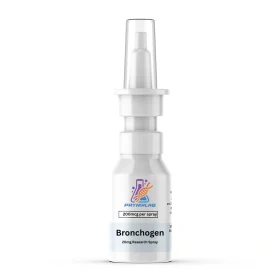
Bronchogen 20mg Nasal Spray
$119.99 or subscribe for $101.99/mo This product has multiple variants. The options may be chosen on the product page -

Bronchogen Peptide 20mg
$54.99 or subscribe for $45.99/mo This product has multiple variants. The options may be chosen on the product page -
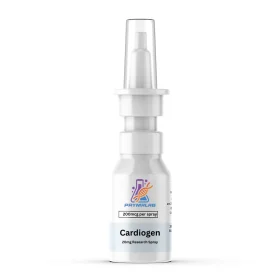
Cardiogen 20mg Nasal Spray
$119.99 or subscribe for $101.99/mo This product has multiple variants. The options may be chosen on the product page -
Cardiogen Peptide 20mg
$54.99 or subscribe for $45.99/mo This product has multiple variants. The options may be chosen on the product page -
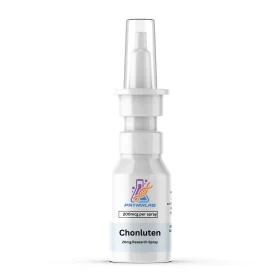
Chonluten 20mg Nasal Spray
$119.99 or subscribe for $101.99/mo This product has multiple variants. The options may be chosen on the product page -
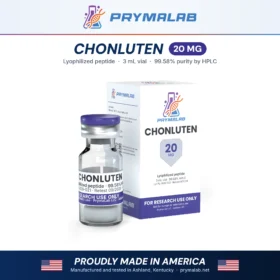
Chonluten Peptide 20mg
$49.99 or subscribe for $41.99/mo This product has multiple variants. The options may be chosen on the product page -
Preloaded Autoinjector | Bronchogen | 3ml Pen | 20mg
$79.99 or subscribe for $67.99/mo This product has multiple variants. The options may be chosen on the product page -
Preloaded Autoinjector | Cardiogen | 3ml Pen | 20mg
$89.99 or subscribe for $75.99/mo This product has multiple variants. The options may be chosen on the product page -
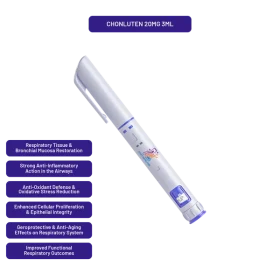
Preloaded Autoinjector | Chonluten | 3ml Pen | 20mg
$69.99 or subscribe for $59.49/mo This product has multiple variants. The options may be chosen on the product page -
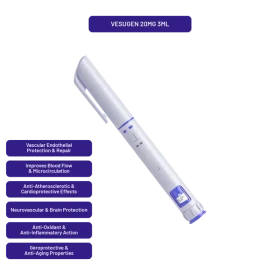
Preloaded Autoinjector | Vesugen | 3ml Pen | 20mg
$79.99 or subscribe for $67.99/mo This product has multiple variants. The options may be chosen on the product page -
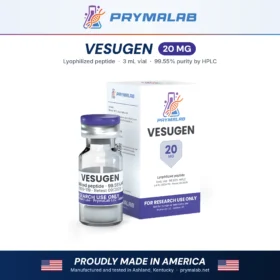
Vesugen 20mg
$39.99 or subscribe for $33.99/mo This product has multiple variants. The options may be chosen on the product page
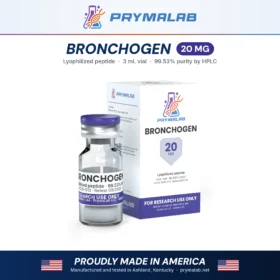
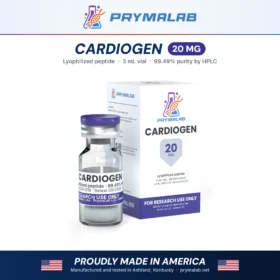


Cardiogen, Bronchogen, Chonluten, Ovagen · heart and lung assignmentsFour compounds in the Khavinson range carry cardiovascular or respiratory assignments, and two of them are what a search for a lung bioregulator is looking for. Cardiogen came from heart tissue, Bronchogen and Chonluten from bronchial tissue. Ovagen sits alongside them because it is Bronchogen minus one residue, which makes it part of the same structural conversation whatever its own assignment says.Specification TableThe cardiovascular and respiratory group comparedPropertyValueCompounds in this groupCardiogen, Bronchogen, Chonluten, with Ovagen structurally attachedCardiogenAla-Glu-Asp-Arg, roughly 489.5 g/mol, heart tissueBronchogenAla-Glu-Asp-Leu, roughly 446.5 g/mol, bronchial tissueChonlutenGlu-Asp-Gly, roughly 319.3 g/mol, bronchial mucosaOvagenGlu-Asp-Leu, roughly 375.4 g/mol. Bronchogen minus its alanineHeaviestCardiogen, also the heaviest compound in the entire bioregulator rangeOnly cationic memberCardiogen, whose arginine outweighs two acidic residuesTruncation pair within this groupBronchogen and Ovagen, differing by one alanineSecond truncation pair touching this groupChonluten is Epitalon minus alanineSolution-state cautionChonluten carries an Asp-Gly motif that rearranges invisibly in waterSequence provenanceConverging secondary sources. Not traced to single primary citationsFormats stockedLyophilized vials and metered nasal spraysPage typeCategory hub, not a product pageSchema page typeCollectionPageCornerstone contentYesMeta robotsindex, followRegulatory statusNo approved human or veterinary formulation in any jurisdictionWhat Does a Lung Bioregulator Refer To?The phrase lung bioregulator names a provenance rather than a pharmacological category, and unpacking it is the most useful thing this page can do.Two compounds answer to lung bioregulator, both recovered from bronchial tissue during the original fractionation work: Bronchogen from bronchial tissue generally and Chonluten from bronchial mucosa.Both names therefore record where a sequence was isolated, not where it has been demonstrated to act.That distinction is not pedantry. No tissue-distribution study across this family has been published, so nothing establishes that a compound recovered from lung tissue subsequently reaches lung tissue preferentially.Complicating it further, both compounds contain the Glu-Asp core shared by fourteen of the sixteen family members, including compounds assigned to heart, liver, pancreas, prostate and pineal gland.If that core is doing the work, the same two residues are present in compounds assigned to entirely different organs, and the respiratory assignment carries less information than the name implies.The term lung bioregulator nonetheless attracts real search demand, which is why this page uses it rather than avoiding it.Anyone selecting on the basis of a lung assignment should understand they are selecting on isolation source, and this page states that plainly rather than trading on the ambiguity.One further point belongs here, because it is the question a supplier should be asked before anything else.Neither of the two lung bioregulator compounds has been characterised by the nasal route in published work, despite both being stocked in that format.That is not a criticism of the format so much as a statement of where the evidence stops, and it applies to every compound in this family.A researcher choosing between a vial and a spray for these compounds is choosing between two routes with no comparative data, which is worth knowing before the decision rather than after.How Do the Two Lung Bioregulator Compounds Differ?Two compounds share the lung bioregulator label, and the structural difference between them is larger than their shared origin suggests.Bronchogen is Ala-Glu-Asp-Leu at roughly 446.5 daltons. Chonluten is Glu-Asp-Gly at roughly 319.3.They share the Glu-Asp core and differ at both ends, which places them in different structural sub-groups despite a common source tissue.Bronchogen ends in leucine, the most hydrophobic terminus anywhere in this family, which shifts its chromatographic retention markedly later than its relatives.Chonluten ends in glycine and carries an Asp-Gly motif, which is one of the most reactive arrangements in peptide chemistry and rearranges in aqueous solution to a mass-identical product.That is a meaningful practical difference. Bronchogen is stable in a solution-state format and Chonluten degrades invisibly in one.For a buyer holding both, the two need different handling despite sharing a tissue assignment and a product category.It also means a purity figure carries different weight for each: informative for Bronchogen, incomplete for Chonluten without a fill date attached.Why Is Ovagen Grouped Here?A compound assigned to ovarian tissue appears in a cardiovascular and respiratory group, and the reason is structural rather than clerical.Ovagen is Glu-Asp-Leu at roughly 375.4 daltons. Bronchogen is Ala-Glu-Asp-Leu at roughly 446.5.Remove the amino-terminal alanine from Bronchogen and Ovagen is exactly what remains.Since solid-phase synthesis assembles a chain backwards from the carboxy terminus, that alanine is the last residue added, so a failed final coupling on a Bronchogen batch produces Ovagen.Both compounds are stocked in this catalogue, which means the expected manufacturing impurity of one product is another product on the same shelf with its own price and its own page.That relationship is invisible from either product page alone and obvious when the sequences sit together, which is precisely what a category page is for.The masses differ by roughly 71 daltons, so any mass spectrometer resolves them and the check costs a supplier one line on a certificate.Four such pairs exist across the wider bioregulator range, and this is one of them.What Makes Cardiogen Different?Cardiogen is the outlier of this group and of the whole family, on a property unrelated to its assignment and unrelated to the lung bioregulator question.Cardiogen is Ala-Glu-Asp-Arg at roughly 489.5 daltons, making it the heaviest compound in the entire bioregulator range.More consequentially, its arginine carries a guanidinium group with a pKa near 12.5, which stays protonated across every buffer condition a laboratory realistically uses.That single residue outweighs the two acidic residues in the middle of the sequence and leaves the molecule with a net positive charge.Fifteen of the sixteen bioregulators are anionic or near neutral. Cardiogen alone is cationic.The consequence appears at surfaces. Mucosal surfaces carry a net negative charge, so a cationic molecule binds them electrostatically where an anionic one passes by.Container surfaces behave the same way, which makes untreated glass a poor choice for this compound at low concentration.Cardiogen also has its own truncation partner in Pinealon, which is Cardiogen minus its alanine, giving this group two of the four family truncation pairs.What Should a Certificate Show for This Group?Three of the four compounds here have a specific analytical requirement beyond the generic panel.For Bronchogen, whether the analysis distinguished it from Testagen. The two sit about a dalton apart at roughly 446.5 and 447.5, which a nominal-mass instrument cannot separate.Chromatography does separate that pair cleanly, since leucine is far more hydrophobic than the glycine Testagen carries, so retention differs where mass does not.For Chonluten, the fill date rather than the purity figure. Its Asp-Gly rearrangement produces an isoaspartate isomer with an identical mass, which no resolution detects, so elapsed time in solution is the only practical proxy.For Ovagen, whether anything appears near 446.5 from Bronchogen carryover on shared equipment.For Cardiogen, whether anything appears near 418.4 from its own truncation to Pinealon.Cardiogen also warrants a note on container material, since a cationic peptide at spray concentrations loses measurable material to glass.None of those questions is difficult and none appears on a standard certificate, which is why asking them explicitly is worth the exchange.One field applies to all four and is worth adding to any request.The sequence itself, written out in three-letter or single-letter form rather than given as a trade name.Four compounds here differ from one another and from the wider family by one or two residues, and a trade name carries no chemical information at all.A certificate naming only the product is describing a label rather than a molecule, which is a distinction that matters most in exactly this family.What Does the Published Record Show for These Compounds?The research position for this group matches the family as a whole and is worth stating without inflation.Work from the St Petersburg programme reports observations in aged rodent models with histological assessment and markers of tissue-associated gene expression.Those studies used parenteral routes. Where nasal spray formats are stocked, no published work characterises any of these compounds delivered by that route.Cell-culture work reporting chromatin decondensation across the family supports the DNA-binding hypothesis rather than any cardiovascular or respiratory claim specifically.No receptor has been identified for any compound in this family and no binding constant has been published.No adequately powered independent Western clinical trial has been conducted on any of these four compounds.The primary record for Chonluten in particular is among the thinnest in the family, which is worth knowing before building a study around it.How Should This Group Be Stored?Handling divides by structure rather than by tissue assignment, which is the recurring theme of this page.All four are chemically undemanding as lyophilized powder. None carries cysteine, methionine or tryptophan, so oxidation and photodegradation routes are absent.Refrigerate dry powder at 2 to 8 degrees Celsius sealed against light and moisture, and colder for extended storage.In solution-state formats the group splits. Bronchogen, Ovagen and Cardiogen are stable, since their aspartate is followed by leucine or arginine rather than glycine.Chonluten is the exception and its Asp-Gly motif rearranges over time in water, which makes a fresh bottle for later study arms a reasonable precaution rather than an upsell.Cardiogen needs attention to container material because of its positive charge, and low-binding or silanised surfaces recover a measurable fraction.Counterion correction is proportionally large across all four, since none exceeds 490 daltons and a single trifluoroacetate at 114 is 23 percent or more of the associated mass.Record the lot, the net peptide content, the container material, and for Chonluten the fill date. Those cover the failure modes this group actually has.Published LiteratureSelected references. This literature originates almost entirely from one research programme and used parenteral routes.Khavinson VK, Malinin VV. Gerontological Aspects of Genome Peptide Regulation. Basel: Karger; 2005. DOI: 10.1159/isbn.978-3-318-01193-6Anisimov VN, Khavinson VK. Peptide bioregulation of aging. Biogerontology. 2010;11(2):139-149. DOI: 10.1007/s10522-009-9249-8Geiger T, Clarke S. Deamidation, isomerization, and racemization at asparaginyl and aspartyl residues in peptides. J Biol Chem. 1987;262(2):785-794. DOI: 10.1016/S0021-9258(19)75855-4Frequently Asked QuestionsWhat does a lung bioregulator refer to?A compound recovered from bronchial tissue during the original Khavinson fractionation work. Two exist in this range: Bronchogen from bronchial tissue generally and Chonluten from bronchial mucosa.Does the name indicate where it acts?No. It records where a sequence was isolated. No tissue-distribution study across this family has been published, so nothing establishes preferential arrival at lung tissue.How do Bronchogen and Chonluten differ?Substantially, despite the shared source. Bronchogen is Ala-Glu-Asp-Leu at roughly 446.5 daltons and Chonluten is Glu-Asp-Gly at roughly 319.3. They share only the Glu-Asp core.Does that affect handling?Yes. Bronchogen is stable in solution. Chonluten carries an Asp-Gly motif that rearranges invisibly in water, so the two need different handling despite sitting in the same category.Why is Ovagen grouped here?Structurally rather than by assignment. Ovagen is Glu-Asp-Leu, which is exactly Bronchogen minus its amino-terminal alanine, so a failed final coupling on a Bronchogen batch produces it.Why does that matter commercially?Because both compounds are stocked here. The expected manufacturing impurity of one product is another product on the same shelf with its own price and page.What makes Cardiogen different?Its arginine. A guanidinium group with a pKa near 12.5 stays protonated in every realistic buffer, outweighing two acidic residues and making Cardiogen the only cationic compound in the whole family.What follows from that charge?Mucosal binding, since mucosal surfaces are negatively charged, and adsorption to untreated glass at low concentration. Container material becomes a delivered-amount question rather than paperwork.What should a Bronchogen certificate show?Whether the analysis distinguished it from Testagen, which sits about a dalton away at roughly 447.5. Chromatography separates that pair cleanly where nominal mass cannot.What should a Chonluten certificate show?The fill date, more than the purity figure. Its rearrangement produces a mass-identical isomer that no resolution detects, so elapsed time in solution is the only practical proxy.Is the nasal route supported for these compounds?No. Where nasal spray formats are stocked, no published work characterises any of these four compounds delivered by that route. Every published study used a parenteral route instead.How large is the counterion correction here?Proportionally large across all four, since none exceeds 490 daltons. A single trifluoroacetate at 114 is 23 percent or more of the associated mass.Compliance StatementThese bioregulator compounds are sold exclusively for laboratory research use. They are not a drug, food, or cosmetic product, and they are not a dietary product of any kind. They are not approved by the FDA or any comparable authority for human or veterinary use, the proposed mechanism has not been independently established, organ assignments record isolation source rather than demonstrated site of action, and no published work characterises any of them delivered by the nasal route. These products are not intended to diagnose, treat, cure, or prevent any disease. They must not be given to humans or animals. Purchase is restricted to qualified researchers and institutions operating within applicable laws. All handling is the responsibility of the purchasing laboratory.
All 11 products in the Cardiovascular & Respiratory Bioregulators range
Every listing states its quantity, concentration and format and carries a batch certificate of analysis. Products are supplied for laboratory research only.