
Description
PrymaLab · Research use only
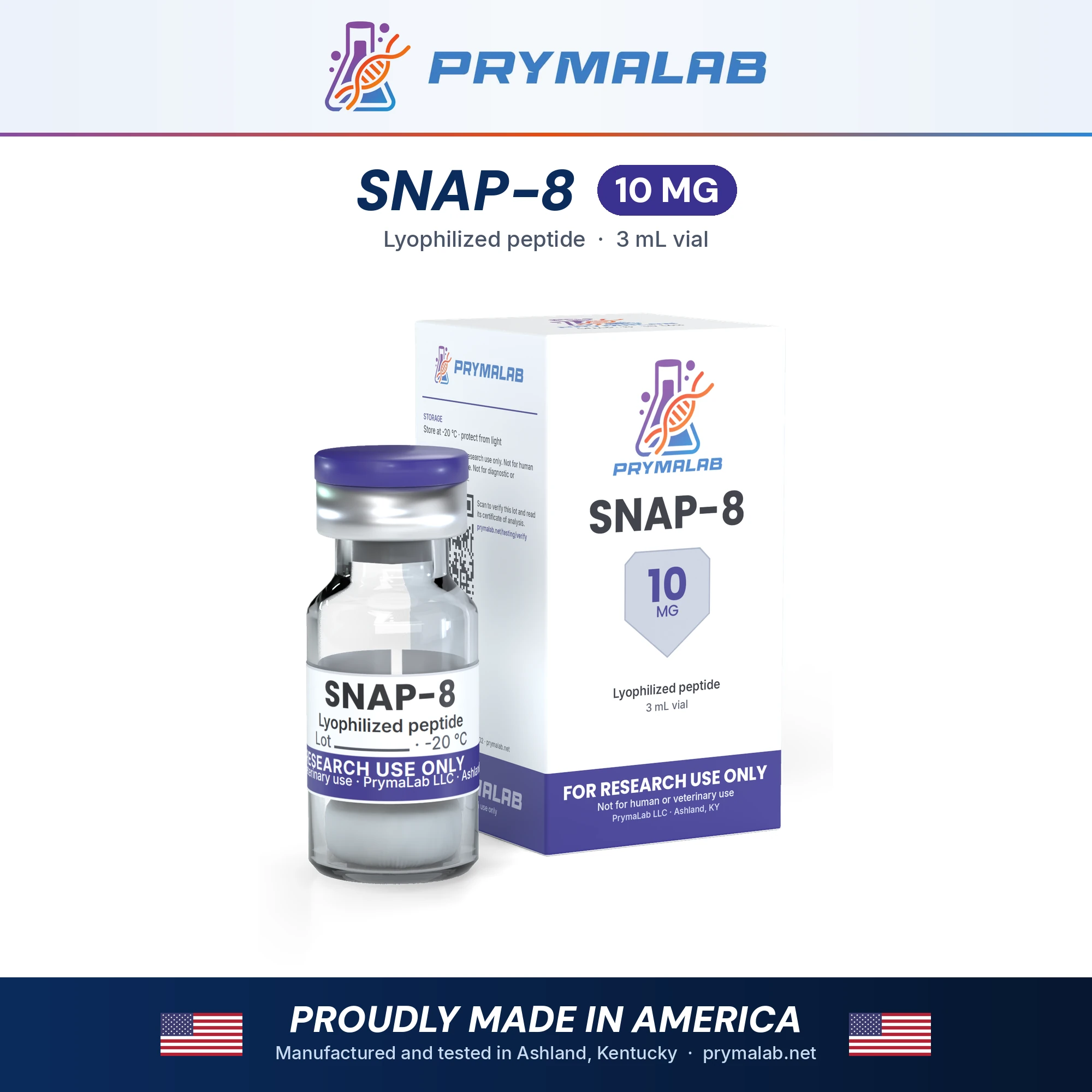
Snap-8 10mg
Acetyl octapeptide-3 (Ac-EEMQRRAD-NH2), 10 mg of freeze-dried peptide in a vial
SNAP-8 is the trade name of acetyl octapeptide-3, an eight-residue synthetic peptide (Ac-EEMQRRAD-NH2) developed as a cosmetic ingredient. This listing is a 10 mg vial of the freeze-dried peptide. SNAP-8 extends the better-known hexapeptide Argireline by two residues, and the research behind it concerns peptides that mimic part of SNAP-25, a protein of the SNARE complex that drives neurotransmitter release, plus a few multi-ingredient skin studies.
Specifications
| Property | Value |
|---|---|
| Compound | SNAP-8 (Acetyl octapeptide-3 (Ac-EEMQRRAD-NH2)) |
| CAS number | 868844-74-0 |
| Molecular formula | C41H70N16O16S |
| Label claim | 10 mg per vial |
| Form | Lyophilized (freeze-dried) powder or cake in a sealed glass vial with a rubber stopper and aluminium crimp cap |
| Safety data sheet | PL-SDS-153 |
What is in the vial
The safety data sheet (PL-SDS-153) identifies the contents as acetyl octapeptide-3, CAS 868844-74-0, formula C41H70N16O16S, at 10 mg per vial as a white to off-white freeze-dried powder. The sequence, Ac-Glu-Glu-Met-Gln-Arg-Arg-Ala-Asp-NH2, is capped at both ends: an acetyl group on the N-terminus and an amide on the C-terminus. Its first six residues are the Argireline sequence, Ac-EEMQRR-NH2, and SNAP-8 adds alanine and aspartate. Using the sheet’s molecular weight of 1075.2, 10 mg is about 9.3 µmol.
The sheet notes that the single methionine is sensitive to oxidation. Keep the sealed vial at −20 °C, desiccated and dark, let it reach room temperature before opening, and hold reconstituted solution at 2 to 8 °C away from light. SNAP-8 is not classified as hazardous.
What the research covers
Peptides that mimic SNAP-25
Neurotransmitter release depends on the SNARE complex, the protein assembly that drives calcium-dependent fusion of vesicles with the cell membrane1. SNAP-25 is one of its proteins. In 1997 Gutierrez and colleagues showed that a 20-residue peptide patterned on the C-terminus of SNAP-25, a stretch that includes the cleavage site for botulinum neurotoxin A, blocked the slow, ATP-dependent component of exocytosis in chromaffin cells while leaving the fast calcium-triggered fusion step alone2. Electron microscopy showed dense-core vesicles piling up near the membrane, as with the toxin, and the authors concluded that the peptide prevented vesicle docking2. They suggested such peptides might one day replace botulinum toxins in some uses2.
From Argireline to SNAP-8
Blanes-Mira and colleagues carried the idea into cosmetics with Argireline, the hexapeptide Ac-EEMQRR-NH2, which came out of a rational design programme1. In their tests it inhibited neurotransmitter release with a potency similar to botulinum neurotoxin A but much lower efficacy, by interfering with the formation or stability of the SNARE complex1. An oil-in-water emulsion containing it reduced wrinkle depth by up to 30% in healthy women volunteers, and the peptide showed no oral toxicity or primary irritation in the tests reported1. SNAP-8 is the same sequence lengthened by two residues. None of the abstracts cited here reports a direct test of the octapeptide on the SNARE complex, so its mechanism is inferred from the hexapeptide work.
Where SNAP-8 sits among cosmetic peptides
Reviews sort cosmeceutical peptides into three groups: signal peptides, neurotransmitter-affecting peptides and carrier peptides3. Argireline, as an inhibitor of neurotransmitter release1, belongs to the second. Lupo and Cole noted in 2007 that the benefits of these ingredients had not been tested as rigorously as those of FDA-regulated drugs, though the supporting evidence was growing3.
Studies that included acetyl octapeptide-3
The human data that involve SNAP-8 come from multi-ingredient products. Avcil and colleagues ran a 12-week single-centre study of hyaluronic acid microneedle patches carrying acetyl octapeptide-3 alongside an arginine/lysine polypeptide, palmitoyl tripeptide-5, adenosine and seaweed extracts; no subject reported a skin reaction, and fine lines and wrinkles decreased by 25.8%4. Shin and colleagues compared a dissolving microneedle patch containing acetyl octapeptide-3, an ascorbic acid derivative and a lysophosphatidic acid salt with a hyaluronic-acid-only placebo patch in 24 healthy subjects over 28 days, and reported better improvement of eye wrinkles with the active patch5. Several actives were present in both, so neither result can be credited to SNAP-8 alone.
What is not established
No study in this list tested SNAP-8 by itself in people, animals or isolated cells. How much of such a peptide crosses the skin is a separate open question: Kraeling and colleagues measured penetration of the shorter acetyl hexapeptide-8 from a cosmetic emulsion into hairless guinea pig and human cadaver skin, prompted by concern that cosmetic peptides might reach deep skin layers and act there6. That work concerned Argireline, not the octapeptide. The Snap-8 peptide guide compares SNAP-8 with Argireline and botulinum toxin.
How each lot is tested
Every lot is tested in PrymaLab’s own laboratory in Ashland, Kentucky before release: RP-HPLC for purity, LC-MS for identity, Karl Fischer titration for water, LAL for endotoxin and USP <71> for sterility. Published certificates are listed on the results page and can be checked by number and key on the verify page. These are in-house results from PrymaLab Analytical, not an independent test, and the lab is not accredited to ISO 17025. The third-party testing guarantee on this page still applies: if any independent laboratory finds the wrong compound, or less than the stated purity or amount, the order is refunded and the cost of the test is reimbursed.
Frequently asked questions
How is SNAP-8 related to Argireline?
Argireline is the hexapeptide Ac-EEMQRR-NH2. SNAP-8 is the octapeptide Ac-EEMQRRAD-NH2: the same six residues followed by alanine and aspartate. Most of the mechanistic work was done on the shorter peptide, so what is said about SNAP-8 itself is inferred rather than measured.
Is SNAP-8 related to botulinum toxin?
Only by target. Both act on the SNARE machinery behind neurotransmitter release, but SNAP-8 is a short synthetic peptide, not a toxin or an enzyme. In the Argireline study, the hexapeptide matched botulinum toxin A in potency but had much lower efficacy.
How should the vial be stored?
Keep the sealed vial at −20 °C, desiccated and protected from light, and let it reach room temperature before opening. Reconstituted solution should be kept at 2 to 8 °C in the dark. The safety data sheet notes that the methionine residue is prone to oxidation.
What does the published evidence show for SNAP-8 itself?
Very little. The human studies that included acetyl octapeptide-3 tested microneedle patches with several other actives, so no effect can be pinned on SNAP-8. The mechanistic work was done on Argireline and on longer SNAP-25 peptides, not on this octapeptide.
Is SNAP-8 from this listing for cosmetic or human use?
No. This vial is sold for laboratory research only. It is not a cosmetic product, is not approved for human or veterinary use, and must not be applied to, or used in, people or animals.
References
- Blanes-Mira C, Clemente J, Jodas G, et al. A synthetic hexapeptide (Argireline) with antiwrinkle activity. Int J Cosmet Sci. 2002;24(5):303-10. DOI · PubMed
- Gutierrez LM, Viniegra S, Rueda J, et al. A peptide that mimics the C-terminal sequence of SNAP-25 inhibits secretory vesicle docking in chromaffin cells. J Biol Chem. 1997;272(5):2634-9. DOI · PubMed
- Lupo MP, Cole AL. Cosmeceutical peptides. Dermatol Ther. 2007;20(5):343-9. DOI · PubMed
- Avcil M, Akman G, Klokkers J, et al. Efficacy of bioactive peptides loaded on hyaluronic acid microneedle patches: A monocentric clinical study. J Cosmet Dermatol. 2020;19(2):328-337. DOI · PubMed
- Shin JY, Han D, Yoon KY, et al. Clinical Safety and Efficacy Evaluation of a Dissolving Microneedle Patch Having Dual Anti-Wrinkle Effects With Safe and Long-Term Activities. Ann Dermatol. 2024;36(4):215-224. DOI · PubMed
- Kraeling ME, Zhou W, Wang P, et al. In vitro skin penetration of acetyl hexapeptide-8 from a cosmetic formulation. Cutan Ocul Toxicol. 2015;34(1):46-52. DOI · PubMed
Research use only
For laboratory research use only. Snap-8 10mg is not a drug, food, cosmetic or dietary supplement, is not approved by the FDA or any comparable authority for human or veterinary use, and must not be given to people or animals. It is sold to qualified researchers and institutions, and the buyer is responsible for lawful handling and disposal.
Other formats of Snap-8
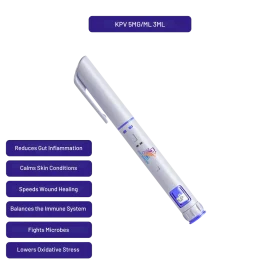
Snap-8 is also stocked as SNAP-8 10mg preloaded 3ml pen. Each listing states its own quantity and concentration, and the pen and vial comparison explains what changes between formats.








Reviews
There are no reviews yet.