
-
Sale!
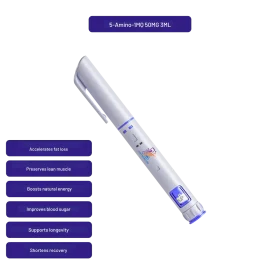
Preloaded Autoinjector | 5-Amino-1MQ | 3ml Pen | 50mg/ml
Original price was: $139.99.$119.99Current price is: $119.99. -

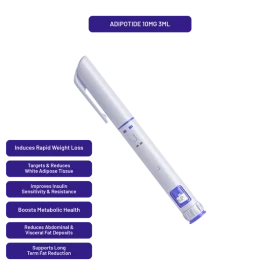
Preloaded Autoinjector | Adipotide (FTPP) | 3ml Pen | 10mg
$99.99 or subscribe for $84.99/mo This product has multiple variants. The options may be chosen on the product page -
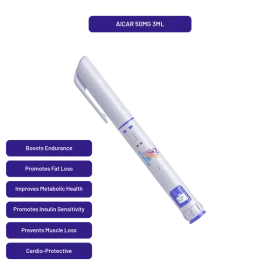
Preloaded Autoinjector | AICAR | 3ml Pen | 50mg
$89.99 or subscribe for $76.49/mo This product has multiple variants. The options may be chosen on the product page -
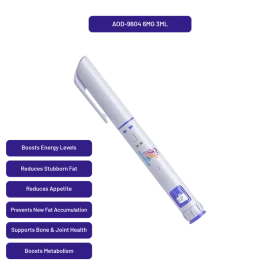
Preloaded Autoinjector | AOD-9604 | 3ml Pen | 6mg
$59.99 or subscribe for $49.99/mo This product has multiple variants. The options may be chosen on the product page -
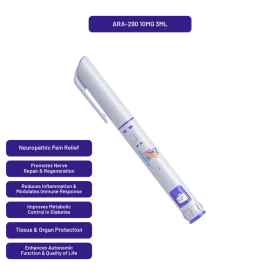
Preloaded Autoinjector | ARA-290 (Cibinetide) | 3ml Pen | 10mg
$69.99 or subscribe for $59.49/mo This product has multiple variants. The options may be chosen on the product page -
Sale!
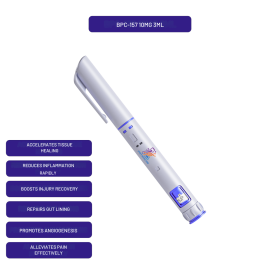
Preloaded Autoinjector | BPC-157 | 3ml Pen | 5mg/ml
Original price was: $54.99.$39.99Current price is: $39.99. -
Preloaded Autoinjector | Bronchogen | 3ml Pen | 20mg
$79.99 or subscribe for $67.99/mo This product has multiple variants. The options may be chosen on the product page -
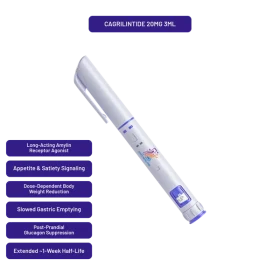
Preloaded Autoinjector | Cagrilintide | 3ml Pen | 20mg
$119.99 or subscribe for $99.99/mo This product has multiple variants. The options may be chosen on the product page -
Preloaded Autoinjector | Cardiogen | 3ml Pen | 20mg
$89.99 or subscribe for $75.99/mo This product has multiple variants. The options may be chosen on the product page -
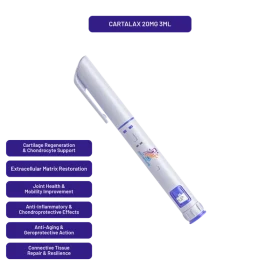
Preloaded Autoinjector | Cartalax | 3ml Pen | 20mg
$79.99 or subscribe for $67.99/mo This product has multiple variants. The options may be chosen on the product page -
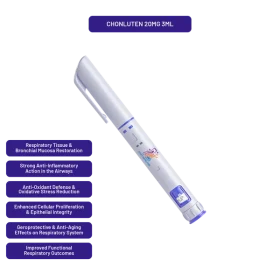
Preloaded Autoinjector | Chonluten | 3ml Pen | 20mg
$69.99 or subscribe for $59.49/mo This product has multiple variants. The options may be chosen on the product page -
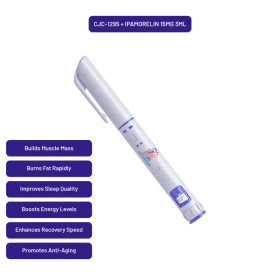
Preloaded Autoinjector | CJC-1295 (No DAC) + Ipamorelin | 3ml Pen | 15mg
$99.99 or subscribe for $84.99/mo This product has multiple variants. The options may be chosen on the product page -
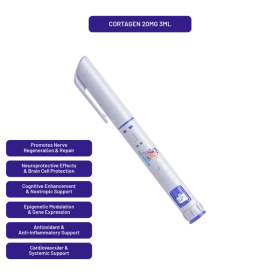
Preloaded Autoinjector | Cortagen | 3ml Pen | 20mg
$69.99 or subscribe for $59.49/mo This product has multiple variants. The options may be chosen on the product page -
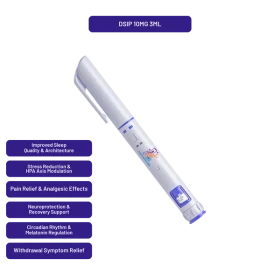
Preloaded Autoinjector | DSIP | 3ml Pen | 10mg
$59.99 or subscribe for $49.99/mo This product has multiple variants. The options may be chosen on the product page -
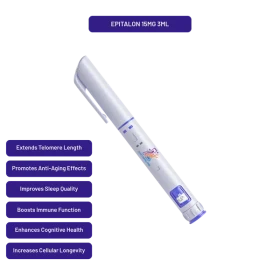
Preloaded Autoinjector | Epithalon | 3ml Pen | 15mg
$69.99 or subscribe for $59.49/mo This product has multiple variants. The options may be chosen on the product page -
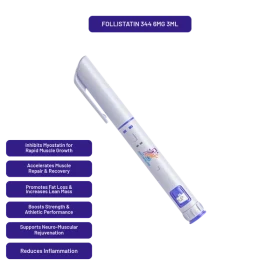
Preloaded Autoinjector | Follistatin 344 | 3ml Pen | 6mg
$499.99 or subscribe for $424.99/mo This product has multiple variants. The options may be chosen on the product page -
Preloaded Autoinjector | FOXO4-DRI | 3ml Pen | 10mg
$249.99 or subscribe for $212.49/mo This product has multiple variants. The options may be chosen on the product page -
Sale!
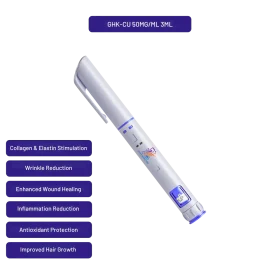
Preloaded Autoinjector | GHK-CU | 3ml Pen | 50mg/ml
Original price was: $89.99.$69.99Current price is: $69.99. -
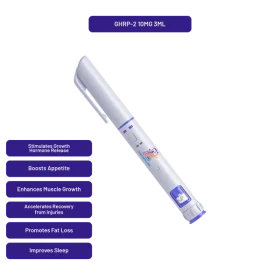
Preloaded Autoinjector | GHRP-2 | 3ml Pen | 10mg
$59.99 or subscribe for $49.99/mo This product has multiple variants. The options may be chosen on the product page -
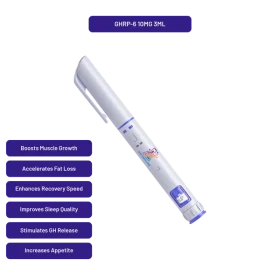
Preloaded Autoinjector | GHRP-6 | 3ml Pen | 10mg
$59.99 or subscribe for $49.99/mo This product has multiple variants. The options may be chosen on the product page -
Sale!
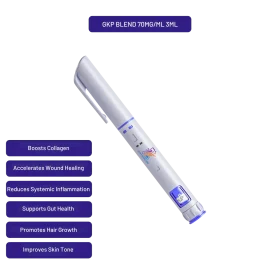
Preloaded Autoinjector | GKP BLEND | 3ml Pen | 70mg/ml
Original price was: $179.99.$159.99Current price is: $159.99. -
Sale!
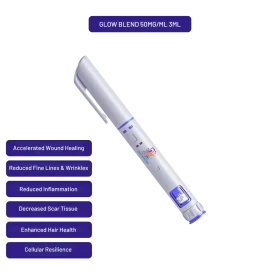
Preloaded Autoinjector | GLOW BLEND | 3ml Pen | 50mg/ml
Original price was: $199.99.$169.99Current price is: $169.99. -
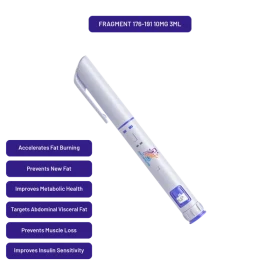
Preloaded Autoinjector | HGH Fragment 176-191 | 3ml Pen | 10mg
$59.99 or subscribe for $49.99/mo This product has multiple variants. The options may be chosen on the product page -
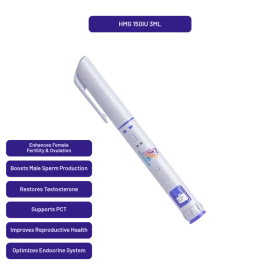
Preloaded Autoinjector | hMG (Menotropins) | 3ml Pen | 150IU
$89.99 or subscribe for $75.99/mo This product has multiple variants. The options may be chosen on the product page -
Sale!
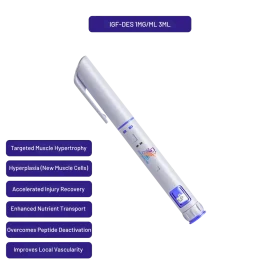
Preloaded Autoinjector | IGF-DES | 3ml Pen | 1mg/ml
Original price was: $79.99.$64.99Current price is: $64.99. -
Sale!
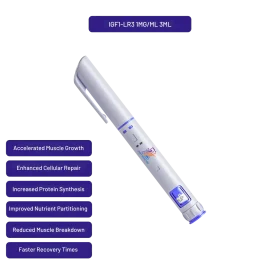
Preloaded Autoinjector | IGF1 LR3 | 3ml Pen | 1mg/ml
Original price was: $89.99.$69.99Current price is: $69.99. -
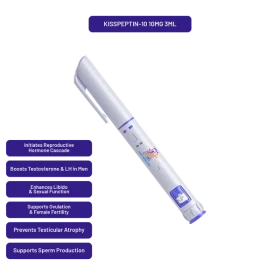
Preloaded Autoinjector | Kisspeptin-10 | 3ml Pen | 10mg
$79.99 or subscribe for $67.99/mo This product has multiple variants. The options may be chosen on the product page -
Sale!
Preloaded Autoinjector | KLOW Blend | 3ml Pen | 80mg/ml
Original price was: $239.99.$199.99Current price is: $199.99. -
Sale!
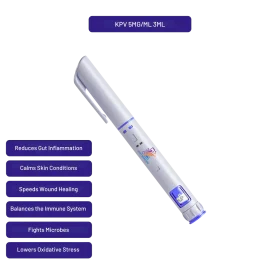
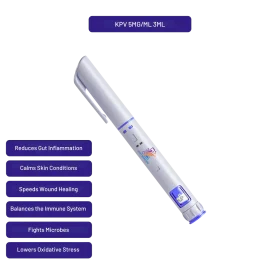
Preloaded Autoinjector | KPV | 3ml Pen | 5mg/ml
Original price was: $69.99.$49.99Current price is: $49.99. -
Preloaded Autoinjector | Livagen | 3ml Pen | 20mg
$79.99 or subscribe for $67.99/mo This product has multiple variants. The options may be chosen on the product page




Preloaded autoinjectors · what the format fixes and what it fixes in place
Peptide pens remove the reconstitution step and fix the concentration in the same movement. That trade is the whole story of the format. A preloaded autoinjector arrives as a solution, which means its degradation clock started at the fill line rather than at the bench, and it means the concentration was chosen by the manufacturer rather than by the experiment. This page sets out what both consequences look like in practice.
Specification Table
| Property | Value |
|---|---|
| Format | Solution-state peptide in a sealed cartridge with a metered delivery mechanism |
| Typical cartridge volume in this range | 3 millilitres |
| Concentration | Fixed at manufacture and not adjustable by the user |
| Degradation clock start | The fill line, not the point of receipt |
| Field a pen spec needs that a vial spec does not | Fill date, because solution-state age is not otherwise recoverable |
| Second field | Buffer composition and pH, which govern the principal degradation routes |
| Third field | Graduation resolution, the smallest increment the mechanism can deliver |
| Why resolution matters | A mechanism cannot deliver less than one increment, which sets a floor on the smallest usable volume |
| Principal solution-state failure routes | Deamidation, oxidation, aggregation and adsorption to the cartridge wall |
| Storage | Refrigerated at 2 to 8 degrees Celsius, protected from light, never frozen |
| Why freezing is excluded | Ice formation concentrates solutes and shifts local pH at the freezing boundary, which drives aggregation |
| Page type | Category hub, not a product page |
| Schema page type | CollectionPage |
| Cornerstone content | Yes |
| Meta robots | index, follow |
| Regulatory status | No compound supplied in this format holds an approved human or veterinary formulation |
What Do Peptide Pens Actually Remove From the Workflow?
The convenience argument for this format is real and it is narrower than it sounds, so it is worth stating exactly.
Reconstitution introduces several places for error. The diluent volume has to be measured, the powder has to dissolve completely without vigorous agitation, and the resulting concentration has to be calculated from a vial mass that may not equal the label.
That last step is where most of the error lives, because net peptide content is frequently unknown and the calculation silently inherits whatever the true figure was.
Peptide pens remove all three steps. The solution exists, its concentration is stated, and no arithmetic is required at the point of use.
They also remove a contamination opportunity. A sealed cartridge is not opened, punctured repeatedly or exposed to laboratory air across a series of withdrawals.
What they do not remove is uncertainty about what the concentration actually is, since the stated figure still depends on the manufacturer having measured rather than assumed it.
A pen specification stating a concentration without stating how it was verified has moved the arithmetic upstream rather than eliminating it.
So the format converts a per-use error into a per-lot error, which is a genuine improvement in consistency and not an improvement in accuracy.
There is a second, quieter advantage. Because the solution was prepared once in bulk, every increment drawn from a cartridge came from material that was mixed under the same conditions, which removes a source of between-session variance that vial preparation reintroduces every time.
For a study running over weeks, that consistency is frequently worth more than the accuracy the format gives up.
What Does the Solution-State Clock Cost?
Everything a lyophilized powder is protected from, a solution is exposed to, and the exposure begins before the product ships.
A dry solid at low temperature has very little available water and very little dissolved oxygen. Hydrolysis, deamidation and oxidation all need one or the other, and their rates in a well-sealed powder are low enough that months pass without a measurable change.
In solution every one of those routes is open continuously.
Deamidation is the most consequential because it is silent. Asparagine converts to aspartate or isoaspartate through a succinimide intermediate, and the isoaspartate product is mass-identical to the parent, so ordinary mass spectrometry does not see it.
Aggregation is the second. Peptides in solution associate over time, and the process is concentration dependent and temperature dependent, which is why a pen held above its stated range does not simply lose a proportional amount.
Adsorption to the cartridge wall removes material from solution rather than degrading it, and it matters most for dilute contents in small volumes.
None of that argues against the format. It argues that fill date belongs on the specification, because a pen filled two months ago and a pen filled two days ago are different materials sold under the same description.
Fill date is the field most often absent from peptide pens in this market, and its absence makes the stability question unanswerable rather than merely unanswered.
Temperature history compounds all of this. Degradation rates rise sharply with temperature, so a cartridge that spent two days at ambient conditions in transit has consumed considerably more of its stability budget than two days in a refrigerator would suggest.
That is why cold chain documentation is a stability question rather than a logistics question, and why an excursion is worth recording even when the material appears unchanged.
Why Does Graduation Resolution Set a Floor?
A mechanical detail decides which experiments a pen can serve, and it appears on almost no listing.
The delivery mechanism moves in discrete increments. It cannot deliver a fraction of one, so the smallest increment is a hard floor on the smallest volume the device can produce.
That floor interacts with the fixed concentration in a way that determines the smallest quantity available at all. A high concentration paired with a coarse increment produces a large minimum, and no adjustment at the bench reduces it.
For work near the low end of a range, that combination can put the required quantity below what the device can deliver, which makes the pen the wrong instrument regardless of what it contains.
The arithmetic is worth doing before ordering rather than after. Multiply the smallest increment by the stated concentration and compare the result against the smallest quantity the work requires.
Accuracy at the bottom of the range is a separate question from resolution. A mechanism delivering its smallest increment is operating at the least accurate part of its range, and the relative error there is larger than at mid-scale.
Where small quantities matter, a vial reconstituted to a concentration the experiment chose is more precise than any preloaded device.
Peptide pens are built for repeated delivery of a similar quantity, and they are very good at that and poor at the alternative.
How Should a Pen Be Compared With a Vial?
The comparison comes down to who controls which variable, and neither format wins in the abstract.
The vial gives the experiment control of concentration. A researcher chooses the diluent, chooses the volume, and can prepare a different concentration next week without new material.
The pen gives the manufacturer that control and returns consistency in exchange. Every delivery from the same cartridge comes from the same solution, prepared once, which removes preparation variance between sessions.
The vial starts its degradation clock when the researcher opens it, which means the clock is documented because the researcher was present.
The pen started its clock at a moment the buyer did not witness and frequently cannot establish.
On contamination the pen is ahead, since a sealed cartridge avoids the repeated septum punctures that a multi-use vial accumulates.
On analytical traceability the vial is ahead, because the powder can be independently assayed before anything is added to it, while a pen can only be assayed as the formulation it already is.
A study needing several concentrations, or needing to verify the material independently, should use vials. A study needing the same quantity repeatedly with minimum handling variance is what peptide pens were designed for.
Cost per unit of compound usually favours the vial, since the cartridge, the mechanism and the cold chain all sit inside the price of a pen.
That gap narrows once the handling time and the wasted material of repeated reconstitution are counted, and for a long-running study it can reverse.
Neither calculation is worth doing in the abstract. It depends on how many deliveries the work needs and how much variance between them the design can absorb.
What Should Be Verified Before Ordering a Pen?
Six fields cover the format-specific risks, and a vial checklist does not include most of them. Concentration is where this range spreads widest. The fifty-seven pens here run from IGF1 LR3 at 1mg/ml to NAD+ at 500mg/ml, a five-hundred-fold span, so the smallest useful quantity differs by orders of magnitude across the shelf. The repair pens sit in the middle of it: BPC-157 and TB-500 are both filled at 5mg/ml.
The multi-component blends sit at the top of the concentration range because they carry several peptides in one barrel: the KLOW peptide pen at 80mg/ml, the GKP blend pen at 70mg/ml, and the GLOW blend pen and GHK-Cu pen at 50mg/ml alongside the 5-Amino-1MQ pen.
The single-peptide pens spread out below that. MOTS-C is filled at 10mg/ml and PT-141 at the same, while KPV and VIP5 sit at 5mg/ml and Selank and Semax at the bottom of the range. Graduation resolution matters most at the low end, where the smallest increment the mechanism delivers is a larger share of the quantity being drawn.
Fill date, which establishes how much of the solution-state clock has already run.
Stated concentration together with the method used to verify it, since a calculated concentration and a measured one are different claims.
Buffer composition and pH, which determine which degradation routes are open and how fast they run.
Graduation resolution, the smallest increment the mechanism delivers, checked against the smallest quantity the work requires.
Cartridge material, because adsorption differs between glass and polymer and matters most for dilute contents.
Cold chain history, meaning whether the shipment was held at its stated temperature throughout and what happens if it was not.
Two of those six appear on most listings in this market. The other four have to be requested, and the response is informative even when it is a refusal.
Where a supplier of peptide pens can answer fill date and buffer composition without hesitation, the rest of the operation is usually in order as well.
What Distinguishes a Preloaded Pen From a Reusable One?
Two quite different objects get sold under the same word, and the distinction determines what a buyer is actually paying for.
A preloaded device arrives filled and sealed. The compound is in solution from manufacture, the concentration is set by the filler, and the device is discarded when empty.
A reusable injection pen is the other kind. It is empty hardware, into which the user loads 3ml cartridges, and it is the pen that persists while the cartridge is replaced.
A reusable peptide pen injector of that type is a piece of engineering rather than a product containing anything, which is why it is sold as hardware alongside accessories.
The specifications that matter on such a pen are few. An adjustable dose dial with fine dose increment resolution is the one that governs what an experiment can ask.
A 60 unit peptide pen injector with 1-unit increments cannot resolve a volume smaller than one unit, and that floor sets the smallest difference between two conditions the device can express.
Where a pen offers a clear scale and 1-unit increments, the arithmetic is legible. Where the graduations are coarse, a stated volume is an approximation and should be recorded as one.
Cartridge replacement is the other practical difference. A disposable pen ends when its contents do; a reusable one continues, which makes cartridge compatibility a real constraint rather than a detail.
An 11mm long stopper and a specified cartridge geometry are what determine that compatibility, and mixing cartridge and pen across manufacturers is where most delivery problems begin.
Hardware features such as a metal body, an anti-slip grip, or a steam-sterilized construction affect durability and handling. None affects what is delivered.
Pens marketed as V1 and V2 pens, servopen units, or auto-injector pen variants differ in mechanism rather than in what they can hold.
Needle-free insulin injection devices are a separate category again, using pressure rather than a needle, and they are not interchangeable with a cartridge pen.
What Does the Format Change, and What Does It Not?
The honest summary is that a pen is a metrology improvement, not an evidence one.
What it removes is the reconstitution step. A reconstituted peptide prepared from a lyophilized vial carries whatever error entered when the diluent was added, and every downstream concentration inherits it.
Working from a reconstituted peptide also means the buyer owns the sterility of that preparation, where a sealed device moves it to the manufacturer.
That is the whole case for the format. A reconstituted peptide is fine when the arithmetic is done carefully and recorded, and a device simply removes the opportunity to do it badly.
Against that, a reusable peptide pen injector loaded with a reconstituted peptide gives the flexibility a sealed device cannot, since the concentration is the user's decision rather than the filler's.
Peptide therapy providers reach for the same hardware for the same reason, and an adjustable dose dial is what makes either approach workable at all.
Compounds vary in how much this matters. BPC-157 is used across a wide concentration range, so a BPC-157 preparation benefits from a fine adjustable dose dial more than a fixed-dose compound would, and a peptide injection pen holding BPC-157 at an unstated concentration answers none of that.
What a pen does not change is the compound. A peptide injection pen and a vial deliver the same molecule with the same published evidence behind it, which for most compounds in this range is none.
A reconstituted peptide has one advantage no sealed device offers, which is that its concentration was chosen for the experiment rather than for the shelf.
Nor does it change the degradation clock. A preloaded device holds its contents in solution from the day it was filled, so shelf life becomes the manufacturer's specification rather than the user's decision.
Accessories sold with these devices, including a travel case for cold transport, alcohol prep pads and prep pads generally, a starter kit bundling the pen with cartridges, and a sharps container, are practical items rather than performance ones.
A travel case matters more than it sounds for a refrigerated product, since a cold chain broken in transit is invisible afterwards.
Devices of this kind are used across the pharmaceutical industry for GLP-1 drugs, growth hormones and insulin, which is where the hardware lineage comes from.
Retatrutide and similar compounds are the reason pen demand has grown in the research market, and a retatrutide pen and a research peptide pen are the same hardware holding different things.
Peptide side effect questions belong to the compound rather than to the device, and no delivery format makes an unapproved compound safer.
These devices and their contents are supplied for laboratory research only. Subcutaneous injection into humans or animals is not a use any of them is offered for.
Which Peptides Come as a Preloaded Pen?
Fifty-seven compounds are stocked in the 3ml pen format as of September 2026. The pens added in June 2026 are labelled by concentration, in milligrams per millilitre; the forty added in September are labelled by the total quantity in the barrel. Both figures appear on each product page, and the dilution calculator converts between them.
Repair and recovery: BPC-157 and TB-500 at 5mg/ml each, the Wolverine stack pen carrying both at 20mg total, KPV at 5mg/ml, VIP5 at 5mg/ml, LL-37 at 10mg, ARA-290 at 10mg, and the GKP blend pen at 70mg/ml.
Growth hormone axis: CJC-1295 with ipamorelin at 15mg, GHRP-2 and GHRP-6 at 10mg each, sermorelin at 6mg, tesamorelin at 10mg, HGH fragment 176-191 at 10mg, IGF-1 LR3 and IGF-1 DES at 1mg/ml, follistatin 344 at 6mg, and MOTS-C at 10mg/ml.
Metabolic and weight research: retatrutide at 15mg, cagrilintide at 20mg, AOD-9604 at 6mg, AICAR at 50mg, adipotide at 10mg, 5-Amino-1MQ at 50mg/ml, and NAD+ at 500mg/ml or 100mg/ml.
Bioregulators, the short synthetic peptides of the Khavinson series: Vilon 6mg, Vesugen 20mg, Vesilute 50mg, Thymogen 10mg, Testagen 10mg, Prostamax 20mg, Pinealon 6mg, Pancragen 20mg, Ovagen 6mg, Livagen 20mg, Epithalon 15mg, Cortagen 20mg, Chonluten 20mg, Cartalax 20mg, Cardiogen 20mg, and Bronchogen 20mg.
Cognition, sleep and mood: DSIP at 10mg, oxytocin at 10mg, and Selank and Semax at 1mg/ml.
Longevity and mitochondrial research: SS-31 (elamipretide) and FOXO4-DRI, both at 10mg.
Skin and cosmetic research: GHK-Cu at 50mg/ml, the GLOW blend at 50mg/ml, the KLOW blend at 80mg/ml, Melanotan 2 at 10mg, and SNAP-8 at 10mg.
Reproductive and hormone signalling: PT-141 at 10mg/ml, Kisspeptin-10 at 10mg, triptorelin at 6mg, and hMG (menotropins) at 150IU.
Every pen page links to the lyophilized vial and, where one exists, the nasal spray of the same compound, so the format comparison can be made per compound rather than in the abstract.
Published Literature
Selected references on solution-state stability, surface interaction and formulation.
- Manning MC, Chou DK, Murphy BM, Payne RW, Katayama DS. Stability of protein pharmaceuticals: an update. Pharm Res. 2010;27(4):544-575. https://doi.org/10.1007/s11095-009-0045-6
- Wang W. Instability, stabilization, and formulation of liquid protein pharmaceuticals. Int J Pharm. 1999;185(2):129-188. https://doi.org/10.1016/S0378-5173(99)00152-0
- Bee JS, Randolph TW, Carpenter JF, Bishop SM, Dimitrova MN. Effects of surfaces and leachables on the stability of biopharmaceuticals. J Pharm Sci. 2011;100(10):4158-4170. https://doi.org/10.1002/jps.22597
- Geiger T, Clarke S. Deamidation, isomerization, and racemization at asparaginyl and aspartyl residues in peptides. J Biol Chem. 1987;262(2):785-794. https://doi.org/10.1016/S0021-9258(19)75855-4
Frequently Asked Questions
What are peptide pens?
Preloaded autoinjectors containing a peptide already in solution, with the concentration fixed at manufacture and a metered mechanism delivering discrete increments. They remove the reconstitution step and remove concentration choice at the same time.
What does the format actually remove from the workflow?
Diluent measurement, dissolution handling and the concentration calculation, which is where most reconstitution error originates because net peptide content is frequently unknown. It also removes the repeated septum punctures a multi-use vial accumulates.
Why does fill date matter more than for a vial?
A solution starts degrading at the fill line rather than at reconstitution. A pen filled two months ago and one filled two days ago are different materials sold under one description, and without a fill date the difference is not recoverable.
Which degradation route is hardest to detect?
Deamidation. Asparagine converts through a succinimide intermediate to aspartate or isoaspartate, and the isoaspartate product is mass-identical to the parent, so ordinary mass spectrometry does not distinguish it.
Why must a pen never be frozen?
Ice formation concentrates solutes and shifts local pH at the freezing boundary. That combination drives aggregation, and the change is not reversed by thawing.
What is graduation resolution?
The smallest increment the delivery mechanism can produce. Because it cannot deliver a fraction of one increment, that value multiplied by the fixed concentration sets a hard floor on the smallest quantity obtainable from the device.
When is a pen the wrong format?
When the work needs a quantity below the mechanical floor, when several different concentrations are required, or when the material has to be independently assayed before use. A vial serves all three and a pen serves none of them.
When is a pen the right format?
When the same quantity is delivered repeatedly and handling variance between sessions is the thing worth minimising. Every delivery comes from one solution prepared once, which is the format strength.
Does a pen improve accuracy or consistency?
Consistency. The stated concentration still depends on the manufacturer having measured rather than calculated it, so the format converts a per-use error into a per-lot error rather than eliminating error.
Does cartridge material matter?
Yes. Peptides adsorb to surfaces, and the extent differs between glass and polymer. The effect is largest for dilute contents in small volumes, where the fraction removed from solution becomes measurable.
What should a pen specification state that a vial specification need not?
Fill date, buffer composition and pH, graduation resolution, and cartridge material. Two of those appear on most listings and the other two normally have to be requested.
Is the compound in a pen different from the compound in a vial?
No. It is the same sequence in a different physical state. What differs is the handling requirement, the degradation clock and who controls the concentration.
What is the difference between a preloaded and a reusable pen?
A preloaded device arrives filled and sealed and is discarded when empty. A reusable injection pen is empty hardware that takes 3ml cartridges, so the pen persists while peptide pen cartridges are replaced. A reusable peptide pen injector contains nothing until it is loaded.
Which pen specifications actually matter?
The adjustable dose dial and its dose increment resolution. A 60 unit peptide pen injector with 1-unit increments cannot resolve below one unit, and that floor sets the smallest difference between conditions the device can express. A clear scale makes the arithmetic legible.
Do hardware features change what is delivered?
No. A metal body, an anti-slip grip and steam-sterilized construction affect durability and handling. An anti-slip grip does not affect dose. V1 V2 pens, servopen units and auto-injector pen variants differ in mechanism rather than in what they hold.
Are cartridges interchangeable between pens?
Not reliably. An 11mm long stopper and a specified cartridge geometry determine compatibility, and mixing cartridge and pen across manufacturers is where most delivery problems begin. A reusable injection pen is only as useful as its cartridge supply.
What does a pen remove from the workflow?
The reconstitution step. A reconstituted peptide prepared from a lyophilized vial carries whatever error entered with the diluent, and every downstream concentration inherits it. Working from a reconstituted peptide also puts sterility on the buyer rather than the manufacturer.
Does a peptide injection pen change the evidence?
No. A peptide injection pen and a vial deliver the same molecule with the same published evidence, which for most compounds in this range is none. BPC-157 in a pen is BPC-157 in a vial, and a peptide injection pen makes no compound safer.
What accessories are worth having?
A travel case matters more than it sounds for a refrigerated product, since a cold chain broken in transit is invisible afterwards. Alcohol prep pads, a sharps container and a starter kit bundling pen with cartridges are practical rather than performance items.
Where does this hardware come from?
The pharmaceutical industry, where medical devices of this kind deliver GLP-1 drugs, growth hormones and insulin. Retatrutide demand is why pen supply grew in the research market, and a retatrutide pen and a research pen are the same hardware holding different things.
Can these pens deliver very small volumes?
Only down to the graduation floor. Low doses below one increment cannot be expressed on a 60 unit capacity pen with 1-unit steps, so a compound used at low volume, GHK-Cu among them, may need dilution rather than a finer dial setting.
Compliance Statement
Peptide pens are sold exclusively for laboratory research use. They are not a drug, food, or cosmetic product, and they are not a dietary product of any kind. They are not approved by the FDA or any comparable authority for human or veterinary use, solution-state material carries a degradation history that begins at manufacture rather than at receipt, fill date is frequently absent from specifications in this market, and no compound supplied in this format holds an approved human or veterinary formulation. These products are not intended to diagnose, treat, cure, or prevent any disease. They must not be given to humans or animals. Purchase is restricted to qualified researchers and institutions operating within applicable laws. All handling is the responsibility of the purchasing laboratory.
The pen format currently covers TB-500, KPV, Semax and Selank, each supplied as a filled autoinjector rather than a vial for reconstitution.