-
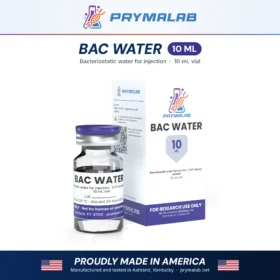
BAC Water (Bacteriostatic Water) 10ML
$7.99 This product has multiple variants. The options may be chosen on the product page -

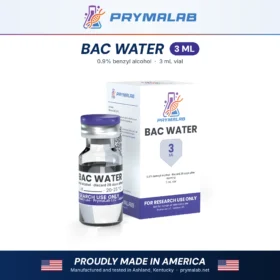
BAC Water (Bacteriostatic Water) 3ML
$3.99 This product has multiple variants. The options may be chosen on the product page
Nine of sixteen are receptor modulators · and what selectivity means
SARMs for sale in this category sit alongside compounds that are not SARMs at all. The honest place to start is with that mix. Of the sixteen products offered here, nine are selective androgen receptor modulators and the label SARMs for sale describes those nine accurately. The remaining seven are a metabolic compound, two peptide fragments, a nootropic and a set of compounds that fit no other heading. This page explains the selectivity premise the class is named for, and how far the published record supports it.
Specification Table
| Property | Value |
|---|---|
| Products in this category | 16 |
| Selective androgen receptor modulators among them | RAD-140, RAD-150, S-23, S4, YK-11, AC-262, and the related compounds GW-501516 and SR-9011 |
| Compounds here that are not SARMs | 5-Amino-1MQ, PNC-27, Tesofensine, SLU-PP-332, Ac-SDKP, Noopept, MK-677 |
| What the class name claims | Binding at the androgen receptor with tissue-dependent rather than uniform effect |
| Chemical class | Non-steroidal. Aryl propionamide, quinolinone and related scaffolds |
| Why non-steroidal matters | The scaffold is unrelated to the steroid ring system despite acting at the same receptor |
| GW-501516 actual target | PPAR-delta, a nuclear receptor unrelated to the androgen receptor |
| SR-9011 actual target | REV-ERB, a circadian nuclear receptor, also unrelated |
| MK-677 actual target | GHS-R1a, the growth hormone secretagogue receptor |
| Why those three are grouped here anyway | Market convention rather than pharmacology |
| Standard identity method for this class | Nuclear magnetic resonance alongside mass spectrometry, since structural isomers share a mass |
| Documented labelling accuracy | Published analysis of this market found the labelled compound present as stated in a minority of samples |
| Page type | Category hub, not a product page |
| Schema page type | CollectionPage |
| Cornerstone content | Yes |
| Meta robots | index, follow |
| Regulatory status | No compound in this category holds an approved human or veterinary formulation |
What Does Selective Actually Mean in This Class?
The word selective carries the entire premise of the class, and it is worth unpacking rather than accepting.
The androgen receptor is a single protein expressed across many tissues. A conventional steroid binds it everywhere it is found, which is why steroid effects appear in tissues nobody was targeting.
The selectivity claim is that a non-steroidal ligand can bind the same receptor and produce a tissue-dependent outcome rather than a uniform one.
The proposed mechanism is coactivator recruitment. A receptor bound by different ligands adopts slightly different conformations, and those conformations recruit different coregulatory proteins, which are themselves expressed differently between tissues.
So the selectivity is claimed to arise downstream of binding rather than at the binding site. That is a subtle and testable proposition.
Published characterisation reports differing ratios of effect between tissue types in animal models for several compounds in this class, which is the evidence the premise rests on.
What that evidence does not establish is that the ratio holds across species, across concentrations, or across the whole time course of exposure.
A compound described as tissue-selective has been shown to produce a ratio in a particular model, and the ratio is a measured property of that experiment rather than an intrinsic property of the molecule.
One consequence follows for anyone comparing SARMs for sale across suppliers. A selectivity figure quoted without the model, the species and the concentration attached is not a specification, and it cannot be checked.
It is closer to a summary of an experiment run elsewhere, repeated until it reads like a property of the compound.
How Do the Compounds in This Class Differ?
Three chemical scaffolds account for most of the class and they are not interchangeable.
Aryl propionamides are the oldest group and derive from early non-steroidal antiandrogen chemistry, repurposed once it became clear the same scaffold could act as an agonist with the right substitutions. S4 sits here.
Quinolinones and related bicyclics are a separate scaffold reached independently, and the binding geometry differs even though the target is the same.
RAD-140 belongs to yet another structural family and is among the more studied compounds in published characterisation work.
YK-11 is the outlier and it is frequently misdescribed. Its structure is steroidal rather than non-steroidal, built on a gestrinone-derived skeleton, which makes calling it a SARM a category error that has propagated widely.
Scaffold matters for verification as much as for pharmacology, because compounds within a scaffold family are structural isomers of one another and share molecular formulas.
That is precisely the situation where mass spectrometry alone cannot distinguish one product from another, and it is why this class needs nuclear magnetic resonance in a way the peptide range does not.
A certificate reporting HPLC purity and a matching mass for an aryl propionamide has confirmed the formula and left the arrangement open.
Potency across the class also varies by more than an order of magnitude. It does not track scaffold in any tidy way.
Two compounds sharing a skeleton can differ substantially in receptor affinity, and two from unrelated skeletons can land close together.
That is ordinary medicinal chemistry rather than anything unusual. It means the scaffold tells you about verification rather than about strength.
Which Compounds Here Are Not SARMs at All?
Three compounds are sold alongside this class routinely and act at receptors that have nothing to do with androgens.
GW-501516 binds PPAR-delta, a nuclear receptor governing lipid handling and oxidative metabolism. Its inclusion in SARM listings is market convention and nothing more.
SR-9011 acts at REV-ERB, a nuclear receptor forming part of the circadian transcriptional loop, which is a different biological system again.
MK-677 binds GHS-R1a, the growth hormone secretagogue receptor covered in detail on the growth hormone hub, and it is not an androgen receptor ligand in any sense.
Grouping the three with receptor modulators is not harmless, because a researcher reading class-level literature and applying it to any of them will be applying the wrong literature.
The other non-SARM compounds in this category are more obviously distinct. PNC-27 is a peptide, Ac-SDKP is a tetrapeptide fragment, and Tesofensine is a monoamine reuptake inhibitor.
5-Amino-1MQ inhibits nicotinamide N-methyltransferase, an enzyme in the NAD salvage pathway, and SLU-PP-332 is an ERR agonist.
Reading the individual product page rather than the category heading is therefore load-bearing here in a way it is not for a well-sorted category, and that is a consequence of how this catalogue grew rather than a deliberate design.
How Should SARMs for Sale Be Verified?
Verification for SARMs for sale is stricter than for peptides, and the reason is structural rather than regulatory.
Nuclear magnetic resonance data, alongside mass spectrometry, because structural isomers within a scaffold family share a molecular formula and therefore share a mass. This is the single most important request and it is the one least often granted.
Purity by chromatography with the method and detection wavelength stated, and the chromatogram itself rather than a summary percentage.
The specific lot the order will ship from, with its certificate produced before purchase rather than after.
Which laboratory performed the analysis, and whether it was in-house or contracted. Both answers are fine and evasion is not.
Solubility data, since a large share of these compounds are not water soluble and require an organic co-solvent that becomes a variable in any assay.
Storage and light sensitivity, because several compounds in this class photodegrade in a way the peptide range does not.
Published analysis of material sold in this market has found labelling accuracy to be poor, which is covered in detail on the research chemicals hub and is the reason none of the above is optional.
A supplier who supplies nuclear magnetic resonance data without being asked has already answered most of the rest.
A closing note on why this matters more here than elsewhere in the catalogue. Anyone buying SARMs for sale is purchasing from a market where the published labelling accuracy is poor and where structural isomers are common.
Those two facts compound. A mislabelled isomer passes a mass check, passes a purity check, and fails only the test most suppliers do not run.
Why Is This Category Named Miscellaneous?
The heading on this page and the products beneath it do not match, and the reason is worth stating plainly rather than quietly fixing.
This category accumulated compounds that did not fit the other research chemical headings as the catalogue grew, and the receptor modulators ended up here by default rather than by design.
Nine related compounds sitting under a heading that describes none of them is a navigation problem before it is anything else, since a visitor looking for one of them has no reason to open a category called miscellaneous.
Several compounds here also appear in other categories, which means the same product is reachable by more than one path and neither path describes it well.
The honest position is that this is a catalogue structure question rather than a copy question, and copy can only partially compensate for it.
What this page does is describe what is actually present, so that a visitor arriving from a search for receptor modulators finds them and understands what else is in the list.
What it cannot do is make a mixed category read as a coherent one, and pretending otherwise would be the kind of overclaiming this catalogue avoids elsewhere.
Anyone browsing rather than searching is better served by the product pages, each of which states its own target, scaffold and verification requirements.
One practical suggestion, offered as a catalogue observation rather than a copy fix. A category holding nine related compounds has earned its own heading.
Splitting them out would let this page describe what remains, and would give the receptor modulators a URL that matches what a searcher typed.
Published Literature
Selected references on the receptor pharmacology and on labelling accuracy in this market.
- Bhasin S, Jasuja R. Selective androgen receptor modulators as function promoting therapies. Curr Opin Clin Nutr Metab Care. 2009;12(3):232-240. DOI: 10.1097/MCO.0b013e32832a3d79
- Van Wagoner RM, Eichner A, Bhasin S, Deuster PA, Eichner D. Chemical composition and labeling of substances marketed as selective androgen receptor modulators and sold via the internet. JAMA. 2017;318(20):2004-2010. DOI: 10.1001/jama.2017.17069
- Thevis M, Schanzer W. Detection of SARMs in doping control analysis. Mol Cell Endocrinol. 2018;464:34-45. DOI: 10.1016/j.mce.2017.01.040
- Narayanan R, Coss CC, Dalton JT. Development of selective androgen receptor modulators (SARMs). Mol Cell Endocrinol. 2018;465:134-142. DOI: 10.1016/j.mce.2017.06.013
Frequently Asked Questions
What are SARMs?
Non-steroidal compounds that bind the androgen receptor, named for a claim that the effect is tissue-dependent rather than uniform. Nine of the sixteen products in this category belong to that class.
What does selective mean in this context?
That a ligand binding the receptor produces a tissue-dependent outcome. The proposed mechanism is coactivator recruitment, where different ligands hold the receptor in slightly different conformations that recruit different coregulatory proteins.
Is the selectivity claim established?
Published characterisation reports differing ratios of effect between tissue types in animal models. That is a measured property of a particular experiment rather than an intrinsic property of the molecule, and it does not automatically hold across species or concentrations.
Why is YK-11 described differently here?
Because its structure is steroidal rather than non-steroidal, built on a gestrinone-derived skeleton. Calling it a SARM is a category error that has propagated widely through this market.
Is GW-501516 a SARM?
No. It binds PPAR-delta, a nuclear receptor governing lipid handling and oxidative metabolism. Its presence in SARM listings is market convention rather than pharmacology.
Is SR-9011 a SARM?
No. It acts at REV-ERB, a nuclear receptor forming part of the circadian transcriptional loop, which is an unrelated biological system.
Is MK-677 a SARM?
No. It binds GHS-R1a, the growth hormone secretagogue receptor. It is not an androgen receptor ligand in any sense and the growth hormone hub covers it properly.
Why does this class need NMR when peptides do not?
Because structural isomers within a scaffold family share a molecular formula and therefore share a mass. Mass spectrometry confirms the formula and leaves the arrangement open, which nuclear magnetic resonance resolves.
What are the main chemical scaffolds?
Aryl propionamides, derived from early non-steroidal antiandrogen chemistry, quinolinones and related bicyclics reached independently, and further structural families. The scaffold determines binding geometry and verification requirements.
How accurate is labelling in this market?
Poor. Published analysis of products sold online as selective androgen receptor modulators found the labelled compound present as stated in a minority of samples, which the research chemicals hub covers in detail.
Why is the category called miscellaneous?
It accumulated compounds that did not fit the other research chemical headings as the catalogue grew, and the receptor modulators ended up here by default. That is a catalogue structure question rather than a copy question.
Do any of these hold an approved formulation?
No. No compound in this category holds an approved human or veterinary formulation in any jurisdiction, and all material is supplied for laboratory research only.
Compliance Statement
SARMs and the other compounds in this category are sold exclusively for laboratory research use. They are not a drug, food, or cosmetic product, and they are not a dietary product of any kind. They are not approved by the FDA or any comparable authority for human or veterinary use, tissue selectivity is a measured ratio in specific animal models rather than an established intrinsic property, several compounds grouped with this class act at entirely unrelated receptors, published analysis of this market has documented poor labelling accuracy, and no compound listed here holds an approved human or veterinary formulation. These products are not intended to diagnose, treat, cure, or prevent any disease. They must not be given to humans or animals. Purchase is restricted to qualified researchers and institutions operating within applicable laws. All handling is the responsibility of the purchasing laboratory.
All 2 products in the Miscellaneous Research Compounds range
Every listing states its quantity, concentration and format and carries a batch certificate of analysis. Products are supplied for laboratory research only.