Description
PrymaLab · Research use only
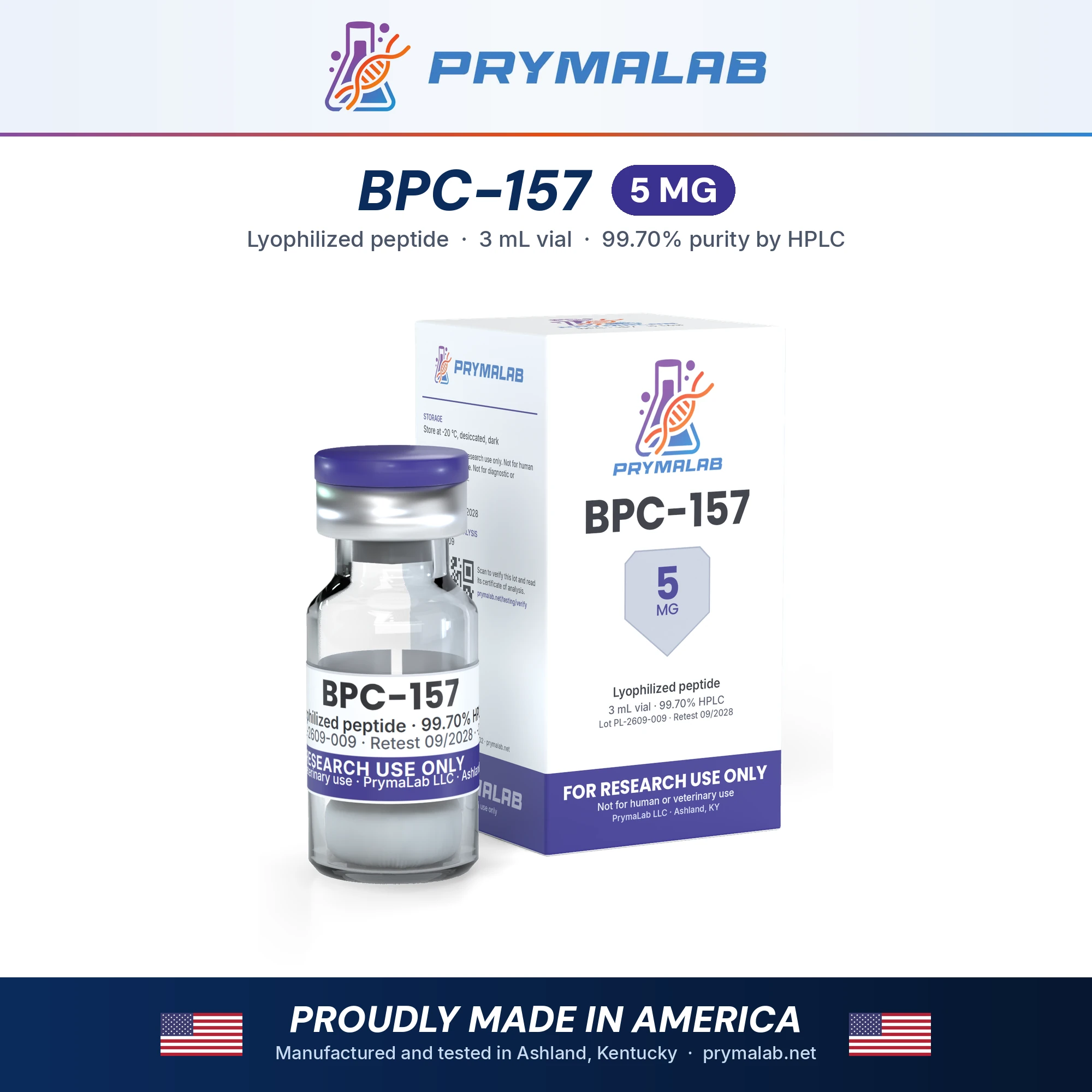
BPC-157 5MG
The 15-residue gastric peptide GEPPPGKPADDAGLV, freeze-dried in a 5 mg vial
BPC-157 is a synthetic peptide of 15 amino acids, GEPPPGKPADDAGLV, that reproduces part of a protein first isolated from human gastric juice. This listing is the main BPC-157 vial: 5 mg of freeze-dried powder, with a 10 mg fill sold alongside it. Published work on BPC-157 has looked at gut lesions, tendon and muscle injury and the growth of new blood vessels, almost all of it in rats and cultured cells, and much of it from one research group in Zagreb.
Specifications
| Property | Value |
|---|---|
| Compound | BPC-157 Body Protection Compound-157; pentadecapeptide |
| CAS number | 137525-51-0 |
| Molecular formula | C62H98N16O22 |
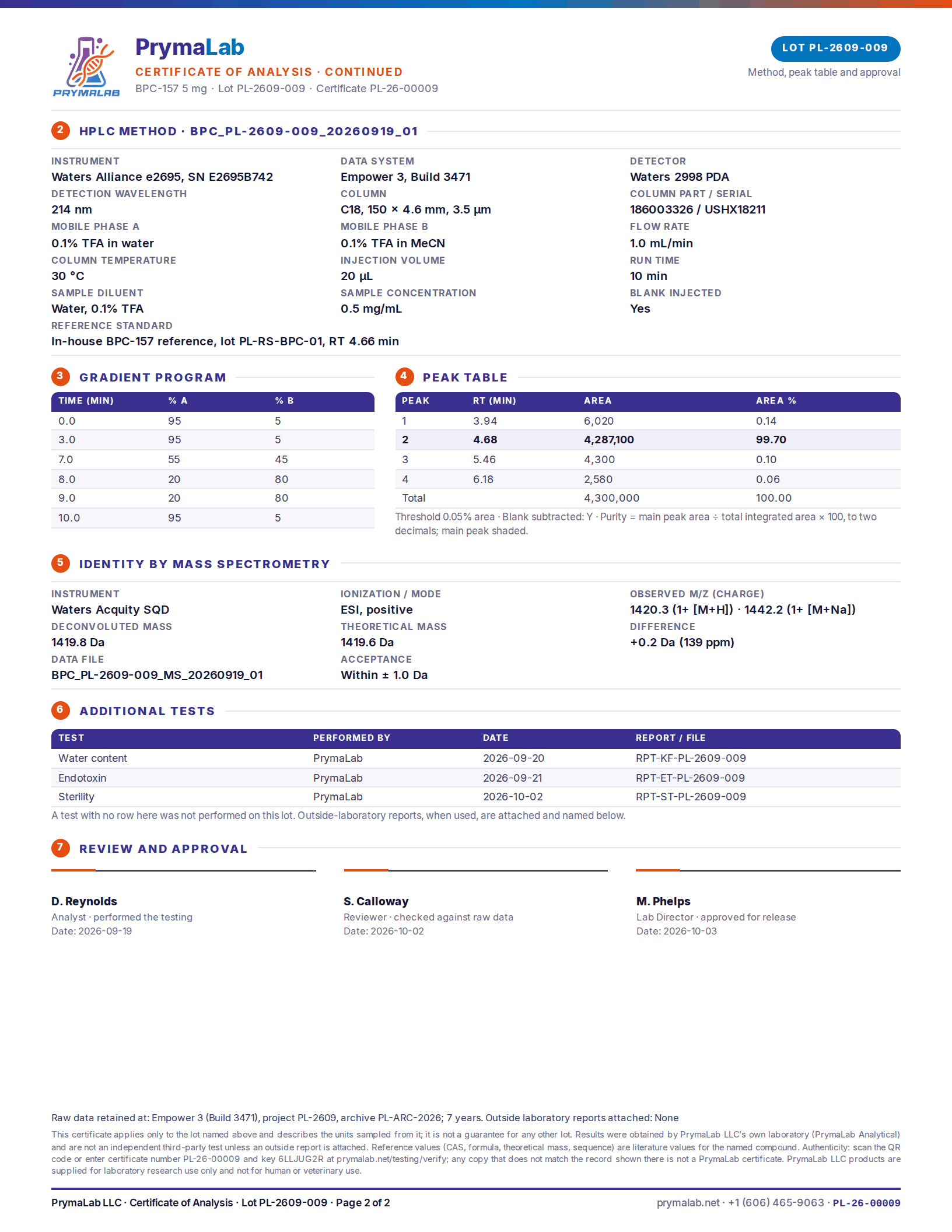
| Theoretical mass | 1419.6 Da |
| Sequence / structure | H-GEPPPGKPADDAGLV-OH (15 residues; free N- and C-termini) |
| Label claim | 5 mg/vial |
| Form | Lyophilized (freeze-dried) powder or cake in a sealed glass vial with a rubber stopper and aluminium crimp cap |
| Storage, sealed | −20 °C, desiccated, dark |
| Purity specification | 99.0% or higher by RP-HPLC |
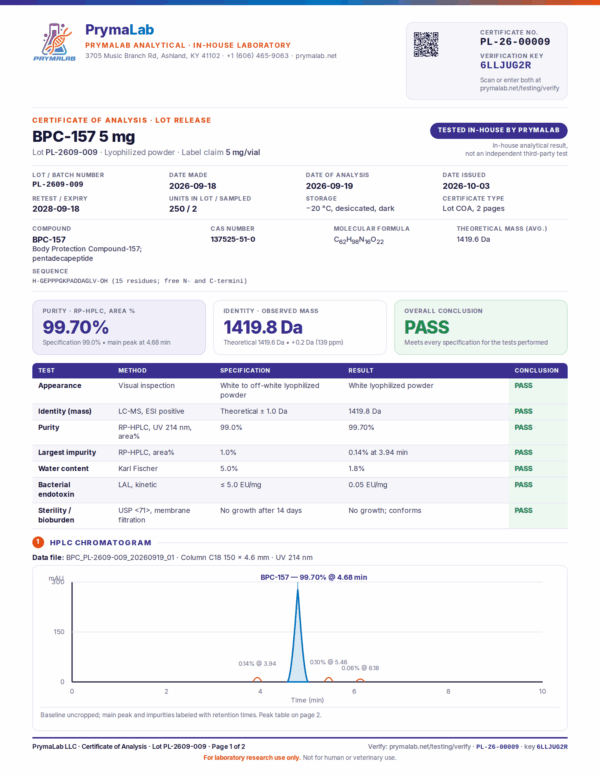
| Lot certificate | Results for the lot now shipping are in the certificate panel on this page |
| Safety data sheet | PL-SDS-019 |
Fills in this range
BPC-157 is sold in 2 fills. The compound and the testing are the same in every fill; only the amount in the vial changes.
| Fill | Listing |
|---|---|
| 5 mg | BPC-157 5MG (this page) |
| 10 mg | BPC-157 10MG |
Sequence, mass and the vial certificate
The certificate gives the sequence as H-GEPPPGKPADDAGLV-OH: glycine at one end, valine at the other, and both termini left free rather than capped. Four of the fifteen residues are proline, three of them in a row near the N-terminus. There is no cysteine, so the peptide has no disulfide bond to form or scramble. The molecular formula is C62H98N16O22 and the theoretical mass is 1419.6 Da, which is the number to hold against the LC-MS identity result on the lot certificate.
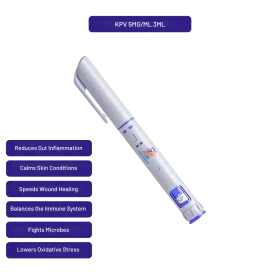
With the mass known, molar amounts are simple arithmetic: 5 mg of a 1419.6 Da peptide is about 3.5 µmol, slightly less in practice because the powder also carries the residual water the certificate reports. The same peptide is sold ready-dissolved as a BPC-157 pen and a BPC-157 nasal spray, and in solid form as BPC-157 capsules.
What the research covers
Origin and identity
BPC-157 is a partial sequence of a larger protein, body protection compound, that was discovered in and isolated from human gastric juice1. Predrag Sikiric’s group at the University of Zagreb, which produced much of the early work, described the pentadecapeptide as stable in human gastric juice, gave it the designation PL 14736 and a molecular weight of 14192. Their 2011 review called it an anti-ulcer agent with no reported toxicity and said it had been safe in clinical trials in inflammatory bowel disease, although the abstract gives neither the design nor the results of those trials2.
Gut and blood vessel studies in rats
Most of the evidence comes from rat injury models. The same review covered lesions of the oesophagus, stomach, duodenum, intestine, liver and pancreas, with particular attention to damage from alcohol and from NSAIDs2. In rats with oesophagitis and failing sphincters, BPC-157 brought pressure in the lower oesophageal and pyloric sphincters back toward normal, while in healthy rats it could lower one and raise the other2. The group also reported healing of intestinal anastomoses and of fistulas between the gut and the skin, prevention and reversal of thrombus after abdominal aorta anastomosis, and interactions with the nitric oxide, dopamine and serotonin systems2. A 2018 review by Seiwerth, Rucman and colleagues, co-authors of the 2011 paper, set BPC-157 beside EGF, FGF and VEGF and concluded that only BPC-157 was consistently effective across their acute and chronic injury models from the oesophagus to the lower gut; it went on to tendon, ligament, muscle and bone3.
Cell work on tendon fibroblasts and endothelium
A separate group, Chang, Tsai and colleagues, cultured fibroblasts from the rat Achilles tendon. BPC-157 sped the outgrowth of cells from tendon explants, increased migration and spreading in step with its concentration, and helped the cells survive hydrogen peroxide stress, yet it had no direct effect on proliferation1. Treated cells formed more F-actin and showed higher phosphorylation of FAK and paxillin1. A later microarray study from the same laboratory found the growth hormone receptor among the genes most strongly up-regulated, and treated fibroblasts then divided faster when growth hormone was added, with JAK2 activated downstream4. On the vascular side, Hsieh and colleagues reported higher vessel density in the chick chorioallantoic membrane and in endothelial tube-formation assays, faster recovery of blood flow in ischaemic rat hind limbs, and more VEGFR2, but not VEGF-A, in human endothelial cells, along with activation of VEGFR2-Akt-eNOS signalling5.
What is not established
A 2019 critical review of the musculoskeletal studies found them consistently positive, but noted that most were in small rodents, that efficacy in humans had yet to be confirmed, and that only a handful of research groups had studied the peptide in depth over two decades6. Two of the reviews cited here come from the Zagreb group summarising its own experiments, and outside replication is limited to a few laboratories6. None of these abstracts identifies a receptor that BPC-157 binds, and none of the studies used PrymaLab material.
The BPC-157 Peptide guide covers the literature in more depth.
How each lot is tested
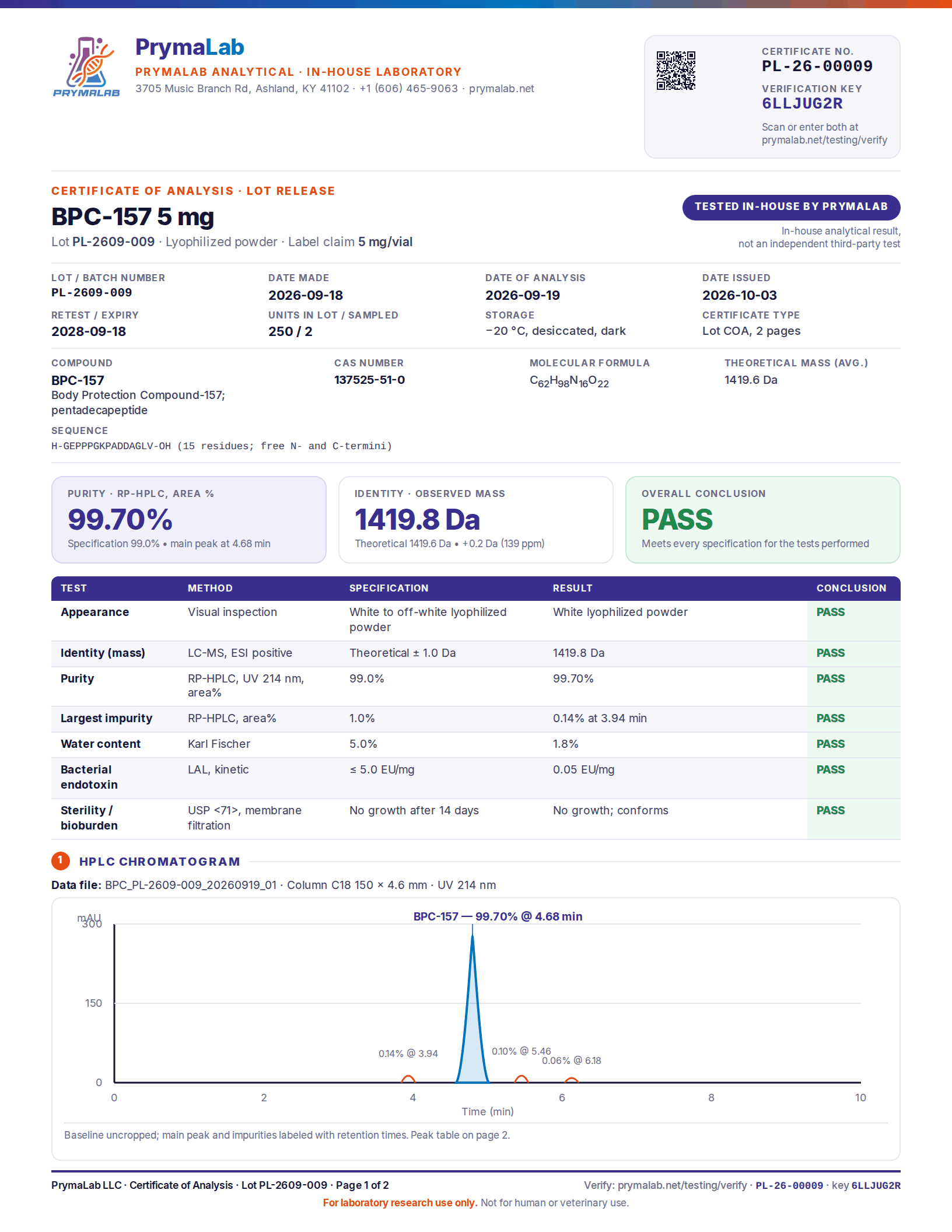
Every lot is tested in PrymaLab’s own laboratory in Ashland, Kentucky before release: RP-HPLC for purity, LC-MS for identity, Karl Fischer titration for water, LAL for endotoxin and USP <71> for sterility. The results for the lot now shipping are in the certificate panel on this page, and the certificate number, key and QR code can be checked on the verify page. These are in-house results from PrymaLab Analytical, not an independent test, and the lab is not accredited to ISO 17025. The third-party testing guarantee on this page still applies: if any independent laboratory finds the wrong compound, or less than the stated purity or amount, the order is refunded and the cost of the test is reimbursed.
Frequently asked questions
What exactly is in the 5 mg vial?
5 mg of synthetic BPC-157, the 15-residue peptide H-GEPPPGKPADDAGLV-OH, as white freeze-dried powder in a sealed glass vial. The safety data sheet lists no other ingredient. The lot certificate gives the measured mass against the theoretical 1419.6 Da, together with purity, water content, endotoxin and sterility.
How does this vial compare with the 10 mg vial and the other BPC-157 formats?
The 10 mg vial holds twice the peptide and is made and tested as its own lot. The pen and the nasal spray contain BPC-157 already dissolved in bacteriostatic water and are kept refrigerated; the capsules hold it blended with a cellulose filler. The 5 mg vial keeps the peptide dry until you dissolve it.
How do I check the certificate for the vial I received?
Every vial is printed with its lot number. Compare it with the certificate panel on this page, which shows the lot currently shipping. Certificates for earlier lots are on the testing results page, and any certificate can be confirmed on the verify page with its number and key.
How should the vial be stored?
Sealed, at −20 °C, dry and dark. Let the closed vial warm to room temperature before opening so that moisture does not condense on the powder. After reconstitution, keep the solution at 2 to 8 °C away from light and use it within the period your laboratory has set.
Has BPC-157 been studied in humans?
Very little. The papers cited here are cell and rodent studies and reviews of them. One Zagreb review states that the peptide was safe in inflammatory bowel disease trials without reporting results, and a 2019 review concluded that efficacy in humans had not been confirmed.
Is this product for human or veterinary use?
No. It is sold only for laboratory research, has no FDA or other regulatory approval for use in people or animals, and must not be given to either. This page summarises published research and does not describe any clinical use.
References
- Chang CH, Tsai WC, Lin MS, et al. The promoting effect of pentadecapeptide BPC 157 on tendon healing involves tendon outgrowth, cell survival, and cell migration. J Appl Physiol (1985). 2011;110(3):774-80. DOI · PubMed
- Sikiric P, Seiwerth S, Rucman R, et al. Stable gastric pentadecapeptide BPC 157: novel therapy in gastrointestinal tract. Curr Pharm Des. 2011;17(16):1612-32. DOI · PubMed
- Seiwerth S, Rucman R, Turkovic B, et al. BPC 157 and Standard Angiogenic Growth Factors. Gastrointestinal Tract Healing, Lessons from Tendon, Ligament, Muscle and Bone Healing. Curr Pharm Des. 2018;24(18):1972-1989. DOI · PubMed
- Chang CH, Tsai WC, Hsu YH, et al. Pentadecapeptide BPC 157 enhances the growth hormone receptor expression in tendon fibroblasts. Molecules. 2014;19(11):19066-77. DOI · PubMed
- Hsieh MJ, Liu HT, Wang CN, et al. Therapeutic potential of pro-angiogenic BPC157 is associated with VEGFR2 activation and up-regulation. J Mol Med (Berl). 2017;95(3):323-333. DOI · PubMed
- Gwyer D, Wragg NM, Wilson SL. Gastric pentadecapeptide body protection compound BPC 157 and its role in accelerating musculoskeletal soft tissue healing. Cell Tissue Res. 2019;377(2):153-159. DOI · PubMed
Research use only
For laboratory research use only. BPC-157 5MG is not a drug, food, cosmetic or dietary supplement, is not approved by the FDA or any comparable authority for human or veterinary use, and must not be given to people or animals. It is sold to qualified researchers and institutions, and the buyer is responsible for lawful handling and disposal.
Other formats of BPC-157
BPC-157 is also stocked as BPC-157 + TB500 (10mg/10mg) "Wolverine Blend", BPC 157 5mg + TB500 5mg, TB-500 5mg/ml preloaded 3ml pen and Wolverine Stack (BPC-157 + TB-500) 20mg preloaded 3ml pen. Each listing states its own quantity and concentration, and the pen and vial comparison explains what changes between formats.









2 reviews for BPC-157 5MG