-

5-Amino-1MQ 50mg (60 Capsules)
$179.99 or subscribe for $149.99/mo This product has multiple variants. The options may be chosen on the product page -

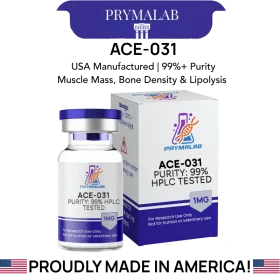
ACE-031 1MG
$129.99 or subscribe for $109.99/mo This product has multiple variants. The options may be chosen on the product page -
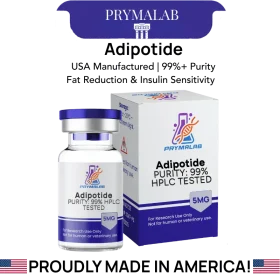
Adipotide 5mg
$49.99 or subscribe for $41.99/mo This product has multiple variants. The options may be chosen on the product page -
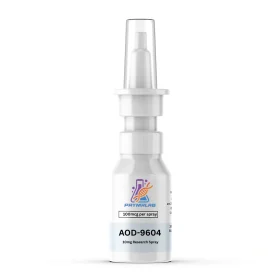
AOD9604 10mg Nasal Spray
$119.99 or subscribe for $101.99/mo This product has multiple variants. The options may be chosen on the product page -
Sale!
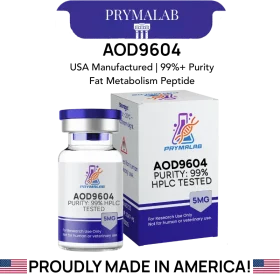
AOD9604 5MG
$34.99 or subscribe for $27.99/mo This product has multiple variants. The options may be chosen on the product page -
ARA-290 10mg
$48.99 or subscribe for $40.99/mo This product has multiple variants. The options may be chosen on the product page -
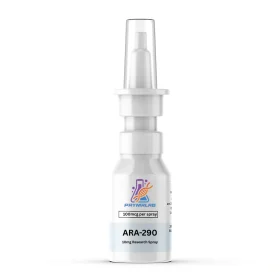
ARA-290 10mg Nasal Spray
$79.99 or subscribe for $67.99/mo This product has multiple variants. The options may be chosen on the product page -
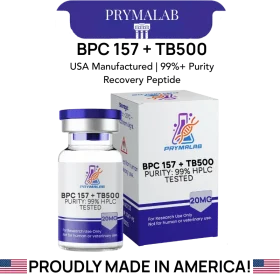
BPC 157 5mg + TB500 5mg
$49.99 or subscribe for $39.99/mo This product has multiple variants. The options may be chosen on the product page -
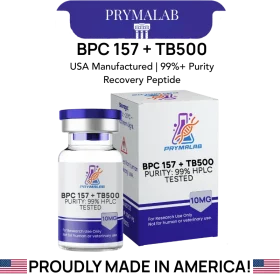
BPC-157 + TB500 (10mg/10mg) “Wolverine Blend”
$109.99 or subscribe for $89.99/mo This product has multiple variants. The options may be chosen on the product page -
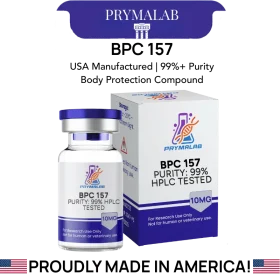
BPC-157 10MG
$39.99 or subscribe for $32.99/mo This product has multiple variants. The options may be chosen on the product page -
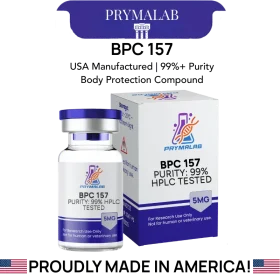
BPC-157 5MG
$19.99 or subscribe for $16.99/mo This product has multiple variants. The options may be chosen on the product page -
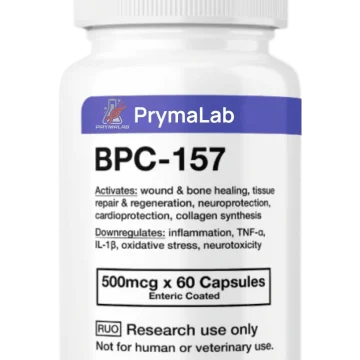
BPC-157 Capsules (60/500mcg)
$129.99 or subscribe for $99.99/mo This product has multiple variants. The options may be chosen on the product page -
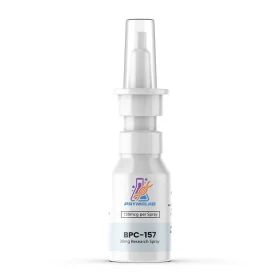
BPC-157 Peptide Nasal Spray
$119.99 or subscribe for $99.99/mo This product has multiple variants. The options may be chosen on the product page -
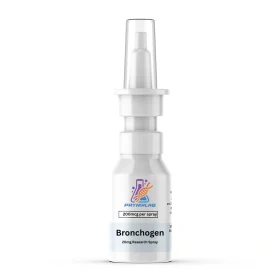
Bronchogen 20mg Nasal Spray
$119.99 or subscribe for $101.99/mo This product has multiple variants. The options may be chosen on the product page -
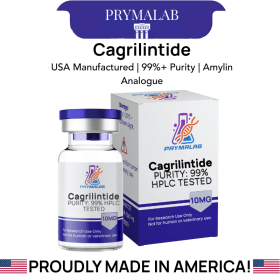
Cagrilintide 10mg
$99.99 or subscribe for $84.99/mo This product has multiple variants. The options may be chosen on the product page -
cagrilintide 2.5mg + semaglutide 2.5mg
$49.99 or subscribe for $39.99/mo This product has multiple variants. The options may be chosen on the product page -
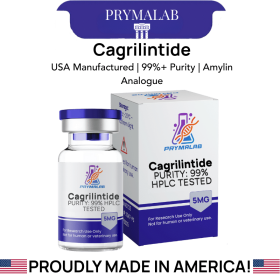
Cagrilintide 5mg
$59.99 or subscribe for $49.99/mo This product has multiple variants. The options may be chosen on the product page -
Cagrilintide 5mg + Semaglutide 5mg
$89.99 or subscribe for $75.99/mo This product has multiple variants. The options may be chosen on the product page -
Cardiogen 20mg Nasal Spray
$119.99 or subscribe for $101.99/mo This product has multiple variants. The options may be chosen on the product page -
Cerebrolysin 120mg Nasal Spray
$219.99 or subscribe for $186.99/mo This product has multiple variants. The options may be chosen on the product page -
Cerebrolysin 60mg
$49.99 or subscribe for $41.99/mo This product has multiple variants. The options may be chosen on the product page -
Chonluten 20mg Nasal Spray
$119.99 or subscribe for $101.99/mo This product has multiple variants. The options may be chosen on the product page -
Sale!
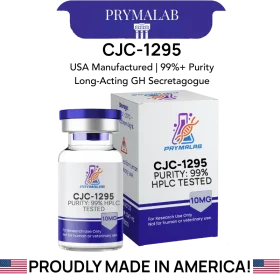
CJC-1295 (NO DAC) 10MG
$44.99 or subscribe for $34.99/mo This product has multiple variants. The options may be chosen on the product page -
Sale!
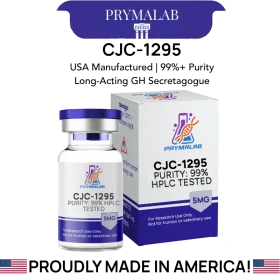
CJC-1295 (NO DAC) 5MG
$24.99 or subscribe for $22.99/mo This product has multiple variants. The options may be chosen on the product page -
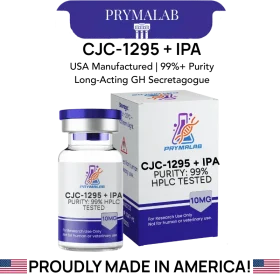
CJC-1295 (no DAC), Ipamorelin 10mg (Blend)
$59.99 or subscribe for $49.99/mo This product has multiple variants. The options may be chosen on the product page -
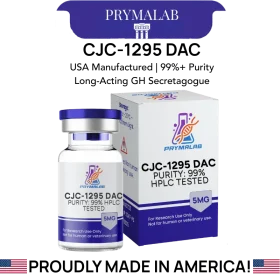
CJC-1295 DAC 5MG
$38.99 or subscribe for $32.99/mo This product has multiple variants. The options may be chosen on the product page -
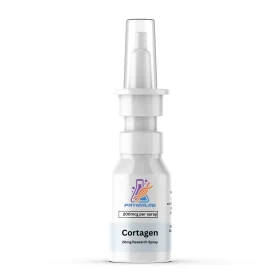
Cortagen 20mg Nasal Spray
$119.99 or subscribe for $101.99/mo This product has multiple variants. The options may be chosen on the product page -
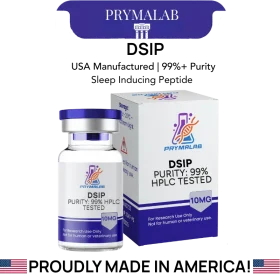
DSIP 10MG
$29.99 or subscribe for $24.99/mo This product has multiple variants. The options may be chosen on the product page -
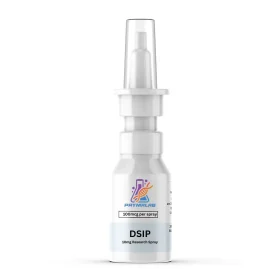
DSIP 10mg Nasal Spray
$59.99 or subscribe for $49.99/mo This product has multiple variants. The options may be chosen on the product page -
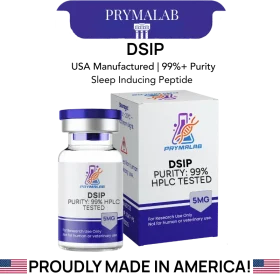
DSIP 5MG
$14.99 or subscribe for $11.99/mo This product has multiple variants. The options may be chosen on the product page


What the grade means · what a certificate has to show
Research peptides are synthetic amino acid sequences supplied for laboratory work, and the phrase describes a legal status rather than a quality standard. Nothing in it guarantees purity, identity or accurate labelling. What guarantees those is a certificate of analysis with specific fields on it, and this page sets out which fields, why each one exists, and what their absence tells you about a supplier.
Specification Table
| Property | Value |
|---|---|
| What the term describes | Intended use and legal status, not a purity specification |
| What it guarantees about purity | Nothing on its own. Purity is a lot-specific measured value |
| Governing labelling concept | Research use only, meaning not for human or veterinary use and not for diagnostic procedures |
| Standard purity method | Reverse-phase HPLC, area percent at a stated wavelength |
| Standard identity method | Mass spectrometry, observed mass against calculated mass |
| Field most often missing | Net peptide content, which is the fraction that is actually peptide |
| Second most often missing | Counterion identity, usually trifluoroacetate or acetate |
| Why those two matter | Together they can account for 15 to 30 percent of the mass in a vial |
| What a purity figure alone omits | Water, salt and counterion, none of which appear in an area percent number |
| Lot specificity | Every figure on a certificate applies to one synthesis lot and no other |
| Page type | Category hub, not a product page |
| Schema page type | CollectionPage |
| Cornerstone content | Yes |
| Meta robots | index, follow |
| Regulatory status | No compound in this category holds an approved human or veterinary formulation |
What Does the Grade on Research Peptides Actually Guarantee?
The phrase research peptides is doing less work than most buyers assume, and the gap is worth naming precisely.
It describes intended use. The material is supplied for laboratory work, it is not for human or veterinary use, and it is not validated for any diagnostic procedure.
That is a statement about what the seller permits, not a statement about what is in the vial.
There is no grading body, no agency inspecting suppliers and issuing ratings, and no threshold purity that has to be met before the phrase may be used.
Two vials from two suppliers, both truthfully described as research peptides, can differ by twenty percentage points of purity and by an entire order of magnitude in impurity profile.
What closes that gap is measurement. A certificate of analysis reports what a specific synthesis lot actually contained, determined by instruments, on a named date.
The certificate is therefore the product in a meaningful sense, because the powder is inert until somebody knows what it is.
A supplier who publishes lot-specific certificates and a supplier who publishes a generic purity claim are not offering the same thing, whatever the listing says.
What Has to Be on a Certificate of Analysis?
Six fields carry almost all of the information, and most certificates in circulation carry four of them.
Purity by reverse-phase HPLC, expressed as area percent at a stated detection wavelength. The wavelength matters because 214 nanometres detects the peptide bond itself while 280 detects only aromatic residues, and a sequence without tryptophan, tyrosine or phenylalanine is close to invisible at 280.
Identity by mass spectrometry, reported as an observed mass against the calculated mass for the sequence. A figure within a fraction of a dalton confirms the molecular formula and does not confirm the order of the residues.
Sequence confirmation, where it exists at all, comes from tandem mass spectrometry or Edman degradation. Very few certificates in this market include it.
Net peptide content, the fraction of the vial contents that is peptide rather than water, salt or counterion. This is the field most often absent and it is frequently the largest correction.
Counterion identity, normally trifluoroacetate from the purification step or acetate after exchange. Trifluoroacetate is heavier and its contribution to vial mass is proportionally larger for small sequences.
Lot number and synthesis date, without which none of the preceding figures can be tied to the material actually shipped.
A certificate reporting purity and mass alone answers two of six questions and reads as though it answered all six.
Why Does Net Peptide Content Change the Arithmetic?
A vial labelled ten milligrams rarely contains ten milligrams of peptide. The shortfall is systematic rather than fraudulent.
Lyophilized peptide carries residual water, which is hygroscopic and varies with how the vial was sealed and stored.
It carries counterion, which is a chemical consequence of purification rather than an additive. Reverse-phase HPLC using trifluoroacetic acid leaves trifluoroacetate paired to every basic site on the molecule.
It carries residual salt from the synthesis and cleavage steps.
Added together those components commonly account for fifteen to thirty percent of the mass in the vial, and for small heavily basic sequences the figure runs higher still.
The consequence is arithmetic. Reconstituting a nominal ten milligram vial in one millilitre gives a solution somewhere between seven and eight and a half milligrams per millilitre of actual peptide, and the researcher has no way to know where in that range without the number.
Every downstream calculation inherits the error, and it inherits it silently because the solution looks identical either way.
This is the single most useful question to put to a supplier of research peptides, and the answer separates operations that run their own analytics from operations that resell drums.
How Should a Supplier Be Verified?
Verification is a small number of specific questions, and the answers are informative even when they are refusals.
Ask for the certificate for the lot you would receive, not a specimen certificate. Real lot data takes minutes to produce.
Ask which laboratory performed the analysis and whether it is in-house or contracted. Both answers are acceptable. Evasion is not.
Ask for the chromatogram rather than the purity number. A number is a claim, and a trace shows where the impurities sit, whether they are resolved, and whether the integration was reasonable.
Ask for net peptide content and counterion identity. This is the question that most reliably separates suppliers, because the figures require analysis that a repackager has not done.
Ask what the storage history of the lot has been. Solution-state and reconstituted material has a clock running on it that a lyophilized powder does not.
Compare the calculated mass for the stated sequence against the observed mass on the certificate yourself. The calculation takes a minute, and it catches transcription errors, which are a good deal more common in this market than deliberate falsification.
A supplier who answers five of those six is unusual in this market. One who answers none is selling a listing rather than a compound.
How Is This Catalogue Organised?
The range divides by mechanism and by physical format, and knowing which axis you are on saves a great deal of browsing.
By mechanism the divisions are growth hormone axis compounds, metabolic and incretin compounds, repair and matrix compounds, neuroactive and cognitive compounds, pigmentary and melanocortin compounds, and the short peptide bioregulator family.
By format the divisions are lyophilized vials, preloaded autoinjector pens, nasal sprays, capsules and multi-component blends.
Those two axes are independent. The same sequence can appear as a vial, a pen and a spray, and the choice between them changes the handling requirements rather than the compound.
Format is not a minor decision. A lyophilized powder is stable for long periods at low temperature and starts its degradation clock at reconstitution, while a solution-state product started that clock at the fill line before it was shipped.
The bioregulator family sits apart from the rest of the catalogue because its compounds are very short, two to four residues, and because the published record behind them originates almost entirely from a single research programme.
Where a compound exists in more than one size, the difference is quantity rather than chemistry, and a supplier who manufactures a difference between them is worth reading sceptically.
Each sub-category hub carries the handling detail specific to its format, and each product page carries the sequence, the calculated mass and the citations for that individual compound.
What Should Be Recorded on Receipt?
Five fields recorded at receipt cover most of what goes wrong later, and none of them takes more than a minute.
Lot number, transcribed from the vial rather than from the invoice, since those two can differ when an order is split across lots.
Purity, net peptide content and counterion, copied from the certificate into the same record so the reconstitution arithmetic can be reproduced months later.
Arrival condition, meaning whether cold-chain material actually arrived cold. A shipment that spent a day at ambient temperature is not necessarily compromised, and it is not equivalent to one that did not.
Date of first reconstitution for any vial that gets opened, because that date is the start of the degradation clock and it will not be recoverable afterwards.
Container material for anything stored in solution, since adsorption to ordinary polypropylene removes a measurable fraction of dilute peptide from small volumes.
Those five fields are what turn a result into something a second laboratory could reproduce.
Their absence is the most common reason a research peptides experiment cannot be repeated, and it is entirely avoidable.
Published Literature
Selected references on peptide analysis, impurity profiling and the verification questions above.
- D'Hondt M, Bracke N, Taevernier L, et al. Related impurities in peptide medicines. J Pharm Biomed Anal. 2014;101:2-30. https://doi.org/10.1016/j.jpba.2014.06.012
- Mant CT, Chen Y, Yan Z, et al. HPLC analysis and purification of peptides. Methods Mol Biol. 2007;386:3-55. https://doi.org/10.1007/978-1-59745-430-8_1
- Verlander M. Industrial applications of solid-phase peptide synthesis. Int J Pept Res Ther. 2007;13:75-82. https://doi.org/10.1007/s10989-006-9075-7
- Goebel-Stengel M, Stengel A, Tache Y, Reeve JR. The importance of using the optimal plasticware and glassware in studies involving peptides. Anal Biochem. 2011;414(1):38-46. https://doi.org/10.1016/j.ab.2011.02.009
Frequently Asked Questions
What are research peptides?
Synthetic amino acid sequences supplied for laboratory work under research-use-only terms. The phrase describes intended use and legal status rather than anything at all about what the vial actually contains. It is not a purity grade and no agency issues it.
Does research grade mean high purity?
No. There is no threshold that has to be met before the phrase can be used. Purity is a measured, lot-specific value that appears on a certificate of analysis, and two vials both truthfully described this way can differ by twenty percentage points.
What is net peptide content?
The fraction of a vial that is actually peptide rather than residual water, salt or counterion. It commonly sits between seventy and eighty-five percent, and it is the field most often missing from a certificate.
Why does counterion identity matter?
Purification by reverse-phase HPLC with trifluoroacetic acid leaves trifluoroacetate bound to every basic site. Trifluoroacetate is heavier than acetate, so its contribution to vial mass is larger, and proportionally larger still for short sequences.
What detection wavelength should a purity figure state?
Either 214 or 280 nanometres, and the certificate should say which. Detection at 214 sees the peptide bond in every sequence. Detection at 280 sees only aromatic residues, so a sequence lacking tryptophan, tyrosine and phenylalanine is nearly invisible at that wavelength.
Does a matching mass confirm the sequence?
No. A mass within a fraction of a dalton confirms the molecular formula. It does not confirm residue order, and it cannot distinguish a sequence from a rearranged isomer of the same composition.
What is the single most useful question to ask a supplier?
Net peptide content and counterion identity for the specific lot. Those figures require analysis that a repackager has not performed, so the answer separates operations running their own analytics from operations reselling drums.
Why ask for a chromatogram rather than a purity number?
A number is a claim. A trace shows where impurities elute, whether they are resolved from the main peak, and whether the integration was reasonable. Co-eluting material can inflate a purity figure without any falsification taking place.
Are bulk peptides analysed differently from single vials?
The methods are the same. What changes is that one certificate covers a larger quantity, so a single lot underwrites more work and any error propagates further. Lot consistency becomes the governing concern rather than a formality.
Does format change the compound?
No. It changes the handling requirements. A lyophilized powder begins degrading at reconstitution, while a solution-state product began at the fill line, and the buyer has no visibility into how much of that interval elapsed before delivery.
What should be recorded when a shipment arrives?
Lot number transcribed from the vial, purity, net peptide content, counterion, arrival condition for cold-chain items, and date of first reconstitution. Those fields are what allow a second laboratory to reproduce the work.
Why does plasticware matter for dilute solutions?
Peptides adsorb to polypropylene and other common surfaces. At low concentration in small volumes the fraction removed from solution is measurable, which changes the concentration actually present rather than merely documenting it.
Compliance Statement
Research peptides are sold exclusively for laboratory research use. They are not a drug, food, or cosmetic product, and they are not a dietary product of any kind. They are not approved by the FDA or any comparable authority for human or veterinary use, no compound in this catalogue holds an approved human or veterinary formulation, and the analytical fields described on this page are supplier verification criteria rather than quality assurances made by this site. These products are not intended to diagnose, treat, cure, or prevent any disease. They must not be given to humans or animals. Purchase is restricted to qualified researchers and institutions operating within applicable laws. All handling is the responsibility of the purchasing laboratory.
Browse the Research Peptides range by focus
The range is split into 10 groups, each with its own page: Anti-Aging & Longevity Peptides (13), Cognitive, Sleep & Mood Peptides (17), Growth Hormone & Performance Peptides (37), Healing & Recovery Peptides (29), Peptide Blends (15), Peptide Nasal Sprays (37), Peptides Capsules (4), Preloaded Autoinjectors (57), Skin, Hair & Beauty Peptides (16) and Weight Loss & Metabolic Peptides (43). Open a group to see every product in it with its quantity, concentration and format. Everything is supplied for laboratory research only and ships with a batch certificate of analysis.