

Medical Disclaimer: This article is for educational and research-information purposes only and does not constitute medical advice. The research peptides discussed here — such as BPC-157, TB-500, and other growth-hormone-releasing peptides — are not approved by the FDA for human use and are sold for laboratory research purposes only. Learn more about what a peptide is.

Are Peptides Good for You? Benefits, Safety & Uses Explained
1. Peptides are short chains of 2 to 50 amino acids that act as targeted signaling molecules — the basis of every application in this guide.
2. "Are peptides good for you?" depends on the peptide: some are FDA-approved medicines, collagen and food peptides are broadly safe, and many performance peptides are research-only with limited human data.
3. The most-studied muscle- and recovery-related peptides (GHRPs, IGF-1, CJC-1295, follistatin, BPC-157, TB-500) are studied for muscle and tissue repair, and most are not approved for human use.
4. Skin peptides signal collagen production through fibroblasts; research suggests visible firmness improvements over 8 to 12 weeks.
5. Peptides are not steroids — peptides signal cells; steroids mimic hormones — different mechanisms, different risks.
6. Collagen peptides are a food-grade protein widely considered safe and pair well with vitamin C, adequate protein intake, and good sleep.
Peptides are big in the news and pop culture at the moment, and many are asking, "Are they good for you?" They are at the center of skincare, recovery, and metabolic research right now — and the honest answer? It depends on which peptide, at what dose, and in what context. Read on for the latest research on peptide benefits, plus considerations for safety, therapy, supplements, injections, skin, and muscle — and the areas where the evidence is still thin.
💡 Quick Answer
Peptides are short chains of 2 to 50 amino acids that act as the body's signaling molecules — telling cells to take different actions. Some may trigger collagen production, others repair tissue, and some regulate hormones and modulate immunity. Whether they're "good for you" depends on the specific peptide and how it's used. Some are well-established (insulin and GLP-1 drugs, such as semaglutide, are FDA-approved).
Many others — the recovery and performance peptides sold as research compounds — have limited human data and are not yet fully approved for human use. Safety is conditional, not guaranteed: it hinges on the peptide, the dose, product purity, and clinical oversight.
The category "peptide" is a broad one, and that's the source of most of the confusion. A collagen powder in your coffee and a prescription GLP-1 injection are all "peptides" — but they sit in completely different regulatory and evidence tiers. This guide keeps those tiers separate so you can see what's proven, what's promising, and what's still experimental.
Table of Contents
- 1. What Are Peptides? Understanding the Basics
- 2. How Do Peptides Work in the Body?
- 3. Peptide Benefits: What the Research Supports
- 4. Peptides for Skin: Anti-Aging and Beyond
- 5. Best Peptides for Muscle Growth: What Science Says
- 6. Peptide Therapy: Medical Uses and Innovations
- 7. Peptide Supplements: Forms, Effectiveness & Choosing
- 8. Peptide Injections: How They're Used in Research and Clinical Settings
- 9. Are Peptides Safe? Risks, Side Effects & Regulation
- 10. Are Peptides Steroids? Clearing Up the Confusion
- 11. Are Collagen Peptides Good for You?
- 12. Natural Sources of Peptides in Food
- 13. The Future of Peptide Research and Applications
- 14. Frequently Asked Questions
- 15. References
1. What Are Peptides? Understanding the Basics
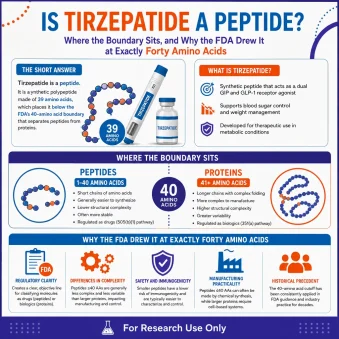
Peptides are short chains of amino acids, typically 2 to 50 residues linked by peptide bonds. They sit between single amino acids and full proteins on the size spectrum, and despite being small, they do a large share of the body's signaling work. Researchers have characterized hundreds of distinct peptide sequences with defined biological roles — including hormones such as insulin and oxytocin, immune modulators such as defensins, and growth factors involved in tissue repair.
The human body produces peptides naturally, and your diet supplies more — bioactive peptides from foods such as eggs, milk, soy, and fish. Synthetic peptides are manufactured in labs under controlled conditions for therapeutic, cosmetic, and research use. That mix of natural origin and biological precision (along with manufacturability) is why interest in peptides has climbed so fast.
Key Functions of Peptides in the Body
- Signaling: peptides bind cell-surface receptors to deliver targeted instructions.
- Collagen production: signal peptides direct skin cells to synthesize new collagen and elastin.
- Muscle repair and growth: specific peptides influence growth-hormone pathways and tissue regeneration.
- Immune modulation: peptides help calibrate the immune response to infection and inflammation.
- Hormone regulation: peptide hormones such as insulin, glucagon, and growth hormone control core metabolic processes.
- Tissue repair: peptides such as BPC-157 and TB-500 are studied for roles in healing and recovery.
Because peptides act as messengers rather than raw building blocks, even small amounts can produce fairly measurable biological effects that are worth researching. That precision is why peptides now show up across three very different worlds: cosmetic skincare, FDA-approved medicine, and early-stage research.
2. How Do Peptides Work in the Body?
Peptides work by binding to specific receptors on cell surfaces and triggering downstream responses. When a peptide docks with its target receptor, it works like a key in a lock: the cell receives a defined instruction — produce more collagen, release growth hormone, or dial down an inflammatory signal. This receptor-mediated action is why peptide effects tend to be selective, with fewer of the broad side effects you see from larger, less specific molecules.
Different peptides specialize in different processes. Collagen-stimulating peptides used in skincare communicate with fibroblasts. Growth hormone-releasing peptides (GHRPs) target the pituitary gland to stimulate the release of growth hormone. Repair peptides such as BPC-157 and TB-500 are being studied for their effects on actin dynamics, angiogenesis, and connective tissue repair.
Key Actions of Peptides in the Body
- Signaling: interacting with cell receptors to send precise biological messages.
- Regulation: helping balance hormone levels and immune responses toward homeostasis.
- Synthesis: participating in the formation of collagen, elastin, and other structural proteins.
- Repair: supporting tissue repair and muscle recovery after exercise or injury.
- Protection: antimicrobial peptides defending against pathogens.
The underlying principle is the same across all of them: deliver a specific molecular instruction to a specific cell type to produce a specific outcome. What changes are which peptide and which receptor, as well as how strong the evidence is for the result.
3. Peptide Benefits: What the Research Supports
Peptides earn attention because they act as "targeted messengers." Where a generic vitamin floods the body with a substrate, a peptide delivers a precise, targeted instruction. And it's that precision that underlies most of the applications you'll read about — like sports-medicine research and FDA-approved metabolic drugs.
The evidence is not uniform. Some peptide effects are well documented, such as insulin's role in blood sugar regulation, while others are still under active study with limited human data. The strongest evidence appears where the peptide is well characterized and the dose is well defined. When the work is conducted in controlled trials, that helps as well.
Peptide Benefits, by Evidence Tier
- Skin and anti-aging benefits: cosmetic peptides signal fibroblasts to produce collagen, and some clinical work links them to firmer skin and fewer fine lines.
- Muscle recovery benefits (under study): recovery-focused peptides such as GHRPs, IGF-1, CJC-1295, BPC-157, and TB-500 are researched for tissue repair and lean-tissue support, but most are not approved for human use.
- Joint and tissue repair benefits (under study): BPC-157 and TB-500 are among the most-studied peptides for tendon, ligament, and connective tissue healing.
- Immune modulation benefits: thymosin alpha-1 and related peptides are being studied for immune support.
- Metabolic health benefits (FDA-approved): GLP-1 receptor agonists such as semaglutide (Wegovy, Ozempic) and tirzepatide (Zepbound, Mounjaro) are FDA-approved for type 2 diabetes and chronic weight management. Trial data show roughly 15% average loss in body weight over 68 weeks in the semaglutide STEP program (FDA; STEP trials).
- Cognitive and wellness support benefits (early research): some peptides are being explored for sleep and cognitive performance, though this evidence is preliminary.
The pattern across all of these: benefit tracks with a well-characterized peptide, a defined dose, quality-controlled sourcing, and, for approved drugs, clinical oversight.
4. Peptides for Skin: Anti-Aging and Beyond
Peptides for skin are now a mainstream ingredient class in skincare and cosmetics, showing up in serums, moisturizers, clinical-grade topicals, and more. As we age, natural collagen production declines. That can lead to fine lines, loss of elasticity, and reduced hydration. Topical peptides act as messengers that signal skin cells to produce more collagen and elastin, which is how they're thought to help restore firmness and smooth fine lines.
Cosmetic peptides sit in a different tier from research compounds — they're formulated into consumer skincare, not sold as research chemicals. A few classes do most of the work.
Types of Peptides Used in Skincare
- Signal peptides: communicate with fibroblasts to boost collagen and elastin production.
- Carrier peptides: deliver trace elements such as copper (as in GHK-Cu) to skin cells, supporting wound healing and barrier function.
- Enzyme-inhibitor peptides: slow the breakdown of existing collagen by inhibiting matrix metalloproteinases.
- Neurotransmitter-inhibitor peptides: reduce the muscle contractions behind expression lines, a "Botox-like" concept in topical form.
What the Science Says You Can Realistically Expect
- Improved firmness and elasticity over roughly 8 to 12 weeks of consistent use in the studies that have looked at it
- A reduced appearance of fine lines with consistent application
- Better hydration and barrier function
- More even tone over time
- Antioxidant support when paired with vitamin C and daily SPF
In cosmetic use, peptides generally pair well with other actives such as hyaluronic acid and niacinamide. For copper-peptide and other skin-focused research compounds, PrymaLab's anti-aging and longevity peptides and GHK-Cu listings show the research-grade side of the same ingredient class.
5. Best Peptides for Muscle Growth: What Science Says
Athletes, bodybuilders, and recovery-focused adults often ask which peptides are best for muscle growth. Several peptides have shown promising effects on muscle repair and recovery in research settings — but most are not FDA-approved for human use, results depend heavily on training and nutrition, and many are banned under sport-governing rules such as those of the World Anti-Doping Agency (WADA) Prohibited List.
The Most-Studied Peptides in This Space
- GHRPs (growth hormone-releasing peptides): stimulate the pituitary to release endogenous growth hormone.
- CJC-1295: promotes prolonged growth hormone release; often studied alongside a GHRP.
- IGF-1: influences cell growth and recovery downstream of growth hormone.
- Follistatin: inhibits myostatin, a protein that limits muscle growth.
- BPC-157: studied for tendon, ligament, and gastric-tissue repair.
- TB-500 (a synthetic fragment of thymosin beta-4): studied for soft-tissue repair and angiogenesis.
Endpoints the Research Explores
- Recovery after exercise or injury
- Training capacity as a downstream effect of recovery
- Lean tissue
- Resolution of training-induced inflammation
The caveats are real: unregulated products, contamination, and unsupervised use carry genuine risk. That's why sourcing and lot-specific testing matter so much in this category. PrymaLab publishes research on BPC-157 and TB-500 and offers lot-tested BPC-157, TB-500, and the combined recovery blend for researchers working in this area.
6. Peptide Therapy: Medical Uses and Innovations
In clinical settings, "peptide therapy" refers to a clinician-guided approach that uses defined peptides for specific medical concerns. It's different from over-the-counter peptide products: it's medically supervised, uses defined doses of characterized compounds, and is monitored through follow-up labs and symptom tracking. The same molecule can appear in either context — the difference is the rigor around it.
Applications Studied in Clinical Peptide Therapy
- Hormonal regulation: encouraging natural hormone production rather than introducing synthetic replacements.
- Immune support: thymosin alpha-1 and related peptides, studied for autoimmune and immunodeficiency contexts.
- Tissue repair: BPC-157, TB-500, and GHK-Cu, studied for recovery after injury or surgery.
- Metabolic health: GLP-1 receptor agonists, FDA-approved for type 2 diabetes and chronic weight management.
- Neurological research: peptides under investigation for cognitive function and neurodegenerative conditions.
- Joint and musculoskeletal health: anti-inflammatory peptides studied alongside physical therapy.
Where it's practiced, it is described as personalized, with baseline biomarkers, defined goals and regular lab monitoring.
7. Peptide Supplements: Forms, Effectiveness & Choosing
Peptide supplements — think collagen powders and other food-derived peptides — are over-the-counter products for general wellness, recovery, and aesthetics. This is a different category from research peptides: these are food-grade or cosmetic products, not lab compounds. They often come as powders, capsules, liquids, and topicals. Quality varies enormously between brands, which makes sourcing the decision that matters most.
Common Peptide Supplement Formats
- Powders: mix into drinks or smoothies; common for collagen peptides.
- Capsules: convenient and pre-dosed.
- Liquids: used for sublingual or oral formats.
- Topicals: skincare-grade peptides in serums and creams.
How to Judge Quality — the Same Standards Researchers Apply
- Source: reputable manufacturers with documented quality control.
- Purity: lot-specific test results that can be verified, and minimal fillers.
- Evidence: peptides supported by peer-reviewed research for the claimed benefit.
- Transparency: a Certificate of Analysis (CoA) for each batch.
A note on the two tiers: food-derived supplements, such as collagen, are generally considered safe as part of a normal diet. Research peptides are a separate matter — they're sold for laboratory use, not as supplements, and shouldn't be treated as if they were. PrymaLab's sourcing guide walks through how to vet a supplier's testing and documentation.
8. Peptide Injections: How They're Used in Research and Clinical Settings
Injectable delivery bypasses the digestive system and the first-pass metabolism that limits the bioavailability of many oral peptides. That's why, in clinical and research settings, injection is the route used for peptides that can't be delivered orally. It's also where precise dosing and sterile handling matter most.
Why Injectable Delivery Is Used
- Bioavailability: higher absorption than oral for many peptides.
- Precision: exact dose control for clinical or research applications.
- Targeting: specific tissues, hormone pathways, or recovery endpoints.
- Onset: measurable changes in relevant biomarkers in shorter timeframes.
Because most performance and recovery peptides are research-only and not FDA-approved for human use, injectable use carries real risks — injection-site reactions, infections from poor technique, and reactions to impurities in poorly made products. That's a research-handling reality, not a how-to recommendation. For more on diluents, see our companion article on bacteriostatic water best practices.
9. Are Peptides Safe? Risks, Side Effects & Regulation
There's no single answer, because "peptides" isn't one thing. Safety depends on several factors:
- The specific peptide
- The route of administration
- The dose
- Product purity
- The individual using the peptide
- Whether you're talking about an FDA-approved drug, a food-grade supplement, or a research compound
Well-characterized, approved peptides have been studied in clinical trials with documented safety profiles; many research peptides simply don't have that human data yet.
Side Effects Reported in Research and Clinical Use
- Mild, usually temporary injection-site irritation
- Digestive discomfort with oral use
- Headache early in some clinical uses
- Transient fatigue or lightheadedness
- Allergic reactions — rare, but possible with any biological compound
- Hormonal disruption if hormone-active peptides are used at excessive doses
Regulatory and Quality Considerations
Since purity is the single biggest safety variable for research peptides, this is what to check before use:
| Quality Indicator | What to Look For | Red Flag |
|---|---|---|
| Certificate of Analysis (CoA) | Lot-specific, matches the lot number on the vial, and can be verified | No CoA, outdated, or cannot be verified |
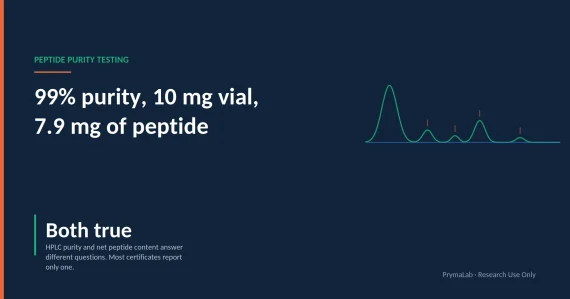
| HPLC Purity | 98% or higher | Below 95% or undisclosed |
| Mass Spectrometry | Confirmed correct molecular weight | No MS verification provided |
| Endotoxin Testing | Below 0.5 EU/mg | No endotoxin data disclosed |
| Manufacturing Standards | cGMP-aligned facility | Unknown or unverifiable facility |
| Customer Support | Transparent contact details + lab docs on request | Anonymous storefront, no business address |
Regulations vary significantly by country and by peptide. Some, like the GLP-1 agonists, are FDA-approved; many others — including BPC-157 and TB-500 — remain research-only, are not approved for human treatment, and cannot legally be sold as dietary supplements in the U.S. (FDA). Never assume a product sold online has been independently verified for safety — the CoA is what tells you.
10. Are Peptides Steroids? Clearing Up the Confusion
No, peptides are not steroids. They're fundamentally different in chemistry, mechanism, and regulation. Peptides are short chains of amino acids that send signals to cells. Steroids are lipid-based compounds that mimic hormones such as testosterone and cortisol and act by binding to intracellular receptors and directly altering gene expression.
Key Differences Between Peptides and Steroids
| Feature | Peptides | Steroids |
|---|---|---|
| Composition | Short chains of amino acids | Lipid-based four-ring molecules |
| Mechanism | Cell-surface receptor signaling | Intracellular receptor + gene expression |
| Specificity | Often highly targeted | Often broad systemic effects |
| Common Uses | Skin, recovery, hormone support, therapy | Anti-inflammatory, anabolic, hormone replacement |
| Side-Effect Profile | Generally milder; type-dependent | Can include systemic hormonal disruption |
| Regulatory Status | Varies; many research-only | Often controlled or prescription-only |
Peptides send precise instructions to specific cells, while steroids act broadly across the body by mimicking a hormone signal. Keeping that distinction can help prevent the common mistake of expecting steroid-like effects from peptides — and sets realistic expectations about what they can and can't do.
11. Are Collagen Peptides Good for You?
Collagen peptides are one of the most popular peptide supplement categories, and they're a good example of the food-grade tier — a normal dietary protein, not a research compound. For most people, collagen peptides are a reasonable addition to overall protein intake. They provide hydrolyzed collagen fragments that supply the amino acids your body uses for skin, joint, and connective-tissue support.
Why Collagen Peptides Are Generally Good for You
- Skin: several clinical studies report improved hydration and elasticity with daily collagen peptide use over roughly 8 to 12 weeks (Choi et al., 2019).
- Joints: research suggests modest improvements in activity-related joint discomfort, with collagen peptides supporting cartilage and connective tissue.
- Hair and nails: emerging and anecdotal evidence points to improvements in nail strength; the data here is thinner.
- Convenient protein: easy to mix into coffee, smoothies, or oatmeal as a daily top-up.
- Generally well tolerated: most users report nothing beyond occasional mild digestive adjustment.
Choose products with verified sourcing and minimal additives, and pair them with vitamin C — which supports collagen synthesis — plus adequate protein and sleep.
12. Natural Sources of Peptides in Food
Peptides do occur naturally in many everyday foods. Including them is a simple way to support overall peptide intake without engineered products.
Foods Rich in Bioactive Peptides
- Eggs: high-quality protein that yields beneficial peptides during digestion.
- Milk and dairy: casein and whey, both rich in bioactive peptides.
- Soy: provides peptides studied for cardiovascular and cholesterol support.
- Fish: especially marine collagen sources, studied for skin and joint health.
- Lean meats and poultry: yield recovery-supporting peptides during digestion.
- Legumes: beans and lentils add plant-derived peptides.
Processing and heat can change the peptide content of foods, and gentler preparation tends to preserve more of these fragments. A varied diet across animal and plant proteins supports a broad spectrum of dietary peptides — a foundation that targeted products can build on when diet alone doesn't reach a specific goal.
13. The Future of Peptide Research and Applications
Peptide research is one of the most active areas in modern biomedicine. You'll find research in personalized medicine, precision oncology, metabolic disease, and regenerative therapeutics. The FDA has approved a growing number of peptide drugs over the past two decades, with dozens more in clinical trials. Here are a few of the directions it's heading.
Emerging Peptide Research Directions
- Personalized peptide approaches matched to individual biomarker profiles.
- Chronic-disease management in metabolic and autoimmune conditions.
- Targeted oncology: peptide-drug conjugates that deliver chemotherapy directly to tumor cells.
- Neurodegeneration: peptides investigated for Alzheimer's, Parkinson's, and traumatic brain injury.
- Regenerative medicine: tissue-repair peptides paired with stem-cell and biomaterial approaches.
- Better delivery: oral formulations, transdermal patches, and nanoparticle carriers.
As the science matures, expect the line between "supplements" and "therapy" to sharpen, with stricter quality standards and clearer regulatory pathways.
Explore Research-Grade Peptides at PrymaLab
From TB-500 and BPC-157 to GHK-Cu and thymosin-family compounds, every PrymaLab lot is tested in PrymaLab's own laboratory (RP-HPLC purity, LC-MS identity), and certificates can be checked on the certificate verification page.
Browse PrymaLab Research Catalog14. Frequently Asked Questions
Are peptides good for you?
It depends on the peptide and how it's used. As short chains of 2 to 50 amino acids, peptides act as signaling molecules that support collagen production, tissue repair, immune function, and hormone regulation. Some are FDA-approved medicines; food-grade peptides, like collagen, are widely considered safe; and many performance peptides are research-only, with limited human data. Benefit and safety both depend on the specific peptide, dose, and context.
Are peptides safe to use?
Safety is conditional, not blanket. Well-studied, approved peptides have documented safety profiles; research peptides often don't have human safety data. Mild, temporary side effects can include digestive discomfort or injection-site irritation; rare risks include allergic reactions or hormonal imbalance. Research peptides are sold for laboratory use only and are not for human use.
Are peptides and steroids the same thing?
No. Peptides are short chains of amino acids that signal cells; steroids are lipid-based compounds that mimic hormones such as testosterone. They act through different mechanisms, so peptides are not classified as steroids, and the two carry different regulatory treatment and risk profiles.
Are collagen peptides good for you?
For most people, yes — collagen peptides are a food-grade protein that supplies amino acids the body uses for skin elasticity, hydration, joint comfort, and connective tissue. Most people tolerate them well, and some clinical studies report improved skin firmness within 8 to 12 weeks of consistent daily use alongside adequate protein.
What are the best peptides for muscle growth?
The most-discussed in research are GHRPs, IGF-1, CJC-1295, and follistatin, plus BPC-157 and TB-500 for tissue repair. They influence growth-hormone pathways or healing, but they aren't magic bullets — results depend on training and nutrition, and most are research-only, not FDA-approved. Many are prohibited under sport-governing rules such as the WADA Prohibited List.
Are peptide supplements good for you?
Food-grade peptide supplements can be a reasonable choice when matched to a specific goal and sourced carefully. Powders, capsules, and liquids vary in absorption and quality. Look for lot-specific test results that can be verified, minimal additives, and real supporting evidence.
How long do peptides take to work?
Timelines vary by peptide, dose, and goal, and much of this comes from limited data. Skin-focused peptides often show visible changes after 8 to 12 weeks. Reported recovery timelines are shorter but less well-established. Hormone-modulating peptides used clinically typically need weeks of monitored use for measurable shifts in lab markers.
Related reading
- FOXO4-DRI: senolytic evidence, mechanism and human trials
- Cagrilintide and CagriSema: mechanism, trial data and safety
- Cerebrolysin: composition, trials and FDA status
- MK-677 (ibutamoren): mechanism, trials and side effects
15. References
- Lau JL, Dunn MK. Therapeutic peptides: Historical perspectives, current development trends, and future directions. Bioorganic & Medicinal Chemistry. 2018;26(10):2700–2707. DOI: 10.1016/j.bmc.2017.06.052.
- Fields K, Falla TJ, Rodan K, Bush L. Bioactive peptides: signaling the future of cosmetic actives. Journal of Cosmetic Dermatology. 2009;8(1):8–13.
- Sikiric P, Seiwerth S, Rucman R, et al. Brain-gut axis and pentadecapeptide BPC 157: theoretical and practical implications. Current Neuropharmacology. 2016;14(8):857–865.
- Choi FD, Sung CT, Juhasz ML, Mesinkovska NA. Oral collagen supplementation: A systematic review of dermatological applications. Journal of Drugs in Dermatology. 2019;18(1):9–16.
- Bock-Marquette I, Saxena A, White MD, et al. Thymosin beta4 activates integrin-linked kinase and promotes cardiac cell migration, survival and cardiac repair. Nature. 2004;432:466–472.
- Kleinman HK, Sosne G. Thymosin β4 promotes dermal healing. Vitamins and Hormones. 2016;102:251–275.
- Wilkinson DJ, Hossain T, Hill DS, et al. Effects of leucine and its metabolite β-hydroxy-β-methylbutyrate on human skeletal muscle protein metabolism. Journal of Physiology. 2013;591(11):2911–2923.
- FDA. Approved drug products: GLP-1 receptor agonists for type 2 diabetes, obesity, and chronic weight management. U.S. Food and Drug Administration. 2024.
Disclaimer: This article is for educational and research-information purposes only. The research peptides discussed — including BPC-157 and TB-500 — are not FDA-approved for human use and are sold exclusively for laboratory research, not human consumption. The information here does not constitute medical advice, diagnosis, or treatment.
PrymaLab does not encourage or condone the use of research peptides for self-medication.