-
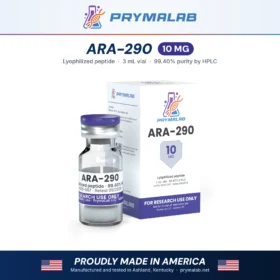
ARA-290 10mg
$48.99 or subscribe for $40.99/mo This product has multiple variants. The options may be chosen on the product page -

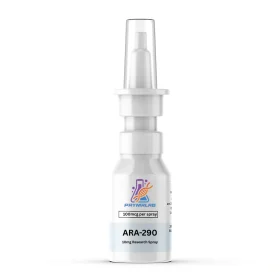
ARA-290 10mg Nasal Spray
$79.99 or subscribe for $67.99/mo This product has multiple variants. The options may be chosen on the product page -
BPC 157 5mg + TB500 5mg
$39.99 or subscribe for $33.99/mo This product has multiple variants. The options may be chosen on the product page -
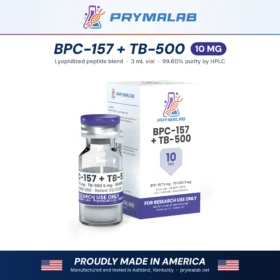
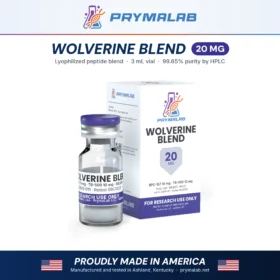
BPC-157 + TB500 (10mg/10mg) “Wolverine Blend”
$63.99 or subscribe for $54.39/mo This product has multiple variants. The options may be chosen on the product page -
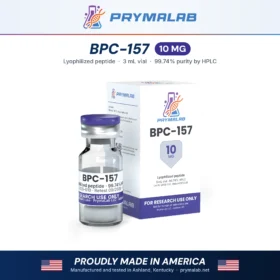
BPC-157 10MG
$39.99 or subscribe for $32.99/mo This product has multiple variants. The options may be chosen on the product page -
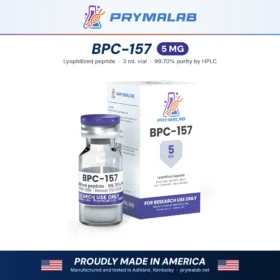
BPC-157 5MG
$19.99 or subscribe for $16.99/mo This product has multiple variants. The options may be chosen on the product page -
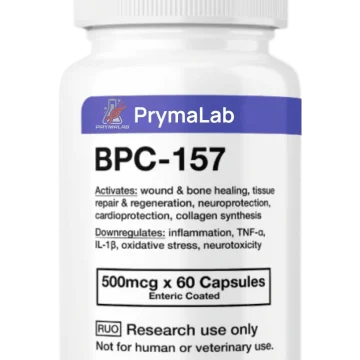
BPC-157 Capsules (60/500mcg)
$129.99 or subscribe for $99.99/mo This product has multiple variants. The options may be chosen on the product page -
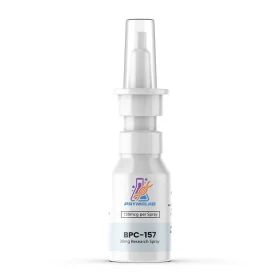
BPC-157 Peptide Nasal Spray
$119.99 or subscribe for $99.99/mo This product has multiple variants. The options may be chosen on the product page -
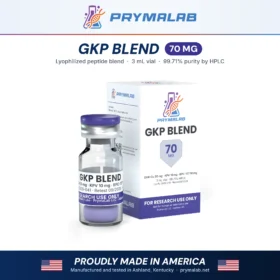
GKP BLEND 70MG
$109.99 or subscribe for $92.99/mo This product has multiple variants. The options may be chosen on the product page -
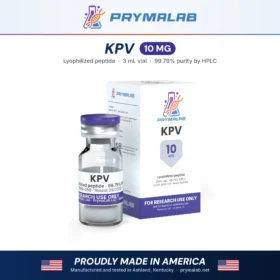
KPV (10mg)
$39.99 or subscribe for $32.99/mo This product has multiple variants. The options may be chosen on the product page -
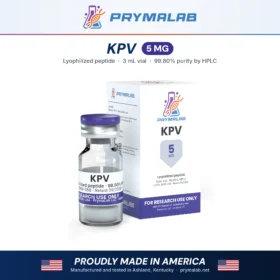
KPV (5mg)
$19.99 or subscribe for $16.99/mo This product has multiple variants. The options may be chosen on the product page -
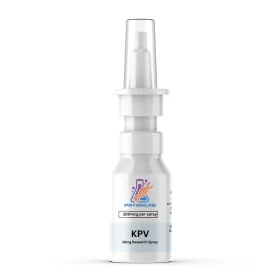
KPV 10mg Nasal Spray
$89.99 or subscribe for $75.99/mo This product has multiple variants. The options may be chosen on the product page -
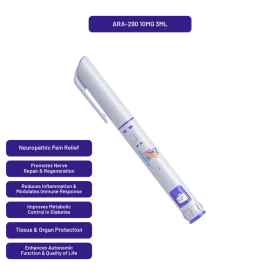
Preloaded Autoinjector | ARA-290 (Cibinetide) | 3ml Pen | 10mg
$69.99 or subscribe for $59.49/mo This product has multiple variants. The options may be chosen on the product page -
Sale!
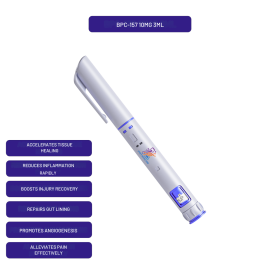
Preloaded Autoinjector | BPC-157 | 3ml Pen | 5mg/ml
Original price was: $54.99.$39.99Current price is: $39.99. -
Sale!
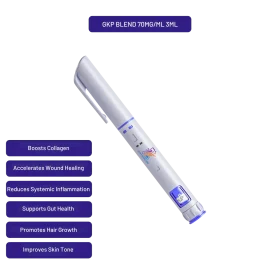
Preloaded Autoinjector | GKP BLEND | 3ml Pen | 70mg/ml
Original price was: $179.99.$159.99Current price is: $159.99. -
Sale!
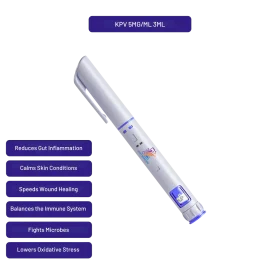
Preloaded Autoinjector | KPV | 3ml Pen | 5mg/ml
Original price was: $69.99.$49.99Current price is: $49.99. -
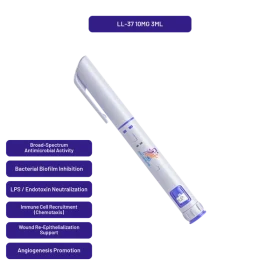
Preloaded Autoinjector | LL-37 | 3ml Pen | 10mg
$89.99 or subscribe for $75.99/mo This product has multiple variants. The options may be chosen on the product page -
Sale!
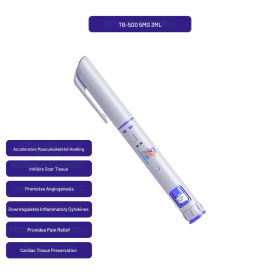
Preloaded Autoinjector | TB-500 | 3ml Pen | 5mg/ml
Original price was: $54.99.$39.99Current price is: $39.99. -
Sale!
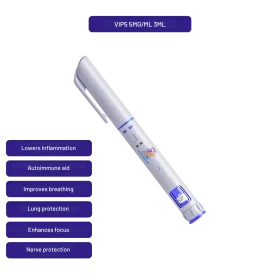
Preloaded Autoinjector | VIP5 (Vasoactive Intestinal Peptide) | 3ml Pen | 5mg/ml
Original price was: $99.99.$84.99Current price is: $84.99. -
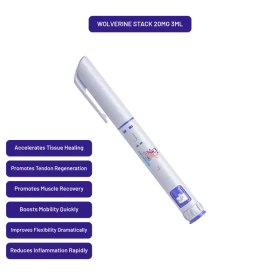
Preloaded Autoinjector | Wolverine Stack (BPC-157 + TB-500) | 3ml Pen | 20mg
$129.99 or subscribe for $109.99/mo This product has multiple variants. The options may be chosen on the product page -
Sale!
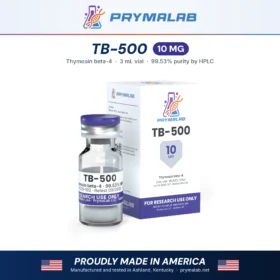
TB-500 (Thymosin Beta-4) 10mg
$43.99 or subscribe for $36.99/mo This product has multiple variants. The options may be chosen on the product page -
Sale!
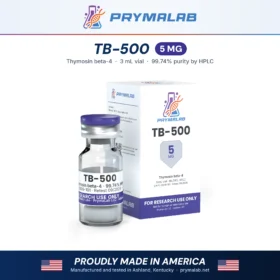
TB-500 (Thymosin Beta-4) 5mg
$17.99 or subscribe for $14.99/mo This product has multiple variants. The options may be chosen on the product page -
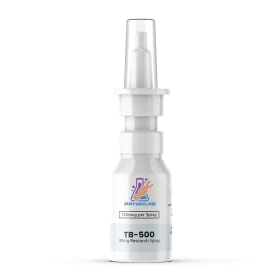
TB-500 Peptide Nasal Spray
$119.99 or subscribe for $99.99/mo This product has multiple variants. The options may be chosen on the product page -
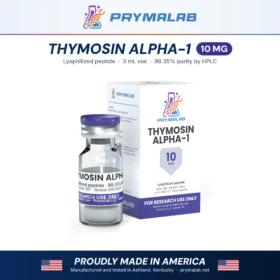
Thymosin Alpha-1 10mg
$89.99 or subscribe for $76.49/mo This product has multiple variants. The options may be chosen on the product page -
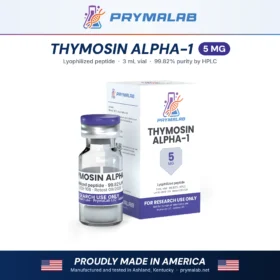
Thymosin Alpha-1 5mg
$59.99 or subscribe for $49.99/mo This product has multiple variants. The options may be chosen on the product page -
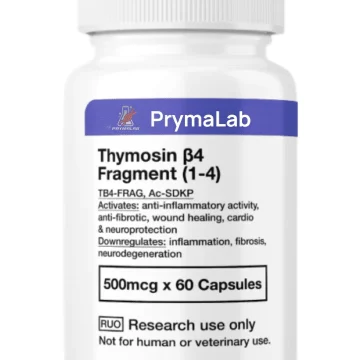
Thymosin Beta-4 Fragment (1-4) (Ac-SDKP) – 500mcg (60 Capsules)
$149.99 or subscribe for $125.99/mo This product has multiple variants. The options may be chosen on the product page -
VIP 10mg Nasal Spray
$119.99 or subscribe for $101.99/mo This product has multiple variants. The options may be chosen on the product page -
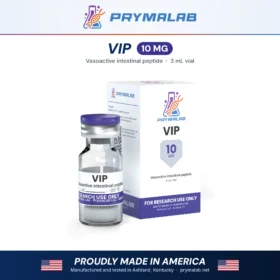
VIP5 10MG (Vasoactive Intestinal Peptide)
$69.99 or subscribe for $58.99/mo This product has multiple variants. The options may be chosen on the product page -
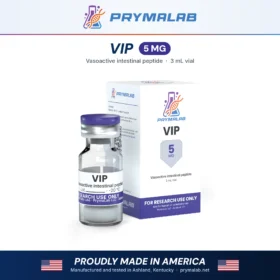
VIP5 5MG (Vasoactive Intestinal Peptide)
$42.99 or subscribe for $36.54/mo This product has multiple variants. The options may be chosen on the product page
What tissue repair is measurable as · and where the evidence concentrates
Recovery peptides are sold against tissue repair, and repair is not one measurement. It is at least four, they answer different questions, and a compound can move one while leaving the others flat. This page sets out what a repair study actually records, why the evidence base for the best-known compound in this category is concentrated in an unusual way, and what you are buying when a fragment carries the name of the whole protein.
Specification Table
| Property | Value |
|---|---|
| Endpoint 1 | Tensile strength, the mechanical load a repaired tissue bears before failure |
| Endpoint 2 | Collagen deposition, measured by hydroxyproline assay or picrosirius staining |
| Endpoint 3 | Histological scoring, a graded assessment of tissue organisation |
| Endpoint 4 | Angiogenesis, measured through vessel density or endothelial migration assays |
| Why they diverge | Collagen can be deposited disorganised, which raises deposition scores without raising tensile strength |
| Best-known compound in this range | BPC-157, a pentadecapeptide derived from a gastric protein sequence |
| Evidence pattern for it | A large animal literature concentrated in one research group, with no published human trial |
| TB-500 status | A fragment corresponding to a short region of thymosin beta-4, not the intact 43-residue protein |
| Why that distinction matters | The intact protein sequesters actin. A short fragment does not necessarily reproduce that function |
| Model species caveat | Rodent skin contracts during repair where human skin granulates, so closure rates do not transfer |
| Overlap with the skin range | Copper complexes appear in both. This page covers systemic repair, the skin hub covers topical delivery |
| Page type | Category hub, not a product page |
| Schema page type | CollectionPage |
| Cornerstone content | Yes |
| Meta robots | index, follow |
| Regulatory status | No compound in this category holds an approved human or veterinary formulation |
How Is Tissue Repair Actually Measured?
Four endpoints dominate the repair literature, and a study reporting one of them has not reported the others.
Tensile strength is the mechanical measurement. A repaired tissue is loaded until it fails and the load at failure is recorded, which makes it both the endpoint closest to function and the hardest of the four to produce artefactually.
Collagen deposition is chemical or histochemical, determined by hydroxyproline assay or by staining that distinguishes collagen types under polarised light.
Histological scoring is a graded assessment of tissue organisation, performed by an observer against a defined scale, which makes blinding essential and frequently absent.
Angiogenesis is measured by vessel density or by endothelial migration assays.
Those four diverge more often than they agree, and the divergence is informative rather than noisy.
Collagen can be deposited in disorganised orientation, which raises a deposition score and a histology score while leaving tensile strength unchanged or worse.
So a compound reported to increase collagen deposition has not been reported to produce stronger tissue, and treating those as the same finding is the most common misreading in this literature.
Anyone comparing recovery peptides across suppliers or across studies should establish which of the four endpoints a given claim rests on before comparing anything else.
Two studies reporting improvement in different endpoints are not corroborating each other, and two reporting the same endpoint in different models may not be either.
Where Does the Evidence for This Category Concentrate?
The best-known compound among recovery peptides has an evidence base with an unusual shape. The shape matters as much as the volume.
BPC-157 is a pentadecapeptide derived from a sequence found in a gastric protein. The published animal literature on it is genuinely large, spanning tendon, ligament, muscle, bone and gastrointestinal models.
A very large share of that literature, though, originates with a single research group and the collaborators working alongside it.
That is not an accusation. Single-group dominance is common for compounds that one laboratory discovered and championed, and it describes the Khavinson family in this catalogue too.
It does mean the usual protection that independent replication provides is thinner than the citation count suggests, since many of the citations trace back to a common source.
No published human trial exists for the compound, which is the more consequential gap for anyone reading the animal work as predictive.
The honest summary is a substantial, internally consistent animal literature with limited independent replication and no human data, and that summary is more useful than either enthusiasm or dismissal.
A supplier presenting the citation count without the concentration is reporting a number that means less than it appears to.
The same reading applies across recovery peptides generally rather than to one compound. Citation counts in this area are inflated by review articles citing the same primary work repeatedly.
Tracing three citations back to their primary sources takes a few minutes and frequently collapses an apparently broad literature into a narrow one.
What Is TB-500 and What Is It Not?
A naming convention in this category causes persistent confusion, and it is worth being exact.
Thymosin beta-4 is a 43-residue protein whose principal characterised function is sequestering monomeric actin, holding a pool available for filament assembly.
TB-500 as supplied in this market is a short fragment corresponding to a region of that protein rather than the intact molecule.
The fragment is chosen because published work identified that region as carrying some of the activity, and it is far cheaper to synthesise than a 43-residue protein.
Whether a short fragment reproduces the actin-sequestering function of the intact protein is a separate question from whether the region was correctly identified, and the answer is not simply yes.
Actin binding involves an extended interface. A fragment can retain a binding motif while losing the structural context that makes the interaction productive.
The practical consequence for a buyer is that literature on thymosin beta-4 is not automatically literature on TB-500, and a listing citing the former for the latter has skipped a step.
The verification question follows directly: does the certificate state the residue range, and does it match the fragment the cited work used.
Verification for recovery peptides follows the ordinary peptide panel with one addition. Where a compound is a fragment of a larger protein, the certificate has to state the residue range rather than the parent protein name.
That single field separates a defined article from a name. It is absent from most listings in this category.
Measured mass, purity with method and wavelength stated, sequence, counterion and net peptide content cover the rest.
The naming convention itself deserves a note. A number in a compound name is a catalogue reference, not a residue count, a mass or a concentration.
Reading it as any of those has caused real errors in this market, and the fix is to work from the sequence instead.
Why Do Model Species Matter So Much Here?
Repair studies are run overwhelmingly in rodents, and rodent repair differs from human repair in a way that changes what transfers.
Rodent skin is loosely attached to underlying tissue and repairs largely by contraction, with the wound margins drawn together by myofibroblast activity.
Human skin is tethered and repairs largely by granulation, filling the defect with new tissue rather than closing it by contraction.
A compound accelerating closure in a rodent model may be accelerating contraction. That is a mechanism human skin barely uses.
Splinted wound models exist specifically to suppress contraction and force granulation, and whether a study used one is among the most informative methodological details available.
Tendon and ligament models transfer somewhat better, since the tissue architecture and the repair sequence are more similar across species.
Bone models transfer better still. That is why orthopaedic work leans on them so heavily.
Reading a repair result without knowing the model and whether contraction was controlled is reading a number without its units.
Age of the model animal is the variable that compounds all of the above and is reported least often.
Young animals repair quickly and reliably, which compresses the range in which any intervention can show an effect and makes a null result more likely for reasons unrelated to the compound.
Aged animals repair slowly and variably, which widens the window and also widens the error bars.
A study reporting an effect in young animals has demonstrated something under the least favourable conditions for detecting it, which is worth more than the same effect size in an aged cohort.
How Do Recovery Peptides Relate to the Skin Compounds?
Several compounds appear in both this category and the skin range, and the split between them is deliberate rather than arbitrary.
Copper complexes are the clearest case. The same molecule is studied for topical cosmetic application and for systemic tissue repair, and those are different literatures with different endpoints.
The skin range covers the topical question: the four mechanistic classes of cosmetic peptides and the molecular weight ceiling that governs anything applied to intact skin.
This range covers the repair question: tensile strength, collagen organisation, angiogenesis and the model systems those are measured in.
A compound can perform well on one and be irrelevant to the other, since a molecule that cannot cross the stratum corneum may still act perfectly well when it is not being asked to.
KPV sits across both categories too.
For a researcher the practical guidance is to read the endpoint before the compound. The question determines which literature applies, and the compound list is the same either way.
Where a supplier presents skin research as repair evidence or the reverse, the citation has been moved across a boundary that the underlying studies do not cross.
Are Collagen Peptides the Same Category?
Two entirely different things are sold as peptides for healing, and separating them is the most useful thing this page can do.
Collagen peptides, also sold as hydrolyzed collagen, are food-grade protein fragments produced by breaking down animal collagen into short chains of amino acids.
They are eaten rather than injected, regulated as food, and available in any supermarket. Human trials exist for skin and for joint pain, with mixed results and small effect sizes.
The mechanism proposed for them is nutritional. Hydrolyzed collagen supplies the amino acids collagen synthesis requires, principally glycine and proline, and some work suggests specific dipeptides survive digestion and act as signals.
That is a supplement argument, and it is a legitimate one in its own category.
Research peptides in this catalogue are not that. They are single defined sequences, unapproved, supplied for laboratory use, and none is a food product.
Confusing the two is common because both are sold on tissue repair language, and the difference in evidence and in regulatory status is total.
Vitamin C belongs to the same conversation, since collagen synthesis genuinely requires it as a cofactor, and a deficiency limits collagen production in a way no peptide corrects.
Which Compounds Belong to Which Mechanism?
The category contains three unrelated mechanisms, and grouping them by outcome obscures what each is proposed to do.
The first group acts locally on repair. BPC-157, body protection compound-157, is reported to drive angiogenesis and blood vessel growth through VEGFR2 signalling, with fibroblast migration and collagen organisation reported in tendon models.
TB-500 sits beside it, sequestering actin monomers and so influencing cell migration during tissue remodeling. GHK-Cu acts on the extracellular matrix through collagen synthesis and matrix enzyme regulation.
KPV is the anti-inflammatory member, interfering with inflammatory signalling rather than promoting growth, which makes it mechanistically the odd one out.
The second group acts on the growth hormone axis and reaches tissue indirectly. Sermorelin, CJC-1295 and tesamorelin are growth hormone-releasing hormone analogues, and ipamorelin is a ghrelin receptor agonist.
Those growth hormone secretagogues raise endogenous growth hormone, which raises IGF-1, and IGF-1 is the growth factor actually driving protein synthesis in tissue.
So a GHRH analogue is two steps removed from any repair effect, and human growth hormone itself is a third option again with its own approved uses and its own risks.
The third group is metabolic and appears here only by association. AOD-9604 acts on lipolysis and fat loss rather than on repair, and hyaluronic acid is a matrix component rather than a signalling peptide.
Peptides for muscle recovery as a search category collapses all three, and no study has compared compounds across those groups on any shared endpoint.
Peptide therapy clinics sell them together for the same reason, which is that a customer asking about recovery does not arrive with a mechanism in mind.
Anyone searching peptides for muscle recovery is really asking which of three unrelated things to try, and a peptide therapy menu answers that question by not asking it.
The useful version of the question is which mechanism the injury actually calls for, and peptides for muscle recovery is not a category that answers it.
What Does the Evidence Actually Support?
The honest summary is short and worth stating before anything else on this page is read as a claim.
No compound in this category has demonstrated accelerated healing of a human injury in an adequately powered controlled trial.
The animal record is real. Reported findings cover tendon repair, soft-tissue regeneration, muscle repair and reduced scar tissue formation in rodent models of induced injury.
Rodent healing differs from human healing in rate and in scarring behaviour, which is why the translation step is where this category consistently fails.
Claims about sports injuries, muscle strains, tendon injuries, overuse injuries, post-surgical recovery, injury prevention and general systemic recovery come from that animal work rather than from human outcomes.
Muscle growth, build muscle and lean body mass claims belong to the growth hormone axis group and rest on the IGF-1 relationship rather than on direct evidence.
Regenerative medicine as a field contains interventions that have been through trials. Physical therapy in particular has a substantial evidence base for musculoskeletal injuries and is the intervention most often skipped in favour of a compound.
NSAIDs occupy the other established position, with the known tradeoff that suppressing inflammation may slow the repair it is masking.
Cortisol and chronic inflammation both affect healing measurably, and addressing sleep, load management and nutrition changes outcomes in ways these compounds have never demonstrated.
WADA prohibits BPC-157, TB-500, the growth hormone secretagogues and IGF-1 analogues, all in and out of competition, so use in tested sport is an anti-doping rule violation.
Several of these compounds have also been placed by the FDA among substances presenting significant risks for compounding, which removed them from the 503A bulks list.
Injectable peptides supplied as research chemicals carry none of the manufacturing controls a therapeutic peptide would, and subcutaneous injection into a person is not a use any of this material is offered for.
Everything in this category is supplied for laboratory research only and is not for administration to humans or animals.
Published Literature
Selected references on the compounds in this range and on the endpoints used to assess repair.
- Sikiric P, Seiwerth S, Rucman R, et al. Stable gastric pentadecapeptide BPC 157: novel therapy in gastrointestinal tract. Curr Pharm Des. 2011;17(16):1612-1632. DOI: 10.2174/138161211796197115
- Goldstein AL, Hannappel E, Kleinman HK. Thymosin beta4: actin-sequestering protein moonlights to repair injured tissues. Trends Mol Med. 2005;11(9):421-429. DOI: 10.1016/j.molmed.2005.07.004
- Malinda KM, Sidhu GS, Mani H, et al. Thymosin beta4 accelerates wound healing. J Invest Dermatol. 1999;113(3):364-368. DOI: 10.1046/j.1523-1747.1999.00708.x
- Pickart L, Margolina A. Regenerative and protective actions of the GHK-Cu peptide in the light of the new gene data. Int J Mol Sci. 2018;19(7):1987. DOI: 10.3390/ijms19071987
Frequently Asked Questions
How is tissue repair measured?
Four ways. Tensile strength, the load a repaired tissue bears before failure. Collagen deposition by hydroxyproline assay or staining. Histological scoring against a graded scale. And angiogenesis through vessel density or endothelial migration assays.
Why do those endpoints disagree?
Because collagen can be deposited in disorganised orientation. That raises a deposition score and a histology score while leaving tensile strength unchanged or worse, so more collagen is not the same finding as stronger tissue.
Which endpoint is closest to function?
Tensile strength. It is a mechanical measurement of the load at failure and it is the hardest of the four to produce artefactually.
What is unusual about the BPC-157 evidence base?
Its shape rather than its size. The animal literature is genuinely large and spans several tissue types, and a very large share of it originates with one research group and its collaborators.
Is that a criticism?
No. Single-group dominance is common for compounds one laboratory discovered and championed, and it describes other families in this catalogue too. It does mean independent replication is thinner than the citation count implies.
Is there human data for BPC-157?
No published human trial exists, which is the more consequential gap for anyone reading the animal work as predictive of human outcomes.
Is TB-500 the same as thymosin beta-4?
No. Thymosin beta-4 is a 43-residue protein. TB-500 as supplied in this market is a short fragment corresponding to a region of it, chosen because published work identified that region as carrying some activity and because it is far cheaper to synthesise.
Does the fragment reproduce the whole protein function?
Not automatically. Actin binding involves an extended interface, and a fragment can retain a binding motif while losing the structural context that makes the interaction productive. Literature on the protein is not automatically literature on the fragment.
What should a TB-500 certificate state?
The residue range, so a buyer can confirm it matches the fragment used in whatever work is being cited alongside it.
Why does rodent skin differ from human skin in repair?
Rodent skin is loose and repairs by contraction. Human skin is tethered and repairs largely by granulation. A compound accelerating rodent closure may be accelerating a mechanism human skin barely uses.
What is a splinted wound model?
A model designed to suppress contraction and force granulation, making the rodent result more comparable to human repair. Whether a study used one is among the most informative methodological details available.
Why do some compounds appear in both this range and the skin range?
Because they have two separate literatures with different endpoints. The skin range covers topical delivery and the molecular weight ceiling. This range covers tensile strength, collagen organisation and angiogenesis in repair models.
Are collagen peptides the same thing?
No. Collagen peptides and hydrolyzed collagen are food-grade protein fragments, eaten rather than injected, regulated as food and available in any supermarket. Research peptides here are single defined sequences, unapproved, and not food products. The difference in regulatory status is total.
Do collagen peptides work?
Human trials exist for skin and joint pain with mixed results and small effect sizes. The proposed mechanism is nutritional, supplying the amino acids collagen synthesis needs. Vitamin C matters here too, since collagen synthesis genuinely requires it as a cofactor.
Which compounds act directly on repair?
BPC-157 through angiogenesis and fibroblast migration, TB-500 through actin sequestration and cell migration, GHK-Cu on the extracellular matrix. KPV is the anti-inflammatory member and mechanistically the odd one out. This tripeptide group acts locally rather than systemically.
How do the growth hormone compounds fit?
Indirectly. Sermorelin, CJC-1295 and tesamorelin are GHRH analogues and ipamorelin is a ghrelin receptor agonist. Each raises HGH, which raises IGF-1, and IGF-1 is the growth factor actually driving protein synthesis. Sermorelin is therefore two steps removed from any repair effect.
Has any of this been shown to heal a human injury?
No compound in this category has demonstrated accelerated healing of a human injury in an adequately powered controlled trial. The animal record is real, and rodent healing differs from human healing in rate and scarring, which is where the translation consistently fails.
What about peptides for injury recovery generally?
Peptides for injury recovery as a search category collapses three unrelated mechanisms. Physical therapy has a substantial evidence base for musculoskeletal and soft tissue injuries and is the intervention most often skipped in favour of a compound.
Are these banned in sport?
Yes. WADA prohibits BPC-157, TB-500, the growth hormone secretagogues and IGF-1 analogues, in and out of competition. Several have also been placed by the FDA among substances presenting significant risks for compounding.
What is the wolverine stack?
A market nickname for BPC-157 combined with TB-500, sometimes with GHK-Cu or KPV added. No controlled study has tested that combination in anything, and peptide therapy clinics assembled it from vendor listings rather than from trial data.
Why do metabolic drugs appear in this category?
Association rather than mechanism. AOD-9604 acts on lipolysis rather than repair, and semaglutide appears in the same clinic menus for unrelated reasons. Peptide therapeutics as a label covers both without implying either shares a pathway with the other.
Does inflammation need suppressing for recovery?
Not straightforwardly. NSAIDs carry the known tradeoff that suppressing inflammation may slow the repair it masks. Systemic inflammation and cortisol both affect healing measurably, and sleep, load management and nutrition change outcomes in ways these compounds have never demonstrated.
Compliance Statement
Recovery peptides are sold exclusively for laboratory research use. They are not a drug, food, or cosmetic product, and they are not a dietary product of any kind. They are not approved by the FDA or any comparable authority for human or veterinary use, the published evidence for the best-characterised compound in this category is concentrated in a single research group, no human trial has been published for it, TB-500 is a fragment rather than the intact thymosin beta-4 protein, and rodent repair models differ mechanically from human tissue in ways that limit what transfers. These products are not intended to diagnose, treat, cure, or prevent any disease. They must not be given to humans or animals. Purchase is restricted to qualified researchers and institutions operating within applicable laws. All handling is the responsibility of the purchasing laboratory.
All 29 products in the Healing & Recovery Peptides range
Every listing states its quantity, concentration and format and carries a batch certificate of analysis. Products are supplied for laboratory research only.
- ARA-290 (Cibinetide) 10mg preloaded 3ml pen
- ARA-290 10mg
- ARA-290 10mg Nasal Spray
- BPC-157 + TB500 (10mg/10mg) “Wolverine Blend”
- BPC-157 5MG
- BPC-157 5mg/ml preloaded 3ml pen
- BPC-157 10MG
- BPC-157 Capsules (60/500mcg)
- BPC-157 Peptide Nasal Spray
- BPC 157 5mg + TB500 5mg
- GKP BLEND 70MG
- GKP BLEND 70mg/ml preloaded 3ml pen
- KPV (5mg)
- KPV (10mg)
- KPV 5mg/ml preloaded 3ml pen
- KPV 10mg Nasal Spray
- LL-37 10mg preloaded 3ml pen
- TB-500 (Thymosin Beta-4) 5mg
- TB-500 (Thymosin Beta-4) 10mg
- TB-500 5mg/ml preloaded 3ml pen
- TB-500 Peptide Nasal Spray
- Thymosin Alpha-1 5mg
- Thymosin Alpha-1 10mg
- Thymosin Beta-4 Fragment (1-4) (Ac-SDKP) – 500mcg (60 Capsules)
- VIP5 (Vasoactive Intestinal Peptide) 5mg/ml preloaded 3ml pen
- VIP5 5MG (Vasoactive Intestinal Peptide)
- VIP5 10MG (Vasoactive Intestinal Peptide)
- VIP 10mg Nasal Spray
- Wolverine Stack (BPC-157 + TB-500) 20mg preloaded 3ml pen