

Sermorelin benefits: what the research shows on GHRH analogues
Sermorelin is a synthetic fragment of growth hormone-releasing hormone, GHRH (1-29), studied for its ability to stimulate pulsatile growth hormone release from the pituitary, and in trials on IGF-1, sleep and body composition in older adults. PrymaLab supplies it as Sermorelin 5mg and Sermorelin 10mg vials and a preloaded Sermorelin pen for research use.
- Sequence: 29 amino acids, the N-terminal fragment of GHRH, 3,357.9 Da as the free peptide (C149H246N44O42S)
- Class: GHRH receptor agonist; approved for pediatric growth hormone deficiency as Geref and later withdrawn from the market
- Studied for: GH and IGF-1 restoration in older adults, slow-wave sleep, lean and fat mass, immune markers
- Storage: lyophilized vial refrigerated, away from light; reconstituted solution refrigerated
- Forms and sizes at PrymaLab: Sermorelin 5mg vial, Sermorelin 10mg vial, Sermorelin pen (6mg)
| Feature | Sermorelin | Recombinant HGH |
|---|---|---|
| What it is | Fragment of the hypothalamic releasing hormone | The full 191-amino-acid growth hormone |
| How GH rises | Pituitary releases its own GH in pulses | Exogenous GH enters the blood directly |
| Feedback | Somatostatin and IGF-1 feedback remain active | Feedback is bypassed; pituitary output is suppressed |
| Regulatory status | Approved for pediatric GH deficiency, later withdrawn; research compound today | Approved prescription drug for defined indications |
Trial designs are summarised in the sermorelin literature review.
Quick answer: sermorelin benefits
Sermorelin benefits are usually listed as a wish list: sleep, energy, lean mass, fat loss, skin. The trial record is narrower and more useful. Sermorelin is the first 29 amino acids of growth hormone-releasing hormone, and what the studies measured was whether that fragment could make an ageing pituitary release more growth hormone, whether IGF-1 followed, and what changed downstream in older adults over weeks of treatment. This page goes through those results system by system, keeps the figures tied to the study that produced them, and marks where the evidence stops. Trial designs are covered in the sermorelin literature review.
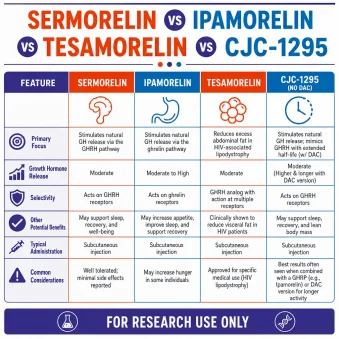
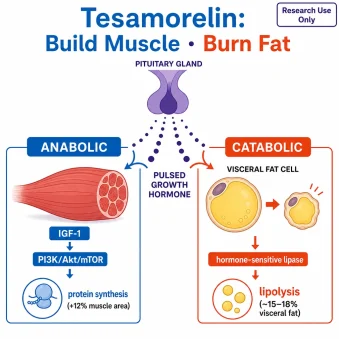
Comparing sermorelin with tesamorelin? The receptor, half-life and approval differences between sermorelin, tesamorelin, ipamorelin and CJC-1295 are covered in Sermorelin vs Ipamorelin vs Tesamorelin, which now holds the sermorelin vs tesamorelin comparison table. This page stays on what the sermorelin trials themselves reported.
Sermorelin benefits reported in trials are narrower than the usual list: a rise in growth hormone release and, in some studies, IGF-1, with smaller and less consistent changes in body composition and sleep. Sermorelin is a synthetic analog of growth hormone-releasing hormone (GHRH) that stimulates the pituitary gland to release its own growth hormone (HGH).
This evidence-based guide covers the sermorelin peptide trial record, its mechanism and the sermorelin side effects reported in studies. According to research published in Clinical Interventions in Aging, sermorelin represents "a better approach to care of adult-onset growth hormone insufficiency" because it preserves the body's natural feedback mechanisms and avoids the risks linked with exogenous HGH therapy.
?? What You'll Learn in This Guide
This article covers the clinical evidence and safety data on sermorelin.
- What sermorelin is and how it works at the cellular level to boost growth hormone
- What trials measured, with common sermorelin benefits claims checked against them
- Sermorelin tablets vs injections: what the references do and do not show
- Sermorelin side effects including long-term safety and cancer considerations
- Sermorelin before and after: timelines reported in studies
- Sermorelin vs HGH — key differences in safety, efficacy, and legal status
- Buying sermorelin for laboratory research
?? Quick Overview
In this evidence-based guide, you will learn that sermorelin benefits stem from its power to boost the pituitary gland's own production of growth hormone, rather than introducing synthetic HGH directly. Research shows sermorelin preserves natural hormonal feedback loops and supports episodic GH release patterns.
What Is Sermorelin? Definition & How It Works
Sermorelin is a synthetic peptide consisting of the first 29 amino acids of naturally occurring growth hormone-releasing hormone (GHRH), also known as sermorelin acetate or GHRH(1-29)NH2. It is a GHRH peptide that binds to specific receptors on the anterior pituitary gland, triggering the production and release of endogenous human growth hormone (HGH) in a pattern that closely mimics the body's natural pulsatile secretion rhythm.
Originally developed and FDA-approved under the brand name Geref for diagnosing and treating growth hormone deficiency in children, sermorelin was voluntarily discontinued by its manufacturer in 2008 for commercial reasons — not due to safety or effectiveness concerns. According to the Federal Register, the FDA confirmed that "both GEREF products were not withdrawn from sale for reasons of safety or effectiveness."
How Does Sermorelin Differ from Direct HGH Therapy?
The basic difference between sermorelin and direct HGH injection is that sermorelin boosts the body to produce its own growth hormone, while HGH therapy introduces exogenous (external) hormone directly into the bloodstream. This distinction is clinically major because sermorelin's effects are regulated by the body's natural feedback mechanisms, including the inhibitory neurohormone somatostatin.
According to Walker (2006) in Clinical Interventions in Aging, this means "overdoses of endogenous hGH are hard if not impossible to achieve" with sermorelin, unlike with direct HGH injection where improper dosing can lead to serious side effects.
How Does Sermorelin Work? Mechanism of Action
Sermorelin works by binding to GHRH receptors on somatotroph cells in the anterior pituitary gland, starting a signaling cascade that boosts the synthesis and secretion of growth hormone in episodic pulses that mirror the body's natural circadian rhythm. This mechanism preserves the hypothalamic-pituitary axis and avoids the "square wave" pharmacological presentation linked with direct HGH injection.
Pituitary Activation & GH Release
When sermorelin binds to pituitary GHRH receptors, it triggers a cascade of intracellular events that result in growth hormone gene transcription and protein synthesis. The peptide has a short half-life, measured in minutes, which supports physiologic GH pulses rather than continuous boost. This pulsatile release pattern is key because the body's tissues respond optimally to intermittent GH exposure, not constant rise.
Preserved Feedback Loops & Safety
One of sermorelin's most important clinical benefits is that it preserves the body's natural feedback systems. The interaction between sermorelin and somatostatin ensures that GH release remains episodic and self-regulated. According to research, sermorelin also boosts pituitary gene transcription of HGH messenger RNA, which increases pituitary reserve and helps preserve the growth hormone neuroendocrine axis — the first hormonal system to decline during aging.
IGF-1 Production & Downstream Effects
Growth hormone released by sermorelin boost travels to the liver, where it triggers the production of insulin-like growth factor 1 (IGF-1). IGF-1 is the main mediator of many growth hormone effects, including muscle protein synthesis, bone mineralization, fat body function, and cellular repair. IGF-1 is the standard marker trials used to assess the response to sermorelin.
What Are the Main Sermorelin Benefits?
The sermorelin benefits usually listed span body composition, cognition, sleep and overall metabolic health. Most of those claims come from growth hormone research in general rather than from sermorelin trials. A review in Translational Andrology and Urology discussed growth hormone secretagogues, including sermorelin, in relation to well-being, lean body mass, insulin response and libido. The subsections below separate what was measured with sermorelin from what is extrapolated from growth hormone.
Lean mass and muscle
Growth hormone stimulates protein synthesis and satellite cell activation, and Velloso (2008) in the British Journal of Pharmacology reviewed GH and IGF-1 signaling as key regulators of muscle mass. That is growth hormone evidence. In the GHRH trials cited here, Khorram et al. 1997 reported a rise in lean body mass in the men only over 16 weeks.
Fat and body composition
Growth hormone promotes lipolysis, the breakdown of stored fat. In the trials cited here, body composition largely did not change: Vittone et al. 1997 found no change in weight, body mass index or dual-energy x-ray absorptiometry measures of fat over 6 weeks.
Sleep
Growth hormone is mainly released during deep sleep stages. Morselli et al. (2013) in the European Journal of Endocrinology reported that GH replacement therapy improved sleep architecture in adults with GH deficiency; that study used growth hormone itself, not sermorelin.
Skin
Growth hormone has a role in collagen synthesis and skin cell turnover. No trial cited in this article measured skin outcomes with sermorelin; the skin claims that circulate come from user reports.
Bone
GH and IGF-1 are essential for bone remodeling and calcium homeostasis. No sermorelin trial cited in this article measured bone mineral density.
Cardiovascular and metabolic markers
Research has linked GH deficiency to dyslipidemia, increased visceral fat and elevated cardiovascular risk, and Caicedo et al. (2018) in the International Journal of Molecular Sciences reviewed growth hormone and the cardiovascular system. These are growth hormone findings, not sermorelin results.
Cognition
Growth hormone receptors are present throughout the brain, and GH plays a role in neurogenesis, synaptic plasticity and cognitive function. Friedman et al. (2013) in JAMA Neurology reported improved cognitive function and higher brain GABA levels in adults with mild cognitive impairment after treatment with tesamorelin, a different GHRH analogue; it was not a sermorelin trial.
Immune markers
Growth hormone supports immune cell proliferation and function. Immune markers were among the downstream measures in sermorelin trials, and the changes were smaller and less consistent than the hormone changes.
What Does Sermorelin Do for Men?
Claims about sermorelin benefits for males usually cite muscle, energy and testosterone. In the trials cited here, Khorram et al. 1997 reported a rise in lean body mass in the men only over 16 weeks, with no other change in body composition.
Does Sermorelin Increase Testosterone?
Sermorelin does not directly increase testosterone. A review in Translational Andrology and Urology suggested that sermorelin may complement testosterone replacement therapy in hypogonadal males; no trial cited in this article measured that combination.
What Are the Sermorelin Benefits for Women?
Claims about sermorelin benefits for females usually cite skin, sleep, fat around the midsection and bone. None of these was measured in women in the trials cited here, and Khorram et al. 1997 found its rise in lean body mass in the men only.
Sermorelin Side Effects in Women
Sermorelin for females side effects reported in the literature are the same as in men: local reactions, headaches and occasional dizziness.
Does Sermorelin Help with Weight Loss?
Sermorelin for weight loss claims rest on growth hormone's effect on lipolysis, the breakdown of stored triglycerides in fat cells. The sermorelin trials measured hormones first and body composition second: Vittone et al. 1997 found no change in weight, body mass index, waist to hip ratio or dual-energy x-ray absorptiometry measures of muscle and fat over 6 weeks, and Khorram et al. 1997 found body weight unaffected over 16 weeks.
No trial has tested sermorelin as a weight-loss agent in a general population, so sermorelin weight loss and sermorelin fat loss claims are extrapolation from the growth hormone literature, not sermorelin data.
Sermorelin before and after: timelines reported in studies
Sermorelin before and after timelines that circulate (sleep within weeks, body and skin changes within months) come from user reports, not trials. The trials cited here ran for 2 to 16 weeks: Corpas et al. 1992 brought older men's 24-hour GH release and IGF-1 to levels not significantly different from those of young men within 14 days, Vittone et al. 1997 raised nocturnal GH over 6 weeks without a change in IGF-1 or body composition, and Khorram et al. 1997 found a rise in lean body mass in the men only over 16 weeks.
Where the sermorelin figures come from
Sermorelin was an approved prescription product (Geref) for diagnosing and treating growth hormone deficiency in children, and the trials behind that approval dosed by body weight under clinical supervision. The adult figures that circulate on anti-aging clinic sites do not come from those trials; they are clinic protocols. This page does not provide a schedule. The studies that measured sermorelin's effect on growth hormone and IGF-1 are listed in the references, and PrymaLab supplies sermorelin for laboratory research only.
Sermorelin tablets vs injections
Sermorelin tablets, sermorelin pills and sermorelin injections are all marketed, but the trials cited in this article gave sermorelin by injection, and its references contain no bioavailability figures for tablet, sublingual or oral forms.
Sermorelin Sublingual Tablets & Oral Options
Oral sermorelin must pass through the gut tract, where peptide breakdown reduces absorption. No oral or sublingual bioavailability figure for sermorelin appears in this article's references.
How sermorelin breaks down in water
Dry sermorelin is stable; dissolved sermorelin is not, and the reasons are known in some detail. Bongers and colleagues held GRF(1-29)-NH₂ and full-length GRF(1-44)-NH₂ in aqueous solution, then isolated and identified what formed (Bongers et al. 1992). Degradation happened at two places, Asp3 and Asn8 (Bongers et al. 1992). In acidic solution, below the pKa of the Asp3 side chain, the main reaction was cleavage of the Asp3-Ala4 bond, which removes the first three residues and leaves GRF(4-29)-NH₂ (Bongers et al. 1992). Above pH 4 the same aspartate mostly isomerised instead, giving the beta-Asp3 form (Bongers et al. 1992). Faster than either, from about pH 5 upward, Asn8 deamidated to beta-Asp8 and Asp8 in roughly a four-to-one ratio (Bongers et al. 1992). Every product tested had much lower in vitro potency than the parent peptide, and the window of best stability was pH 4 to 5 (Bongers et al. 1992).
Friedman and colleagues reached the same conclusion about position 8 from a different angle. A Leu27 GRF analogue incubated at pH 7.4 and 37 °C degraded mostly through Asn8 deamidation, and the beta-Asp8 product was 400 to 500 times less potent than the parent in cultured bovine pituitary cells (Friedman et al. 1991). Analogues with serine at position 8 lasted several times longer in solution and kept full potency after 14 days, while the Asn8 versions lost activity (Friedman et al. 1991). The authors concluded that the same loss of activity through deamidation should be weighed when other peptides are engineered (Friedman et al. 1991).
What Are the Sermorelin Side Effects?
Sermorelin side effects reported in the clinical literature were mostly mild and temporary. The most common sermorelin peptide side effects were local reactions where it was injected, headaches and dizziness, and according to the Mayo Clinic and clinical literature, serious adverse events were rare.
-
1Local Reactions
The most common side effect was redness, swelling, pain or itching where the peptide was injected, usually mild and resolving within minutes to hours.
-
2Headaches
Mild headaches were reported, mostly in the first weeks of treatment, and usually resolved without intervention.
-
3Dizziness & Flushing
Temporary dizziness and facial flushing can occur shortly after injection. These effects are related to the peptide's vasodilatory properties and often last only a few minutes.
-
4Nausea
Mild nausea is an uncommon side effect in the literature.
-
5Difficulty Swallowing
Rarely reported, difficulty swallowing (dysphagia) is an uncommon side effect.
-
6Sleepiness & Taste Changes
Increased sleepiness and temporary taste changes were also reported. These effects were mild and often transient.
Sermorelin Long-Term Side Effects
Sermorelin long-term side effects are not well-documented in clinical literature due to limited long-term studies. However, sermorelin's mechanism of action works through the body's natural feedback systems. The somatostatin feedback loop prevents too much GH production, and sermorelin does not cause pituitary suppression or tachyphylaxis (reduced response over time).
Sermorelin Side Effects and Cancer
Sermorelin side effects cancer concerns are an important consideration. Growth hormone is mitogenic (promotes cell division), which raises theoretical concerns about cancer risk. However, sermorelin produces physiologic (normal-range) GH levels, not supraphysiologic levels. Boguszewski et al. (2022) in the European Journal of Endocrinology published a consensus statement confirming that GH replacement in appropriate patients does not increase cancer risk. Sermorelin is contraindicated in people with active cancer or untreated tumors.
?? Important Safety Notice
Is sermorelin safe? Long-term safety data are limited, and sermorelin is contraindicated in people with active cancer, untreated hypothyroidism or known allergy to sermorelin. PrymaLab supplies sermorelin for laboratory research only.
Sermorelin Side Effects in Men vs Women
The literature cited here reports no sex-specific sermorelin side effects; local reactions, headaches and dizziness were described in men and women alike.
Sermorelin vs HGH: What Are the Key Differences?
Sermorelin vs HGH is one of the most important comparisons in growth hormone therapy. While both aim to increase GH levels, they differ fundamentally in mechanism, safety profile and legal status.
| Factor | Sermorelin | HGH (Recombinant) |
|---|---|---|
| Mechanism | Stimulates pituitary to produce own GH | Directly introduces exogenous GH |
| GH Release Pattern | Pulsatile (natural rhythm) | "Square wave" (constant elevation) |
| Feedback Regulation | Preserved (somatostatin-regulated) | Bypassed (no natural regulation) |
| Overdose Risk | Very low (self-limiting) | Higher (dose-dependent) |
| Pituitary Health | Preserves and may improve function | May suppress pituitary over time |
| Tachyphylaxis | Minimal (pulsatile release) | Possible with chronic use |
| Side Effect Profile | Mild (local reactions, headache) | More significant (edema, joint pain, insulin resistance) |
| Legal Status (US) | Off-label prescribing permitted | Restricted to specific diagnoses |
According to Walker (2006), sermorelin offers several distinct benefits over HGH: its effects are regulated by negative feedback, release is episodic rather than constant, tachyphylaxis is avoided, and it preserves pituitary reserve. Those are the terms of the HGH vs sermorelin comparison in that review.
Sermorelin vs Ipamorelin & Other GHRH Peptides
Sermorelin and ipamorelin are both growth hormone-boosting peptides, but they work through different receptor pathways. Sermorelin is a GHRH analog that acts on GHRH receptors, while ipamorelin is a growth hormone-releasing peptide (GHRP) that acts on ghrelin receptors. The sermorelin ipamorelin blend combines both pathways.
Ipamorelin Benefits vs Sermorelin
Ipamorelin benefits include selective GH release without major increases in cortisol, prolactin, or appetite — making it one of the cleanest GHRPs available. Ipamorelin peptide benefits act on a different receptor from sermorelin's GHRH pathway; no trial cited in this article tested the ipamorelin and sermorelin combination.
Sermorelin vs CJC-1295
CJC-1295 is another GHRH analog, but with a much longer half-life (days vs minutes for sermorelin) due to Drug Affinity Complex (DAC) technology. While CJC-1295 provides sustained GH rise, sermorelin's short half-life better mimics natural pulsatile GH release. The two differ in whether GH rises as a sustained baseline (CJC-1295) or in pulses (sermorelin).
Buying sermorelin for laboratory research
Sermorelin for human use needs a prescription and is not available over the counter. PrymaLab supplies sermorelin for laboratory research only. To buy research peptides safely, check that the certificate matches the lot number on your vial and can be verified. Every PrymaLab lot is tested in PrymaLab's own laboratory (RP-HPLC purity, LC-MS identity), certificates can be checked at https://prymalab.net/testing/verify/, and the third-party testing guarantee refunds the order and reimburses the test if any independent laboratory finds the wrong compound or less than the stated purity or amount.
Is Sermorelin FDA Approved? Legal Status & Regulatory Considerations
Is sermorelin FDA approved? Sermorelin was before FDA-approved under the brand name Geref for diagnosing and treating growth hormone deficiency in children. The manufacturer voluntarily discontinued production in 2008 for commercial reasons. The FDA confirmed in a 2013 Federal Register notice that sermorelin "was not withdrawn from sale for reasons of safety or effectiveness." Today, sermorelin is available through compounding pharmacies as a compounded medication.
Unlike recombinant HGH, which is restricted by federal law to specific diagnoses (AIDS wasting and diagnosed GHD), sermorelin prescription for off-label use is not prohibited by the Code of Federal Regulations. However, sermorelin is prohibited by major anti-doping organizations including WADA and USADA due to its performance-enhancing possible.
?? Medical & Legal Disclaimer
This article is for informational and educational purposes only and does not constitute medical advice, diagnosis, or treatment. PrymaLab supplies sermorelin for laboratory research use only; it is not for human or veterinary use.
The data presented is based on published research and clinical literature. PrymaLab does not make treatment claims about sermorelin. Compounded drugs are not FDA-approved and are prepared by compounding pharmacies to meet personal patient needs.
Frequently Asked Questions About Sermorelin Benefits
Below are the most often asked questions about sermorelin, covering what the trials measured, side effects and regulatory status.
What are the benefits of sermorelin?
In the research, sermorelin's measured effect is a rise in pulsatile growth hormone and, over weeks, in IGF-1. Corpas et al. 1992 gave old men GHRH (1-29) for 14 days and brought their 24-hour GH release and IGF-1 to levels not significantly different from those of young men. A later trial did less: Vittone et al. 1997 raised nocturnal GH over 6 weeks but recorded no change in IGF-1, and Khorram et al. 1997 activated the somatotropic axis over 16 weeks with a GHRH analogue. Reported downstream changes in lean mass, fat mass, sleep and immune markers were smaller and less consistent than the hormone changes.
What does sermorelin do?
Sermorelin binds the GHRH receptor on pituitary somatotroph cells and triggers release of stored growth hormone. Because it works through the pituitary, the release stays pulsatile and the body's somatostatin and IGF-1 feedback still operate, which is the main difference from injecting growth hormone itself. It is cleared within minutes by the enzyme DPP-4.
Does sermorelin work for weight loss?
The trials measured hormones first and body composition second. In older adults given GHRH (1-29) or a close analogue for 6 to 16 weeks, the growth hormone measures moved while body composition largely did not. Vittone et al. 1997 found no change in weight, body mass index, waist to hip ratio or dual-energy x-ray absorptiometry measures of muscle and fat over 6 weeks, and Khorram et al. 1997 found body weight unaffected over 16 weeks, with a rise in lean body mass in the men only and no other change in body composition. No trial has tested sermorelin as a weight-loss agent in a general population, so weight-loss claims are extrapolation from the growth hormone literature, not sermorelin data.
Is sermorelin FDA approved?
Sermorelin was approved as Geref for diagnosing and treating growth hormone deficiency in children, and the product was later withdrawn from the US market for commercial reasons rather than safety findings. It is not approved for adults, for anti-ageing or for body composition. PrymaLab supplies sermorelin as a lyophilized research compound, not as a drug.
How is sermorelin different from HGH?
HGH is the 191-amino-acid hormone itself; injecting it raises blood GH directly and suppresses the pituitary's own output. Sermorelin is a 29-amino-acid fragment of the releasing hormone that asks the pituitary to secrete GH in its own pulses, leaving feedback intact. In trials the GH and IGF-1 rise from sermorelin was smaller and more variable than from HGH, and depended on a responsive pituitary.
What You Need to Remember About Sermorelin Benefits
- Sermorelin is a GHRH analog that stimulates the pituitary gland to produce its own growth hormone naturally, preserving the body's feedback mechanisms
- Sermorelin benefits in trials were mainly hormonal: higher pulsatile GH and, in some studies, IGF-1; changes in lean mass, fat mass, sleep and immune markers were smaller and less consistent
- Reported side effects were generally mild: local reactions, headaches and dizziness
- Sermorelin acts through the pituitary, so GH release stays pulsatile and feedback is preserved, unlike direct HGH
- No trial has tested sermorelin as a weight-loss agent, and claims about skin, bone and cognition come from growth hormone research or other compounds
- PrymaLab supplies sermorelin for laboratory research only

Explore Research-Grade Peptides
PrymaLab offers research peptides for laboratory use, including sermorelin acetate, ipamorelin and other growth hormone secretagogues. Every lot is tested in PrymaLab's own laboratory (RP-HPLC purity, LC-MS identity), and certificates can be checked at https://prymalab.net/testing/verify/.
Browse Peptide Products ?References & Further Reading
The following peer-reviewed sources were used in preparing this evidence-based guide to sermorelin benefits, dosage, and safety.
- Walker RF. "Sermorelin: A better approach to management of adult-onset growth hormone insufficiency?" Clinical Interventions in Aging. 2006;1(4):307-308. PMC2699646
- Sinha DK, et al. "Beyond the androgen receptor: the role of growth hormone secretagogues in the modern management of body composition in hypogonadal males." Translational Andrology and Urology. 2020;9(Suppl 2):S149-S159. PMC7108996
- Velloso CP. "Regulation of muscle mass by growth hormone and IGF-I." British Journal of Pharmacology. 2008;154(3):557-568. PMID: 18500379
- Morselli LL, et al. "Impact of growth hormone replacement therapy on sleep in adult patients with growth hormone deficiency of pituitary origin." European Journal of Endocrinology. 2013;168(5):763-770. PMC3832204
- Friedman SD, et al. "Growth hormone-releasing hormone effects on brain ?-aminobutyric acid levels in mild cognitive impairment and healthy aging." JAMA Neurology. 2013;70(7):883-890. PMC3764915
- Caicedo D, et al. "Growth hormone (GH) and the cardiovascular system." International Journal of Molecular Sciences. 2018;19(1):290. PMID: 29346331
- Boguszewski MCS, et al. "Safety of growth hormone replacement in survivors of cancer and intracranial and pituitary tumours: a consensus statement." European Journal of Endocrinology. 2022;186(6):P35-P52. PMC9066587
- Merriam GR, et al. "Growth hormone-releasing hormone treatment in normal aging." Journal of Anti-Aging Medicine. 2001;4:331-343. PMC2544358
- Thorner M, et al. "Once daily subcutaneous growth hormone-releasing hormone therapy accelerates growth in growth hormone-deficient children during the first year of therapy." Journal of Clinical Endocrinology & Metabolism. 1996;81(3):1189-1196. JCEM
- Sasanuma H, et al. "PDK1-FoxO1 pathway in AgRP neurons promotes bone formation via the GHRH-GH-IGF-1 axis." Molecular Metabolism. 2017;6(5):428-439. PMC5404105