What Is Testagen? Sequence, Assignment and Evidence
The testagen peptide is a short synthetic peptide bioregulator from the Dr. Vladimir Khavinson research tradition, catalogued as a testes bioregulator. This guide covers what Testagen is, the mechanism proposed for it, what the published studies measured, safety, and how to check research material.

Editorial & research disclaimer: This article is for educational purposes only and is not medical advice. Testagen is a peptide bioregulator and has not been evaluated by the FDA to diagnose, treat, cure, or prevent any disease, including low testosterone. PrymaLab supplies Testagen for laboratory research only.

Quick Answer
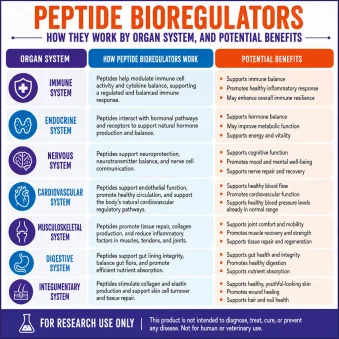
What is Testagen? Testagen is a synthetic tetrapeptide bioregulator (a "cytogen") with the sequence Lysyl-glutamyl-aspartyl-glycine (Lys-Glu-Asp-Gly / KEDG). The Khavinson catalogue assigns it to the testes, and the Khavinson model proposes that short peptides of this kind interact with DNA to regulate protein synthesis.
The experimental papers that name the KEDG sequence studied the pituitary and thyroid in chickens and describe KEDG as derived from anterior pituitary cytomedins, not testes; none measured testosterone, testicular tissue or fertility. Evidence is preclinical and from its originating research school.
Testagen is a Khavinson-class bioregulator assigned to the testes: a synthetic peptide (Lys-Glu-Asp-Gly), not an approved drug.
Mechanism is epigenetic by hypothesis: it is proposed to interact with DNA to regulate protein synthesis; the KEDG studies did not measure testosterone.
Reported testagen peptide benefits for testosterone, fertility, libido and mood have no study behind them; the experimental KEDG papers concern the pituitary-thyroid axis in chickens and peptide uptake in HeLa cells.
What Is Testagen?
So, precisely what is Testagen? The testagen peptide (sometimes written "peptide testagen") is a synthesized peptide bioregulator assigned to the male reproductive system, primarily the testes, in the Khavinson catalogue. As a testes bioregulator, it belongs to the family of Khavinson bioregulators and is a cytogen, a short synthetic peptide. It is commonly sold as a "Testagen 20mg" capsule.
The Chemical Architecture and Male Aging
Testagen features the specific Lysyl-glutamyl-aspartyl-glycine (Lys-Glu-Asp-Gly / h-lys-glu-asp-gly-oh / KEDG / c17h29n5o9) amino acid sequence, which corresponds to the molecular formula C17H29N5O9 and includes the essential amino acid lysine. Male hormones decline with age: beginning in the late 20s to early 30s, the Hypothalamus-Pituitary-Testicular Axis (HPTA), involving the anterior pituitary gland, becomes less efficient, Leydig cells degrade, and testosterone levels gradually fall — the process often called andropause.

How Does Testagen Work?
As cells age, protein synthesis plummets, and a testicular cell that cannot synthesize protein cannot produce testosterone or sperm efficiently. Testagen is proposed to work by directly regulating protein synthesis in male organs, potentially improving the response to luteinizing hormone. When the Lys-Glu-Asp-Gly sequence interacts with the DNA of a degraded testicular cell, it is hypothesized to trigger gene transcription of specific genes — a form of epigenetic regulation that involves "switching back on" down-regulated gene expression and protein expression.
The proposed step-by-step: the small peptide, characterized by its low molecular weight, survives digestion and enters the bloodstream, targets testicular tissue, crosses into Leydig and Sertoli cells, binds DNA promoter regions, interacts with histone proteins to open chromatin, and prompts the cell to synthesize repair proteins. So does the testagen peptide increase testosterone? The proposed model is indirect: rather than adding hormone, it is meant to help the "factory" repair itself so the body's own natural testosterone biosynthesis can recover. These are mechanistic, largely preclinical observations, not proven human outcomes.
Testagen peptide benefits: claims and evidence
The testagen peptide benefits usually listed (testosterone, fertility, body composition and muscle growth, libido, mood and the immune system) are extrapolated from what testosterone supports, not measured with Testagen. None of the studies cited in this guide measured testosterone, other sex hormones, testicular tissue or fertility; the studies that exist are described below.
Testagen peptide for women: there is little to no research on Testagen in women.

What the KEDG studies actually measured
The peer-reviewed papers that name the Lys-Glu-Asp-Gly sequence concern the pituitary and thyroid in birds, not the testis. Kuznik and colleagues described KEDG as synthesised from the amino acid composition of pituitary cytomedins, specifically extracts of the anterior pituitary lobe, and studied it alongside Ala-Glu-Asp-Gly (Epitalon) (Kuznik et al. 2008) (Kuznik et al. 2011). In a 2008 study, neonatally hypophysectomised chickens given either tetrapeptide showed higher thyrotropic and thyroid hormone concentrations and recovery of thyroid gland structure (Kuznik et al. 2008). A 2011 study extended the work to chickens hypophysectomised at five days old and to old hens, and reported that both peptides significantly reduced the hormonal and structural changes that followed the operation, with a weaker effect on hormone levels in the old hens (Kuznik et al. 2011). Neither abstract reports group sizes or numerical results.
The only other experimental paper that names Testagen is a cell study. Fedoreyeva and colleagues followed fluorescently labelled Testagen, Epitalon and Pinealon into the cytoplasm, nucleus and nucleolus of HeLa cells, and reported that short peptides changed the fluorescence of labelled DNA fragments in a sequence-dependent way (Fedoreyeva et al. 2011). None of these studies measured testosterone, other sex hormones, testicular tissue or fertility.
Where the Testagen figures come from
Testagen is not an approved medicine anywhere and has no official human dose. The capsule products sold as supplements in Russia carry a label regimen; that is a supplement label, not a trial result, and it concerns a different product from the research peptide sold here. The Khavinson group's published work on this peptide is cell and animal research, and those papers are the only dose figures with a source behind them. PrymaLab supplies Testagen for laboratory research only. This page does not give a schedule for using it.
Safety and Long-Term Effects
Reports from its originating research tradition describe short-chain peptides as well tolerated and non-toxic. Reported testagen peptide side effects are minimal in this literature, but independent, large-scale human trials are limited, so these reports are not a safety record.
PrymaLab supplies Testagen for laboratory research only; it is not for human or veterinary use.
Where to Find Testagen for Sale Safely
As demand grows, so do low-quality products. When looking for testagen for sale (or to buy Testagen), buy on documentation and reputation rather than price.
| Factor | High-Quality (Verified) | Low-Quality / Risky |
|---|---|---|
| Testing / COA | Certificate matches the lot number and can be verified | Missing or generic |
| Sourcing | Authentic Khavinson lineage / reputable brand | Unknown origin |
| Labeling | States Lys-Glu-Asp-Gly, capsule strength | Vague ingredient list |
| Claims | Supportive, realistic | "Instant test boost" hype |
| Price | Reflects real synthesis cost | Suspiciously cheap (filler risk) |
PrymaLab's bioregulator catalog is a reference point for the transparency standards a trustworthy supplier should meet.
PrymaLab makes the compound as a Testagen peptide 20mg vial, and that product page carries the Lys-Glu-Asp-Gly sequence and the storage conditions this section says to check for.
Related: the bioregulator peptide guide on Cardiogen.
Researching male bioregulators? Start with verified material.
PrymaLab focuses on US-handled research peptides with transparent documentation and careful handling.
Explore PrymaLab BioregulatorsFrequently Asked Questions
What are the main Testagen peptide benefits?
The benefits usually claimed (testosterone, fertility, body composition, libido and mood) have not been measured with Testagen. The experimental KEDG papers studied the pituitary-thyroid axis in chickens and peptide uptake into HeLa cells.
Does the Testagen peptide increase testosterone?
No study cited here measured testosterone with Testagen. The Khavinson model proposes an indirect effect on Leydig cells, but that is a hypothesis from the originating school, not a measured result.
Are there Testagen peptide side effects?
Its originating research tradition reports short-chain peptides as well tolerated, non-toxic, and non-dependency-forming, with few noted side effects. Independent human trial data are limited.
Where can I find Testagen for sale safely?
Look for testagen for sale from suppliers with authentic Khavinson lineage or a reputable brand, a certificate that matches the lot number on your vial and can be verified, and clear labeling of the Lys-Glu-Asp-Gly composition and capsule strength. Avoid 'instant test boost' hype and suspiciously cheap products, and confirm the legal status of the compound in your region before buying.
References & Further Reading
- Khavinson, V.Kh. (2002). Peptides and Ageing. Neuroendocrinology Letters, 23(Suppl 3), 11–144.
- Khavinson, V.Kh., & Malinin, V.V. (2005). Gerontological Aspects of Genome Peptide Regulation. Karger, Basel.
- Anisimov, V.N., & Khavinson, V.Kh. (2010). Peptide bioregulation of aging: results and prospects. Biogerontology, 11(2), 139–149.
- Review literature on short peptide bioregulators and testicular Leydig/Sertoli cell function (Lys-Glu-Asp-Gly / KEDG-class peptides).
- U.S. Food and Drug Administration. Dietary Supplements: Questions and Answers. FDA.gov. Accessed 2026.
PrymaLab resources: Bioregulator peptides · Research Hub · Peptide calculator · FAQ.
Final disclaimer: This article is for educational purposes only. Testagen and the other compounds discussed have not been evaluated by the FDA or comparable agencies to diagnose, treat, cure, or prevent any disease, and statements about their effects have not been evaluated by the FDA.
Verify the legal status of any compound in your jurisdiction. PrymaLab does not endorse any specific third-party peptide vendor mentioned in this article and assumes no responsibility for third-party products.
Formats stocked for the compounds in this article
Testagen: Testagen 10mg preloaded 3ml pen and Testagen 20mg Nasal Spray. Every listing is supplied for laboratory research use with a batch certificate of analysis.