
Description
PrymaLab · Research use only
KissPeptin-10 5mg
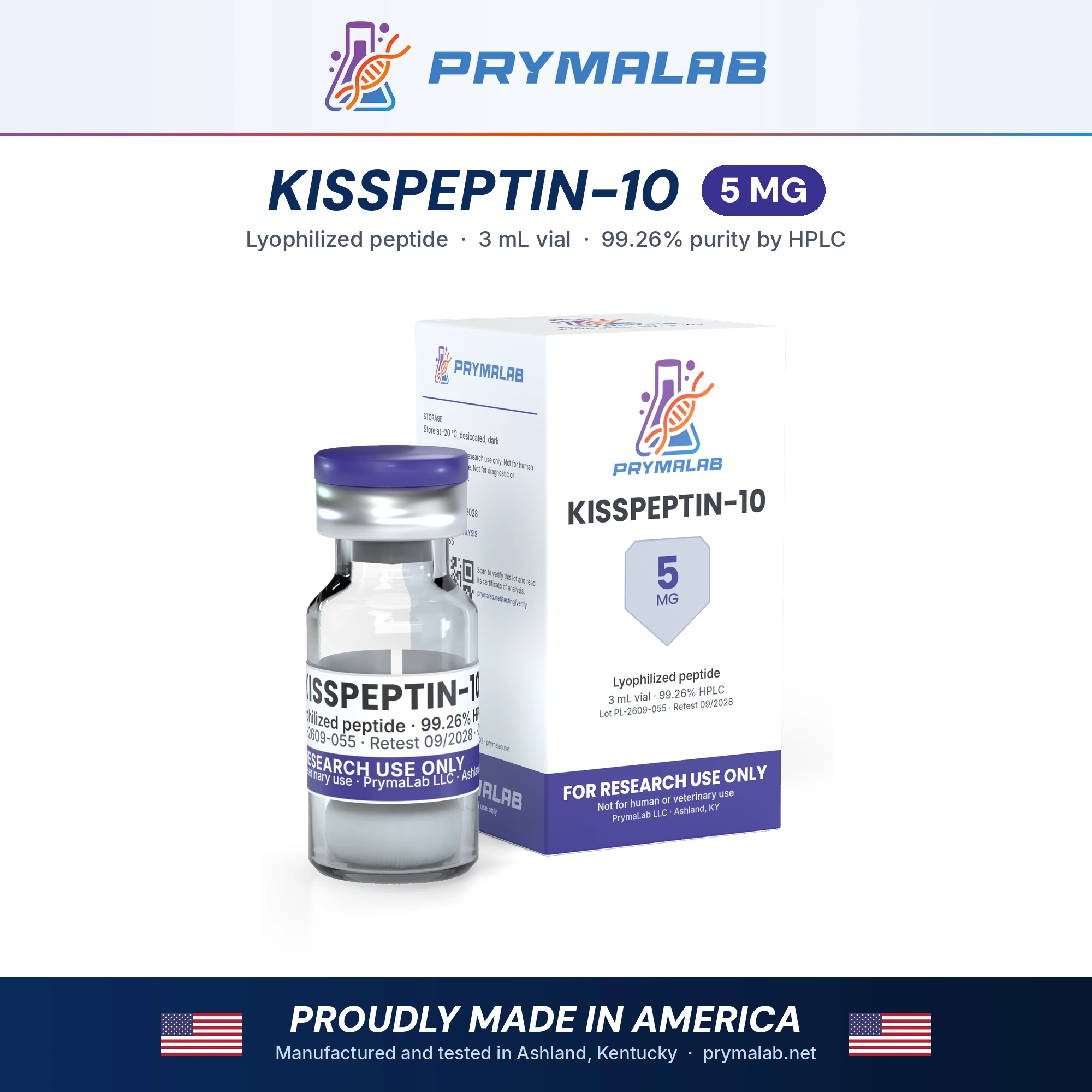
Kisspeptin-10 (human metastin 45-54), the amidated decapeptide, 5 mg freeze-dried
Kisspeptin-10 (KP-10) is the ten-residue C-terminal fragment of human kisspeptin, YNWNSFGLRF-NH2, and the shortest form that still activates the kisspeptin receptor, KISS1R, formerly called GPR54. This listing is the 5 mg vial of freeze-dried peptide, the main fill; a 10 mg vial is also sold. Research on kisspeptin-10 covers how the kisspeptins were found, how the receptor signals, their place upstream of GnRH neurons, small studies of LH release in healthy volunteers and the peptide’s very short half-life.
Specifications
| Property | Value |
|---|---|
| Compound | Kisspeptin-10 KP-10; human metastin 45–54 |
| CAS number | 374675-21-5 |
| Molecular formula | C63H83N17O14 |
| Theoretical mass | 1302.4 Da |
| Sequence / structure | H-YNWNSFGLRF-NH₂ (10 residues; C-terminal amide) |
| Label claim | 5 mg/vial |
| Form | Lyophilized (freeze-dried) powder or cake in a sealed glass vial with a rubber stopper and aluminium crimp cap |
| Storage, sealed | −20 °C, desiccated, dark |
| Purity specification | 99.0% or higher by RP-HPLC |
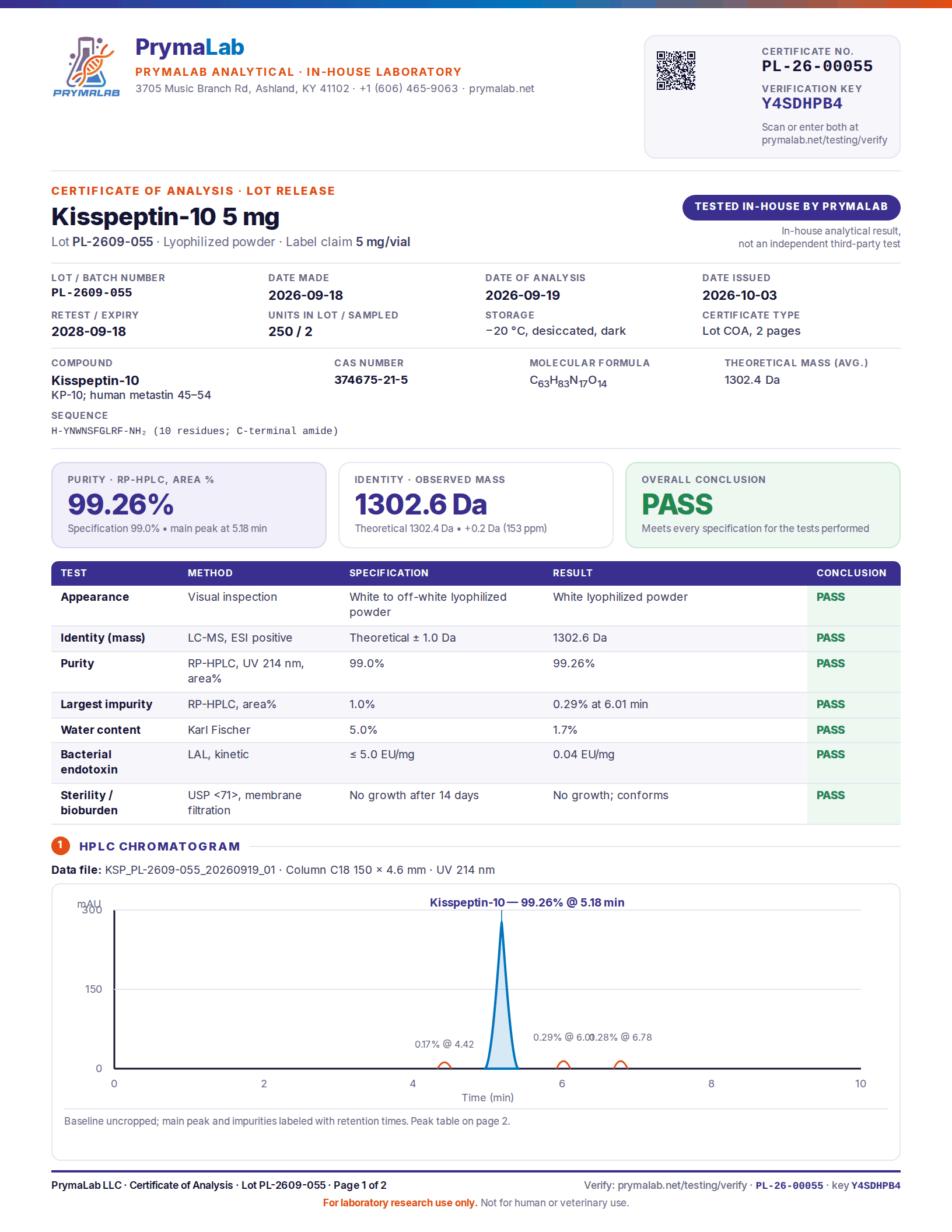
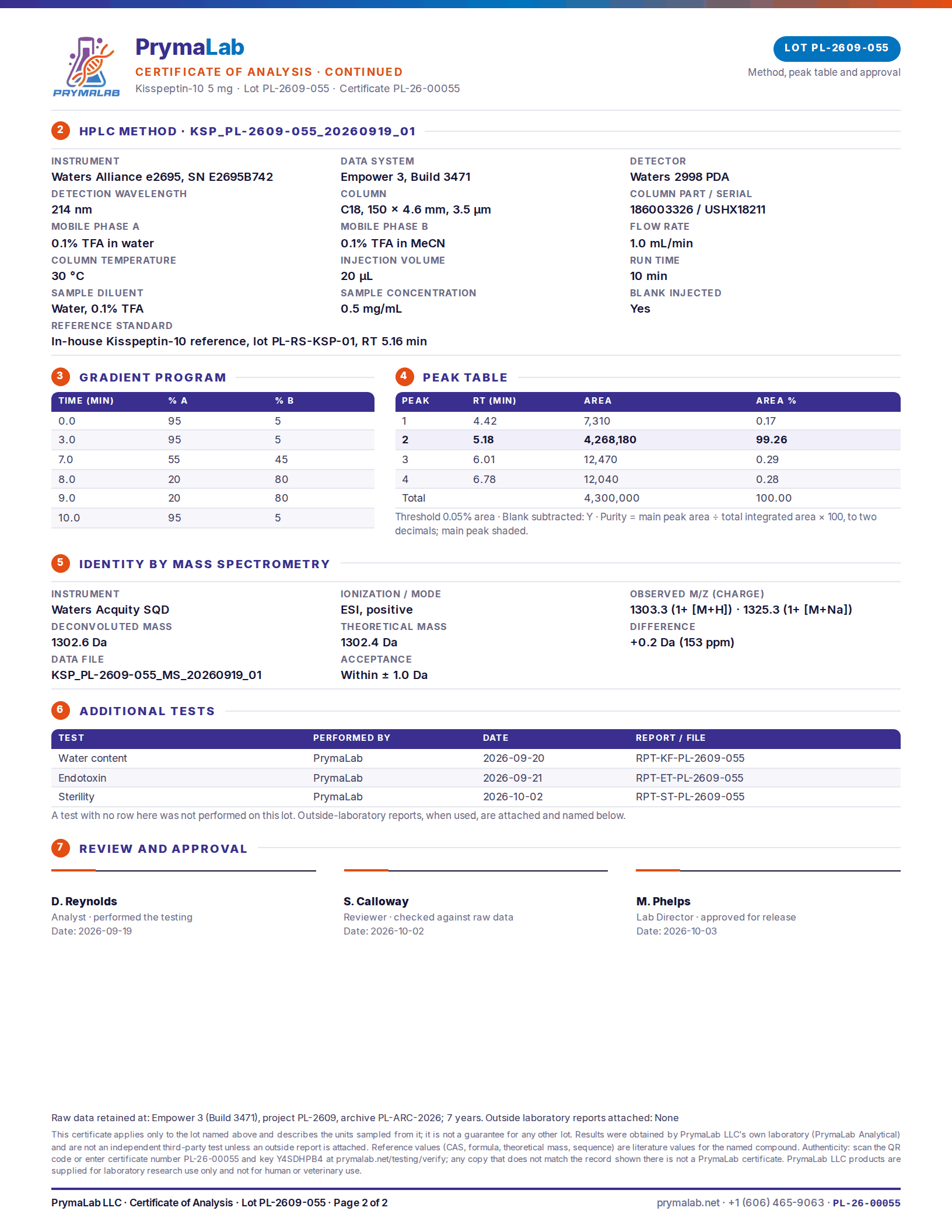
| Lot certificate | Results for the lot now shipping are in the certificate panel on this page |
| Safety data sheet | PL-SDS-092 |
Fills in this range
Kisspeptin-10 is sold in 2 fills. The compound and the testing are the same in every fill; only the amount in the vial changes.
| Fill | Listing |
|---|---|
| 5 mg | KissPeptin-10 5mg (this page) |
| 10 mg | KissPeptin-10 (10mg) |
The sequence, the amide and the numbering
The certificate gives the sequence as H-YNWNSFGLRF-NH2: a free N-terminal tyrosine and a C-terminal phenylalanine amide, the Arg-Phe-amide ending that every active kisspeptin shares. Formula C63H83N17O14, theoretical mass 1302.4 Da. A version ending in a free acid instead of the amide would weigh about one dalton more, so the LC-MS identity result on the certificate is worth reading closely against 1302.4.
The numbering explains the other names. The same ten residues are positions 45 to 54 of kisspeptin-54, hence metastin 45-54, and positions 112 to 121 when counted from the start of the 145-residue precursor. From the theoretical mass, 5 mg is about 3.8 µmol, slightly less once the water content on the certificate is allowed for. The sequence also contains two asparagines, at positions 2 and 4, a residue that can deamidate in solution.
What the research covers
Discovery and the receptor
Kisspeptins were identified in 2001 as the natural ligands of GPR54, then an orphan G protein-coupled receptor. Kotani and colleagues isolated peptides of 54, 14 and 13 residues from human placenta, all ending in the same RF-amide C-terminus and all derived from KiSS-1, a metastasis suppressor gene for melanoma cells1. The peptides bound rat and human GPR54 with low nanomolar affinity and stimulated PIP2 hydrolysis, calcium mobilisation, arachidonic acid release and MAP kinase phosphorylation, while inhibiting cell proliferation1. Human GPR54 was highly expressed in placenta, pituitary, pancreas and spinal cord, and kisspeptin given to rats stimulated oxytocin secretion1.
The IUPHAR nomenclature committee later named the receptor the kisspeptin receptor, gene KISS1R2. Its review describes kisspeptin-54 as cleaved from a 145-residue gene product and lists kisspeptin-10 as the smallest of the shorter fragments that remain biologically active2. The receptor couples to Gq/11 and the phospholipase C pathway, mobilising calcium, and its sequence is more than 80% conserved between human, rat and mouse2. Mutations in KISS1R cause hypogonadotropic hypogonadism, and mice with the gene disrupted reproduce that phenotype2.
Upstream of GnRH
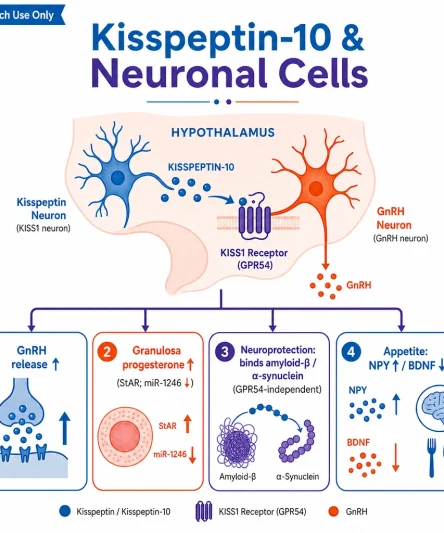
A 2012 review in Physiological Reviews placed kisspeptins, produced mainly by neurons in discrete hypothalamic nuclei, upstream of the neurons that make gonadotropin-releasing hormone3. It traced their involvement from sexual differentiation of the brain and the onset of puberty to adult gonadotropin secretion and the metabolic control of fertility, and set out the questions still contested3. The cell-line studies of hypothalamic neurons, granulosa cells and amyloid binding are summarised in the kisspeptin-10 (kisspeptin 45-54) guide.
Human volunteer studies
Kisspeptin-10 itself was first studied in men by George and colleagues in 2011. Healthy men received intravenous boluses of kisspeptin-10 or vehicle and, in a second phase, infusions lasting up to 22.5 hours, while LH pulse frequency and size were estimated by deconvolution analysis4. Serum LH rose quickly after a bolus; the response grew with the amount given up to a maximum and was smaller at the highest amount tested, and the infusions raised LH and testosterone4. Jayasena and colleagues compared men and women the same year, in groups of four or five5. LH and FSH rose in men, but women in the follicular phase of the menstrual cycle showed no change in gonadotropins by any of the routes tested, while women in the preovulatory phase did respond5.
A short half-life
Kisspeptin-10 is cleared quickly. In male mice, d’Anglemont de Tassigny and colleagues measured a half-life in the bloodstream of about 4 minutes for kisspeptin-10 against about 32 minutes for kisspeptin-54, and kisspeptin-54 sustained LH release far longer6. Repeating kisspeptin-10 at short intervals to make up for its clearance still did not reproduce the sustained rise, which suggested that clearance was not the whole explanation6.
What is not established
The human work consists of physiological experiments in groups of four to six, measuring hormones over hours4,5. Kotani’s binding data were obtained with the 54-, 14- and 13-residue peptides rather than kisspeptin-101, and the mouse comparison shows the short and long forms do not behave the same way in vivo6, so results for one form do not transfer automatically to another. The neuroprotection and appetite findings in the guide come from cell lines. None of the work used PrymaLab material.
How each lot is tested
Every lot is tested in PrymaLab’s own laboratory in Ashland, Kentucky before release: RP-HPLC for purity, LC-MS for identity, Karl Fischer titration for water, LAL for endotoxin and USP <71> for sterility. The results for the lot now shipping are in the certificate panel on this page, and the certificate number, key and QR code can be checked on the verify page. These are in-house results from PrymaLab Analytical, not an independent test, and the lab is not accredited to ISO 17025. The third-party testing guarantee on this page still applies: if any independent laboratory finds the wrong compound, or less than the stated purity or amount, the order is refunded and the cost of the test is reimbursed.
Frequently asked questions
What is the difference between kisspeptin-10 and kisspeptin-54?
Kisspeptin-54 is the full peptide cleaved from the 145-residue KISS1 precursor; kisspeptin-10 is its last ten residues, the smallest fragment that keeps activity at the receptor. In mice the shorter peptide was cleared within minutes and sustained LH release for a much shorter time.
How do the 5 mg and 10 mg vials differ?
Only in the amount of peptide. Both contain freeze-dried kisspeptin-10 with the same sequence and mass, and each fill is made and tested as its own lot with its own certificate. In molar terms the 5 mg vial holds about 3.8 µmol and the 10 mg vial about 7.7 µmol.
How do I check the certificate for the vial I received?
Match the lot number on the vial label to the certificate panel on this page. Older lots are listed on the testing results page, and the verify page confirms a certificate from its number and key. The LC-MS identity figure should sit close to 1302.4 Da.
How should kisspeptin-10 be stored?
Sealed at −20 °C, desiccated and dark. Let the vial reach room temperature before it is opened so moisture does not condense on the powder. Reconstituted solutions go at 2 to 8 °C, protected from light, for a period your laboratory has established, according to the safety data sheet.
Has kisspeptin-10 been studied in people?
In small physiological studies, yes. Healthy men and women received kisspeptin-10 intravenously or by other routes while LH, FSH and testosterone were measured over hours. Those studies say nothing about research vials like this one, and none of them used PrymaLab material.
Is this vial for human use?
No. It is sold for laboratory research only. Kisspeptin-10 is not approved by the FDA or any other authority for human or veterinary use, and this product must not be given to people or animals.
References
- Kotani M, Detheux M, Vandenbogaerde A, et al. The metastasis suppressor gene KiSS-1 encodes kisspeptins, the natural ligands of the orphan G protein-coupled receptor GPR54. J Biol Chem. 2001;276(37):34631-6. DOI · PubMed
- Kirby HR, Maguire JJ, Colledge WH, et al. International Union of Basic and Clinical Pharmacology. LXXVII. Kisspeptin receptor nomenclature, distribution, and function. Pharmacol Rev. 2010;62(4):565-78. DOI · PubMed
- Pinilla L, Aguilar E, Dieguez C, et al. Kisspeptins and reproduction: physiological roles and regulatory mechanisms. Physiol Rev. 2012;92(3):1235-316. DOI · PubMed
- George JT, Veldhuis JD, Roseweir AK, et al. Kisspeptin-10 is a potent stimulator of LH and increases pulse frequency in men. J Clin Endocrinol Metab. 2011;96(8):E1228-36. DOI · PubMed
- Jayasena CN, Nijher GM, Comninos AN, et al. The effects of kisspeptin-10 on reproductive hormone release show sexual dimorphism in humans. J Clin Endocrinol Metab. 2011;96(12):E1963-72. DOI · PubMed
- d'Anglemont de Tassigny X, Jayasena CN, Murphy KG, et al. Mechanistic insights into the more potent effect of KP-54 compared to KP-10 in vivo. PLoS One. 2017;12(5):e0176821. DOI · PubMed
Research use only
For laboratory research use only. KissPeptin-10 5mg is not a drug, food, cosmetic or dietary supplement, is not approved by the FDA or any comparable authority for human or veterinary use, and must not be given to people or animals. It is sold to qualified researchers and institutions, and the buyer is responsible for lawful handling and disposal.
Other formats of KissPeptin-10
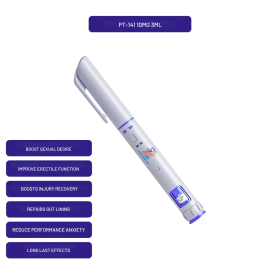
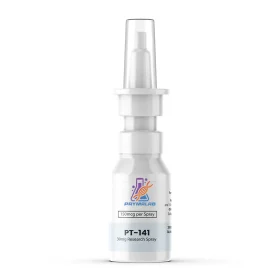
KissPeptin-10 is also stocked as Kisspeptin-10 10mg Nasal Spray and Kisspeptin-10 10mg preloaded 3ml pen. Each listing states its own quantity and concentration, and the pen and vial comparison explains what changes between formats.








Reviews
There are no reviews yet.