
15% fall discount applied automatically at checkoutFree USA shipping over $100Free worldwide shipping over $200Credit/debit checkout disabled for updates
Sign in 0
Sale!

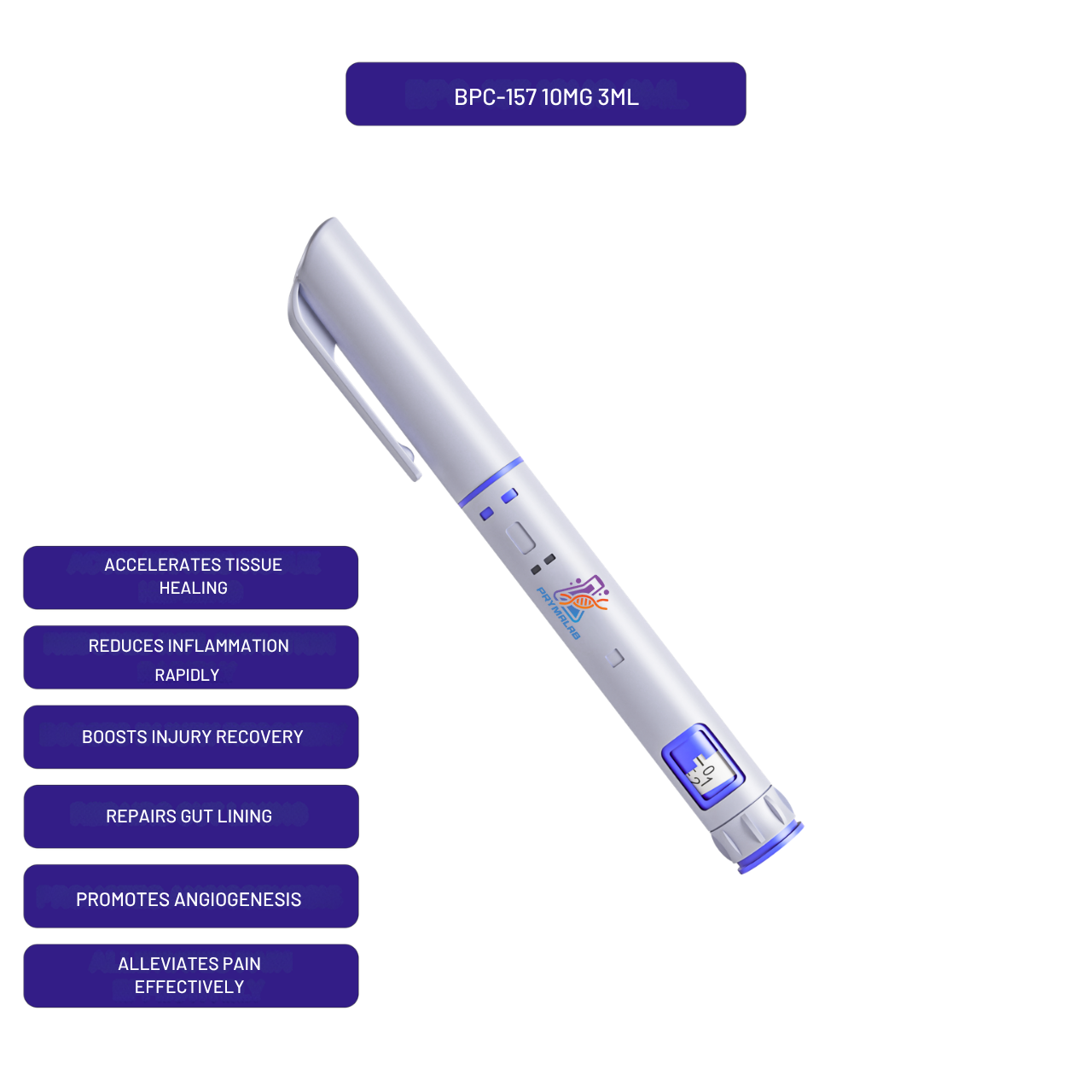
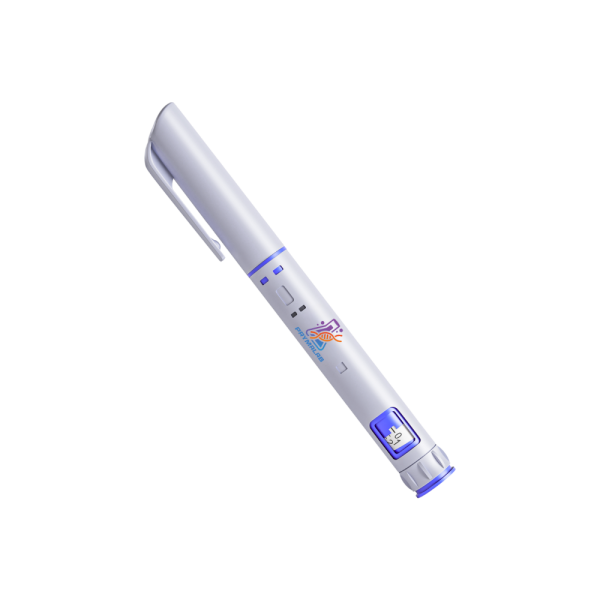
Preloaded Autoinjector | BPC-157 | 3ml Pen | 5mg/ml

(20 customer reviews)

Original price was: $54.99.Current price is: $39.99.

BPC-157 from PrymaLab is a research-use-only compound supplied in a preloaded 3ml autoinjector pen at 5mg/ml for laboratory study, offering consistent measured delivery and reliable handling for researchers.

Description

PrymaLab · Research Use Only

Preloaded Autoinjector | BPC-157 | 3ml Pen | 5mg/ml

Pentadecapeptide · VEGFR2-Akt-eNOS · 3ml at 5mg/ml

The BPC-157 autoinjector is a preloaded 3ml research device containing BPC-157 in solution at 5mg/ml, giving 15mg of total peptide. BPC-157 is a fifteen-residue partial sequence of a protein identified in human gastric juice, CAS 137525-51-0, molecular weight 1419.55, and its sequence composition makes it comparatively well-supported in solution.

Specification Table

BPC-157 autoinjector device and compound data
Property Value
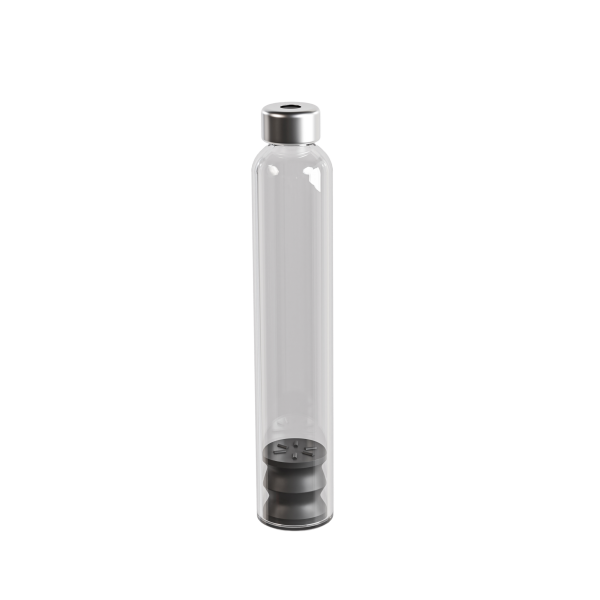
Device format Preloaded autoinjector pen, glass cartridge
Fill volume 3 ml
Concentration 5 mg/ml
Total compound in device 15 mg
Molar concentration Approximately 3.5 mM
Compound BPC-157
Full name Body Protection Compound 157
CAS number 137525-51-0
Molecular formula C62H98N16O22
Molecular weight 1419.55 g/mol
Residue count 15 (pentadecapeptide)
Amino acid sequence Gly-Glu-Pro-Pro-Pro-Gly-Lys-Pro-Ala-Asp-Asp-Ala-Gly-Leu-Val
Sequence origin Partial sequence of a protein found in human gastric juice
Reported molecular association VEGFR2, with downstream Akt and eNOS activation
Oxidation-prone residues None. No cysteine, methionine, tryptophan, tyrosine or histidine
Proline content Four residues, at positions 3, 4, 5 and 8
Reconstitution required None. Supplied as solution
Excipient system Not published on the product record
Solution stability Not established over device shelf life
Storage 2-8°C, protected from light
Purity Per lot-specific certificate of analysis
Regulatory status No approved human or veterinary formulation in any jurisdiction

What Does the Sequence Tell You?

Reading Gly-Glu-Pro-Pro-Pro-Gly-Lys-Pro-Ala-Asp-Asp-Ala-Gly-Leu-Val predicts a good deal about how this peptide behaves, and it is worth doing before considering any pharmacology.

Four prolines, three of them consecutive at positions 3, 4 and 5. Proline restricts backbone rotation severely, so a run of three imposes a rigid, extended local conformation rather than allowing the flexible chain most short peptides adopt. That rigidity contributes to proteolytic resistance, since many peptidases require the substrate to adopt a particular conformation in the active site.

No cysteine. No disulfide bonds to form, scramble or reduce, which removes the single largest source of preparation ambiguity affecting growth factors and longer peptides.

None of the five oxidation-prone residues. No methionine, tryptophan, tyrosine or histidine, so metal-catalysed and photo-oxidation routes are largely closed.

Two adjacent aspartates at positions 10 and 11, followed by alanine. Asp-Gly sequences are the classic isomerisation risk; Asp-Asp-Ala is less problematic but aspartate isomerisation remains the most plausible chemical degradation route for this sequence in solution.

What Is the VEGFR2 Association?

Hsieh and colleagues provided the clearest mechanistic characterisation available for this compound (Hsieh et al., Journal of Molecular Medicine, 2017).

In human vascular endothelial cells they reported that BPC-157 increased both mRNA and protein expression of VEGFR2, the principal receptor mediating vascular endothelial growth factor signalling, without increasing VEGF-A itself. That distinction matters: the compound appears to act on receptor availability rather than on ligand supply.

They further reported that BPC-157 promoted VEGFR2 internalisation and produced time-dependent activation of the VEGFR2-Akt-eNOS signalling axis. Endothelial nitric oxide synthase sits at the end of that chain, which links the pathway to nitric oxide production and vascular tone.

Vessel density increased in vivo and in vitro in the same body of work, and recovery of blood flow was accelerated in a rat hind-limb ischaemia model.

What this does not establish is a receptor for BPC-157 itself. No direct binding partner has been identified, and the compound is described as acting on VEGFR2 expression and trafficking rather than as a VEGFR2 ligand. That gap is real and is worth stating.

How Does the BPC-157 Autoinjector Compare With a Vial?

For the BPC-157 autoinjector the comparison turns on the same trade-off as every device in this catalogue, though the balance here is more favourable than most.

The device removes reconstitution and its associated failure modes: diluent measurement error, incomplete dissolution, shear from over-agitation, adsorptive loss during transfer, and variable time between preparation and use.

It accepts solution-state storage in exchange. For BPC-157 that exchange is comparatively cheap, because the sequence carries no oxidation-prone residues and no disulfides, leaving aspartate isomerisation and slow amide hydrolysis as the principal routes. Both proceed considerably more slowly at 2-8°C than oxidation would in a methionine-containing peptide.

At 5 mg/ml the solution is approximately 3.5 millimolar, which suits cell-based work with modest dilution. Published in vitro concentrations for this compound span a wide range in the literature, so the appropriate dilution depends on which body of work a design is following.

What Is Not Established About This Compound?

A good deal, and the gaps are worth naming because BPC-157 attracts more confident description than its evidence supports.

No receptor has been identified. The VEGFR2 association concerns expression and trafficking rather than direct binding, and no protein has been shown to bind BPC-157 with the affinity and specificity a receptor implies.

No human clinical trial has been completed and published. Sikiric and colleagues reference tolerability in early inflammatory bowel disease work, but there is no phase III dataset and no approved formulation anywhere.

Pharmacokinetics are poorly characterised. Half-life figures circulate widely without traceable primary sources, and for a fifteen-residue peptide with no protective modifications beyond its proline content, rapid clearance would be the default expectation.

Solution stability over device shelf life is unpublished for this format specifically, which is the gap most relevant to anyone using this product rather than the compound generally.

How Should BPC-157 Findings Be Interpreted?

This compound attracts unusually confident description, and a page that repeats it without qualification will not survive scrutiny from anyone who has read the primary literature.

The published record is substantial in volume and narrow in provenance. A large proportion of the animal work comes from one research group in Croatia, spanning tendon, muscle, gastrointestinal and vascular models over more than two decades. The work is detailed. Independent replication by unaffiliated laboratories is thinner than the citation count suggests.

Effect sizes reported in that literature are frequently large, and large effects across many unrelated tissue systems from a single compound warrant more scepticism than they usually receive. A molecule that improves every model it is tested in is either remarkable or is being tested in a way that favours it.

None of that means the findings are wrong. It means a researcher designing around them should build in the controls that would detect a false positive: blinded assessment, pre-registered endpoints, and where possible a comparator with known activity.

The absence of an identified receptor compounds the issue, because without a molecular target there is no mechanistic prediction to test against. An effect with no mechanism is harder to falsify, which is a weakness rather than a strength.

What Would Strengthen the Evidence Base?

For the BPC-157 autoinjector, naming what is missing is more useful than restating what exists, and for this compound the gaps are specific.

Independent replication of the principal animal findings by laboratories with no connection to the originating group would address the provenance concentration directly. Several findings have never been reproduced outside that lineage.

Identification of a molecular target would convert a descriptive literature into a mechanistic one. Affinity chromatography, photoaffinity labelling and proteomic pulldown approaches have all been applied successfully to comparable orphan peptides.

Pharmacokinetic characterisation would give exposure figures that designs could work from rather than around. No reliable half-life exists, which makes translating between in vitro and in vivo work guesswork.

Blinded, pre-registered animal work would address the effect-size question. Where a compound reports large advantages across many unrelated models, blinding is the control that distinguishes a real broad-spectrum effect from an assessment artefact.

Verifying and Handling the Device

Inspect the solution before each draw against both light and dark backgrounds. It should be clear and free of particulate. A colourless peptide solution provides no colour cue, so clarity is the only visual signal available.

Verify delivered volume gravimetrically at least once per device. Actuate onto a tared vessel, record the mass, convert using solution density, repeat across several actuations. Run the check at the temperature of intended use, since cold solution is more viscous and viscosity affects delivery in a spring mechanism.

Discard rather than measure the first actuation after any rest period. Both air ingress and seal relaxation produce under-delivery on the first use after standing.

Keep it at 2-8°C shielded from light, and return the device to packaging whenever it is not in use. Record lot, date of first actuation, storage conditions and volume drawn per session, since the interval between first use and each later draw is an experimental variable while shelf-life data remains unpublished.

A Note on Concentration Selection

Published in vitro concentrations for the BPC-157 autoinjector compound span an unusually wide range, and picking one requires knowing which body of work a design is following.

That spread is itself informative. A compound with a well-characterised target usually converges on a concentration range across laboratories. Wide dispersion suggests either genuine system dependence or insufficient standardisation, and for BPC-157 the absence of an identified receptor makes the second harder to rule out.

The practical response is to run a concentration-response curve rather than adopting a single figure from a paper using a different system.

Where a design must use one concentration, state which published work it follows and why, so a reader can locate the choice in the literature rather than treating it as arbitrary.

What Does the Preclinical Record Actually Report?

The rodent literature on this synthetic peptide is large, consistent within itself, and produced almost entirely by one research group, which is the combination a reader has to hold in mind throughout.

The compound is a stable fragment of a gastric protein, 15 amino acids long, and the reported work centres on injury models rather than on healthy animals.

Tendon models are the most cited. Reported effects on tendon fibroblasts include increased cell migration and altered collagen synthesis in culture, with the cell migration result the one most often reproduced.

Ligament and muscle injury models appear alongside them, with the ligament work following the same pattern of accelerated closure against untreated controls.

Angiogenesis is the mechanistic thread running through most of it, with reported blood vessel formation attributed to VEGFR2 signalling and downstream nitric oxide pathways.

Increased growth hormone receptor expression in tendon fibroblasts is reported in one of those papers, which is the closest the record comes to a named receptor-level effect.

Gastrointestinal models make up the other large group, including work in colitis-like injury, which is where the gut health language attached to this compound originates.

Two things about that body of work deserve stating rather than glossing.

Independent replication outside the originating group is thin, and no adequately powered human trial of this compound exists in any indication.

So tissue repair and tissue regeneration are descriptions of rodent findings here, not of anything demonstrated in a person.

Claims that it can reduce inflammation, resolve joint pain or accelerate muscle recovery do not have human evidence behind them, and this product is not offered for any of those purposes.

What Is the Wolverine Stack, and Is This Product Part of It?

Search traffic for this compound is dominated by one phrase, and it is worth addressing directly rather than pretending it does not exist.

The wolverine stack is a market nickname for combining this peptide with thymosin beta-4, usually sold as TB-500, on the reasoning that two compounds with reported tissue repair activity should work better together.

Sometimes GHK-Cu or KPV joins the combination, and the whole thing is marketed for injury recovery, joint recovery, chronic pain, a muscle strain and soft tissue repair alike.

No controlled study has tested that combination in anything. The wolverine stack is a marketing construct rather than a protocol with evidence, and the name comes from a comic-book character rather than from a laboratory.

The same grouping is sold as healing peptides, and this compound specifically is sometimes called the wolverine peptide, which is the same claim compressed into one word.

A wolverine stack listing tells a buyer what two vendors decided to sell together. It says nothing about whether either compound does anything, and it is not a delivery method or a protocol.

Growth hormone secretagogues such as ipamorelin, and GLP-1 drugs such as semaglutide, turn up in the same stack guides despite sharing no mechanism with this peptide at all.

Regenerative medicine as a field does contain real interventions, PRP among them, that have been through actual trials with mixed results. A peptide stack assembled from vendor listings is not in that category.

Anyone comparing this against PRP or stem cell therapy is comparing an unapproved research chemical against clinical procedures, which is not a like-for-like comparison.

None of that makes the wolverine stack a fraud. It makes it an untested idea sold as a finished one, and the distinction matters to anyone deciding what to buy.

What Is the Regulatory and Anti-Doping Position?

Two separate regulatory facts attach to this compound and they are often confused with each other.

The first is that it holds no approval anywhere. It is not an FDA-approved drug, and in 2023 the FDA placed it in the category of substances that present significant safety risks for compounding, which removed it from the Section 503A bulks list.

That means a compounding pharmacy in the United States cannot lawfully compound it for patients, which is a specific change and one that a lot of listings have not caught up with.

The second is anti-doping. WADA, the World Anti-Doping Agency, prohibits this compound. It appears on the prohibited list under the growth factor and peptide categories, in and out of competition.

Any athlete subject to testing who uses it is committing an anti-doping rule violation, and that is true regardless of the delivery format or the label on the container.

Stating that plainly is more useful than leaving it for somebody to discover afterwards.

This device is supplied for laboratory research only. It is not a peptide therapy, not a treatment, and not for administration to humans or animals.

What Is Known About the Safety Profile?

Very little, and the shape of that gap is worth describing precisely rather than summarising as reassurance.

The rodent work reports no obvious toxicity across a wide range of doses, which is where the safety profile claims circulating for this compound come from.

Rodent tolerability at short duration is not a human safety profile. No trial has characterised side effects in people, and no long-term data exists in any species.

The routes used in that published work were mostly intraperitoneal and intragastric. The market uses subcutaneous and intramuscular administration instead, so even the animal safety data does not describe the route the market has adopted.

Where injection is discussed for this compound, the reported problems are local: injection site reactions, tenderness and irritation at the injection site, which are common to any subcutaneous injection of an unbuffered peptide solution.

An intramuscular injection carries the same local considerations and no additional evidence.

The theoretical concern that gets least attention is the mechanism itself. A compound promoting angiogenesis is promoting blood vessel formation indiscriminately, and no study has examined what that does over time in a person with an undiagnosed tumour.

That is a hypothesis rather than a finding, and it is the reason the absence of long-term human data matters more here than it would for an inert compound.

Anti-inflammatory effects reported in the gut models, including reduced inflammatory cytokines in colitis-like injury, are the basis of leaky gut and ulcerative colitis claims made by sellers. Neither condition has been studied with this compound in a controlled human trial.

Biohackers running a peptide protocol on themselves are not generating that evidence either, since an uncontrolled self-experiment cannot separate an effect from the natural course of an injury.

How Does the Device Compare With Other Formats?

This compound is sold in several presentations and the differences between them are practical rather than chemical.

The most common is a lyophilized powder in a vial. Buyers reconstitute peptides of that kind with bacteriostatic water before use, and that step is where most handling error enters. It is the step this format removes.

Removing it changes the arithmetic and nothing else. A peptide injection prepared from a device and one prepared from a vial deliver the same molecule with the same absence of human evidence behind it.

Capsules also circulate, marketed on the argument that the peptide survives stomach acid. That claim is contested and the oral bioavailability data behind it is thin.

A nasal spray version exists in the same market and carries the same absence of published pharmacokinetic data by that route.

What no format changes is the evidence. A preloaded device and a vial contain the same molecule and the same amount of published human data, which is none.

Certificates matter more than format. Ask for HPLC purity with the gradient stated, mass confirmation, and endotoxin testing, since a solution-state product in a device cannot be re-analysed by the buyer before use.

Endotoxins are the specific concern a purity figure misses. A preparation can be 99 percent pure by HPLC and still carry bacterial endotoxins from synthesis or filling, and only a dedicated assay detects them.

Third-party testing and published COAs are the distinguishing feature between careful suppliers and the rest, and the impurities question is the one a purity percentage alone does not answer.

Published Literature

Validated against publisher records or primary indexes. The 2017 paper is the source for the VEGFR2 findings described in the mechanism section.

  1. Hsieh MJ, Liu HT, Wang CN, Huang HY, Lin Y, Ko YS, Wang JS, Chang VH, Pang JS. Journal of Molecular Medicine. 2017;95(3):323-333. DOI: 10.1007/s00109-016-1488-y
  2. Chang CH, Tsai WC, Lin MS, Hsu YH, Pang JH. Journal of Applied Physiology. 2011;110(3):774-780. PMID: 21030672
  3. Sikiric P, Seiwerth S, Rucman R, et al. Current Pharmaceutical Design. 2011;17(16):1612-1632. PMID: 21548867
  4. Huang T, Zhang K, Sun L, Xue X, Zhang C, Shu Z, Mu N, Gu J, Zhang W, Wang Y, Zhang Y, Zhang W. Drug Design, Development and Therapy. 2015;9:2485-2499.
  5. Chang CH, Tsai WC, Hsu YH, Pang JH. Molecules. 2014;19(11):19066-19077.

Frequently Asked Questions

What is the BPC-157 autoinjector?

A preloaded 3ml research device containing BPC-157 in solution at 5mg/ml, giving 15mg total and approximately 3.5 millimolar. CAS 137525-51-0, molecular weight 1419.55, fifteen residues. Supplied for laboratory research use only and not approved anywhere.

What does the sequence predict about stability?

Favourable behaviour. No cysteine means no disulfides to scramble. None of the five oxidation-prone residues, so metal-catalysed and photo-oxidation routes are largely closed. Four prolines, three consecutive, impose a rigid conformation contributing to proteolytic resistance.

What degradation route does remain?

Aspartate isomerisation, given the adjacent aspartates at positions 10 and 11, plus slow amide hydrolysis. Asp-Gly sequences are the classic isomerisation risk and Asp-Asp-Ala is less problematic, but it remains the most plausible chemical route for this sequence in solution.

What is the VEGFR2 association?

Published work reports BPC-157 increases VEGFR2 mRNA and protein expression in human vascular endothelial cells without increasing VEGF-A, promotes receptor internalisation, and produces time-dependent activation of the VEGFR2-Akt-eNOS axis. The compound acts on receptor availability rather than ligand supply.

Does BPC-157 bind VEGFR2 directly?

No such binding has been demonstrated. The association concerns expression and trafficking rather than direct ligand interaction, and no protein has been shown to bind BPC-157 with the affinity and specificity a receptor would imply. That gap in the literature is real.

Where does the sequence come from?

It is a partial sequence of a protein identified in human gastric juice, which is where the name Body Protection Compound originates. The fifteen-residue fragment is synthetic rather than isolated, and it corresponds to a portion of that larger natural protein.

Is there human clinical data?

No completed and published clinical trial exists. Early tolerability work in inflammatory bowel disease is referenced in review literature, but there is no phase III dataset and no approved formulation in any jurisdiction. Circulating half-life figures lack traceable primary sources.

How does the device compare with a vial?

The device removes reconstitution and its failure modes: measurement error, incomplete dissolution, shear, adsorptive loss and variable time-to-use. It accepts solution storage instead, which for this sequence is a comparatively cheap exchange given the absence of oxidation-prone residues.

How should delivered volume be verified?

Gravimetrically, at least once per device. Actuate onto a tared vessel, record delivered mass, convert using solution density, and repeat across several actuations at the temperature of intended use. Discard rather than measure the first actuation after a rest period.

What should be inspected before each draw?

Clarity, against both light and dark backgrounds. A colourless peptide solution gives no colour cue to degradation, so freedom from particulate and haze is the only visual signal available. Aggregation appears as faint opalescence before obvious turbidity.

How should BPC-157 findings be read?

With more caution than the citation count suggests. A large proportion of the animal work comes from one research group, spanning many tissue systems over two decades. The work is detailed, and independent replication by unaffiliated laboratories is thinner than the volume implies.

Why does the absence of a receptor matter?

Because without a molecular target there is no mechanistic prediction to test against. An effect with no mechanism is harder to falsify, which is a weakness rather than a strength, and it compounds the difficulty of interpreting large effects across unrelated systems.

What controls would detect a false positive?

Blinded assessment, pre-registered endpoints, and a comparator with known activity where one exists. Those are standard safeguards, and they matter more for a compound reporting large effects across many unrelated models than for one with a narrow well-replicated finding.

What is the wolverine stack?

A market nickname for combining this peptide with thymosin beta-4, sometimes with GHK-Cu or KPV, marketed for injury recovery. No controlled study has tested that combination in anything. The wolverine stack is a marketing construct, and the name comes from a comic-book character.

Is BPC-157 banned by WADA?

Yes. The World Anti-Doping Agency prohibits it in and out of competition. Any tested athlete using BPC-157 peptide is committing an anti-doping rule violation, whatever the delivery format or the label on the container.

Can a compounding pharmacy still supply it?

Not lawfully in the United States. In 2023 the FDA placed it among substances presenting significant safety risks for compounding, removing it from the Section 503A bulks list, so a compounding pharmacy cannot compound it for patients. Many listings have not caught up.

What are the side effects?

Unknown in humans. No trial has characterised side effects in people. Reported problems around a BPC-157 injection are local: injection site reactions and irritation, common to any subcutaneous injection of an unbuffered peptide solution.

What route does the published work use?

Mostly intraperitoneal and intragastric in rodents. The market has adopted subcutaneous injection and intramuscular injection instead, so even the animal data does not describe the route being used. This product is not for injection into anyone.

Does it help leaky gut or ulcerative colitis?

No controlled human trial exists in either. The gut claims come from rodent colitis-like injury models reporting reduced inflammatory cytokines. Those are animal findings, and this is not a treatment for any condition.

How does the device compare with a vial or capsules?

Same molecule, same evidence. A vial of lyophilized powder needs bacteriostatic water and a reconstitution step this format removes. Capsules are sold on a contested stomach-acid-survival argument with thin oral bioavailability data behind it.

Compliance Statement

The BPC-157 autoinjector is sold exclusively for laboratory research use. It is not a drug, food, or cosmetic product, and it is not a dietary product of any kind. It is not approved by the FDA or any comparable authority for human or veterinary use. This product is not intended to diagnose, treat, cure, or prevent any disease. It must not be given to humans or animals. Purchase is restricted to qualified researchers and institutions operating within applicable laws. All handling is the responsibility of the purchasing laboratory.

Other formats of BPC-157

BPC-157 is also stocked as BPC-157 5MG, BPC-157 10MG, BPC-157 Capsules (60/500mcg), BPC-157 Peptide Nasal Spray, BPC-157 + TB500 (10mg/10mg) "Wolverine Blend", BPC 157 5mg + TB500 5mg, TB-500 (Thymosin Beta-4) 5mg and TB-500 (Thymosin Beta-4) 10mg. Each listing states its own quantity and concentration, and the pen and vial comparison explains what changes between formats.


20 reviews for Preloaded Autoinjector | BPC-157 | 3ml Pen | 5mg/ml

  1. Spencer Sanders
    August 2, 2026
    Tested good
    Had this order sent off to Janoshik for testing and it just came back with a perfect on the endotoxin testing and a purity of 99.97%. I will be shoppi...More
    Had this order sent off to Janoshik for testing and it just came back with a perfect on the endotoxin testing and a purity of 99.97%. I will be shopping here from now on, no vendor that I trust has better pricing.
    Helpful? 0 0
    Damon Gray
    August 2, 2026
    Thanks.
    Shipping was slow but everything came as it should.
    Helpful? 0 0
    Paula Harper
    August 1, 2026
    quality on point!
    test came back 99.71%. Will be back fs
    Helpful? 0 0
    Beverly Jones
    August 1, 2026
    Already seeing results!
    Shipping was slow but after only a week I am already seeing amazing results. Thank you.
    Helpful? 0 0
    Curtis Harper
    July 30, 2026
    will be back
    thanks
    Helpful? 0 0
    Brandon Owens
    July 12, 2026
    Best source ive found
    So happy i found this place.
    Helpful? 0 0
    Beverly Powell
    July 11, 2026
    Legit...
    Cannot recommend enough.
    Helpful? 0 0
    Sophia Berry
    July 8, 2026
    My new go to!
    Repeat customer here. The quality is exactly what i was hoping for, consistent and pure. Also most companies overcharge for the same thing but the pri...More
    Repeat customer here. The quality is exactly what i was hoping for, consistent and pure. Also most companies overcharge for the same thing but the pricing here beat everyone else i checked.
    Helpful? 0 0
    Maria Kim
    July 6, 2026
    Super impressed!
    Happy with the order. Quality was there fasho.
    Helpful? 0 0
    Tara West
    July 1, 2026
    Blown away honestly
    Honestly cant complain at all. The quality is exactly what i was hoping for. Also other brands packaging shows up crushed but this came double boxed w...More
    Honestly cant complain at all. The quality is exactly what i was hoping for. Also other brands packaging shows up crushed but this came double boxed with ice packs. These guys got a customer for life.
    Helpful? 0 0
    Grant Thomas
    July 1, 2026
    Def worth it
    happy wit the order. No real issues with the product. Will def order again. just wish shipping was faster
    Helpful? 0 0
    Karen Weaver
    June 25, 2026
    10/10 would buy again
    First time ordering and im impressed. Everything showed up perfect and sealed. I switched over after corepeptides sent the powder wus half melted but ...More
    First time ordering and im impressed. Everything showed up perfect and sealed. I switched over after corepeptides sent the powder wus half melted but the lyophilized powder here was a perfect intact puck. You can tell the difference when a company actually cares. Cant wait for my next order.
    Helpful? 0 0
    Janet Harrison
    June 24, 2026
    went smoothly
    Honestly cant complain at all. Everything arrived as expected and I feel amazing. Thank you.
    Helpful? 0 0
    Marie Collins
    June 16, 2026
    Love you guys ❤️
    Wont be buying from anywhere else. Tested 3 products from pryma through janoshik myself, all came back 99.96+ pure, swiss chems only came back 96 at t...More
    Wont be buying from anywhere else. Tested 3 products from pryma through janoshik myself, all came back 99.96+ pure, swiss chems only came back 96 at the highest.
    Helpful? 0 0
    Craig Gomez
    June 12, 2026
    Perfect
    Packaging an product were both on point. Keep it up guys.
    Helpful? 0 0
    Janet Harrison
    June 8, 2026
    no issues
    u can tell they actually care about what they send out.
    Helpful? 0 0
    Denise Turner
    June 2, 2026
    Repeat customer for life!
    I used to order from penguin peptides but I kept getting vials that were sealed bad and leaked but every vial here was sealed perfect. Gonna be my mai...More
    I used to order from penguin peptides but I kept getting vials that were sealed bad and leaked but every vial here was sealed perfect. Gonna be my main source from now on for sure. Much love
    Helpful? 0 0
    Jennifer Kowalski
    June 1, 2026
    ok so i was super nervous about using an autoinjector for the first time but this thing is SO easy. No more messing around with syringes and needles l...More
    ok so i was super nervous about using an autoinjector for the first time but this thing is SO easy. No more messing around with syringes and needles lol. The pen is really well made, dosing is consistent and the price honestly beats everywhere else ive looked. American made too which matters to me. 10/10
    Helpful? 0 0
    Edward Berry
    May 14, 2026
    very pleased
    Good stuff no doubt.
    Helpful? 0 0
    Eric Smith
    April 3, 2026
    Legit and high quality!
    Ordered again an its the same great quality.
    Helpful? 0 0

Only logged in customers who have purchased this product may leave a review.

Peptide Research Articles

Bacteriostatic water depiction

Bacteriostatic Water Peptide Science: Why It Matters in Reconstitution & Research

Bacteriostatic water peptide science is the foundation of safe, accurate peptide reconstitution. This 2026 guide covers bacteriostatic water composition, how to reconstitute peptides using a peptide reconstitution calculator and peptide dosage calculator, bacteriostatic water vs sterile water differences, peptide storage best practices, and a 10-step reconstitution protocol. Expert insights from PrymaLab.

wolverine blend article vial

Peptides for Injury Recovery: The Wolverine Stack Peptide Guide (BPC-157 + TB-500)

The Wolverine stack peptide combines BPC-157 and TB-500 for research into tendon, ligament, and joint recovery. This 2026 guide covers BPC-157 peptide where to buy responsibly, BPC 157 peptide side effects, peptides for tendon repair, peptides for joint recovery, peptides for elbow pain, and the BPC-157 TB-500 peptide blend scientific research. Expert insights from PrymaLab.

are peptides healthy

Are Peptides Good for You? A Complete 2026 Guide

Are peptides good for you? This comprehensive 2026 guide explores peptide therapy benefits, safety, side effects, and how peptides work in the body. Learn about peptide health benefits, research findings, and what you need to know before considering peptide therapy. Expert insights from PrymaLab.

Ovagen peptide capsules for liver health with dosage cycling chart showing 10-20 day protocols repeated 2-3 times per year

Ovagen Peptide Guide: Uses, Research, Safety & Buying Info

Ovagen peptide is a short-chain liver bioregulator developed at the St. Petersburg Institute of Bioregulation and Gerontology under Professor Vladimir Khavinson. It contains the AC-3 peptide complex (glutamic acid and aspartic acid) designed to target hepatocyte gene expression for liver cell repair, bile production, and detoxification. This guide covers dosing protocols, cycling schedules, side effects, a head-to-head comparison with NAC, milk thistle, TUDCA, and BPC-157, cost analysis ($120-360 per year), and how to verify genuine Ovagen products online.

GHK-Cu peptide vial and syringe with dosage chart showing injection protocols for skin rejuvenation and hair growth

GHK-Cu Peptide: Benefits, Dosage, Side Effects & Complete Research Guide (2026)

GHK-Cu peptide is a naturally occurring copper tripeptide that modulates over 4,000 human genes involved in collagen synthesis, wound healing, and tissue regeneration. This comprehensive guide covers injection dosage protocols, clinical research on skin rejuvenation and hair growth, side effects, safety data, and how to reconstitute GHK-Cu 50mg vials. Includes dosage charts, comparison tables, and 10 frequently asked questions answered by a peptide research specialist.

Sermorelin dosage guide for anti-aging muscle growth and weight loss showing GHRH analog pituitary stimulation

Sermorelin Dosage Guide 2025: Complete Protocol for Anti-Aging, Muscle Growth & Weight Loss

Sermorelin acetate is a growth hormone-releasing hormone (GHRH) analog that stimulates natural GH production from the pituitary gland. This comprehensive dosage guide covers protocols for anti-aging, muscle growth, weight loss, and sleep optimization — along with side effects, before-and-after timelines, and comparisons to HGH and ipamorelin.

Customer reviews

4.90
Based on 20 reviews
5
90%
18
4
10%
2
3
0%
0
2
0%
0
1
0%
0
1 2
Spencer Sanders
August 2, 2026
Tested good
Had this order sent off to Janoshik for testing and it just came back with a perfect on the endotoxin testing and a purity of 99.97%. I will be shoppi...More
Had this order sent off to Janoshik for testing and it just came back with a perfect on the endotoxin testing and a purity of 99.97%. I will be shopping here from now on, no vendor that I trust has better pricing.
Helpful? 0 0
Damon Gray
August 2, 2026
Thanks.
Shipping was slow but everything came as it should.
Helpful? 0 0
Paula Harper
August 1, 2026
quality on point!
test came back 99.71%. Will be back fs
Helpful? 0 0
Beverly Jones
August 1, 2026
Already seeing results!
Shipping was slow but after only a week I am already seeing amazing results. Thank you.
Helpful? 0 0
Curtis Harper
July 30, 2026
will be back
thanks
Helpful? 0 0
Brandon Owens
July 12, 2026
Best source ive found
So happy i found this place.
Helpful? 0 0
Beverly Powell
July 11, 2026
Legit...
Cannot recommend enough.
Helpful? 0 0
Sophia Berry
July 8, 2026
My new go to!
Repeat customer here. The quality is exactly what i was hoping for, consistent and pure. Also most companies overcharge for the same thing but the pri...More
Repeat customer here. The quality is exactly what i was hoping for, consistent and pure. Also most companies overcharge for the same thing but the pricing here beat everyone else i checked.
Helpful? 0 0
Maria Kim
July 6, 2026
Super impressed!
Happy with the order. Quality was there fasho.
Helpful? 0 0
Tara West
July 1, 2026
Blown away honestly
Honestly cant complain at all. The quality is exactly what i was hoping for. Also other brands packaging shows up crushed but this came double boxed w...More
Honestly cant complain at all. The quality is exactly what i was hoping for. Also other brands packaging shows up crushed but this came double boxed with ice packs. These guys got a customer for life.
Helpful? 0 0
Grant Thomas
July 1, 2026
Def worth it
happy wit the order. No real issues with the product. Will def order again. just wish shipping was faster
Helpful? 0 0
Karen Weaver
June 25, 2026
10/10 would buy again
First time ordering and im impressed. Everything showed up perfect and sealed. I switched over after corepeptides sent the powder wus half melted but ...More
First time ordering and im impressed. Everything showed up perfect and sealed. I switched over after corepeptides sent the powder wus half melted but the lyophilized powder here was a perfect intact puck. You can tell the difference when a company actually cares. Cant wait for my next order.
Helpful? 0 0
1 2
24/7 Online support

support@prymalab.net info@prymalab.net

Money back guarantee

30 Day return window. Satisfaction guaranteed or your money back.

FREE shipping and return

All orders over %150 in value will receive free shipping.