Description
PrymaLab · Research use only
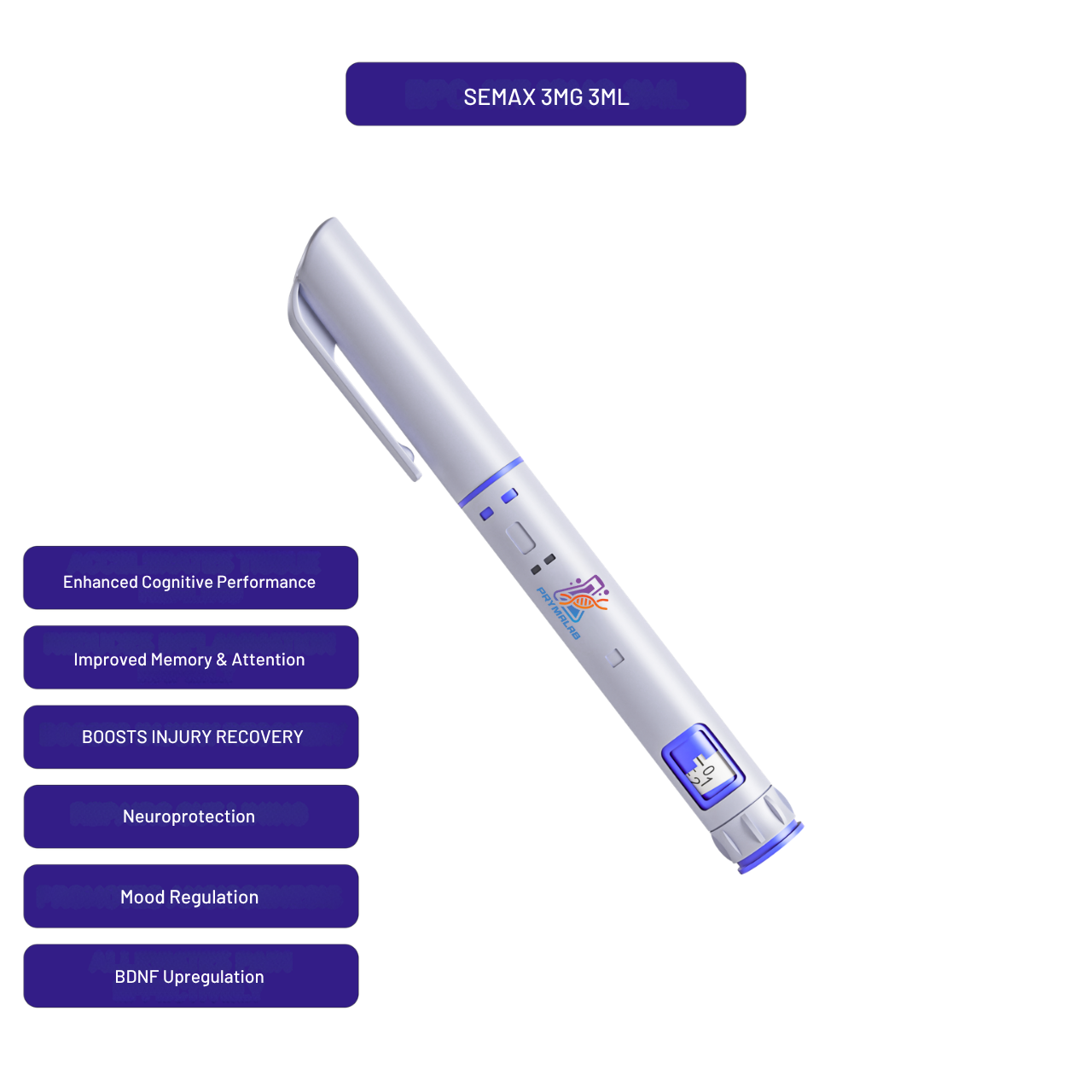
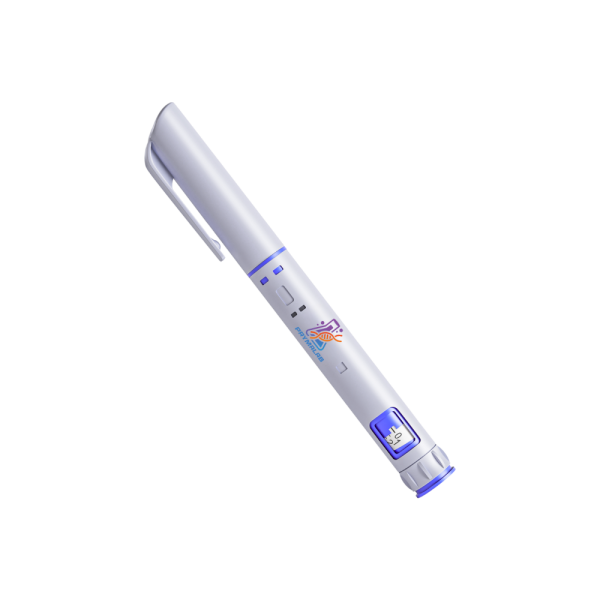
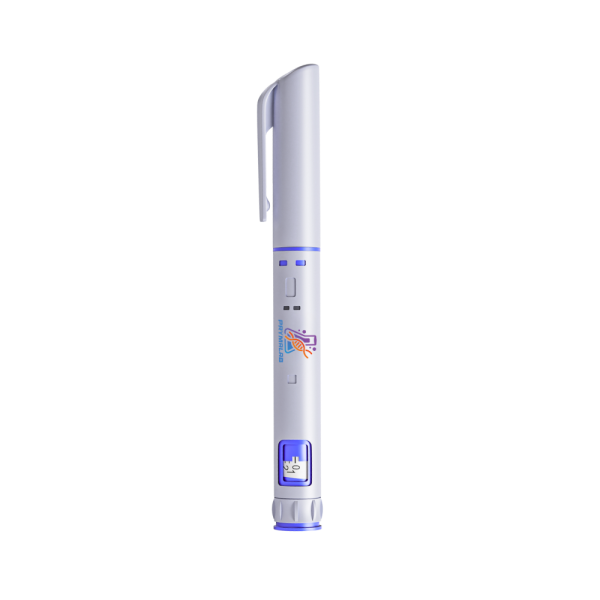
Preloaded Autoinjector | Semax | 3ml Pen | 1mg/ml
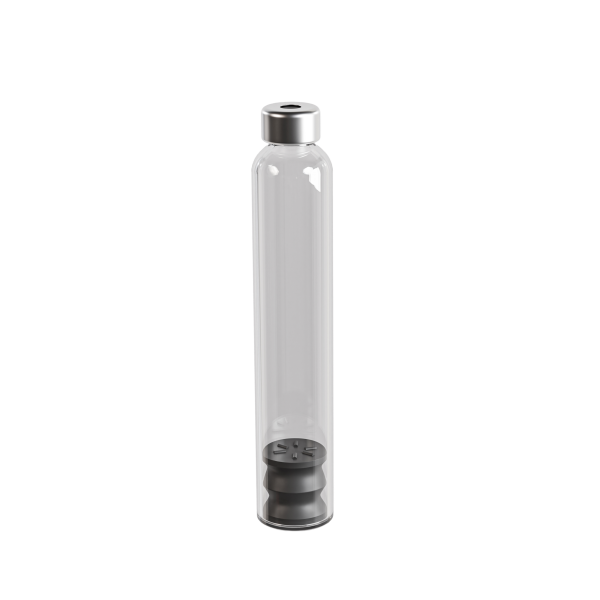
Semax in bacteriostatic water at 1 mg/mL: 3 mg in a preloaded 3 mL pen
Semax is the heptapeptide Met-Glu-His-Phe-Pro-Gly-Pro, built from residues 4 to 7 of ACTH with a Pro-Gly-Pro tail. Here it comes already dissolved: a preloaded autoinjector pen holding a 3 mL cartridge at 1 mg/mL, 3 mg of peptide in all, with no powder to handle. The Semax literature, nearly all of it from Russian groups, deals with neurotrophin expression in rat cells and brain and with how quickly the peptide is degraded.
Specifications
| Property | Value |
|---|---|
| Compound | Semax ACTH(4–7)-Pro-Gly-Pro heptapeptide (MEHFPGP) |
| CAS number | 80714-61-0 |
| Molecular formula | C37H51N9O10S |
| Theoretical mass | 813.9 Da |
| Sequence / structure | H-MEHFPGP-OH (7 residues; free N- and C-termini) |
| Contents | Semax: 3 mg per 3 mL pen (0.1% w/v) |
| Form | Sterile aqueous solution in bacteriostatic water (0.9% benzyl alcohol), supplied in a 3 mL glass cartridge inside a preloaded autoinjector pen fitted with a needle |
| Storage, sealed | Store at 2–8 °C in the original carton, protected from light |
| Safety data sheet | PL-SDS-148 |
What is in the pen
The cartridge holds 3 mL of sterile aqueous solution. Semax is present at 0.1% w/v, which is 1 mg/mL and 3 mg per pen, in bacteriostatic water preserved with 0.9% benzyl alcohol. The safety data sheet does not classify the peptide as hazardous. Benzyl alcohol is classified: harmful if swallowed or inhaled, a serious eye irritant and a possible skin sensitiser.
Keep the pen at 2 to 8 °C in its original carton, away from light, and keep it capped once in use. It must not be frozen; discard a pen whose solution has frozen, discoloured or turned cloudy. The freeze-dried Semax 5 mg vial is the alternative for work that needs the peptide dry and frozen until the day it is dissolved, and the general differences between the formats are set out in peptide pen vs vial.
What the research covers
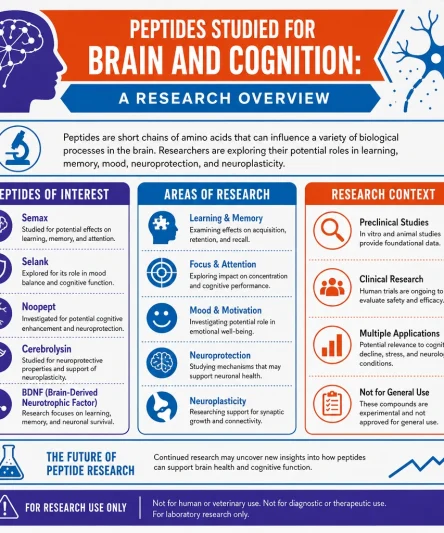
Semax is an analogue of the ACTH(4-10) fragment that keeps Met-Glu-His-Phe and ends in Pro-Gly-Pro1. Its literature mostly asks whether it alters neurotrophin signalling. In glial cells cultured from the basal forebrain of newborn rats, Semax raised BDNF mRNA eightfold and NGF mRNA fivefold, peaking 30 minutes after it was added2. In the rat hippocampus, one application was followed by up to 1.4-fold more BDNF protein and more phosphorylated trkB, along with more conditioned avoidance reactions in a learning task1.
The pen raises a question those papers do not answer: how Semax behaves as a stored solution. The abstracts deal with tissue and cell culture, not with stability in a cartridge, and none used a preserved solution like this one. Methionine oxidation has been measured in proteins such as G-CSF, where the rate for each methionine shifted with pH and with the movement of the chain around it3, but no comparable measurement for Semax in bacteriostatic water is among the references here. The storage limits on the safety data sheet are the ones to follow.
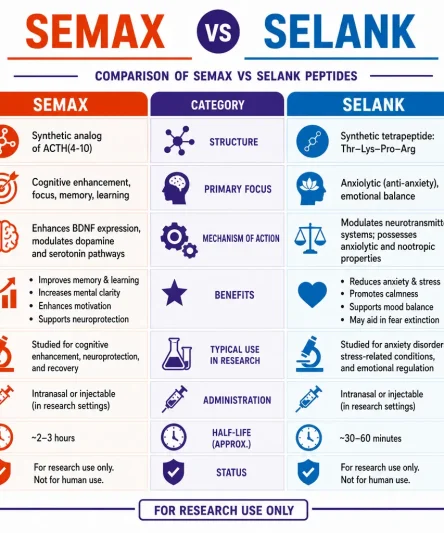
The work summarised above is Russian rat and cell research, much of it by one group of authors. The Semax vs Selank guide covers the full literature and how Semax compares with its sister peptide.
How each lot is tested
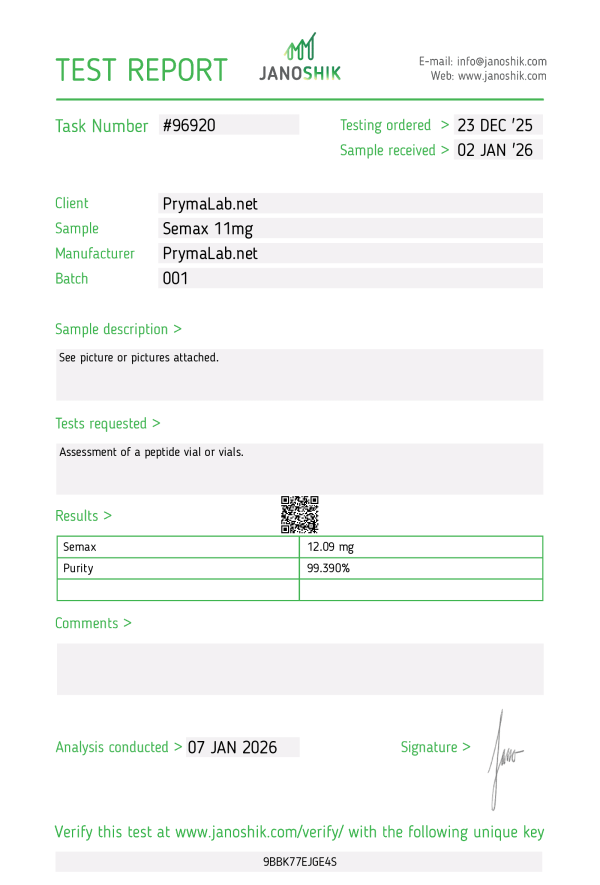
Every lot is tested in PrymaLab’s own laboratory in Ashland, Kentucky before release: RP-HPLC for purity, LC-MS for identity, Karl Fischer titration for water, LAL for endotoxin and USP <71> for sterility. Published certificates are listed on the results page and can be checked by number and key on the verify page. The certificate covers the peptide lot used to fill the pen, not the finished solution. The one outside report on file is a Janoshik Analytical test of Semax 11 mg, batch 001 (task 96920, 99.39% purity), which can be checked on Janoshik’s verify page. These are in-house results from PrymaLab Analytical, not an independent test, and the lab is not accredited to ISO 17025. The third-party testing guarantee on this page still applies: if any independent laboratory finds the wrong compound, or less than the stated purity or amount, the order is refunded and the cost of the test is reimbursed.
Frequently asked questions
How does the pen differ from the Semax vials?
The vials hold freeze-dried Semax, stored at −20 °C and kept dry until the laboratory dissolves it. The pen holds 3 mg already in bacteriostatic water at 1 mg/mL and is stored at 2 to 8 °C. It trades the flexibility of dry powder for a fixed, ready concentration.
What does the certificate cover for the pen?
It covers the Semax peptide lot used to fill the pen, not the finished solution inside the cartridge. The testing section on this page lists what each lot certificate reports and where a certificate can be checked by its number and key.
Why is the pen kept cold but never frozen?
Those are the storage terms on its safety data sheet: 2 to 8 °C, in the carton and away from light. The sheet says to discard a pen whose solution has frozen, discoloured or turned cloudy, which is why the pen and the dry vials follow different storage rules.
Is the pen intended for human use?
No. Like every PrymaLab product it is sold only for laboratory research. It is not approved by the FDA for human or veterinary use, must not be given to people or animals, and nothing on this page describes use in a person.
References
- Dolotov OV, Karpenko EA, Inozemtseva LS, et al. Semax, an analog of ACTH(4-10) with cognitive effects, regulates BDNF and trkB expression in the rat hippocampus. Brain Res. 2006;1117(1):54-60. DOI · PubMed
- Shadrina MI, Dolotov OV, Grivennikov IA, et al. Rapid induction of neurotrophin mRNAs in rat glial cell cultures by Semax, an adrenocorticotropic hormone analog. Neurosci Lett. 2001;308(2):115-8. DOI · PubMed
- Chu JW, Yin J, Wang DI, et al. Molecular dynamics simulations and oxidation rates of methionine residues of granulocyte colony-stimulating factor at different pH values. Biochemistry. 2004;43(4):1019-29. DOI · PubMed
Research use only
For laboratory research use only. This product is not a drug, food, cosmetic or dietary supplement, is not approved by the FDA or any comparable authority for human or veterinary use, and must not be given to people or animals. It is sold to qualified researchers and institutions, and the buyer is responsible for lawful handling and disposal.
Other formats of Semax
Semax is also stocked as Semax 10mg Nasal Spray and Semax 11mg. Each listing states its own quantity and concentration, and the pen and vial comparison explains what changes between formats.







Reviews
There are no reviews yet.