
Description
PrymaLab · Research Use Only
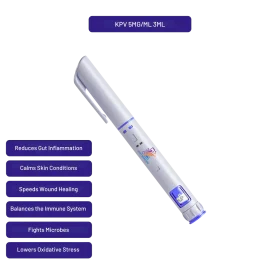
Preloaded Autoinjector | Pinealon | 3ml Pen | 6mg
EDR tripeptide in solution · 3ml at 6/3 mg/ml · No reconstitution step
The pinealon pen is a preloaded 3ml research autoinjector holding the tripeptide Glu-Asp-Arg in solution at 6/3 mg/ml, giving 6mg of total peptide. Both termini of this molecule are free and unprotected, which gives it three separate degradation routes in water, and not one of them has ever been measured.
Specification Table
| Property | Value |
|---|---|
| Device format | Preloaded autoinjector pen, glass cartridge |
| Fill volume | 3 ml |
| Concentration | 6/3 mg/ml |
| Total compound in device | 6 mg |
| Molar concentration | 6 x 0.797 mM |
| Compound | Pinealon, the Khavinson-group name for L-alpha-glutamyl-L-alpha-aspartyl-L-arginine, abbreviated EDR |
| CAS number | 175175-23-2, referring to the free peptide (PubChem CID 10273502, annotated from EPA DSSTox) |
| Molecular formula | C15H26N6O8 |
| Molecular weight | 418.40 g/mol average; 418.1812 Da monoisotopic |
| Amino acid sequence | EDR, Glu-Asp-Arg; free N-terminal amine and free C-terminal carboxylic acid, no acetylation or amidation |
| Solution appearance | Clear and colourless expected; not published on the product record |
| Reconstitution required | None. Supplied as solution |
| Excipient system | Not published on the product record. Confirm against certificate of analysis |
| Solution pH | Not published on the product record. Buffering near neutral is the rational choice for this sequence |
| Storage | 2-8°C, protect from light, do not freeze |
| Light sensitivity | No chromophore above about 220 nm; direct photolysis is not expected, so light protection is precautionary |
| Solution stability | No published study. PubMed holds 22 records for the name and none concerns stability, formulation, pharmacokinetics or toxicology |
| Cyclisation routes | N-terminal Glu1 to pyroglutamate (loss of 18 Da); diketopiperazine formation releasing free arginine |
| Isomerisation site | Asp2, with Arg3 supplying the backbone N-H needed for succinimide formation; Asp-Arg is a moderate hot spot |
| Net charge at pH 7.4 | About -1; calculated pI approximately 4.0 |
| Salt form | Acetate is stated by vendors and is unverified. The Khavinson papers specify no salt |
| Purity | Per lot-specific certificate of analysis |
| Regulatory status | No approved drug product anywhere. No FDA, EMA, PMDA, TGA or Health Canada approval, no NDA, no INN and no pharmacopoeial monograph. Russian market status as a supplement is unverified |
What Changes When The Pinealon Pen Ships EDR In Solution?
Three reactions become available that a dry cake in a freezer largely prevents, and all three follow from the same structural fact: this tripeptide has a free amine at one end and a free carboxylate at the other, with no acetyl or amide cap on either.
The first is pyroglutamate formation. An N-terminal glutamate can cyclise onto its own backbone with loss of water, giving pGlu-Asp-Arg at 400.4 g/mol against the parent’s 418.40. The reaction is slower for glutamate than for glutamine but is accelerated by acidic pH and by heat, and this molecule supplies the acidic pH itself. Three carboxylates on Glu1, Asp2 and the C-terminus against two bases give a net charge near -1 at pH 7.4 and a calculated isoelectric point around 4.0, so the free acid dissolved in unbuffered water produces an acidic solution. That is precisely the condition that favours the cyclisation.
The second is aspartate isomerisation. Arg3 has a backbone amide hydrogen, which is what a succinimide ring needs to form, so Asp2 can rearrange to iso-aspartate and to the D-aspartate epimer. Asp-Arg is a moderate hot spot rather than a fast one, well below Asp-Gly, but it is available. The awkward part is analytical: an isomer has the same molecular formula and the same mass as the parent, so this route is completely silent on any mass measurement and needs chromatography to see.
The third is diketopiperazine formation, the classic fate of short peptides with a free N-terminus. The terminal amine attacks the carbonyl of residue 2, closing a six-membered ring and releasing the C-terminal residue. For this sequence that gives cyclo(Glu-Asp) at 244.2 g/mol and free arginine at 174.2. Two peaks appear where there was one, and their masses sum to the parent, which makes the route easy to identify once anyone looks for it. The rate for this particular sequence has never been measured.
What the molecule does not have matters too. There is no methionine, tryptophan, tyrosine, cysteine, histidine, asparagine or glutamine, so no oxidation, no deamidation, no disulfide scrambling and no aromatic photochemistry. At 418 daltons with a PubChem XLogP3 of -6.1 it is too small and too hydrophilic to aggregate. Being anionic, it should show little attraction to the negatively charged silanol surface of borosilicate glass, an advantage over the cationic peptides filling most of this catalogue.
What Is Pinealon, And What Is EDR?
Pinealon is the Khavinson-group name for the synthetic tripeptide H-Glu-Asp-Arg-OH, abbreviated EDR, one of the short sequences the St Petersburg Institute of Bioregulation and Gerontology describes as tissue-specific bioregulators. Khavinson and colleagues define it as Glu-Asp-Arg in the 2011 Rejuvenation Research paper, and the group’s own 2021 systematic review lists EDR under the same name.
Anyone asking what is pinealon should note two things the name suggests but does not mean. It is a synthetic tripeptide rather than an extract of the pineal gland, and no melatonin or sleep endpoint appears anywhere in the indexed literature for it.
The identity is registry-traceable, which is not true of every compound in this family. PubChem registers the molecule as CID 10273502 under CAS 175175-23-2, annotated from EPA DSSTox, with Pinealon listed as a synonym. The formula C15H26N6O8 and the average mass of 418.40 g/mol come from that record rather than from a calculation. A separate acetate salt entry exists in PubChem without a CAS that could be confirmed. Background on this family sits in the bioregulator research overview.
Pinealon Solution Stability: Three Routes, None Measured
There is no pinealon solution stability study. PubMed holds 22 records for the name and not one concerns stability, formulation, pharmacokinetics or toxicology. Everything on this page about aqueous behaviour is mechanistic inference from standard peptide chemistry applied to a sequence that has never been on a stability programme.
That is a specific gap rather than a general one, because the three routes described above are not equally visible. Pyroglutamate formation removes 18 daltons and shows up on any mass spectrum. Diketopiperazine formation produces two new species at 244.2 and 174.2. Aspartate isomerisation produces nothing detectable by mass at all. A supplier who reports mass-spectrometric identity on a fresh lot has said nothing about the third route, and a laboratory relying on that report will not see it either.
Pinealon pen storage is 2-8°C, protected from light and without freezing, which slows all three reactions without stopping any of them. Cyclisation and isomerisation both proceed in the cold. What refrigeration cannot correct is formulation pH: an unbuffered acidic solution keeps supplying the condition that favours the pyroglutamate route no matter how cold the cartridge is. Record the fill date and the date of first actuation. General principles are covered in the peptide storage and stability notes.
Concentration And Increment Arithmetic For The Pinealon Pen
At 6mg in 3 ml the concentration is 6/3 mg/ml, and dividing by the 418.4 g/mol average mass gives 6 x 0.797 mM. Per increment, 0.01 ml delivers 6/300 mg and 0.1 ml delivers 6/30 mg.
Two worked examples make the range readable. A 10 mg fill gives 3.33 mg/ml, which is 7.97 mM, with 33 micrograms in 0.01 ml and 0.33 mg in 0.1 ml. A 20 mg fill gives 6.67 mg/ml, which is 15.9 mM.
Comparing that with published work is harder than it should be, because the cell-study abstracts for this peptide state no concentrations. The nearest available figure comes from a sister compound in the same family: Zakutskii 2006 used 0.05 ng/ml in rat organotypic explant culture, which for a 418.4 g/mol molecule works out at 1.2 x 10⁻¹⁰ molar, about 0.12 nanomolar. Reaching that from a 7.97 mM fill needs a dilution of roughly 6.7 x 10^7 fold. Animal doses in the rat literature were not confirmed, so no comparison is offered against them.
Pinealon Pen Vs Vial: What The Format Suits
The pinealon pen vs vial question turns on whether the work needs a fixed concentration more than it needs an unstarted clock. A preloaded device removes reconstitution error, diluent measurement error and dissolution variability, and fixes concentration at manufacture, which is the general argument set out in the pen versus vial article and across the preloaded autoinjector range.
Against that, all three degradation routes for this tripeptide need water, and a lyophilized cake does not provide it. The lyophilized 10mg presentation and the smaller vial keep the peptide dry until the moment of use, and the nasal spray is a third presentation with a different handling profile again.
The device suits repeated equivalent draws from one lot across a recorded interval. It does not suit any protocol assuming the contents in month four match the contents at fill, because nothing in the literature supports that assumption for this sequence.
What The Product Record Does Not State
Solution pH is the first gap and the one that decides which route runs fastest. A buffered near-neutral formulation and an unbuffered free-acid solution are different products for this molecule, and only the first of them is defensible against the pyroglutamate route.
The excipient system is unpublished, which is the same question expressed differently: what holds the pH, at what ionic strength, and is anything present that would matter downstream.
Salt form is unpublished. Vendors state acetate; the Khavinson papers specify none; and free acid, acetate and trifluoroacetate give different peptide content for the same nominal 6mg.
Fill date and any release data on the pyroglutamate or iso-aspartate fractions are unpublished. For a compound with no stability literature, those fractions are the only measurements that would say something real about a specific cartridge. Request all four against the lot-specific certificate of analysis.
Verifying The Device And Confirming The Contents
Start with the detection wavelength, because it rules out a common certificate format. EDR contains no tryptophan, tyrosine or histidine and therefore has no absorbance above roughly 220 nm. A purity figure reported by HPLC at 254 nm or 280 nm is measuring the mobile phase and whatever else is in the sample, not this peptide. Purity work has to use 210 to 220 nm detection or mass spectrometry.
Mass spectrometry catches two of the three routes cleanly. The parent is 418.40 average and 418.1812 monoisotopic; minus 18 daltons at 400.4 is the pyroglutamate form; and a pair of peaks at 244.2 and 174.2 is the diketopiperazine route with free arginine alongside it. Because those two masses sum back to the parent, their appearance together is a strong signal rather than an ambiguous one.
Aspartate isomerisation needs chromatography, since iso-Asp2 and D-Asp2 have the identical formula and mass to the parent. Shallow-gradient reverse-phase separation or an isoaspartate-specific enzymatic assay are the practical options. A supplier able to report an iso-Asp fraction on a liquid formulation is reporting something that matters; one reporting total purity by peak area is reporting that the molecule still weighs the right amount.
Inspect the solution against a white background before each draw. Let the device reach ambient temperature before actuating, since a cold solution is more viscous and viscosity changes delivered volume. Verify delivered mass gravimetrically once per device.
What The Pinealon Literature Actually Reports
A mechanistic hypothesis about DNA binding, a set of small animal studies, and three uncontrolled human studies published in Russian with English abstracts. No receptor has been identified for this peptide, and no pharmacokinetic measurement exists in any species.
The mechanistic work is the more interesting half. Fedoreyeva, Kireev and Khavinson in 2011 showed fluorescently labelled short peptides including EDR entering HeLa cell nuclei and binding deoxyribo-oligonucleotides with sequence preference, and a 2013 paper from the same group reported histone binding. Silanteva and colleagues in 2019, publishing in the Journal of Physical Chemistry B, modelled EDR in the DNA major groove using molecular dynamics and NMR and found that magnesium ions strengthen the interaction. That paper comes from a physical-chemistry group rather than the originating laboratory, which makes it the closest thing to independent mechanistic work on this sequence.
The cell and animal work sits with one network of laboratories. Khavinson 2011 in Rejuvenation Research reported dose-dependent suppression of reactive oxygen species and of necrosis in cerebellar granule cells, neutrophils and PC12 cells, with effects on ERK1/2 signalling and the cell cycle. That paper did not measure caspase-3, contrary to how it is often cited; the caspase-3 findings come from Mendzheritskii and colleagues in 2013 and 2014, in rat cortex and brainstem under acute hypoxic hypoxia, alongside reported changes in serum interleukin-6 and tumour necrosis factor alpha. Arutjunyan 2012 gave the peptide to pregnant rats with methionine-induced hyperhomocysteinaemia and reported improved spatial learning in the offspring with reduced reactive oxygen species and cerebellar neuron necrosis. Khavinson 2014 reported increased serotonin and tryptophan hydroxylase expression in ageing cortex cultures.
The human record is thin and uncontrolled. Meshchaninov 2015 in Advances in Gerontology studied 32 patients aged 41 to 83 with chronic polymorbidity and organic brain syndrome. Bashkireva and Artamonova 2012 reported on 150 professional truck drivers given a combination of this peptide and Vesugen, with reduced neurotic symptoms. Myakotnykh 2016 compared geroprotective methods in 110 subjects. None was described in its abstract as randomised, double-blind and placebo-controlled, none carries an NCT number, and the design details exist only in Russian-language full texts.
What has not been studied is the larger list: no randomised controlled human trial, no pharmacokinetics or bioavailability, no toxicology, genotoxicity or immunogenicity, no human dose-response, no injectable-route study in humans, and no replication by any group outside Russia. No adverse findings appear in the abstracts consulted, which is an absence of safety data rather than a safety record.
Safety And Regulatory Position
No approval exists anywhere. There is no FDA, EMA, PMDA, TGA or Health Canada authorisation, no new drug application, no international non-proprietary name and no pharmacopoeial monograph. Russian market status as a supplement was not verified in preparing this page and should not be described as a medicine registration.
The compound is not named on the FDA Category 2 bulk-substance page for substances presenting significant safety risks, and no import alert was located. It has not been located in the FDA 503A bulk-substance categories. It is not named individually on the WADA Prohibited List, though the S0 clause covering non-approved pharmacological substances would apply to any such substance used in sport.
Claims circulating about memory, focus, sleep or brain ageing do not come from the published record. The human studies are small and uncontrolled, the 2021 Alzheimer’s paper from the originating group is a narrative review rather than an experiment, and no melatonin or sleep endpoint appears in the indexed literature. The cartridge is supplied for laboratory research and is not offered for administration to humans or animals.
What Does the Pinealon Literature Claim About Brain Cells?
The recurring claim for this tripeptide is neuroprotection under conditions of oxidative stress. Cell-culture reports from Khavinson’s group describe cortical neurons surviving hypoxic or peroxide challenge at higher rates when the peptide is present, with reduced apoptosis on standard staining. Rodent work adds behavioural endpoints after prenatal hypoxia, reported as better performance on maze and avoidance tasks.
The proposed route runs through reactive oxygen species. ROS accumulate when mitochondrial function is compromised, ROS damage lipids, proteins and DNA, and a compound that lowers ROS load would reduce the oxidative damage that follows. Reports on this peptide describe lower peroxidation markers in treated tissue, which is consistent with that account and also consistent with several others. No study has shown the peptide scavenging a radical directly, and the neuroprotective effects reported are inferences from downstream markers.
Cognitive function is the endpoint that carries the most weight in secondary sources and the least support in primary ones. No study has measured cognitive function in a human given this peptide. The rodent tasks measure specific behaviours under specific insults, and reading them as evidence about cognitive performance in a healthy human, or about age-related cognitive decline, extends them well past what was measured. The neuroprotective properties described in reviews of this compound derive from a small number of studies, mostly from one institute, in models of acute injury rather than in the chronic neurodegenerative diseases the compound is often associated with. No study of this peptide has used a neurodegenerative disease model at all.
Pinealon, Semax and Selank Are Not the Same Class
These three are listed together constantly and belong to different lineages. Pinealon is Glu-Asp-Arg, a three-residue Khavinson bioregulator assigned to the brain by the organ-mapping logic of that programme. Semax is a seven-residue fragment of adrenocorticotropic hormone extended with Pro-Gly-Pro, developed at the Institute of Molecular Genetics in Moscow, and it is a registered medicine in Russia. Selank is a seven-residue analogue of the immunopeptide tuftsin with the same Pro-Gly-Pro extension, from the same Moscow group, also registered in Russia.
The practical difference is the size of the record. Semax has Russian registration, a stated indication and decades of use behind it, and its literature includes controlled human work. Selank has Russian registration for anxiety and a smaller but real clinical literature. Pinealon has neither registration nor a registered trial anywhere. Grouping the three as interchangeable nootropic peptides flattens a genuine difference in evidence, and a purchaser comparing them should know which of the three has been through a regulator and which has not.
Mechanistically they have nothing in common either. Semax and Selank are studied as neuropeptide regulators acting through BDNF expression and through monoamine and GABAergic systems respectively. The Pinealon peptide is claimed to act on gene expression by binding DNA directly, a mechanism proposed for the whole family of peptide bioregulators and demonstrated for none of those peptide bioregulators in a living animal. Different mechanisms, different evidence, one catalogue heading.
Where Do the Pineal and Circadian Claims Come From?
From the name, mostly. Pinealon was assigned to the pineal gland in the organ-mapping scheme, and the other pineal-assigned member of the family carries the melatonin and circadian rhythm literature. Claims about the sleep-wake cycle or sleep quality that appear under this compound’s name are usually Epitalon’s results migrating across a catalogue page. EDR has no published melatonin data of its own.
The three residues themselves say little about tissue. Glutamic acid at position two contributes the negative charge, arginine at position three contributes a strongly basic guanidinium group, and the resulting molecule is small, highly polar and short-lived in serum. Nothing about that composition targets a gland.
What Side Effects Are on Record, and What Does the Format Change?
No side effects have been reported, and no study has been designed to look for them. There is no toxicology for EDR in any species and no human safety database, so the record is silent rather than reassuring. Peptide therapy providers who list this compound alongside registered medicines are presenting a research preparation as though it had comparable scrutiny behind it, which it does not.
On format, a preloaded solution device removes two variables and adds one. It removes the reconstitution step, so no bacteriostatic water is added and no dilution arithmetic is done by hand. It also removes the option of storing the compound dry, which is the form in which short peptides keep best. What it adds is a clock: the fill date, not the purchase date, is when this solution started degrading, and the product record does not state it.
Published Literature
Each item below was confirmed against a PubMed listing, a Crossref record or the publisher’s own page before it went on this list.
- Khavinson V, Ribakova Y, Kulebiakin K, et al. Pinealon increases cell viability by suppression of free radical levels and activating proliferative processes. Rejuvenation Res. 2011;14(5):535-541. DOI: 10.1089/rej.2011.1172. PMID: 21978084
- Arutjunyan A, Kozina L, Stvolinskiy S, et al. Pinealon protects the rat offspring from prenatal hyperhomocysteinemia. Int J Clin Exp Med. 2012;5(2):179-185. PMID: 22567179
- Silanteva IA, Komolkin AV, Morozova EA, et al. Role of mono- and divalent ions in peptide Glu-Asp-Arg-DNA interaction. J Phys Chem B. 2019;123(9):1896-1902. DOI: 10.1021/acs.jpcb.8b10359. PMID: 30762356
- Fedoreyeva LI, Kireev II, Khavinson VKh, et al. Penetration of short fluorescence-labeled peptides into the nucleus in HeLa cells and in vitro specific interaction of the peptides with deoxyribooligonucleotides and DNA. Biochemistry (Mosc). 2011;76(11):1210-1219. DOI: 10.1134/S0006297911110022. PMID: 22117547
- Khavinson VKh, Lin’kova NS, Tarnovskaya SI, et al. Short peptides stimulate serotonin expression in cells of brain cortex. Bull Exp Biol Med. 2014;157(1):77-80. DOI: 10.1007/s10517-014-2496-y. PMID: 24909721
- Mendzheritskii AM, Karantysh GV, Ryzhak GA, et al. Regulation of content of cytokines in blood serum and of caspase-3 activity in brains of old rats in model of sharp hypoxic hypoxia with Cortexin and Pinealon. Adv Gerontol. 2014;27(1):94-97. PMID: 25051764
- Meshchaninov VN, Tkachenko EL, Zharkov SV, et al. Effect of synthetic peptides on aging of patients with chronic polymorbidity and organic brain syndrome of the central nervous system in remission. Adv Gerontol. 2015;28(1):62-67. PMID: 26390612
- Khavinson V, Linkova N, Kozhevnikova E, et al. EDR peptide: possible mechanism of gene expression and protein synthesis regulation involved in the pathogenesis of Alzheimer’s disease. Molecules. 2021;26(1):159. DOI: 10.3390/molecules26010159. PMID: 33396470
Frequently Asked Questions
What is the pinealon pen?
A preloaded 3ml research autoinjector holding the tripeptide Glu-Asp-Arg in solution at 6/3 mg/ml, giving 6mg in total, with no reconstitution step. It is supplied strictly for laboratory research. No approved drug product containing this peptide exists in any jurisdiction.
What is pinealon?
A synthetic tripeptide, Glu-Asp-Arg or EDR, of 418.40 g/mol, named by the St Petersburg Institute of Bioregulation and Gerontology. Despite the name it is not a pineal extract, and no melatonin or sleep endpoint appears in the indexed literature. PubChem registers it as CID 10273502 under CAS 175175-23-2.
What degrades first in solution?
Three routes compete, all following from the free termini. N-terminal glutamate cyclises to pyroglutamate with loss of 18 daltons; Asp2 isomerises to iso-aspartate through a succinimide that Arg3 makes possible; and diketopiperazine formation releases free arginine. None of the three rates has been measured for this sequence.
Why does an unbuffered solution make it worse?
Because the free acid is acidic in water. Three carboxylates against two bases give a net charge near -1 at pH 7.4 and a calculated pI around 4.0, so an unbuffered solution sits at the low pH that favours pyroglutamate formation. The peptide supplies its own worst condition.
Is there any published pinealon solution stability data?
None. PubMed holds 22 records for the name and not one concerns stability, formulation, pharmacokinetics or toxicology. Every statement about pinealon solution stability on this page is inference from standard peptide chemistry applied to a sequence that has never been through a stability programme.
How does the pinealon pen vs vial choice look here?
The pinealon pen vs vial decision turns on water, since all three degradation routes need it and a lyophilized cake does not supply it. The pen buys fixed concentration and repeated equivalent draws from one lot. The vial keeps the clock unstarted until the moment of use.
What are the correct pinealon pen storage conditions?
Pinealon pen storage is 2-8°C, protected from light, without freezing. Cold slows cyclisation and isomerisation rather than stopping them. What refrigeration cannot correct is formulation pH, which is the variable driving the pyroglutamate route, and that value is not published on the product record.
What concentration does the device hold?
6/3 mg/ml, which is 6 x 0.797 mM against the 418.4 g/mol average mass. A 10 mg fill gives 3.33 mg/ml and 7.97 mM; a 20 mg fill gives 6.67 mg/ml and 15.9 mM. The molar figure assumes the free peptide rather than a salt.
How much peptide is in one 0.01 ml increment?
6/300 mg per 0.01 ml and 6/30 mg per 0.1 ml. For a 10 mg fill that is 33 micrograms and 0.33 mg respectively. Graduation resolution sets the floor on the smallest quantity the device can deliver reproducibly.
How does the fill compare with published concentrations?
The cell-study abstracts for this peptide state no concentrations at all. The nearest figure comes from a sister compound: Zakutskii 2006 used 0.05 ng/ml in rat explant culture, about 0.12 nanomolar here, which needs a dilution of roughly 6.7 x 10^7 fold from a 7.97 mM fill.
Why does the certificate of analysis wavelength matter?
Because this peptide has no tryptophan, tyrosine or histidine and no absorbance above roughly 220 nm. An HPLC purity figure reported at 254 nm or 280 nm is not measuring this molecule. Ask for 210 to 220 nm detection or mass spectrometric confirmation instead.
What would a mass spectrum show if the peptide had degraded?
Two of the three routes appear clearly. The parent is 418.40 average and 418.1812 monoisotopic; 400.4 is the pyroglutamate form after loss of 18 daltons; and a pair at 244.2 and 174.2 is the diketopiperazine plus free arginine. Aspartate isomerisation is invisible by mass.
What is not published on the product record?
Solution pH, excipient system, salt form and fill date. Solution pH matters most, since an unbuffered acidic formulation and a buffered near-neutral one differ in which degradation route dominates. Request all four, plus any release data on the pyroglutamate fraction, against the lot certificate.
What does the mechanistic literature report?
Direct nuclear action rather than a receptor. Fedoreyeva 2011 showed labelled short peptides including EDR entering HeLa nuclei and binding oligonucleotides with sequence preference. Silanteva 2019, from a physical-chemistry group, modelled EDR in the DNA major groove by molecular dynamics and NMR, with magnesium strengthening the interaction.
How strong is the human evidence?
Three small uncontrolled studies in Russian with English abstracts: 32 patients aged 41 to 83 with polymorbidity, 150 truck drivers given a peptide combination, and 110 subjects comparing geroprotective methods. None is described as randomised, double-blind and placebo-controlled, and none carries an NCT number.
What is the regulatory position?
No approval anywhere: no FDA, EMA, PMDA, TGA or Health Canada authorisation, no NDA, no INN and no pharmacopoeial monograph. It is not on the FDA Category 2 bulk-substance page and not named individually by WADA. Russian market status as a supplement was not verified.
What does the literature report about Pinealon and oxidative stress?
Cell-culture work describes cortical neurons and other brain cells surviving peroxide or hypoxic challenge at higher rates with less apoptosis when the peptide is present, and rodent work adds behavioural endpoints after prenatal hypoxia. The account runs through reactive oxygen species and mitochondrial function, but no study shows the peptide scavenging a radical directly, so the neuroprotective effects are inferred from downstream markers of oxidative damage.
How does Pinealon compare with Semax and Selank?
They belong to different lineages. Semax is a seven-residue ACTH fragment and Selank a tuftsin analogue, both from the Moscow institute and both registered medicines in Russia with clinical literature behind them. Pinealon is a three-residue Khavinson bioregulator with no registration and no registered trial anywhere. Listing the three together as one class hides a real difference in evidence.
Does this peptide have circadian or sleep data of its own?
No. The melatonin and circadian rhythm literature in this family belongs to Epitalon, the other pineal-assigned member. Claims about the sleep-wake cycle or sleep quality that appear under this name are usually Epitalon results migrating across a catalogue. EDR has no published melatonin data, and nothing in its composition targets a gland.
What side effects are on record for the Pinealon peptide?
None have been reported and none have been looked for. There is no toxicology in any species and no human safety database, so the silence carries no information. This device is supplied for laboratory research and is not a treatment for anything, whatever peptide therapy providers list it alongside.
Compliance Statement
The pinealon pen is sold exclusively for laboratory research use. It is not a drug, food, or cosmetic product, and it is not a dietary product of any kind. It is not approved by the FDA or any comparable authority for human or veterinary use. This product is not intended to diagnose, treat, cure, or prevent any disease. It must not be given to humans or animals. Purchase is restricted to qualified researchers and institutions operating within applicable laws. All handling is the responsibility of the purchasing laboratory.
Other formats of Pinealon
Pinealon is also stocked as Pinealon 20mg. Each listing states its own quantity and concentration, and the pen and vial comparison explains what changes between formats.










Reviews
There are no reviews yet.