15% fall discount applied automatically at checkoutFree USA shipping over $100Free worldwide shipping over $200Credit/debit checkout disabled for updates
Sign in 0

Preloaded Autoinjector | SS-31 (Elamipretide) | 3ml Pen | 10mg

$99.99 or subscribe for $84.99/mo

SS-31 (elamipretide) from PrymaLab is a research-use-only compound supplied in a preloaded 3ml autoinjector pen at 10/3 mg/ml for laboratory study, sold as the SS-31 pen with no reconstitution step. Salt form is not published on the product record, and free base at 639.8 g/mol and trihydrochloride at 749.2 differ in peptide content.

Description

PrymaLab · Research Use Only

Preloaded Autoinjector | SS-31 (Elamipretide) | 3ml Pen | 10mg

Mitochondria-targeted tetrapeptide in solution · 3ml at 10/3 mg/ml · No reconstitution step

The SS-31 pen is a preloaded 3ml research autoinjector holding elamipretide in solution at 10/3 mg/ml, giving 10mg of total peptide. What separates this molecule from most research peptides is that its approved counterpart is also a liquid: FORZINITY ships at 80 mg/ml in a preserved phosphate buffer, so the solution-format question has a published answer to argue with.

Specification Table

SS-31 pen: autoinjector device and compound data
Property Value
Device format Preloaded autoinjector pen, glass cartridge
Fill volume 3 ml
Concentration 10/3 mg/ml
Total compound in device 10 mg
Molar concentration 10 x 0.521 mM on a free-base basis
Compound Elamipretide (INN); codes SS-31 and MTP-131; former names Bendavia and Ocuvia
CAS number 736992-21-5 (free base); 2244098-12-0 (hydrochloride)
Molecular formula C32H49N9O5 (free base)
Molecular weight 639.8 g/mol average, 639.3857 Da monoisotopic; trihydrochloride 749.2
Amino acid sequence D-Arg-Dmt-Lys-Phe-NH2, where Dmt is 2′,6′-dimethyl-L-tyrosine
Solution appearance Clear; the approved solution is described as colourless to yellow
Reconstitution required None. Supplied as solution
Excipient system Not published on the product record. Confirm against certificate of analysis
Solution pH Not published on the product record
Storage 2-8°C, do not freeze
Light sensitivity No photostability study located; the Dmt phenol absorbs near 280 nm and is the oxidisable group
Solution stability Not established over device shelf life in published data
Salt form Not published on the product record. Research material is usually TFA or acetate; the approved drug is the hydrochloride
Net charge at pH 7 About +3 from pH 3 to 9; calculated pI approximately 11.6
Fibrillation risk None reported; XLogP3 of 0 and 640 Da argue against self-association
Purity Per lot-specific certificate of analysis
Regulatory status Elamipretide hydrochloride is approved as FORZINITY (NDA 215244, Stealth BioTherapeutics), FDA accelerated approval September 19, 2025, for Barth syndrome. This research preparation is not that product

What Changes When The SS-31 Pen Ships Elamipretide In Solution?

Less than for almost any other peptide in this catalogue, because the manufacturer of the approved product reached the same conclusion and sells a liquid. FORZINITY is a sterile aqueous solution at 80 mg/ml, not a lyophilisate, which removes the usual argument that a dry cake is the only defensible presentation.

The chemistry behind that decision is worth stating residue by residue. Elamipretide is four residues long and carries no Asn and no Gln, so the deamidation route that dominates the shelf life of longer peptides has nothing to act on. There is no Asp-Gly or Asp-Pro bond, so no succinimide chemistry and no acid-labile cleavage site. There is no Cys, so no disulfide scrambling, and no Trp, so no indole oxidation. The C-terminus is a primary amide and the N-terminal residue is D-arginine, which blocks aminopeptidases.

One side chain is exposed. Dmt, the 2′,6′-dimethyltyrosine at position 2, carries the phenol that Zhao and colleagues identified in 2004 as the radical-scavenging group. A phenol that scavenges radicals is by definition oxidisable, and tyrosines in solution are photo-oxidised and metal-oxidised to quinone and dityrosine species. No forced-degradation study of elamipretide has been published, so the rate is unknown rather than known to be slow.

The formulation of the approved product suggests the manufacturer treated that risk as manageable but not negligible. FORZINITY is buffered with monobasic sodium phosphate to pH 4.7 to 6.1, preserved with benzyl alcohol at 20 mg/ml, stored at 2-8°C, and discarded eight days after the vial is first punctured. Three of those four decisions (acidic-to-neutral buffering, a preservative, a short in-use window) are the decisions a formulator makes when a solution is stable enough to sell and not stable enough to ignore.

The other solution-state property is electrostatic. Three cationic centres (the free N-terminal amine, the arginine guanidinium and the lysine side chain) give a net charge near +3 across the pH range from 3 to 9, with a calculated pI around 11.6. That charge is the physical basis of the mechanism, since Mitchell and colleagues showed in 2020 that binding to anionic cardiolipin bilayers is driven by surface electrostatics. It also predicts adsorption to the negatively charged silanol groups on borosilicate glass, which matters at dilute working concentrations rather than at the fill concentration. No adsorption study for this peptide has been located.

What Is SS-31 Peptide, And What Does Elamipretide Do?

SS-31 is the Szeto-Schiller laboratory code for elamipretide, a four-residue cationic-aromatic peptide that concentrates in the inner mitochondrial membrane and binds cardiolipin. It has also been published as MTP-131, Bendavia and Ocuvia, and the same molecule is the active ingredient of FORZINITY.

The alternating charge-and-aromatic motif is the whole design. Zhao 2004 showed that Dmt-containing SS peptides accumulate in the inner membrane and limit mitochondrial swelling and oxidative cell death; Birk 2013 tied that to cardiolipin binding in ischaemic kidney mitochondria; Mitchell 2020 measured the bilayer interaction directly. The FDA label describes it as a cardiolipin binder that improves mitochondrial morphology and function. It is not a receptor ligand, which is why the mechanism reads as biophysics rather than pharmacology.

Human pharmacokinetics are unusually clean for a research peptide. After subcutaneous injection, Tmax is 0.5 to 1 hour, absolute bioavailability is about 92 percent, protein binding about 39 percent, volume of distribution about 0.5 L/kg, and the half-life 3 to 4 hours. Close to 100 percent of an administered amount is recovered in urine within 48 hours as parent compound plus the M1 tripeptide and M2 dipeptide, both inactive. D-arginine at position 1 blocks attack from the N-terminus, and clearance proceeds by trimming from the other end instead.

Concentration And Increment Arithmetic For The SS-31 Pen

At 10mg in 3 ml the concentration is 10/3 mg/ml, and the molar concentration is (10/3) divided by 639.8, multiplied by 1000, which is 10 x 0.521 mM on the free-base mass. Quote the fill as trihydrochloride and the divisor becomes 749.2 instead, which shifts the molar figure by about 17 percent.

Per-increment delivery follows from the fill: 10/300 mg in 0.01 ml and 10/30 mg in 0.1 ml. A worked example makes the scale legible. A 10 mg fill gives 3.33 mg/ml, 5.21 mM, 33 micrograms per 0.01 ml and 0.33 mg per 0.1 ml.

FORZINITY is 80 mg/ml, roughly 125 mM, so a 10 mg fill in this format is about 24-fold more dilute than the approved solution. The cell literature is the opposite problem: protection against oxidative stress is reported in the 10 nanomolar to 1 micromolar range, and reaching 100 nanomolar from 5.21 mM needs a dilution of roughly 52,000-fold. The device fixes concentration; it does not shorten that dilution series. The peptide dilution calculator handles the arithmetic for a specific fill.

What The SS-31 Pen Format Suits, And What It Does Not

The SS-31 pen suits work that draws repeatedly from one lot over weeks and would otherwise reconstitute a fresh vial each time. Fixing concentration at manufacture removes diluent measurement error and adsorptive loss during transfer, an argument set out in full in the pen versus vial comparison and across the preloaded autoinjector range.

It suits this molecule better than most, for the reason given above: the degradation inventory is short, and the company holding the approval sells the compound as a solution rather than a powder.

It does not suit anyone who needs a defined salt form on paper. Free base, hydrochloride, acetate and TFA all deliver different peptide masses for the same weighed quantity, and a solution gives no cake to weigh. The FDA briefing document records that the clinical-trial material was an acetate salt while the marketed product is the hydrochloride, which is exactly the kind of substitution that a mass-based potency calculation has to account for.

What The Product Record Does Not State

Four things, and one of them is unusual to have to ask for.

The salt form is unpublished. That single value changes the peptide content of a nominal 10mg fill, and the difference between 639.8 and 749.2 g/mol is not a rounding error.

The excipient system is unpublished. Whether the solution is preserved matters for a multi-draw device, and the approved product uses benzyl alcohol at 20 mg/ml with a warning attached to it.

Solution pH is unpublished. The approved product sits between pH 4.7 and 6.1, and there is no published stability curve for elamipretide outside that window.

Fill date and stability across shelf life are unpublished. FORZINITY carries an eight-day in-use limit after first puncture, which is a manufacturer’s answer for a preserved vial under defined conditions and not a figure that transfers to a different formulation. Request all four against the certificate of analysis before quantitative work, and see the peptide storage and stability notes for what the general case looks like.

Verifying The Device And Confirming The Contents Are Intact

Inspect the solution against a white background before each draw. It should be clear and free of particulate. Elamipretide is small, hydrophilic and highly cationic, with a PubChem XLogP3 of 0, so visible haze or fibre-like material is not expected and is a reason to stop rather than to shake.

Let the SS-31 pen reach ambient temperature before actuating, since cold raises viscosity and viscosity changes delivered volume. Verify delivered mass gravimetrically once per device onto a tared vessel.

For contents rather than volume, this peptide has a usable UV handle. Dmt and Phe absorb near 280 nm, so absorbance at that wavelength tracks the aromatic residues, though it will not distinguish intact peptide from oxidised phenol. Mass spectrometry is the discriminating measurement: oxidation of the Dmt phenol adds 16 daltons, and dityrosine coupling shows as a dimer near 1277 Da against the 639.4 monoisotopic parent. Loss of Phe from the C-terminus would show as the M1 tripeptide, which is the same species the label lists as an inactive metabolite.

What The SS-31 Literature Actually Reports

A large mechanistic file and a run of missed primary endpoints. That combination is the most important thing to know before designing anything around this compound.

TAZPOWER (SPIBA-201, NCT03098797) enrolled 12 males with genetically confirmed Barth syndrome on 40 mg daily subcutaneously. The 12-week randomised double-blind placebo-controlled crossover missed both primary endpoints: the six-minute walk test moved by -0.8 m (p = 0.97) and the BTHS-SA fatigue score by +0.06 (p = 0.89). In the open-label extension the walk test rose by 95.9 m at week 36 (p = 0.024), and a 168-week extension was published in 2024.

MMPOWER (Karaa 2018) was a randomised double-blind intravenous dose-escalation study in 36 adults with primary mitochondrial myopathy; the highest dose gave +64.5 m on the walk test against +20.4 m for placebo, p = 0.053. MMPOWER-3 (Karaa 2023) was the phase 3 follow-up and did not meet its primary endpoint. EMBRACE-STEMI (Gibson 2016) infused MTP-131 during primary PCI and did not reduce infarct size. PROGRESS-HF (Butler 2020) missed its left ventricular end-systolic volume endpoint in heart failure with reduced ejection fraction. The ReCLAIM studies in dry age-related macular degeneration also failed their primary endpoints.

Animal work is ischaemia-reperfusion in rat and mouse heart and kidney, reviewed by Szeto in 2014. Nothing has been published on healthy-subject longevity, exercise performance or cognition, and no trial has used research-grade TFA or acetate material or any pen presentation.

Adverse findings from the 12-patient label population are specific. Injection-site reactions occurred in 100 percent of treated patients against 67 percent on placebo, with erythema 100 percent versus 25 percent, pain 75 percent versus 42 percent, and induration and pruritus each 67 percent versus 17 percent. Eosinophilia appeared after 30 days, peaked near day 90 at a mean rise of roughly 0.5 to 0.6 x 10^3 per microlitre, and resolved over 6 to 12 months. Two participants discontinued for injection-site reactions.

Where Do Claims About SS-31 Peptide Benefits Come From?

Marketing pages listing SS-31 peptide benefits almost always translate the mechanistic literature into outcome language that the trials did not produce. Cardiolipin binding and reduced mitochondrial swelling are measurements in isolated mitochondria and cell lines; they are not endurance, energy or age reversal in a person.

The specific inversions are easy to name. Exercise capacity was the endpoint MMPOWER-3 measured and missed. Cardiac outcome was the endpoint EMBRACE-STEMI and PROGRESS-HF measured and missed. Retinal outcome was the endpoint ReCLAIM measured and missed. A page describing SS-31 peptide benefits in those three areas is describing the hypotheses that the trials tested, not the results they returned.

SS-31 FDA Approval And Regulatory Position

The SS-31 FDA approval is real, narrow and conditional. FORZINITY (elamipretide hydrochloride) injection, 280 mg per 3.5 ml at 80 mg/ml, NDA 215244, Stealth BioTherapeutics, received accelerated approval on September 19, 2025, indicated to improve muscle strength in adult and paediatric patients with Barth syndrome weighing at least 30 kg, at 40 mg once daily. Barth syndrome affects roughly 130 people in the United States by the FDA’s count and about 150 by the sponsor’s, and the approval rests on knee-extensor strength, a median rise of about 34 to 68 newtons from baseline between weeks 12 and 48. This research preparation is not FORZINITY and has no approval anywhere.

The path there was not smooth. FDA refused to file in August 2021, an advisory committee met on October 10, 2024, and a complete response letter issued in May 2025 before the September 2025 accelerated approval. Continued approval is contingent on a confirmatory randomised placebo-controlled knee-extensor-strength trial starting March 2026, completing September 2029 and reporting March 2030, plus carcinogenicity and metformin-interaction studies.

Because the molecule is now the active ingredient of an approved drug, compounding a copy of FORZINITY is restricted under sections 503A and 503B. Elamipretide is not named on the FDA Category 2 bulk-substance page and no import alert was located. An EMA orphan designation is cited by the sponsor; no European marketing authorisation was found, and no approval was located at PMDA, the TGA or Health Canada. WADA does not name the compound individually; before approval it fell under the S0 non-approved-substances clause, and its post-approval classification is not explicitly addressed in the sources consulted.

What Does a Mitochondria-Targeting Peptide Actually Target?

Cardiolipin, and that specificity is what separates elamipretide from every other compound sold as a mitochondrial support product. Cardiolipin is a four-tailed phospholipid found almost nowhere in the cell except the inner mitochondrial membrane, where it makes up about a fifth of the lipid and where it holds the respiratory complexes in the supercomplex arrangement they need to work efficiently. The peptide’s alternating aromatic and basic residues give it a positive charge that draws it across membranes toward the negative matrix potential, and its aromatic face then associates with cardiolipin once it arrives.

The consequence is structural rather than catalytic. A mitochondrial-targeted peptide bound to cardiolipin stabilises cristae architecture and keeps cytochrome c in its electron-carrying role rather than its peroxidase role, which is the switch that begins apoptosis. Electron flow through the electron transport chain improves where it had been disrupted, ATP production rises toward normal, and the electron leak that generates reactive oxygen species falls. That last point is worth stating precisely: the reduction in oxidative stress follows from better-coupled respiration rather than from radical scavenging, so calling this an antioxidant misdescribes the mechanism. Oxidative stress here is an output of broken coupling, not an independent target.

Because the effect is corrective rather than stimulatory, the published work shows most benefit where mitochondrial dysfunction is already present and little where it is not. Ischemia-reperfusion injury models, in heart and in kidney, are where the largest effects appear, since reperfusion is exactly the setting in which cardiolipin peroxidation and cristae collapse dominate. That pattern is consistent across the preclinical literature and it shapes what claims are reasonable.

Where Do the Broader Claims Come From?

From the preclinical breadth rather than from clinical results. Animal work has covered heart failure, acute kidney injury, neurodegeneration, retinal disease, sarcopenia and age-related decline in exercise tolerance, and reports of improved mitochondrial function in aged skeletal muscle are the basis for most anti-aging framing around the compound, and anti-aging is the heading it is most often sold under. Neuroprotection appears in stroke and Parkinson models. Those are real published results in animals.

The human record is narrower and more mixed than that list suggests. The Barth syndrome approval described above rests on knee-extensor strength in an ultra-rare disease. The larger primary mitochondrial myopathy programme missed its primary endpoint in a phase three trial despite promising earlier data, and work in geographic atrophy has progressed without an approval. Anyone reading mitochondrial health or mitochondrial protection claims for this molecule should separate the animal literature, which is substantial, from the human evidence, which is one narrow accelerated approval and a set of mixed trials.

Reported side effects come from those trials rather than from case reports, which is a meaningful difference from most compounds in this catalogue. Injection site reactions were the commonest finding, frequent enough to be dose-limiting for some participants, along with headache and gastrointestinal upset. That is a real adverse event profile generated under monitoring, and it applies to the approved formulation rather than to a research preparation.

What Should a Purchaser Check, and What Does the Format Change?

Ask for a lot-specific CoA giving purity by HPLC with the gradient described, an accurate mass, water content and the counter-ion percentage. The counter-ion question is sharper here than usual: the approved product is a hydrochloride, and material supplied as an acetate or trifluoroacetate salt differs in mass per milligram and, for trifluoroacetate, carries its own cytotoxicity in cell work at concentrations that matter. A CoA that omits the counter-ion is omitting a number that changes the molar concentration.

On format, a vial arrives dry, is reconstituted with bacteriostatic water at the bench, and lets the concentration follow the experiment while the solid keeps. A peptide pen fixes the concentration at 10/3 mg/ml and starts ageing from a fill date the record does not state. For work at defined molar concentrations across a dose range, peptide pens are the wrong format and a vial is the right one; for repeated identical volumes, the reverse holds.

Two framing points. This material is supplied research use only, and research use only is a legal status rather than a formality: it means the preparation may not be given to humans or animals, regardless of the approved drug’s existence. And peptide therapy providers listing this compound alongside GHK-Cu and BPC-157 are grouping by claimed benefit rather than by evidence, since one of the three has an approved product behind it and the other two do not. Peptide therapy protocols for this molecule are not derived from the trials that produced its approval.

Published Literature

References below were checked against Crossref, PubMed listings or the publisher’s own record before being listed here.

  1. Szeto HH. First-in-class cardiolipin-protective compound as a therapeutic agent to restore mitochondrial bioenergetics. Br J Pharmacol. 2014;171(8):2029-2050. DOI: 10.1111/bph.12461. PMID: 24117165
  2. Birk AV, Liu S, Soong Y, et al. The mitochondrial-targeted compound SS-31 re-energizes ischemic mitochondria by interacting with cardiolipin. J Am Soc Nephrol. 2013;24(8):1250-1261. DOI: 10.1681/ASN.2012121216. PMID: 23813215
  3. Zhao K, Zhao GM, Wu D, et al. Cell-permeable peptide antioxidants targeted to inner mitochondrial membrane inhibit mitochondrial swelling, oxidative cell death, and reperfusion injury. J Biol Chem. 2004;279(33):34682-34690. DOI: 10.1074/jbc.M402999200. PMID: 15178689
  4. Mitchell W, Ng EA, Tamucci JD, et al. The mitochondria-targeted peptide SS-31 binds lipid bilayers and modulates surface electrostatics as a key component of its mechanism of action. J Biol Chem. 2020;295(21):7452-7469. DOI: 10.1074/jbc.RA119.012094. PMID: 32273339
  5. Reid Thompson W, Hornby B, Manuel R, et al. A phase 2/3 randomized clinical trial followed by an open-label extension to evaluate the effectiveness of elamipretide in Barth syndrome. Genet Med. 2021;23(3):471-478. DOI: 10.1038/s41436-020-01006-8. PMID: 33077895
  6. Karaa A, Haas R, Goldstein A, et al. Randomized dose-escalation trial of elamipretide in adults with primary mitochondrial myopathy. Neurology. 2018;90(14):e1212-e1221. DOI: 10.1212/WNL.0000000000005255. PMID: 29500292
  7. Karaa A, Bertini E, Carelli V, et al. Efficacy and safety of elamipretide in individuals with primary mitochondrial myopathy: the MMPOWER-3 randomized clinical trial. Neurology. 2023;101(3):e238-e252. DOI: 10.1212/WNL.0000000000207402. PMID: 37268435
  8. Gibson CM, Giugliano RP, Kloner RA, et al. EMBRACE STEMI study: a Phase 2a trial to evaluate the safety, tolerability, and efficacy of intravenous MTP-131 on reperfusion injury in patients undergoing primary percutaneous coronary intervention. Eur Heart J. 2016;37(16):1296-1303. DOI: 10.1093/eurheartj/ehv597. PMID: 26586786

Frequently Asked Questions

What is the SS-31 pen?

A preloaded 3ml research autoinjector holding elamipretide in solution at 10/3 mg/ml, giving 10mg in total, with no reconstitution step. It is supplied strictly for laboratory research. The approved elamipretide product, FORZINITY at 80 mg/ml, is a separate item and this preparation is not it.

What is SS-31 peptide?

SS-31 peptide is the Szeto-Schiller laboratory code for elamipretide, a four-residue peptide with the sequence D-Arg-Dmt-Lys-Phe-NH2 and an average mass of 639.8 g/mol. It concentrates in the inner mitochondrial membrane and binds cardiolipin electrostatically. It has also been published as MTP-131, Bendavia and Ocuvia.

Why does elamipretide survive being sold as a solution?

Its degradation inventory is short. Four residues, no Asn or Gln for deamidation, no Asp-Gly or Asp-Pro bond, no Cys for disulfide scrambling and no Trp. Only the Dmt phenol is oxidisable. The approved product ships as an aqueous solution at 80 mg/ml rather than a lyophilisate.

What is the SS-31 FDA approval position?

Elamipretide hydrochloride received FDA accelerated approval on September 19, 2025 as FORZINITY, NDA 215244, for muscle strength in Barth syndrome at 40 mg daily. That approval covers one product from one manufacturer. This research pen is not that product and carries no approval in any jurisdiction.

Where do claims about SS-31 peptide benefits come from?

From mechanistic work in isolated mitochondria and cell lines, translated into outcome language the trials did not support. MMPOWER-3 missed its exercise endpoint, EMBRACE-STEMI did not reduce infarct size, PROGRESS-HF missed its ventricular volume endpoint, and the ReCLAIM macular studies missed theirs. Listed SS-31 peptide benefits usually describe those failed hypotheses.

What should an SS-31 peptide for sale listing state?

Salt form first, because free base at 639.8 g/mol and trihydrochloride at 749.2 g/mol give different peptide content for the same nominal mass. Then concentration, fill volume, excipient system, solution pH and fill date. An SS-31 peptide for sale listing without a salt form leaves the potency calculation undefined.

What concentration does this device hold?

10/3 mg/ml, which is 10 x 0.521 mM on the free-base mass of 639.8 g/mol. For a 10 mg fill that is 3.33 mg/ml and 5.21 mM. Using the trihydrochloride mass of 749.2 instead shifts the molar figure by about 17 percent.

How much peptide is in one 0.01 ml increment?

That increment holds 10/300 mg; 0.1 ml holds 10/30 mg. A 10 mg fill delivers 33 micrograms per 0.01 ml and 0.33 mg per 0.1 ml. Whatever the mechanism resolves is the floor: nothing smaller than one graduation comes out reproducibly.

How does the fill compare with the approved solution?

FORZINITY is 80 mg/ml, roughly 125 mM. A 10 mg fill in 3 ml is 3.33 mg/ml, about 24-fold more dilute. Reaching a 100 nanomolar in vitro concentration from 5.21 mM still requires a dilution of roughly 52,000-fold, so the format saves no steps in that direction.

Does this molecule need protection from light?

No photostability study has been published and the approved label carries no light-protection instruction. The Dmt phenol absorbs near 280 nm and is oxidisable, so keeping an unpreserved research solution in its packaging is a reasonable precaution rather than a documented requirement. Storage is 2-8°C without freezing.

What is not published on the product record?

Salt form, excipient system, solution pH and stability across shelf life. The approved product answers three of those for itself: phosphate buffer at pH 4.7 to 6.1, benzyl alcohol at 20 mg/ml, and an eight-day window after first puncture. Those values belong to that formulation, not to this one.

How can the contents be confirmed intact?

By mass spectrometry rather than absorbance alone. Dmt phenol oxidation adds 16 daltons to the 639.4 monoisotopic parent, dityrosine coupling appears as a dimer near 1277 Da, and loss of the C-terminal Phe gives the M1 tripeptide the label names as an inactive metabolite. Reverse-phase chromatography resolves all three.

Is a 280 nm reading enough for this compound?

It is a starting point, since Dmt and Phe absorb there. It counts aromatic residues rather than intact structure, so an oxidised phenol still absorbs. For a solution that has been stored for months, pair the absorbance with chromatography and mass detection before treating a purity figure as current.

Why does salt form matter so much here?

Because three salts are in circulation. Research suppliers mostly sell TFA or acetate, the FDA briefing document records the clinical-trial material as an acetate, and the marketed product is a trihydrochloride at 749.2 g/mol against a free base of 639.8. A weighed milligram of each contains a different amount of peptide.

What did the Barth syndrome trial actually show?

TAZPOWER randomised 12 males and missed both primary endpoints: the six-minute walk test at -0.8 m, p = 0.97, and the fatigue score at +0.06, p = 0.89. The open-label extension reported +95.9 m at week 36, p = 0.024. Approval rests on knee-extensor strength, not the walk test.

What adverse findings appear on the approved label?

Injection-site reactions in 100 percent of the 12 treated patients against 67 percent on placebo, with erythema at 100 percent versus 25 percent and pain at 75 percent versus 42 percent. Eosinophilia appeared after 30 days and peaked near day 90 before resolving over 6 to 12 months. Two participants discontinued.

How does this compound relate to other mitochondrial research items?

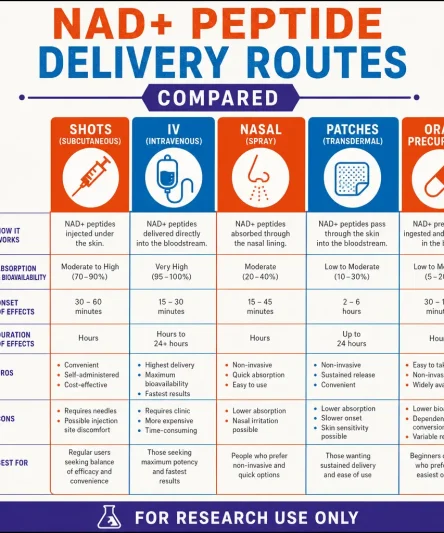
It acts on membrane architecture rather than on a metabolic pool. Cardiolipin binding is structural, which distinguishes it from the MOTS-c research peptide and from NAD+ preparations, where the proposed mechanisms are metabolic signalling and cofactor supply.

What does this peptide target inside the mitochondrion?

Cardiolipin, a four-tailed phospholipid found almost exclusively in the inner mitochondrial membrane, where it holds the respiratory complexes in their supercomplex arrangement. Alternating aromatic and basic residues give the molecule a charge that carries it toward the negative matrix potential, and its aromatic face then associates with that lipid.

How does binding cardiolipin improve ATP production?

Structurally rather than catalytically. A mitochondrial-targeted peptide bound there stabilises cristae architecture and keeps cytochrome c in its electron-carrying role, so electron flow through the electron transport chain improves where it had been disrupted and ATP synthesis rises toward normal. Reduced reactive oxygen species follow from better-coupled respiration rather than from radical scavenging.

Why do animal results look stronger than human ones?

Because the effect is corrective rather than stimulatory, so it shows most where mitochondrial dysfunction already exists. Ischemia-reperfusion injury models give the largest effects. In humans, the Barth syndrome approval rests on knee-extensor strength in an ultra-rare disease, and the larger primary mitochondrial myopathy programme missed its phase three primary endpoint.

What side effects were reported in trials?

Injection site reactions were commonest and dose-limiting for some participants, with headache and gastrointestinal upset also reported. That is an adverse event profile generated under monitoring, which is unusual for a compound in this catalogue, and it belongs to the approved formulation rather than to a research preparation.

Why does the counter-ion matter for this compound?

Because the approved product is a hydrochloride, and material supplied as acetate or trifluoroacetate differs in mass per milligram; trifluoroacetate also carries its own cytotoxicity in cell work at relevant concentrations. A CoA omitting the counter-ion omits a number that changes the molar concentration you think you are using.

Is a peptide pen the right format for this work?

It depends on the experiment. A vial reconstituted with bacteriostatic water lets the concentration follow a dose range while the dry solid keeps. Peptide pens fix the concentration at 10/3 mg/ml and start ageing from an unstated fill date, which suits repeated identical volumes and not a molar series.

Compliance Statement

The SS-31 pen is sold exclusively for laboratory research use. It is not a drug, food, or cosmetic product, and it is not a dietary product of any kind. It is not approved by the FDA or any comparable authority for human or veterinary use. This product is not intended to diagnose, treat, cure, or prevent any disease. It must not be given to humans or animals. Purchase is restricted to qualified researchers and institutions operating within applicable laws. All handling is the responsibility of the purchasing laboratory.

Additional information

Weight N/A
Dimensions N/A

Reviews

There are no reviews yet.

Only logged in customers who have purchased this product may leave a review.

Peptide Research Articles

Bacteriostatic water depiction

Bacteriostatic Water Peptide Science: Why It Matters in Reconstitution & Research

Bacteriostatic water peptide science is the foundation of safe, accurate peptide reconstitution. This 2026 guide covers bacteriostatic water composition, how to reconstitute peptides using a peptide reconstitution calculator and peptide dosage calculator, bacteriostatic water vs sterile water differences, peptide storage best practices, and a 10-step reconstitution protocol. Expert insights from PrymaLab.

wolverine blend article vial

Peptides for Injury Recovery: The Wolverine Stack Peptide Guide (BPC-157 + TB-500)

The Wolverine stack peptide combines BPC-157 and TB-500 for research into tendon, ligament, and joint recovery. This 2026 guide covers BPC-157 peptide where to buy responsibly, BPC 157 peptide side effects, peptides for tendon repair, peptides for joint recovery, peptides for elbow pain, and the BPC-157 TB-500 peptide blend scientific research. Expert insights from PrymaLab.

are peptides healthy

Are Peptides Good for You? A Complete 2026 Guide

Are peptides good for you? This comprehensive 2026 guide explores peptide therapy benefits, safety, side effects, and how peptides work in the body. Learn about peptide health benefits, research findings, and what you need to know before considering peptide therapy. Expert insights from PrymaLab.

Ovagen peptide capsules for liver health with dosage cycling chart showing 10-20 day protocols repeated 2-3 times per year

Ovagen Peptide Guide: Uses, Research, Safety & Buying Info

Ovagen peptide is a short-chain liver bioregulator developed at the St. Petersburg Institute of Bioregulation and Gerontology under Professor Vladimir Khavinson. It contains the AC-3 peptide complex (glutamic acid and aspartic acid) designed to target hepatocyte gene expression for liver cell repair, bile production, and detoxification. This guide covers dosing protocols, cycling schedules, side effects, a head-to-head comparison with NAC, milk thistle, TUDCA, and BPC-157, cost analysis ($120-360 per year), and how to verify genuine Ovagen products online.

GHK-Cu peptide vial and syringe with dosage chart showing injection protocols for skin rejuvenation and hair growth

GHK-Cu Peptide: Benefits, Dosage, Side Effects & Complete Research Guide (2026)

GHK-Cu peptide is a naturally occurring copper tripeptide that modulates over 4,000 human genes involved in collagen synthesis, wound healing, and tissue regeneration. This comprehensive guide covers injection dosage protocols, clinical research on skin rejuvenation and hair growth, side effects, safety data, and how to reconstitute GHK-Cu 50mg vials. Includes dosage charts, comparison tables, and 10 frequently asked questions answered by a peptide research specialist.

Sermorelin dosage guide for anti-aging muscle growth and weight loss showing GHRH analog pituitary stimulation

Sermorelin Dosage Guide 2025: Complete Protocol for Anti-Aging, Muscle Growth & Weight Loss

Sermorelin acetate is a growth hormone-releasing hormone (GHRH) analog that stimulates natural GH production from the pituitary gland. This comprehensive dosage guide covers protocols for anti-aging, muscle growth, weight loss, and sleep optimization — along with side effects, before-and-after timelines, and comparisons to HGH and ipamorelin.

24/7 Online support

support@prymalab.net info@prymalab.net

Money back guarantee

30 Day return window. Satisfaction guaranteed or your money back.

FREE shipping and return

All orders over %150 in value will receive free shipping.