15% SUMMER DISCOUNT APPLIED AUTOMATICALLY AT CHECKOUT FREE USA SHIPPING OVER $100  FREE WORLDWIDE SHIPPING OVER $200

15% SUMMER DISCOUNT APPLIED AUTOMATICALLY FREE USA SHIPPING OVER $100  FREE WORLDWIDE SHIPPING OVER $200

Sale!

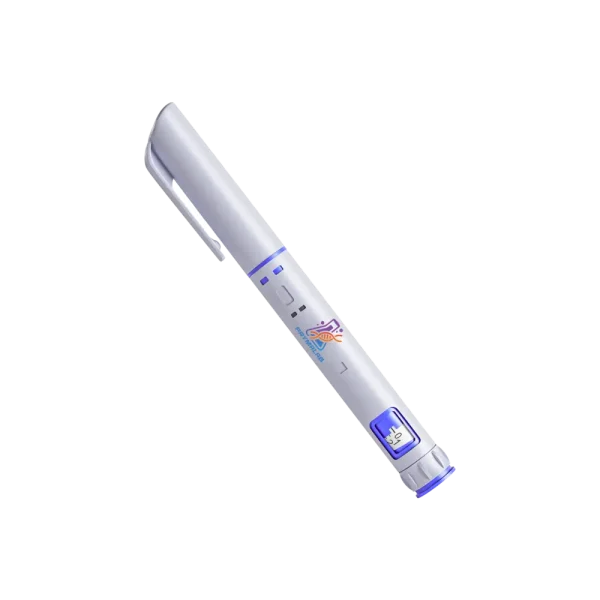
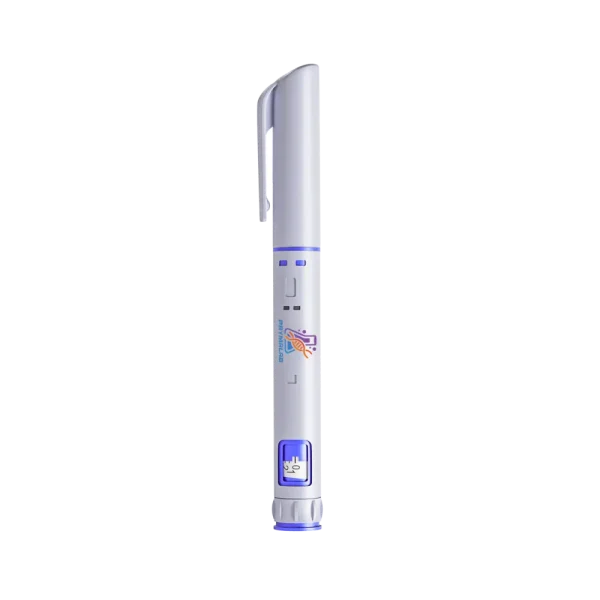
Preloaded Autoinjector | KLOW Blend | 3ml Pen | 80mg/ml

(14 customer reviews)

Original price was: $239.99.Current price is: $199.99.

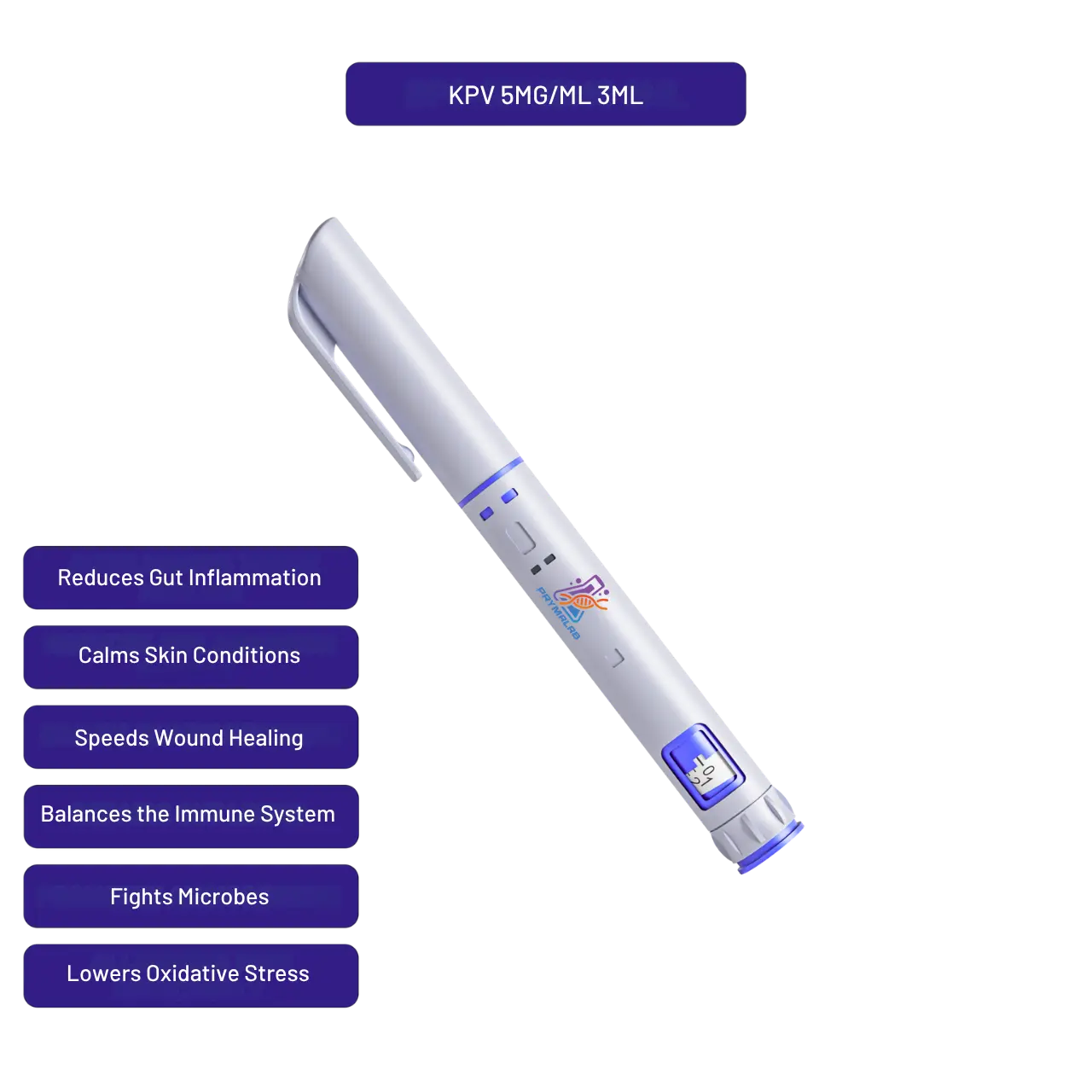
The KLOW Blend autoinjector from PrymaLab is a blend of BPC-157 + TB-500 + KPV + GHK-Cu supplied in a preloaded 3ml autoinjector pen at 80mg/ml, offering consistent measured delivery and reliable handling.

Description

PrymaLab · Research Use Only

Preloaded Autoinjector | KLOW Blend | 3ml Pen | 80mg/ml

Four peptides, four targets · KPV + BPC-157 + TB-500 + GHK-Cu · 3ml at 80mg/ml

The KLOW blend autoinjector pen is a preloaded 3ml research device containing a four-component peptide solution at 80mg/ml. The components are KPV, BPC-157, TB-500 and GHK-Cu. Each has an independently characterised molecular target, spanning NF-κB suppression, VEGFR2 signalling, actin sequestration and copper coordination.

Specification Table

KLOW blend autoinjector pen: device and component data
Property Value
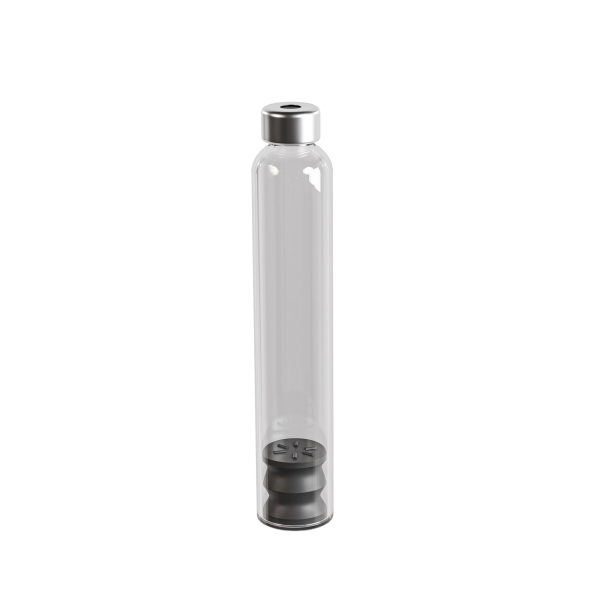
Device format Preloaded autoinjector pen, glass cartridge
Fill volume 3 ml
Solution concentration 80 mg/ml total peptide
Total peptide in device 240 mg
Component 1 KPV (Lys-Pro-Val)
Component 2 BPC-157
Component 3 TB-500 (thymosin β4)
Component 4 GHK-Cu (copper tripeptide)
Component ratio Not published on the product record. Confirm against the certificate of analysis
CAS, KPV 67727-97-3
CAS, BPC-157 137525-51-0
CAS, TB-500 / thymosin β4 77591-33-4
CAS, GHK-Cu 89030-95-5
Molecular weight, KPV 342.43 g/mol
Molecular weight, BPC-157 1419.55 g/mol
Molecular weight, thymosin β4 4963.55 g/mol
Molecular weight, GHK-Cu 401.91 g/mol
Target, KPV NF-κB signalling, via PepT1-mediated uptake
Target, BPC-157 VEGFR2, with downstream Akt and eNOS activation
Target, TB-500 Globular actin (G-actin) sequestration
Target, GHK-Cu Copper(II) coordination, fibroblast matrix protein synthesis
Reconstitution required None. Supplied as solution
Storage 2-8°C, protected from light
Solution stability Not established for this four-component mixture
Regulatory status No approved human or veterinary formulation for any component

What Does the Preloaded Format Change?

Search queries reaching this page are overwhelmingly about the device rather than the chemistry. Pen, premixed pen, peptide pen. That tells you what the audience is actually evaluating before they get anywhere near the molecules themselves.

A preloaded pen removes the reconstitution step, and with it a substantial source of variability. Manual reconstitution introduces error at several points: diluent volume measurement, incomplete dissolution, shear from over-agitation, and adsorptive loss during transfer. Every one of those affects delivered concentration, and none announces itself visually.

The tradeoff is that a preloaded device fixes the concentration at manufacture. There is no option to prepare a different working concentration without diluting from the device, which introduces its own handling step. For a study needing a concentration series, a lyophilized vial offers more flexibility.

The other tradeoff is time. A solution has been sitting in solution since it was filled, whereas a lyophilized cake has been dry. For multi-component peptide mixtures that difference matters, as the next section explains.

What Are the Four Components Doing?

Four peptides carrying four separately characterised targets, with no mechanistic overlap between any of them.

KPV is the C-terminal tripeptide of alpha-melanocyte-stimulating hormone, residues 11 to 13. It enters cells through the PepT1 di- and tripeptide transporter, and published work reports reduced NF-κB activation downstream (Dalmasso et al., Gastroenterology, 2008).

BPC-157 is a fifteen-residue fragment of a protein found in human gastric juice. Published work associates it with increased VEGFR2 expression and time-dependent activation of the VEGFR2-Akt-eNOS pathway in vascular endothelial cells (Hsieh et al., Journal of Molecular Medicine, 2017).

TB-500 refers to thymosin β4, a 43-residue peptide whose defining property is high-affinity binding to globular actin. It sequesters G-actin monomers so they cannot polymerise into filaments, which places it directly inside the cytoskeletal dynamics governing cell migration.

GHK-Cu is a copper-coordinated tripeptide. Published work reports stimulation of collagen synthesis in cultured dermal fibroblasts across picomolar to nanomolar concentrations, with the effect specific to the sequence and its copper coordination rather than to copper delivery generally.

Why Does Solution-State Storage Complicate a Four-Peptide Mixture?

A lyophilized cake is chemically quiet, which is the entire reason peptides ship in that form. Water is largely absent, molecular mobility is low, and degradation proceeds slowly. That is the entire reason peptides are supplied lyophilized.

A solution in a glass cartridge is not quiet at all. Hydrolysis, oxidation, deamidation and aggregation all proceed at rates that depend on pH, temperature, ionic strength and what else is present. With four peptides in the same solution, each is exposed to the others and to whatever the excipient system contributes.

The copper component adds a specific consideration. Copper(II) participates in redox chemistry and can catalyse oxidation of susceptible residues. Thymosin β4 contains a methionine residue, and methionine is among the residues most vulnerable to metal-catalysed oxidation. Whether that occurs at a meaningful rate in this formulation is not something any published dataset addresses.

None of this means the product is unstable. It means the stability question is real, unresolved in the literature, and worth confirming against manufacturer data rather than assumed from the properties of the individual peptides.

What Is Not Established About the KLOW Blend Autoinjector Pen?

The component ratio does not appear on the product record available here. Total concentration is 80 mg/ml across 3 ml, giving 240 mg of peptide in the device, but how that divides between four components is not published on the listing. That single number determines every molar calculation a researcher would need to make, so it should be obtained from the certificate of analysis before any quantitative work.

The combination has no published controlled study. Each component has independent literature of varying depth, and BPC-157 and GHK-Cu are reasonably well covered. No study has examined all four together, and no ratio-optimisation data exists for this or any similar four-peptide arrangement.

Solution stability over the device shelf life is not published. Neither is the excipient system, which affects both stability and any downstream assay the solution enters.

This is a convenience format for a combination whose combined behaviour has not been characterised. That is a reasonable thing to sell and a reasonable thing to buy, provided nobody mistakes the convenience for evidence.

How Should Delivered Volume Be Verified?

A pen introduces a variable that a vial and syringe does not, which is the delivery mechanism itself. Spring-driven actuation is reproducible while everything sits within specification. It drifts when anything does not.

Gravimetric verification is the simplest check available and takes only a few minutes to run. Actuate the device onto a tared weighing vessel and record the mass delivered, then convert using solution density. Repeating across several actuations gives both accuracy against nominal volume and precision across draws, and it takes minutes.

Temperature is the main confounder in that measurement. Perform verification at the temperature the device will actually be used at, since a check run on a device straight from refrigeration will not describe its behaviour after equilibration.

First-actuation behaviour deserves separate attention. Many pen mechanisms under-deliver on the first actuation after a period of rest, because of air in the delivery path or seal relaxation. Where a priming step is specified it should be followed and recorded. Where none is specified, the first draw should be treated as suspect until gravimetric data shows otherwise.

For a four-component solution, an under-delivered volume shifts every component proportionally, so the ratio between them holds while the absolute amount does not. That is the better of the two possible failure modes, and it is still a failure mode worth catching.

Why Four Components Rather Than One

The formulation rationale is worth stating plainly, and so is the question of what it fails to establish.

Each of the four peptides engages a different part of tissue biology. GHK-Cu associates with matrix protein synthesis. BPC-157 associates with vascular signalling through VEGFR2. TB-500 acts on actin dynamics and therefore on cell migration. KPV suppresses NF-κB-driven inflammatory signalling.

Laid out that way the combination has an obvious logic: build matrix, support vasculature, enable migration, restrain inflammation. Four processes that really do operate together in tissue.

What that logic does not establish is that combining the four compounds produces coordinated action on those four processes. Each was characterised alone, in its own model system, usually at concentrations chosen for that system. Putting them in one solution does not make their individual findings additive, and no published work has tested whether it does. The rationale is a hypothesis, and a reasonable one, rather than a finding.

Handling the Device in Laboratory Practice

Store at 2-8°C and protect from light. The copper component makes light exclusion more than a formality, since copper(II) complexes are photosensitive and the solution is not shielded by a lyophilized matrix.

Allow the device to reach ambient temperature before use. Cold solutions are more viscous, and viscosity affects delivery accuracy in a spring-driven mechanism. This is a routine consideration with pen devices and a common source of volume error.

Inspect the solution before each use. It should be clear and free of particulate. A colour shift away from the expected blue-violet tint contributed by the copper component, or any cloudiness, indicates a change that has not been characterised and the device should be set aside.

Record device lot number, date of first use, storage temperature history where available, and the volume drawn for each experiment. For a device used across multiple sessions, the interval between first use and each subsequent draw is an experimental variable.

Published Literature

Traced to the publisher record or a primary index. Note what is absent from the list: every entry covers a single component, and not one of them covers the four peptides in combination.

  1. Dalmasso G, Charrier-Hisamuddin L, Nguyen HT, Yan Y, Sitaraman S, Merlin D. Gastroenterology. 2008;134(1):166-178.
  2. Hsieh MJ, Liu HT, Wang CN, Huang HY, Lin Y, Ko YS, Wang JS, Chang VH, Pang JS. Journal of Molecular Medicine. 2017;95(3):323-333.
  3. Goldstein AL, Hannappel E, Sosne G, Kleinman HK. Expert Opinion on Biological Therapy. 2012;12(1):37-51.
  4. Pickart L, Margolina A. International Journal of Molecular Sciences. 2018;19(7):1987. PMID: 29986520
  5. Sikiric P, Seiwerth S, Rucman R, et al. Current Pharmaceutical Design. 2011;17(16):1612-1632. PMID: 21548867

Frequently Asked Questions

What is the KLOW blend autoinjector pen?

A preloaded 3ml research device holding a four-peptide solution at 80mg/ml, which comes to 240 mg of total peptide across KPV, BPC-157, TB-500 and GHK-Cu. No reconstitution step is required. It is supplied for laboratory research use only and is not approved for human or veterinary use.

What are the four components and their targets?

KPV suppresses NF-kappa-B signalling after entering cells through PepT1, BPC-157 is associated with raised VEGFR2 expression and downstream Akt and eNOS activation, TB-500 binds globular actin and holds it out of the polymerising pool, and GHK-Cu coordinates copper while stimulating fibroblast collagen synthesis. Four peptides. Four separate mechanisms with no overlap.

What is the ratio between the four peptides?

It does not appear on the product record available here, which is a genuine gap rather than an omission from this page. Total concentration is 80mg/ml across 3ml. How that divides between four components determines every molar calculation, so obtain it from the lot-specific certificate of analysis before starting quantitative work.

How does a preloaded pen compare with a lyophilized vial?

The pen removes reconstitution along with the variability it introduces, meaning diluent measurement error, incomplete dissolution, shear from over-agitation and adsorptive loss during transfer all disappear as concerns. In exchange, concentration is fixed at manufacture. A study needing a concentration series has less flexibility than it would with a vial.

Why does solution storage matter for a peptide mixture?

A lyophilized cake is chemically quiet because water is largely absent and molecular mobility is low, which is the entire reason peptides ship in that form rather than as solutions. A filled cartridge is not quiet. Hydrolysis, oxidation, deamidation and aggregation all proceed at rates set by pH, temperature and whatever else shares the solution.

Does the copper component affect the other peptides?

Possibly, and nothing published settles it either way, which is worth knowing before assuming the four components sit inertly alongside one another for the shelf life of the device. Copper(II) participates in redox chemistry. Thymosin beta-4 contains a methionine, and methionine is among the residues most vulnerable to metal-catalysed oxidation.

Is TB-500 the same as thymosin beta-4?

In current usage the two are generally treated as interchangeable, both referring to the full 43-residue peptide with CAS 77591-33-4 and molecular weight 4963.55, though this was not always the case. The name TB-500 originally denoted a fragment. Some suppliers still use it that way, so confirming which molecule a preparation actually contains remains worthwhile.

Why should the device reach room temperature before use?

Cold solutions are more viscous, and viscosity affects delivery accuracy in a spring-driven mechanism, which makes a device used straight from refrigeration a predictable source of volume error that nobody notices at the time. Let it equilibrate first. The wait costs nothing and removes a variable.

What should be inspected before each use?

The solution should be clear and free of any particulate matter, and the blue-violet tint contributed by the copper component should look the same as it did on the previous draw. A colour shift indicates an uncharacterised change. Set the device aside, log the observation, and do not proceed with that draw.

How should delivered volume be verified?

Gravimetrically, by actuating the device onto a tared weighing vessel, recording the delivered mass and converting through solution density, repeated across several actuations to capture both accuracy against nominal volume and precision between draws. Run the check warm. A measurement taken cold will not describe how the device behaves in use.

Why treat the first actuation as suspect?

Many pen mechanisms under-deliver on the first actuation after a rest period, because air enters the delivery path or seals relax, and this is well known among people who use these devices routinely and entirely invisible to anyone who does not. Follow any specified priming step. Where none is specified, let gravimetric data establish the behaviour.

Compliance Statement

The KLOW blend autoinjector pen is sold exclusively for laboratory research use. It is not a drug, food, or cosmetic product, and it is not a dietary product of any kind. It is not approved by the FDA or any comparable authority for human or veterinary use, and no published controlled study has examined these four peptides in combination. This product is not intended to diagnose, treat, cure, or prevent any disease. It must not be given to humans or animals. Purchase is restricted to qualified researchers and institutions operating within applicable laws. All handling is the responsibility of the purchasing laboratory.

14 reviews for Preloaded Autoinjector | KLOW Blend | 3ml Pen | 80mg/ml

  1. Spencer Sanders
    August 2, 2026
    Tested good
    Had this order sent off to Janoshik for testing and it just came back with a perfect on the endotoxin testing and a purity of 99.97%. I will be shoppi...More
    Had this order sent off to Janoshik for testing and it just came back with a perfect on the endotoxin testing and a purity of 99.97%. I will be shopping here from now on, no vendor that I trust has better pricing.
    Helpful? 0 0
    Damon Gray
    August 2, 2026
    Thanks.
    Shipping was slow but everything came as it should.
    Helpful? 0 0
    Paula Harper
    August 1, 2026
    quality on point!
    test came back 99.71%. Will be back fs
    Helpful? 0 0
    Beverly Jones
    August 1, 2026
    Already seeing results!
    Shipping was slow but after only a week I am already seeing amazing results. Thank you.
    Helpful? 0 0
    Curtis Harper
    July 30, 2026
    will be back
    thanks
    Helpful? 0 0
    Gordon Johnson
    July 5, 2026
    Beats swisschems, corepeptides, penguine peptides and anyone else hands down!
    Wont be buying from anywhere else. Fast shipping, janoshik test came back %99.98 pure, quality stealth packaging, freeze packs to prevent degradation,...More
    Wont be buying from anywhere else. Fast shipping, janoshik test came back %99.98 pure, quality stealth packaging, freeze packs to prevent degradation, etc. Everything was absolutely perfect. Will literally never shop anywhere else.
    Helpful? 0 0
    Stephen Turner
    June 28, 2026
    Best
    My go to now. Everything showed up perfect and sealed.
    Helpful? 0 0
    Nathan Reynolds
    June 13, 2026
    Nice and clean ๐Ÿงน
    Works great, clean packaging, fast delivery. thanks
    Helpful? 0 0
    Tyler Green
    May 27, 2026
    Blown away honestly
    Honestly cant complain at all. You can tell they actually care about wat they send out. Also competitors reused batch numbers which is sketch but ever...More
    Honestly cant complain at all. You can tell they actually care about wat they send out. Also competitors reused batch numbers which is sketch but every batch here has its own unique COA. These guys got a customer for life.
    Helpful? 0 0
    Crystal Watkins
    May 11, 2026
    Good but took a while to arrive
    good product but wish the shipping was a lil faster. the quality is exactly wat i was hoping for. Would give 5 if shipping was a touch quicker.
    Helpful? 0 0
    Laura Hall
    May 11, 2026
    Good experience overall
    Good stuff no doubt. No real issues with teh product. Also most vendors dont answer questions before you buy but they walked me thru everything before...More
    Good stuff no doubt. No real issues with teh product. Also most vendors dont answer questions before you buy but they walked me thru everything before i ordered. Will def order again.
    Helpful? 0 0
    Jose Moore
    March 15, 2026
    Thank you!
    Love the convenience of this product, really takes the guesswork out of it for me. Definitely coming back.
    Helpful? 0 0
    Victoria Rivera
    March 8, 2026
    Wont shop anywhere else
    Packaging and product were both on point. Already told my friends about them.
    Helpful? 0 0
    Chad Wilson
    February 27, 2026
    Couldnt be happier.
    wont be buying from anywhere else. The product itself is clearly high quality. 10/10 would recommend.
    Helpful? 0 0

Only logged in customers who have purchased this product may leave a review.

Peptide Research Articles

Bacteriostatic Water Peptide Science: Why It Matters in Reconstitution & Research

Bacteriostatic water peptide science is the foundation of safe, accurate peptide reconstitution. This 2026 guide covers bacteriostatic water composition, how to reconstitute peptides using a peptide reconstitution calculator and peptide dosage calculator, bacteriostatic water vs sterile water differences, peptide storage best practices, and a 10-step reconstitution protocol. Expert insights from PrymaLab.

Peptides for Injury Recovery: The Wolverine Stack Peptide Guide (BPC-157 + TB-500)

The Wolverine stack peptide combines BPC-157 and TB-500 for research into tendon, ligament, and joint recovery. This 2026 guide covers BPC-157 peptide where to buy responsibly, BPC 157 peptide side effects, peptides for tendon repair, peptides for joint recovery, peptides for elbow pain, and the BPC-157 TB-500 peptide blend scientific research. Expert insights from PrymaLab.

Are Peptides Good for You? A Complete 2026 Guide

Are peptides good for you? This comprehensive 2026 guide explores peptide therapy benefits, safety, side effects, and how peptides work in the body. Learn about peptide health benefits, research findings, and what you need to know before considering peptide therapy. Expert insights from PrymaLab.

Ovagen peptide capsules for liver health with dosage cycling chart showing 10-20 day protocols repeated 2-3 times per year

Ovagen Peptide Guide: Uses, Research, Safety & Buying Info

Ovagen peptide is a short-chain liver bioregulator developed at the St. Petersburg Institute of Bioregulation and Gerontology under Professor Vladimir Khavinson. It contains the AC-3 peptide complex (glutamic acid and aspartic acid) designed to target hepatocyte gene expression for liver cell repair, bile production, and detoxification. This guide covers dosing protocols, cycling schedules, side effects, a head-to-head comparison with NAC, milk thistle, TUDCA, and BPC-157, cost analysis ($120-360 per year), and how to verify genuine Ovagen products online.

GHK-Cu peptide vial and syringe with dosage chart showing injection protocols for skin rejuvenation and hair growth

GHK-Cu Peptide: Benefits, Dosage, Side Effects & Complete Research Guide (2026)

GHK-Cu peptide is a naturally occurring copper tripeptide that modulates over 4,000 human genes involved in collagen synthesis, wound healing, and tissue regeneration. This comprehensive guide covers injection dosage protocols, clinical research on skin rejuvenation and hair growth, side effects, safety data, and how to reconstitute GHK-Cu 50mg vials. Includes dosage charts, comparison tables, and 10 frequently asked questions answered by a peptide research specialist.

Sermorelin dosage guide for anti-aging muscle growth and weight loss showing GHRH analog pituitary stimulation

Sermorelin Dosage Guide 2025: Complete Protocol for Anti-Aging, Muscle Growth & Weight Loss

Sermorelin acetate is a growth hormone-releasing hormone (GHRH) analog that stimulates natural GH production from the pituitary gland. This comprehensive dosage guide covers protocols for anti-aging, muscle growth, weight loss, and sleep optimization รขโ‚ฌโ€ along with side effects, before-and-after timelines, and comparisons to HGH and ipamorelin.

Customer reviews

4.71
Based on 14 reviews
5
79%
11
4
14%
2
3
7%
1
2
0%
0
1
0%
0
1 2
Spencer Sanders
August 2, 2026
Tested good
Had this order sent off to Janoshik for testing and it just came back with a perfect on the endotoxin testing and a purity of 99.97%. I will be shoppi...More
Had this order sent off to Janoshik for testing and it just came back with a perfect on the endotoxin testing and a purity of 99.97%. I will be shopping here from now on, no vendor that I trust has better pricing.
Helpful? 0 0
Damon Gray
August 2, 2026
Thanks.
Shipping was slow but everything came as it should.
Helpful? 0 0
Paula Harper
August 1, 2026
quality on point!
test came back 99.71%. Will be back fs
Helpful? 0 0
Beverly Jones
August 1, 2026
Already seeing results!
Shipping was slow but after only a week I am already seeing amazing results. Thank you.
Helpful? 0 0
Curtis Harper
July 30, 2026
will be back
thanks
Helpful? 0 0
Gordon Johnson
July 5, 2026
Beats swisschems, corepeptides, penguine peptides and anyone else hands down!
Wont be buying from anywhere else. Fast shipping, janoshik test came back %99.98 pure, quality stealth packaging, freeze packs to prevent degradation,...More
Wont be buying from anywhere else. Fast shipping, janoshik test came back %99.98 pure, quality stealth packaging, freeze packs to prevent degradation, etc. Everything was absolutely perfect. Will literally never shop anywhere else.
Helpful? 0 0
Stephen Turner
June 28, 2026
Best
My go to now. Everything showed up perfect and sealed.
Helpful? 0 0
Nathan Reynolds
June 13, 2026
Nice and clean ๐Ÿงน
Works great, clean packaging, fast delivery. thanks
Helpful? 0 0
Tyler Green
May 27, 2026
Blown away honestly
Honestly cant complain at all. You can tell they actually care about wat they send out. Also competitors reused batch numbers which is sketch but ever...More
Honestly cant complain at all. You can tell they actually care about wat they send out. Also competitors reused batch numbers which is sketch but every batch here has its own unique COA. These guys got a customer for life.
Helpful? 0 0
Crystal Watkins
May 11, 2026
Good but took a while to arrive
good product but wish the shipping was a lil faster. the quality is exactly wat i was hoping for. Would give 5 if shipping was a touch quicker.
Helpful? 0 0
Laura Hall
May 11, 2026
Good experience overall
Good stuff no doubt. No real issues with teh product. Also most vendors dont answer questions before you buy but they walked me thru everything before...More
Good stuff no doubt. No real issues with teh product. Also most vendors dont answer questions before you buy but they walked me thru everything before i ordered. Will def order again.
Helpful? 0 0
Jose Moore
March 15, 2026
Thank you!
Love the convenience of this product, really takes the guesswork out of it for me. Definitely coming back.
Helpful? 0 0
1 2
24/7 Online support

support@prymalab.net info@prymalab.net

Money back guarantee

30 Day return window. Satisfaction guaranteed or your money back.

FREE shipping and return

All orders over %150 in value will receive free shipping.