⚠️ 15% SUMMER DISCOUNT! USE CODE: SUMMER26 AT CHECKOUT ⚠️

⚠️ 15% SUMMER DISCOUNT! USE CODE: SUMMER26 AT CHECKOUT ⚠️
Sale!

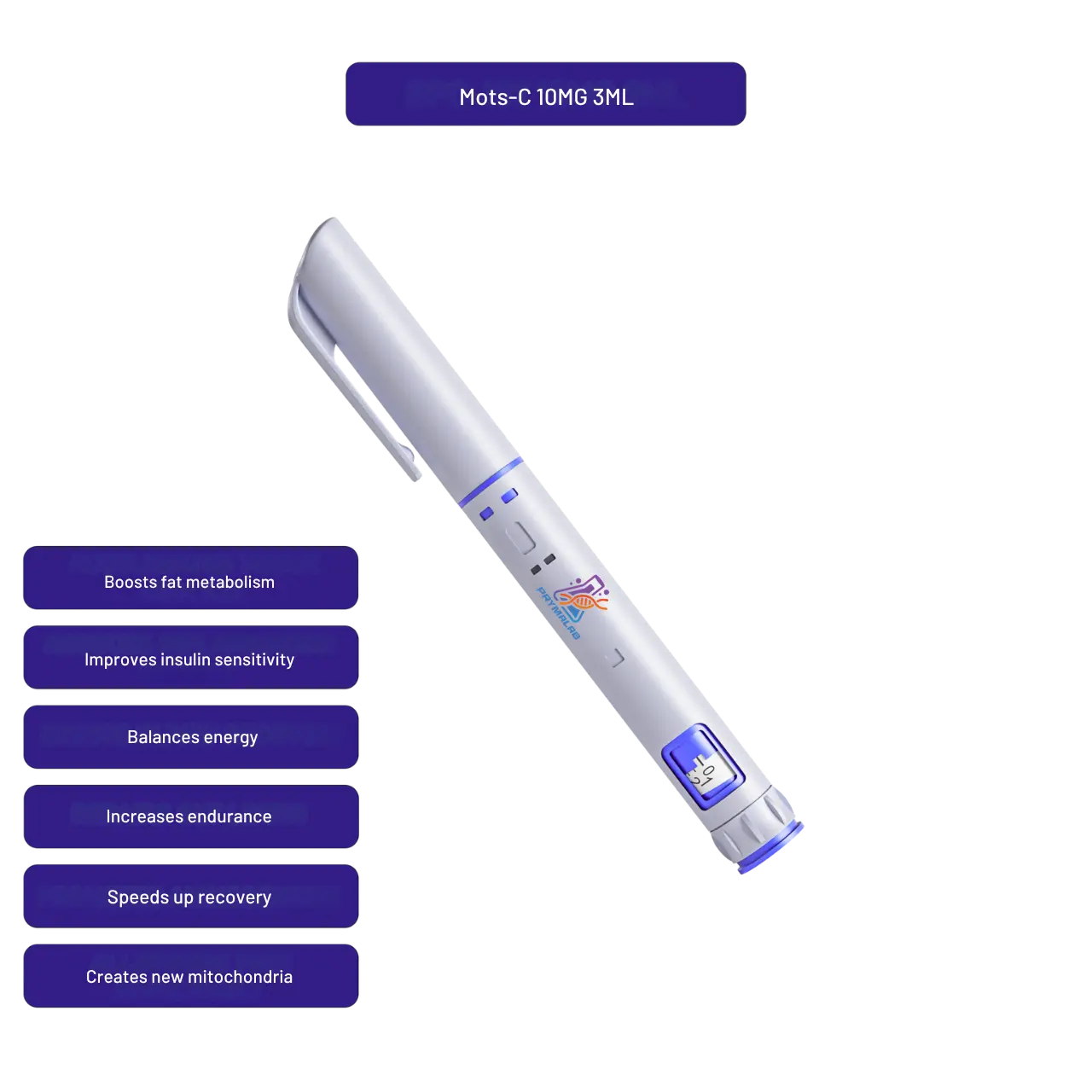
Preloaded Autoinjector | MOTS-C | 3ml Pen | 10mg/ml

Original price was: $84.99.Current price is: $69.99.

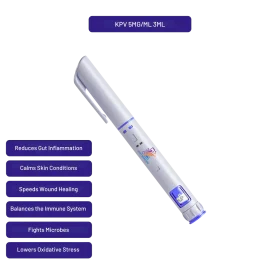
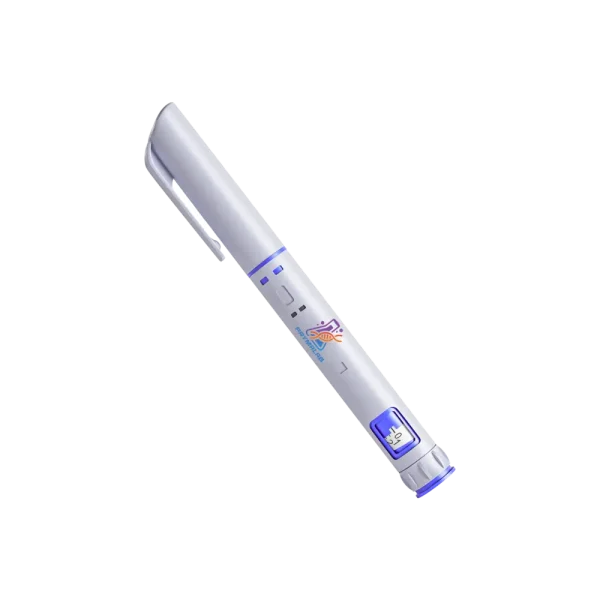
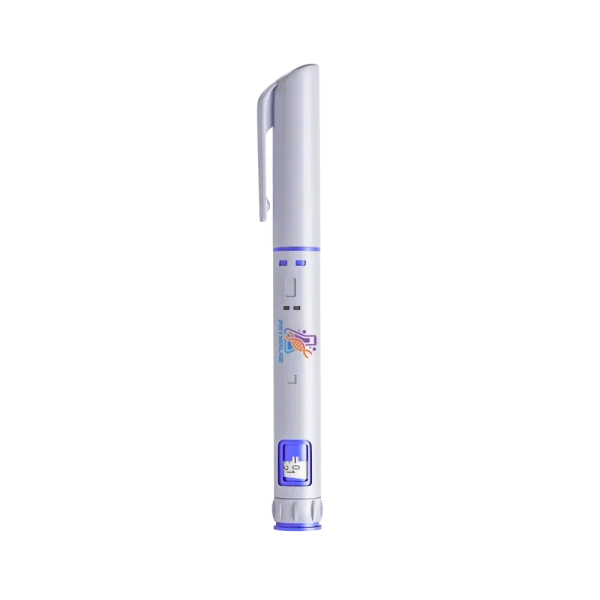
MOTS-C from PrymaLab is a research-use-only compound supplied in a preloaded 3ml autoinjector pen at 10mg/ml for laboratory study, offering consistent measured delivery and reliable handling for researchers.

Description

# Preloaded Autoinjector | MOTS-c (Mitochondrial-Derived Peptide) | 3ml Pen | 10mg/ml | Research Use Only

## Description

MOTS-c from PrymaLab is a research-use-only preparation of the mitochondrial-derived mots-c peptide — a 16–amino acid peptide encoded within the mitochondrial 12S rRNA (MT-RNR1) region — supplied in a preloaded 3ml autoinjector pen calibrated to 10mg/ml. It is engineered for laboratory and non-human research applications, delivering a consistent, measured presentation that investigators can rely on across replicates, study arms, and long-running projects. Every unit ships in the same sealed, standardized format so that the variable in your experiment is your hypothesis — not your reconstitution technique, the variability found in compounding pharmacies, your diluent volumes, or your lot-to-lot consistency. This product is intended strictly for in-vitro and non-human research use and is **not for human or veterinary consumption**.

MOTS-c occupies an unusual and scientifically interesting place in the peptide world. Where most peptides are encoded by nuclear DNA, MOTS-c is one of a small, still-emerging class of *mitochondrial-derived peptides* (MDPs), alongside humanin — short peptides encoded by short open reading frames hidden inside the mitochondrial genome itself. That distinction is not trivia; it is the reason MOTS-c has drawn intense research interest since its discovery, and it is a large part of why laboratories across metabolism, exercise physiology, ageing, and cell-signalling research keep a dependable MOTS-c preparation on the bench. When you standardize on a compound this actively studied, you inherit a rapidly growing body of peer-reviewed literature — and PrymaLab’s role is simply to make sure the material in the pen matches the molecule described in that literature, presentation after presentation.

If you are sourcing MOTS-c for a research program, the two questions that actually determine your results are *”is it the right molecule?”* and *”will it behave the same way every time I open a new unit?”* The rest of this page is built around answering both.

## What MOTS-c is

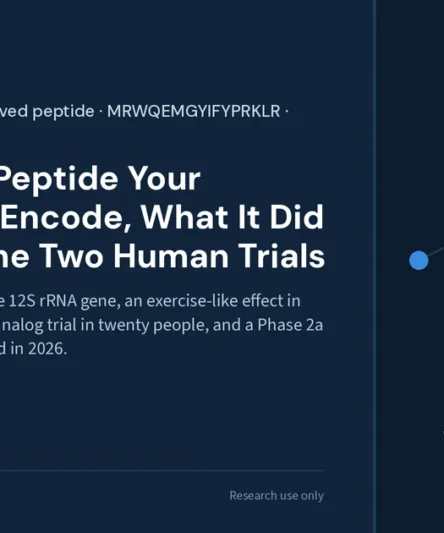
MOTS-c (short for “mitochondrial open reading frame of the 12S rRNA type-c”) was identified in 2015 by Changhan Lee, Pinchas Cohen, and colleagues at the University of Southern California, in a landmark paper published in *Cell Metabolism*. The team searched for functional open reading frames within human mitochondrial 12S ribosomal RNA and found one that could be translated into a 16-residue peptide, which they named MOTS-c. In humans it is encoded within the mitochondrial MT-RNR1 gene, and its published amino acid sequence is Met-Arg-Trp-Gln-Glu-Met-Gly-Tyr-Ile-Phe-Tyr-Pro-Arg-Lys-Leu-Arg (single-letter code: MRWQEMGYIFYPRKLR), a sequence often studied in relation to visceral fat regulation.

PubChem catalogues the compound under CID 146675088 with the molecular formula C₁₀₁H₁₅₂N₂₈O₂₂S₂. Because these identity parameters are a matter of public chemistry record, any research team can independently confirm the compound profile before study design and before citing the material in a manuscript or internal report. That verifiability matters: it means your team is never asked to take an identity claim on faith, because the reference molecule is exactly the one described in the primary literature and public databases.

The mitochondrial encoding of MOTS-c is worth dwelling on because it shapes how the peptide is studied. The discovery of MDPs reframed the mitochondrial genome — long thought to encode only a handful of respiratory-chain proteins within the mitochondria plus the RNA machinery to build them — as a source of bioactive signaling molecule candidates in its own right.
MOTS-c became one of the flagship examples of this idea, and as a result it is frequently used in the literature as a model compound for investigating mitochondrial-to-nuclear communication, sometimes described as “retrograde” signalling from the mitochondrion back to the cell nucleus.

## How MOTS-c signals

The foundational mechanism proposed in the 2015 *Cell Metabolism* paper is that MOTS-c activates AMP-activated protein kinase (AMPK) — a central cellular energy sensor — through a route distinct from the canonical AMP/ATP-ratio mechanism. Specifically, the original work reported that MOTS-c influences the folate cycle, fat oxidation, and de novo purine biosynthesis, leading to accumulation of AICAR (5-aminoimidazole-4-carboxamide ribonucleotide), a well-known endogenous AMPK activator. This gives researchers a defined, mechanistically interesting handle on a metabolic pathway that is studied across an enormous range of disciplines.

Subsequent work added a second, striking dimension to the MOTS-c story: nuclear translocation. Later studies (notably work published in 2018) reported that MOTS-c is largely extra-nuclear under resting conditions but translocates into the cell nucleus in response to metabolic stress or metabolic dysfunction, in an AMPK-dependent manner. Once in the nucleus, MOTS-c has been described interacting with stress-responsive transcription factors — including NRF2, a master regulator of antioxidant and cytoprotective gene programs in response to oxidative stress — and their target genes, regulating adaptive nuclear gene expression related to metabolism and proteostasis. For a research team, this two-tier mechanism (an energy-sensing pathway plus direct transcriptional regulation) is precisely what makes MOTS-c a compelling tool compound: it sits at the crossroads of several of the most intensively studied signalling axes in cell biology.

## Why MOTS-c is so heavily studied

The reason MOTS-c has generated so much literature in such a short time is the breadth of the phenotypes reported in preclinical models. In published animal and cell studies, MOTS-c has been described as promoting metabolic homeostasis, improving insulin sensitivity and glucose uptake to counter insulin resistance, enhancing skeletal-muscle metabolism, and influencing the balance of white versus brown adipose tissue. Because of this profile, MOTS-c is frequently characterized in the research literature as a candidate “exercise mimetic” for studying obesity, body composition, and fatty liver disease or NAFLD — a molecule whose effects in models overlap with some of the metabolic adaptations normally associated with physical exercise.

That framing is reinforced by one of the most cited threads in the MOTS-c literature: its relationship to exercise itself. MOTS-c has been reported as an exercise-induced, mitochondrial-encoded peptide, and studies have described enhanced exercise performance and physical performance when MOTS-c was administered to young, middle-aged, and old mice, along with improved metabolic flexibility and protein homeostasis in skeletal muscle under exercise-induced stress. This intersection of healthy aging, neuroprotection, cardiovascular disease, glucose homeostasis, exercise physiology, mitochondrial biogenesis, and mitochondrial function is a major reason MOTS-c has become a recurring reference point across gerontology, sports-science, and metabolic health research programs.

MOTS-c also carries a fascinating human-genetics dimension that helps explain the sustained scientific interest in it. Researchers have described a naturally occurring mitochondrial DNA polymorphism, m.1382A>C (rs111033358), that produces a lysine-to-glutamine substitution at position 14 of the peptide — the so-called K14Q variant. This variant has been reported to reduce MOTS-c activity as an insulin sensitizer, and it is found predominantly in individuals of Northeast Asian descent. Studies have associated the C-allele with higher type 2 diabetes risk specifically in men with low physical-activity levels — an example of what the authors termed a “kinesio-genomic” gene-by-exercise interaction — while the same haplogroup context (D4b2) has been discussed in connection with the healthspan and exceptional longevity of Japanese centenarians. None of this is a claim about PrymaLab’s product; MOTS-c here is a research-use-only reagent, not a therapeutic or a form of peptide therapy. But it illustrates vividly why a laboratory would want a reliable, standardized MOTS-c preparation on hand: the molecule sits at the centre of active questions spanning metabolism, exercise, ageing, and population genetics.

To restate the boundary plainly: every physiological detail above is provided to help research teams understand the molecule and place it accurately within the existing scientific literature. It is not a representation of what this product does, and it is not a human- or veterinary-use claim.

## Why researchers choose the PrymaLab autoinjector pen

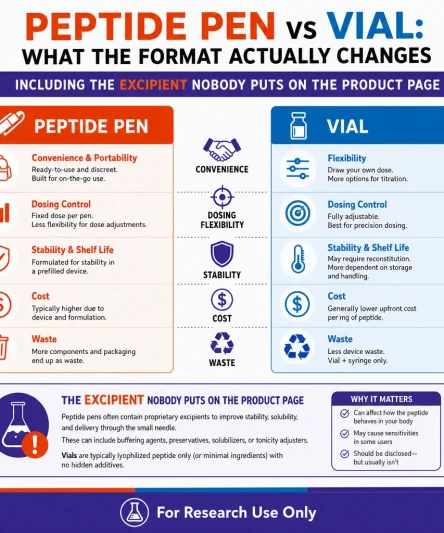
PrymaLab supplies MOTS-c in a preloaded [3ml autoinjector pen](https://prymalab.net/product/kpv-autoinjector/) calibrated to 10mg/ml, giving laboratories a uniform, repeatable format for in-vitro and non-human research workflows. The advantage of a sealed pen over loose vials for models requiring subcutaneous injection is not cosmetic. Peptide research lives and dies on reproducibility, and every manual reconstitution step is an opportunity to introduce variance — pipetting error, inconsistent diluent volumes, freeze-thaw exposure, and handling contamination all add noise to your data. A sealed pen design collapses several of those steps into a single, factory-standardized presentation, supporting clean handling, [accurate measured](https://prymalab.net/peptide-calculator/) delivery, and straightforward record-keeping across study replicates.

Consider what a fixed 10mg/ml concentration in a 3ml pen actually buys a research team. It means every unit begins from the same reference concentration, so dilution schemes designed once can be reused across an entire study without recalculation. It means the person running week twelve of a protocol is working from the same starting material as the person who ran week one. And it means that when a result needs to be defended — in a manuscript revision, an internal review, or a replication attempt by a collaborating lab — the material variable is documented, consistent, and easy to describe in a methods section. Consistency of this kind is not a luxury in peptide research, whether studying MOTS-c, BPC-157, ipamorelin, or tesamorelin; it is frequently the difference between a clean, publishable dataset and one confounded by preparation drift. For teams standardizing on the pen format across their peptide inventory, including compounds like cjc-1295, MOTS-c slots directly into the same workflow used for the rest of the [PrymaLab autoinjector range](https://prymalab.net/product/ghk-cu-peptide-autoinjector/), including compounds like Tesamorelin, so handling procedures, storage practices, and record-keeping conventions carry over without retraining.

## Format and presentation

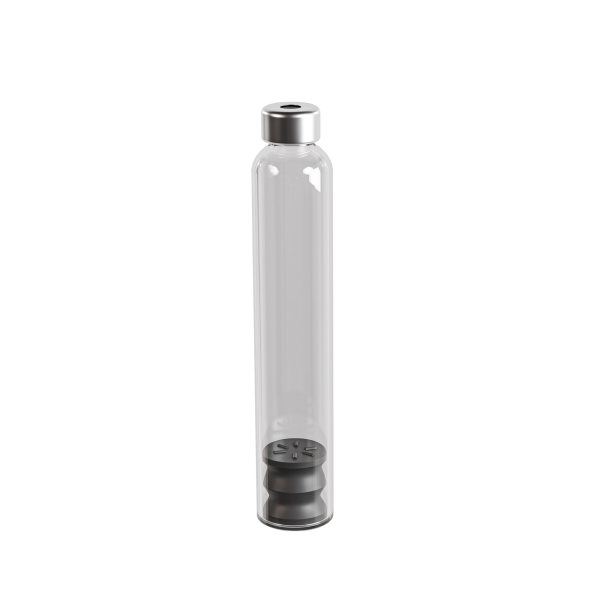
Each unit ships as a single [preloaded 3ml pen](https://prymalab.net/product/5-amino-1mq-autoinjector/) at 10mg/ml. An optional glass reloading cylinder lets research teams refill and standardize the MOTS-c preparation between runs, which keeps the research compound consistent from batch to batch and simplifies inventory management for ongoing laboratory projects. The reloading option is particularly useful for longitudinal work, where maintaining a single standardized preparation across many measurement points often matters more than any individual run in isolation.

The preloaded format is also built with documentation in mind. Because the concentration and volume are fixed and known, the material is trivial to log against study records, lot tracking, and internal audit trails — a practical benefit for any lab that needs to reconstruct exactly what was used, when, and at what concentration months or years later.

## Quality and documentation

PrymaLab MOTS-c is intended strictly for [laboratory and research use](https://prymalab.net/about-prymalab/). Identity and specification details are referenced against public chemistry data — including the PubChem entry for MOTS-c (CID 146675088) — so researchers can confirm the [compound profile before study design](https://prymalab.net/about-prymalab/) and citation. Anchoring identity to a public, third-party record means the reference molecule is exactly the one described in the primary literature.

To restate the boundary clearly: MOTS-c is a research reagent supplied for in-vitro and non-human research applications only. It is not a drug, is not for human or veterinary use, and none of the physiological or scientific context described on this page constitutes a claim about the product.

## Specifications

– **Compound:** MOTS-c (mitochondrial-derived peptide; 12S rRNA / MT-RNR1 open reading frame)
– **Amino acid count:** 16 residues, single-chain
– **Sequence:** MRWQEMGYIFYPRKLR
– **Molecular formula (PubChem):** C₁₀₁H₁₅₂N₂₈O₂₂S₂
– **PubChem CID:** 146675088
– **Peptide class:** Mitochondrial-derived peptide (MDP)
– **First described:** Lee, Cohen et al., *Cell Metabolism*, 2015 (USC)
– **Form:** Preloaded autoinjector pen (research-use-only)
– **Pen size:** 3ml
– **Concentration:** 10mg/ml
– **Optional accessory:** Glass reloading cylinder for standardized refilling between runs
– **Reference:** https://pubchem.ncbi.nlm.nih.gov/compound/MOTS-c
– **Intended use:** In-vitro / non-human laboratory research only. Not for human or veterinary consumption.

## Frequently asked questions

**What is MOTS-c?**
MOTS-c is a research compound — a 16–amino acid mitochondrial-derived peptide encoded within the mitochondrial 12S rRNA (MT-RNR1) region — supplied by PrymaLab as a [preloaded 3ml autoinjector pen](https://prymalab.net/product/vip5-autoinjector/) at 10mg/ml, intended exclusively for laboratory and non-human research use. It was first described by Lee, Cohen, and colleagues at USC in a 2015 *Cell Metabolism* paper and is catalogued in PubChem under CID 146675088.

**What format is PrymaLab MOTS-c supplied in?**
PrymaLab supplies MOTS-c in a [preloaded 3ml autoinjector pen](https://prymalab.net/product/igf1-lr3-autoinjector/) at 10mg/ml, with an optional glass reloading cylinder for standardized refilling between research runs. The sealed, preloaded format is designed to reduce handling variance and support reproducible presentation across study replicates.

**What is the concentration of PrymaLab MOTS-c?**
PrymaLab MOTS-c is supplied at 10mg/ml in a [3ml preloaded autoinjector pen](https://prymalab.net/product/tb-500-autoinjector/), giving a consistent reference concentration for laboratory study design and making dilution schemes repeatable across an entire project.

**How does MOTS-c signal in the research literature?**
Published studies describe MOTS-c activating AMP-activated protein kinase (AMPK) via a folate-cycle/AICAR pathway distinct from the canonical AMP/ATP mechanism, and translocating to the cell nucleus under metabolic stress in an AMPK-dependent manner, where it has been reported to interact with stress-responsive transcription factors such as NRF2 to regulate nuclear gene expression.

**Where can researchers buy MOTS-c for research?**
Researchers can [buy MOTS-c for research-use-only](https://prymalab.net/where-can-i-buy-high-quality-research-peptides/) directly from PrymaLab at prymalab.net, supplied in the [preloaded 3ml autoinjector pen](https://prymalab.net/product/selank-autoinjector/) format at 10mg/ml, with the optional reloading cylinder available for standardized refills.

**Is MOTS-c safe for human or veterinary use?**
No. MOTS-c is a research-use-only reagent intended strictly for in-vitro and non-human laboratory applications. It is not a drug, is not for human or veterinary consumption, and must be handled by qualified personnel in an appropriate research setting.

*Related research entities and terms: MOTS-c, mitochondrial-derived peptide, MDP, 12S rRNA open reading frame, MT-RNR1, 16-amino acid peptide, AMPK activation, AICAR, NRF2 signalling, mitochondrial-to-nuclear (retrograde) signalling, exercise mimetic, K14Q polymorphism, research peptide, research compound, preloaded autoinjector pen, 3ml pen, 10mg/ml concentration, laboratory research use, PubChem CID 146675088.*

Reviews

There are no reviews yet.

Only logged in customers who have purchased this product may leave a review.

Peptide Research Articles

Bacteriostatic Water Peptide Science: Why It Matters in Reconstitution & Research

Bacteriostatic water peptide science is the foundation of safe, accurate peptide reconstitution. This 2026 guide covers bacteriostatic water composition, how to reconstitute peptides using a peptide reconstitution calculator and peptide dosage calculator, bacteriostatic water vs sterile water differences, peptide storage best practices, and a 10-step reconstitution protocol. Expert insights from PrymaLab.

Peptides for Injury Recovery: The Wolverine Stack Peptide Guide (BPC-157 + TB-500)

The Wolverine stack peptide combines BPC-157 and TB-500 for research into tendon, ligament, and joint recovery. This 2026 guide covers BPC-157 peptide where to buy responsibly, BPC 157 peptide side effects, peptides for tendon repair, peptides for joint recovery, peptides for elbow pain, and the BPC-157 TB-500 peptide blend scientific research. Expert insights from PrymaLab.

Are Peptides Good for You? A Complete 2026 Guide

Are peptides good for you? This comprehensive 2026 guide explores peptide therapy benefits, safety, side effects, and how peptides work in the body. Learn about peptide health benefits, research findings, and what you need to know before considering peptide therapy. Expert insights from PrymaLab.

Ovagen peptide capsules for liver health with dosage cycling chart showing 10-20 day protocols repeated 2-3 times per year

Ovagen Peptide Guide: Uses, Research, Safety & Buying Info

Ovagen peptide is a short-chain liver bioregulator developed at the St. Petersburg Institute of Bioregulation and Gerontology under Professor Vladimir Khavinson. It contains the AC-3 peptide complex (glutamic acid and aspartic acid) designed to target hepatocyte gene expression for liver cell repair, bile production, and detoxification. This guide covers dosing protocols, cycling schedules, side effects, a head-to-head comparison with NAC, milk thistle, TUDCA, and BPC-157, cost analysis ($120-360 per year), and how to verify genuine Ovagen products online.

GHK-Cu peptide vial and syringe with dosage chart showing injection protocols for skin rejuvenation and hair growth

GHK-Cu Peptide: Benefits, Dosage, Side Effects & Complete Research Guide (2026)

GHK-Cu peptide is a naturally occurring copper tripeptide that modulates over 4,000 human genes involved in collagen synthesis, wound healing, and tissue regeneration. This comprehensive guide covers injection dosage protocols, clinical research on skin rejuvenation and hair growth, side effects, safety data, and how to reconstitute GHK-Cu 50mg vials. Includes dosage charts, comparison tables, and 10 frequently asked questions answered by a peptide research specialist.

Sermorelin dosage guide for anti-aging muscle growth and weight loss showing GHRH analog pituitary stimulation

Sermorelin Dosage Guide 2025: Complete Protocol for Anti-Aging, Muscle Growth & Weight Loss

Sermorelin acetate is a growth hormone-releasing hormone (GHRH) analog that stimulates natural GH production from the pituitary gland. This comprehensive dosage guide covers protocols for anti-aging, muscle growth, weight loss, and sleep optimization — along with side effects, before-and-after timelines, and comparisons to HGH and ipamorelin.

24/7 Online support

support@prymalab.net info@prymalab.net

Money back guarantee

30 Day return window. Satisfaction guaranteed or your money back.

FREE shipping and return

All orders over %150 in value will receive free shipping.