
Description
PrymaLab · Research Use Only
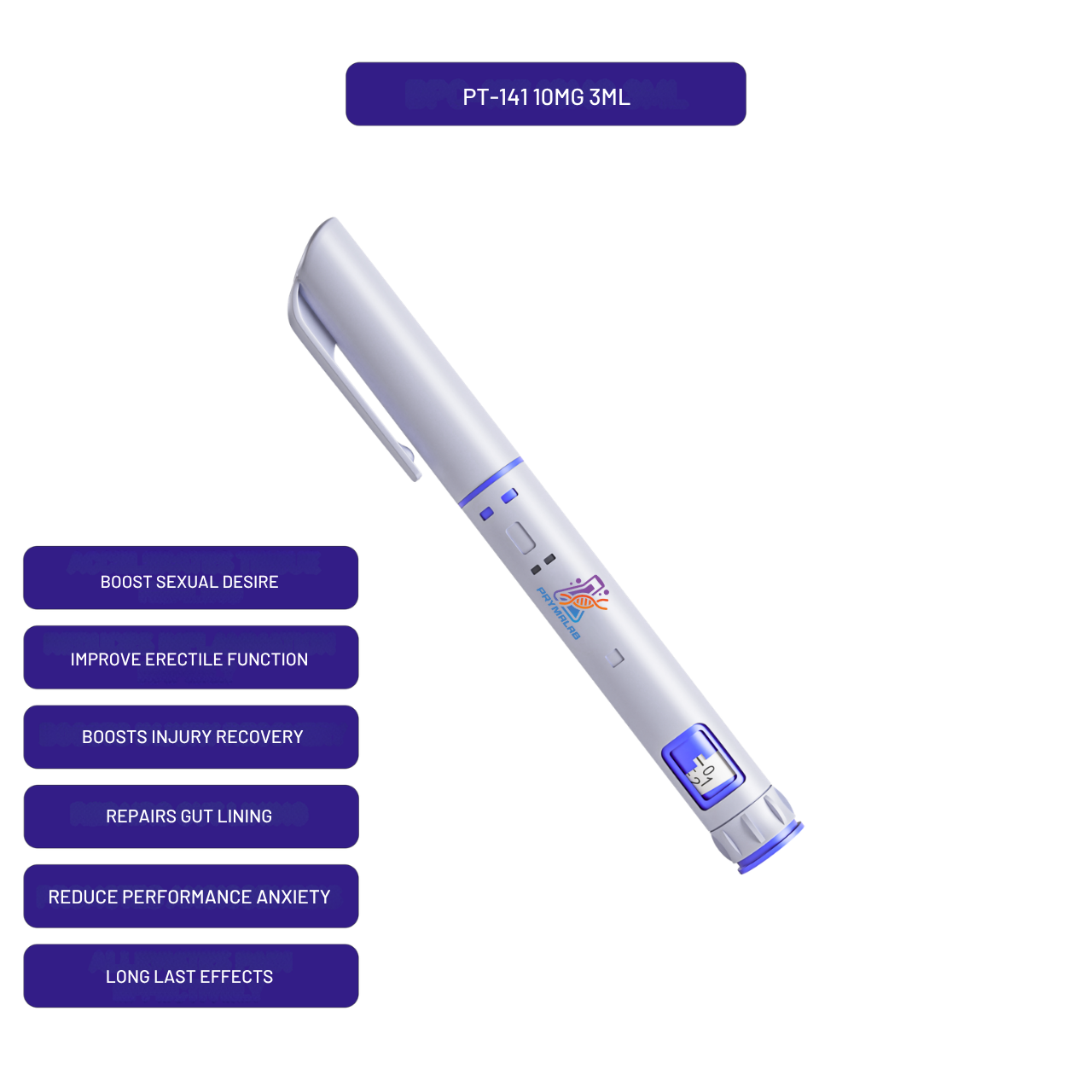
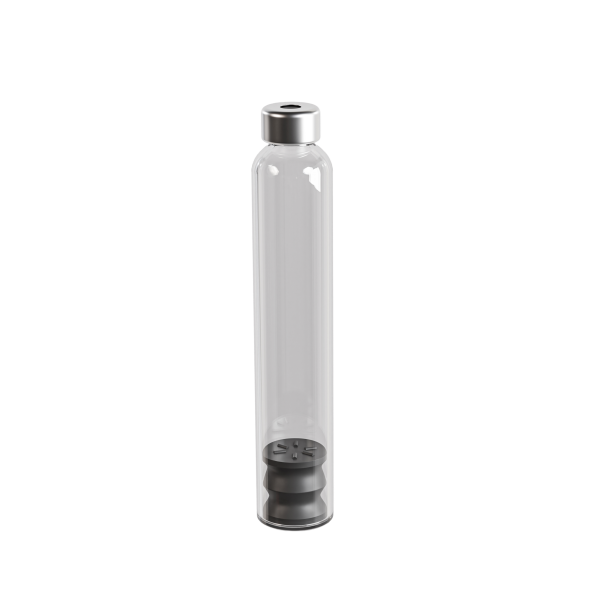
Preloaded Autoinjector | PT-141 | 3ml Pen | 10mg/ml
Cyclic heptapeptide · MC3R and MC4R · 3ml at 10mg/ml
The PT-141 autoinjector is a preloaded 3ml research device containing bremelanotide in solution at 10mg/ml, giving 30mg of total peptide. PT-141 is a synthetic cyclic heptapeptide, molecular weight approximately 1025.2, closed by a lactam bridge and acting as an agonist at the melanocortin receptors MC3R and MC4R.
Specification Table
| Property | Value |
|---|---|
| Device format | Preloaded autoinjector pen, glass cartridge |
| Fill volume | 3 ml |
| Concentration | 10 mg/ml |
| Total compound in device | 30 mg |
| Molar concentration | Approximately 9.8 mM |
| Compound | Bremelanotide |
| Research designation | PT-141 |
| CAS number | 189691-06-3 |
| Molecular formula | C50H68N14O10 |
| Molecular weight | Approximately 1025.2 g/mol |
| Structure | Ac-Nle-cyclo[Asp-His-D-Phe-Arg-Trp-Lys]-OH |
| Residue count | 7 (cyclic heptapeptide) |
| Cyclisation | Lactam bridge between the Asp and Lys side chains |
| Non-standard residues | Norleucine (Nle) at the N-terminus, D-phenylalanine within the ring |
| Molecular targets | Melanocortin receptors MC3R and MC4R |
| Receptor class | Class A G-protein-coupled receptors, Gαs-coupled |
| Reported half-life | Approximately 120 minutes in human studies |
| Parent scaffold | Derived from α-melanocyte-stimulating hormone |
| Oxidation-prone residue | Tryptophan within the ring |
| Reconstitution required | None. Supplied as solution |
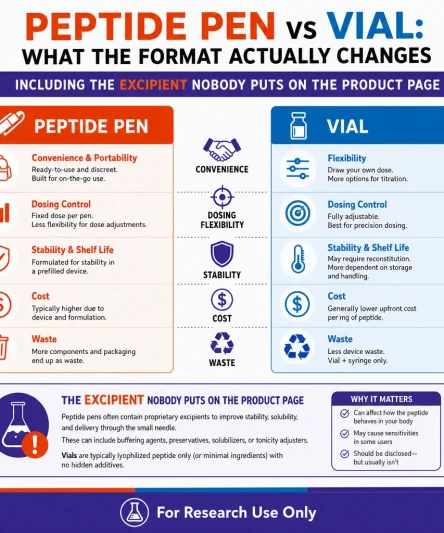
| Excipient system | Not published on the product record |
| Storage | 2-8°C, protected from light |
| Purity | Per lot-specific certificate of analysis |
| Regulatory note | An approved human formulation of bremelanotide exists in the United States for a specific indication. That product is entirely separate from this research material |
What Does the Lactam Bridge Accomplish?
The structure written out is Ac-Nle-cyclo[Asp-His-D-Phe-Arg-Trp-Lys]-OH, and almost every feature of it exists to solve a stability problem.
A lactam bridge is an amide bond between aspartate and lysine side chains. It closes the peptide into a ring. Linear peptides sample many conformations, most of which are not the receptor-binding one, and paying that entropic cost on every binding event weakens affinity. A cyclic peptide is pre-organised, holding the pharmacophore closer to the bound conformation before it ever reaches the receptor.
Cyclisation also removes both termini as substrates. Exopeptidases work inward from a free amino or carboxyl terminus, and a ring has neither in the usual sense, which closes the fastest degradation route available to a linear peptide of this size.
Two further modifications reinforce the same objective. Norleucine at the N-terminus replaces a methionine present in the parent melanocortin sequence. That removes the most oxidation-prone residue outright. D-phenylalanine inside the ring inverts stereochemistry there, and endopeptidases handle the inverted form badly.
The combined finding is a reported half-life near 120 minutes, substantially longer than endogenous melanocortin peptides manage.
How Long Does PT-141 Last?
For the PT-141 autoinjector, published human pharmacokinetic work places the half-life at approximately 120 minutes. That figure is unusually well established for a compound in this catalogue, because bremelanotide progressed through clinical development rather than remaining a research chemical.
Two hours is long for a peptide of this size and short by small-molecule standards. For comparison, native α-melanocyte-stimulating hormone is cleared within minutes, and the cyclisation and residue substitutions described above account for most of the difference.
For experimental design the practical implication concerns sampling and exposure windows. A two-hour half-life means measurable concentrations persist across a working morning but not across a day, and a single endpoint measurement taken late will capture the tail rather than the exposure.
It also means that in a cell system with no clearance mechanism, the compound persists indefinitely, and exposure duration becomes whatever the experimenter chooses rather than what pharmacokinetics dictates. Findings from cell work and animal work are not directly comparable on exposure for this reason.
What Are MC3R and MC4R?
The melanocortin receptor family comprises five class A G-protein-coupled receptors, MC1R through MC5R, all coupling principally through Gαs to raise cyclic AMP. They differ in tissue distribution, and in which of the endogenous melanocortin peptides each one happens to prefer.
MC1R sits largely on melanocytes, where it governs pigmentation. MC2R responds to adrenocorticotropic hormone within the adrenal cortex. MC5R appears in exocrine tissue, and all three of those are largely peripheral in distribution.
MC3R and MC4R are the central members, expressed in hypothalamic and limbic regions, and they are the targets relevant here. Bremelanotide is described in the literature as a non-selective agonist across the melanocortin family with meaningful activity at MC3R and MC4R, which is where its central pharmacology originates.
That non-selectivity matters for experimental interpretation. A compound engaging several receptors in a family cannot be used to attribute an effect to one of them without a selective antagonist or a receptor-null system. Designs claiming MC4R specificity from bremelanotide alone are claiming more than the compound supports.
What Is the Regulatory Position?
Bremelanotide occupies an unusual position in this catalogue, and stating it accurately matters.
An approved human formulation exists in the United States, marketed under a brand name for a specific licensed indication. That is not true of anything else described across these product pages, and it means the compound has passed a regulatory review that research chemicals never undergo.
The material supplied here is not that product. It is research-grade bremelanotide in a laboratory device, not a licensed medicine, and it carries none of the manufacturing, labelling or pharmacovigilance framework an approved product does. It is not approved for human or veterinary use in this form.
The distinction is worth being precise about because the existence of an approved formulation elsewhere is sometimes read as implying something about research material. It does not. Different product, different manufacturing standard, different regulatory status entirely.
What Does Non-Selectivity Mean for Study Design?
Bremelanotide engages several melanocortin receptors, and designing around that requires more than noting it in a methods section.
The family shares substantial structural homology, and the endogenous ligands are themselves thoroughly promiscuous. Selective pharmacology in this system is genuinely difficult in consequence. A compound derived from α-melanocyte-stimulating hormone inherits that promiscuity.
Three approaches address that problem. Selective antagonists exist for several family members, and co-administering one should abolish the contribution of that receptor while leaving others intact. Receptor-null systems, whether knockout animals or cells lacking a given subtype, remove the receptor entirely. And comparing bremelanotide against a more selective agonist isolates what the additional receptor engagement contributes.
Which approach fits depends on the system. Antagonists are simplest in cell work. Knockouts are more definitive and carry the usual developmental compensation caveat.
What does not work is asserting MC4R specificity from bremelanotide data alone. The compound does not provide it, and a conclusion resting on that assertion is resting on nothing.
What Does the Cyclic Structure Cost?
Cyclisation buys stability and affinity. The trade-offs that come with it are worth stating alongside.
Synthesis becomes considerably harder. Forming a lactam bridge requires selective side-chain deprotection and an intramolecular coupling under dilute conditions to favour cyclisation over polymerisation. Yields are lower than for a linear peptide of the same length and the purification is more demanding.
Analytical characterisation is also harder. A cyclic peptide and its linear precursor differ by only the mass of water, eighteen daltons, which is a small difference to resolve on a molecule of 1025. Confirming that cyclisation occurred requires chromatographic separation rather than mass alone.
Incomplete cyclisation therefore produces a plausible impurity that is easy to miss. A preparation containing linear precursor alongside the cyclic product would show near-correct mass and reduced activity.
For quantitative work, confirming cyclic purity specifically, rather than accepting a general purity figure, is worth requesting from the certificate.
Verifying and Handling the PT-141 Autoinjector
The tryptophan within the ring is the one oxidation-sensitive feature, and it is also useful analytically since it gives the peptide measurable absorbance at 280 nm for rapid concentration checks.
Inspect the solution before each draw against light and dark backgrounds. The solution should read clear, with no particulate visible against either background. Cyclic peptides are generally less aggregation-prone than linear ones of similar size, since the constrained conformation limits the extended surface association requires.
Verify delivered volume gravimetrically. Actuate onto a tared weighing vessel, record the mass, convert using solution density, and repeat across several actuations at the temperature of intended use. Discard the first actuation after any rest period rather than measuring it.
Store at 2-8°C protected from light and return the device to packaging between sessions. At 10 mg/ml the solution is approximately 9.8 millimolar, the most concentrated device in this catalogue, so dilution planning matters more here than for the 5 mg/ml formats.
A Note on Concentration and Dilution
At 10 mg/ml the PT-141 autoinjector is the most concentrated device across all three tranches, and that changes the dilution planning more than it first appears.
Approximately 9.8 millimolar means most cell-based work needs three or more serial steps to reach the working range, against two from a 5 mg/ml device. Each step contributes pipetting error and the errors compound.
Preparing a written dilution scheme before the session, rather than improvising, is the cheapest available control on that error.
Where a design repeatedly needs a low working concentration, making an intermediate stock once and using it across the session is preferable to running the full chain each time.
What Is Vyleesi Approved For?
This compound has an approved counterpart, which puts it in a small minority of this catalogue and makes the separation between the two worth drawing carefully.
Bremelanotide is marketed as Vyleesi, and it is FDA-approved for one specific indication: acquired, generalised hypoactive sexual desire disorder in premenopausal women.
HSDD in that definition means distressing low libido not attributable to a co-existing medical condition, a relationship problem, or a medication. Hypoactive sexual desire disorder is a specific diagnosis, not a description of variable interest.
The PT-141 peptide sold for research is the same molecule outside that approval and outside the trial population it was tested in.
Vyleesi is supplied as a single-use subcutaneous injection, taken as needed rather than daily, with a labelled limit on how often it may be used.
The approval does not extend to postmenopausal women, to men, or to any form of erectile dysfunction. Those are off-label use rather than approved indications.
That distinction matters because most search traffic for this compound concerns male sexual dysfunction, which is the population the approval specifically excludes.
How Does It Differ From Viagra and the PDE5 Inhibitors?
The two work at opposite ends of the same process, and confusing them leads to expectations neither can meet.
PDE5 inhibitors act peripherally on vascular smooth muscle. Sildenafil, marketed as Viagra, and tadalafil, marketed as Cialis, both prolong nitric oxide signalling in the penis and improve blood flow given arousal that already exists.
This compound acts centrally instead. It is a melanocortin receptor agonist working in the hypothalamus and wider central nervous system, and the proposed pathway runs through dopamine release in arousal circuits.
So a PDE5 inhibitor addresses the mechanics and this compound is proposed to address sexual arousal itself. Sexual arousal originating centrally rather than peripherally is the whole premise, and it is why the two get discussed as combination therapy.
Combination therapy of that kind has not been established as safe, and both classes affect blood pressure, which is the reason to be cautious rather than curious about combining them.
Where erectile dysfunction has psychogenic rather than vascular origins, a central mechanism is the more coherent theory. Coherent theory and demonstrated benefit are different things, and only the first applies here.
What Is the Safety Position?
This is the part of the file that deserves the most space, because the approved product carries specific documented risks.
Blood pressure is the central one. Vyleesi produces a transient rise in blood pressure with a corresponding fall in heart rate after each dose.
Because of that, the approved label contraindicates it in uncontrolled hypertension and in known cardiovascular disease.
Nausea is the most common adverse effect by a wide margin, reported by a substantial proportion of trial participants and severe enough that some discontinued over it.
Flushing, headache, injection site reactions and vomiting fill out the common list.
Skin darkening is the effect specific to this receptor family. Melanocortin agonism drives melanogenesis, and focal hyperpigmentation was reported in trials, more often with more frequent use.
That connection is structural rather than incidental. This compound is the major active metabolite of Melanotan II, a compound taken specifically for its pigmentation effect, so the two share a receptor family and much of a mechanism.
A research preparation carries every one of those pharmacological properties and none of the monitoring that makes the approved product’s risk manageable. The side effects above are the approved product’s documented side effects, and nothing about a research label removes them from the molecule.
Oxytocin appears in the same sexual wellness listings on a loosely related arousal argument. It is a different peptide acting on a different receptor, and pairing the two has not been studied.
Anyone with hypertension, cardiovascular disease, low libido, HSDD or any form of sexual dysfunction needs a clinician, not a research chemical. Questions about menopause, hormone therapy, hormone replacement therapy or hormone imbalances belong to the same conversation.
This device is supplied for laboratory research only and is not for administration to humans or animals.
What Do the Circulating Protocols Represent?
Usage guidance for this compound circulates in the sexual wellness market, and its provenance is worth understanding.
Subcutaneous injection is the route the approved product uses and the one the market has adopted. A nasal spray version exists too, and intranasal administration was in fact the original development route.
That intranasal programme was discontinued, and the reason was the blood pressure effect described above, which is a useful thing to know about a format still being sold.
Dosing frequency figures circulating for research use come from the approved label or from forums rather than from any study of this preparation.
Compounding pharmacies dispensed bremelanotide preparations for a period, and peptide therapy clinics marketed it as a libido booster well beyond the approved indication.
The trials that support the approval measured desire and distress using validated instruments in premenopausal women. Nothing in that record speaks to a research compound used off-label by anyone else.
Published Literature
Confirmed against publisher records or primary indexes. Bremelanotide carries a deeper clinical record than most compounds described across this catalogue.
- Molinoff PB, Shadiack AM, Earle D, Diamond LE, Quon CY. Annals of the New York Academy of Sciences. 2003;994:96-102.
- Kingsberg SA, Clayton AH, Portman D, Williams LA, Krop J, Jordan R, Lucas J, Simon JA. Obstetrics and Gynecology. 2019;134(5):899-908.
- Cone RD. Endocrine Reviews. 2006;27(7):736-749.
- Gantz I, Fong TM. American Journal of Physiology: Endocrinology and Metabolism. 2003;284(3):E468-E474.
- Hadley ME, Dorr RT. Peptides. 2006;27(4):921-930.
Frequently Asked Questions
What is the PT-141 autoinjector?
A preloaded 3ml research device holding bremelanotide in solution at 10mg/ml, giving 30mg total and roughly 9.8 millimolar. PT-141 is a cyclic heptapeptide agonist at melanocortin receptors MC3R and MC4R. Laboratory research use only.
How long does PT-141 last?
Published human pharmacokinetic work places the half-life near 120 minutes. That is long for a peptide this size and short by small-molecule standards. Native alpha-melanocyte-stimulating hormone clears within minutes, and cyclisation accounts for most of the difference.
What does the lactam bridge do?
It closes the peptide into a ring by bonding the aspartate and lysine side chains. That pre-organises the molecule nearer its receptor-binding conformation, improving affinity, and removes both termini as exopeptidase substrates, closing the fastest degradation route available.
Why norleucine and D-phenylalanine?
Both reinforce stability. Norleucine replaces a methionine present in the parent melanocortin sequence, removing the most oxidation-prone residue. D-phenylalanine inverts stereochemistry at that position, which endopeptidases recognise poorly compared with the natural L form.
What are MC3R and MC4R?
Two of the five melanocortin receptors, all class A G-protein-coupled receptors raising cyclic AMP through G-alpha-s. MC3R and MC4R are the central members, expressed in hypothalamic and limbic regions, unlike MC1R which governs pigmentation peripherally.
Is bremelanotide selective for MC4R?
No, and designs frequently assume otherwise. It is described as a non-selective agonist across the melanocortin family with meaningful activity at both MC3R and MC4R. Any claim of MC4R specificity from this compound alone needs a selective antagonist or a receptor-null system to support it.
Does an approved formulation exist?
Yes, in the United States under a brand name for a specific licensed indication. That product is entirely separate from this research material, which carries none of the manufacturing, labelling or pharmacovigilance framework an approved medicine does.
What can be used for concentration checking?
Absorbance at 280 nanometres, arising from the tryptophan held within the cyclic ring. With a known extinction coefficient this requires no standard curve at all. That makes it convenient for confirming device contents before an experiment rather than assuming the nominal concentration still holds.
Is aggregation a concern for a cyclic peptide?
Less so than for a linear peptide of comparable size, because cyclisation constrains the conformation and limits the extended hydrophobic surface that association requires. Inspection against a dark background remains worthwhile. Faint opalescence precedes obvious turbidity, and only a dark background reveals it.
Why does the higher concentration matter?
At 10 mg/ml the PT-141 autoinjector is the most concentrated device in the catalogue, approximately 9.8 millimolar. Dilution planning matters more here than for the 5 mg/ml formats, since reaching a low working concentration requires an additional serial step and the error that step contributes.
How can receptor selectivity be established?
Three approaches, each suiting different systems. Selective antagonists co-administered to abolish one receptor contribution while leaving others intact. Receptor-null systems, whether knockout animals or cells lacking a subtype. Or comparison against a more selective agonist to isolate what additional engagement contributes.
Can MC4R specificity be claimed from bremelanotide alone?
No. The compound engages several melanocortin receptors and provides no basis for attributing an effect to one of them. A conclusion resting on that assertion is resting on nothing, and it is a common weakness in this literature.
Why is selective melanocortin pharmacology difficult?
Because the family shares substantial structural homology and the endogenous ligands are themselves promiscuous. A compound derived from alpha-melanocyte-stimulating hormone inherits that promiscuity, which is a property of the system rather than a shortcoming of the molecule.
Is PT-141 the same as Vyleesi?
Same molecule, different product. Vyleesi is FDA-approved bremelanotide therapy for acquired, generalised HSDD in premenopausal women, supplied as a single-use subcutaneous injection. This is an unapproved research preparation of the same synthetic peptide, with none of the monitoring around it.
Does it work for erectile dysfunction?
The approval excludes men entirely, so any use there is off-label use. Trials in erectile dysfunction were run and measured with the International Index of Erectile Function, the IIEF, but the development that reached approval went down the HSDD route in women instead.
How does it differ from Viagra or Cialis?
Sildenafil and tadalafil act peripherally on blood flow given arousal that already exists. This acts centrally on arousal pathways through melanocortin receptors, with dopamine release proposed as the downstream step. Central nervous system signaling rather than vascular mechanics is the difference.
What are the side effects?
Nausea leads by a wide margin, severe enough that some trial participants discontinued. Flushing, headache, vomiting and injection site reactions follow. Skin darkening is the effect specific to this receptor family, since melanocortin agonism drives melanogenesis.
What is the blood pressure concern?
The approved product produces a transient rise in systolic blood pressure with a fall in heart rate after each dose. Its label contraindicates use in uncontrolled high blood pressure and in known cardiovascular disease. A research preparation carries the same pharmacology without the monitoring.
Is it related to Melanotan II?
Yes, directly. PT-141 peptide is the major active metabolite of Melanotan II, which is taken specifically for pigmentation. They share a receptor family and much of a mechanism, which is why skin darkening appears in the trial record for both.
Does it help low libido from menopause or stress?
The approval covers premenopausal women only, so perimenopause and postmenopausal use fall outside it. Low libido driven by psychological factors, performance anxiety, psychogenic ED, hormonal balance or HRT questions belongs to a clinician rather than to a research compound.
Why was the nasal formulation discontinued?
Because of the blood pressure effect. Intranasal administration was the original development route and was dropped for that reason, with the subcutaneous route carried forward instead. Nasal spray versions still circulate in the research market regardless.
What did the approval trials actually measure?
Sexual desire and associated distress in premenopausal women with HSDD, using validated instruments. Female sexual arousal disorder is a separate diagnosis and was not the endpoint. Peptide therapy clinics marketing it as a general libido booster are working well outside that evidence.
Compliance Statement
The PT-141 autoinjector is sold exclusively for laboratory research use. It is not a drug, food, or cosmetic product, and it is not a dietary product of any kind. It is not approved by the FDA or any comparable authority for human or veterinary use, and while an approved bremelanotide formulation exists elsewhere for a licensed human indication, this research material is a separate product and is not that medicine. This product is not intended to diagnose, treat, cure, or prevent any disease. It must not be given to humans or animals. Purchase is restricted to qualified researchers and institutions operating within applicable laws. All handling is the responsibility of the purchasing laboratory.
Other formats of PT-141
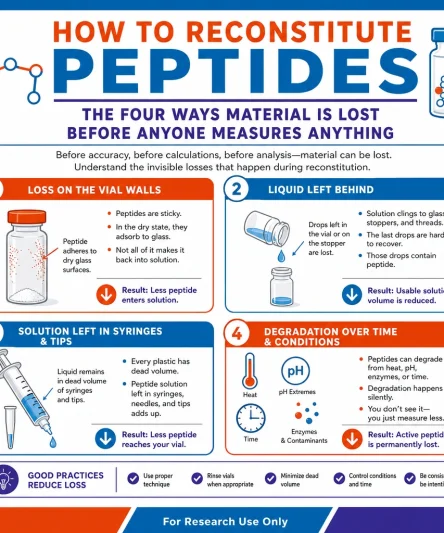
PT-141 is also stocked as PT-141 10mg and PT-141 Peptide Nasal Spray. Each listing states its own quantity and concentration, and the pen and vial comparison explains what changes between formats. The PT-141 sourcing and certificate guide covers what to check on a certificate before ordering.



20 reviews for Preloaded Autoinjector | PT-141 | 3ml Pen | 10mg/ml