Description
PrymaLab · Research Use Only
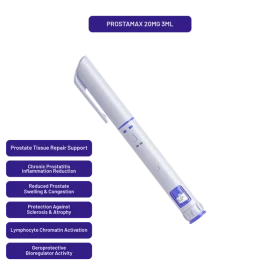
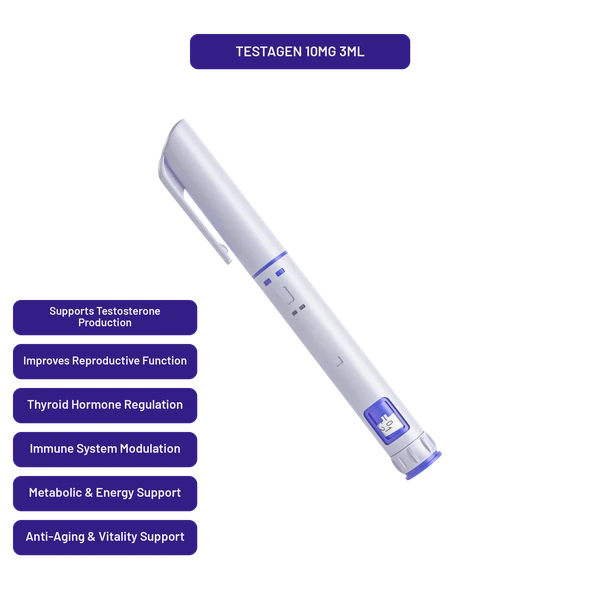
Preloaded Autoinjector | Testagen | 3ml Pen | 10mg
Lys-Glu-Asp-Gly tetrapeptide in solution · 3ml at 10/3 mg/ml · No reconstitution step
The Testagen pen is a preloaded 3ml research autoinjector holding the tetrapeptide Lys-Glu-Asp-Gly in solution at 10/3 mg/ml, giving 10mg in the device. Its third and fourth residues form an Asp-Gly pair, the fastest known site for isoaspartate formation, and that rearrangement changes the molecule without changing its mass by a single dalton.
Specification Table
| Property | Value |
|---|---|
| Device format | Preloaded autoinjector pen, glass cartridge |
| Fill volume | 3 ml |
| Concentration | 10/3 mg/ml |
| Total compound in device | 10 mg |
| Molar concentration | 10 x 0.745 mM; a 10 mg fill gives 7.45 mM |
| Compound | Testagen, L-lysyl-L-alpha-glutamyl-L-alpha-aspartyl-glycine (KEDG) |
| CAS number | Unverified. No registry number is confirmed; vendors quote none or unregistered numbers |
| Molecular formula | C17H29N5O9 (computed) |
| Molecular weight | 447.44 g/mol average; 447.1965 monoisotopic |
| Amino acid sequence | H-L-Lys-L-Glu-L-Asp-Gly-OH (KEDG), four residues, free N-terminal amine and free C-terminal carboxylate |
| Solution appearance | Clear and colourless |
| Reconstitution required | None. Supplied as solution |
| Excipient system | Not published on the product record. Confirm against certificate of analysis |
| Solution pH | Not published on the product record |
| Storage | 2-8°C, protected from light, do not freeze |
| Light sensitivity | Low. No chromophore above 230 nm; light protection guards only against photosensitised impurity chemistry |
| Solution stability | No published study for this sequence at any concentration |
| Mass-silent route | Asp3-Gly4 aspartimide formation, reopening to roughly 3:1 isoaspartyl and aspartyl peptide with no change in mass or formula |
| Net charge at pH 7 | About -1. Two amines against three carboxylates; calculated pI near 4.1, unverified |
| Salt form | Acetate or TFA per vendor statement. Not stated on the product record |
| Purity | Per lot-specific certificate of analysis |
| Regulatory status | No approval anywhere. Not a medicine under FDA, EMA, PMDA, TGA, Health Canada or the Russian Ministry of Health; Russian marketing is as a dietary supplement in capsule form. Not on the WADA 2026 Prohibited List. Not on the FDA 503B category lists of 21 March 2025 and not eligible under section 503A |
What Changes When KEDG Ships in Solution?
One motif in this tetrapeptide dominates everything else about its behaviour in water: the aspartate at position 3 followed by glycine at position 4, which is the fastest sequence known for aspartimide formation and the reason a mass-spectrometric identity check cannot certify a stored solution.
The mechanism was established by Geiger and Clarke in 1987. The backbone nitrogen of the following residue attacks the side-chain carbonyl of the aspartate, closing a five-membered succinimide ring. That ring then reopens by hydrolysis to give roughly three parts isoaspartyl peptide to one part aspartyl peptide, and the alpha-carbon racemises while the ring is closed. Their work showed Asx-Gly sequences are the most reactive of all, on a timescale of days to weeks at 37°C near neutral pH. Glycine has the smallest side chain of any residue, so it puts nothing in the way of the attacking nitrogen.
The consequence for a solution product is specific and awkward. Isoaspartate has the same molecular formula and the same mass as the parent peptide. A certificate reporting purity by area percent and identity by mass spectrometry can be entirely accurate and still say nothing about whether the material in the device is Lys-Glu-Asp-Gly or Lys-Glu-isoAsp-Gly. The backbone of the isomer is one methylene longer, which is a real structural change presented as no analytical signal at all. Glycine sitting at the C-terminus does not close the route, because its backbone nitrogen is still present in the peptide bond.
The remaining chemistry is slower. The glutamate at position 2 has only a sluggish glutarimide route. The N-terminal lysine removes one hazard and adds another: there is no pyroglutamate route, because that requires an N-terminal glutamate or glutamine, but the lysine epsilon-amine forms Maillard adducts with reducing sugars or aldehydic impurities, so a sugar-containing excipient system is a slow browning reaction waiting for warmth. A diketopiperazine route closing cyclo(Lys-Glu) and shedding Asp-Gly is possible, though Goolcharran and Borchardt showed in 1998 that this reaction runs fast mainly when residue 2 is proline or glycine, which it is not here.
Nothing else applies. No asparagine or glutamine means no amide deamidation. No methionine means no sulfoxide. No cysteine means no disulfide chemistry. No tryptophan, tyrosine or histidine means no ultraviolet chromophore and no photo-oxidation. For a molecule of 447.44 Da the entire degradation map reduces to one dominant mass-silent rearrangement and a set of slow secondary routes.
The pH dependence is worth stating because it runs opposite to the more familiar deamidation case. Aspartate-derived succinimide formation is favoured at mildly acidic pH, where the side-chain carboxyl is protonated and can be attacked, while base accelerates hydrolysis of the imide once formed. Both extremes are unhelpful and the optimum for this sequence specifically has never been measured. No forced-degradation or shelf-life study of KEDG has been published at any concentration.
What Does the Testagen Pen Deliver Per Increment?
Concentration is 10/3 mg/ml, and dividing by the molecular weight of 447.44 gives a molarity of 10 multiplied by 0.745 mM.
Worked at a 10 mg fill: 3.33 mg/ml, which is 7.45 mM. Mass per 0.01 ml, the smallest increment on a standard insulin-graduated barrel, is 10 multiplied by 3.33 microgram, or 33.3 microgram at that fill. Per 0.1 ml the figure is 10 multiplied by 33.3 microgram.
No verified in vitro concentration exists for this sequence to compare against. For orientation only, Khavinson-group cell-culture work with related tetrapeptides is usually reported at 10 to 100 ng/ml, which for a 447 Da peptide is roughly 0.02 to 0.22 micromolar. Reaching 0.1 micromolar from a 7.45 mM stock is a 74,500-fold dilution, close to one microlitre carried into 75 millilitres, and it is not a single-step operation.
In vivo comparison is impossible rather than merely difficult. The avian studies give no dose in their abstracts, and the single human report gives neither dose nor route, so there is no published exposure figure for this device to be measured against.
Testagen Pen vs Vial: What the Format Settles
The testagen pen vs vial decision comes down to how long the material sits in water, because the isoaspartate clock only runs once the peptide is dissolved.
A pen fixes concentration at manufacture and removes reconstitution error. The pen versus vial comparison and the preloaded autoinjector category page cover that general argument.
What is compound-specific is that a dry cake of this tetrapeptide is chemically quiet while a solution of it is not. Aspartimide formation needs water and mobility, and a lyophilized vial of the same sequence supplies neither until reconstitution. A pen starts that clock at the fill line and runs it continuously, in the dark, at 2-8°C, with no outward sign of progress.
The trade-off therefore favours the pen for work concentrated into a short period after receipt, where its consistency across draws is worth having, and favours the vial for a device that would otherwise be opened occasionally across many months. The nasal presentation raises a third set of questions again, since it involves a preserved solution rather than a single-lot cartridge.
Does Testagen Come in a Pen?
Yes as a research preparation, and this device is one, holding 10mg in 3 ml of solution ready to draw. No approved or registered product of this sequence exists in a pen or in any other format.
Russian marketing of this compound has been as a dietary supplement in capsules, and details of that registration are unverified. The question of whether does testagen come in a pen therefore has a clean answer for research material and no answer at all for a medicine, because there is no medicine.
A pen, a vial, a nasal spray and a capsule of the same nominal compound are four different stability problems, and only the first two share a route.
What the Product Record Does Not State
Five values are missing, and the first two act directly on the one reaction that matters.
The excipient system is unpublished. Whether any sugar is present decides whether the lysine epsilon-amine has a Maillard partner, and the buffer species and its concentration influence both succinimide formation and imide hydrolysis.
Solution pH is unpublished. Since succinimide formation is favoured on the acidic side and imide opening on the basic side, a single number would allow at least a directional estimate of what has been happening in the cartridge. Without it, no estimate is possible.
Salt form is unpublished. Acetate and trifluoroacetate are both stated by vendors, and residual trifluoroacetate is not visible in a purity figure quoted as area percent while being far from inert in cell culture.
Fill date and in-use stability are unpublished, and no CAS number is confirmed for the sequence.
Verifying the Testagen Pen and Confirming Its Contents
This is the compound where the usual verification toolkit performs worst, because the main degradation route is invisible to mass spectrometry and the molecule has no chromophore for ultraviolet work.
Start with what does not work. There is no absorbance above 230 nm, so the 280 nm concentration check used for tryptophan-bearing peptides is unavailable. HPLC purity has to run at 210 to 220 nm, where the peptide bond absorbs weakly and where buffer components, residual solvents and the counter-ion all contribute signal. Charged-aerosol or evaporative light-scattering detection gives a more honest mass-based purity figure and is worth asking for on a certificate.
Mass spectrometry confirms identity at 447.1965 monoisotopic and will find hydrolytic fragments, but it cannot separate Lys-Glu-Asp-Gly from Lys-Glu-isoAsp-Gly, because the two have identical formulae. Detecting the isomer needs a method built for it: a shallow reversed-phase gradient that resolves the isoaspartyl peak, or an isoaspartate-specific enzymatic assay using protein isoaspartyl methyltransferase, which transfers a methyl group only to the isomer and is the standard approach in protein pharmaceutical work.
Check the solution against a white card before drawing: it should be clear and colourless, with no visible particulate. Let the device reach ambient temperature before actuating, since cold solution is more viscous and viscosity shifts delivered volume in a spring-driven mechanism.
What the KEDG Literature Actually Reports
The peer-reviewed record for this sequence is avian, comes almost entirely from one research group, and measures thyroid and thymus endpoints rather than anything to do with the organ in the product name.
Kuznik, Pateyuk and Rusaeva reported in 2008 that neonatally hypophysectomised chickens given Lys-Glu-Asp-Gly or Ala-Glu-Asp-Gly for 40 days showed increased thyrotropic and thyroid hormone concentrations along with structural recovery of the thyroid gland. A 2011 paper from the same group extended the work to hypophysectomised five-day-old chickens and old hens, reporting reduced thyroid disturbance with a weaker effect in the older birds, and a parallel report appeared in Advances in Gerontology the same year. Pateyuk and colleagues reported in 2013 that both peptides promoted recovery of thymus morphology, with KEDG performing better than AEDG. None of the abstracts states a dose.
Those papers also settle a naming question. They describe Lys-Glu-Asp-Gly as designed from the amino acid composition of anterior-pituitary extract, while Ala-Glu-Asp-Gly, sold elsewhere as Epithalon, came from the posterior lobe. The organ in the trade name enters through marketing rather than through the primary literature, and no study characterises an action on Leydig cells, steroidogenic enzymes or androgen receptors.
Human evidence is one report. Rossikhin and colleagues published in 2011, in the Ukrainian journal Problems of Endocrine Pathology, a study of 36 men with chronic abacterial prostatitis and androgen deficiency who received standard therapy alongside this compound for one month; serum total testosterone rose and uroflowmetry and prostate inflammation measures improved. There was no control group, and the abstract states no dose, formulation or route. It is unreplicated and unregistered. No animal study has measured testosterone with this peptide at all.
The mechanistic claims are in-house. The Khavinson group proposes that KEDG, like the related tetrapeptides, binds histones H1, H2B, H3 and H4 and increases transcriptional accessibility of gene promoters, a position set out in their 2021 systematic review of their own in vitro and in silico work. No independent cell-culture replication was located. There is no pharmacokinetic measurement in any species, and a small linear peptide with a free N-terminus would be expected to be cleared by peptidases within minutes. The bioregulator research overview and the background article on this compound give the wider context.
Testagen Pen Storage and Solution Stability
Testagen pen storage is 2-8°C, protected from light and never frozen, and only the first of those three has a mechanism specific to this molecule.
Refrigeration is the one intervention that acts on aspartimide formation, which is thermally driven and, on the Geiger and Clarke timescale, measurable over days to weeks at 37°C. Dropping to 2-8°C slows it substantially without stopping it. Light protection is precautionary rather than mechanistic, since there is no chromophore above 230 nm; it guards against photosensitised chemistry driven by excipients or impurities. Freezing is prohibited because freeze-concentration raises local solute concentration and drives pH excursions in the shrinking unfrozen fraction, and pH excursion is exactly what shifts the succinimide equilibrium.
Published testagen solution stability data does not exist, and the honest position is to say so rather than to borrow a figure from a related peptide. What can be said about testagen solution stability is that the dominant route is known, its relative rate among sequence motifs is known, and its endpoint is undetectable by the analytical methods normally supplied with research material. Record the fill date, the date of first actuation and cumulative time above refrigeration temperature, and treat elapsed time in solution as an experimental variable rather than a logistical one.
What Is the Safety and Regulatory Position?
No regulator has approved this compound in any form, and no controlled safety study of it exists.
It is not a medicine under the FDA, EMA, PMDA, TGA, Health Canada or the Russian Ministry of Health. Russian marketing has been as a dietary supplement in capsules, with details unverified. No clinical-trial registration was located for any study of the sequence, including the 2011 human report.
The compound is not named on the WADA 2026 Prohibited List, and no existing class covers an acidic tetrapeptide without demonstrated hormonal activity. That position is contingent rather than permanent: a demonstrated testosterone-raising effect would bring the S2 language on testosterone-stimulating agents in males into play, which is worth knowing for anyone whose work touches sport. It does not appear on the FDA 503B category lists published 21 March 2025, has no USP monograph and is not an approved-drug component, so it is not eligible under section 503A. No FDA warning letter or import alert naming it was located.
No adverse findings appear in the literature, which follows from the absence of controlled safety data rather than from any observation of safety. Laboratory research is the only supply route, and the contents must not be given to a human or an animal.
What Does the Name Testagen Promise, and What Does the Sequence Deliver?
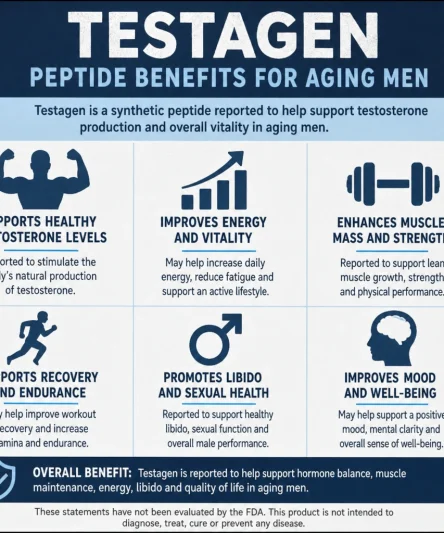
The name points at testosterone and the molecule does not. Testagen is H-Lys-Glu-Asp-Gly-OH, a synthetic tetrapeptide assigned to the reproductive tissue group in Khavinson’s organ-mapping scheme. It is not a steroid, not a steroid precursor, and not a secretagogue for any pituitary hormone. Nothing in four residues of lysine, glutamate, aspartate and glycine resembles anything that binds an androgen receptor.
The published work on this synthetic peptide is a small in-house body describing histological changes in gonadal tissue in ageing rats and altered gene expression in cell preparations. Reported effects on testosterone production are indirect and come from tissue-level measurements in those rodent studies. Testosterone production was inferred from tissue appearance, and serum testosterone levels were not the measured endpoint. No study has measured testosterone levels in a human given the Testagen peptide, and no pharmacokinetic data exists in any species. Claims about reproductive function rest on rodent histology.
The HPG axis is the machinery those claims implicitly invoke. Gonadotropin-releasing hormone from the hypothalamus drives the pituitary gland to release luteinising hormone and follicle-stimulating hormone, and luteinising hormone drives the testes to make the hormone. A compound acting on that axis would show a measurable change at one of those steps. No published study of KEDG reports a measurement at any of them, so the HPG axis appears in descriptions of this compound as context rather than as evidence.
Testagen Is Not TRT, and It Is Not a SARM
Three separate things get grouped under the same search results, and only one of them is a medicine. Testosterone replacement therapy uses the hormone itself, in approved gels, patches, injections and pellets, prescribed for men with diagnosed hypogonadism confirmed on repeat morning blood draws. TRT has a label, a monitoring schedule and a documented risk profile that includes polycythaemia, suppression of spermatogenesis, and worsening of sleep apnoea. Low testosterone as a clinical diagnosis belongs to that pathway, not to a research peptide.
SARMs are the second group, and they are drugs rather than peptides. Selective androgen receptor modulators such as ostarine and ligandrol are small non-steroidal molecules designed to bind the androgen receptor with tissue selectivity. None is approved for any indication, several have been the subject of FDA warning letters about products marketed as supplements, and they carry documented hepatotoxicity signals. Such a compound is a synthetic drug candidate with a defined receptor target. This tetrapeptide is neither, and the side effects reported for that class and for TRT belong to those compounds.
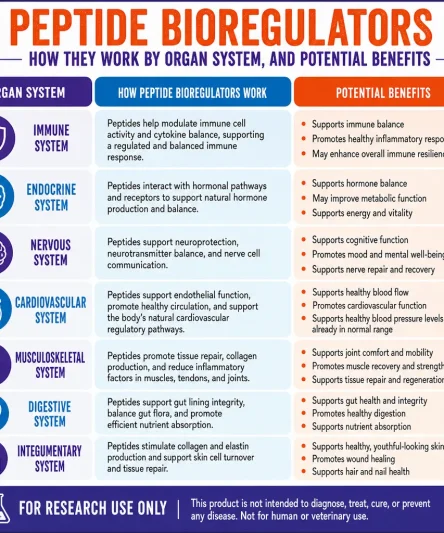
The third group is the Khavinson peptides themselves, of which this is one. Peptide bioregulators of this kind share one claim, regulation of gene expression in an assigned tissue, and one evidentiary position, which is a small literature from one programme. Peptide therapy providers who list a research peptide beside TRT are presenting three different regulatory categories as one menu. Thyroid function, thyroid-stimulating hormone and the rest of the endocrine vocabulary that attaches to this name in search results has no published connection to KEDG at all.
What Should the CoA and the Product Record State?
For any research preparation the certificate is the only document that describes the material in hand. Ask for the lot-specific CoA rather than a representative one, and check that it names H-Lys-Glu-Asp-Gly-OH as the target sequence, states purity with the chromatographic gradient described, gives an accurate mass, and reports the counter-ion percentage. Solubility should be stated too: KEDG is small, doubly charged and freely water-soluble, so a solubility figure that suggests otherwise is a flag about the salt form or about the material.
Format changes the rest. A Testagen 20mg vial arrives as a lyophilized powder, is reconstituted at the bench with bacteriostatic water, and its CoA describes the solid. This device arrives as a solution at 10/3 mg/ml, which fixes the concentration and starts a clock. Its certificate should state concentration, pH, excipient system and fill date, none of which are on the product record now. A peptide in solution ages from the day it was filled, not the day it arrived.
Regulatory position is short. No approved product contains this peptide in the United States, and no other regulator has approved it either. It is supplied research use only, and research use only is a legal status rather than a disclaimer, meaning the material may not be given to humans or animals. Side effects have never been catalogued for KEDG because no study has been designed to catalogue them, and no peptide bioregulators in this family have a toxicology package behind them.
Published Literature
Each reference below was confirmed against the publisher record during research for this page. Four of the six are avian studies, which is the shape of the evidence base.
- Khavinson VK, Popovich IG, Linkova NS, et al. Peptide regulation of gene expression: a systematic review. Molecules. 2021;26(22):7053. DOI: 10.3390/molecules26227053
- Kuznik BI, Pateyuk AV, Rusaeva NS. Effect of tetrapeptides Lys-Glu-Asp-Gly and Ala-Glu-Asp-Gly on the structure and function of the thyroid gland in neonatally hypophysectomized chickens. Bulletin of Experimental Biology and Medicine. 2008;145(1):104-107. DOI: 10.1007/s10517-008-0033-6
- Kuznik BI, Pateyuk AV, Rusaeva NS, et al. Effects of peptides Lys-Glu-Asp-Gly and Ala-Glu-Asp-Gly on hormonal activity and structure of the thyroid gland in hypophysectomized young chickens and old hens. Bulletin of Experimental Biology and Medicine. 2011;150(4):495-499. DOI: 10.1007/s10517-011-1177-3
- Pateyuk AV, Baranchugova LM, Rusaeva NS, et al. Effect of peptides Lys-Glu-Asp-Gly and Ala-Glu-Asp-Gly on the morphology of the thymus in hypophysectomized young and old birds. Bulletin of Experimental Biology and Medicine. 2013;154(5):681-685. DOI: 10.1007/s10517-013-2029-0
- Rossikhin VV, Hoshchenko YuO, Osipov PG. Efficacy of testosterone synthesis inductor application “Testagen” in androgenic deficiency in patients with chronic abacterial prostatitis. Problems of Endocrine Pathology. 2011;36(2):17-22. DOI: 10.21856/j-PEP.2011.2.03
- Geiger T, Clarke S. Deamidation, isomerization, and racemization at asparaginyl and aspartyl residues in peptides. Succinimide-linked reactions that contribute to protein degradation. Journal of Biological Chemistry. 1987;262(2):785-794. DOI: 10.1016/S0021-9258(19)75855-4
- Goolcharran C, Borchardt RT. Kinetics of diketopiperazine formation using model peptides. Journal of Pharmaceutical Sciences. 1998;87(3):283-288. DOI: 10.1021/js970325m
Frequently Asked Questions
What is the Testagen pen?
A preloaded 3ml research autoinjector holding the tetrapeptide Lys-Glu-Asp-Gly in solution at 10/3 mg/ml, giving 10mg in the device. No reconstitution is needed. Nothing containing this sequence is approved as a medicine anywhere; Russian marketing has been as a dietary supplement in capsule form.
Does Testagen come in a pen?
As a research preparation, yes, and this device is one. As an approved or registered medicine, no, because no such product exists in any format. A pen, a vial, a nasal spray and a capsule of the same nominal compound present four different stability and exposure problems.
What degrades first in solution?
The Asp3-Gly4 pair. The glycine backbone nitrogen attacks the aspartate side-chain carbonyl to form a succinimide ring, which reopens to roughly three parts isoaspartyl peptide and one part aspartyl peptide. Geiger and Clarke established in 1987 that Asx-Gly is the most reactive motif for this reaction.
Why can mass spectrometry not certify the contents?
Because isoaspartate has the same molecular formula and the same mass as the parent residue. A certificate can report accurate identity at 447.1965 monoisotopic and accurate purity by area percent while the material has partly rearranged. The isomer differs by one methylene in the backbone and by nothing an ordinary mass measurement can see.
How would isoaspartate actually be detected?
By a method designed for it. A shallow reversed-phase gradient can resolve the isoaspartyl peak from the parent if the column and conditions are chosen for that purpose. The specific alternative is an enzymatic assay using protein isoaspartyl methyltransferase, which methylates only the isomer and is standard in protein pharmaceutical characterisation.
What does the device deliver per 0.01 ml increment?
10 times 3.33 microgram; at 0.1 ml it is ten times that. At a 10 mg fill that is 3.33 mg/ml, 33.3 microgram per increment and a molar concentration of 7.45 mM, calculated on the molecular weight of 447.44.
Why is ultraviolet quantification unavailable?
Because the sequence contains no tryptophan, tyrosine or histidine, so there is no chromophore above 230 nm. HPLC purity must run at 210 to 220 nm where the peptide bond absorbs weakly and buffer components interfere, or use charged-aerosol or evaporative light-scattering detection for a mass-based figure.
How does the testagen pen vs vial choice look?
A dry cake of this tetrapeptide is chemically quiet because aspartimide formation needs water and molecular mobility. A pen starts that clock at the fill line and never stops it. The pen suits work concentrated into a short window after receipt; the vial suits material that would sit for months.
What does testagen pen storage require?
2-8°C, protected from light, never frozen. Refrigeration is the intervention that acts on the isoaspartate route, which is thermally driven. Light protection is precautionary, since nothing in the sequence absorbs above 230 nm. Freezing is prohibited because freeze-concentration drives pH excursions that shift the succinimide equilibrium.
What is known about testagen solution stability?
The dominant route is known and its rate has never been measured for this sequence. No forced-degradation or shelf-life study of KEDG has been published at any concentration. Since the endpoint is mass-silent, a purity certificate cannot substitute for that missing data, and elapsed time in solution should be logged as a variable.
Which excipient details are worth requesting?
Buffer identity, pH, salt form and whether any sugar is present. The sugar question matters because the lysine epsilon-amine forms Maillard adducts with reducing sugars. The pH matters because succinimide formation is favoured on the acidic side while imide hydrolysis is accelerated by base.
What has this sequence actually been studied in?
Birds. Kuznik, Pateyuk and colleagues published between 2008 and 2013 on hypophysectomised chickens and old hens, with thyroid hormone concentrations, thyroid structure and thymus morphology as endpoints. All the work comes from one group, and none of the abstracts states a dose. No mammalian efficacy study was located.
Where does the name come from, if not the testis?
From the product line rather than the primary papers. Those papers describe Lys-Glu-Asp-Gly as designed from the amino acid composition of anterior-pituitary extract, with Ala-Glu-Asp-Gly derived from the posterior lobe. No published study characterises an action on Leydig cells, steroidogenic enzymes or androgen receptors.
What did the single human report find?
Rossikhin and colleagues studied 36 men with chronic abacterial prostatitis and androgen deficiency for one month in 2011, adding this compound to standard therapy; serum total testosterone rose and uroflowmetry and inflammation measures improved. There was no control group, and the abstract states no dose, formulation or route.
How does it differ from Epithalon and Pancragen?
By one residue in each case. Epithalon is Ala-Glu-Asp-Gly, differing only at the N-terminus, and Pancragen is Lys-Glu-Asp-Trp, differing only at the C-terminus. The family is a combinatorial set around a Glu-Asp centre, which is why sequence confirmation on a certificate is worth reading closely.
What is the regulatory and anti-doping position?
Unapproved everywhere, with Russian marketing as a dietary supplement in capsules. Not on the WADA 2026 Prohibited List, since no class covers an acidic tetrapeptide without demonstrated hormonal activity. Not on the FDA 503B category lists of 21 March 2025, no USP monograph, and not eligible under section 503A.
Does Testagen raise testosterone?
No published study has measured serum testosterone levels in a human given this peptide. Reported effects on production come from tissue-level measurements in small rodent studies from one research group. KEDG is not a steroid or a secretagogue, and nothing in its four residues resembles an androgen receptor ligand.
How does this peptide relate to the HPG axis?
As context rather than evidence. Gonadotropin-releasing hormone drives the pituitary gland to release luteinising and follicle-stimulating hormone, and luteinising hormone drives the testes to produce it. A compound acting on that axis would produce a measurable change at one of those steps, and no published study of this tetrapeptide reports a measurement at any of them.
Is Testagen the same as TRT or a SARM?
No, and the three are different categories. Testosterone replacement therapy uses testosterone in approved formulations for diagnosed hypogonadism, with a label and a documented risk profile. SARMs are non-steroidal androgen receptor ligands, none FDA-approved, several the subject of warning letters and hepatotoxicity signals. Low testosterone as a diagnosis belongs to the first pathway. This is a research peptide and neither.
What should the certificate of analysis show?
The target sequence named as H-Lys-Glu-Asp-Gly-OH, purity with the HPLC gradient described, an accurate mass, counter-ion percentage and solubility. A Testagen 20mg vial ships as lyophilized powder and its certificate describes a solid; this pen ships as solution and its certificate should add concentration, pH, excipients and fill date, none of which is on the product record.
What is the regulatory position and the side effect record?
No FDA-approved product contains this peptide and no other regulator has approved it. It is supplied research use only, which is a legal status rather than a disclaimer: the material may not be given to humans or animals. Side effects have never been catalogued because no study was designed to catalogue them, and none of the Khavinson peptides has a toxicology package.
Compliance Statement
The Testagen pen is sold exclusively for laboratory research use. It is not a drug, food, or cosmetic product, and it is not a dietary product of any kind. It is not approved by the FDA or any comparable authority for human or veterinary use. This product is not intended to diagnose, treat, cure, or prevent any disease. It must not be given to humans or animals. Purchase is restricted to qualified researchers and institutions operating within applicable laws. All handling is the responsibility of the purchasing laboratory.


Reviews
There are no reviews yet.