15% fall discount applied automatically at checkoutFree USA shipping over $100Free worldwide shipping over $200Credit/debit checkout disabled for updates
Sign in 0

Preloaded Autoinjector | Epithalon | 3ml Pen | 15mg

$69.99 or subscribe for $59.49/mo

Epithalon from PrymaLab is a research-use-only compound supplied in a preloaded 3ml autoinjector pen at 15/3 mg/ml for laboratory study, with no reconstitution step. The C-terminal Asp-Gly pair isomerises to isoaspartate without any change in mass, so the fill date on the epithalon pen tells a purchaser more than a mass-spectrometry identity check does.

Description

PrymaLab · Research Use Only

Preloaded Autoinjector | Epithalon | 3ml Pen | 15mg

Pineal tetrapeptide AEDG in solution · 3ml at 15/3 mg/ml · No reconstitution step

The epithalon pen is a preloaded 3ml research autoinjector containing the tetrapeptide Ala-Glu-Asp-Gly in solution at 15/3 mg/ml, giving 15mg of peptide per device. The C-terminal Asp-Gly pair is the fastest succinimide-forming aspartyl sequence known, and its main degradation product weighs exactly what the parent weighs, so the fill date on this device carries more information than a mass-spectrometry identity check.

Specification Table

Epithalon autoinjector device and compound data
Property Value
Device format Preloaded autoinjector pen, glass cartridge
Fill volume 3 ml
Concentration 15/3 mg/ml
Total compound in device 15 mg
Molar concentration 15 x 0.854 mM (a 10 mg fill is 8.54 mM)
Compound Epithalon (Epitalon), L-alanyl-L-alpha-glutamyl-L-alpha-aspartyl-glycine
CAS number 307297-39-8 (free peptide)
Molecular formula C14H22N4O9
Molecular weight 390.35 g/mol average; 390.14 Da monoisotopic
Amino acid sequence Ala-Glu-Asp-Gly (AEDG), linear, free N-terminal amine, free C-terminal acid
Solution appearance Clear and colourless expected; no chromophore above about 220 nm
Reconstitution required None. Supplied as solution
Excipient system Not published on the product record. Confirm against certificate of analysis
Solution pH Not published on the product record
Storage 2-8°C, protected from light. Do not freeze
Light sensitivity Low. No aromatic residue; protection is good practice, not a mechanistic need
Solution stability Not established over device shelf life in published data
Succinimide site Asp3-Gly4. Forms isoaspartate with no change in mass
Salt form Acetate or trifluoroacetate typical. Not published on the product record
Net charge at pH 7 About -2 (modelled, Sinjari 2020; not measured)
Purity Per lot-specific certificate of analysis
Regulatory status No approved product in any jurisdiction. PCAC vote of 24 July 2026 (7 yes, 4 no, 1 abstain) is advisory only

What Changes When Epithalon Ships in Solution?

Once Ala-Glu-Asp-Gly is dissolved, the aspartate at position 3 starts cyclising onto the backbone nitrogen of the glycine beside it, and the product, isoaspartyl AEDG, has the same formula and the same 390.35 g/mol mass as the intact peptide.

The mechanism is the aminosuccinyl route. The amide nitrogen of Gly4 attacks the side-chain carbonyl of Asp3, closing a five-membered succinimide ring and expelling water. Water then reopens the ring at either carbonyl: one opening regenerates the alpha-linked aspartate, the other gives beta-linked isoaspartate, in which the backbone now runs through the former side chain. The split is typically about 3:1 in favour of the isoaspartyl form, and the ring racemises at the alpha carbon, so some D-aspartate appears as well. Every one of those products is still C14H22N4O9.

Glycine is why this peptide ranks where it does. Stephenson and Clarke (1989) measured imide formation in Val-Tyr-Pro-X-Y-Ala hexapeptides at pH 7.4 and found that a glycine after aspartate or asparagine accelerated ring closure 6.5 to 17.6-fold relative to alanine, because glycine has no side chain to block the approach. Asparagine cyclised 13 to 36 times faster than aspartate in the same study, so Asp-Gly is the fastest aspartyl pair rather than the fastest pair outright. AEDG contains no asparagine, which is the one favourable fact in its sequence.

Formulation pH decides which product accumulates. Oliyai and Borchardt (1993) followed an Asp-Gly model hexapeptide across the pH range and found three regimes: below pH 3, direct hydrolysis of the Asp-Gly bond dominates, cutting off glycine and leaving Ala-Glu-Asp at about 333 Da; between pH 4 and 5, hydrolysis and isomerisation run in parallel; above pH 6, isomerisation is the only product. A near-neutral fill accumulates an invisible degradant. An acidic fill accumulates a visible one. Neither pH is on the product record.

Mass silence is the operational consequence. An LC-MS identity check reporting 390.1 is consistent with an entirely intact fill and with a fill in which a large fraction has isomerised. Separating the two needs a reversed-phase gradient shallow enough to resolve the isomer, or an enzymatic assay based on protein L-isoaspartyl methyltransferase, and neither is part of a routine certificate. Fill date, storage temperature and formulation pH are the three numbers from which the isoaspartate fraction could be estimated, and only the temperature is under the purchaser’s control, which is why the fill date counts for more on the epithalon pen than on most pens.

The remaining routes are minor. The free N-terminal alanine could close a diketopiperazine with Glu2, but Goolcharran and Borchardt (1998) found that reaction slow unless residue 2 is proline or glycine, and it is unmeasured for AEDG. There is no methionine, tryptophan, cysteine, histidine or tyrosine, so oxidation has nothing to attack and light has nothing to excite above about 220 nm. No approved product exists to borrow a formulation from, and Araj and colleagues (2025) state that physico-chemical investigations of the peptide “remain quite limited”: no study of epitalon solution stability exists, so every shelf-life statement rests on model-peptide kinetics.

What Is Epithalon?

Epithalon is the synthetic tetrapeptide Ala-Glu-Asp-Gly, designed by the Khavinson group in St Petersburg as a defined replacement for Epithalamin, a bovine pineal extract, and sold under the spellings Epitalon, Epithalon and Epithalone.

Four L-residues, a free amine at the alanine end, a free acid at the glycine end, no modification of any kind. Average molecular weight 390.35 g/mol, monoisotopic mass 390.14 Da, calculated XLogP3 of -5.5, modelled net charge about -2 at pH 7. No receptor has been identified; the group proposes nuclear entry and epigenetic regulation of about 98 genes, including Clock, Cry2, p16, p21 and TERT.

The extract and the tetrapeptide are not interchangeable, and the human cohort data belong to the extract. So the answer to what is epithalon, for this cartridge, is the four-residue molecule and nothing inherited from Epithalamin.

How Concentrated Is the Epithalon Pen?

At 15mg in 3 ml the concentration is 15/3 mg/ml, the molar concentration is 15 x 0.854 mM, and each 0.01 ml increment carries 15/300 mg of peptide, so a 10 mg fill delivers 33.3 ug per increment.

For a 10 mg fill: 3.333 mg/ml, divided by 390.35 g/mol and multiplied by 1000, is 8.54 mM or 8,539 uM. One 0.01 ml increment is 33.3 ug, or 85.4 nmol; ten increments (0.1 ml) deliver 333 ug.

Those figures sit far from the published assays. Sinjari and colleagues (2020) used 0.01 ug/ml, which is 25.6 nM, and the wider in-vitro range of 2 to 200 ng/ml is 5 to 512 nM. A 10 mg fill at 8.54 mM is about 334,000-fold above the Sinjari concentration. Anisimov’s mice received 10 ug/ml in saline, so the same fill is 333-fold more concentrated than the lifespan-study solution, and one 0.01 ml increment holds 33 times the 1.0 ug a single mouse received.

One number constrains 15. The only published solubility figure is 5 mg/ml for the trifluoroacetate salt in PBS at pH 7.2 (Cayman); nothing in plain water was found. A 15 mg fill in 3 ml sits exactly at that figure, and anything above it depends on an excipient system the record does not describe. The peptide calculator does the serial-dilution conversions.

Epithalon Pen vs Vial: What Does the Format Suit?

The epithalon pen suits repeated same-lot draws where the alternative is reconstituting a lyophilized vial each time, and it suits long storage after purchase poorly, because the succinimide clock runs from the fill line rather than from the first draw.

In the Epitalon 10mg lyophilized vial the Asp-Gly bond is quiet until diluent goes in, so a solution reconstituted on the morning of an experiment has an age known to the hour. The pen swaps that for a concentration fixed at manufacture and no diluent-volume, dissolution or transfer error, the trade the pen versus vial article works through in general terms.

For this molecule the trade tilts by application. Many equivalent draws over a few weeks, with the isoaspartate fraction taken as a constant background, favour the pen; a study running for months, or one needing a known isoaspartate fraction at the moment of use, favours a vial opened fresh. The preloaded autoinjector category page covers graduation resolution and cold-chain history; with a nasal spray also listed, the epithalon pen vs vial decision is a three-way one here.

What the Product Record Does Not State

Five things are absent from the epithalon pen product record: the salt form, the formulation pH, the excipient system, the fill date, and any measured isoaspartate content at release or over shelf life.

The salt form changes how much peptide a milligram holds. AEDG is sold as the acetate or the trifluoroacetate, and one TFA counterion adds 114 Da to a 390 Da peptide, so up to 22.6 percent of a weighed milligram could be counterion. Whether 15mg means net peptide or gross salt is a certificate question.

The pH decides which degradant forms, as set out above, and is not published. Nor is the excipient system, and for a peptide carrying a net charge of about -2 the buffer species and ionic strength both follow it into any assay. The fill date is the number from which the solution’s age, and so its expected isoaspartate fraction, would be estimated. Confirm against certificate of analysis.

Verifying the Epithalon Pen Before Use

Inspect the solution against a dark and then a white background before each draw: it should be clear and colourless with no particulate, and because AEDG has no aromatic residue, clarity is the only visual handle the device gives.

Let the cartridge reach room temperature before actuating, since a cold, more viscous solution delivers a different volume through a spring mechanism, and verify delivered volume once per device gravimetrically. What follows is specific to this peptide.

There is no absorbance at 280 nm. With no tryptophan or tyrosine, the peptide bond is the only chromophore and detection has to run at 210 to 220 nm, where excipients with carbonyl groups also absorb, so a UV concentration check needs a matched blank the record does not enable. Mass spectrometry sees glycine loss at about 333 Da and misses isoaspartyl AEDG, which sits on the parent at 390. Resolving it takes a shallow reversed-phase gradient run against a same-day reference reconstituted from a lyophilized vial, or a protein L-isoaspartyl methyltransferase assay. A device weeks into use, in an experiment whose result depends on epitalon solution stability, is where either measurement earns its cost.

Fibril checks rank low. Nothing reports aggregation of this tiny, anionic, hydrophilic molecule. The one scenario worth watching is a fill near the 5 mg/ml solubility figure cooled to 2°C, where precipitation would show as haze before it showed as a lower delivered mass.

What Does the Epithalon Literature Actually Report?

The synthetic tetrapeptide has one telomerase paper, two rodent lifespan studies, a handful of in-vitro gene-expression papers and no controlled human trial, and nearly all of it comes from one St Petersburg institute and its collaborators.

Khavinson, Bondarev and Butyugov (2003) reported that AEDG induced expression of the telomerase catalytic subunit, telomerase activity and telomere elongation in telomerase-negative human fetal fibroblasts. That paper is behind every telomere claim attached to the molecule and has not been independently replicated in the 23 years since.

Anisimov and colleagues (2003) gave female SHR mice 1.0 ug subcutaneously on five consecutive days each month from age 3 months, 54 per group. Mean lifespan did not change. Maximum lifespan rose 12.3 percent and the last 10 percent of survivors lived 13.3 percent longer (P < 0.01); leukaemia incidence was 6-fold lower and bone-marrow chromosome aberrations 17.1 percent lower. Vinogradova and colleagues (2008) gave male rats 0.1 ug subcutaneously five times a week for life under three lighting regimens and found no mean-lifespan gain and fewer spontaneous tumours. Khavinson (2000) reported extended lifespan in Drosophila.

The cell and tissue work adds mechanism without a receptor. Djeridane (2003) reported restored melatonin secretion in pineal explants from aged rats; Sinjari and colleagues (2020) reported 1.6 to 1.8-fold rises in nestin, GAP43, beta-tubulin III and doublecortin in human gingival mesenchymal stem cells at 0.01 ug/ml, with docking models placing the peptide on linker histones H1/3 and H1/6.

Human data belong to the extract. Khavinson and Morozov (2003) followed 266 people over 60 for 6 to 8 years after 2 to 3 years of Epithalamin and/or Thymalin and reported mortality 1.6 to 1.8-fold lower with the extract alone and 4.1-fold lower after six annual combined courses, in an open, non-randomised design. No randomised trial of synthetic AEDG was identified, and FDA’s 2026 reviewers called the human studies “short in duration, small in sample size, and insufficient to establish safety or effectiveness”. Unstudied: pharmacokinetics in any species, toxicology, independent replication of the telomerase result, and solution stability. The telomerase and telomere research article covers the fibroblast data in more detail.

Pinealon vs Epitalon: What Is the Difference?

Pinealon is the tripeptide Glu-Asp-Arg (EDR) and Epitalon is the tetrapeptide Ala-Glu-Asp-Gly (AEDG); both come from the Khavinson group, but only AEDG carries the telomerase and lifespan literature, and only AEDG has the fast Asp-Gly succinimide site.

EDR has a molecular weight of about 418.4 g/mol against 390.35, and its arginine brings the net charge near -1 at pH 7 where AEDG sits near -2. In EDR the aspartate is followed by arginine, whose side chain slows ring closure relative to glycine, so the same succinimide route exists but runs slower, which makes the aedg vs edr peptide contrast a stability contrast as well as a sequence one. The names mislead: Pinealon is marketed for brain-tissue research despite the pineal in its name, while Epitalon is the one designed from pineal extract. Most searches for pinealon vs epitalon are naming confusion; the difference between pinealon and epitalon in evidence terms is that AEDG has rodent lifespan and telomerase papers and EDR has neither. Neither peptide has a receptor, a pharmacokinetic study or a controlled human trial.

What Is the Safety and Regulatory Position of Epithalon?

No regulator has approved AEDG in any form: nothing appears in Drugs@FDA, the EMA register, PMDA, TGA or Health Canada, and the 24 July 2026 US advisory committee vote in its favour is a recommendation, not a rule.

FDA placed the peptide in Category 2 of the interim 503A bulk drug substances list on 29 September 2023 and removed it, effective 22 April 2026, pending advisory review. At the Pharmacy Compounding Advisory Committee meeting of 24 July 2026, under docket FDA-2025-N-6895 with insomnia as the nominated use, the committee voted 7 yes, 4 no and 1 abstention to recommend inclusion, against FDA’s own recommendation. No rulemaking has followed and the peptide is not on the 503A list. Russian status could not be verified, and the peptide was not found by name on the WADA Prohibited List, which should be confirmed against the current document.

Adverse findings are absent rather than reassuring. The rodent studies reported none, and FDA’s reviewers judged the safety database insufficient rather than identifying a harm. Telomerase activation is a theoretical oncology concern for any compound with the 2003 fibroblast result attached to it; the mouse and rat studies reported fewer tumours, not more, which is the only tumour data there is. No toxicology and no pharmacokinetics exist in any species.

What Do the Four Residues in the AEDG Peptide Contribute?

Two of the four side chains in the AEDG peptide carry a negative charge at neutral pH, and both come from acidic amino acids. Position 2 is glutamic acid, which contributes a three-carbon side chain ending in a carboxylate. Position 3 is aspartic acid, one carbon shorter, and that single missing carbon is the whole reason this molecule is unstable in water: the shorter arm can reach the backbone nitrogen next to it and close a ring, while the glutamic acid arm cannot reach comfortably and largely does not try.

Alanine at position 1 leaves a free amine at the N-terminus. Glycine at position 4 leaves a free acid at the C-terminus and, having no side chain of its own, gets out of the way of the aspartate beside it. So the sequence is short, doubly charged, wholly hydrophilic, and carries no aromatic ring anywhere along it. That last fact is why the solution is expected to look like water and why no absorbance check at 280 nm can confirm what is in the cartridge.

Why Is Epithalon Tied to the Pineal Gland and Melatonin?

The connection is historical rather than structural. Epithalamin, the starting point for this work, was an extract of bovine pineal gland prepared at the Institute of Bioregulation and Gerontology in St. Petersburg, and Vladimir Khavinson’s group synthesised AEDG as a defined four-residue stand-in for whatever in that extract was active. Nothing in the tetrapeptide’s chemistry points at that organ. The association is inherited from the tissue the extract came from.

That inheritance is why melatonin appears in almost every description of the compound. That gland is the body’s main site of melatonin production, so an extract from it was expected to act on the same system, and Khavinson and Morozov (2003) reported restored night-time rhythm in older subjects given the peptide. The measurement was made in a small unblinded cohort and has not been repeated by an independent group. Any statement about circadian regulation from this molecule rests on that single report.

The wider claim, that the peptide restores circadian rhythm or improves sleep quality, has the same problem in a sharper form. Sleep quality was not a measured endpoint in the published rodent work at all, and the human circadian rhythms data comes from the same laboratory that developed the compound. The 2025 FDA nomination named insomnia as the intended use, and FDA’s own reviewers described the supporting evidence as insufficient. Claims about hormonal balance are downstream of the same thin base.

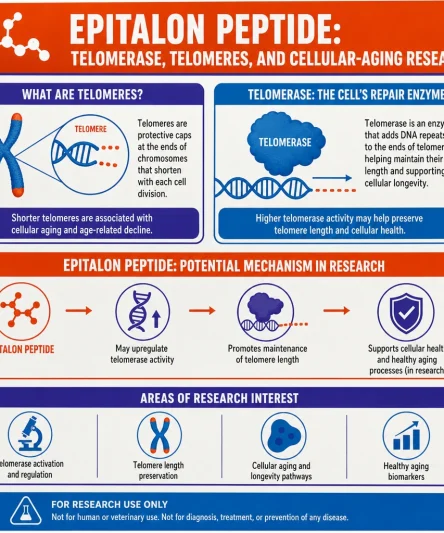
What Do Telomere Length and Cellular Aging Claims Rest On?

One experiment. Khavinson, Bondarev and Butyugov (2003) added the peptide to human fetal fibroblasts in culture and reported telomerase induction with telomere length increasing past the point where the cells would normally have stopped dividing. That is the entire primary basis for every telomere maintenance claim attached to this compound, and it has not been independently replicated in the twenty-two years since.

The rodent work is separate and does not measure telomeres at all. Anisimov and colleagues (2003) and Vinogradova and colleagues (2008) followed mice and rats given the peptide across their lifespans and reported longer mean survival with fewer spontaneous tumors in the treated groups. Those are colony-level outcomes. Neither study reported cellular senescence markers, telomerase activity in tissue, or any measure of biological age other than how long the animals lived.

This matters for how the cellular aging language should be read. A compound that induces telomerase in a dish and a compound that extends rodent lifespan may be doing the same thing or entirely different things, and no published work connects the two results mechanistically. The anti-aging framing that surrounds the peptide runs ahead of that gap rather than through it. Nothing in the literature measures cellular health in a human given the compound.

What Side Effects Have Been Reported?

None, and that is a statement about the size of the record rather than about the compound. The rodent lifespan studies reported no treatment-related adverse effects. The small human reports from the St. Petersburg group reported none either. No study designed to find side effects has ever been run on this peptide, in any species, at any dose.

What that leaves unaddressed is worth naming. There is no toxicology package and no pharmacokinetic data. Injection site reactions, the most ordinary finding for any subcutaneous injection of a peptide preparation, have never been systematically recorded for AEDG, so their absence from the literature carries no information. The acetate or trifluoroacetate counter-ion in the fill is unstated, and trifluoroacetate has its own local irritancy profile in cell work.

No FDA-approved product contains this peptide. The FDA-approved status of a molecule is what generates a label, and a label is what collects adverse effects at scale over years. Without one, the safety record here is a handful of small studies from a single research group, which is not a safety record.

Is This Peptide Therapy?

No. Peptide therapy is a term used by clinics offering peptide preparations to patients, and it describes a service rather than a class of medicine. This pen is a research preparation supplied for laboratory research, and it is not a treatment for anything.

The distinction has practical weight for anyone reading around the compound. Marketing material for peptide therapy tends to describe protocols, cycles and dosing schedules, none of which exist in the published literature for AEDG. The rodent studies used courses given over months in drinking water or by injection at doses set by the investigators, and the human reports used courses of the parent extract as often as the synthetic tetrapeptide. There is no established protocol to import, which is why this page gives increment arithmetic rather than a schedule.

Delta sleep-inducing peptide, DSIP, is worth separating out here because it appears alongside AEDG in the same clinic lists and the same supplier catalogues. DSIP is a nonapeptide isolated from rabbit cerebral venous blood in 1977 and has no sequence relationship to this tetrapeptide. The two compounds share a nominated use, insomnia, and nothing else. Peptide therapies that list both are grouping by claimed effect, not by chemistry.

Published Literature

The list below was verified against primary indexes; nothing in it concerns a preloaded device.

  1. Khavinson VKh, Bondarev IE, Butyugov AA. Bull Exp Biol Med. 2003;135(6):590-592. DOI: 10.1023/A:1025493705728 PMID: 12937682
  2. Anisimov VN, Khavinson VKh, Popovich IG, et al. Biogerontology. 2003;4(4):193-202. DOI: 10.1023/A:1025114230714
  3. Vinogradova IA, Bukalev AV, Zabezhinski MA, et al. Bull Exp Biol Med. 2008;145(4):472-477. DOI: 10.1007/s10517-008-0121-7
  4. Araj SK, Brzezik J, Madra-Gackowska K, et al. Int J Mol Sci. 2025;26(6):2691. DOI: 10.3390/ijms26062691 PMID: 40141333
  5. Sinjari B, Khavinson V, Diomede F, et al. Molecules. 2020;25(3):609. DOI: 10.3390/molecules25030609
  6. Khavinson VKh, Morozov VG. Neuro Endocrinol Lett. 2003;24(3-4):233-240. PMID: 14523363
  7. Stephenson RC, Clarke S. J Biol Chem. 1989;264(11):6164-6170. DOI: 10.1016/S0021-9258(18)83327-0 PMID: 2703484
  8. Oliyai C, Borchardt RT. Pharm Res. 1993;10(1):95-102. DOI: 10.1023/A:1018981231468

Frequently Asked Questions

What is the epithalon pen?

A preloaded 3ml autoinjector holding the tetrapeptide Ala-Glu-Asp-Gly in solution at 15/3 mg/ml, 15mg in total, with no reconstitution step. It is supplied for laboratory research only. No approved product containing this peptide exists in any jurisdiction, and the July 2026 US advisory committee vote in its favour has not produced a rule.

Why does the Asp-Gly bond matter once the peptide is in solution?

Because glycine has no side chain, the backbone nitrogen of Gly4 reaches the Asp3 side-chain carbonyl easily and closes a succinimide ring. Stephenson and Clarke (1989) measured that as 6.5 to 17.6 times faster than the same reaction with alanine in the glycine position. The ring reopens mostly as isoaspartate, which has the parent’s exact mass.

Has epitalon solution stability been measured?

No. No published study has followed AEDG in solution over time, and the 2025 review by Araj and colleagues describes the physico-chemical work on the peptide as “quite limited”. Every estimate of epitalon degradation in solution therefore comes from model peptides carrying the same Asp-Gly bond, not from the tetrapeptide itself.

What does the formulation pH decide for this peptide?

Which degradant the pen accumulates. Oliyai and Borchardt (1993) found that below pH 3 the Asp-Gly bond hydrolyses, cutting off glycine and leaving a 333 Da tripeptide, while above pH 6 isomerisation to isoaspartate is the only route. Between pH 4 and 5 both run. The product record does not state the pH.

Epithalon pen vs vial: which suits which work?

The pen suits repeated equivalent draws from one lot over a few weeks, with the isoaspartate fraction accepted as a constant background. A lyophilized vial reconstituted on the day suits work that needs a solution of known age or that will run for months. For nanomolar cell assays the dilution arithmetic is identical from either.

How much peptide does each 0.01 ml increment deliver?

15/300 mg, which for a 10 mg fill is 33.3 ug, or 85.4 nmol. Ten increments deliver 15/30 mg, 333 ug at that fill. The smallest increment of a 10 mg pen therefore holds 33 times the 1.0 ug that a single mouse received in the Anisimov 2003 lifespan study.

Can mass spectrometry confirm the contents are intact?

Only partly. It sees glycine loss at about 333 Da and any diketopiperazine products at about 200 and 190 Da, but isoaspartyl AEDG shares the parent’s 390.35 g/mol and appears as the same peak. Confirming the intact fraction needs a resolving reversed-phase HPLC method or a protein L-isoaspartyl methyltransferase assay.

Why is there no UV check at 280 nm?

The sequence contains no tryptophan or tyrosine, so nothing absorbs at 280 nm. Detection has to use the peptide bond at 210 to 220 nm, where buffer components with carbonyl groups also absorb, which makes a concentration estimate by UV depend on an excipient blank the product record does not describe.

Which salt form is in the pen, and does it matter?

The product record does not say; suppliers sell AEDG as the acetate or the trifluoroacetate. One TFA counterion adds 114 Da to a 390 Da peptide, so up to 22.6 percent of a weighed milligram could be counterion. Whether 15mg means net peptide or gross salt is a certificate of analysis question.

How should the device be stored?

Store the epithalon pen at 2 to 8°C, protected from light, and never frozen. Succinimide formation accelerates with temperature, so time spent warm in transit or on a bench counts against this peptide more than against one whose slowest step is something else. Record the fill date and the date of first actuation.

What is epithalon?

The synthetic tetrapeptide Ala-Glu-Asp-Gly, molecular weight 390.35 g/mol, designed by the Khavinson group as a defined replacement for Epithalamin, a bovine pineal extract. The two are not interchangeable: the extract has the human cohort data, the tetrapeptide has the telomerase and rodent lifespan papers. Epitalon, Epithalon and Epithalone are spellings of the same molecule.

Pinealon vs epitalon: what is the difference?

Pinealon is Glu-Asp-Arg, a tripeptide of about 418.4 g/mol marketed for brain-tissue research; Epitalon is Ala-Glu-Asp-Gly, 390.35 g/mol, designed from pineal extract. Only AEDG has the telomerase and lifespan papers. In solution, arginine after aspartate slows succinimide formation relative to glycine, so epitalon vs pinealon is also a stability contrast.

What human evidence exists for the tetrapeptide?

None from a controlled trial. The 266-person cohort in Khavinson and Morozov (2003) received Epithalamin extract, not synthetic AEDG, in an open, non-randomised design. FDA’s 2026 reviewers called the available human studies short, small and insufficient to establish safety or effectiveness. No registered clinical study of the synthetic peptide was identified.

Has the telomerase result been replicated independently?

No. The 2003 report of telomerase activity and telomere elongation in telomerase-negative human fetal fibroblasts comes from the Khavinson group, and no laboratory outside that institute or its collaborators has published a replication since. Docking models in Sinjari 2020 propose binding to linker histones H1/3 and H1/6, which is a hypothesis rather than a measured mechanism.

What did the FDA advisory committee vote in 2026?

On 24 July 2026 the Pharmacy Compounding Advisory Committee voted 7 yes, 4 no and 1 abstention to recommend adding the peptide to the 503A bulks list, nominated for insomnia under docket FDA-2025-N-6895, against FDA’s recommendation. The vote is advisory. FDA had listed it in Category 2 on 29 September 2023 and removed it on 22 April 2026.

Is epithalon approved anywhere?

No. Nothing appears in Drugs@FDA, the EMA register, PMDA, TGA or Health Canada, and the Russian status of the synthetic peptide could not be verified. It was not found by name on the WADA Prohibited List, which should be confirmed against the current document. This research preparation is not a medicine in any jurisdiction.

Which amino acids make up this tetrapeptide?

Alanine, glutamic acid, aspartic acid and glycine, in that order. Two of the four side chains are acidic, which gives the molecule a net charge of about -2 at neutral pH, and none of the four is aromatic, which is why the solution has no useful absorbance above 220 nm.

Why is this peptide associated with the pineal gland?

The tetrapeptide was synthesised as a defined replacement for epithalamin, a bovine pineal gland extract, so the association is inherited from the source tissue rather than from the chemistry. Khavinson and Morozov (2003) reported restored night-time melatonin production in a small unblinded group. No independent laboratory has repeated that measurement.

What evidence supports the telomere length claims?

A single 2003 cell-culture experiment in human fetal fibroblasts, reporting telomerase induction and telomere lengthening past the normal division limit. It has not been independently replicated. The rodent lifespan studies that report fewer spontaneous tumors did not measure telomeres or cellular senescence at all, so the telomere maintenance result and the lifespan result are not connected by any published mechanism.

What side effects have been reported for epithalon?

None have been reported, but no study has ever been designed to find them. There is no toxicology and no pharmacokinetics in any species, and injection site reactions have never been systematically recorded for subcutaneous injection of this peptide. An absent adverse effects record from a handful of small studies is not the same as a clean one.

Is epithalon peptide therapy, and how does it relate to DSIP?

No. Peptide therapy describes a clinic service, not a class of medicine, and this pen is supplied for laboratory research only. DSIP is a nonapeptide from a 1977 rabbit blood isolation with no sequence relationship to AEDG. Peptide therapies that list the two together are grouping by nominated use, insomnia, rather than by chemistry.

Compliance Statement

The Epithalon pen is sold exclusively for laboratory research use. It is not a drug, food, or cosmetic product, and it is not a dietary product of any kind. It is not approved by the FDA or any comparable authority for human or veterinary use. This product is not intended to diagnose, treat, cure, or prevent any disease. It must not be given to humans or animals. Purchase is restricted to qualified researchers and institutions operating within applicable laws. All handling is the responsibility of the purchasing laboratory.

Other formats of Epithalon

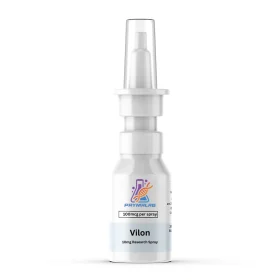
Epithalon is also stocked as Epitalon 10mg Nasal Spray and Epitalon 50mg. Each listing states its own quantity and concentration, and the pen and vial comparison explains what changes between formats.
Additional information

Weight N/A
Dimensions N/A

Reviews

There are no reviews yet.

Only logged in customers who have purchased this product may leave a review.

Peptide Research Articles

Bacteriostatic water depiction

Bacteriostatic Water Peptide Science: Why It Matters in Reconstitution & Research

Bacteriostatic water peptide science is the foundation of safe, accurate peptide reconstitution. This 2026 guide covers bacteriostatic water composition, how to reconstitute peptides using a peptide reconstitution calculator and peptide dosage calculator, bacteriostatic water vs sterile water differences, peptide storage best practices, and a 10-step reconstitution protocol. Expert insights from PrymaLab.

wolverine blend article vial

Peptides for Injury Recovery: The Wolverine Stack Peptide Guide (BPC-157 + TB-500)

The Wolverine stack peptide combines BPC-157 and TB-500 for research into tendon, ligament, and joint recovery. This 2026 guide covers BPC-157 peptide where to buy responsibly, BPC 157 peptide side effects, peptides for tendon repair, peptides for joint recovery, peptides for elbow pain, and the BPC-157 TB-500 peptide blend scientific research. Expert insights from PrymaLab.

are peptides healthy

Are Peptides Good for You? A Complete 2026 Guide

Are peptides good for you? This comprehensive 2026 guide explores peptide therapy benefits, safety, side effects, and how peptides work in the body. Learn about peptide health benefits, research findings, and what you need to know before considering peptide therapy. Expert insights from PrymaLab.

Ovagen peptide capsules for liver health with dosage cycling chart showing 10-20 day protocols repeated 2-3 times per year

Ovagen Peptide Guide: Uses, Research, Safety & Buying Info

Ovagen peptide is a short-chain liver bioregulator developed at the St. Petersburg Institute of Bioregulation and Gerontology under Professor Vladimir Khavinson. It contains the AC-3 peptide complex (glutamic acid and aspartic acid) designed to target hepatocyte gene expression for liver cell repair, bile production, and detoxification. This guide covers dosing protocols, cycling schedules, side effects, a head-to-head comparison with NAC, milk thistle, TUDCA, and BPC-157, cost analysis ($120-360 per year), and how to verify genuine Ovagen products online.

GHK-Cu peptide vial and syringe with dosage chart showing injection protocols for skin rejuvenation and hair growth

GHK-Cu Peptide: Benefits, Dosage, Side Effects & Complete Research Guide (2026)

GHK-Cu peptide is a naturally occurring copper tripeptide that modulates over 4,000 human genes involved in collagen synthesis, wound healing, and tissue regeneration. This comprehensive guide covers injection dosage protocols, clinical research on skin rejuvenation and hair growth, side effects, safety data, and how to reconstitute GHK-Cu 50mg vials. Includes dosage charts, comparison tables, and 10 frequently asked questions answered by a peptide research specialist.

Sermorelin dosage guide for anti-aging muscle growth and weight loss showing GHRH analog pituitary stimulation

Sermorelin Dosage Guide 2025: Complete Protocol for Anti-Aging, Muscle Growth & Weight Loss

Sermorelin acetate is a growth hormone-releasing hormone (GHRH) analog that stimulates natural GH production from the pituitary gland. This comprehensive dosage guide covers protocols for anti-aging, muscle growth, weight loss, and sleep optimization — along with side effects, before-and-after timelines, and comparisons to HGH and ipamorelin.

24/7 Online support

support@prymalab.net info@prymalab.net

Money back guarantee

30 Day return window. Satisfaction guaranteed or your money back.

FREE shipping and return

All orders over %150 in value will receive free shipping.