
15% fall discount applied automatically at checkoutFree USA shipping over $100Free worldwide shipping over $200Credit/debit checkout disabled for updates
Sign in 0
Sale!

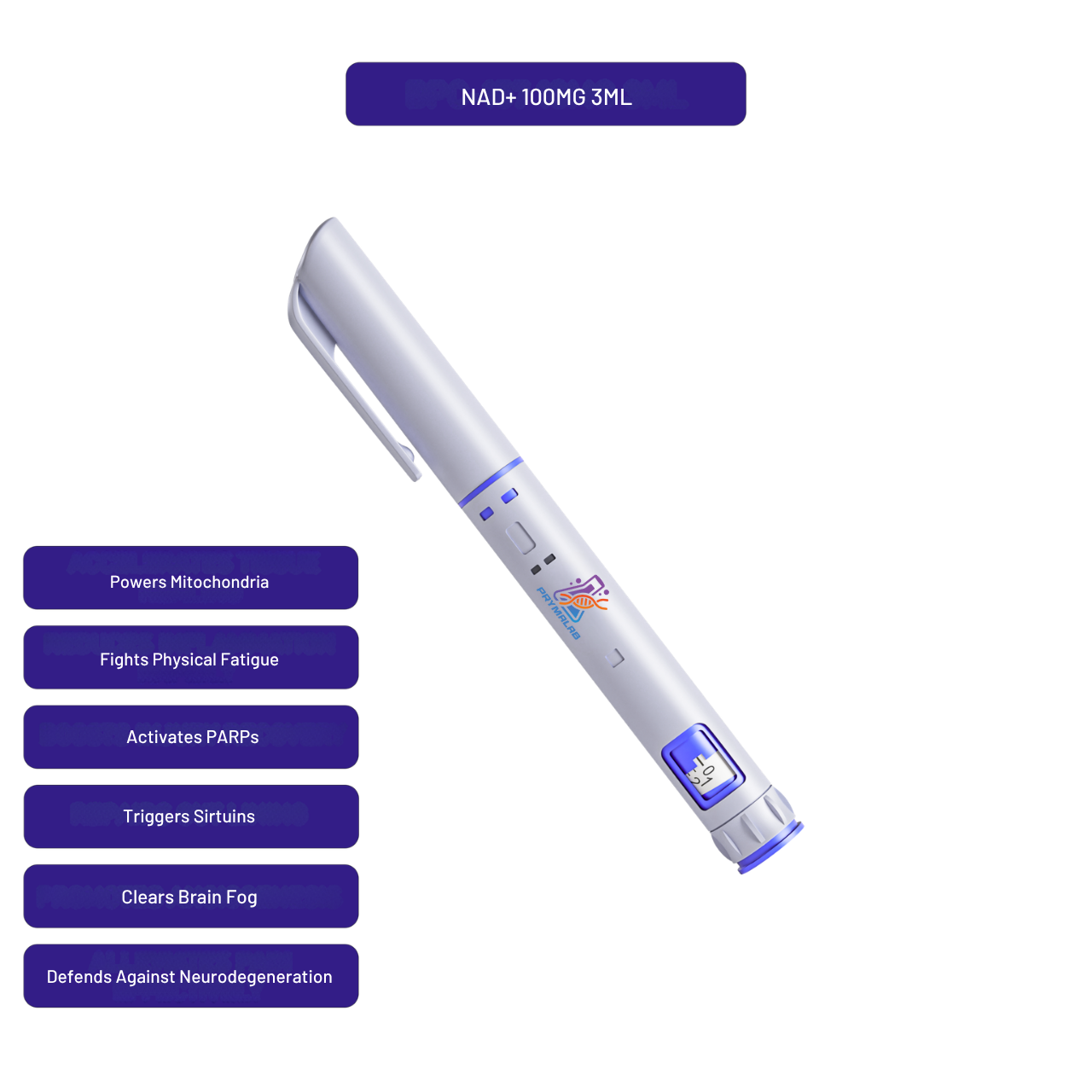
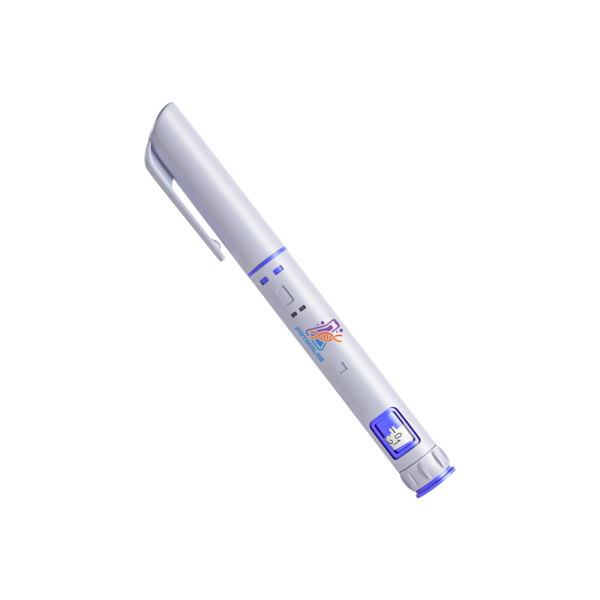
Preloaded Autoinjector | NAD+ | 3ml Pen | 100mg/ml

(20 customer reviews)

Original price was: $79.99.Current price is: $59.99.

NAD autoinjector is a pre-filled device format for nicotinamide adenine dinucleotide, a coenzyme that behaves nothing like the peptides sold beside it.

  • Pre-filled, so there is no reconstitution step and no bacteriostatic water to add
  • 663 Da dinucleotide with no amide backbone and no disulfides to scramble
  • Cells hold separate mitochondrial, cytosolic and nuclear NAD+ pools that do not freely equilibrate
  • NAD+ photodegrades, so protect from light · purity per lot-specific COA

Research use only. Not for human or veterinary use, food, or household application.

Description

PrymaLab · Research Use Only

NAD+ Autoinjector

Pre-filled coenzyme device · nicotinamide adenine dinucleotide

The NAD autoinjector is a pre-filled device supplying nicotinamide adenine dinucleotide, CAS 53-84-9, molecular formula C21H27N7O14P2, molecular weight 663.43. Unlike most devices in this catalogue it contains a dinucleotide coenzyme rather than a peptide, and the handling assumptions differ accordingly.

Specification Table

NAD autoinjector format and compound data
Property Value
Compound Nicotinamide adenine dinucleotide, oxidised form
Format Pre-filled autoinjector device
Physical state Solution, supplied ready-filled
Compound category relative to catalogue Coenzyme, not a peptide
Common designation NAD+
CAS number 53-84-9
Molecular formula C21H27N7O14P2
Molecular weight 663.43 g/mol
Compound class Dinucleotide coenzyme. Not a peptide
Structure Nicotinamide mononucleotide joined to adenosine monophosphate through a pyrophosphate bridge
Redox partner NADH, the reduced form
Principal enzyme classes consuming NAD+ Sirtuins, PARPs, CD38, SARM1
Principal biosynthetic routes De novo from tryptophan, Preiss-Handler from nicotinic acid, salvage from nicotinamide
Rate-limiting salvage enzyme NAMPT, nicotinamide phosphoribosyltransferase
Appearance White to off-white lyophilized powder
Purity Per lot-specific certificate of analysis
Solubility Freely water soluble
Aqueous stability Degrades in aqueous solution, faster at alkaline pH and at raised temperature
Storage, lyophilized -20°C, protected from light and moisture
Storage, reconstituted 2-8°C, protected from light, short hold only
Regulatory status No approved human or veterinary injectable formulation

Why Does It Matter That This Is Not a Peptide?

Nearly every other device beside the NAD autoinjector in this catalogue contains a peptide, and the assumptions that carry across from those formats do not all hold here.

A peptide is a chain of amino acids joined by amide bonds. NAD+ is two nucleotides joined through a pyrophosphate bridge, one bearing nicotinamide and the other adenine. Structurally the two compound classes have almost nothing in common.

Degradation routes differ accordingly. Peptides deamidate, oxidise at methionine and cysteine, aggregate, and hydrolyse at labile amide bonds. NAD+ hydrolyses at its glycosidic bond, undergoes addition at the nicotinamide ring under alkaline conditions, and is sensitive to light in ways most short peptides are not.

Analytical methods differ too. Peptide identity is confirmed by mass spectrometry against a calculated sequence mass. NAD+ is more conveniently confirmed by ultraviolet absorbance, since its chromophores give a characteristic spectrum that peptides lacking aromatic residues do not.

A researcher applying peptide-handling defaults to this compound will be broadly right about cold storage and broadly wrong about how long a solution lasts.

What Are the Separate Cellular Pools?

A point that whole-cell measurements obscure and that shapes how any NAD+ finding should be read.

The inner mitochondrial membrane is impermeable to NAD+ in mammalian cells. The mitochondrial pool is therefore maintained separately from the cytosolic pool, with its own synthesis through mitochondrial NMNAT3 and its own consumption.

The nuclear pool communicates with the cytosolic pool through nuclear pores, which pass molecules of this size, so those two are usually treated together. PARP activity in the nucleus can nonetheless draw down the shared pool substantially.

Compartment-specific measurement requires either fractionation with rigorous purity controls or genetically encoded sensors targeted to each compartment. Both are considerably more work than a whole-cell lysate assay, and both answer a question the lysate cannot.

The practical consequence is that a reported change in cellular NAD+ says little about where that change occurred, and interventions can move one pool while leaving another unchanged.

How Should Light Exposure Be Managed?

Light sensitivity receives less attention than it deserves for this compound, and the device format makes it easier to overlook.

The nicotinamide and adenine rings both absorb ultraviolet light strongly, which is what makes spectrophotometric quantification convenient. The same absorbance means the molecule takes up photon energy readily, and photodegradation follows.

Ambient laboratory lighting is a slower problem than direct sunlight or ultraviolet exposure, but for a solution-state product with an extended shelf life, slow processes accumulate.

Keeping the device in its original opaque or tinted packaging until immediately before use addresses it with no additional effort. Benches near windows are worth avoiding for any solution-state storage.

Where a solution has been left exposed, spectrophotometric checking will reveal degradation, since photodegradation products alter the absorbance profile rather than simply reducing its magnitude.

What Should Accompany a Device Purchase?

For a NAD autoinjector, documentation substitutes for the analytical access a sealed format stops, and knowing what to ask for makes that substitution useful.

Measured concentration rather than nominal. A certificate stating the concentration determined analytically at manufacture carries information a label cannot.

Manufacture date, which for a solution-state coenzyme is the variable determining how much degradation has already occurred. A device manufactured recently and shipped cold is in a different condition from one that has been in inventory.

Purity by chromatography, which distinguishes intact coenzyme from degradation products and from nicotinamide, both of which may be present in a preparation that has been stored imperfectly.

Storage conditions during transit. For this compound a cold-chain record has real informational content rather than being a formality, and its absence is worth noting rather than assuming.

What Does the NAD Autoinjector Format Suit and Not Suit?

Matching format to experimental question saves more effort than optimising any single handling step, and the fit here is narrower than for the peptide devices.

The format suits work delivering a consistent quantity repeatedly over an extended schedule, where operator-to-operator pipetting variation would otherwise become a source of noise and where the specific concentration supplied happens to match the design.

It suits situations where handling steps are worth minimising, since material never contacts open air between manufacture and delivery, which removes both contamination and evaporative concentration as variables.

It does not suit concentration-ranging work of any kind. A fixed concentration in a sealed container cannot be titrated, and diluting from a device defeats the consistency advantage that justified choosing it.

It does not suit work where the coenzyme must be demonstrably intact at a known concentration, because the format denies the verification that would establish either. For a compound that degrades in solution, that limitation bears directly on data quality rather than only on convenience.

Nor does it suit cell-culture addition, where the permeability problem means added coenzyme largely does not reach the intracellular compartment regardless of how it was delivered.

How Should Ectoenzyme Activity Be Considered?

Coenzyme delivered into any biological system encounters surface enzymes before it encounters anything intracellular, and for this molecule that encounter is consequential.

CD38 is the principal one, an ectoenzyme with its ecto-domain facing outward and substantial turnover capacity, and it hydrolyses the coenzyme extracellularly, and its expression varies widely between cell types and rises in several contexts.

CD73 and various nucleotide pyrophosphatases contribute additional extracellular processing, converting the coenzyme through intermediates toward nicotinamide riboside and nicotinamide.

Those products are membrane-permeant in ways the parent molecule is not, which creates the interpretive problem described elsewhere on this catalogue: an intracellular effect following extracellular addition may be an effect of the breakdown products.

Measuring the extracellular species over time, by mass spectrometry of the medium, distinguishes the possibilities directly. Comparing against direct addition of nicotinamide riboside at the concentrations generated is the complementary test.

Neither is elaborate, and either turns an ambiguous observation into an interpretable one.

What Should Accompany NAD Autoinjector Data in a Methods Section?

Reporting practice for a solution-state coenzyme differs from reporting practice for a peptide, and the differences are small but consequential.

State the format explicitly. A reader needs to know that the material came from a pre-filled device rather than a reconstituted vial, because the two carry different solution histories and therefore different degradation expectations.

State the elapsed time between manufacture and use if it is known. Where a NAD autoinjector has been in inventory for months, that fact belongs in the methods rather than being silently absorbed into the finding.

State whether concentration was verified independently or taken from the label, and both are legitimate choices and they support different levels of confidence.

Finally, state the storage history including any excursion. For this compound a warm afternoon on a bench is a data-affecting event, not a housekeeping detail.

Storage and Handling in Laboratory Practice

A NAD autoinjector wants cold, dark, undisturbed conditions, and used within a defined window from manufacture rather than from receipt.

Keep the device refrigerated continuously. Return it promptly after use rather than leaving it at ambient temperature between sessions, since the degradation processes described above run continuously rather than being triggered by any particular event.

Leave it in original packaging until immediately before use, which handles light exposure and protects the mechanism from physical damage.

Inspect each time. Clear, colourless to very pale solution, intact seal, no particulate. Discolouration is the most accessible degradation indicator for this compound and it should be treated as disqualifying rather than cosmetic.

Record lot, manufacture date, storage history including any temperature excursion, and dates of use. For a solution-state coenzyme, storage history is part of the experimental record.

A final consideration concerns comparability. Where a programme has previously used lyophilized coenzyme reconstituted in-house and switches to a device format, the two are not interchangeable without a bridging measurement.

The reason is solution age. Freshly reconstituted material and material that has been in solution since manufacture differ in their degraded fraction, and that difference maps directly onto effective concentration.

Running both side by side in one assay on one day, at matched nominal concentration, quantifies the gap. If the responses match, the formats can be treated as equivalent for that assay. If they diverge, the divergence is the answer.

What Does NAD+ Do, and Why Does It Fall With Age?

The biochemistry here is settled, which separates it from most of this catalogue and makes the mechanism worth stating rather than hedging.

The coenzyme cycles between oxidised and reduced forms, carrying electrons through the redox reactions that glycolysis and the Krebs cycle depend on.

Mitochondrial energy production runs on that cycling, so cellular energy production and ATP output stop without it. That is textbook biochemistry rather than a marketing claim.

Beyond metabolism it is consumed as a substrate. Sirtuins use it in deacetylation and PARPs use it during DNA repair, and both consume rather than recycle the molecule.

Tissue NAD+ levels fall with age in several species, and that observation is the whole foundation of the anti-aging interest. Anti-aging is the framing rather than a demonstrated outcome, and NAD+ injections are sold on it throughout.

Injection site tolerance for that route has not been studied, so an injection site reaction is anecdote rather than a documented rate.

Whether the decline drives the aging process or reflects it is unresolved, and restoring levels in mice improves markers of mitochondrial function without settling the direction.

Energy metabolism, cellular metabolism and metabolic health all connect to it for the same reason: a central coenzyme correlates with everything, which is a property of central metabolites rather than evidence of therapeutic effect.

The same caution applies to reported effects on the immune system, on oxidative stress, on metabolic function and on cellular functions generally. A molecule sitting at the junction of that many metabolic pathways will show up wherever anyone looks.

Maintaining healthy NAD+ levels is a real physiological requirement and a poor basis for a product claim, since a deficiency severe enough to matter is a clinical condition rather than a lifestyle one.

Vitamin B3 and niacin feed the salvage pathway that maintains the pool, and precursors such as nicotinamide riboside and NMN enter the same route.

What Does the Human Evidence Support?

The gap between the biochemistry and the marketing is where a reader needs most help, because the first is solid and the second is not.

Human trials of oral NAD+ precursors reliably raise blood NAD+ levels. What those trials have generally not shown is a corresponding clinical benefit.

Raising a biomarker and improving an outcome are different claims, and only the first has support.

Direct administration of the coenzyme itself has considerably less evidence than the precursors do.

An IV infusion is what clinics most often sell, given slowly because faster rates are poorly tolerated, and the claims made for that IV therapy exceed the published data by a wide margin.

NAD+ injections given subcutaneously are the newer format, and no controlled trial has compared subcutaneous injections against IV drips for any endpoint.

Bioavailability is the unresolved question underneath all of it. The molecule is large and charged, which is why oral NAD+ supplements are considered inefficient and precursors are used instead.

Whether an injected dose reaches the intracellular compartment intact, or is degraded outside the cell to precursors first, has not been established. A molecule that cannot enter the cell is functionally a precursor with extra steps.

Claims about mental clarity, cognitive clarity, brain fog, cellular health, cellular repair, skin health and healthy aging come from clinic marketing rather than from controlled trials.

Reported side effects of infusion include headache, nausea, flushing and chest tightness, most tracking infusion rate rather than dose.

NAD+ therapy is not FDA-approved for any indication. It is not a treatment for addiction, chronic fatigue, Lyme disease, cognitive decline or aging.

What Does the Device Format Actually Solve?

A pre-filled device solves a measurement problem and leaves every biological question where it found it.

What it solves is knowing how much is delivered. A stated concentration with a specified delivery volume gives a defensible number where a reconstituted vial rarely does.

What it does not solve is whether the molecule reaches its target, what its half-life is by this route, or whether any clinical claim holds.

An NAD+ pen, an injection pen and an NAD+ cartridge are the same idea under three names, and a pen kit bundles the device with consumables rather than with evidence. Whichever injection pen a supplier ships, the coenzyme inside is the same and so are the open questions. Glutathione devices are sold in the identical format for the identical reason.

Some devices use micro-needles rather than a conventional needle, which changes depth and comfort and nothing about the pharmacology.

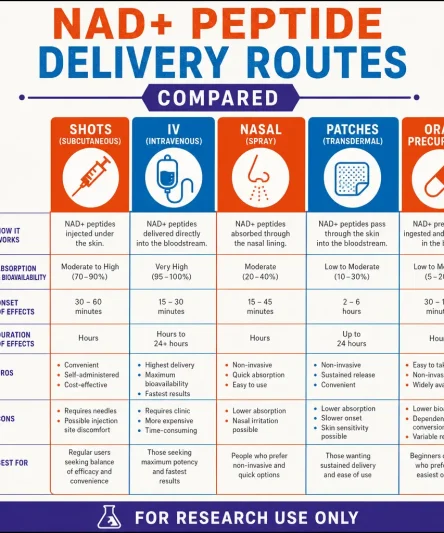
Other formats circulate too. An NAD+ nasal spray and NAD+ patches are sold on the same premise, each with its own unaddressed absorption question and none with comparative data.

Self-injection technique, a titration schedule, alcohol swabs, an alcohol wipe and sharps disposal all belong to clinical guidance for approved prescription products. None of it applies here.

Questions about use during pregnancy or breastfeeding belong to a clinician discussing an approved medicine, and this is not for human use in any circumstance.

Glutathione, B12 injection courses and low dose naltrexone are the things most often sold alongside it in the same clinics, usually with hydration drips. None shares a mechanism with this coenzyme.

Glutathione in particular is marketed on an antioxidant argument and this one on an energy argument, and pairing them in an injection pen protocol is a commercial decision rather than a pharmacological one.

Growth hormone secretagogues appear in the same clinic menus for unrelated reasons. Where a clinic instructs someone to inject subcutaneously from an NAD+ solution alongside those, none of it rests on comparative evidence.

This device is supplied for laboratory research only and is not for administration to humans or animals.

Published Literature

References verified against the publisher record. They concern NAD+ biology, for which the evidence base is substantial and independent, rather than the device format.

  1. Cantó C, Menzies KJ, Auwerx J. Cell Metabolism. 2015;22(1):31-53.
  2. Verdin E. Science. 2015;350(6265):1208-1213.
  3. Yoshino J, Baur JA, Imai SI. Cell Metabolism. 2018;27(3):513-528.
  4. Rajman L, Chwalek K, Sinclair DA. Cell Metabolism. 2018;27(3):529-547.
  5. Cambronne XA, Kraus WL. Trends in Biochemical Sciences. 2020;45(10):858-873.
  6. Bogan KL, Brenner C. Annual Review of Nutrition. 2008;28:115-130.

Frequently Asked Questions

What is the NAD autoinjector?

A pre-filled device supplying nicotinamide adenine dinucleotide, CAS 53-84-9, molecular weight 663.43. Unlike most devices in this catalogue it contains a dinucleotide coenzyme rather than a peptide. For laboratory research use exclusively, and not for human or veterinary use.

Why does the peptide distinction matter?

Because handling assumptions do not transfer. A peptide is amino acids joined by amide bonds. NAD+ is two nucleotides joined through a pyrophosphate bridge. Structurally they have almost nothing in common, and their degradation routes differ accordingly.

How do the degradation routes differ?

Peptides deamidate, oxidise at methionine and cysteine, aggregate and hydrolyse at labile bonds. NAD+ hydrolyses at its glycosidic bond, undergoes addition at the nicotinamide ring under alkaline conditions, and is light-sensitive in ways most short peptides are not.

What are the separate cellular pools?

The mitochondrial pool is maintained separately, since the inner mitochondrial membrane is impermeable to NAD+ in mammalian cells and the compartment has its own synthesis through NMNAT3. Nuclear and cytosolic pools communicate through nuclear pores and are usually treated together.

Why does compartmentalisation complicate measurement?

Because a whole-cell lysate assay reports a total that says nothing about where a change occurred. An intervention can move one pool while leaving another unchanged, and only fractionation with purity controls or compartment-targeted sensors can distinguish them.

How light-sensitive is NAD+?

More than commonly assumed. The nicotinamide and adenine rings absorb ultraviolet strongly, which is what makes spectrophotometric quantification convenient and also means the molecule takes up photon energy readily. Photodegradation follows, slowly under ambient lighting.

How is photodegradation detected?

Spectrophotometrically. Photodegradation products alter the absorbance profile rather than simply reducing its magnitude, so a spectrum that has changed shape indicates degradation more informatively than a reduced reading at a single wavelength would.

What documentation should accompany a device?

Measured rather than nominal concentration, manufacture date, purity by chromatography distinguishing intact coenzyme from degradation products and nicotinamide, and storage conditions during transit. For this compound a cold-chain record has real informational content.

Why does manufacture date matter more than receipt date?

Because degradation begins at manufacture, not at delivery. A solution-state coenzyme that has been in inventory is in a different condition from one recently made and shipped cold, and the receipt date says nothing about the interval before it.

What visual check applies?

Clear, colourless to very pale solution with an intact seal and no particulate. Discolouration toward yellow or brown is the most accessible degradation indicator for this compound and should be treated as disqualifying rather than cosmetic.

What does NAD+ do in a cell?

It carries electrons through redox reactions. Glycolysis and the Krebs cycle depend on it, so cellular energy metabolism and ATP output stop without the pool cycling. Sirtuins and PARPs then consume it during deacetylation and DNA repair.

Do NAD+ injections work better than an oral supplement?

Unestablished. Oral precursors reliably raise blood levels in trials but have generally not shown clinical benefit. No controlled trial has compared NAD+ injections against oral NAD+ supplements, or against IV therapy, for any outcome.

Why is bioavailability the open question?

Because the molecule is large and charged. Whether an injectable NAD dose reaches the intracellular compartment intact, or is degraded outside the cell to precursors first, has not been established. A molecule that cannot enter the cell is functionally a precursor with extra steps.

What side effects are reported?

For IV infusion, headache, nausea, flushing and chest tightness, most tracking infusion rate rather than dose. That is why an IV drip is given slowly. No controlled safety data exists for the subcutaneous route, and injection site effects are anecdotal.

Is NAD+ therapy approved for anything?

No. It is not FDA-approved for any indication and is not a treatment for addiction, chronic fatigue, Lyme disease, cognitive decline or the aging process. Claims about cognitive function, improved energy and mental clarity come from clinic marketing.

What does an injection pen change?

Measurement only. An NAD+ injection pen with a stated concentration and specified delivery volume gives a defensible number where a vial and syringe rarely does. An NAD+ pen, an NAD+ cartridge and cartridges sold as a pen kit are the same idea under different names.

What about nasal sprays and patches?

An NAD+ nasal spray and NAD+ patches are sold on the same premise as injection, each with its own unaddressed absorption question and none with comparative data. No NAD+ formulation has published head-to-head evidence against another.

What else do clinics sell alongside it?

Glutathione most often, plus B12 injection courses and low dose naltrexone. Glutathione shares no mechanism with this coenzyme. A compounding pharmacy supplying prescription products is a different category from a research compound entirely.

Does it improve mitochondrial function or insulin sensitivity?

Restoring the pool in mice improves markers of mitochondrial function, and insulin sensitivity appears in that animal work too. Whether the age-related decline drives dysfunction or reflects it remains unresolved, so boosting NAD+ levels has a mechanism and no demonstrated human outcome.

Compliance Statement

NAD+ autoinjector is sold exclusively for laboratory research use. It is not a drug, food, or cosmetic product, and it is not a dietary product of any kind. It is not approved by the FDA or any comparable authority for human or veterinary use, and the device format does not alter that status in any way. This product is not intended to diagnose, treat, cure, or prevent any disease. It must not be given to humans or animals. Purchase is restricted to qualified researchers and institutions operating within applicable laws. All handling is the responsibility of the purchasing laboratory.

Other formats of NAD+

NAD+ is also stocked as NAD+ 500mg, NAD+ 1000mg, NAD+ Nasal Spray and NAD+ (injectable) 500mg/ml preloaded 3ml pen. Each listing states its own quantity and concentration, and the pen and vial comparison explains what changes between formats.
20 reviews for Preloaded Autoinjector | NAD+ | 3ml Pen | 100mg/ml

  1. Spencer Sanders
    August 2, 2026
    Tested good
    Had this order sent off to Janoshik for testing and it just came back with a perfect on the endotoxin testing and a purity of 99.97%. I will be shoppi...More
    Had this order sent off to Janoshik for testing and it just came back with a perfect on the endotoxin testing and a purity of 99.97%. I will be shopping here from now on, no vendor that I trust has better pricing.
    Helpful? 0 0
    Damon Gray
    August 2, 2026
    Thanks.
    Shipping was slow but everything came as it should.
    Helpful? 0 0
    Paula Harper
    August 1, 2026
    quality on point!
    test came back 99.71%. Will be back fs
    Helpful? 0 0
    Beverly Jones
    August 1, 2026
    Already seeing results!
    Shipping was slow but after only a week I am already seeing amazing results. Thank you.
    Helpful? 0 0
    Curtis Harper
    July 30, 2026
    will be back
    thanks
    Helpful? 0 0
    Brandon Owens
    July 12, 2026
    Best source ive found
    So happy i found this place.
    Helpful? 0 0
    Beverly Powell
    July 11, 2026
    Legit...
    Cannot recommend enough.
    Helpful? 0 0
    Sophia Berry
    July 8, 2026
    My new go to!
    Repeat customer here. The quality is exactly what i was hoping for, consistent and pure. Also most companies overcharge for the same thing but the pri...More
    Repeat customer here. The quality is exactly what i was hoping for, consistent and pure. Also most companies overcharge for the same thing but the pricing here beat everyone else i checked.
    Helpful? 0 0
    Maria Kim
    July 6, 2026
    Super impressed!
    Happy with the order. Quality was there fasho.
    Helpful? 0 0
    Tara West
    July 1, 2026
    Blown away honestly
    Honestly cant complain at all. The quality is exactly what i was hoping for. Also other brands packaging shows up crushed but this came double boxed w...More
    Honestly cant complain at all. The quality is exactly what i was hoping for. Also other brands packaging shows up crushed but this came double boxed with ice packs. These guys got a customer for life.
    Helpful? 0 0
    Grant Thomas
    July 1, 2026
    Def worth it
    happy wit the order. No real issues with the product. Will def order again. just wish shipping was faster
    Helpful? 0 0
    Karen Weaver
    June 25, 2026
    10/10 would buy again
    First time ordering and im impressed. Everything showed up perfect and sealed. I switched over after corepeptides sent the powder wus half melted but ...More
    First time ordering and im impressed. Everything showed up perfect and sealed. I switched over after corepeptides sent the powder wus half melted but the lyophilized powder here was a perfect intact puck. You can tell the difference when a company actually cares. Cant wait for my next order.
    Helpful? 0 0
    Janet Harrison
    June 24, 2026
    went smoothly
    Honestly cant complain at all. Everything arrived as expected and I feel amazing. Thank you.
    Helpful? 0 0
    Marie Collins
    June 16, 2026
    Love you guys ❤️
    Wont be buying from anywhere else. Tested 3 products from pryma through janoshik myself, all came back 99.96+ pure, swiss chems only came back 96 at t...More
    Wont be buying from anywhere else. Tested 3 products from pryma through janoshik myself, all came back 99.96+ pure, swiss chems only came back 96 at the highest.
    Helpful? 0 0
    Craig Gomez
    June 12, 2026
    Perfect
    Packaging an product were both on point. Keep it up guys.
    Helpful? 0 0
    Janet Harrison
    June 8, 2026
    no issues
    u can tell they actually care about what they send out.
    Helpful? 0 0
    Steve Brinkman
    June 4, 2026
    The autoinjector pen is a game changer for NAD+. Ive done IV before and this is way more convenient for research purposes. Comes preloaded so theres n...More
    The autoinjector pen is a game changer for NAD+. Ive done IV before and this is way more convenient for research purposes. Comes preloaded so theres no reconstitution hassle. Prymalab is legitamately one of the best suppliers ive dealt with, fast domestic shipping and the COA's are actually from a real lab not some in-house test
    Helpful? 0 0
    Denise Turner
    June 2, 2026
    Repeat customer for life!
    I used to order from penguin peptides but I kept getting vials that were sealed bad and leaked but every vial here was sealed perfect. Gonna be my mai...More
    I used to order from penguin peptides but I kept getting vials that were sealed bad and leaked but every vial here was sealed perfect. Gonna be my main source from now on for sure. Much love
    Helpful? 0 0
    Edward Berry
    May 14, 2026
    very pleased
    Good stuff no doubt.
    Helpful? 0 0
    Eric Smith
    April 3, 2026
    Legit and high quality!
    Ordered again an its the same great quality.
    Helpful? 0 0

Only logged in customers who have purchased this product may leave a review.

Peptide Research Articles

Bacteriostatic water depiction

Bacteriostatic Water Peptide Science: Why It Matters in Reconstitution & Research

Bacteriostatic water peptide science is the foundation of safe, accurate peptide reconstitution. This 2026 guide covers bacteriostatic water composition, how to reconstitute peptides using a peptide reconstitution calculator and peptide dosage calculator, bacteriostatic water vs sterile water differences, peptide storage best practices, and a 10-step reconstitution protocol. Expert insights from PrymaLab.

wolverine blend article vial

Peptides for Injury Recovery: The Wolverine Stack Peptide Guide (BPC-157 + TB-500)

The Wolverine stack peptide combines BPC-157 and TB-500 for research into tendon, ligament, and joint recovery. This 2026 guide covers BPC-157 peptide where to buy responsibly, BPC 157 peptide side effects, peptides for tendon repair, peptides for joint recovery, peptides for elbow pain, and the BPC-157 TB-500 peptide blend scientific research. Expert insights from PrymaLab.

are peptides healthy

Are Peptides Good for You? A Complete 2026 Guide

Are peptides good for you? This comprehensive 2026 guide explores peptide therapy benefits, safety, side effects, and how peptides work in the body. Learn about peptide health benefits, research findings, and what you need to know before considering peptide therapy. Expert insights from PrymaLab.

Ovagen peptide capsules for liver health with dosage cycling chart showing 10-20 day protocols repeated 2-3 times per year

Ovagen Peptide Guide: Uses, Research, Safety & Buying Info

Ovagen peptide is a short-chain liver bioregulator developed at the St. Petersburg Institute of Bioregulation and Gerontology under Professor Vladimir Khavinson. It contains the AC-3 peptide complex (glutamic acid and aspartic acid) designed to target hepatocyte gene expression for liver cell repair, bile production, and detoxification. This guide covers dosing protocols, cycling schedules, side effects, a head-to-head comparison with NAC, milk thistle, TUDCA, and BPC-157, cost analysis ($120-360 per year), and how to verify genuine Ovagen products online.

GHK-Cu peptide vial and syringe with dosage chart showing injection protocols for skin rejuvenation and hair growth

GHK-Cu Peptide: Benefits, Dosage, Side Effects & Complete Research Guide (2026)

GHK-Cu peptide is a naturally occurring copper tripeptide that modulates over 4,000 human genes involved in collagen synthesis, wound healing, and tissue regeneration. This comprehensive guide covers injection dosage protocols, clinical research on skin rejuvenation and hair growth, side effects, safety data, and how to reconstitute GHK-Cu 50mg vials. Includes dosage charts, comparison tables, and 10 frequently asked questions answered by a peptide research specialist.

Sermorelin dosage guide for anti-aging muscle growth and weight loss showing GHRH analog pituitary stimulation

Sermorelin Dosage Guide 2025: Complete Protocol for Anti-Aging, Muscle Growth & Weight Loss

Sermorelin acetate is a growth hormone-releasing hormone (GHRH) analog that stimulates natural GH production from the pituitary gland. This comprehensive dosage guide covers protocols for anti-aging, muscle growth, weight loss, and sleep optimization — along with side effects, before-and-after timelines, and comparisons to HGH and ipamorelin.

Customer reviews

4.90
Based on 20 reviews
5
90%
18
4
10%
2
3
0%
0
2
0%
0
1
0%
0
1 2
Spencer Sanders
August 2, 2026
Tested good
Had this order sent off to Janoshik for testing and it just came back with a perfect on the endotoxin testing and a purity of 99.97%. I will be shoppi...More
Had this order sent off to Janoshik for testing and it just came back with a perfect on the endotoxin testing and a purity of 99.97%. I will be shopping here from now on, no vendor that I trust has better pricing.
Helpful? 0 0
Damon Gray
August 2, 2026
Thanks.
Shipping was slow but everything came as it should.
Helpful? 0 0
Paula Harper
August 1, 2026
quality on point!
test came back 99.71%. Will be back fs
Helpful? 0 0
Beverly Jones
August 1, 2026
Already seeing results!
Shipping was slow but after only a week I am already seeing amazing results. Thank you.
Helpful? 0 0
Curtis Harper
July 30, 2026
will be back
thanks
Helpful? 0 0
Brandon Owens
July 12, 2026
Best source ive found
So happy i found this place.
Helpful? 0 0
Beverly Powell
July 11, 2026
Legit...
Cannot recommend enough.
Helpful? 0 0
Sophia Berry
July 8, 2026
My new go to!
Repeat customer here. The quality is exactly what i was hoping for, consistent and pure. Also most companies overcharge for the same thing but the pri...More
Repeat customer here. The quality is exactly what i was hoping for, consistent and pure. Also most companies overcharge for the same thing but the pricing here beat everyone else i checked.
Helpful? 0 0
Maria Kim
July 6, 2026
Super impressed!
Happy with the order. Quality was there fasho.
Helpful? 0 0
Tara West
July 1, 2026
Blown away honestly
Honestly cant complain at all. The quality is exactly what i was hoping for. Also other brands packaging shows up crushed but this came double boxed w...More
Honestly cant complain at all. The quality is exactly what i was hoping for. Also other brands packaging shows up crushed but this came double boxed with ice packs. These guys got a customer for life.
Helpful? 0 0
Grant Thomas
July 1, 2026
Def worth it
happy wit the order. No real issues with the product. Will def order again. just wish shipping was faster
Helpful? 0 0
Karen Weaver
June 25, 2026
10/10 would buy again
First time ordering and im impressed. Everything showed up perfect and sealed. I switched over after corepeptides sent the powder wus half melted but ...More
First time ordering and im impressed. Everything showed up perfect and sealed. I switched over after corepeptides sent the powder wus half melted but the lyophilized powder here was a perfect intact puck. You can tell the difference when a company actually cares. Cant wait for my next order.
Helpful? 0 0
1 2
24/7 Online support

support@prymalab.net info@prymalab.net

Money back guarantee

30 Day return window. Satisfaction guaranteed or your money back.

FREE shipping and return

All orders over %150 in value will receive free shipping.