


Description
PrymaLab · Research use only
Preloaded Autoinjector | Wolverine Stack (BPC-157 + TB-500) | 3ml Pen | 20mg
Wolverine stack pen: BPC-157 and TB-500 in solution, 20 mg combined in a 3 mL pen
The Wolverine stack pairs two research peptides: BPC-157, a synthetic 15-residue sequence from a gastric juice protein, and TB-500, which in PrymaLab’s freeze-dried blends is full-length N-acetyl thymosin beta-4. This listing is a preloaded autoinjector pen with 3 mL of solution holding 20 mg of the two peptides combined. Each peptide has a literature of its own, largely in rodents. The combination has been tested in a single rat study, and the pen format in none.
Specifications
| Property | Value |
|---|---|
| Components | BPC-157 (Body Protection Compound-157; pentadecapeptide) TB-500 (Thymosin β4); N-acetyl thymosin β4, full-length 43-residue peptide |
| BPC-157 CAS number | 137525-51-0 |
| TB-500 (Thymosin β4) CAS number | 77591-33-4 |
| Contents | BPC-157: 20 mg per 3 mL pen (0.67% w/v) TB-500 (Thymosin β4): 20 mg per 3 mL pen (0.67% w/v) |
| Form | Sterile aqueous solution in bacteriostatic water (0.9% benzyl alcohol), supplied in a 3 mL glass cartridge inside a preloaded autoinjector pen fitted with a needle |
| Storage, sealed | Store at 2–8 °C in the original carton, protected from light |
| Safety data sheet | PL-SDS-188 |
What is in the pen
The listing gives 3 mL of solution containing 20 mg of BPC-157 and TB-500 together. It does not yet give a per-peptide split, so check the carton label before planning work that depends on the amount of each. PrymaLab’s freeze-dried blends are made 1:1 by weight, with TB-500 as the complete 43-residue chain.
PrymaLab’s single-peptide pens hold their peptide in bacteriostatic water with 0.9% benzyl alcohol and are stored at 2 to 8 °C in the carton, out of the light and never frozen. Keep this pen the same way and discard it if the solution freezes, clouds or changes colour. The freeze-dried BPC-157 + TB-500 5 mg + 5 mg vial carries a lot certificate on its page, and peptide pen vs vial compares the two formats.
What the research covers
For most of their history BPC-157 and thymosin beta-4 were studied separately: BPC-157 mainly in gut, tendon and muscle injury in rats, thymosin beta-4 mainly as an actin-binding protein linked to wound repair. They met in one published experiment, in which Biçer and colleagues repaired cut Achilles tendons in 32 rats and compared control, BPC-157, TB-500 and combined groups1. Load to failure rose above control in both single-peptide groups, reaching significance only with TB-500, and the abstract does not list the combined group in that result1.
Some pharmacology is known for BPC-157 alone. In rats and beagle dogs its elimination half-life was under 30 minutes, its pharmacokinetics were linear, and radiolabelled peptide was quickly cut into small fragments and then single amino acids, cleared through urine and bile2. Nothing comparable has been published for the mixture.
For a pen, the open question is what happens to two peptides held together in water over time, and no cited study measured it. A widely cited review of protein stability handles chemical and physical instability, and stabilisation in solution and in the dried state, as separate problems3. The Wolverine stack guide comparing TB-500 and BPC-157 covers the literature on each peptide.
How each lot is tested
Every lot is tested in PrymaLab’s own laboratory in Ashland, Kentucky before release: RP-HPLC for purity, LC-MS for identity, Karl Fischer titration for water, LAL for endotoxin and USP <71> for sterility. Published certificates are listed on the results page and can be checked by number and key on the verify page. The certificate covers the peptide lot used to fill the pen, not the finished solution. These are in-house results from PrymaLab Analytical, not an independent test, and the lab is not accredited to ISO 17025. The third-party testing guarantee on this page still applies: if any independent laboratory finds the wrong compound, or less than the stated purity or amount, the order is refunded and the cost of the test is reimbursed.
Which TB-500 is in the Wolverine stack cartridge, and why the question is not pedantic
TB-500 is the one name in this listing that does not identify a molecule, and anyone buying a BPC-157 and TB-500 peptide stack should settle it before anything else. It is the single most useful question to ask about a Wolverine peptide stack listing from any supplier. Thymosin beta-4 itself is well defined: a 43-residue chain with an acetylated N-terminus and a molecular weight near 4,963, CAS 77591-33-4, which binds and sequesters monomeric actin one-to-one and so governs cell migration4. The name TB-500 is used by vendors for that full-length peptide and also for a seven-residue fragment of it, Ac-LKKTETQ, the actin-binding region at positions 17 to 23, which has a formula of C38H68N10O14 and a mass near 8895.
Those two differ by a factor of more than five in mass, which matters for every calculation a researcher would make from a stated milligram figure. The fragment is what anti-doping laboratories found when they analysed a product sold as TB-500 and characterised its contents5, and a later analysis of internet-sold TB500 and TB1000 concluded their contents were not systematically consistent with the products’ stated descriptions6. PrymaLab’s freeze-dried blends use the complete 43-residue peptide, which is stated above; a certificate of analysis that reports a measured mass is the document that settles it for a given lot, and a certificate of analysis quoting roughly 889 rather than roughly 4,963 is describing the fragment.
The same caution applies to the market generally rather than to this listing. An analysis of 6,441 grey-market samples across fourteen compounds, BPC-157 and thymosin beta-4 among them, reported that between 41.6 and 71.1 per cent failed basic quality criteria depending on the framework applied, with measurable endotoxin in 15 per cent7. That paper is a preprint and has not completed peer review, so treat the figures as indicative. It is the reason a synthetic peptide bought for injury work is worth checking rather than assuming, and the reason the reconstitution step on a vial is useful: dry material can be sampled and sent out, where a filled cartridge cannot. A Wolverine stack sold as a solution is a Wolverine stack whose purity nobody outside the filling room can retest.
What each peptide’s own literature covers
The Wolverine stack has no literature of its own beyond one rat tendon experiment, so what follows is the component record. The ligament evidence for BPC-157 is the most directly relevant single study for a product sold around soft tissue work. Cerovecki and colleagues transected the rat medial collateral ligament surgically and followed healing over 90 days, finding improvement across functional, biomechanical, macroscopic and histological endpoints8. The paper reports improvement rather than fold-changes, so no percentage should be attached to it. That is a rat study; it is not a study of ligament injuries in people, and no human trial of this peptide in any musculoskeletal indication has been published. A placebo-controlled Phase 2 in acute hamstring strain began recruiting in February 2026, which will be the first such trial to report if it completes.
Thymosin beta-4’s side of the file is about actin. Sequestering monomeric actin changes how readily a cell can remodel its cytoskeleton, which is the mechanistic account behind the cell migration and wound healing claims for the molecule4. Angiogenesis appears in the same reviews, usually as blood vessel formation into a healing site, and tissue repair, tissue regeneration and tissue healing are the general headings that work is filed under. Tissue repair in a rat tendon or a rat gut is the measurement; tissue repair in a person is not. None of it was measured for this pen, and the combination appears in one rat tendon experiment, described above.
Several of the terms this product is searched under have no study behind them for either peptide. Muscle recovery has not been an endpoint. Gut health belongs to the separate BPC-157 gastrointestinal literature in rats rather than to anything measured here. Claims that the Wolverine peptide stack reduces inflammation, or acts on chronic inflammation, rest on cytokine measurements in rodent tissue rather than on a clinical inflammatory endpoint. Nothing published shows this peptide stack reducing inflammation in a person. Soft tissue is the honest umbrella for what the rodent work covers: tendon, muscle and gut in rats, by routes and in models that do not transfer to a person. A soft tissue result in a rat injury model is where this literature begins and ends.
Where this sits against other injury-recovery options, and its regulatory position
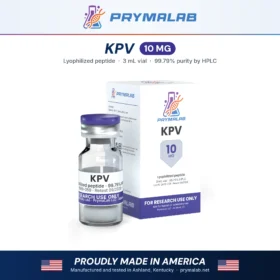
Two comparisons come up constantly and neither is like-for-like. Platelet-rich plasma, PRP, is an autologous blood product prepared and injected as a clinical procedure, with its own trial literature and its own regulatory route. A peptide solution is a different kind of thing entirely, and a PRP result says nothing about this product. GHK-Cu and KPV are the other two peptides frequently added to a peptide stack of this sort, and both are separate compounds with separate literatures: GHK-Cu is a copper-binding plasma tripeptide and KPV a three-residue fragment of alpha-MSH. Neither is in this pen. Bundling them as regenerative peptides describes a shopping category rather than a shared mechanism, and nothing published tests a four-way combination. A Wolverine peptide stack listing that adds them is widening the category, not the evidence.
The regulatory position is short and worth stating plainly. Neither peptide in this pen is FDA-approved for anything, in any formulation, and nothing sold as a research chemical is FDA-approved by definition, because approval attaches to a finished drug product rather than to a molecule. Both components of the Wolverine stack are prohibited in sport at all times under the WADA Code: thymosin beta-4 and its derivatives are named under section S2.3 and BPC-157 under section S0, the non-approved substances clause. Side effects have never been catalogued for either compound in a controlled human study, so the absence of a side effects table measures how little has been done rather than how safe the material is, and that holds for subcutaneous administration as much as for any other route. Peptide therapy providers who supply this pairing are working from mechanism and anecdote, and no peptide therapy protocol for the Wolverine peptide stack derives from a published trial of it.
Frequently asked questions
How much BPC-157 and how much TB-500 does the pen contain?
The listing states 20 mg of the two peptides combined in 3 mL and does not yet break that down by peptide. The freeze-dried blend vials are made 1:1 by weight, and their certificates report a measured mass for each peptide.
Does a certificate cover the pen?
Certificates cover the peptide lots used for filling, not the finished solution. This pen has no certificate panel on its page; published certificates are on the testing results page and can be confirmed by number and key on the verify page.
Has the combination been studied in a pen or in solution?
No. The only combination study in the references is a rat tendon experiment, and no cited work measured the stability of BPC-157 and thymosin beta-4 held together in solution. Go by the storage conditions and dates on the label.
Is the pen for human use?
No. It is a laboratory research product with no FDA or other regulatory approval for human or veterinary use. Nothing on this page describes using it in people or animals, and it must not be given to either.
Does TB-500 mean the full-length peptide or the fragment?
Vendors use the name for both, which is why it has to be settled per lot. Thymosin beta-4 is 43 residues with an acetylated N-terminus and a mass near 4,963, CAS 77591-33-44; the fragment Ac-LKKTETQ, residues 17 to 23, is C38H68N10O14 at a mass near 8895. PrymaLab’s blends use the complete chain. A measured mass on the certificate is what distinguishes them.
How reliable is grey-market material for this pairing?
An analysis of 6,441 grey-market samples across fourteen compounds, including BPC-157 and thymosin beta-4, reported 41.6 to 71.1 per cent failing basic quality criteria depending on framework, with measurable endotoxin in 15 per cent7. That paper is a preprint and has not completed peer review, so the figures are indicative rather than settled.
What is the strongest ligament study for BPC-157?
A rat medial collateral ligament transection followed over 90 days, which reported improvement across functional, biomechanical, macroscopic and histological endpoints8. The paper gives improvement rather than fold-changes, so no percentage belongs on it, and it studied a surgical transection in rats rather than ligament injuries in people.
How does this compare with PRP?
It does not compare directly. Platelet-rich plasma is an autologous blood product prepared and injected as a clinical procedure, with its own trials and its own regulatory route. A peptide solution is a different category of product, and a PRP result says nothing about this one.
What is the anti-doping and approval status?
Neither peptide is FDA-approved in any formulation. Both are prohibited at all times under the WADA Code: thymosin beta-4 and its derivatives under section S2.3 and BPC-157 under section S0, the non-approved substances clause. No controlled human study has catalogued side effects for either compound by any route.
References
- Biçer O, Adanir O, Güleryüz Y, et al. Effects of BPC-157 and TB-500 on Achilles tendon healing in rats: A histopathological and biomechanical study. Jt Dis Relat Surg. 2026;37(3):822-837. DOI · PubMed
- He L, Feng D, Guo H, et al. Pharmacokinetics, distribution, metabolism, and excretion of body-protective compound 157, a potential drug for treating various wounds, in rats and dogs. Front Pharmacol. 2022;13:1026182. DOI · PubMed
- Manning MC, Chou DK, Murphy BM, et al. Stability of protein pharmaceuticals: an update. Pharm Res. 2010;27(4):544-75. DOI · PubMed
- Low TL, Hu SK, Goldstein AL. Complete amino acid sequence of bovine thymosin beta 4: a thymic hormone that induces terminal deoxynucleotidyl transferase activity in thymocyte populations. Proc Natl Acad Sci U S A. 1981;78(2):1162-1166. DOI · PubMed
- Esposito S, Deventer K, Goeman J, et al. Synthesis and characterization of the N-terminal acetylated 17-23 fragment of thymosin beta 4 identified in TB-500, a product suspected to possess doping potential. Drug Test Anal. 2012;4(9):733-738. DOI · PubMed
- Delcourt V, Garcia P, Chabot B, et al. TB500/TB1000 and SGF1000: A scientific approach for a better understanding of misbranded and adulterated drugs. Drug Test Anal. 2023;15(4):458-464. DOI · PubMed
- Mendias CL, Awan TM. Quality analysis of grey-market peptide samples. Preprint, not peer reviewed. DOI
- Cerovecki T, Bojanic I, Brcic L, et al. Pentadecapeptide BPC 157 (PL 14736) improves ligament healing in the rat. J Orthop Res. 2010;28(9):1155-1161. DOI · PubMed
Research use only
For laboratory research use only. This product is not a drug, food, cosmetic or dietary supplement, is not approved by the FDA or any comparable authority for human or veterinary use, and must not be given to people or animals. It is sold to qualified researchers and institutions, and the buyer is responsible for lawful handling and disposal.
Other formats of Wolverine Stack (BPC-157 + TB-500)
Wolverine Stack (BPC-157 + TB-500) is also stocked as BPC-157 + TB500 (10mg/10mg) "Wolverine Blend", BPC-157 5MG, BPC-157 10MG, BPC-157 Capsules (60/500mcg), BPC-157 Peptide Nasal Spray, TB-500 (Thymosin Beta-4) 5mg and TB-500 (Thymosin Beta-4) 10mg. Each listing states its own quantity and concentration, and the pen and vial comparison explains what changes between formats.








Reviews
There are no reviews yet.