Description
# VIP5 (Vasoactive Intestinal Peptide) — 3ml Autoinjector Pen, 5mg/ml | Research Use Only
## Description
VIP5 from PrymaLab is a research-use-only preparation of vasoactive intestinal peptide (VIP), the classic 28–amino acid signaling peptide, supplied in a preloaded 3ml autoinjector pen calibrated to 5mg/ml. It is engineered for laboratory and non-human research applications, delivering a consistent, measured presentation that investigators can rely on across replicates, study arms, and long-running projects. Every unit ships in the same sealed, standardized format so that the variable in your experiment is your hypothesis — not your handling, your reconstitution technique, or your lot-to-lot consistency. This product is intended strictly for in-vitro and non-human research use and is **not for human or veterinary consumption**.
Vasoactive intestinal peptide is one of the most extensively characterized neuropeptides and neurotransmitters in modern physiology, which is precisely why it remains a workhorse reference compound in so many laboratories. First isolated from the porcine gastrointestinal tract by Sami Said and Viktor Mutt in 1970, VIP was named for the two properties that guided its purification: its origin in intestinal extracts and its potent vasodilatory activity. More than five decades of peer-reviewed literature now surround this single molecule, giving research teams an unusually deep, well-documented foundation on which to design studies, benchmark assays, and cite prior work. When you standardize on a compound this thoroughly studied, you inherit that entire body of knowledge — and PrymaLab’s job is simply to make sure the material in the pen matches the molecule described in that literature, presentation after presentation.
If you are sourcing VIP for a research program, the two questions that actually determine your results are *”is it the right molecule?”* and *”will it behave the same way every time I open a new unit?”* The remainder of this page is built around answering both.
## What vasoactive intestinal peptide is
VIP is a 28-residue, single-chain, highly basic polypeptide. Its published amino acid sequence is His-Ser-Asp-Ala-Val-Phe-Thr-Asp-Asn-Tyr-Thr-Arg-Leu-Arg-Lys-Gln-Met-Ala-Val-Lys-Lys-Tyr-Leu-Asn-Ser-Ile-Leu-Asn (in single-letter code, HSDAVFTDNYTRLRKQMAVKKYLNSILN). PubChem catalogues the compound under CID 53314964 with the molecular formula C₁₄₇H₂₃₇N₄₃O₄₃S, a composition consistent with the roughly 3.3 kDa mass expected of a 28-residue peptide. Because these identity parameters are a matter of public chemistry record, any research team can independently confirm the compound profile before study design and before citing the material in a manuscript or internal report.
VIP does not sit in isolation. It belongs to the secretin/glucagon peptide hormone superfamily, sharing meaningful sequence similarity with secretin (27 residues), glucagon (29 residues), and peptide histidine isoleucine, and it is the namesake partner of pituitary adenylate cyclase-activating polypeptide (PACAP) in what is often called the VIP/PACAP family. That family relationship matters for researchers because it frames how VIP is interpreted in the literature: it is studied alongside a structurally related group of peptides that also includes glucagon-like peptides, gastric inhibitory peptide (GIP), and growth hormone-releasing hormone (GHRH). A team working with VIP is therefore working with a molecule whose behavior can be cross-referenced against an entire, well-mapped peptide neighborhood.
At the genetic level, the human VIP gene is localized to chromosome 6q25.2, spans roughly 8,837 base pairs, and is organized into seven exons. The mature 28-residue peptide is not translated directly; it is cleaved from a 170–amino acid precursor (prepro-VIP) that carries a 22-residue signal peptide. This precursor biology is one reason VIP is such a rich subject for molecular and cell-biology research — a single gene product gives rise to this biologically active neurohormone through defined processing steps, a story that researchers routinely probe in expression and processing studies.
## How vasoactive intestinal peptide signals
VIP exerts its effects through class B (secretin-like, also called class II) G-protein-coupled receptors. Three receptors are relevant to the wider family: PAC1, VPAC1, and VPAC2. The selectivity pattern is well established in the pharmacological literature and is central to how researchers design VIP experiments. PACAP binds with high affinity to all three receptors, whereas VIP binds with high affinity to VPAC1 and VPAC2 and shows roughly a thousand-fold lower affinity for PAC1 compared with PACAP. In practical terms, VIP is frequently used in the literature as a tool to interrogate VPAC-receptor biology specifically.
The two VPAC receptors have distinct tissue distributions that shape where VIP is studied. VPAC1 is broadly distributed across the central nervous system, liver, lung, intestine, and T-lymphocytes. VPAC2 appears in the central nervous system, pancreas, skeletal muscle, heart, kidney, adipose tissue, testis, gallbladder, and stomach. Because these receptors are stimulatory (Gs-coupled) type-2 GPCRs, VIP binding is classically associated with activation of adenylate cyclase and a subsequent rise in intracellular cyclic AMP (cAMP) — one of the most tractable and widely used second-messenger readouts in receptor pharmacology. This gives investigators a clean, quantifiable signaling axis to work with when characterizing responses in cell-based systems.
## Why vasoactive intestinal peptide is so heavily studied
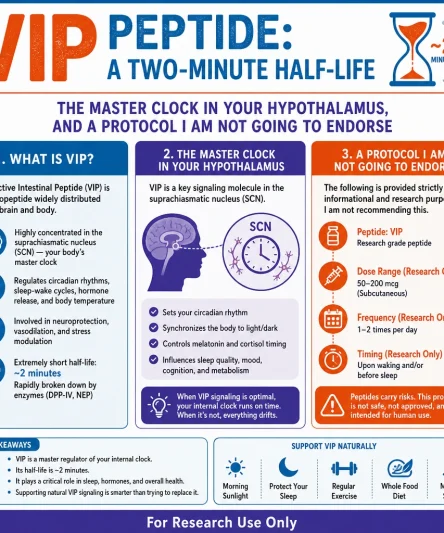
The published functional range of VIP is unusually broad, which is exactly why it appears across so many distinct research disciplines. In the central nervous system, particularly within the hypothalamus, VIP and PACAP are documented in the control of circadian rhythms, learning and memory, anxiety, and responses to stress and brain injury, while in the gut, VIP is noted for stimulating the secretion of pepsinogen. Secreted by both neurons and immune cells, including mast cells, VIP is described in the literature as a modulator of exocrine and endocrine secretion, immune response, smooth-muscle relaxation and gastrointestinal motility, vasodilation and blood flow, and fetal development. This makes VIP a recurring reference point in neuroscience, gut and gastrointestinal physiology, immunology—including studies on rheumatoid arthritis—endocrinology, and cardiovascular research programs alike.
VIP’s biology also has a well-known clinical-research footprint that helps explain the sustained interest in the molecule. Overproduction of VIP is the defining feature of VIP-secreting tumors, such as the rare neuroendocrine tumor known as a VIPoma, a condition studied precisely because it isolates the downstream consequences of elevated VIP signaling. On the receptor side, VPAC2 has been examined as a target of interest in the context of metabolic research, including type 2 diabetes models. None of this is a claim about PrymaLab’s product — VIP5 is a research-use-only reagent and is not a therapeutic — but it does illustrate why a laboratory would want a dependable, standardized VIP preparation on the shelf: the molecule sits at the intersection of many active research questions.
One further characteristic that shapes experimental design is VIP’s short biological half-life, reported at approximately two minutes in the bloodstream. Rapid clearance is a defining practical feature of native VIP and a major reason the peptide is studied so intensively in analog- and stability-focused research. For a working laboratory, a fast-acting peptide places a premium on consistent handling and reproducible presentation — which is where the format of the product becomes as important as the molecule itself.
## Why researchers choose the PrymaLab autoinjector pen
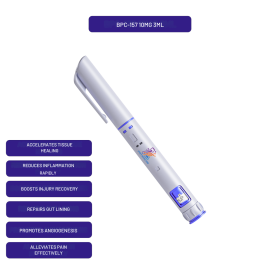
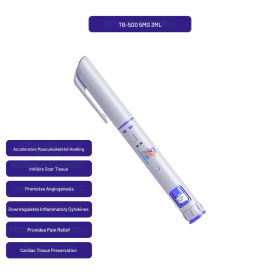
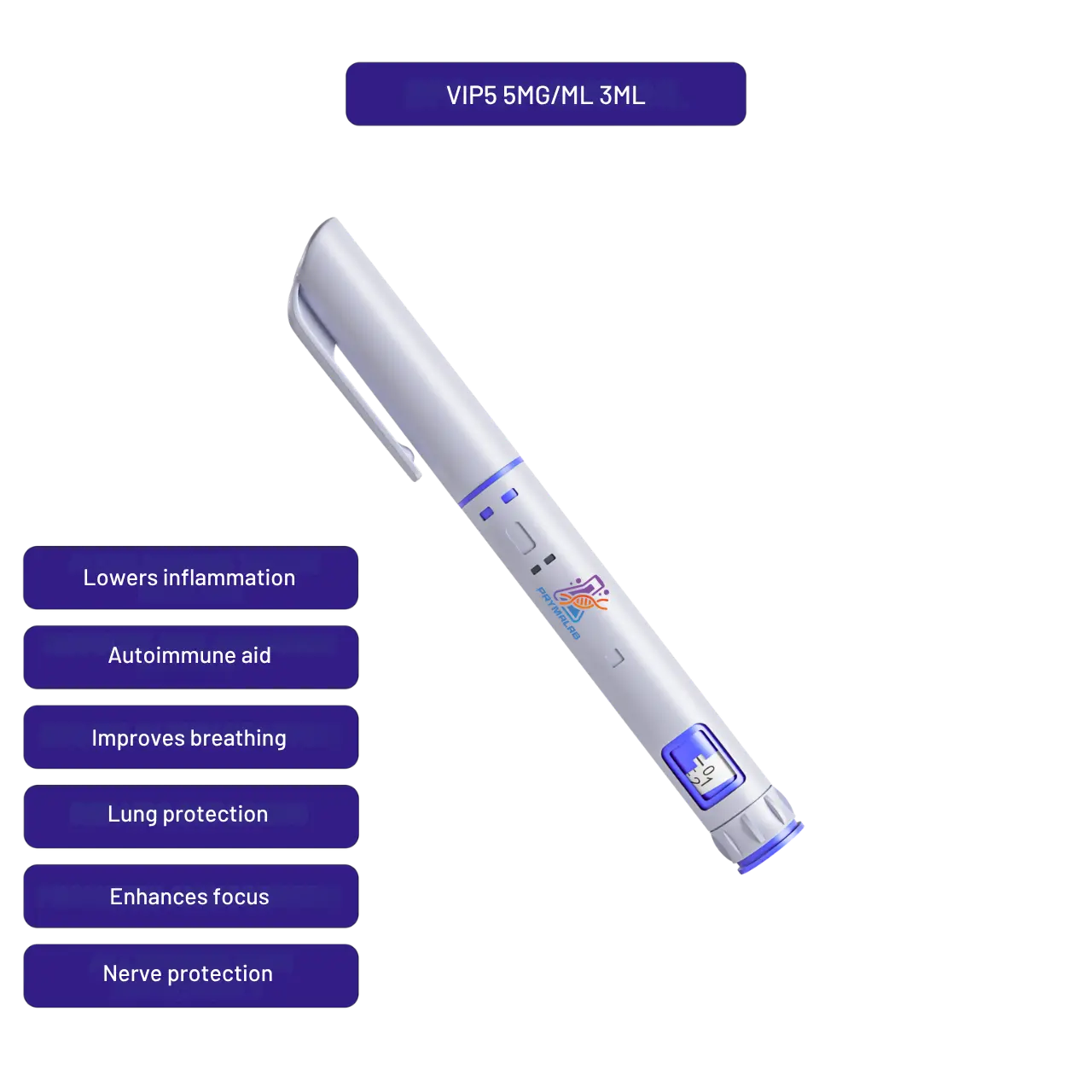
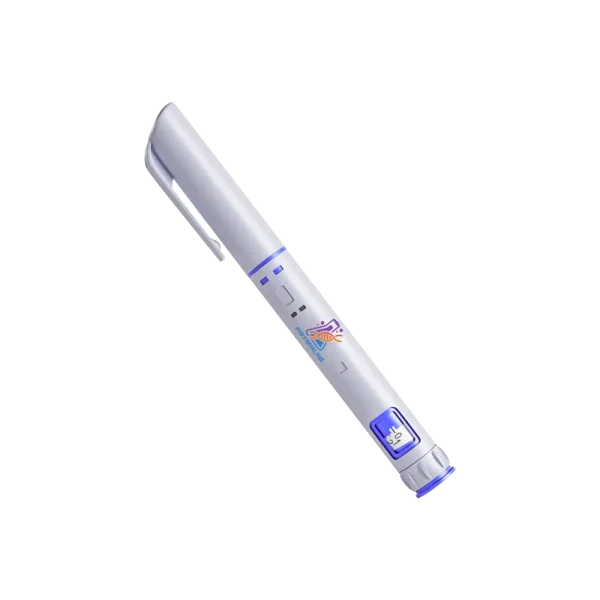
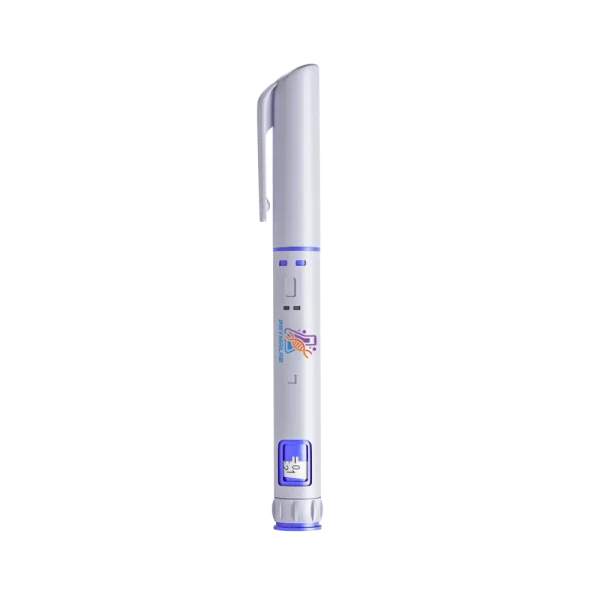
PrymaLab supplies VIP5 in a preloaded [3ml autoinjector pen](https://prymalab.net/product/gkp-blend-autoinjector/) calibrated to 5mg/ml, giving laboratories a uniform, repeatable format for in-vitro and non-human research workflows. The advantage of a sealed pen over loose vials is not cosmetic. Peptide research lives and dies on reproducibility, and every manual reconstitution step is an opportunity to introduce variance — pipetting error, inconsistent diluent volumes, freeze-thaw exposure, and handling contamination all add noise to your data. A [sealed pen design](https://prymalab.net/product/igf1-autoinjector/) collapses several of those steps into a single, factory-standardized presentation, supporting clean handling, accurate measured delivery, and straightforward record-keeping across study replicates.
Consider what a fixed 5mg/ml concentration in a 3ml pen actually buys a research team. It means every unit begins from the same reference concentration, so dilution schemes designed once can be reused across an entire study without recalculation. It means the person running week twelve of a protocol is working from the same starting material as the person who ran week one. And it means that when a result needs to be defended — in a manuscript revision, an internal review, or a replication attempt by a collaborating lab — the material variable is documented, consistent, and easy to describe in a methods section. Consistency of this kind is not a luxury in peptide research; it is often the difference between a clean, publishable dataset and one confounded by preparation drift.
For groups already standardizing on the pen format across their peptide inventory, VIP5 slots directly into the same workflow used for the rest of the [PrymaLab autoinjector range](https://prymalab.net/product/ghk-cu-peptide-autoinjector/), so handling procedures, storage practices, and record-keeping conventions carry over without retraining.
## Format and presentation
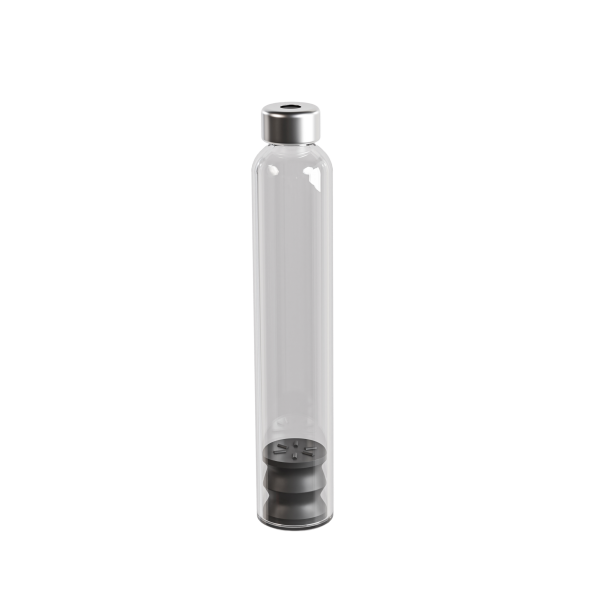
Each unit ships as a single [preloaded 3ml pen](https://prymalab.net/product/tb-500-autoinjector/) at 5mg/ml. An optional glass reloading cylinder lets research teams refill and standardize the VIP5 preparation between runs, which keeps the research compound consistent from batch to batch and simplifies inventory management for ongoing laboratory projects. The reloading option is particularly useful for longitudinal studies, where maintaining a single standardized preparation across many measurement points is often more important than any single run in isolation.
The preloaded format is also built with documentation in mind. Because the concentration and volume are fixed and known, the material is trivial to log against study records, lot tracking, and internal audit trails — a practical benefit for any lab that needs to reconstruct exactly what was used, when, and at what concentration months or years after the fact.
## Quality and documentation
PrymaLab VIP5 is intended strictly for [laboratory and research use](https://prymalab.net/product/bpc-157-autoinjector/). [Identity and specification details](https://prymalab.net/product/semax-autoinjector/) are referenced against public chemistry data — including the PubChem entry for vasoactive intestinal peptide — so researchers can confirm the compound profile before study design and before citing the material in their work. Anchoring identity claims to a public, third-party record means your team is never asked to take a specification on faith; the reference molecule is exactly the one described in the primary literature and public databases.
To restate the boundary clearly: VIP5 is a research reagent supplied for in-vitro and non-human research applications only. It is not a drug, is not for human or veterinary use, and none of the physiological or clinical context described on this page constitutes a claim about the product. That context is provided solely to help research teams understand the molecule they are working with and to place it accurately within the existing scientific literature.
## Specifications
– **Compound:** VIP5 — vasoactive intestinal peptide (vasoactive intestinal polypeptide, 28-residue peptide)
– **Amino acid count:** 28 residues, single-chain
– **Sequence:** HSDAVFTDNYTRLRKQMAVKKYLNSILN
– **Molecular formula (PubChem):** C₁₄₇H₂₃₇N₄₃O₄₃S
– **PubChem CID:** 53314964
– **Peptide family:** Secretin/glucagon superfamily; VIP/PACAP group
– **Form:** Preloaded autoinjector pen (research-use-only)
– **Pen size:** 3ml
– **Concentration:** 5mg/ml
– **Optional accessory:** Glass reloading cylinder for standardized refilling between runs
– **Reference:** https://pubchem.ncbi.nlm.nih.gov/compound/Vasoactive-intestinal-peptide
– **Intended use:** In-vitro / non-human laboratory research only. Not for human or veterinary consumption.
## Frequently asked questions
**What is VIP5 (vasoactive intestinal peptide)?**
VIP5 is a research compound — vasoactive intestinal peptide, a 28–amino acid single-chain polypeptide of the secretin/glucagon superfamily — supplied by PrymaLab as a preloaded 3ml autoinjector pen at 5mg/ml, intended exclusively for laboratory and non-human research use. VIP was first isolated from porcine duodenum by Said and Mutt in 1970 and is catalogued in PubChem under CID 53314964.
**What format is PrymaLab VIP5 supplied in?**
PrymaLab supplies VIP5 in a [preloaded 3ml autoinjector pen](https://prymalab.net/product/kpv-autoinjector/) at 5mg/ml, with an optional glass reloading cylinder for standardized refilling between research runs. The sealed, preloaded format is designed to reduce handling variance and support reproducible presentation across study replicates.
**What is the concentration of PrymaLab VIP5?**
PrymaLab VIP5 is supplied at 5mg/ml in a 3ml preloaded autoinjector pen, giving a consistent reference concentration for [laboratory study design](https://prymalab.net/product/igf1-lr3-autoinjector/) and making dilution schemes repeatable across an entire project.
**Which receptors does vasoactive intestinal peptide act through?**
In the published literature, VIP signals through the class B G-protein-coupled receptors VPAC1 and VPAC2, to which it binds with high affinity, and it has roughly a thousand-fold lower affinity for the PAC1 receptor relative to PACAP. These receptors are Gs-coupled and are classically associated with activation of adenylate cyclase and increased intracellular cAMP.
**Where can researchers buy VIP5 for research?**
Researchers can [buy VIP5 for research-use-only](https://prymalab.net/product/vip5-5mg-peptide/) directly from PrymaLab at prymalab.net, supplied in the preloaded 3ml autoinjector pen format at 5mg/ml, with the optional reloading cylinder available for standardized refills.
**Is VIP5 safe for human or veterinary use?**
No. VIP5 is a research-use-only reagent intended strictly for in-vitro and non-human laboratory applications. It is not a drug, is not for human or veterinary consumption, and must be handled by qualified personnel in an appropriate research setting.
—
*Related research entities and terms: vasoactive intestinal peptide, vasoactive intestinal polypeptide, VIP, 28-amino acid peptide, secretin/glucagon superfamily, VIP/PACAP family, VPAC1 receptor, VPAC2 receptor, class B GPCR, cyclic AMP signaling, research peptide, research compound, preloaded autoinjector pen, 3ml pen, 5mg/ml concentration, laboratory research use, PubChem CID 53314964.*


Reviews
There are no reviews yet.