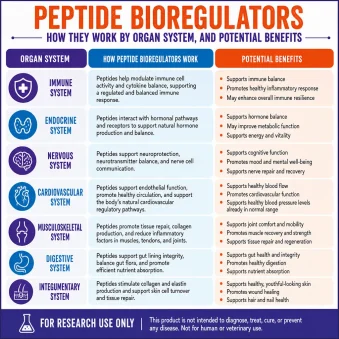


Bronchogen: lung bioregulator research and what it measured
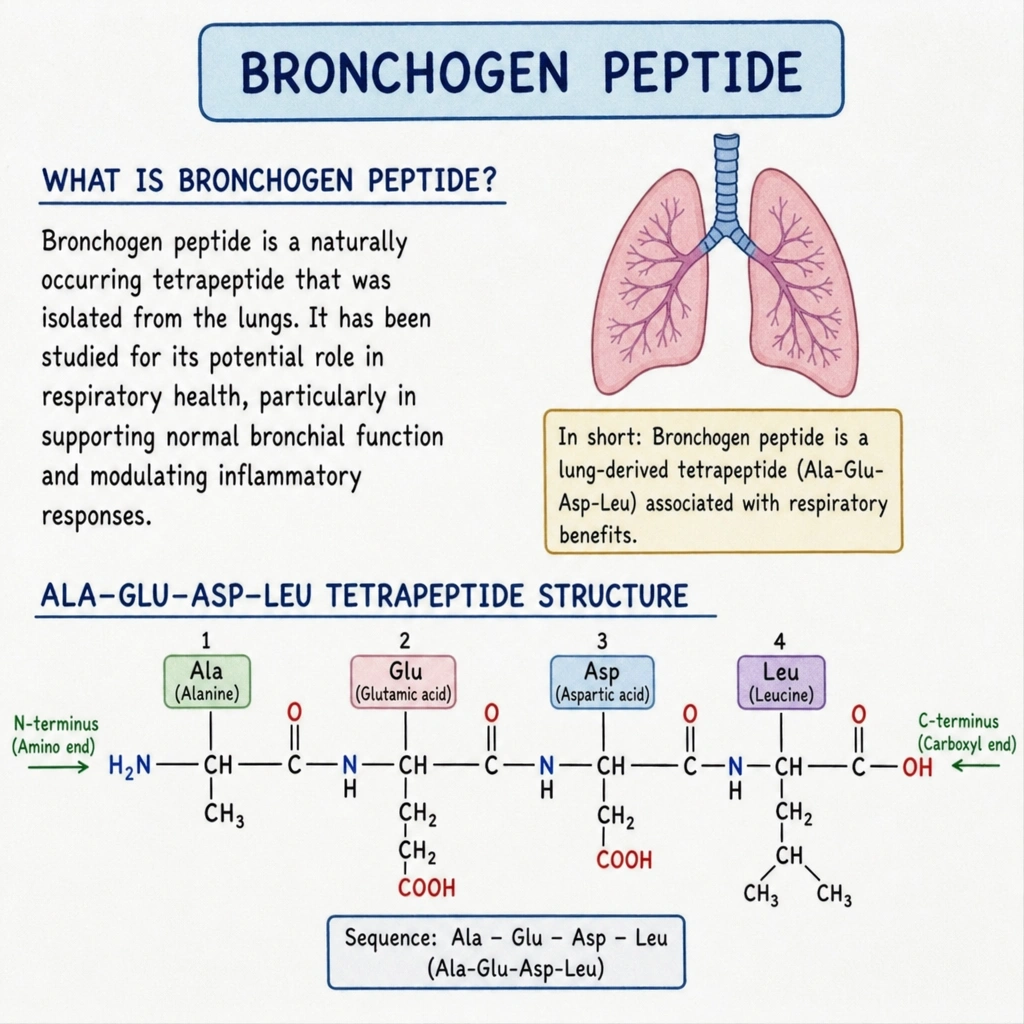
Bronchogen is a synthetic lung bioregulator tetrapeptide (Ala-Glu-Asp-Leu, about 446 g/mol) from the Khavinson series, studied for regeneration of bronchial epithelium, gene expression in lung tissue and airway tissue maintenance with age. PrymaLab supplies it as a Bronchogen 20mg vial, a Bronchogen 20mg nasal spray and a Bronchogen 20mg pen for research use.
- Sequence: Ala-Glu-Asp-Leu (AEDL), four amino acids, molecular weight about 446.4 g/mol.
- Class: synthetic cytogen (short bioregulator peptide) from the Khavinson series, assigned to lung tissue and bronchial mucosa.
- Studied for: regeneration of bronchial epithelium, gene expression in lung cells, airway tissue maintenance with age.
- Dose figures: none from a dose-finding study in animals or people; the one published concentration is 0.05 ng/mL in organotypic lung explant culture (Zakutskii et al., Adv Gerontol 2006;19:93-96).
- Storage: lyophilized powder refrigerated or frozen, away from light; reconstituted solution refrigerated and used within weeks.
- Forms and sizes at PrymaLab: Bronchogen Peptide 20mg, Bronchogen 20mg Nasal Spray, Preloaded Autoinjector | Bronchogen | 3ml Pen | 20mg.
- Related: Chonluten (Glu-Asp-Gly) guide for the sibling bronchial peptide; peptide reconstitution calculator for vial-to-volume math.
| Compound | Bronchogen | Chonluten | Taxorest |
|---|---|---|---|
| What it is | Synthetic tetrapeptide, Ala-Glu-Asp-Leu | Synthetic tripeptide, Glu-Asp-Gly | Natural peptide complex extracted from calf lung (cytomax) |
| Size | 4 amino acids, about 446 g/mol | 3 amino acids, about 319 g/mol | Mixture of peptides, no single sequence |
| Tissue focus in the literature | Lung tissue and bronchial epithelium; regeneration | Bronchial mucosa; airway inflammation; endurance work | Lung tissue; the extract the synthetic peptides were modeled on |
| At PrymaLab | Bronchogen Peptide 20mg | Chonluten Peptide 20mg | Not sold by PrymaLab |
Bronchogen is the tetrapeptide Ala-Glu-Asp-Leu (AEDL), a synthetic lung bioregulator from the Khavinson series studied for its action on bronchial epithelium. This guide covers what a lung bioregulator is, how Bronchogen differs from Chonluten, what the research shows, dose notes, storage, and where to find Bronchogen for sale as a research-use vial, nasal spray or preloaded pen.
Bronchogen as a lung bioregulator
Bronchogen is a lung bioregulator: a short synthetic peptide, Ala-Glu-Asp-Leu, that the Khavinson series assigns to lung tissue and the bronchial mucosa, where it is studied for its effect on the epithelial cells lining the airways. The term comes from the peptide bioregulation model developed in St. Petersburg, in which each organ is paired with a short peptide thought to act on that tissue's gene expression.
Chonluten is the other respiratory bioregulator in the series, and the two are easy to confuse. Bronchogen is a tetrapeptide (four amino acids) whose literature centers on regeneration of bronchial epithelium and lung tissue. Chonluten is a tripeptide, Glu-Asp-Gly, assigned to the bronchial mucosa and studied more for airway inflammation and mucosal support, with a further line of work on endurance. Both are synthetic cytogens, both are sold as research-use vials, nasal sprays and preloaded pens, and neither is an approved medicine. The Chonluten guide covers the tripeptide in detail.
Editorial & research disclaimer: This article is for educational purposes only and is not medical advice. Bronchogen is a peptide bioregulator and has not been evaluated by the FDA to diagnose, treat, cure, or prevent any disease. Always consult a licensed healthcare professional and verify local regulations before using any peptide.

Quick Answer
What is Bronchogen peptide? Bronchogen is a synthesized short-chain peptide bioregulator, commonly described as the tetrapeptide Ala-Glu-Asp-Leu (AEDL), designed to act specifically on lung and bronchial tissue. In the Khavinson model it works as an epigenetic switch, binding DNA in respiratory cells to activate the protein synthesis used for repair.
It is usually sold as an oral capsule bioregulator (often labeled as a Bronchogen 20mg peptide complex) and used in short cycles. Evidence is largely preclinical and from its originating research school, so treat it as an educational, research-grade compound rather than an approved medicine.
Bronchogen is a Khavinson-class lung peptide bioregulator — a synthetic tetrapeptide (Ala-Glu-Asp-Leu) studied for bronchial and lung tissue support, not an approved drug.
Mechanism is epigenetic by hypothesis: the bronchogen peptide bioregulator is proposed to bind DNA in respiratory cells, promoting DNA stability and upregulating repair-related protein synthesis.
Reported bronchogen peptide benefits include age-related lung support, post-illness recovery, bronchial repair in smokers, and reduced airway hyper-reactivity — mostly from preclinical and originating-school data.
No human dose has been established. The capsule courses quoted by suppliers are not from a published trial.
Buy on proof. Check that the certificate matches the lot number on your vial and can be verified, that the AEDL composition is stated, and that the label is clear.
What is Bronchogen peptide?
So, the bronchogen peptide — what is it, exactly? Bronchogen (sometimes misspelled "broncogen") is a specialized peptide bioregulator and bioregulatory peptide formulated to target, support, and regenerate the tissues of the lungs and the bronchial mucosal lining. It belongs to a class of compounds known as synthesized short peptides for the lungs, and it is tissue-specific: it is intended to act on the respiratory tract rather than the whole body.
In scientific terms, the tetrapeptide Bronchogen is an artificially synthesized short-chain geroprotective peptide consisting of four amino acids — Alanine, Aspartic acid, Glutamic acid, and Leucine (Ala-Glu-Asp-Leu, or AEDL). Because it has a low molecular weight, it is proposed to pass through the digestive system via oral administration, enter the bloodstream, and reach the cells of the respiratory tissues. As a bronchogen khavinson peptide, it shares the research lineage of other Khavinson bioregulators such as Chonluten, Vesugen, and Cardiogen.
Form and Labeling
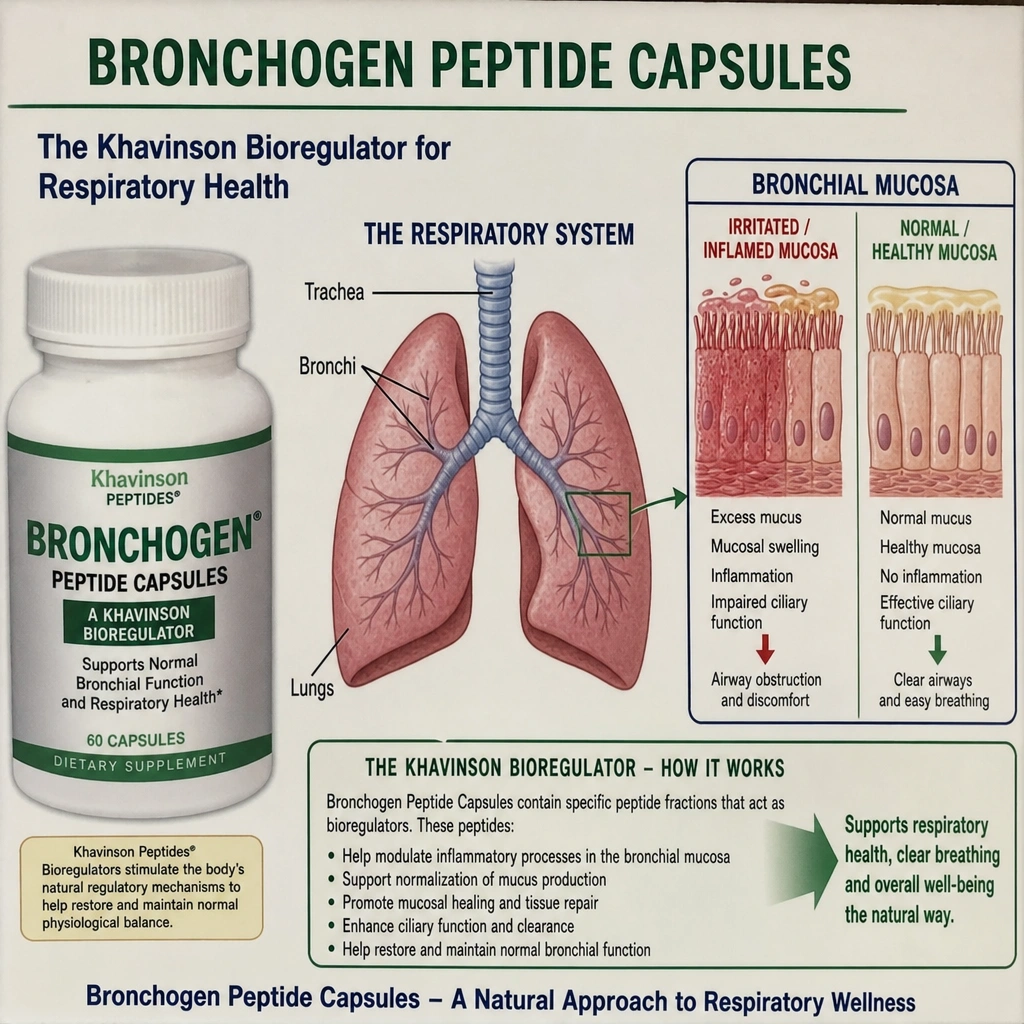
Bronchogen is most often supplied as bronchogen peptide capsules, frequently labeled as a "Bronchogen 20mg" peptide complex. It is not an approved medicine in the United States, and PrymaLab supplies it for laboratory research use only. Check the current legal status in your own region.
Because search phrasings vary, you may also find this compound under queries such as "bronchogen peptide what is it," "what is bronchogen peptide used for," "bronchogen peptide khavinson," "bronchogen peptide bioregulator lungs," "bronchogen peptide bioregulator bronchial," and "bronchogen peptide lung bioregulator." Each refers to the same Ala-Glu-Asp-Leu respiratory bioregulator described here, aimed at optimizing respiratory health and overall lung health.
How does the Bronchogen peptide work?
If you are wondering how lung bioregulators work, the answer lies in tissue specificity and epigenetic regulation. The amino-acid sequence of the bronchogen peptide bioregulator is proposed to be keyed to the respiratory system, so that it interacts mainly with the cells of the lungs, bronchial tubes, and respiratory mucosa. In the Khavinson model, the bronchogen peptide bioregulator for the lungs is proposed to work on bronchial epithelial cells in stages:
- Cellular penetration: the small four-amino-acid molecule crosses into respiratory cells and reaches the nucleus.
- DNA binding: it seeks out a specific promoter region on the DNA.
- Gene activation: binding is proposed to make that gene accessible for transcription, potentially influencing markers like NKX2-1, interacting with specific transcription factors like FOXA1 to modulate gene expression.
- Protein synthesis: the cell transcribes and translates the structural proteins the lung tissue needs, such as surfactant protein B, to maintain healthy surfactant production and regulate alveolar surface tension.
- Cellular restoration: with fresh proteins, the cell can repair damage, facilitating cellular regeneration and broader tissue regeneration to function more like a younger cell.
Bronchial Mucosa Repair and Local Immunity
A key proposed action of the bronchogen peptide bioregulator for the bronchial lining is supporting the bronchial epithelium, specifically the ciliated cells and club cells that sweep debris out of the lungs and addressing goblet cell hyperplasia or squamous metaplasia to manage protective MUC5AC mucus production. By supporting this lining and modulating the local inflammatory response and immune response, including the production of secretory immunoglobulin A, Bronchogen is proposed to help restore the lungs' self-cleaning mechanism and improve mucociliary clearance. It is also discussed in the context of local immunity — supporting secretory IgA, CXCL12, NKX2-1, SCGB3A2, and SCGB1A1 expression in the BALF, and healthy alveolar macrophage signaling. These are mechanistic, largely preclinical observations involving the analysis of bronchoalveolar lavage fluid, not proven human outcomes.
Bronchogen peptide benefits in the research literature
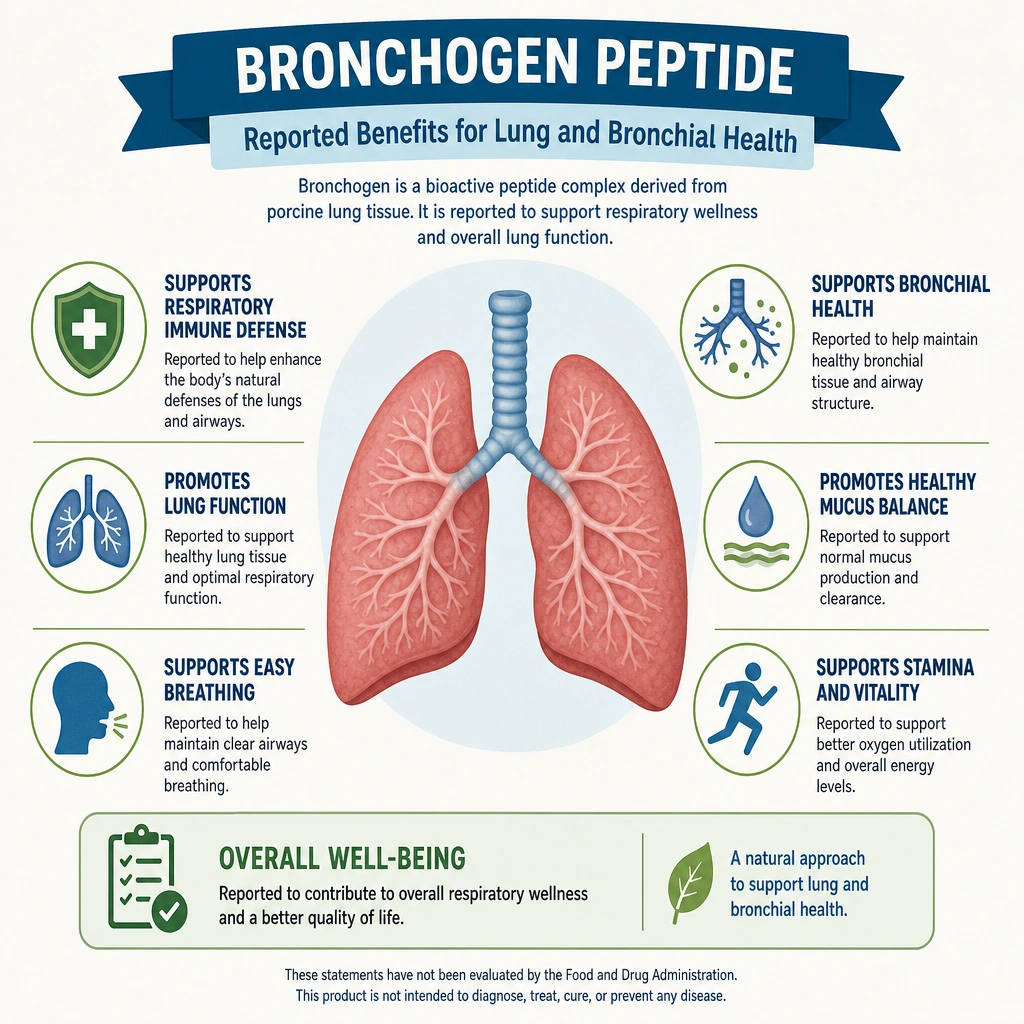
Because it is proposed to operate at the level of cellular repair, the reported bronchogen benefits cascade into broader pulmonary function, respiratory capacity, and respiratory health. The primary bronchogen peptide benefits discussed in bioregulator literature include:
- Supporting age-related lung decline: proposed to support elastin, collagen, and surfactant production in the lung matrix, helping maintain elasticity.
- Improving lung capacity after illness: studied for accelerating repair of microscopic lesions and reversing squamous metaplasia after respiratory infections.
- Bronchial support in smokers and ex-smokers: proposed to support regeneration of the bronchial lining damaged by smoke and reverse signs of squamous metaplasia.
- Airway hyper-reactivity: discussed in bioregulator literature, with no controlled study and no asthma endpoint.
- Environmental exposure: proposed in the same literature, without supporting measurements.
The honest limitation: there are no large independent randomized human trials establishing efficacy for the bronchogen peptide. It cannot regrow destroyed alveoli and will not "cure" chronic obstructive lung pathology like COPD; frame it as quality-of-life support, and treat overnight-cure claims as marketing.
Measured findings: bronchial cultures and DNA melting
Two Bronchogen papers report measurements rather than models. In 2012 Khavinson, Linkova, Polyakova and colleagues looked at the differentiation factors CXCL12 and Hoxa3 in cultures of human embryonic pancreatic and bronchial cells, and CXCL12 and WEGC1 in human prostatic fibroblasts (Khavinson et al. 2012). Expression of these factors fell in late-passage, aging cultures. Bronchogen (Ala-Glu-Asp-Leu) stimulated them in bronchial epithelial cells, while pancragen did so in pancreatic cells and vesugen in fibroblasts, and the effect was more pronounced in the aged cultures (Khavinson et al. 2012).
The second paper, by Monaselidze, Khavinson and colleagues in 2011, measured DNA melting by differential scanning microcalorimetry (Monaselidze et al. 2011). Bronchogen raised the melting temperature of calf thymus and mouse liver DNA by 3.1 °C within a narrow range of molar ratios (0.01 to 0.055 peptide per base pair), with no further rise at higher ratios and no change in melting enthalpy. The authors concluded that the peptide stabilises DNA, binds both strands mainly at the bases and is neither AT- nor GC-specific (Monaselidze et al. 2011). That paper's title gives the sequence as Ala-Asp-Glu-Leu, while other papers from the group write Ala-Glu-Asp-Leu (Khavinson et al. 2012) (Khavinson et al. 2016). The two orders have the same composition and mass, so a reader comparing studies should check which one was used.
A separate docking study predicted that AEDL binds the DNA sequence ctcc (Khavinson et al. 2016), but that is a computed model, not a measurement.
Bronchogen vs Taxorest: synthesized vs natural
Bronchogen (a synthesized "cytogen") is often compared with Taxorest, a natural lung extract ("cytomax"). Synthesized peptides are exact copies of the active molecule and act faster; natural extracts act more slowly but may nourish tissue longer. The bioregulator literature pairs the two, with Bronchogen as the defined peptide and Taxorest as the tissue extract.
| Factor | Bronchogen (Cytogen) | Taxorest (Cytomax) |
|---|---|---|
| Type | Synthetic tetrapeptide (Ala-Glu-Asp-Leu) | Natural bronchial extract |
| Target tissue | Lungs & bronchial mucosa | Lungs & bronchial mucosa |
| Onset | Faster-acting | Slower, gradual |
| Duration | Immediate trigger | Longer-lasting nourishment |
| Typical role | Defined synthetic peptide | Tissue extract |
| Form | Capsules (Bronchogen 20mg) | Capsules |
Bronchogen handling in the lab
Bronchogen is not an approved medicine and no human dose has been established. The figures that circulate for capsule courses come from supplier and bioregulator literature, not from a published trial, and this page does not repeat them.
- Formats — oral capsules containing lyophilized powder (often a Bronchogen 20mg peptide complex), and lyophilized vials for laboratory work.
- Dissolving a vial — a lyophilized peptide is dissolved in a suitable diluent; the concentration is the mass of peptide divided by the volume added.
- Storage — lyophilized powder cold and out of the light; solutions refrigerated.
- Records — note the lot number, the diluent and the concentration alongside any result.
Bronchogen combinations studied with other bioregulators
In the Khavinson framework, organs do not work in isolation, so Bronchogen is often "stacked" with other tissue bioregulators or systemic repair peptides like BPC-157 and GHK-Cu:
- Respiratory-immune (Bronchogen + Vladonix): pairs lung repair with thymus/immune support to guard against secondary infection.
- Cardiopulmonary (Bronchogen + Ventfort): adds vascular support for the pulmonary capillaries to enhance respiratory capacity — of interest to athletes targeting VO2 max.
- Mucosal repair (Bronchogen + Stamakort): addresses silent acid reflux that can irritate the bronchial tubes by also supporting the gastric lining.
These pairings come from bioregulator literature and practitioner material, not from controlled studies of the combinations.
Safety and side effects in the literature
Reports from its originating research tradition describe a favorable safety profile: as a short peptide of natural amino acids, Bronchogen is said to be well tolerated, with no documented dependency or overdose risk because excess is metabolized. Reported bronchogen peptide side effects are uncommon and mild — occasionally short-lived gastrointestinal upset when first starting. Independent, large-scale human trial data remain limited, so read these reports as encouraging rather than definitive.
Precautions: avoid during pregnancy or breastfeeding unless a physician advises otherwise; use pediatric dosing only under medical supervision; and check the capsule's inactive ingredients (gelatin or cellulose shell, fillers) for personal allergies.
Where to find Bronchogen for sale
As peptide therapy grows, so does the number of vendors. Finding legitimate bronchogen for sale requires diligence — read bronchogen peptide reviews, but buy on documentation rather than hype. Use the checklist below.
| Factor | High-Quality (Verified) | Low-Quality / Risky |
|---|---|---|
| Sourcing | Authentic Khavinson research tie / authorized distributor | Unknown origin |
| Testing / COA | Lot-matched certificate that can be verified | Missing or generic |
| Labeling | States Ala-Glu-Asp-Leu composition | Vague ingredient list |
| Formulation | Clean inactive ingredients | Dyes, harsh binders, allergens |
| Claims & price | Realistic, supportive claims | "Overnight cure" / suspiciously cheap |
PrymaLab's bioregulator catalog is a reference point for the transparency standards a supplier should meet.
Researching respiratory bioregulators? Start with verified material.
PrymaLab focuses on US-handled research peptides with transparent documentation and careful handling.
Explore PrymaLab BioregulatorsFrequently asked questions
What is Bronchogen peptide?
Bronchogen peptide is the synthetic tetrapeptide Ala-Glu-Asp-Leu (AEDL), a lung bioregulator from the Khavinson series developed at the St. Petersburg Institute of Bioregulation and Gerontology. It is studied for regeneration of bronchial epithelium, gene expression in lung tissue and maintenance of airway tissue with age. PrymaLab supplies it as a 20mg vial, a 20mg nasal spray and a 20mg preloaded pen for research use.
What is a lung bioregulator?
A lung bioregulator is a short peptide that, in the Khavinson model of peptide bioregulation, is paired with lung tissue and studied for its effect on gene expression there. The series has two synthetic examples: Bronchogen (Ala-Glu-Asp-Leu) for lung tissue and bronchial epithelium, and Chonluten (Glu-Asp-Gly) for the bronchial mucosa. Taxorest, a natural calf-lung extract, is the older cytomax version. All are research material, not approved medicines.
What is the difference between Bronchogen and Chonluten?
Both are synthetic respiratory bioregulators from the Khavinson series, but they differ in size and emphasis. Bronchogen is the tetrapeptide Ala-Glu-Asp-Leu, assigned to lung tissue and studied for regeneration of bronchial epithelium. Chonluten is the tripeptide Glu-Asp-Gly, assigned to the bronchial mucosa and studied for airway inflammation, mucosal support and endurance. PrymaLab's Chonluten guide covers the tripeptide; both compounds are sold as research-use vials, nasal sprays and pens.
Is Bronchogen the same as Taxorest?
No. Taxorest is a natural peptide complex extracted from calf lung tissue, a mixture of peptides in the cytomax line of the Khavinson series. Bronchogen is a synthetic tetrapeptide with one defined sequence, Ala-Glu-Asp-Leu, designed as the cytogen counterpart for the same tissue. The practical difference: a defined molecule is easier to quantify and to study, while an extract has no single active sequence.
How should Bronchogen be stored?
Sealed lyophilized Bronchogen is stored refrigerated at 2 to 8 C, or frozen at -20 C, and kept out of light. After reconstitution with bacteriostatic water the solution is refrigerated, not frozen, and used within a few weeks. The nasal spray and the preloaded pen are refrigerated as well. Temperature swings shorten shelf life, so the vial goes back in the fridge after each use.
What is Bronchogen peptide and what is it used for?
Bronchogen is a synthesized short-chain peptide bioregulator (the tetrapeptide Ala-Glu-Asp-Leu) designed to support and regenerate lung and bronchial tissue. It is used mainly to support recovery after respiratory illness, age-related lung decline, and bronchial health in smokers. In the Khavinson model it acts epigenetically, potentially influencing factors like FOXA2, to drive repair-related protein synthesis.
What are the main Bronchogen peptide benefits?
Reported bronchogen peptide benefits include supporting lung elasticity with age, improving lung capacity after illness, aiding bronchial repair in smokers, easing airway hyper-reactivity over time, and helping the lungs clear pollutants. Evidence is largely preclinical and from its originating research school, so strong disease claims should be treated cautiously.
What did the Bronchogen studies measure?
The primary measurements are in cell culture: a 2012 study of differentiation factors in human bronchial epithelial cultures, where Bronchogen stimulated CXCL12 and Hoxa3 more strongly in aged cultures, and a 2011 differential scanning microcalorimetry study, where it raised the melting temperature of DNA. No human dose has been established, and the capsule courses quoted by suppliers are not from a trial.
Has Bronchogen been studied in asthma?
No. Bronchogen is not an approved medicine and is not an acute rescue medication. The published work is cell culture and DNA binding; there is no controlled study with an asthma or COPD endpoint, so the airway claims that circulate for it are not supported by the literature.
Are there Bronchogen peptide side effects?
Reported bronchogen peptide side effects are uncommon and mild, most often brief gastrointestinal upset when first starting. Its originating research tradition reports no dependency or overdose risk because excess peptide is metabolized. Controlled human trial data are limited, and there are no safety data in pregnancy, nursing or children.
Where can I find Bronchogen for sale, and do I need a prescription?
Bronchogen is sold as a research chemical, not as an approved medicine or a supplement, and PrymaLab supplies it for laboratory research use only. Local rules vary. Look for bronchogen for sale from suppliers who state the Ala-Glu-Asp-Leu composition, issue a certificate that matches the lot number on the vial and can be verified, and avoid cure-all claims or suspiciously low prices.
Is Bronchogen a Khavinson peptide?
Yes. The bronchogen khavinson peptide comes from the bioregulator research tradition associated with Professor Vladimir Khavinson and the St. Petersburg Institute of Bioregulation and Gerontology, which developed short, tissue-specific peptides — including synthesized respiratory peptides — to support organ-specific repair.
References and further reading
- Khavinson, V.Kh. (2002). Peptides and Ageing. Neuroendocrinology Letters, 23(Suppl 3), 11–144.
- Khavinson, V.Kh., & Malinin, V.V. (2005). Gerontological Aspects of Genome Peptide Regulation. Karger, Basel.
- Anisimov, V.N., & Khavinson, V.Kh. (2010). Peptide bioregulation of aging: results and prospects. Biogerontology, 11(2), 139–149.
- Review literature on short peptide bioregulators and bronchopulmonary tissue (Ala-Glu-Asp-Leu / AEDL-class peptides).
- U.S. Food and Drug Administration. Dietary Supplements: Questions and Answers. FDA.gov. Accessed 2026.
PrymaLab resources: Bioregulator peptides · Research Hub · Peptide calculator · FAQ.
Final disclaimer: This article is for educational purposes only. Bronchogen and the other compounds discussed have not been evaluated by the FDA or comparable agencies to diagnose, treat, cure, or prevent any disease, and statements about their effects have not been evaluated by the FDA.
PrymaLab supplies Bronchogen for laboratory research use only; it is not for human or veterinary use. Verify the legal status of any compound in your jurisdiction. PrymaLab does not endorse any specific third-party peptide vendor mentioned in this article and assumes no responsibility for third-party products.