

Chonluten peptide: research, how it works and uses
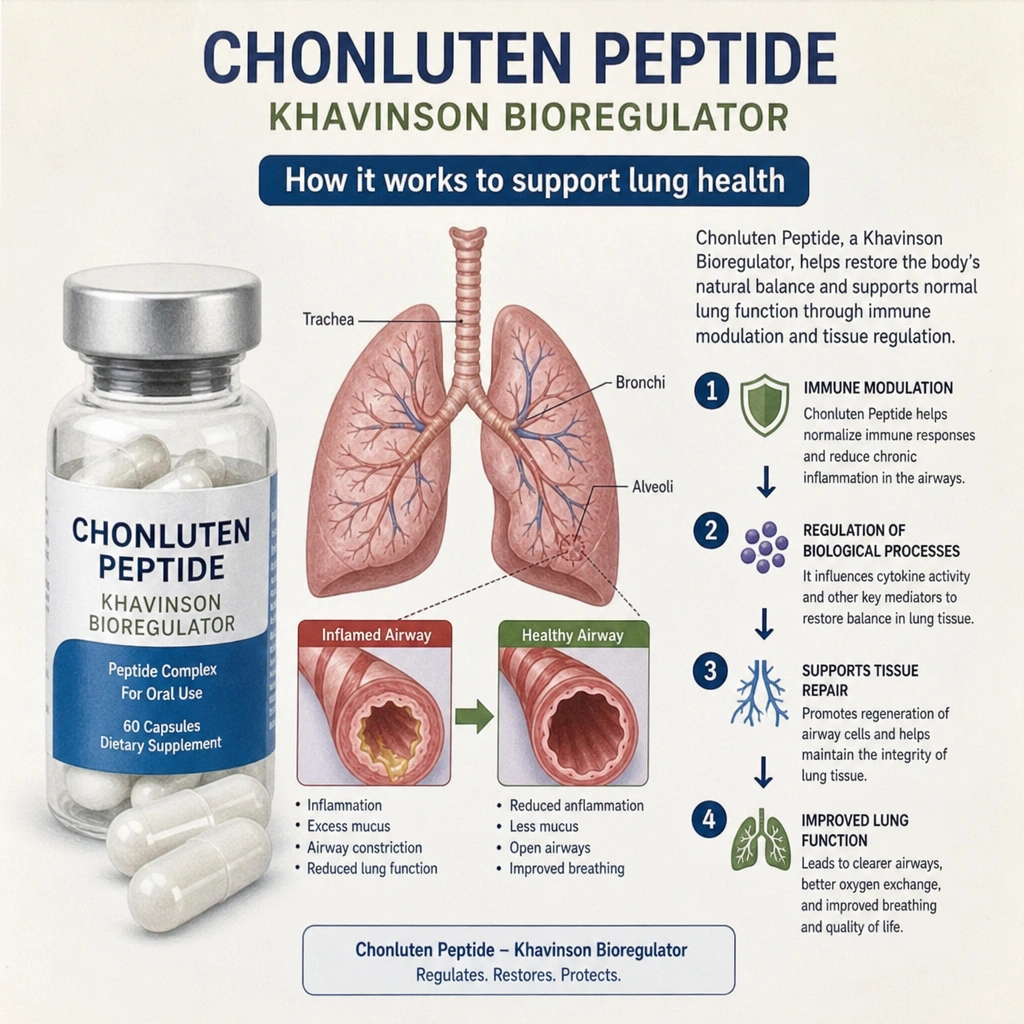
Chonluten is a synthetic bioregulator tripeptide (Glu-Asp-Gly, about 319 g/mol) from the Khavinson series, studied for bronchial mucosa and lung tissue support and airway inflammation, and discussed in endurance research. PrymaLab supplies it as a Chonluten 20mg vial, a Chonluten 20mg nasal spray and a Chonluten 20mg pen for research use.
- Sequence: Glu-Asp-Gly (EDG), three amino acids, molecular weight about 319.3 g/mol.
- Class: synthetic cytogen (short bioregulator peptide) from the Khavinson series, assigned to the bronchial mucosa and lungs.
- Studied for: bronchial mucosa support, airway inflammation, gene expression in bronchial epithelial cells, endurance in athletes.
- Dose figures: none from a peer-reviewed dose-finding study.
- Storage: lyophilized powder refrigerated or frozen, away from light; reconstituted solution refrigerated and used within weeks.
- Forms and sizes at PrymaLab: Chonluten Peptide 20mg, Chonluten 20mg Nasal Spray, Preloaded Autoinjector | Chonluten | 3ml Pen | 20mg.
- Related: Bronchogen (Ala-Glu-Asp-Leu) guide for the sibling lung peptide; peptide reconstitution calculator for vial-to-volume math.
| Compound | Chonluten | Bronchogen |
|---|---|---|
| Sequence | Glu-Asp-Gly, three amino acids | Ala-Glu-Asp-Leu, four amino acids |
| Tissue focus in the literature | Bronchial mucosa; airway inflammation; endurance work | Lung tissue and bronchial epithelium; regeneration |
| At PrymaLab | Chonluten Peptide 20mg | Bronchogen Peptide 20mg |
Chonluten is the tripeptide Glu-Asp-Gly, a synthetic bioregulator from the Khavinson series assigned to the bronchial mucosa and lungs. This guide covers what the research shows, how the peptide is thought to act on gene expression in airway tissue, what the literature measured, storage, and where to find Chonluten for sale as a research-use vial, nasal spray or preloaded pen.
Chonluten peptide benefits: what the research shows
Four points summarize what the literature on this tripeptide covers. Each is expanded in the sections that follow, with the standing caveat that this is preclinical and Russian clinical work, not an approved use.
- Bronchial mucosa support. In the Khavinson series Chonluten is the cytogen assigned to the bronchial mucosa, and its published work examines how the peptide affects the epithelial cells lining the airways.
- Inflammatory signaling. Avolio and colleagues (Int J Mol Sci 2022;23:3607) report that Chonluten lowered tumor necrosis factor production by LPS-stimulated human THP-1 monocytes and cut their adhesion to activated endothelial cells. That work was done in monocytes and macrophages, not in airway epithelium.
- Gene expression in bronchial epithelial cells. The proposed mechanism is the same as for other cytogens: the short peptide enters the nucleus and shifts transcription of tissue-specific genes, which is how a three-residue molecule is thought to act at all.
- A defined molecule rather than an extract. As a synthetic cytogen with one sequence, a result can be attributed to the peptide itself, unlike the natural lung extract (cytomax) it was modeled on.
Editorial & research disclaimer: This article is for educational purposes only and is not medical advice. Chonluten is a peptide bioregulator and has not been evaluated by the FDA to diagnose, treat, cure, or prevent any disease. Chonluten supplied by PrymaLab is for laboratory research use only and is not for human use.

Quick Answer
What is Chonluten peptide? Chonluten is a synthetic tripeptide bioregulator — commonly described as Glu-Asp-Gly (EDG) — designed to act specifically on the bronchial mucosa and lung tissue. In the Khavinson model it works as an epigenetic signal, binding DNA in bronchial epithelial cells to switch on the protein synthesis and proliferative activity needed for repair.
It is sold as an oral capsule bioregulator in Russia and as a lyophilized research powder. The evidence base is largely preclinical and originates with its developing research school, so it should be treated as an educational, research-grade compound rather than an approved medicine.
Chonluten is a Khavinson-class lung peptide bioregulator — a synthetic tripeptide studied for bronchial and pulmonary tissues support, not an approved drug.
Mechanism is epigenetic by hypothesis: the peptide is proposed to bind DNA in respiratory cells and upregulate repair-related protein synthesis.
Published primary data are cell studies: lower TNF and IL-6 in human THP-1 monocytes and macrophages, and a gene-expression paper on the T-34 peptide in gastric ulcer. Claims about post-infection recovery, smoker's cough and endurance have no controlled human data behind them.
Check the certificate. For research material, check that the certificate of analysis matches the lot number on the vial and can be verified.
What is the Chonluten peptide?
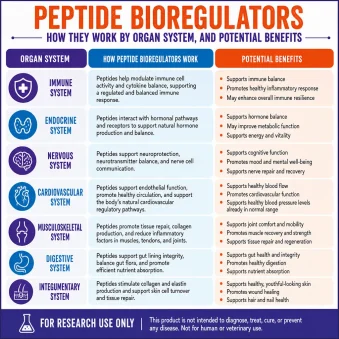
The chonluten peptide is a synthetic short peptide bioregulator designed to target the cells of the respiratory system — particularly the bronchial mucosa, endothelial cells, and lung tissue. Unlike broad-spectrum supplements such as vitamin C, Chonluten is tissue-specific: it is intended to act on the respiratory tract rather than the whole body.
Chonluten belongs to the family of Khavinson bioregulators — short peptide sequences isolated or synthesized to match the shortest active fragments of natural tissue peptide complexes. As a chonluten khavinson peptide, it shares the same research lineage as other well-known bioregulators like Vesugen, Cardiogen, and Testagen. Readers arriving from different search phrasings may know it as the chonluten peptide lung bioregulator or simply as chonluten peptide lung support — all refer to the same respiratory compound.
The Biochemical Structure: A Targeted Tripeptide
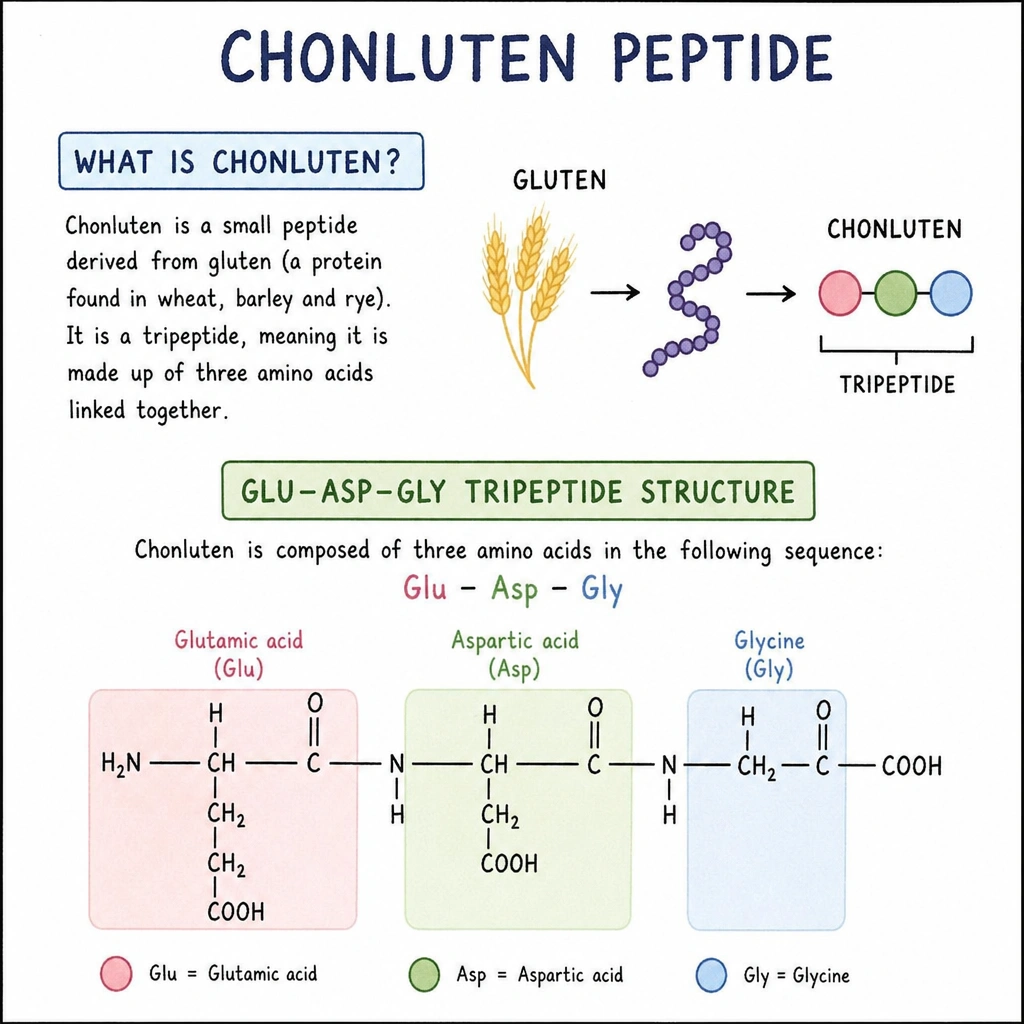
Chonluten is classified as a synthetic tripeptide, commonly described as the T-34 tripeptide or EDG sequence — Glu-Asp-Gly (glutamic acid, aspartic acid, and glycine). Because reported amino acid sequences can differ across sources, confirm the exact sequence on the supplier's documentation rather than assuming it. Each residue plays a role often highlighted in respiratory support:
- Glutamic acid: a metabolic fuel for rapidly dividing cells, including those lining the respiratory tract.
- Aspartic acid: involved in DNA and RNA synthesis, the metabolic conversion of asparagine, and cellular energy generation for tissue repair.
- Glycine: associated with anti-inflammatory activity, the modulation of TNF tolerance and pro-inflammatory cytokines like interleukin-6, TNF-α, and cyclooxygenase-2 (COX-2), and the production of collagen and glutathione.
At three residues, Chonluten is extremely small — central to the Khavinson hypothesis that such peptides can reach the cell nucleus and interact with DNA, potentially influencing processes like DNA methylation.
How does the Chonluten peptide work?
Understanding how the chonluten peptide bioregulator lungs therapy is proposed to work requires a look at the microscopic environment of the airways. Every inhale draws in oxygen but also dust, allergens, pathogens like LPS, and pollutants that can affect both the respiratory epithelium and the underlying endothelial cells. The respiratory tract is lined with a mucosal membrane responsible for mucus production and millions of tiny cilia that sweep trapped debris up and out. Illness, smoke, and pollution inflame this lining, slow the cilia, and reduce the cells' ability to synthesize repair proteins.
According to the Khavinson model, the chonluten lung peptide bioregulator reverses this decline, potentially interacting with mesenchymal stem cells to support bronchial mucosal function, potentially improving TNF tolerance, through three proposed steps:
- Epigenetic upregulation: Chonluten is proposed to penetrate the nucleus of bronchial cells and switch on genes, such as the c-Fos transcription factor and heat shock protein 70 (HSP70), potentially influencing signaling pathways like signal transducer and activator of transcription (STAT3) phosphorylation and apoptosis to govern the structural integrity of the mucosal lining.
- Restoring the ciliary escalator: by supporting cellular metabolism, it may help regenerate damaged cilia and restore the lungs' self-cleaning mechanism.
- Normalizing local immunity: it is proposed to help balance alveolar macrophage and monocyte activity and regulate local immune responses to modulate immune responses, alongside antioxidant enzymes like superoxide dismutase (SOD) to combat oxidative stress, so the lungs stay vigilant without excess inflammation.
It is worth being precise: a hypothesis about gene regulation is not the same as a proven therapeutic effect. These are mechanistic, largely preclinical observations describing what is being studied, not confirmed clinical outcomes in humans.
Respiratory research on Chonluten in more detail
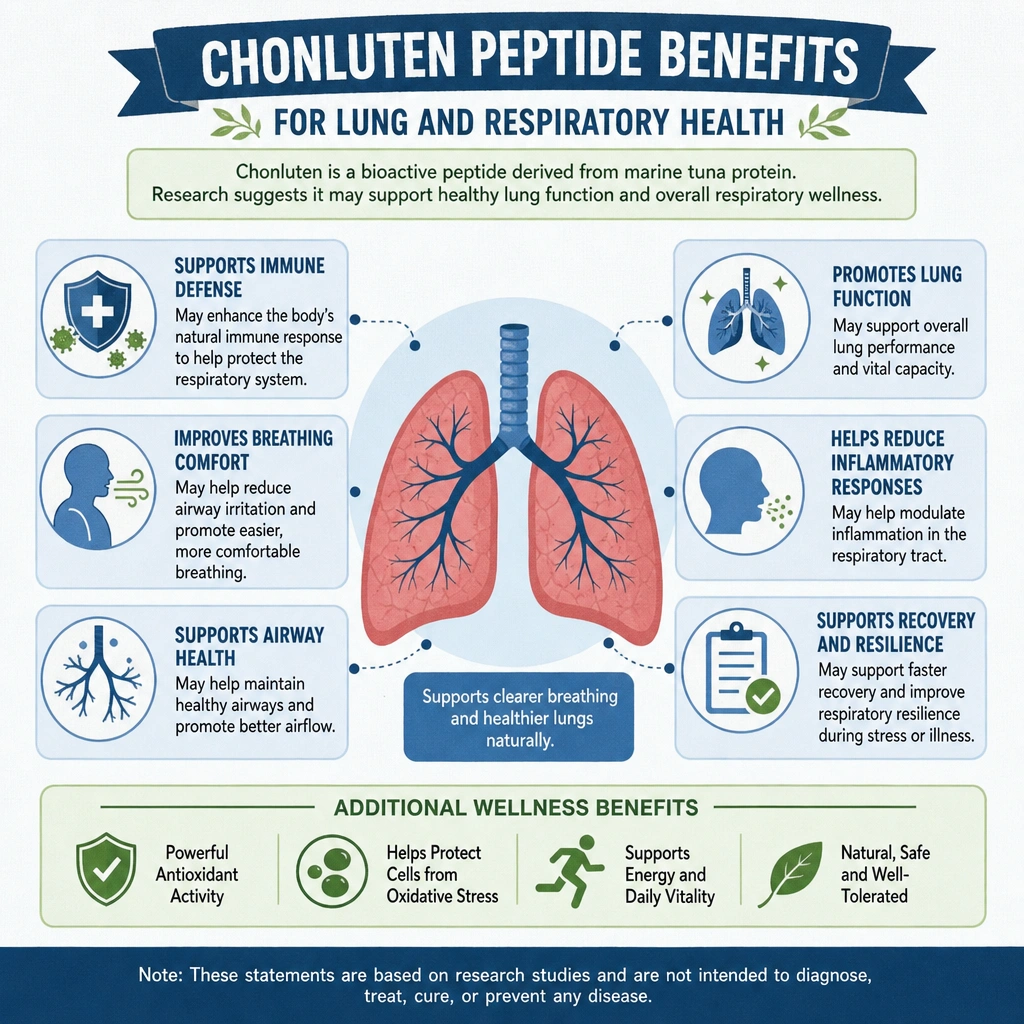
The uses claimed for the chonluten peptide range from acute recovery to long-term maintenance. The list below summarizes the applications discussed in bioregulator literature; none has been tested in a controlled human trial, and most evidence is preclinical and concentrated in its originating research school.
- COPD-related inflammation: proposed to act on the structural proteins of the alveoli and bronchi in chronic obstructive pulmonary disease.
- Recovery after respiratory infections: proposed for repair of the epithelial lining after pneumonia, influenza and other infections.
- Irritated bronchial mucosa: discussed in asthma and allergy contexts.
- Environmental toxins: proposed to act through antioxidant defense, cell turnover and the mucociliary escalator against oxidative stress from smog and pollutants.
- Smoker's cough: named as a use, with claims of tissue regeneration in ciliated cells that no controlled study supports.
The honest limitation: there are no large independent randomized human trials establishing efficacy for the chonluten peptide. Treat strong disease claims as marketing rather than settled science, and keep expectations calibrated to the strength of the evidence.
Cell-line findings: TNF and IL-6 in THP-1 cells
The most specific published experiment on Chonluten is a 2022 study by Avolio, Martinotti, Khavinson and colleagues in the International Journal of Molecular Sciences (Avolio et al. 2022). It compared five Khavinson peptides (the Epitalon tetrapeptide, the Vilon and Thymogen dipeptides, the Thymalin peptide complex and the Chonluten tripeptide) on THP-1, a human leukaemia monocytic cell line that can be differentiated into macrophages. All five increased tyrosine phosphorylation of mitogen-activated cytoplasmic kinases, which the authors read as modulation of proliferative signalling (Avolio et al. 2022). Chonluten, described in the paper as derived from bronchial epithelial cells, inhibited TNF production by monocytes exposed to bacterial lipopolysaccharide, and the authors connected the low TNF release to a documented mechanism of TNF tolerance (Avolio et al. 2022). In the differentiated cells, all five peptides inhibited the TNF and IL-6 expression stimulated by lipopolysaccharide (Avolio et al. 2022).
An older paper from the St Petersburg group reported that the peptide T-34 regulates mRNA expression of genes encoding antioxidant and anti-inflammatory proteins in the context of gastric ulcer, and normalises the synthesis of those proteins (Khavinson et al. 2012). Its abstract gives no model details or effect sizes. Neither study used lung or bronchial tissue, so both describe effects on immune cells and gene expression rather than on the airways.
Cytogens vs cytomaxes: where Chonluten fits
Explore peptide bioregulators and you'll meet two categories: Cytomaxes and Cytogens. Understanding the difference between synthetic and natural peptide preparations clarifies what a result can be attributed to. Chonluten is a Cytogen — a lab-synthesized, single active tripeptide — while its natural counterpart for the lungs, Taxorest, is a Cytomax extracted from animal bronchial mucosa.
| Factor | Chonluten (Cytogen) | Taxorest (Cytomax) |
|---|---|---|
| Type | Synthetic single tripeptide (Glu-Asp-Gly) | Natural peptide complex (extracted) |
| Target tissue | Bronchial mucosa & lung | Bronchial mucosa & lung |
| Form | Capsules | Capsules |
Chonluten in endurance and athlete research
Endurance athletes have taken interest in the chonluten peptide because lung capacity, efficiency and VO2 max limit performance in sports like running, cycling, swimming and high-altitude training. No controlled study among the references here has tested Chonluten in athletes, and claims about oxygen exchange, exercise-induced bronchospasm or training interruptions have no published data behind them.
Chonluten is also named alongside Vladonix, Cerluten, Cartalax, GHK-Cu and BPC-157 peptides in combinations discussed online; none of these combinations has been studied.
What the literature measured
Chonluten is not an approved medicine anywhere and has no official human dose. Capsule products sold as supplements in Russia carry a label regimen; that is a supplement label, not a trial result, and it concerns a different product from the research peptide sold here. The Khavinson group's published work on this peptide is cell and animal research, and those papers are the only figures with a source behind them. PrymaLab supplies Chonluten for laboratory research only.
The Asp-Gly bond and N-terminal glutamate in solution
Chonluten's sequence, Glu-Asp-Gly, contains two features that peptide chemists watch for in solution. The first is the Asp-Gly bond. Aspartyl residues can dehydrate to a cyclic succinimide that reopens to give an isoaspartyl, beta-linked Asp-Xaa bond, and this rearrangement is a major source of spontaneous damage to proteins under physiological conditions (Reissner et al. 2003). Oliyai and Borchardt measured it in the model hexapeptide Val-Tyr-Pro-Asp-Gly-Ala (Oliyai et al. 1993). At very acidic pH the main reaction was acid-catalysed hydrolysis of the Asp-Gly bond; at pH 4 and 5 the peptide isomerised through the cyclic imide to the iso-Asp form while also being cleaved, and the ionised aspartate side chain was the more reactive form (Oliyai et al. 1993).
The second is the N-terminal glutamic acid. Chelius and colleagues showed that N-terminal glutamate in antibody chains cyclises to pyroglutamic acid without any enzyme, detectable after a few weeks at 37 and 45 °C, with the least formation at pH 6.2 and more at pH 4 and 8 (Chelius et al. 2006).
None of these studies used Chonluten, and no stability data for Chonluten itself appear in the references checked. They do show that the tripeptide can change in water by more than one route, and that an isomer will not show up in a mass check.
Safety and side effects in the literature
A common question is whether influencing gene expression is risky. Reports from Chonluten's originating research tradition describe a favorable safety profile: as a short peptide of natural amino acids, excess is said to be metabolized without toxicity, and no dependency or rebound is documented. Independent, large-scale human trial data, however, remain limited — so these reports should be read as encouraging rather than definitive.
Precautions: independent safety data are lacking for pregnant or nursing individuals, children and people with active illness (including cancer), and research-grade Chonluten is not for human use.
Where to find Chonluten for sale
As peptide therapy grows in popularity, so does the market for counterfeits. Finding legitimate chonluten for sale takes a little diligence — when you look to buy Chonluten, buy on documentation, not price. Use the checklist below to separate trustworthy sources from risky ones.
| Factor | High-Quality (Verified) | Low-Quality / Risky |
|---|---|---|
| Sourcing | Authorized distributor or reputable brand | Unknown origin, no provenance |
| Testing / COA | Batch documentation available | Missing, generic, or undated |
| Sequence disclosure | Stated and consistent | Vague or inconsistent |
| Labeling | Clear form, contents and research-use statement | Mixed or exaggerated claims |
| Pricing | Reflects real synthesis cost | Suspiciously cheap (filler risk) |
Authentic Khavinson-style bioregulators such as Chonluten are typically sold as capsules with clear labeling; a price far below reputable distributors often signals generic amino acid powder rather than the specific bonded sequence. For the PrymaLab bioregulator catalog, every lot is tested in PrymaLab's own laboratory (RP-HPLC purity, LC-MS identity), and certificates can be checked at https://prymalab.net/testing/verify/.
Researching respiratory bioregulators? Start with verified material.
PrymaLab focuses on US-handled research peptides with transparent documentation and careful handling.
Explore PrymaLab BioregulatorsFrequently asked questions
What is Chonluten?
Chonluten is the synthetic tripeptide Glu-Asp-Gly (EDG), a cytogen from the Khavinson series developed at the St. Petersburg Institute of Bioregulation and Gerontology and assigned to the bronchial mucosa. It is studied for its effect on airway epithelial cells, inflammation in bronchial tissue and gene expression in lung cells. PrymaLab supplies it as a 20mg vial, a 20mg nasal spray and a 20mg preloaded pen for research use.
What is Chonluten studied for?
Two lines of work appear in the literature. The first is bronchial mucosa maintenance: how the tripeptide changes gene expression and cell turnover in airway epithelium. The second is inflammatory signaling, where Avolio and colleagues (Int J Mol Sci 2022) reported lower TNF release from LPS-stimulated human monocytes exposed to the tripeptide. None of this is approved clinical use; it is research material.
What is the difference between Chonluten and Bronchogen?
Both are synthetic respiratory bioregulators from the Khavinson series, but they are different molecules with different emphases. Chonluten is the tripeptide Glu-Asp-Gly, assigned to the bronchial mucosa and studied for airway inflammation and mucosal support. Bronchogen is the tetrapeptide Ala-Glu-Asp-Leu, assigned to lung tissue and studied for regeneration of bronchial epithelium. PrymaLab's Bronchogen guide covers the second in detail; both are sold as research-use vials, sprays and pens.
What amounts appear in the Chonluten literature?
Very little in the peer-reviewed record. The Khavinson group's clinical reports on cytogens describe short oral capsule courses rather than dose-response studies, and PrymaLab has not located one that states a Chonluten dose. PrymaLab supplies Chonluten for laboratory research only.
How should Chonluten be stored?
Lyophilized Chonluten is kept refrigerated at 2 to 8 C, or frozen at -20 C for longer storage, sealed and away from light. After reconstitution the solution stays refrigerated and is used within a few weeks; it is not frozen. The nasal spray and the preloaded pen are stored refrigerated too. Temperature swings shorten shelf life, so the vial goes back in the fridge after each opening.
What is the Chonluten peptide?
Chonluten is a synthetic tripeptide bioregulator, commonly described as Glu-Asp-Gly (EDG), designed to act on bronchial and lung tissue. In the Khavinson model it works epigenetically, binding DNA to upregulate the protein synthesis cells use for repair. It is sold mainly as an oral capsule bioregulator for research and educational purposes.
What has the Chonluten peptide been studied for?
Published primary data are limited to cell studies of TNF and IL-6 in human monocytes and macrophages and a gene-expression paper on the T-34 peptide in gastric ulcer. Claims about recovery after respiratory infections, chronic bronchial irritation, environmental toxins, smoker's cough and athletic endurance come from its originating research tradition, without controlled human trials.
What amounts does the literature report?
No peer-reviewed dose-finding study exists. Capsule products sold as supplements in Russia carry a label regimen, which is not a trial result. Chonluten is one of several Khavinson peptides whose published work is cell and animal research.
How is Chonluten different from Taxorest?
Chonluten is a Cytogen, a lab-synthesized single active tripeptide. Taxorest is a Cytomax, a natural bronchial-tissue extract with a broader peptide mixture.
Is the Chonluten peptide safe?
Reports from its originating research tradition describe a favorable safety profile, with excess peptide metabolized as amino acids and no documented dependency. Independent human trial data remain limited. Research-grade Chonluten is not for human use.
Where can I find Chonluten for sale?
Look for suppliers who disclose sequence, source and testing, with a certificate that matches the lot number on the vial and can be verified. Authentic Khavinson-style bioregulators are typically sold as capsules with clear labeling; suspiciously cheap products may contain generic amino acid powder. Verify documentation and confirm the legal status in your region before purchasing.
Is Chonluten a Khavinson peptide?
Yes. The chonluten khavinson peptide comes from the bioregulator research tradition associated with Professor Vladimir Khavinson and the St. Petersburg Institute of Bioregulation and Gerontology, which developed short, tissue-specific peptides for pulmonary tissues and other body systems.
References and further reading
- Khavinson, V.Kh. (2002). Peptides and Ageing. Neuroendocrinology Letters, 23(Suppl 3), 11–144.
- Khavinson, V.Kh., & Malinin, V.V. (2005). Gerontological Aspects of Genome Peptide Regulation. Karger, Basel.
- Anisimov, V.N., & Khavinson, V.Kh. (2010). Peptide bioregulation of aging: results and prospects. Biogerontology, 11(2), 139–149.
- Review literature on short peptide bioregulators, STAT1 modulation, and bronchopulmonary tissue (Glu-Asp-Gly / EDG-class peptides).
- U.S. Food and Drug Administration. Dietary Supplements & Compounding: Questions and Answers. FDA.gov. Accessed 2026.
PrymaLab resources: Bioregulator peptides · Research Hub · Peptide calculator · FAQ.
Final disclaimer: This article is for educational purposes only. Chonluten and the other compounds discussed have not been evaluated by the FDA or comparable agencies to diagnose, treat, cure, or prevent any disease, and statements about their effects have not been evaluated by the FDA.
Verify the legal status of any compound in your jurisdiction. PrymaLab does not endorse any specific third-party peptide vendor mentioned in this article and assumes no responsibility for third-party products.