

Bioavailable Peptides: How Oral Peptide Delivery Works [2026 Guide]
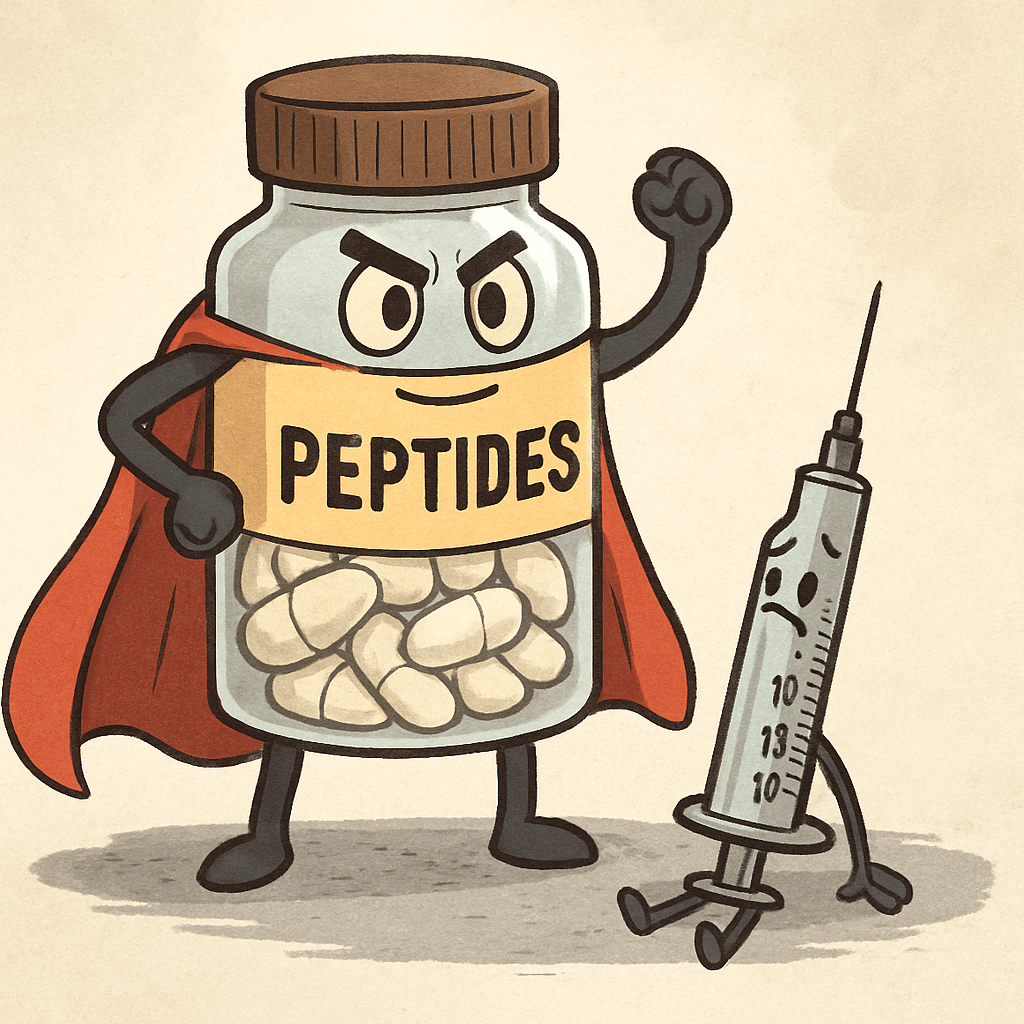
Bioavailable peptides are peptide therapeutics engineered to survive the gut tract and reach systemic circulation after oral use. Natural peptides have oral uptake below 1% because of enzymatic breakdown and poor gut permeability. Modern form science now pushes that number meaningfully higher — with oral semaglutide reaching clinical effectiveness at about 1% uptake, TB4 fragment SDKP hitting roughly 30% in rats, and BPC-157 arginate showing over sevenfold higher oral absorption than the acetate salt.
This guide explains exactly how oral peptide supply works, which peptides are most studied as oral peptides for weight loss and muscle growth, and what the evidence says about whether oral peptides work.
?? Educational Content Notice
This article is for educational and research purposes only. Oral peptides discussed here include FDA-approved drugs, investigational therapeutics, and research-grade compounds. Nothing in this article constitutes medical advice. Research-grade peptides are sold for laboratory research use only.
?? Quick Overview: Bioavailable Peptides At a Glance
What you'll learn in this 2026 guide
- Definition: Bioavailable peptides are orally active peptide formulations engineered to resist GI degradation and cross the intestinal epithelium.
- Mechanism: Five main uptake routes — PepT1 transport, transcellular diffusion, paracellular transport, receptor-mediated endocytosis, and lymphatic absorption.
- Key formulations: Salt modification (BPC-157 arginate), sequence truncation (TB4 SDKP), permeation enhancers (SNAC), lipidation, cyclization, and enteric coatings.
- FDA-approved oral peptides: Rybelsus (semaglutide), Mycapssa (octreotide), salmon calcitonin tablets.
- Oral peptides for weight loss: Oral semaglutide is the clinical benchmark; AOD-9604, MOTS-c, and tesamorelin oral forms remain investigational.
- Oral peptides in muscle research: BPC-157 arginate, TB4 SDKP, MOTS-c and IGF-1 analogs, mostly studied in animal models.
- Bottom line: Do oral peptides work? Yes — when properly formulated. Most unmodified peptides do not.
What Are Bioavailable Peptides?
Bioavailable peptides are short amino acid chains (often 2 to 50 residues) mainly engineered or formulated to achieve meaningful absorption into systemic circulation when gave orally. Unlike their unmodified counterparts — which are rapidly degraded by stomach acid, proteolytic enzymes, and the gut mucus barrier — bioavailable peptides leverage structural changes, salt selection, absorption enhancers, and controlled-release technologies to survive the gut (GI) tract and exert treatment effects.
The pharmaceutical industry has long recognized peptides as high-value therapeutics. In 2023, the global peptide and protein therapeutics market was valued at $42.8 billion, with projections exceeding $80 billion by 2033 (Baral & Choi, 2025). Yet the vast most of peptide drugs remain confined to injectable use because conventional oral peptide forms often achieve less than 1% — and sometimes less than 0.1% — uptake. Overcoming this barrier is one of the defining challenges in modern drug supply science.
The Bioavailability Problem
Peptides face four overlapping obstacles once they enter the GI tract. First, the acidic stomach environment (pH 1.0 to 2.0) denatures many peptides and starts pepsin, an enzyme that cleaves peptide bonds at aromatic residues like phenylalanine, tryptophan, and tyrosine. Second, pancreatic proteases — including trypsin, chymotrypsin, elastase, and the carboxypeptidases — rapidly hydrolyze peptides as they pass through the duodenum and jejunum.
Published research has shown that insulin is nearly completely degraded by trypsin, a-chymotrypsin, and elastase within one hour under natural conditions (Baral & Choi, 2025). Third, the 100 to 200 micrometer thick mucus gel layer lining the intestine physically impedes peptide diffusion, especially for molecules above 6.5 kDa. Fourth, the gut epithelium itself — with tight junctions composed of occludin, claudins, and junctional adhesion molecules — restricts paracellular transport of peptides larger than a few hundred Daltons.
These barriers explain why unmodified peptides are poor oral drug candidates. But they also point directly to the strategies that define bioavailable peptides: protecting the peptide from breakdown, penetrating the mucus layer, and crossing the epithelial barrier efficiently.
How Bioavailable Peptides Differ from Conventional Peptides
A conventional peptide such as BPC-157 acetate or unmodified Thymosin Beta-4 has no such protection; in studies it is usually injected, which bypasses the GI tract entirely. A bioavailable peptide, by contrast, incorporates one or more of the following pharmaceutical strategies:
- Sequence truncation — shortening a longer peptide into a smaller, more stable fragment (e.g., TB4 fragment SDKP from Thymosin Beta-4)
- Salt modification — pairing the peptide with a counterion that enhances lipophilicity and absorption (e.g., BPC-157 arginate vs acetate)
- Permeation enhancers — co-formulating with agents like SNAC, sodium caprate, or lauroylcarnitine that transiently open tight junctions or increase transcellular transport
- Structural modification — PEGylation, lipidation, cyclization, D-amino acid substitution, or N-acylation to resist proteolysis
- Enteric coatings — pH-responsive polymer coatings (like Eudragit) that protect the peptide through the stomach and release it in the intestine
- Mucoadhesive or mucus-penetrating carriers — chitosan nanoparticles, PEGylated liposomes, or lipid-based nanocarriers that prolong residence or accelerate diffusion
The result is a peptide that behaves more like a small-molecule oral drug while retaining the natural specificity that makes peptides therapeutically attractive. The commercial landmark for this category is oral semaglutide (Rybelsus®), approved by the FDA in 2019 — the first orally gave GLP-1 receptor agonist and a proof-of-concept that bioavailable peptides can achieve clinical success at scale.
How Does Oral Peptide Delivery Work?
Oral peptide supply works through a multi-step cascade: the peptide must first survive gastric acid and proteases, then penetrate the gut mucus layer, and finally cross the epithelial cell barrier via one of several transport pathways. Each step represents an engineering challenge, and successful oral peptides solve all three.
Step 1: Surviving the Stomach
The stomach is a hostile environment for proteins. Gastric pH often ranges from 1.0 to 2.0 during fasting, and pepsin — the dominant gastric protease — functions optimally in this acidic range. Many peptides unfold (denature) under these conditions, exposing cleavage sites that would otherwise remain buried. To bypass gastric breakdown, bioavailable peptide forms often use one of three strategies:
- Enteric coatings that remain intact below pH 5 and dissolve in the intestine (pH greater than 6), delivering the peptide where protease activity is lower and absorption potential is higher.
- pH-modulating excipients like SNAC (salcaprozate sodium), which locally raise gastric pH around the peptide, inactivating pepsin and allowing intact passage.
- Intrinsic peptide resistance achieved through structural modification — cyclization, D-amino acid substitution, or N-methylation — that removes or shields cleavage sites.
Oral semaglutide exemplifies the SNAC approach: the tablet co-releases semaglutide with a high local level of SNAC in the stomach, where SNAC both neutralizes pepsin activity and enhances transcellular absorption across gastric epithelium.
Step 2: Crossing the Mucus Layer
The gut lumen is coated with a 100 to 200 micrometer thick layer of mucus secreted by goblet cells. This layer is a mesh of heavily glycosylated mucins arranged in a three-dimensional network with an average pore size of roughly 0.2 micrometers. The mucus does two things simultaneously: it traps possibly harmful molecules and shears them off through continuous turnover, and it acts as a negatively charged barrier that binds cationic peptides.
To penetrate this layer, oral peptide forms use either mucoadhesive or mucus-penetrating strategies. Mucoadhesive carriers — like chitosan and thiolated polymers — bind to the mucus and prolong residence time, giving the peptide more opportunity to reach the epithelium. Mucus-penetrating systems, often based on PEGylated nanoparticles with a hydrophilic, net-neutral surface, diffuse through the mesh more rapidly, mimicking the surface properties of viruses that evolved to penetrate mucus naturally (Baral & Choi, 2025).
Step 3: Crossing the Intestinal Epithelium
Once through the mucus, the peptide must cross a single layer of enterocytes to reach portal blood. There are five principal transport routes, and oral peptide uptake depends on which routes the form can recruit:
Table 1: The Five Main Routes of Oral Peptide Absorption
| Route | Mechanism | Best For | Example |
|---|---|---|---|
| PepT1 transporter | Active H+-coupled transport of di/tripeptides | Short peptides (2-3 residues) | Ac-SDKP (TB4 fragment), valacyclovir |
| Transcellular diffusion | Passive diffusion through lipid bilayer | Small, lipophilic, lipidated peptides | Oral semaglutide (with SNAC) |
| Paracellular transport | Passage through tight junctions (3-10 Å gaps) | Small hydrophilic peptides | Octreotide (Mycapssa, with caprylate) |
| Receptor-mediated endocytosis | Active uptake via surface receptors | Larger peptides and proteins | Insulin (with ligand-targeted carriers) |
| Lymphatic transport | Chylomicron-mediated uptake via lacteals | Highly lipophilic or lipidated peptides | Lipidated GLP-1 analogs |
The PepT1 transporter (also called SLC15A1) deserves special attention. It is a proton-coupled oligopeptide transporter expressed mainly in the jejunum and is one of the most important active uptake systems for short peptides. PepT1 can transport an estimated 8,000 different dipeptides and tripeptides, as well as peptide-mimetic drugs like the antiviral valacyclovir and the ACE inhibitor captopril (Brandsch et al., 2012).
Peptides designed or fragmented to mimic PepT1 substrates — such as the tetrapeptide SDKP derived from TB-500 — can achieve largely higher oral uptake than their full-length parents.
?? The PepT1 Advantage
PepT1 operates by coupling peptide uptake to the inward flow of protons across the gut brush border. This active mechanism means PepT1-targeted peptides can be absorbed against their level gradient, achieving far higher uptake than passive diffusion alone would allow. Many orally active peptide drugs owe their absorption to PepT1.
Step 4: Reaching the Bloodstream
Once absorbed, peptides enter the portal circulation and travel to the liver, where many are subject to first-pass body function. Peptides that survive hepatic extraction enter systemic circulation and reach target tissues. Lymphatic-transported peptides (those taken up via chylomicrons) bypass the liver entirely, which is one reason highly lipidated peptides can show disproportionately high systemic exposure despite modest gut absorption.
Advantages of Oral Peptide Administration
The main advantages of oral peptide drugs are convenience, long-term adherence, no needle handling, lower cost and direct access to gut targets. These advantages are why the entire peptide industry is moving aggressively toward oral forms wherever the science allows.
Convenience and Compliance
The single largest practical advantage of oral peptide therapy is that it removes the need for needles, mixing and cold-chain handling at the point of use.
Adherence in chronic conditions — diabetes, osteoporosis, acromegaly — consistently improves when patients can switch from injectables to oral forms. Real-world data on Rybelsus (oral semaglutide) show that adherence and persistence can be comparable to or better than injectable GLP-1 agonists for patients who prefer tablets.
Reduced Procedural Risk
For approved peptide drugs, an oral form avoids the local reactions and needle handling that come with repeated injections. Peptide capsules are one oral format in which research peptides are supplied for laboratory study.
Local GI Action
For peptides whose target tissue is the gut itself — like BPC-157, studied in animal models of gastric ulcers and inflammatory bowel disease, or glucagon-like peptide-2 (GLP-2) analogs for short bowel syndrome — oral supply offers a pharmacological advantage beyond convenience. Oral use concentrates the peptide precisely where it acts, achieving luminal and mucosal levels that would need much higher injectable doses to replicate. This is why oral BPC-157 is often preferred for gut-related research uses even though its systemic uptake is lower than the injectable form.
Cost and Manufacturing
Oral peptide forms remove the need for sterile manufacturing of injection-ready products at the consumer level, reduce cold-chain requirements, and simplify distribution. While the pharmaceutical R&D costs of developing a bioavailable peptide are large, the downstream cost of goods and distribution is often lower than for injectables. This economic advantage is one reason oral peptide technology is now a priority area for companies like Novo Nordisk, Chiasma, Enteris BioPharma, and Merrion Pharmaceuticals.
?? Important Caveat
Not every peptide is a good oral candidate. Peptides with very low potency, short half-lives, or targets in deep tissues may not achieve treatment levels even with advanced oral forms. The decision to pursue oral supply is always driven by the specific pharmacology of the peptide and its clinical use.
Formulation Science: Salts, Modifications & Stability
The science of bioavailable peptides depends on six core form strategies: salt selection, sequence truncation, lipidation, cyclization, PEGylation, and the use of absorption enhancers. Grasp these techniques explains why some peptides are orally active and others are not.
Salt Selection: Why BPC-157 Arginate Outperforms Acetate
A peptide is rarely delivered in its free-base or free-acid form. Instead, it is paired with a counterion — a salt — that influences solubility, shelf life, and, critically, membrane permeability. The BPC-157 peptide is the canonical example of salt selection for oral supply.
In its most common form, BPC-157 is supplied as an acetate salt, which is stable and inexpensive but shows minimal oral uptake. When BPC-157 is reformulated as the arginate salt — pairing the peptide with the basic amino acid arginine — oral uptake increases dramatically. A published rat study showed that BPC-157 arginate achieved more than sevenfold higher oral uptake than BPC-157 acetate. The mechanism is thought to involve both enhanced peptide shelf life in the gastric environment and arginine-mediated support of gut transport processes.
Sequence Truncation: The TB4 SDKP Story
Thymosin Beta-4 (TB-500) is a 43-amino-acid peptide with well-documented tissue regrowth and anti-swelling activity. It is also nearly unusable orally — full-length TB-500 shows less than 1% oral uptake in rats. Researchers identified a tetrapeptide fragment, N-acetyl-Ser-Asp-Lys-Pro (Ac-SDKP, sometimes called TB4 fragment SDKP), that retains much of TB-500's natural activity while being dramatically more stable and absorbable.
Published pharmacokinetic data show that Ac-SDKP achieves about 30% oral uptake in rats, compared with less than 1% for TB-500 itself (Kassem et al., 2019; Zhang et al., 2020). The fragment is small enough to exploit PepT1-mediated uptake, short enough to resist gastric proteolysis, and N-acetylated to protect the N-terminus from aminopeptidase cleavage. SDKP has also shown anti-fibrotic and heart-protective activity in multiple animal models, making it a leading candidate for orally active TB4-derived therapeutics.
Lipidation and Cyclization
Attaching a fatty acid (lipidation) or forming a macrocyclic ring within the peptide backbone (cyclization) are two of the most effective strategies for creating bioavailable peptides. Lipidation increases lipophilicity and drives peptide association with albumin in circulation, extending half-life from minutes to hours or days. Lipidation also lets lymphatic absorption via chylomicrons, bypassing hepatic first-pass body function. Semaglutide itself is a lipidated GLP-1 analog, and its palmitic acid side chain is central to its long half-life.
Cyclization rigidifies the peptide structure and removes accessible N- and C-termini that would otherwise be cleaved by exopeptidases. Cyclized peptides like octreotide (a cyclized somatostatin analog) show largely improved proteolytic shelf life and are the basis for Mycapssa, the first oral octreotide capsule approved for acromegaly (2020).
PEGylation and D-Amino Acid Substitution
PEGylation — covalent attachment of polyethylene glycol chains — shields peptides from proteases, extends plasma half-life, and reduces immunogenicity. It does carry trade-offs: larger PEG conjugates can reduce target binding affinity, and some patients develop anti-PEG antibodies. D-amino acid substitution, by contrast, replaces natural L-amino acids with their mirror-image D-enantiomers at cleavage-sensitive positions. Because mammalian proteases almost exclusively recognize L-amino acids, D-substituted peptides are far more resistant to breakdown while often retaining target activity.
Absorption Enhancers
Absorption enhancers are co-formulated excipients that temporarily increase gut permeability. The most clinically validated enhancer is SNAC (salcaprozate sodium), which powers oral semaglutide. SNAC works by forming a non-covalent, reversible complex with the peptide, increasing its local lipophilicity and letting transcellular absorption through gastric epithelium. Clinical studies show that SNAC does not permanently disrupt membrane integrity or alter membrane fluidity (Baral & Choi, 2025).
Other validated enhancers include:
- Sodium caprate (C10) — a medium-chain fatty acid salt that opens tight junctions and enhances paracellular transport. Used in Novo Nordisk's GIPET technology.
- Lauroylcarnitine and palmitoylcarnitine — zwitterionic excipients used in Enteris BioPharma's Peptelligence platform.
- 5-CNAC (5-chlorosalicyloyl-aminocaprylic acid) — an absorption enhancer developed by Novartis for oral salmon calcitonin.
- Bile salts — including sodium deoxycholate and sodium taurocholate, which fluidize membranes and open tight junctions.
Table 2: Core Form Strategies for Bioavailable Peptides
| Strategy | Mechanism | Typical Gain | Example |
|---|---|---|---|
| Salt modification | Improves solubility, stability, and uptake | 5-10× bioavailability increase | BPC-157 arginate vs acetate |
| Sequence truncation | Reduces size, removes cleavage sites | Up to 30× bioavailability | TB4 SDKP vs TB-500 |
| Lipidation | Albumin binding, lymphatic uptake | Half-life hours ? days | Semaglutide |
| Cyclization | Protease resistance, rigid structure | 10-100× metabolic stability | Octreotide (Mycapssa) |
| Permeation enhancers | Tight-junction or transcellular transport | 10× absorption increase | Oral semaglutide (SNAC) |
| Enteric coating | Protects peptide through stomach | Variable, formulation-dependent | Mycapssa octreotide capsules |
Key Oral Peptides: BPC-157, TB4 SDKP, Tesamorelin & More
The most studied oral peptides in 2026 include BPC-157 (very the arginate salt form), TB4 fragment SDKP, tesamorelin peptide oral forms, AOD-9604, MOTS-c, PT-141, and oral semaglutide. Each addresses different treatment targets, and each uses different uptake strategies. This section reviews the leading candidates.
BPC-157 Oral Peptide (Body Protection Compound 157)
BPC-157 is a 15-amino-acid synthetic peptide derived from a protective protein found in human gastric juice. It has been studied extensively in animal models for tendon repair, ligament healing, gastric ulcer protection, and inflammatory bowel disease. Given orally to animals, BPC-157 peptide oral forms meet the GI mucosa first, which is why oral studies focus on gut endpoints.
The key form variable is the salt form. BPC-157 arginate shows markedly higher oral uptake than BPC-157 acetate, with rat pharmacokinetic data showing over sevenfold gain in systemic exposure. BPC-157 itself is notably stable in human gastric juice (half-life measured in hours), which partly explains why even the acetate form retains some oral activity in gut-targeted studies.
TB4 Fragment SDKP (Ac-SDKP)
As discussed in the form section, Ac-SDKP is the tetrapeptide fragment of Thymosin Beta-4 that retains much of TB-500's natural activity while being orally bioavailable at about 30% in rats. SDKP has well-documented anti-fibrotic activity in cardiac and renal models, pro-angiogenic effects, and wound-healing properties. It is one of the most promising orally active peptides in the regrowth medicine space, though clinical growth remains in earlier stages than oral semaglutide or octreotide.
Tesamorelin Peptide Oral
Tesamorelin is a synthetic analog of growth hormone-releasing hormone (GHRH) that is FDA-approved as an injectable (Egrifta) for the reduction of excess abdominal fat in HIV-linked lipodystrophy. Research interest in a tesamorelin peptide oral form is driven by its possible utility in visceral adiposity, body syndrome, and cognitive aging research.
Oral tesamorelin forms remain investigational as of 2026, with growth programs focused on enteric coatings combined with permeation enhancers to protect the 44-amino-acid peptide from gastric breakdown.
AOD-9604 Peptide Oral
AOD-9604 is a 16-amino-acid fragment of human growth hormone (residues 177-191) originally developed as an anti-obesity agent. It retains the lipolytic activity of hGH without the growth-promoting effects. AOD-9604 peptide oral research has attracted attention because the relatively small size of the peptide makes it a more plausible oral candidate than full-length growth hormone analogs, though uptake remains modest without absorption enhancers.
MOTS-c Peptide Oral
MOTS-c (Energy-cell Open Reading frame of the 12S rRNA-c) is a 16-amino-acid energy-cell-derived peptide involved in body homeostasis, exercise capacity, and insulin response. MOTS-c peptide oral research is in the lab phase, but the peptide's small size and body effects make it a target of intense interest for both weight loss and muscle growth uses.
PT-141 Peptide Oral
PT-141 (bremelanotide) is a melanocortin receptor agonist FDA-approved as an injectable (Vyleesi) for hypoactive sexual desire disorder in women. PT-141 peptide oral forms are investigational. Because PT-141 is a small cyclic heptapeptide, it is a relatively favorable candidate for oral growth, though no approved oral product exists as of 2026.
Oral Semaglutide (Rybelsus)
The flagship FDA-approved oral peptide is oral semaglutide, marketed as Rybelsus. Approved in 2019 for type 2 diabetes and now widely prescribed off-label for weight loss in some markets, Rybelsus uses the SNAC absorption enhancer to achieve about 1% oral uptake of the 31-amino-acid lipidated GLP-1 analog. Despite the modest uptake, semaglutide is so potent at the GLP-1 receptor that clinically effective plasma levels are achieved with a tablet. Oral semaglutide has transformed the field and proved that bioavailable peptides can be commercially viable at scale.
Table 3: Key Oral Peptides — Status and Uses (2026)
| Peptide | Target | Oral Status | Notable Feature |
|---|---|---|---|
| Oral Semaglutide | GLP-1 receptor | FDA-approved (Rybelsus) | SNAC-enhanced, ~1% bioavail |
| Oral Octreotide | Somatostatin receptors | FDA-approved (Mycapssa) | Cyclized, TPE®-enhanced |
| BPC-157 Arginate | Gut/tissue repair | Research/compounded | 7× higher oral vs acetate |
| TB4 SDKP | Anti-fibrotic, wound | Preclinical/research | ~30% oral bioavail in rats |
| Tesamorelin | GHRH receptor | Injectable approved; oral investigational | GHRH analog, visceral fat |
| AOD-9604 | Fat metabolism | Research/compounded | hGH fragment, lipolytic |
| MOTS-c | Mitochondrial function | Preclinical | Exercise capacity, metabolism |
| PT-141 | Melanocortin receptor | Injectable approved; oral investigational | Cyclic heptapeptide |
Oral Peptides for Weight Loss
Oral semaglutide (Rybelsus) is the only oral peptide with weight data from controlled trials; AOD-9604, MOTS-c and investigational oral tesamorelin forms are at the research stage. Of these, only oral semaglutide has FDA approval, and its weight-reduction data come mainly from off-label use and trials conducted in the broader semaglutide class.
Oral Semaglutide for Weight Loss
Oral semaglutide is a GLP-1 receptor agonist that reduces appetite, slows gastric emptying, and improves glucose control. Clinical trials in the PIONEER program reported weight reduction at the strengths approved for diabetes. A dedicated obesity trial of oral semaglutide (OASIS 1) reported average weight reductions of about 15% over 68 weeks at a higher oral strength, similar to the injectable form. As of 2026, a higher-strength oral semaglutide is moving through regulatory pathways for obesity in several markets.
Side effects mirror injectable GLP-1s: nausea, diarrhea, constipation, and rare but serious risks like pancreatitis and gallbladder disease.
AOD-9604 in fat metabolism research
AOD-9604 is a research peptide derived from the lipolytic C-terminus of human growth hormone. In animal studies, AOD-9604 increased lipolysis (fat breakdown) and reduced lipogenesis (fat storage) without the hyperglycemic or insulin-resistance side effects linked with full-length growth hormone. Several human trials of injectable AOD-9604 for obesity showed modest effects that did not meet commercial growth thresholds, but interest in the peptide persists in the research and compounding space. Oral AOD-9604 forms rely on enteric coatings and, in some cases, absorption enhancers to achieve measurable systemic exposure.
MOTS-c in metabolic research
MOTS-c is a energy-cell-derived peptide that regulates body homeostasis by starting the AMPK pathway — the same pathway targeted by metformin. In animal studies, MOTS-c reduced weight gain and improved insulin response and exercise capacity. Human pharmacokinetic data for oral MOTS-c remain limited, and it is not an approved drug.
It is included here because it is often discussed in the context of best oral peptides for weight loss, though the clinical evidence is largely weaker than for semaglutide.
Investigational Tesamorelin Oral Forms
Injectable tesamorelin reduces visceral adipose tissue (VAT) in HIV-linked lipodystrophy, and research interest extends to VAT reduction in non-HIV populations. Oral tesamorelin forms remain at the laboratory stage.
?? Weight Loss Peptide Reality Check
Outside of oral semaglutide, the clinical evidence for oral peptides for weight loss is preliminary. Most research peptides sold for weight-loss purposes have not completed phase 3 trials, lack long-term safety data, and may be produced outside of regulated pharmaceutical manufacturing.
Oral peptides in muscle and tendon research
The oral peptides most discussed in muscle research in 2026 are BPC-157 (arginate form), TB4 fragment SDKP, MOTS-c and investigational IGF-1 analogs. None is FDA-approved for performance or muscle growth, and most evidence comes from animal models rather than controlled human trials.
Oral BPC-157 in tendon and muscle injury models
BPC-157 is the most extensively studied research peptide for connective tissue repair. Animal studies have shown accelerated healing of tendon-to-bone injuries, ligament damage, and muscle tears after both systemic and local administration in those models. The rat data on BPC-157 oral peptides, including the arginate salt, concern uptake; they do not measure tendon or muscle outcomes.
TB4 fragment SDKP in muscle research
SDKP retains the pro-regrowth and anti-fibrotic effects of full-length Thymosin Beta-4 that underpin its use in muscle healing research. Because SDKP is orally bioavailable at about 30% in rats — versus less than 1% for TB-500 itself — it is a plausible oral candidate for study. Research on BPC-157 and TB4 SDKP in injury models is summarised in the injury research guide.
MOTS-c for Exercise Capacity
MOTS-c has been linked to improved exercise capacity and body flexibility in animal models. In mice, MOTS-c extended running endurance and improved mitochondrial function in aging muscle. Human data are limited but include one reported MOTS-c polymorphism linked with exercise capacity in Japanese populations. Oral MOTS-c research is lab, and any best oral peptides for bodybuilding list that includes MOTS-c is citing animal data.
Oral IGF-1 Analogs (Research Stage)
Insulin-like growth factor 1 (IGF-1) and its variants (IGF-1 LR3, IGF-1 DES) drive muscle hypertrophy through mTOR signaling. Because IGF-1 is a 70-amino-acid protein, oral uptake is extremely challenging. Research into IGF-1 prodrugs, truncated analogs, and nanoparticle-encapsulated IGF-1 continues, but no orally active IGF-1 peptide has reached clinical growth.
A Note on Oral Peptides and Performance
Most peptides discussed in muscle-growth contexts — BPC-157, TB-500, MOTS-c, and others — are not FDA-approved for performance or aesthetic signs. BPC-157 and TB-500 are banned by the World Anti-Doping Agency (WADA) in competitive sport. The FDA classified BPC-157 as a Category 2 bulk drug substance in 2023, restricting its compounding supply.
The regulatory and safety position of BPC-157 is covered in the BPC-157 safety guide.
Do Oral Peptides Work? Evidence Review
Yes, oral peptides work — but only when properly formulated and when the peptide's intrinsic potency is high enough to overcome the inherent low uptake of oral supply. The FDA approval of multiple oral peptide drugs is the strongest possible evidence that the technology is real. The more nuanced question is which oral peptides work for which signs.
FDA-Approved Oral Peptides: The Strongest Evidence
Three oral peptide drugs have full FDA approval:
-
1Rybelsus (oral semaglutide) — 2019
The first oral GLP-1 receptor agonist. Approved for type 2 diabetes. Showed major HbA1c reduction and weight loss across the PIONEER clinical trial program. Uses SNAC absorption enhancer.
-
2Mycapssa (oral octreotide) — 2020
The first oral somatostatin analog. Approved for long-term maintenance treatment of acromegaly. Uses Chiasma's TPE® (Transient Permeability Enhancer) platform, including sodium caprylate.
-
3Salmon Calcitonin Tablets (oral calcitonin)
Studied for osteoporosis and bone health. Uses 5-CNAC as an absorption enhancer. Not widely marketed in the US but approved in multiple jurisdictions.
These drugs together show that oral peptides can achieve clinically meaningful outcomes across body, endocrine, and bone-health signs.
Research Peptide Evidence
Beyond FDA-approved products, the research literature provides specific, measurable data on oral uptake for several peptides:
- BPC-157 arginate — over 7-fold higher oral bioavailability than the acetate form in rat pharmacokinetic studies. Oral BPC-157 shows pharmacological activity in animal models of gastric ulceration, colitis, and tendon injury (He et al., 2022).
- Ac-SDKP (TB4 fragment) — approximately 30% oral bioavailability in rats vs less than 1% for full-length Thymosin Beta-4. Oral SDKP shows anti-fibrotic and cardioprotective effects in rodent models (Kassem et al., 2019).
- Oral salmon calcitonin (with 5-CNAC) — clinically meaningful plasma concentrations and bone turnover marker changes in phase 3 osteoporosis trials.
The broader point is that "are oral peptides effective" is not a yes-or-no question. It is a form-and-sign question. The same peptide can be highly effective orally for a gut-targeted condition and nearly useless orally for a systemic condition — because uptake and target tissue matter more than the simple fact of oral use.
?? What the Evidence Supports
Oral peptide supply is a proven pharmaceutical technology when backed by proper form science and appropriate peptide selection. Skepticism is warranted for unmodified peptides sold in oral form without supporting pharmacokinetic data. For Rybelsus and Mycapssa the evidence is clinical; for BPC-157 arginate it is rat pharmacokinetic data.
Oral vs Injectable Peptides Comparison
Oral peptides offer convenience, compliance, and localized GI action, while injectable peptides offer higher uptake, faster onset, and precise systemic dosing. The choice between oral and injectable is driven by the specific peptide, the target tissue, and the treatment context.
Oral BPC-157 vs Injection: A Representative Case
The oral BPC-157 vs injection comparison is instructive because it captures the general trade-offs. An injected peptide reaches the circulation without passing the gut. Oral BPC-157 meets the gut mucosa first, which is where BPC-157 was discovered and where many of its laboratory effects were reported, while achieving more modest systemic exposure. Which route a study uses depends on whether its endpoint is in the gut or elsewhere.
Table 4: Oral vs Injectable Peptides — Side-by-Side Comparison
| Factor | Oral Peptides | Injectable Peptides |
|---|---|---|
| Bioavailability | Typically under 1-30% | ~100% (subcutaneous) |
| Format | Tablet or capsule | Sterile solution |
| Onset of action | Slower (hours) | Faster (minutes) |
| Dose precision | Variable (food, pH, compliance) | High (no absorption step) |
| Long-term adherence | Typically higher | Typically lower |
| Best for GI targets | Excellent (direct mucosal action) | Moderate (must distribute systemically) |
| Best for deep-tissue targets | Limited | Excellent |
| Cost of goods | Lower (no sterile injection kit) | Higher (vials, syringes, cold chain) |
| Manufacturing complexity | High (formulation science) | Moderate (standardized) |
Emerging Oral Peptide Technologies
Emerging oral peptide technologies in 2026 include ingestible robotic supply devices, nanoparticle carrier platforms, hydrophobic ion pairing, advanced cyclization strategies, and site-specific colonic supply systems. The next decade will likely see oral peptide forms transform from niche science to mainstream pharmaceutical practice.
Ingestible Drug Delivery Devices
Companies like Rani Therapeutics and Novo Nordisk (via acquisition of Emisphere) have developed smart ingestible capsules that mechanically deliver peptides across the gut wall. Rani's "RaniPill" uses a dissolvable capsule that unfolds in the small intestine and deploys a tiny, painless microneedle injection from within the GI lumen. Early clinical studies have reported systemic uptake exceeding 70% — comparable to under-skin injection — for peptides including octreotide and PTH analogs.
Nanoparticle Carriers
Lipid nanoparticles, solid lipid nanoparticles (SLNs), and polymeric nanoparticles can protect peptides from GI breakdown while helping mucus penetration and epithelial uptake. PEGylated nanoparticles with virus-mimetic surface properties have shown dramatic gains in mucus diffusion. Self-emulsifying drug supply systems (SEDDS) and nanostructured lipid carriers (NLCs) are also under active growth for oral peptide drugs.
Next-Generation Oral GLP-1 Analogs
Beyond Rybelsus, the pharmaceutical industry is racing to develop next-generation oral peptide semaglutide alternatives. Candidates include orforglipron (an oral small-molecule GLP-1 agonist, technically a peptidomimetic rather than a true peptide) and several true peptide analogs in phase 2 and phase 3 trials. These programs target higher uptake, simpler dosing schedules, and improved tolerability profiles.
Site-Specific Colonic Delivery
The colon has lower protease activity and higher pH than the small intestine, making it a theoretically attractive site for peptide absorption. Enzyme-triggered and pH-triggered coating systems let targeted release in the colon, possibly benefiting peptides for swelling bowel disease and systemic signs where colonic absorption can be engineered.
Hydrophobic Ion Pairing (HIP)
HIP is a non-covalent lipidation technique that pairs charged peptides with oppositely charged surfactants to create lipophilic complexes that dissociate in the gut environment. HIP-based forms have shown promise for insulin, GLP-1 analogs, and calcitonin, and may represent the next wave of commercial oral peptide products.
? Key Takeaways
- Bioavailable peptides are real: Oral semaglutide (Rybelsus), oral octreotide (Mycapssa), and oral salmon calcitonin prove that properly formulated oral peptides achieve clinical efficacy.
- Natural peptides have under 1% oral bioavailability — every successful oral peptide overcomes this through formulation science.
- The five main absorption routes are PepT1 transport, transcellular diffusion, paracellular transport, receptor-mediated endocytosis, and lymphatic uptake.
- BPC-157 arginate achieves over 7× higher oral bioavailability than the acetate form in rats — a textbook example of salt selection.
- TB4 fragment SDKP reaches ~30% oral bioavailability in rats vs under 1% for full-length TB-500 — showing the power of sequence truncation.
- Oral semaglutide uses SNAC to achieve ~1% bioavailability, which is clinically sufficient because of semaglutide's high receptor potency.
- Oral peptides for weight loss: Rybelsus is the clinical gold standard; AOD-9604, MOTS-c, and oral tesamorelin remain investigational.
- Oral peptides in muscle research include BPC-157 arginate, TB4 SDKP, and MOTS-c — all research-stage, none FDA-approved for performance.
- Oral BPC-157 meets the gut mucosa first, so oral studies focus on gut endpoints.
- Emerging technology — ingestible devices, nanoparticles, and HIP formulations — will push oral peptide bioavailability substantially higher over the next decade.
?? Medical & Legal Disclaimer
This article is for educational and research purposes only and does not constitute medical advice. Oral peptides discussed include FDA-approved drugs (Rybelsus, Mycapssa), investigational pharmaceuticals, and research-grade compounds that are not FDA-approved for treatment use. BPC-157 was classified by the FDA as a Category 2 bulk drug substance in September 2023, restricting its use in compounding.
BPC-157 and TB-500 are banned by the World Anti-Doping Agency (WADA) in competitive sport. Research-grade peptides are for laboratory research use only. Follow all applicable laws and regulations, and check that the certificate matches the lot number on your vial and can be verified.
Frequently Asked Questions About Bioavailable Peptides
Common questions about bioavailable peptides, oral peptide supply, oral peptides in weight-loss research, and oral peptides in muscle research.
Bioavailable peptides are short amino acid chains formulated or chemically modified to resist gut breakdown and cross the gut wall into systemic circulation when taken orally. Natural peptides often have oral uptake under 1%, but bioavailable peptides achieve meaningful absorption through strategies like salt selection (e.g., BPC-157 arginate), sequence truncation (e.g., TB4 SDKP fragment), permeation enhancers (e.g., SNAC in oral semaglutide), lipidation, cyclization, and enteric coatings.
Oral peptide supply works by protecting the peptide from stomach acid and digestive enzymes, then enhancing its absorption across the gut epithelium. The peptide passes through the stomach (protected by enteric coatings), reaches the small intestine, crosses the mucus layer, and traverses enterocytes either via PepT1 transporters (for di- and tripeptides), transcellular diffusion (for lipidated or small peptides), paracellular transport (through tight junctions loosened by permeation enhancers), or receptor-mediated endocytosis. Once absorbed, the peptide enters portal circulation and reaches target tissues.
Yes, oral peptides work when properly formulated. FDA-approved examples include oral semaglutide (Rybelsus) for type 2 diabetes, oral octreotide (Mycapssa) for acromegaly, and salmon calcitonin tablets for osteoporosis. Research peptides with documented oral activity include BPC-157 arginate (over 7-fold higher uptake than the acetate salt in rats), TB4 fragment SDKP (about 30% oral uptake versus less than 1% for full-length TB-500), and several GLP-1 analogs. Effect depends on form, dose, and the peptide's intrinsic potency.
Oral semaglutide (Rybelsus), a GLP-1 receptor agonist FDA-approved for type 2 diabetes with documented weight reduction in trials; oral AOD-9604, a modified fragment of human growth hormone studied for fat metabolism; oral MOTS-c, a mitochondrial-derived peptide studied in metabolic research; and oral tesamorelin forms under study for visceral fat reduction. Oral semaglutide is the only one with full FDA approval for a body sign; the others remain investigational.
Oral peptides under active muscle research include oral BPC-157 (body protection compound, especially the arginate salt), studied in tendon and muscle injury models in animals; oral TB4 fragment SDKP, studied for tissue regeneration; oral MOTS-c, linked to energy-cell function and exercise capacity; and oral IGF-1 analogs in lab growth. None are FDA-approved for muscle growth, and most evidence comes from animal models rather than controlled human trials.
Some peptides are orally active, but only when they are specifically formulated for oral delivery. Unmodified peptides are rapidly degraded in the stomach and poorly absorbed. Oral peptide forms use strategies such as enteric coatings, permeation enhancers (like SNAC), salt changes, sequence truncation, lipidation, and cyclization to achieve meaningful uptake.
The uptake of oral peptides often ranges from less than 0.1% for unmodified peptides to about 1% for optimized pharmaceutical forms. For example, oral semaglutide (Rybelsus) achieves about 0.4 to 1% uptake using the absorption enhancer SNAC. TB4 fragment SDKP reaches roughly 30% oral uptake in rats, compared with under 1% for full-length TB-500. BPC-157 arginate shows over sevenfold higher oral uptake than BPC-157 acetate in rat studies. High potency often compensates for low uptake in clinical success.
Oral and injected BPC-157 differ in uptake and distribution. An injected peptide reaches the circulation without passing the gut; oral BPC-157 has lower systemic uptake but meets the gut mucosa first, which is why oral studies focus on gut endpoints such as ulcer and colitis models in animals. The arginate salt form shows markedly better oral absorption than the acetate form in rats.
Oral semaglutide (Rybelsus) achieves oral uptake through co-form with salcaprozate sodium (SNAC), a permeation enhancer that creates a localized pH shift in the stomach, protecting semaglutide from pepsin breakdown and increasing its lipophilicity. SNAC lets transcellular absorption across the gastric epithelium without disrupting membrane integrity. Despite only about 1% uptake, semaglutide's high potency makes the approach clinically effective.
Oral peptides can be effective when properly formulated, but they often need higher doses than injectables because of lower uptake (often under 1% for oral versus near 100% for under-skin). Oral forms avoid needles and act locally in the gut; injected forms give more precise systemic levels. Some peptides, like oral semaglutide, achieve comparable clinical outcomes to their injectable counterparts despite lower uptake because of high receptor potency.
TB4 fragment SDKP (N-acetyl-Ser-Asp-Lys-Pro, also called Ac-SDKP) is a tetrapeptide naturally cleaved from Thymosin Beta-4 (TB-500). Unlike full-length TB-500, which has less than 1% oral uptake and often needs injection, SDKP achieves about 30% oral uptake in rats because of its smaller size and resistance to gastric breakdown. SDKP retains key regrowth and anti-fibrotic activities of TB-500, very in heart and wound-healing models, making it a promising orally active derivative.
FDA-approved oral peptides such as Rybelsus (semaglutide), Mycapssa (octreotide), and salmon calcitonin tablets have set up safety profiles with common side effects limited to gut symptoms like nausea. Research-grade oral peptides, including BPC-157 and TB4 SDKP, lack large-scale human safety data, and long-term effects are unknown. Permeation enhancers like SNAC and sodium caprate are often well tolerated in approved products. Research-grade peptides are for laboratory research use only.

Explore Research-Grade Oral Peptide Formulations
Discover PrymaLab's selection of laboratory-tested bioavailable peptides, including BPC-157 arginate, TB4 fragment SDKP, and other oral peptide forms for research use.
Browse Peptide Research Library ?Related reading
- MK-677 (ibutamoren): mechanism, trials and side effects
- 5-Amino-1MQ: what it is, benefits, dosage and research
References & Further Reading
This article draws on peer-reviewed publications and FDA records current through 2026. Citations reflect the main literature supporting claims about oral peptide uptake, form science, and FDA-approved oral peptide products.
- Baral, K. C., & Choi, K. Y. (2025). Barriers and Strategies for Oral Peptide and Protein Therapeutics Delivery: Update on Clinical Advances. Pharmaceutics, 17(4), 397. doi:10.3390/pharmaceutics17040397
- He, L., Feng, D., Guo, H., et al. (2022). Pharmacokinetics, distribution, metabolism, and excretion of body-protective compound 157, a potential drug for treating various wounds, in rats and dogs. Frontiers in Pharmacology, 13:1026182. doi:10.3389/fphar.2022.1026182
- Kassem, K. M., Vaid, S., Peng, H., Sarkar, S., & Rhaleb, N. E. (2019). Tß4-Ac-SDKP pathway: Any relevance for the cardiovascular system? Canadian Journal of Physiology and Pharmacology, 97(7), 589-599. doi:10.1139/cjpp-2018-0570
- Zhang, G., Murthy, K. D., Binti Pare, R., & Qian, Y. (2020). Protective effect of Tß4 on central nervous system tissues and its developmental prospects. European Journal of Inflammation, 18. doi:10.1177/2058739220934559
- Vukojevic, J., Milavic, M., Perovic, D., et al. (2022). Pentadecapeptide BPC 157 and the central nervous system. Neural Regeneration Research, 17(3), 482-487. doi:10.4103/1673-5374.320969
- Brandsch, M., Knütter, I., & Bosse-Doenecke, E. (2012). Pharmaceutical and pharmacological importance of peptide transporters. Journal of Pharmacy and Pharmacology, 60(5), 543-585. doi:10.1211/jpp.60.5.0002
- Aroda, V. R., Rosenstock, J., Terauchi, Y., et al. (2019). PIONEER 1: Randomized clinical trial of the efficacy and safety of oral semaglutide monotherapy in comparison with placebo in patients with type 2 diabetes. Diabetes Care, 42(9), 1724-1732. doi:10.2337/dc19-0749
- Knop, F. K., Aroda, V. R., do Vale, R. D., et al. (2023). Oral semaglutide 25 mg and 50 mg compared with 14 mg in adults with type 2 diabetes (PIONEER PLUS): a multicentre, randomised, phase 3b trial. The Lancet, 402(10403), 705-719. doi:10.1016/S0140-6736(23)01185-6
- Buckley, S. T., Bækdal, T. A., Vegge, A., et al. (2018). Transcellular stomach absorption of a derivatized glucagon-like peptide-1 receptor agonist. Science Translational Medicine, 10(467), eaar7047. doi:10.1126/scitranslmed.aar7047
- U.S. Food and Drug Administration. (2024). RYBELSUS (semaglutide) tablets — Prescribing Information. Reference ID: 5312894.
- Melmed, S., Popovic, V., Bidlingmaier, M., et al. (2015). Safety and efficacy of oral octreotide in acromegaly: results of a multicenter phase III trial. Journal of Clinical Endocrinology & Metabolism, 100(4), 1699-1708. doi:10.1210/jc.2014-4113
- Karsdal, M. A., Byrjalsen, I., Alexandersen, P., et al. (2015). Treatment of symptomatic knee osteoarthritis with oral salmon calcitonin: results from two phase 3 trials. Osteoarthritis and Cartilage, 23(4), 532-543. doi:10.1016/j.joca.2014.12.019