
NAD+ peptide: what it is and what research shows
NAD+ (nicotinamide adenine dinucleotide) is a coenzyme, not a peptide; "NAD+ peptide" is the search term, and the molecule is a dinucleotide present in every living cell, studied for cellular energy metabolism, DNA repair enzymes and age-related decline. PrymaLab supplies it as NAD+ 500mg and NAD+ 1000mg vials, an NAD+ Nasal Spray and preloaded NAD+ pens for research use.
- Molecule: C21H27N7O14P2, 663.4 Da; a dinucleotide, not an amino-acid chain
- Class: coenzyme for redox reactions and substrate for sirtuins, PARPs and CD38
- Studied for: mitochondrial function, DNA repair, age-related NAD+ decline, oral precursor (NMN, NR) trials
- Human evidence: controlled trials with clinical endpoints exist only for oral precursors such as NMN; injection data come from small infusion studies
- Storage: lyophilized vial refrigerated, away from light; reconstituted solution refrigerated and protected from light
- Forms and sizes at PrymaLab: NAD+ 500mg, NAD+ 1000mg, NAD+ Nasal Spray, NAD+ pen 100mg/ml, NAD+ pen 500mg/ml
| Feature | NAD+ | NMN | NR |
|---|---|---|---|
| What it is | The coenzyme itself, a dinucleotide | Nicotinamide mononucleotide, one step before NAD+ | Nicotinamide riboside, two steps before NAD+ |
| How cells use it | Broken down at the cell surface and rebuilt inside | Enters the salvage pathway after conversion | Enters the salvage pathway |
| Human trial evidence | No controlled outcome trial; small infusion studies | 10-week randomised trial in Yoshino et al. 2021, Science | 6-week trial in Martens et al. 2018, Nature Communications 9:1286 |
| PrymaLab product | NAD+ 500mg and 1000mg vials, nasal spray, pens | None | None |
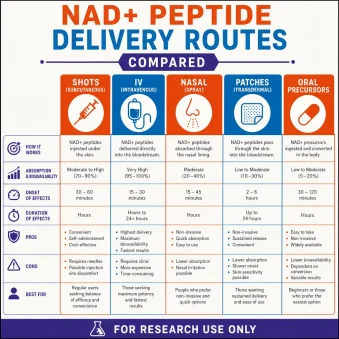
Injection, IV, nasal and oral routes are compared in NAD+ delivery routes compared.

NAD+ peptide is what people type, so it is the title of this page, but the first thing to get right is that NAD+ is not a peptide. It is nicotinamide adenine dinucleotide, a coenzyme built from two nucleotides that every cell uses to move electrons in metabolism and that sirtuins, PARPs and CD38 consume as a substrate. It sits in the peptide catalogue because it is supplied the same way, as a lyophilized vial, and because the research questions overlap: what it does in cells, why levels fall with age, and what the injection, nasal and oral precursor studies report. The route question has its own page, NAD+ delivery routes compared.
This evidence-based article explains the science behind NAD+ peptides, their role in cellular health and ageing research, and what the studies do and do not show. All claims are supported by peer-reviewed research cited in the references section below. This content is for educational purposes only and does not constitute medical advice.
NAD+ Peptide Benefits: At a Glance
In this evidence-based guide, you will learn:
- What NAD+ is and why every cell needs it
- Is NAD+ a peptide? — the classification debate explained
- NAD+ peptide benefits — what the research shows on energy, DNA repair, cognition, ageing and metabolism
- NAD injections — what the infusion studies measured
- NAD injections vs pills vs patches — bioavailability comparison table
- NAD+ research in women — hormones, fertility and skin
- NAD+ and weight loss — what the research actually shows
- Side effects — what has been reported
- NAD+ injections before and after — why the timelines online are not evidence
What Is NAD+? Understanding the Coenzyme Behind Cellular Health
NAD+ stands for nicotinamide adenine dinucleotide, a coenzyme present in every living cell of the human body. It plays an indispensable role in over 500 enzymatic reactions, making it one of the most important molecules for sustaining life. At its core, NAD+ functions as an electron carrier in metabolic processes, shuttling electrons between molecules during the chemical reactions that convert food into cellular energy in the form of adenosine triphosphate (ATP). Without adequate NAD+ levels, cells cannot produce the energy they need to function, repair themselves, or communicate with neighboring cells.
The molecule exists in two primary forms: NAD+ (the oxidized form) and NADH (the reduced form). During cellular respiration, NAD+ accepts electrons from nutrients during glycolysis and the citric acid cycle, becoming NADH. This NADH then donates those electrons to the electron transport chain in mitochondria, driving ATP production. This continuous cycling between NAD+ and NADH is fundamental to energy metabolism, and any disruption in this balance can lead to fatigue, cognitive decline, and accelerated aging.
Beyond energy production, NAD+ serves as a critical substrate for three major enzyme families that regulate cellular health and longevity. Sirtuins (SIRT1–SIRT7) are NAD+-dependent deacetylases that regulate gene expression, DNA repair, inflammation, and metabolic function — they are often called the "longevity genes" because of their role in extending lifespan in animal models. PARPs (poly ADP-ribose polymerases) consume NAD+ to repair damaged DNA, protecting cells from mutations that could lead to cancer. CD38 is an NAD+-consuming enzyme involved in immune cell signaling and calcium regulation. As we age, CD38 activity increases dramatically, consuming more NAD+ and contributing to the age-related decline in NAD+ levels that affects virtually every organ system.
NAD+ (Nicotinamide Adenine Dinucleotide) is a coenzyme found in all living cells that is essential for energy metabolism, DNA repair, gene expression regulation, and cellular signaling. NAD+ levels decline by approximately 50% between ages 40 and 60, directly contributing to age-related health deterioration.
Why NAD+ Levels Decline With Age
One of the most significant discoveries in aging research is that NAD+ levels decline substantially as we age. Studies published in Cell Metabolism have demonstrated that by age 60, most individuals have approximately half the NAD+ levels they had at age 20. This decline is driven by multiple factors: increased activity of CD38 (which consumes NAD+ at accelerating rates with age), chronic low-grade inflammation that depletes NAD+ stores, reduced activity of NAMPT (the rate-limiting enzyme in NAD+ biosynthesis), and accumulated DNA damage that forces PARPs to consume more NAD+ for repair. The consequences of this decline are far-reaching — reduced energy production, impaired DNA repair, decreased sirtuin activity, increased inflammation, and compromised cellular communication all contribute to the visible and invisible signs of aging. This decline is the main reason NAD+ and its precursors are studied, and why people search what is NAD injections.
NAD+ Biosynthesis Pathways
The body produces NAD+ through three primary biosynthesis pathways. The salvage pathway is the most important for maintaining NAD+ levels, recycling nicotinamide (a form of vitamin B3) back into NAD+ through the enzyme NAMPT. The Preiss-Handler pathway converts nicotinic acid (niacin) into NAD+ through a series of enzymatic steps. The de novo pathway synthesizes NAD+ from the amino acid tryptophan, though this is the least efficient route. Understanding these pathways is crucial because different NAD+ precursors — such as NMN (nicotinamide mononucleotide) and NR (nicotinamide riboside) — enter the biosynthesis process at different points, which affects their efficiency in raising NAD+ levels.
NAD+ is held in separate pools inside the cell
Cells do not keep NAD+ in one well-mixed pool. Cambronne and Kraus reviewed the evidence in 2020 that steady-state NAD+ levels are compartmentalised within mammalian cells, and that changing where NAD+ is made lets a cell control signalling by setting the NAD+ concentration in each subcellular location (Cambronne et al. 2020). The roles NAD+ plays, as a redox coenzyme and as a cosubstrate for sirtuins and PARPs (Verdin 2015), are therefore organised partly by where in the cell the molecule sits. Cantó, Menzies and Auwerx made a related point when they described NAD+ metabolism as a balancing act between mitochondria and the nucleus, linking a cell's energy status with its adaptive responses (Cantó et al. 2015).
Compartmentalisation affects how NAD+ experiments are read. A single measurement from a cell lysate or a tissue sample averages across pools that may be regulated separately, which is why Cambronne and Kraus also reviewed methods for measuring NAD+ in individual compartments (Cambronne et al. 2020). It bears on precursors as well: Yoshino, Baur and Imai noted that the fate of NMN and NR depends on how each tissue expresses NAD+ biosynthetic enzymes, nucleotidases and presumed transporters (Yoshino et al. 2018), so where a precursor ends up is not uniform either.
Is NAD+ a Peptide? Classification Explained
A common question in the wellness community is whether NAD+ is a peptide, and the answer requires some nuance. Technically, NAD+ is not a peptide. A peptide is a short chain of amino acids (typically 2–50) linked by peptide bonds, while NAD+ is a dinucleotide coenzyme composed of two nucleotides — nicotinamide mononucleotide (NMN) and adenosine monophosphate (AMP) — joined through phosphate groups. Its molecular structure is fundamentally different from peptides like BPC-157, GHK-Cu, or thymosin alpha-1.
However, the term "NAD peptide" has become widely adopted in the health optimization and anti-aging community for several practical reasons. NAD+ is frequently administered alongside peptide therapies in clinical settings, shares similar delivery methods (subcutaneous injections, IV infusions), targets overlapping biological pathways related to aging and cellular repair, and is sold through the same compounding pharmacies and wellness clinics that provide peptide therapies. For these reasons, NAD+ peptides and NAD peptides have become convenient umbrella terms, even though they are not scientifically precise. The question "is NAD a peptide" comes up frequently, and the short answer is no — but the association persists because of shared clinical contexts. Throughout this article, we use the term "NAD+ peptide" in alignment with common usage while acknowledging this important distinction.
Table 1: NAD+ vs. True Peptides — Structural Comparison
| Feature | NAD+ (Dinucleotide) | True Peptides (e.g., BPC-157) |
|---|---|---|
| Chemical Structure | Two nucleotides linked by phosphate groups | Amino acid chains linked by peptide bonds |
| Molecular Weight | 663.4 Da | Varies (500–5,000+ Da) |
| Primary Function | Electron carrier, enzyme substrate | Cell signaling, tissue repair |
| Delivery Methods | IV, injection, oral, patches, nasal spray | Injection, oral, topical |
| Key Targets | Sirtuins, PARPs, CD38 | Growth factor receptors, immune cells |
| Main research areas | Energy metabolism, DNA repair, ageing | Tissue repair, immune modulation |
NAD+ peptide benefits: what the research shows
The benefits of NAD peptide use that circulate online run well ahead of the evidence. NAD+ acts in nearly every major biological system through its role as a substrate for sirtuins, PARPs and other NAD+-consuming enzymes, but most of the findings below come from cell and animal studies, and controlled human trials with clinical endpoints exist only for oral precursors. Each category of reported NAD+ peptide benefits is summarised below with that caveat.
Cellular energy production and ATP synthesis
NAD+ is essential for mitochondrial function: it is the main electron carrier feeding the electron transport chain, the process by which mitochondria produce ATP. Reports of less fatigue and more energy after NAD injections come from clinics and patients, not from controlled trials.
DNA repair and genomic stability
PARP enzymes use NAD+ to build poly(ADP-ribose) chains that recruit repair proteins to DNA breaks, and each cell sustains approximately 10,000 to 100,000 DNA lesions a day from oxidative stress, UV radiation, environmental toxins and normal metabolism. When NAD+ levels are low, PARP activity is compromised. Whether raising NAD+ improves DNA repair in people has not been tested in a controlled trial.
Neuroprotection in animal models
The brain uses approximately 20% of the body's energy despite representing only 2% of body weight, which makes neurons sensitive to NAD+ depletion. Research published in Nature Neuroscience has shown that NAD+ supplementation activates SIRT1 and SIRT3 in brain tissue, and animal studies have reported protection against neurodegeneration in models of Alzheimer's disease, Parkinson's disease and traumatic brain injury. Reports of sharper focus after NAD+ injections are anecdotal.
Ageing and lifespan in animal models
Sirtuins are the main reason NAD+ is studied in ageing research. SIRT1 regulates cellular stress responses, inflammation and metabolic efficiency, and SIRT6 has a role in telomere maintenance. Studies in animal models have reported longer lifespan and healthspan when NAD+ was raised, and a 2016 study in Science reported that NAD+ repletion in aged mice reversed age-related muscle deterioration and restored mitochondrial function. Human longevity trials are still ongoing.
Metabolic function and insulin sensitivity
NAD+ acts on metabolism through SIRT1 and AMPK (AMP-activated protein kinase). Research in Cell Metabolism has shown that NAD+ precursor supplementation in obese mice improved glucose tolerance, reduced liver fat and increased metabolic flexibility, and a randomised trial of oral NMN found improved muscle insulin sensitivity in prediabetic women.
Cardiovascular findings in animal models
NAD+ is involved in endothelial function and blood-pressure regulation through SIRT1-mediated pathways. Research has linked NAD+ depletion with age-related vascular stiffness, hypertension and heart failure, and animal studies have reported that NAD+ repletion reversed age-related arterial dysfunction and reduced cardiac hypertrophy.
Addiction medicine
NAD+ infusions have been used in addiction clinics since the 1960s, and clinics report fewer withdrawal symptoms and cravings. Large-scale randomized controlled trials are still needed, so these remain clinic reports.
Immune function and inflammation
SIRT1 and SIRT6 suppress NF-kB, a master regulator of inflammatory gene expression, and NAD+ affects CD38 activity on immune cells. Research suggests that NAD+ levels bear on the balance between overactive immunity, which drives autoimmunity and chronic inflammation, and underactive immunity, which increases infection susceptibility.
A 2020 study published in Nature Metabolism found that NAD+ repletion in aged mice restored immune cell function to levels comparable to young mice. Human trials of this effect are under way.
NAD injections: what has been measured
Injected or infused NAD+ bypasses the digestive system, whereas oral NAD+ is largely broken down by digestive enzymes before it can be absorbed. Human data on injected or infused NAD+ are limited to small studies, most of them infusion studies measuring blood levels and tolerability rather than outcomes. The per-day and per-week charts that circulate online, with loading and maintenance phases by route, come from clinic protocols, not from controlled trials, and this page does not reproduce them. How subcutaneous injection and the other routes differ, and why NAD+ cannot simply cross the cell membrane, is covered in NAD shots vs IV vs nasal vs oral precursors. PrymaLab supplies NAD+ for laboratory research only.
NAD Injections vs Pills vs IV Therapy vs Patches: Complete Comparison
The routes differ in how much NAD+, or precursor, reaches the blood and how fast. The question of NAD injections vs pills is among the most frequently asked. Below are the figures that circulate for the major delivery methods, including NAD IV therapy, NAD patches, liposomal NAD+, and NAD+ nasal spray.
Table 4: NAD+ Delivery Methods — Complete Bioavailability Comparison
| Delivery Method | Bioavailability | Onset Time |
|---|---|---|
| IV NAD Drip | ~100% | Immediate |
| IM Injection | 90–95% | 15–30 min |
| Subcutaneous Injection | 85–95% | 30–60 min |
| NAD+ Nasal Spray | 40–60% | 15–30 min |
| Liposomal NAD+ | 30–50% | 30–60 min |
| NAD Patches | 20–40% | 2–4 hours |
| Oral NMN/NR Supplements | 40–60% (precursor) | 1–2 hours |
| Oral NAD+ (Direct) | 5–20% | 1–3 hours |
Is Taking NAD Orally Effective?
The question of whether taking NAD orally is effective is nuanced. Direct oral NAD+ supplementation has limited efficacy because the NAD+ molecule is largely broken down by digestive enzymes (particularly CD38 and NADases in the gut lining) before it can reach the bloodstream. However, this does not mean oral supplementation is worthless. NAD+ precursors — specifically NMN (nicotinamide mononucleotide) and NR (nicotinamide riboside) — are designed to survive digestion and be converted into NAD+ inside cells. The NR vs NAD comparison is important here: NR is a precursor that the body converts into NAD+, not direct NAD+ itself, which affects both bioavailability and cost considerations. Human clinical trials have reported that oral NMN raises blood NAD+ levels. Liposomal NAD+ formulations have also improved oral bioavailability by encapsulating NAD+ molecules in lipid vesicles that protect them during digestion. Their bioavailability is still lower than that reported for NAD injections or NAD IV therapy.
NAD+ Nasal Spray vs Injection
The NAD+ nasal spray vs injection comparison is increasingly relevant as nasal delivery gains popularity. NAD+ nasal sprays deliver the molecule through the nasal mucosa, which has a rich blood supply and direct access to the brain via the olfactory nerve pathway. This is why nasal delivery is studied for the brain: it may achieve higher brain concentrations than systemic injection. Proposed NAD+ nasal spray benefits are needle-free delivery, rapid onset (15–30 minutes) and possible direct brain delivery. The total systemic bioavailability (40–60%) is lower than by injection.
NAD+ Peptide Research: What Science Says
The body of NAD peptide research has expanded dramatically over the past decade, with hundreds of studies published in peer-reviewed journals investigating NAD+'s role in aging, metabolism, neurodegeneration, and disease prevention. While much of the foundational research has been conducted in animal models, an increasing number of human clinical trials are providing evidence that supports the therapeutic potential of NAD+ supplementation.
Key Preclinical Findings
Animal studies have produced some of the most compelling evidence for NAD+ therapy. A landmark 2013 study by Sinclair and colleagues at Harvard Medical School demonstrated that one week of NMN treatment in aged mice reversed age-related mitochondrial dysfunction, restoring muscle tissue to a state resembling that of young mice. Subsequent research showed that NAD+ repletion in mouse models of Alzheimer's disease reduced amyloid-beta plaques, improved cognitive function, and decreased neuroinflammation. Studies in cardiac models have shown that NAD+ supplementation protects against heart failure and ischemia-reperfusion injury. Research on metabolic disease has demonstrated that NAD+ precursors improve insulin sensitivity, reduce liver fat, and enhance metabolic flexibility in obese mice.
Human Clinical Trials
Human research on NAD+ supplementation is still in relatively early stages but has produced encouraging results. A 2021 randomized controlled trial published in Science found that 10 weeks of oral NMN improved muscle insulin sensitivity and muscle remodeling in prediabetic postmenopausal women. A 2022 study in Nature Aging showed that NMN supplementation improved physical performance and reduced biological age markers in middle-aged adults. Multiple smaller clinical studies have reported improvements in energy levels, sleep quality, cognitive function, and exercise capacity with various forms of NAD+ supplementation. Large-scale, long-term human trials are currently underway at institutions including Harvard, Washington University, and the University of Tokyo.
NAD+ precursors and resveratrol
The combination of NAD+ and resveratrol has garnered significant research interest. Resveratrol is a polyphenol found in red wine and grapes that activates SIRT1 — but SIRT1 requires NAD+ as a co-substrate to function. This means that resveratrol's effectiveness is directly dependent on available NAD+ levels. Research by Dr. David Sinclair's lab has shown that combining NAD+ precursors with resveratrol produces synergistic effects on sirtuin activation, mitochondrial function, and metabolic health that exceed either compound alone.
NAD+ Benefits for Women: Hormones, Fertility, and Skin
Several areas of NAD+ research concern women specifically, which is why NAD+ benefits for women is a common search: hormonal change, reproductive ageing and skin.
Hormones and menopause
NAD+ influences hormonal health through sirtuin-mediated regulation of estrogen metabolism and hypothalamic-pituitary-ovarian (HPO) axis function. During perimenopause and menopause, declining estrogen levels coincide with declining NAD+ levels, creating a compounding effect on energy, mood, and metabolic health. Whether NAD+ or its precursors affect menopausal symptoms is an open research question; the NAD+ benefits for women during menopause have not been established.
Fertility and Egg Quality
One of the most exciting areas of NAD+ research for women involves reproductive health. A 2020 study published in Cell Reports demonstrated that NMN supplementation in aged mice restored egg quality, improved ovulation rates, and increased fertility to levels comparable to younger mice. The mechanism involves NAD+-dependent restoration of mitochondrial function in oocytes (egg cells), which deteriorates with age and is a primary driver of declining fertility. While human fertility trials are still in progress, these findings have generated significant interest among reproductive endocrinologists.
Skin research
Proposed mechanisms for NAD skin effects include sirtuin-mediated effects on fibroblasts and collagen, PARP-dependent repair of UV-induced DNA damage, and lower oxidative stress. Reports of NAD+ benefits for skin before and after and of NAD hair growth come from clinical settings and practitioners and have not been tested in controlled trials.
NAD+ and Weight Loss: What the Evidence Shows
The question "does NAD help with weight loss" is one of the most frequently searched topics related to NAD+ therapy. The relationship between NAD+ and body weight is complex and operates through multiple metabolic pathways. The evidence comes mainly from animal studies.
The proposed mechanisms are SIRT1-driven fatty acid oxidation in liver and skeletal muscle, AMPK activation, mitochondrial function and insulin sensitivity.
Animal studies have been particularly encouraging. Research published in Cell Metabolism showed that NMN supplementation in obese mice reduced body weight, improved glucose tolerance, and decreased liver fat without changes in food intake. A separate study demonstrated that NAD+ repletion activated brown adipose tissue (brown fat), which burns calories to generate heat — a process called thermogenesis. In those mouse studies the effect on body weight did not come from lower food intake, which is why NAD for weight loss is discussed in metabolic rather than appetite terms. Reports of NAD iv before and after results come from clinics, not trials.
NAD+ side effects reported in studies
Reports of NAD injections side effects come mainly from clinic and infusion settings.
Common Side Effects
The side effects of NAD injections reported most often are mild and transient: local redness, swelling and pain where NAD+ was given, a stinging or burning sensation, temporary flushing, warmth or tingling, nausea and gastrointestinal discomfort (more often with rapid intravenous infusion), headache and lightheadedness, and chest tightness or pressure during fast intravenous infusion.
Populations without safety data
There are no safety data in pregnancy or breastfeeding, and whether people can take NAD while pregnant has not been answered by clinical research. Because NAD+ supports cellular proliferation, it could theoretically support tumor growth in some contexts, and interactions with anticoagulants and reactions in people allergic to niacin or nicotinamide have been raised as concerns. NAD+ supplied by PrymaLab is for laboratory research only.
Table 5: NAD+ Therapy Safety Profile — Side Effects by Delivery Method
| Side Effect | Subcutaneous Injection | IM Injection | IV Drip | Oral Supplement |
|---|---|---|---|---|
| Local pain/redness | Common (20–30%) | Common (15–25%) | Mild (10–15%) | N/A |
| Stinging/burning sensation | Very common | Common | Mild | N/A |
| Nausea | Uncommon (5–10%) | Uncommon (5–10%) | Common (15–25%) | Uncommon (5%) |
| Flushing/warmth | Occasional (10%) | Occasional (10%) | Common (20–30%) | Rare |
| Headache | Uncommon (5%) | Uncommon (5%) | Occasional (10%) | Rare |
| Chest tightness | Rare | Rare | Occasional (if too fast) | N/A |
| GI discomfort | Rare | Rare | Uncommon | Occasional (10%) |
NAD+ injections before and after: what studies measured
Timelines for NAD+ injections before and after that circulate online, from energy within days to skin changes, weight management and inflammation reduction within months, come from clinic observations and patient reports, not from controlled trials. The controlled human data with clinical endpoints are the oral precursor trials described above, and the injection and infusion studies measured blood NAD+ and tolerability rather than outcomes. NAD before and after pictures and NAD injections before and after photos shared online should be viewed with skepticism, as many factors beyond NAD therapy may contribute to visible changes.
What the human NAD+ studies measured
The oral precursor trials are the only controlled human data with clinical endpoints; the infusion study measured blood and urine metabolites.
| Study | Subject | Design | Measured |
|---|---|---|---|
| Yoshino et al. 2021, Science | Prediabetic postmenopausal women | Randomised controlled trial of oral NMN, 10 weeks | Muscle insulin sensitivity and muscle remodeling |
| Grant et al. 2019, Frontiers in Aging Neuroscience 11:257 | Eleven healthy men aged 30 to 55, eight of them in the test group | Single intravenous infusion over 6 hours | Plasma and urine metabolites |
PrymaLab supplies the NAD+ 500mg vial and NAD+ 1000mg vial, the NAD+ nasal spray and two preloaded pens, the NAD+ pen 100mg/ml and the NAD+ pen 500mg/ml, for laboratory research only.
Frequently Asked Questions About NAD+ Peptides
Is NAD+ a peptide?
No. NAD+ is nicotinamide adenine dinucleotide, a coenzyme made of two nucleotides joined through their phosphate groups; a peptide is a chain of amino acids. The phrase NAD+ peptide exists because NAD+ is sold in the same lyophilized vials as research peptides and searched alongside them. Its chemistry, its transport into cells and its research literature are all different from those of peptides.
What does NAD+ do in the body?
NAD+ carries electrons in the reactions that turn glucose and fat into ATP, cycling between NAD+ and NADH. It is also consumed as a substrate by three enzyme families: sirtuins, which regulate gene expression and mitochondrial function; PARPs, which repair DNA; and CD38, which controls calcium signalling. Because those enzymes use it up, cells must keep rebuilding NAD+ through the salvage pathway.
What are the benefits of NAD+ injections?
Research claims for NAD+ injections cover energy, cognition, recovery and ageing, but controlled human trials with clinical endpoints exist only for oral precursors: in a 2021 Science trial, 10 weeks of oral NMN improved muscle insulin sensitivity in prediabetic postmenopausal women. Injection data show that blood NAD+ rises; whether that changes outcomes has not been tested in a controlled trial.
What did the human NAD+ studies measure?
Oral precursor trials measured blood NAD+ and, in the 2021 Science trial, muscle insulin sensitivity over 10 weeks. A pilot infusion study (Grant et al., 2019) gave eight healthy men a single intravenous infusion of NAD+ over 6 hours and tracked plasma and urine metabolites. Whether raising blood NAD+ by injection changes outcomes has not been tested in a controlled trial.
Does NAD+ decline with age?
Yes. Tissue NAD+ falls with age in animals and, in the human data cited on this page, by up to 50 percent between the ages of 40 and 60. The proposed causes are higher consumption by CD38 and PARPs under chronic inflammation and DNA damage, together with lower synthesis through the salvage pathway. That decline is the reason NAD+ and its precursors are studied at all.
?? Key Takeaways
- NAD+ is a critical coenzyme that declines ~50% by age 60, a decline studied for its links to energy, cognition, metabolism, and cellular repair
- NAD+ research covers energy metabolism, DNA repair, neuroprotection and ageing, mostly in cell and animal models
- Controlled human trials with clinical endpoints exist only for oral precursors such as NMN
- NAD injections bypass digestion, while oral NAD+ is largely broken down before absorption; liposomal NAD+ sits in between
- NAD+ research in women includes a mouse fertility study; menopause and skin effects are not established
- NAD+ and weight loss: body-weight findings come from mouse studies
- Reported side effects include local discomfort, flushing and nausea, mostly mild and transient
- NAD+ and resveratrol: resveratrol activates SIRT1, which needs NAD+ as a co-substrate
Explore Research-Grade NAD+ Products
PrymaLab supplies NAD+ for laboratory research. Every lot is tested in our own laboratory (RP-HPLC purity, LC-MS identity), and each certificate can be checked at prymalab.net/testing/verify.
Browse NAD+ Products ??? Medical Disclaimer: This article is for educational and informational purposes only and does not constitute medical advice, diagnosis, or treatment. NAD+ peptides and related compounds discussed in this article are intended for research purposes. The information presented is based on current research and clinical observations, which are subject to change as new evidence emerges.

Related reading
- FOXO4-DRI: senolytic evidence, mechanism and human trials
- Cerebrolysin: composition, trials and FDA status
- 5-Amino-1MQ: what it is, capsules vs vial and research
References & Further Reading
- Yoshino, J., Baur, J. A., & Imai, S. (2018). NAD+ intermediates: The biology and therapeutic potential of NMN and NR. Cell Metabolism, 27(3), 513–528. doi:10.1016/j.cmet.2017.11.002
- Gomes, A. P., Price, N. L., Ling, A. J., et al. (2013). Declining NAD+ induces a pseudohypoxic state disrupting nuclear-mitochondrial communication during aging. Cell, 155(7), 1624–1638. doi:10.1016/j.cell.2013.11.037
- Yoshino, M., Yoshino, J., Kayser, B. D., et al. (2021). Nicotinamide mononucleotide increases muscle insulin sensitivity in prediabetic women. Science, 372(6547), 1224–1229. doi:10.1126/science.abe9985
- Camacho-Pereira, J., Tarragó, M. G., Chini, C. C., et al. (2016). CD38 dictates age-related NAD decline and mitochondrial dysfunction through an SIRT3-dependent mechanism. Cell Metabolism, 23(6), 1127–1139. doi:10.1016/j.cmet.2016.05.006
- Bertoldo, M. J., Listijono, D. R., Ho, W. J., et al. (2020). NAD+ repletion rescues female fertility during reproductive aging. Cell Reports, 30(6), 1670–1681. doi:10.1016/j.celrep.2020.01.058
- Rajman, L., Chwalek, K., & Sinclair, D. A. (2018). Therapeutic potential of NAD-boosting molecules: The in vivo evidence. Cell Metabolism, 27(3), 529–547. doi:10.1016/j.cmet.2018.02.011
- Hou, Y., Lautrup, S., Cordonnier, S., et al. (2018). NAD+ supplementation normalizes key Alzheimer's features and DNA damage responses in a new AD mouse model with introduced DNA repair deficiency. Proceedings of the National Academy of Sciences, 115(8), E1876–E1885. doi:10.1073/pnas.1718819115
- Cantó, C., Houtkooper, R. H., Pirinen, E., et al. (2012). The NAD+ precursor nicotinamide riboside enhances oxidative metabolism and protects against high-fat diet-induced obesity. Cell Metabolism, 15(6), 838–847. doi:10.1016/j.cmet.2012.04.022
- Braidy, N., Berg, J., Clement, J., et al. (2019). Role of nicotinamide adenine dinucleotide and related precursors as therapeutic targets for age-related degenerative diseases. Antioxidants & Redox Signaling, 30(2), 251–294. doi:10.1089/ars.2017.7269
- Yi, L., Maier, A. B., Tao, R., et al. (2023). The efficacy and safety of NMN supplementation in human clinical trials: A systematic review. Nature Aging, 3, 1–12. doi:10.1038/s43587-023-00478-0
- Imai, S., & Guarente, L. (2014). NAD+ and sirtuins in aging and disease. Trends in Cell Biology, 24(8), 464–471. doi:10.1016/j.tcb.2014.04.002
- Shade, C. (2020). The science behind NMN — A stable, reliable NAD+ activator and anti-aging molecule. Integrative Medicine: A Clinician's Journal, 19(1), 12–14. PubMed: 32549859