

Cardiogen peptide benefits (AEDR): research and uses
Cardiogen is a synthetic bioregulator tetrapeptide (Ala-Glu-Asp-Arg, about 489 g/mol) from the Khavinson series, studied for cardiomyocyte maintenance, gene expression in heart tissue and recovery after cardiac strain. PrymaLab supplies it as a Cardiogen 20mg vial, a Cardiogen 20mg nasal spray and a Cardiogen 20mg pen for research use.
- Sequence: Ala-Glu-Asp-Arg (AEDR), four amino acids, molecular weight about 489.5 g/mol.
- Class: synthetic cytogen (short bioregulator peptide) from the Khavinson series, assigned to heart muscle.
- Studied for: cardiomyocyte maintenance, gene expression in heart tissue, recovery after strain, and hypertension contexts.
- Evidence base: cell and computer-modelling studies from the Khavinson group; no large independent randomized human trial.
- Storage: lyophilized powder refrigerated or frozen, away from light; reconstituted solution refrigerated and used within weeks.
- Forms and sizes at PrymaLab: Cardiogen Peptide 20mg, Cardiogen 20mg Nasal Spray, Preloaded Autoinjector | Cardiogen | 3ml Pen | 20mg.
- Related: Vesugen 20mg (Lys-Glu-Asp), the vascular cytogen; Chonluten guide, a sibling cytogen; peptide reconstitution calculator for vial-to-volume math.
| Compound | Cardiogen | Vesugen |
|---|---|---|
| Sequence | Ala-Glu-Asp-Arg, four amino acids | Lys-Glu-Asp, three amino acids |
| Tissue focus in the literature | Heart muscle: cardiomyocytes, cardiac gene expression, recovery after strain | Blood vessels: vascular wall and endothelium |
| At PrymaLab | Cardiogen Peptide 20mg | Vesugen 20mg |
Also known as: Cardiogen (AEDR)
Cardiogen is the tetrapeptide Ala-Glu-Asp-Arg (AEDR), a synthetic heart bioregulator from the Khavinson series studied for its action on cardiomyocytes and gene expression in heart tissue. This guide covers what the research shows, how the peptide is thought to work, the studies behind it, safety data, and where to find Cardiogen for sale as a research-use vial, nasal spray or preloaded pen.
Cardiogen peptide benefits: what the research shows
Five points cover what the literature on this tetrapeptide reports. Each one is expanded further down the page. All of it is preclinical or Russian clinical work, not an approved use anywhere.
- Heart-muscle bioregulator. In the Khavinson series Cardiogen (AEDR) is the cytogen assigned to the myocardium, and its published work looks at how the peptide affects cardiomyocytes and the fibroblasts around them.
- Gene expression in heart tissue. The proposed mechanism is transcriptional: the short peptide is thought to enter the nucleus and change expression of tissue-specific genes, which is how a four-residue molecule is expected to act on cell behavior.
- Organotypic culture findings. Zakutskii and colleagues (Adv Gerontol 2006;19:93-96) report that Cardiogen at 0.05 ng/mL stimulated growth of heart explants from 3-week-old and 18-month-old rats against untreated controls; the mechanism section covers this.
- Recovery, strain and hypertension. The clinical-contexts section summarizes the settings in which Cardiogen has been studied: recovery after cardiac strain and, in Russian work, hypertension.
- Not a cardiovascular drug. Cardiogen is not studied as a receptor-targeted agent the way a beta blocker or an ACE inhibitor is; the comparison section explains why a tissue bioregulator is a different kind of research object.
Editorial & research disclaimer: This article is for educational purposes only and is not medical advice. Cardiogen is a peptide bioregulator and has not been evaluated by the FDA to diagnose, treat, cure, or prevent any disease, including any heart condition, chronic heart failure, or heart failure. PrymaLab supplies Cardiogen for laboratory research use only, not for use in people, and it is no substitute for care from a healthcare professional. Verify local regulations before purchase.

Quick Answer
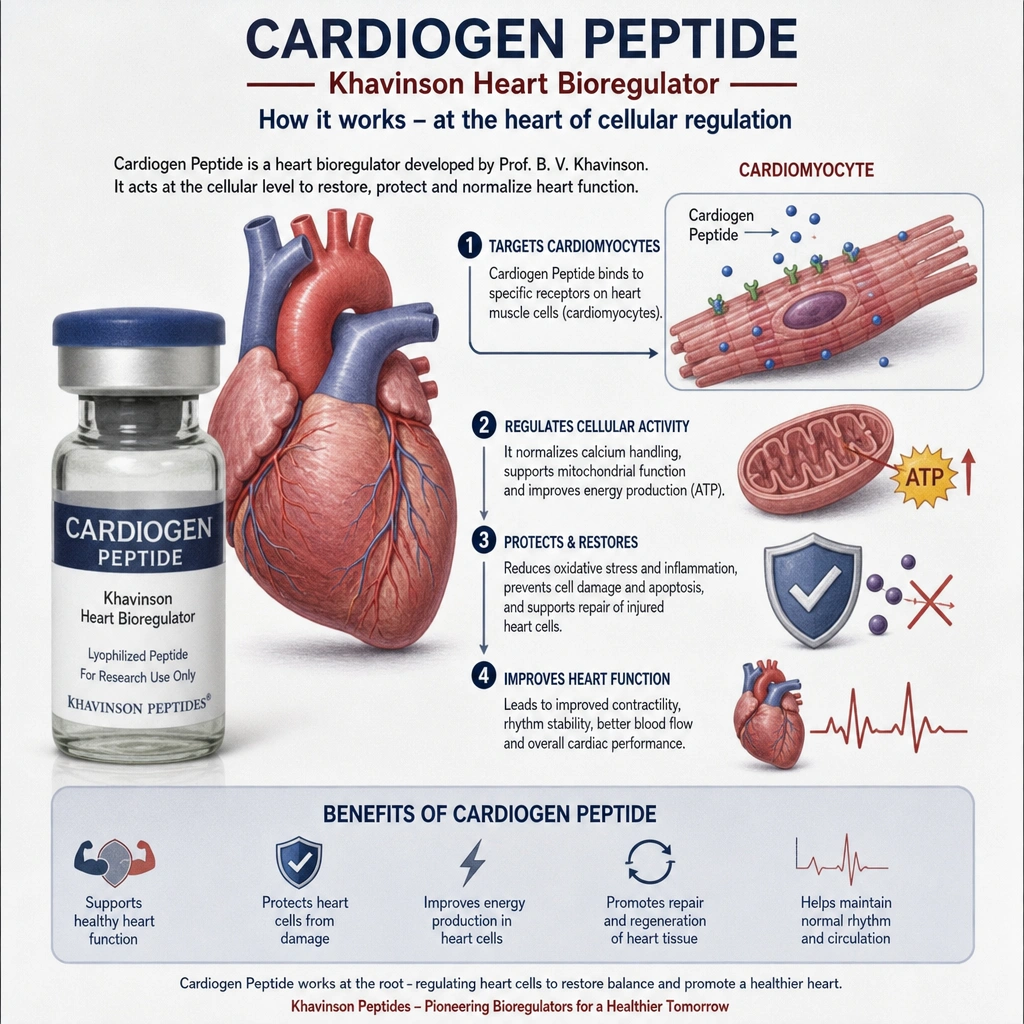
What is Cardiogen peptide? Cardiogen is a synthetic short-chain peptide bioregulator — commonly described as the sequence Ala-Glu-Asp-Arg (AEDR) — designed to target the cardiovascular system. In the Khavinson model it acts as an epigenetic signal, entering cardiomyocytes (heart muscle cells or myocardial cells) and prompting the protein synthesis of elastin used for cellular tissue repair, cardiomyocyte proliferation, CXCL12 and WEDC1 expression, and the regulation of apoptosis or programmed cell death by inhibiting endonuclease-catalyzed DNA hydrolysis.
It is sold as oral capsules, sublingual drops, or an injectable research form. Evidence is largely preclinical, including studies on M-1 sarcoma models involving hemorrhagic necrosis and from its originating research school, so treat Cardiogen as an educational, research-grade compound rather than an approved medicine. Note: it is unrelated to "Cardiogen 82," a radioactive isotope generator used in PET imaging.
Cardiogen is a Khavinson-class heart bioregulator — a synthetic tetrapeptide (Ala-Glu-Asp-Arg) studied as a bioregulator of cardiovascular function for cardioprotective support, not an approved drug.
Mechanism is epigenetic by hypothesis: it is proposed to enter cardiomyocytes and upregulate repair-related protein synthesis.
Reported cardiogen peptide benefits (heart function, cardiovascular ageing, microcirculation and cellular metabolism) are proposals from the originating research school, mostly preclinical; the only AEDR-specific studies are in fibroblasts and computer models.
No established amount: Cardiogen has no approved or trial-based dose for any use.
Buy on proof. Check that the certificate matches the lot number on the vial and can be verified; confirm legality in your region.
What is Cardiogen? (and what it is not)
The cardiogen peptide is a synthetically produced, short-chain peptide bioregulator designed to target and support the cardiovascular system. As a heart bioregulator, it belongs to the family of Khavinson bioregulators — short peptides that are small enough to penetrate cell membranes and interact with DNA. It is often sold as a "Cardiogen 20mg" peptide complex in capsule form.
Cardiogen Peptide Structure and Sequence
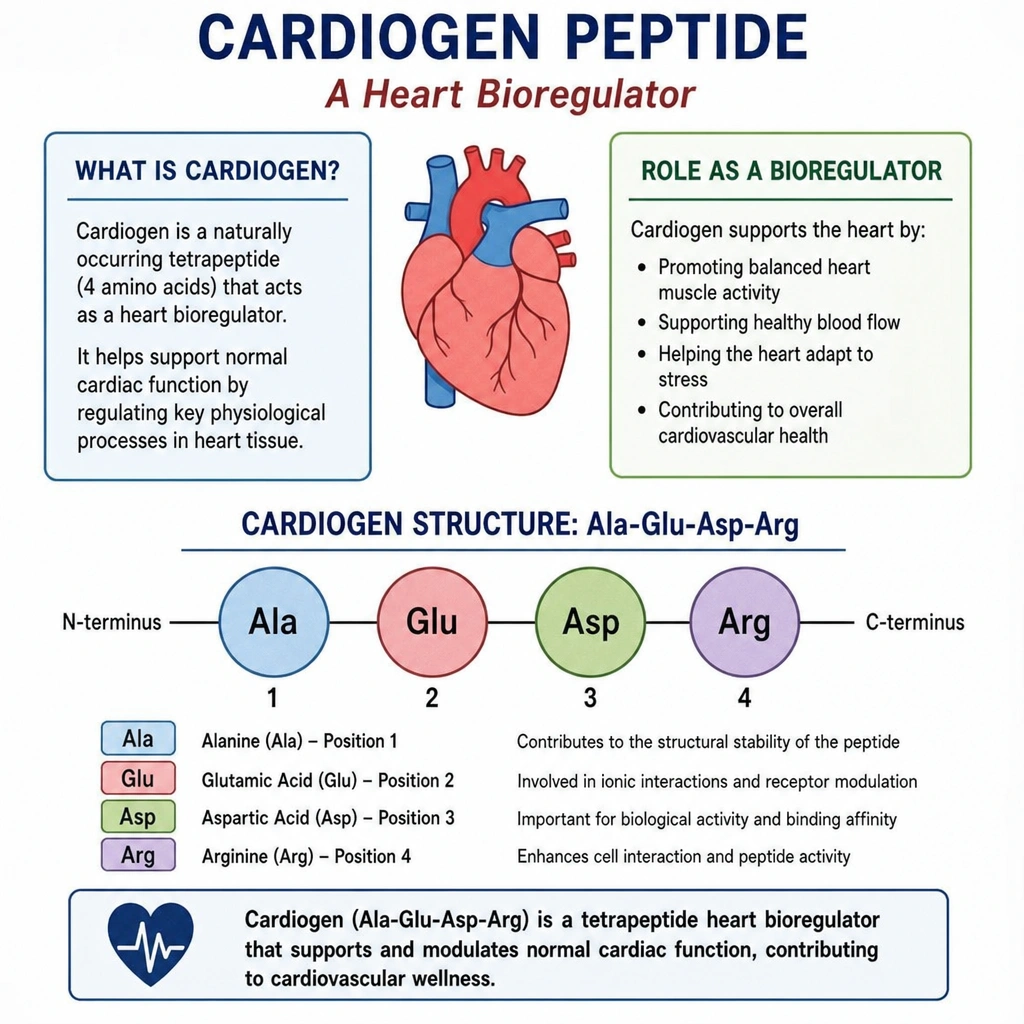
In terms of cardiogen peptide structure and sequence, it is commonly described as the tetrapeptide H-Ala-Glu-Asp-Arg-OH (AEDR) — a compound with a low molecular weight consisting of alanine, glutamic acid, aspartic acid, and arginine. Because reported sequences can differ across suppliers, confirm the exact sequence on the product documentation.
Cardiogen Peptide vs. Cardiogen 82
An important disambiguation: the cardiogen peptide is not the same as "Cardiogen 82," which is a brand name for a Rubidium Rb-82 generator — a radioactive isotope generator used in clinical cardiac PET scans. This article is exclusively about the bioregulatory peptide (sometimes searched as "peptide cardiogen" or "cardiogen bioregulator peptide").
How does the Cardiogen peptide work?
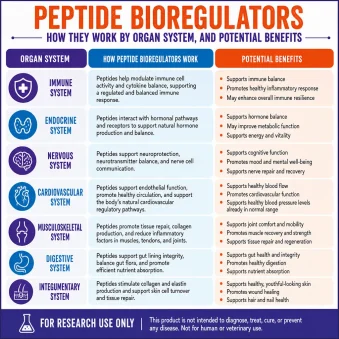
Traditional heart medications typically alter systemic functions — thinning the blood, dilating vessels, or slowing the heart — without healing the underlying tissue. The cardiogen peptide bioregulator for the heart is proposed to work differently. Cardiomyocytes (the heart's muscle cells) have a famously low rate of regeneration, so when they are damaged they do not easily replace themselves.
According to the Khavinson model, According to the Khavinson model, Cardiogen is proposed to penetrate the nucleus of these heart cells and fibroblasts of the prostate gland to interact with DNA and influence p53 protein expression, Lamin A, and other protein expression, signaling the cell to begin synthesizing specific structural and functional cytoskeletal proteins like actin, tubulin, vimentin, elastin, and collagen. In short, it is hypothesized to "remind" aging or stressed cardiomyocytes and cardiac progenitor cells how to behave like younger, healthier cells by influencing nuclear matrix proteins like Lamin C — the cornerstone idea behind tissue regeneration, cellular resilience, cellular repair, and cardiac repair in heart tissue. These are mechanistic, largely preclinical observations, not proven human outcomes.
Cardiogen research in more detail
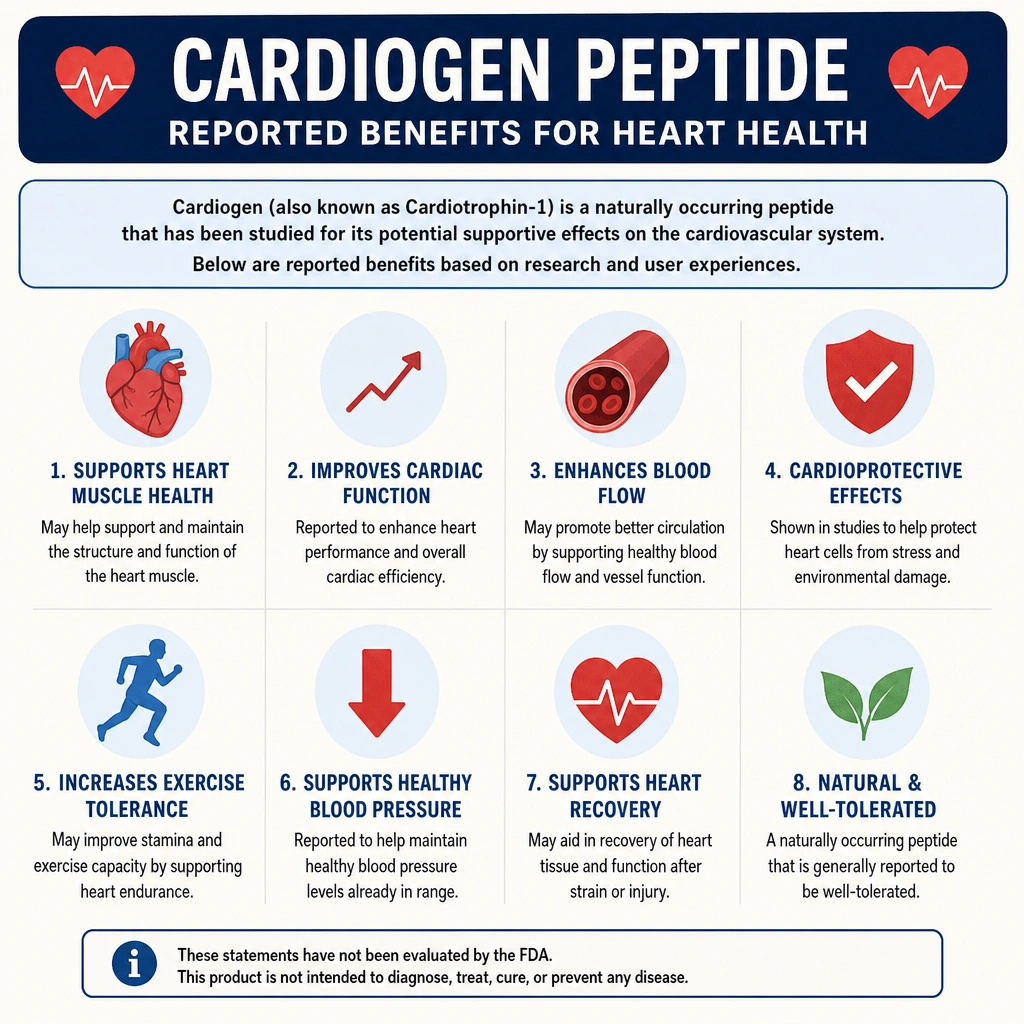
Because of its targeted nature, the reported cardiogen peptide benefits center on the heart muscle and its supply. Bioregulator literature highlights the following proposals, with the caveat that most evidence is preclinical and from its originating research school:
- Myocardial endurance and left-ventricular function: proposed to support the overall cardiac function, cardiac output, contractility, and efficiency of the heart's main pumping chamber.
- Cardiovascular-aging prevention: proposed to help keep cardiac tissue pliable and resilient by supporting age-declining protein synthesis, enhancing cellular resilience, and slowing cellular aging.
- Microcirculation support: discussed as supporting the vascular endothelium, endothelial function, angiogenesis, and capillary supply within the heart muscle while potentially mitigating vascular inflammation.
- Cellular metabolism: proposed to help cardiomyocytes with metabolic regulation and mitochondrial function to use oxygen and nutrients efficiently for steady ATP production.
The honest limitation: there are no large independent randomized human trials establishing efficacy for the cardiogen peptide. Strong disease claims are marketing.
What the cell and modelling studies of AEDR measured
Two primary studies among the verified references test the Cardiogen sequence, Ala-Glu-Asp-Arg, directly, and neither used heart cells. In 2012 Khavinson, Lin'kova, Polyakova and colleagues added H-Ala-Glu-Asp-Arg-OH to cultured mouse embryonic fibroblasts and measured cytoskeletal and nuclear matrix proteins (Khavinson et al. 2012). Expression of actin, tubulin and vimentin rose two- to five-fold, and expression of lamin A and lamin C two- to three-fold. The authors proposed that the cardioprotective activity reported for the tetrapeptide in earlier work follows from this, because more synthesis of these proteins stimulates cell proliferation and reduces apoptosis (Khavinson et al. 2012).
In 2023 the same group modelled whether 26 biologically active ultrashort peptides, AEDR among them, could enter cells through the amino acid transporters LAT1 and LAT2 and the peptide transporter PEPT1 (Khavinson et al. 2023). Docking showed the binding sites were large enough for di-, tri- and tetrapeptides, and the 26 active peptides scored consistently higher than di- and tripeptides with no established activity, out of all 8,400 possible combinations (Khavinson et al. 2023). Most also bound more strongly than known substrates or inhibitors of the transporters (Khavinson et al. 2023). The study was computational, and no transport of AEDR into cells was measured.
These two papers are the measured basis for the mechanism usually attributed to Cardiogen. Neither tested cardiomyocytes, heart tissue or a living animal.
Clinical contexts in the literature: recovery, strain and hypertension
Discussion of Cardiogen tends to focus on three settings, including ischemia, metabolic syndrome, and ischemic heart disease. None has a controlled trial behind it:
- Myocardial-infarction recovery: the proposal is that it supports the surviving "border zone" cells around a scar during recovery; no measured result is cited here.
- Athletic heart strain: discussed in relation to maladaptive cardiac remodeling from overtraining, a topic also covered in the peptides for injury recovery guide; no study of Cardiogen in athletes is cited here.
- Hypertension: Cardiogen does not lower blood pressure like a drug. Russian-language reports describe its use in hypertension, framed as support for overall cardiovascular health, and none of them is indexed in PubMed.
Peptide bioregulation vs cardiovascular drugs
The point of comparing peptide bioregulation with cardiovascular drugs used for cardiovascular diseases is not to replace medicine but to understand distinct roles. Drugs save lives in emergencies; bioregulators are proposed to support long-term tissue health.
| Factor | Cardiogen (Bioregulator) | Cardiovascular Drugs |
|---|---|---|
| Mechanism | Proposed DNA signaling in cardiomyocytes | Receptor/systemic modulation |
| Focus | Root-cause tissue support (hypothesized) | Symptom control, acute events |
| Onset | Not established | Fast-acting |
| Emergency use | Not for acute events | Life-saving in emergencies |
| Status | Research/educational compound | Approved medications |
Why this guide gives no Cardiogen amounts
Cardiogen is not an approved medicine anywhere and has no official human dose. The capsule products sold as supplements in Russia carry a label regimen; that is a supplement label, not a trial result, and it concerns a different product from the research peptide sold here. The Khavinson group's published work on this peptide is cell and animal research. PrymaLab supplies Cardiogen for laboratory research only. This page does not give a schedule for using it.
Safety and side effects in the literature
Reports from its originating research tradition describe Cardiogen as well tolerated, but independent human trial data are lacking, so these reports are not definitive. Accounts of cardiogen peptide side effects in use come from user reports rather than studies.
The proposed stimulation of protein synthesis (see how peptides stimulate protein synthesis) is a theoretical concern in cancer models, and no data exist on pregnancy or on interactions with cardiac medications.
Where to buy Cardiogen for research
As peptide therapy grows, the terms "cardiogen for sale" and "buy cardiogen" flood health forums. The market is largely unregulated, so caution matters. Beyond cardiogen peptide reddit threads and cardiogen peptide reviews, buy on documentation.
| Factor | High-Quality (Verified) | Low-Quality / Risky |
|---|---|---|
| Testing / COA | Certificate of Analysis that matches the lot number on the vial and can be verified | Missing or generic |
| Sourcing | Reputable, transparent vendor | Anonymous, unverified |
| Labeling | States Ala-Glu-Asp-Arg composition | Vague ingredient list |
| Claims | Supportive, realistic | "Cure" or guaranteed results |
| Price | Reflects real synthesis cost | Suspiciously cheap (filler risk) |
PrymaLab tests every lot in its own laboratory (RP-HPLC purity, LC-MS identity), and its certificates can be checked at prymalab.net/testing/verify. Under its third-party testing guarantee, if any independent laboratory finds the wrong compound or less than the stated purity or amount, the order is refunded and the test reimbursed. PrymaLab's bioregulator catalog shows the documentation a trustworthy supplier should provide.
Researching heart bioregulators? Start with verified material.
PrymaLab focuses on US-handled research peptides and research chemicals with transparent documentation and careful handling.
Explore PrymaLab BioregulatorsFrequently asked questions
What is Cardiogen peptide?
Cardiogen peptide is the synthetic tetrapeptide Ala-Glu-Asp-Arg (AEDR), a cytogen from the Khavinson series developed at the St. Petersburg Institute of Bioregulation and Gerontology and assigned to heart muscle. It is studied for its effect on cardiomyocytes, gene expression in heart tissue and recovery after cardiac strain. PrymaLab supplies it as a 20mg vial, a 20mg nasal spray and a 20mg preloaded pen for research use.
What are the Cardiogen peptide benefits reported in research?
The reported findings fall into three groups. Organotypic culture work from the Khavinson group describes Cardiogen at 0.05 ng/mL stimulating growth of rat heart explants against untreated controls (Zakutskii et al., Adv Gerontol 2006). Russian-language reports describe its use after cardiac strain and in hypertension, but none of those is indexed in PubMed, so that part of the record cannot be checked against a primary source. The mechanism literature frames all of this as tissue-specific gene regulation rather than a drug-like receptor effect. None of it is an approved use.
What did the Cardiogen studies measure?
The only AEDR-specific studies among the verified references are a 2012 culture study in mouse embryonic fibroblasts, which measured cytoskeletal and nuclear matrix proteins, and a 2023 docking study of peptide transporters. Organotypic culture work also describes Cardiogen at 0.05 ng/mL stimulating growth of rat heart explants (Zakutskii et al., Adv Gerontol 2006). No dose-finding trial exists, and the capsule and injection figures that circulate online are not reproduced here.
What is the difference between Cardiogen and Vesugen?
Both are short synthetic cytogens from the Khavinson series, but they are assigned to different tissues. Cardiogen is the tetrapeptide Ala-Glu-Asp-Arg and its literature concerns heart muscle: cardiomyocytes, cardiac gene expression and recovery after strain. Vesugen is the tripeptide Lys-Glu-Asp and its literature concerns blood vessels: the vascular wall and the endothelium. PrymaLab supplies Vesugen 20mg for research alongside the Cardiogen vial, spray and pen.
How should Cardiogen be stored?
Sealed lyophilized Cardiogen is stored refrigerated at 2 to 8 C, or at -20 C for long-term storage, and kept out of light. Once reconstituted the solution is refrigerated, not frozen, and used within a few weeks. The nasal spray and the preloaded pen are refrigerated as well. Short peptides degrade faster with repeated warming, so the vial is returned to the fridge promptly after each use.
What is Cardiogen peptide and what does it do?
Cardiogen is a synthetic short-chain peptide bioregulator (commonly Ala-Glu-Asp-Arg) that targets the cardiovascular system. In the Khavinson model it enters cardiomyocytes and signals DNA to drive repair-related protein synthesis. It is studied to support heart-muscle function and cardiovascular-aging prevention, and is used as an educational, research-grade compound rather than an approved medicine.
What are the main Cardiogen peptide benefits?
Proposed cardiogen peptide benefits in the Khavinson literature include left-ventricular function, cardiovascular ageing, microcirculation and cellular metabolism. The only AEDR-specific studies measured cytoskeletal proteins in fibroblasts and transporter docking in a computer model, so these remain proposals.
Is there an established Cardiogen amount?
No. Cardiogen has no approved or trial-based dose, and the capsule and injection figures that circulate online are not reproduced here.
Is Cardiogen the same as Cardiogen 82?
No. The cardiogen peptide is a bioregulatory supplement made of amino acids. Cardiogen 82 is an unrelated brand name for a Rubidium Rb-82 generator used to produce a radioactive tracer for cardiac PET imaging. They share a similar name but serve completely different purposes.
Are there Cardiogen peptide side effects?
No controlled study has reported side effects for Cardiogen. Its originating research tradition reports few systemic effects, and other accounts are anecdotal.
Where can I find Cardiogen for sale safely?
Look for cardiogen for sale from suppliers whose certificates match the lot number on the vial and can be verified, with clear labeling of the Ala-Glu-Asp-Arg composition, and avoid cure-all claims or suspiciously low prices. Always confirm the legal status of the compound in your region before purchasing.
Is Cardiogen a Khavinson peptide?
Yes. The cardiogen khavinson peptide comes from the Russian research and bioregulator tradition associated with Professor Vladimir Khavinson and the St. Petersburg Institute of Bioregulation and Gerontology, which developed short, tissue-specific peptides — including this heart bioregulator — to support organ-specific repair.
References and further reading
- Khavinson, V.Kh. (2002). Peptides and Ageing. Neuroendocrinology Letters, 23(Suppl 3), 11–144.
- Khavinson, V.Kh., & Malinin, V.V. (2005). Gerontological Aspects of Genome Peptide Regulation. Karger, Basel.
- Anisimov, V.N., & Khavinson, V.Kh. (2010). Peptide bioregulation of aging: results and prospects. Biogerontology, 11(2), 139–149.
- Review literature on short peptide bioregulators and cardiomyocyte protein synthesis (Ala-Glu-Asp-Arg / AEDR-class peptides).
- U.S. Food and Drug Administration. Dietary Supplements: Questions and Answers. FDA.gov. Accessed 2026.
PrymaLab resources: Bioregulator peptides · Research Hub · Peptide calculator · FAQ.
Final disclaimer: This article is for educational purposes only. Cardiogen and the other compounds discussed have not been evaluated by the FDA or comparable agencies to diagnose, treat, cure, or prevent any disease, and statements about their effects have not been evaluated by the FDA.
PrymaLab supplies these compounds for laboratory research use only. Verify the legal status of any compound in your jurisdiction. PrymaLab does not endorse any specific third-party peptide vendor mentioned in this article and assumes no responsibility for third-party products.