

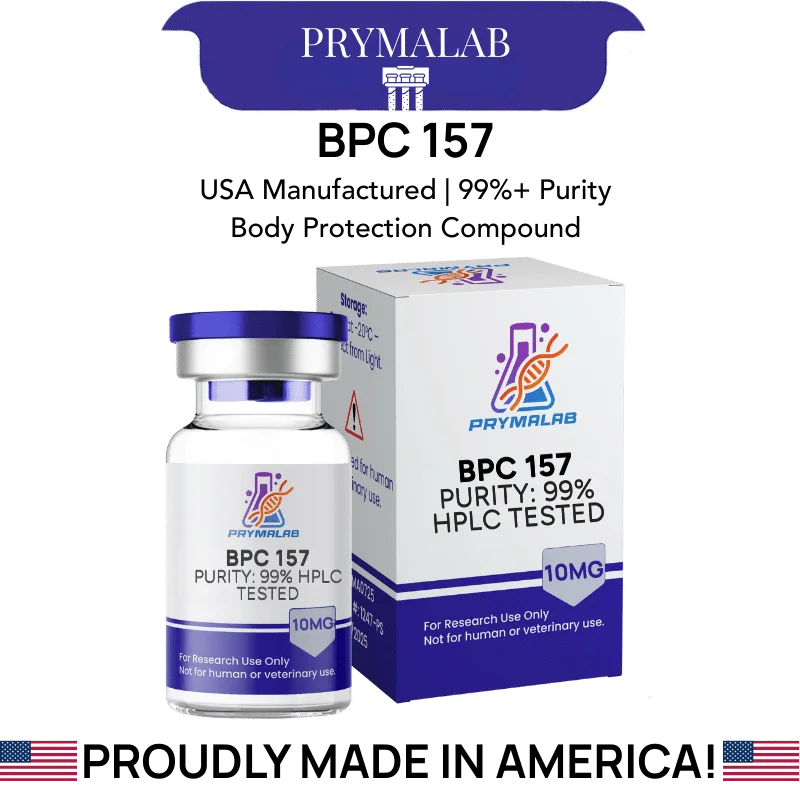
BPC-157 is a synthetic pentadecapeptide copied from a protective protein in human gastric juice, studied for tendon, ligament, muscle and gut-lining repair, mostly in rat models. PrymaLab supplies it as a BPC-157 5mg vial and a BPC-157 10mg vial, lyophilized, for research use.
- Sequence: 15 amino acids, GEPPPGKPADDAGLV, molecular weight 1,419
- Class: gastric pentadecapeptide, a stable fragment of body protection compound (BPC)
- Studied for: tendon, ligament and muscle healing, gut ulcer models and blood vessel repair, mostly in rats
- Storage: lyophilized vial refrigerated and away from light; reconstituted solution refrigerated
- Forms and sizes at PrymaLab: BPC-157 5mg vial, BPC-157 10mg vial, BPC-157 Capsules, BPC-157 Peptide Nasal Spray, BPC-157 pen
| Form | PrymaLab product | Route in research | Preparation |
|---|---|---|---|
| Lyophilized vial | BPC-157 5mg, BPC-157 10mg | Subcutaneous or intraperitoneal injection in animal studies | Dissolved in a suitable diluent before use |
| Capsules | BPC-157 Capsules (60/500mcg) | Oral, the route used in gut-lining models | None |
| Nasal spray | BPC-157 Peptide Nasal Spray | Intranasal | None, supplied in solution |
| Preloaded pen | Preloaded Autoinjector BPC-157 3ml pen, 5mg/ml | Not stated | None, supplied in solution |
Vial arithmetic is done with the peptide reconstitution calculator. For the citations and the side-effect data, read the full BPC-157 research guide.
BPC-157 (Body Protection Compound-157) is a synthetic 15-amino-acid peptide whose sequence is derived from a protein found in human gastric juice. It is one of the most studied research peptides in animal models of tendon, ligament, muscle and gastrointestinal injury. This guide summarises what the published literature reports about its proposed mechanisms, how it compares with TB-500, its regulatory status in the United States, and how to read a certificate of analysis before buying it for research. BPC-157 is not approved for any use in people, and PrymaLab supplies it for laboratory research only.
Editorial & research disclaimer: This article is for educational and informational purposes only and is not medical advice. BPC-157 is sold and discussed for research purposes only and is not approved by the FDA for human therapeutic use. PrymaLab supplies it for laboratory research use only, not for human or veterinary use. The World Anti-Doping Agency lists BPC-157 as a prohibited substance under section S0.

Quick Answer
What is BPC-157 and what does it do? BPC-157 is a synthetic pentadecapeptide — a 15-amino-acid fragment of a protective protein in gastric juice — studied as a cellular signaling molecule for tissue regeneration. In animal studies the BPC 157 peptide was linked to angiogenesis (new blood vessel growth), growth-factor upregulation and collagen expression, which is why BPC-157 research centers on wound healing, tendon, ligament, and gut repair.
It is best understood as a biological repair signal, not a miracle cure: animal data are promising, large human trials are still missing, and quality varies wildly between suppliers — so verification matters as much as the molecule itself.
What BPC-157 is: a synthetic 15-amino-acid peptide (pentadecapeptide) derived from a body protection compound in gastric juice — a research signaling molecule, not an approved drug.
What it does: in research models the BPC 157 peptide was linked to angiogenesis, growth-factor upregulation, and collagen expression in tendon and ligament injury models.
BPC-157 vs TB-500: in animal work BPC-157 was studied for local connective-tissue and gut repair, while TB-500 is studied for cell migration and muscle repair.
Safety reality: animal studies show low toxicity, but human trials are lacking, BPC-157 side effects are usually mild, and the FDA lists it as a Category 2 bulk drug substance.
Source carefully: check that the certificate shows 99%+ HPLC purity, matches the lot number on your vial and can be verified. PrymaLab focuses on education plus verified, US-sourced research peptides at prymalab.net.
What is BPC-157?
BPC-157 is a synthetic pentadecapeptide — a chain of 15 amino acids — isolated as a stable fragment of Body Protection Compound, a protein that naturally helps the human digestive tract repair itself. If you are asking BPC 157 what is it in plain language: think of an injury as a construction site within the field of regenerative medicine, and this bio-identical molecule as the foreman using cellular signaling to give repair crews clear instructions. Because the peptide BPC 157 (also written as bpc peptide 157, peptide 157 bpc, or simply peptides 157 in search) originates in gastric juice rather than being a foreign chemical, researchers are particularly interested in how well it is tolerated in animal models.
The reason so many people search for BPC-157 information in the context of sports medicine and healthy aging is the gap between what hurts and what heals. Muscles bounce back in weeks; tendons and ligaments can take months. The hypothesis behind the bpc peptide — and the focus of ongoing BPC-157 research — is that it improves the local blood supply that connective tissue normally lacks. For the broader biochemistry of these molecules, see our primer on what a peptide is.
How does BPC-157 work?
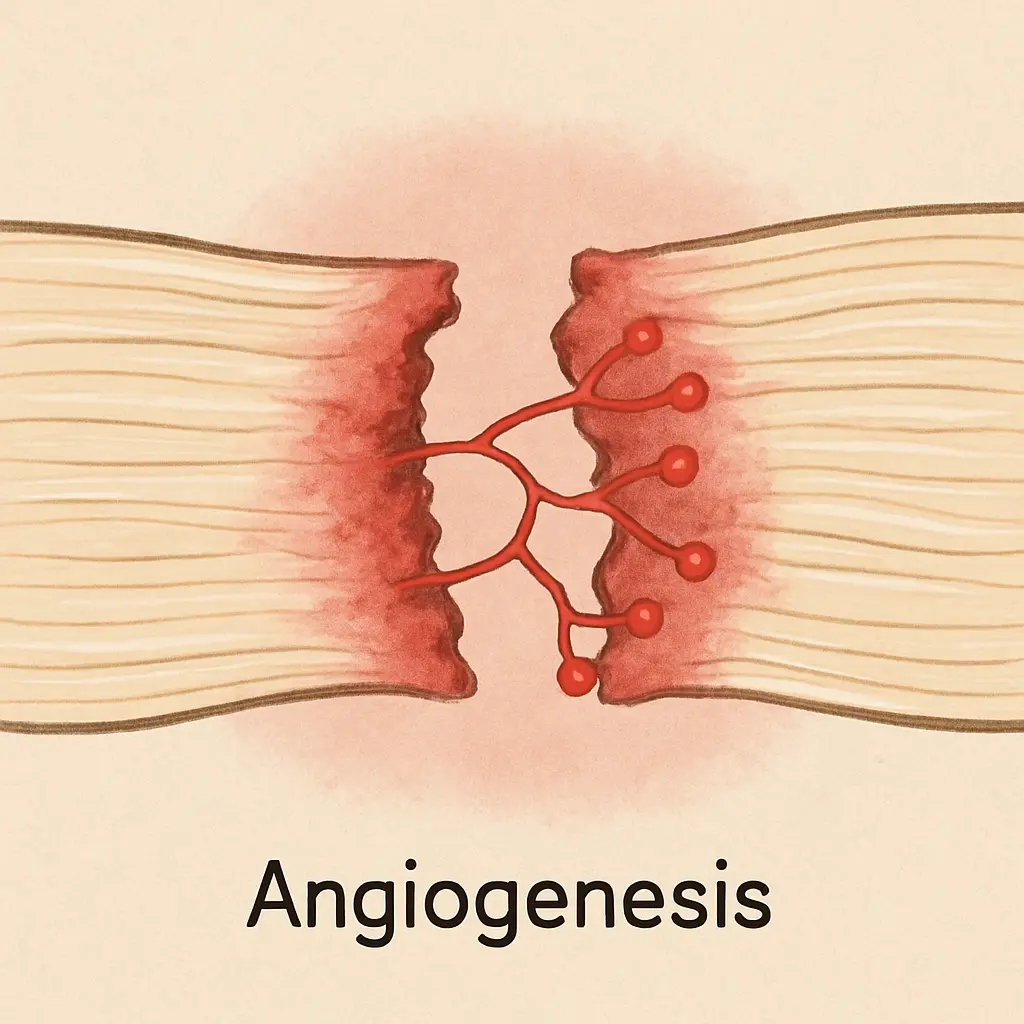
So bpc 157 what does it do at the cellular level? Animal research links the Body Protection Compound 157 mechanism of action to blood flow at damaged tissue: in injury models the 157 peptide was associated with new vessels, stronger signaling, and better collagen.
Angiogenesis and the "White Tissue" Problem
Ever wonder why a torn muscle heals in weeks while a sprained ligament takes months? Muscles are "red tissue," packed with blood flow that delivers nutrients and repair cells. Tendons and ligaments are "white tissue" — naturally blood-starved, so they heal frustratingly slowly. This is where the angiogenic and regenerative properties of pentadecapeptide BPC-157 stand out. Acting like a biological bridge builder, the peptide is studied for triggering angiogenesis and collagen synthesis: the creation of new microscopic blood vessels and structural fibers that push nutrients into those dry, stubborn areas.
How BPC-157 Coordinates the Repair Process
Once supply lines open, BPC-157 research suggests it behaves like a cellular construction foreman, stimulating tendon fibroblasts and organizing the site by triggering three critical responses:
- Blood vessel formation: building vital new "roads" directly to the injury so nutrients and immune cells can arrive.
- Growth factor upregulation: sending louder biochemical signals that attract specialized healing cells to the trauma site.
- Increased collagen expression: promoting robust collagen synthesis to weave strong, flexible fibers rather than the stiff, brittle scar tissue that re-tears easily.
Ultimately, this targeted rebuilding process explains why the peptide 157 BPC is so often discussed in tendon and ligament research. Muscle injury research leans more on TB-500, covered next.
BPC-157 vs TB-500: how the two differ
BPC-157 is studied mainly for connective-tissue repair. TB-500 (Thymosin Beta-4) is studied for cell migration and is described as acting more systemically, including in research on damaged muscle fibers and muscle growth.
| FactorBPC-157 (Pentadecapeptide)TB-500 (Thymosin Beta-4) | ||
|---|---|---|
| Primary action | Localized angiogenesis & connective-tissue repair | Systemic cell migration & muscle recovery |
| Best-studied target | Tendons, ligaments, joint stability, gut lining | Muscle fibers, flexibility, widespread tissue |
| Tissue type focus | "White tissue" (blood-starved) | "Red tissue" (vascular muscle) |
| Reach | Site-specific "bridge building" | Travels system-wide |
| Unique advantage | Cytoprotective gut & NSAID-damage research | Broad muscle-tear coverage |
| Common research pairing | Sold together as the Wolverine blend; no controlled human trial of the pair | |
Combining BPC-157 With TB-500
Because their proposed mechanisms complement each other, combining them — often called stacking BPC-157 with TB-500 — is discussed for a synergistic effect, but the combination has not been tested in a controlled human trial. For a deeper look at the systemic partner molecule, see our overview of the TB-500 5mg research peptide.
Gastrointestinal models: what the BPC-157 literature reports
Beyond structural injuries, the bpc 157 peptid is studied for cytoprotective (cell-protecting) effects within the digestive tract, a focus TB-500 research lacks. The peptide's true origin lies in the stomach, where it is built for cytoprotection — actively shielding cells from harm. Researchers study it in models of NSAID (ibuprofen) damage.
Inside the gut, microscopic gatekeepers called tight junctions normally prevent toxins from escaping into the bloodstream. Scientists study BPC-157 in models where these break down. Areas of active research interest include interstitial cystitis and:
- Models of increased intestinal permeability
- NSAID-induced gastrointestinal damage models
- Supporting research models of ulcerative colitis, inflammatory bowel disease, and inflammatory bowel condition
Thanks to its gastric stability — meaning it survives harsh stomach acid — the compound is studied orally in gut models for anti-inflammatory effects.
How BPC-157 Is Prepared and Administered in Published Studies
Animal studies of BPC-157 tissue repair used oral delivery in gut-lining models and injection in tendon and ligament models. For a fuller comparison of delivery methods in research, see our guide on oral vs. injectable peptide delivery.
Reconstitution for laboratory work
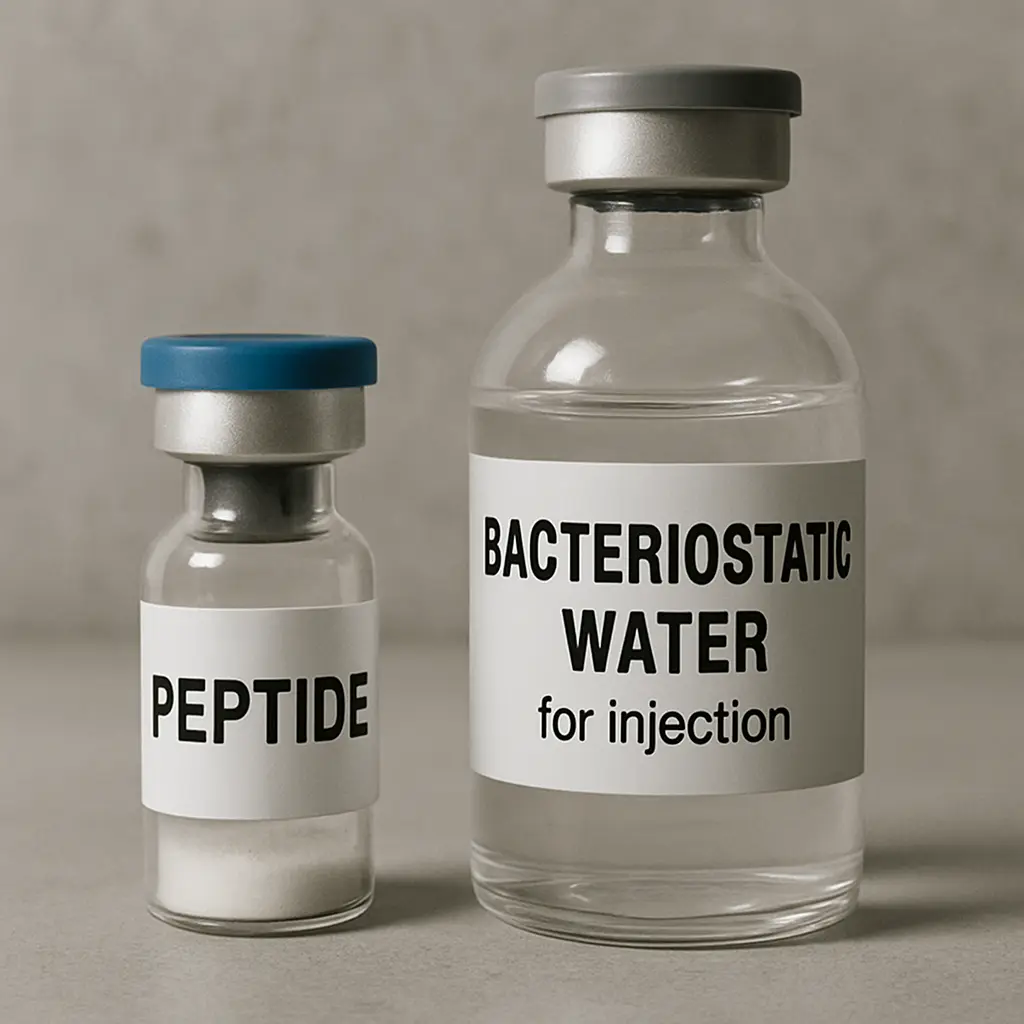
Lyophilized BPC-157 is dissolved in a suitable diluent before use, and handling peptide powder safely preserves its amino-acid bonds. Add the diluent slowly down the inner glass wall of the vial and swirl gently until the powder dissolves into a clear solution; do not shake. Concentration is the vial’s content divided by the volume added. Store the solution refrigerated, away from heat and light.
Navigating the Grey Area: BPC-157 Safety, Side Effects & FDA Regulatory Status
For anyone seeking honest BPC-157 information, understanding BPC-157 safety means separating internet hype from clinical reality. While animal studies report healing effects without major toxicity, large-scale, long-term human clinical trials are currently missing from the medical literature. That single fact should anchor every decision around the bpc 157 peptide.
FDA Regulatory Status of BPC-157
Because of this lack of human data, the FDA regulatory status of BPC-157 recently shifted. The agency placed the peptide in the Category 2 bulk drug substance group — substances that raise significant safety risks — effectively restricting regulated compounding pharmacies from legally producing and selling it to patients while more safety data is gathered. In practical terms, that keeps BPC-157 in a research-only classification.
Possible BPC-157 Side Effects
Formal human safety data are absent; the available toxicology comes from animal studies, and the FDA lists BPC-157 as a Category 2 bulk drug substance. Reported side effects typically include mild nausea, flushing, or dizziness, which may suggest a temporary interaction with the central nervous system. More seriously, a rare but severe allergic reaction called anaphylaxis — which causes throat swelling and difficulty breathing — remains a possible risk with any unapproved injectable product.
Quality and Sourcing: How to Read a BPC-157 COA
Navigating this grey market safely means avoiding low-quality suppliers by demanding a Certificate of Analysis (COA) for the lot that shows the vial's purity and identity. This is also where the search term bpc 157 peptide sciences comes up: with major legacy vendors restructuring under regulatory pressure, verification now matters more than any brand name. Before you treat any 157 bpc source as trustworthy, confirm:
- Purity of 99%+ on a recent HPLC report; below 98% is a yellow flag and below 95% is a hard pass.
- A verifiable certificate that can be checked with the issuing laboratory, with a test date inside the last 12 months.
- A mass-spec identity match confirming the molecular weight matches the labeled peptide.
- Lot/batch cross-reference — the number on the COA must match the number on your vial, every time.
- Lyophilized, cold-shipped product from a transparent, US-based supplier.
If a supplier refuses to share a COA, or the report looks like a blurry photocopy from three years ago, walk away. PrymaLab tests every lot in its own laboratory (RP-HPLC for purity, LC-MS for identity), and its certificates can be checked at https://prymalab.net/testing/verify/. For more on evaluating suppliers and reading lab reports, see our companion guide on BPC-157 benefits and safety, and review transparency standards at prymalab.net.
BPC-157 for research, with the lot certificate linked
PrymaLab pairs research-grade, US-sourced peptides with transparent COAs and a Test → Interpret → Optimize framework — so your decisions are guided by data, not hype.
Explore PrymaLab Research PeptidesFrequently Asked Questions About BPC-157
What is BPC-157?
BPC-157 is a short synthetic peptide, a pentadecapeptide, copied from a protective protein found in human gastric juice. It is not a hormone and not a steroid. Researchers study it in animal models of tendon, ligament, muscle and gut-lining injury. It is not approved as a drug anywhere and is sold in lyophilized vials for research use only.
What does BPC-157 do?
In rat studies, BPC-157 has been reported to speed healing of transected Achilles tendons, medial collateral ligaments and crushed muscle, to protect the stomach lining against ulcer-inducing agents, and to promote new blood vessel growth around injuries. The proposed mechanisms involve the nitric oxide system and growth factor receptors. Human trial data are limited, so these remain research findings, not established effects.
Is BPC-157 a steroid?
No. BPC-157 is a peptide, a short chain of amino acids, with no steroid structure and no direct action on androgen receptors. The confusion comes from its use in sports settings. The World Anti-Doping Agency lists BPC-157 as a prohibited non-approved substance under section S0, so it is banned in tested competition even though it is not a steroid.
How is BPC-157 reconstituted?
A lyophilized BPC-157 vial is dissolved by adding a suitable diluent slowly down the inside wall and swirling, never shaking. Concentration is the vial’s content divided by the volume added, so a 5 mg vial with 2 mL gives 2.5 mg per mL. The solution is stored refrigerated.
Is BPC-157 FDA approved?
No. BPC-157 has never been approved by the FDA for any use, and published human data are limited to small pilot reports. In 2023 the FDA placed BPC-157 in Category 2 of its interim 503A bulk drug substances list, the category for substances that may present significant safety risks, citing immunogenicity for certain routes, peptide-impurity and characterisation complexities, and limited safety information. FDA's current Category 2 document carries BPC-157 among nominations that were withdrawn rather than on the active list, and it has not been added to Category 1, so it is still not a substance a compounding pharmacy may use. It is supplied only as a research compound.
What is BPC-157 and what does it do?
BPC-157 is a synthetic pentadecapeptide (a 15-amino-acid chain) derived from Body Protection Compound, a protein found in human gastric juice. In research models it acts as a cellular signaling molecule that promotes angiogenesis, upregulates growth factors, and increases collagen expression — which is why BPC-157 research focuses on tendon, ligament, and gastrointestinal repair.
Why do tendons and ligaments heal so slowly, and what is BPC-157 studied for?
Tendons and ligaments are "white tissue" with poor blood supply, so they get fewer nutrients and repair signals than "red" muscle tissue. BPC-157 is studied for promoting angiogenesis — building new micro-blood vessels into the injury — so nutrients and repair cells can reach the site, while also upregulating growth factors and collagen expression for stronger, more flexible repair.
How does BPC-157 compare with TB-500?
BPC-157 shines in localized connective-tissue repair (tendons and ligaments) and gut protection, whereas TB-500 (Thymosin Beta-4) acts systemically and is studied for muscle recovery via enhanced cell migration. The two are sold together as the Wolverine blend; no controlled human trial has tested the pair.
What is BPC-157 studied for in the gut?
Originating from the stomach's protective systems, BPC-157 is studied for cytoprotection in gut models, including tight-junction integrity, intestinal permeability, NSAID-induced injury and ulcerative colitis models. Its gastric stability lets it survive stomach acid.
How is BPC-157 reconstituted for laboratory work, and what time points do studies report?
Lyophilized BPC-157 is reconstituted with sterile or bacteriostatic water to a known concentration for in-vitro or animal-model work and stored refrigerated. Published animal studies report outcomes at defined time points after injury; they do not establish any timeline in people. PrymaLab supplies BPC-157 for laboratory research only.
What are the main BPC-157 safety and regulatory considerations?
Animal studies suggest promising healing with low toxicity, but large, long-term human trials are still lacking. The FDA classified BPC-157 as a Category 2 bulk drug substance, restricting compounding pharmacies from producing it pending more data. Reported BPC-157 side effects are usually mild (nausea, flushing, dizziness), though serious allergic reactions like anaphylaxis are possible with any unapproved injection.
How do I verify BPC-157 quality before buying for research?
Demand a recent, batch-specific Certificate of Analysis (COA) showing 99%+ HPLC purity and a mass-spec identity match, check that it matches the lot number on your vial and can be verified, and confirm that the peptide ships lyophilized and cold from a US-based supplier. No COA, no purchase — regardless of price.
References & Further Reading
- Sikiric, P., et al. (2018). Stable gastric pentadecapeptide BPC 157: novel therapy in gastrointestinal tract. Current Pharmaceutical Design, 24(18), 1990–2001.
- Chang, C.H., Tsai, W.C., et al. (2011). The promoting effect of pentadecapeptide BPC 157 on tendon healing involves tendon outgrowth, cell survival, and cell migration. Journal of Applied Physiology, 110(3), 774–780.
- Gwyer, D., Wragg, N.M., & Wilson, S.L. (2019). Gastric pentadecapeptide body protection compound BPC 157 and its role in accelerating musculoskeletal soft tissue healing. Cell and Tissue Research, 377(2), 153–159.
- Seiwerth, S., et al. (2018). BPC 157 and standard angiogenic growth factors. Current Pharmaceutical Design, 24(18), 1972–1989.
- U.S. Food and Drug Administration. Bulk Drug Substances Nominated for Use in Compounding Under Section 503A — Category 2. FDA.gov. Accessed 2026.
- Lau, J.L., & Dunn, M.K. (2018). Therapeutic peptides: historical perspectives, current development trends, and future directions. Bioorganic & Medicinal Chemistry, 26(10), 2700–2707.
Internal references on PrymaLab: What is a peptide? · BPC-157 benefits & safety · Oral peptide delivery · Research peptides.
Final disclaimer: This article is for educational purposes only. BPC-157 is sold in the United States for research purposes only and is not approved by the FDA for human therapeutic use; it is currently listed as a Category 2 bulk drug substance. Statements about peptide effects have not been evaluated by the FDA. Nothing here should be interpreted as a recommendation to purchase, possess, or self-administer any regulated substance.
PrymaLab supplies BPC-157 for laboratory research use only. Verify the legal status of any compound in your jurisdiction. PrymaLab assumes no responsibility for third-party products.