BPC-157 peptide: benefits, safety and research (2026)
BPC-157 is a synthetic gastric pentadecapeptide, a stable fragment of body protection compound, studied for tendon, ligament and muscle healing, gut ulcer protection and blood vessel repair in animal models. PrymaLab supplies it as BPC-157 5mg and BPC-157 10mg vials, BPC-157 Capsules (60/500mcg), a BPC-157 Peptide Nasal Spray and a preloaded BPC-157 pen for research use.
- Sequence: 15 amino acids, GEPPPGKPADDAGLV, molecular weight 1,419
- Class: synthetic gastric pentadecapeptide, stable in gastric juice, active by injection and by mouth in rat models
- Studied for: Achilles tendon, MCL and muscle-crush healing in rats; gastric and colon lesions; vascular repair; brain-gut axis
- Evidence base: mostly rat studies; three small human pilot studies and no dose-finding trial
- Storage: lyophilized vial refrigerated, away from light; reconstituted solution refrigerated
- Forms and sizes at PrymaLab: BPC-157 5mg vial, BPC-157 10mg vial, BPC-157 Capsules, BPC-157 Peptide Nasal Spray, BPC-157 pen
| Feature | BPC-157 | TB-500 |
|---|---|---|
| Origin | Fragment of a protective protein in gastric juice | Synthetic thymosin beta-4, an actin-binding protein |
| Size | 15 amino acids | 43 amino acids |
| Main research models | Tendon, ligament, muscle and gut lesions in rats | Cell migration, skin, corneal and cardiac repair in rodents |
| Routes used in research | Subcutaneous, oral, intranasal | Subcutaneous |
New to the compound? Start with the plain-language BPC-157 primer. For the combination with TB-500, read the Wolverine stack guide. Vial arithmetic: peptide reconstitution calculator.
Quick answer: BPC-157 benefits
BPC-157 is the most cited research peptide for soft-tissue and gut repair, and almost all of that citation trail is preclinical: rat models of tendon transection, ligament injury, muscle crush and chemically induced ulcers. This guide covers what those studies found, what the proposed mechanisms are, the models and routes the literature used, the reported side effects and toxicology, and the legal position in the United States. A shorter plain-language BPC-157 primer exists for readers who want the basics first.
The peptide BPC-157 (Body Protection Compound-157) is a synthetic pentadecapeptide derived from a protective protein found in human gastric juice. It has drawn wide interest because of animal studies on healing in connective tissue, tendons, ligaments, muscles, the gut lining and the nervous system. Researchers have documented BPC-157 benefits in hundreds of lab studies since the 1990s, almost all of them in animals.
This guide covers what the BPC-157 studies found, the wolverine stack combination with TB-500, the BPC-157 capsules used in oral research, and what remains unknown in 2026.
Despite the excitement surrounding BPC-157, it is essential to approach this peptide with a clear grasp of both its notable lab track record and the current limitations of human clinical data. The BPC-157 side effects profile appears favorable in animal models, yet only three small human pilot studies have been published to date.
This guide synthesizes the latest research — including the full 2025 narrative review by McGuire and colleagues — to give you an honest, thorough assessment of what BPC-157 can and cannot do, and where the science is headed.
?? Educational & Research Purposes Only
This article is intended for informational and educational purposes. BPC-157 is classified as a research peptide and is not FDA-approved for human treatment use. The FDA placed BPC-157 in Category 2 (does not meet current safety criteria for compounding) in September 2023. PrymaLab supplies it for laboratory research use only, not for use in people.
BPC-157 Benefits at a Glance
BPC-157 is a 15-amino-acid synthetic peptide derived from human gastric juice that has been studied for healing through VEGFR2-mediated angiogenesis and nitric oxide signaling. Here is what the current research, almost all of it in animals, reports:
- Tendon & ligament repair: faster collagen synthesis and Achilles tendon healing in animal models
- Gut protection: protection against ulcers, colitis and NSAID-induced intestinal damage in rat models
- Anti-inflammatory: lower inflammation in animal models, linked to nitric oxide pathway modulation
- Neuroprotective: nerve regeneration and dopaminergic system recovery findings in animal models
- Wolverine stack: the name used for the combination with TB-500, which no study has tested
- Safety data: no lethal dose identified in animal toxicology; no controlled human safety trials
- Legal status — FDA Category 2 (2023); WADA banned under S0 (2022)
What Is BPC-157? Definition & Origin
BPC-157, formally known as pentadecapeptide BPC 157 or Body Protection Compound-157, is a synthetic peptide consisting of 15 amino acids (Gly-Glu-Pro-Pro-Pro-Gly-Lys-Pro-Ala-Asp-Asp-Ala-Gly-Leu-Val) with the cell-level formula C62H98N16O22 and a cell-level weight of about 1,419 daltons. The peptide is derived from a larger protective protein naturally present in human gastric juice, which is why researchers sometimes refer to it as a "gastric pentadecapeptide." Unlike many synthetic peptides that mimic hormones or growth factors, BPC-157 is a fragment of a protein the human body already produces as part of its internal signaling molecules, and this distinction is central to grasp both its mechanism and its safety profile.
The research history of peptide BPC-157 stretches back to the early 1990s, when Croatian scientist Predrag Sikiric and his team at the University of Zagreb first isolated the compound, sparking interest in sports medicine and regenerative medicine, and began documenting its notable cytoprotective properties. Over the following three decades, more than 100 lab studies have explored BPC-157's effects on virtually every organ system, from the gut tract and musculoskeletal system to the heart and central nervous systems.
The peptide is available in two main salt forms — BPC-157 acetate and BPC-157 arginate (also called pentadecapeptide arginate) — with the arginate form often considered more stable at room heat and in acidic environments like the stomach.
What Makes BPC-157 Unique Among Peptides?
Several characteristics set BPC-157 apart from other research peptides. First, it shows an unusually broad spectrum of activity, promoting healing in tissues as diverse as tendons, gut mucosa, bone, muscle, and nerve fibers. Second, BPC-157 appears to work through multiple signaling pathways simultaneously rather than targeting a single receptor, which may explain its versatility.
Third, the peptide is notably stable in gastric acid, and in rat studies it remained active when given by mouth, a rare property among peptides, which often degrade in the digestive tract. This stability is why oral BPC-157 and BPC-157 capsules are used in research.
How Does BPC-157 Work? Mechanism of Action
Grasp how BPC-157 works needs examining several interconnected cell-level pathways that the peptide starts to promote tissue repair and reduce swelling. The 2025 narrative review by McGuire and colleagues provides the most full synthesis of BPC-157's mechanisms to date, identifying VEGFR2-mediated angiogenesis as the central pathway through which the peptide exerts its regrowth effects.
VEGFR2 & Angiogenesis Pathway
The main mechanism through which BPC-157 promotes healing involves start of vascular endothelial growth factor receptor 2 (VEGFR2), the master regulator of VEGF-driven new blood vessel formation. When BPC-157 starts VEGFR2 within endothelial cells, it triggers a cascade of downstream signaling events including phosphorylation of Akt (protein kinase B) and start of endothelial nitric oxide synthase (eNOS).
This VEGFR2/Akt-eNOS pathway increases local VEGF and nitric oxide production, which dilates blood vessels, improves blood flow to injured tissues, and promotes the formation of new capillaries, a process called angiogenesis. In animal models, a better blood supply to damaged areas was linked to faster healing.
Nitric Oxide System Modulation
BPC-157's interaction with the nitric oxide (NO) system extends beyond simple vasodilation to support broader tissue regeneration. Research shows that the peptide tunes NO production in a context-dependent manner, increasing it where blood flow is needed for healing while preventing the too much NO production that adds to swelling tissue damage. This dual control capacity helps explain why BPC-157 can simultaneously promote healing and reduce swelling — two processes that often work at cross-purposes with conventional treatments. The peptide also interacts with the ERK1/2 signaling pathway, which regulates cell proliferation, differentiation, and survival, further supporting tissue regrowth.
Growth Factor Interactions
Beyond VEGFR2, BPC-157 influences several other growth factor systems key for tissue repair. Studies have documented interactions with epidermal growth factor (EGF), fibroblast growth factor (FGF), and transforming growth factor beta (TGF-ß), all of which play essential roles in wound healing, collagen synthesis, and extracellular matrix remodeling.
The peptide also appears to upregulate growth hormone receptor expression in some tissues, possibly amplifying the body's natural growth hormone signaling without directly affecting circulating GH levels.
BPC-157 Half-Life & Pharmacokinetics
The BPC-157 half-life is estimated at less than 30 minutes in circulation, which seems short for a compound whose effects in animal models lasted much longer.
One proposed explanation, sometimes called a "hit-and-run" profile, is that the peptide starts signaling cascades and gene expression changes that outlast its presence in plasma. The references on this page do not test that explanation.
What Are the Main BPC-157 Benefits?
The BPC-157 benefits documented across hundreds of lab studies span a wide range of tissues and models. Most of the evidence comes from animal models rather than human trials. The following sections describe the most often reported BPC-157 peptide findings, organized by body system.
Table 1: Summary of BPC-157 Benefits by Body System
| Body System | Findings in Animal Models | Evidence Level | Key Mechanism |
|---|---|---|---|
| Gastrointestinal | Ulcer healing, IBD protection, gut lining repair | Strong (100+ animal studies) | Mucosal protection, NO modulation |
| Musculoskeletal | Tendon repair, ligament healing, bone fracture recovery | Strong (50+ animal studies) | VEGFR2 angiogenesis, collagen synthesis |
| Muscular | Faster recovery, reduced atrophy, muscle tear healing | Moderate (20+ animal studies) | Growth factor upregulation, anti-inflammatory |
| Nervous System | Nerve regeneration, neuroprotection, dopamine modulation | Moderate (30+ animal studies) | Neurotrophic factor support, NO pathway |
| Cardiovascular | Blood vessel repair, blood pressure regulation | Moderate (15+ animal studies) | eNOS activation, angiogenesis |
| Hepatic | Liver protection, reduced fibrosis | Emerging (10+ animal studies) | Anti-inflammatory, cytoprotective |
BPC-157 for Gut Health
The gut system is where BPC-157 research began, and it remains the area with the deepest body of evidence supporting the peptide's treatment possible. Given that BPC-157 is derived from a protein naturally found in gastric juice, its affinity for gut tissue is perhaps unsurprising. Dozens of animal studies have showed that BPC-157 for gut health offers protection against many gut insults, from NSAID-induced ulcers and alcohol damage to swelling bowel disease and gut anastomosis complications.
Gastric Ulcer Protection & Healing
BPC-157's most extensively documented gut benefit is its power to both prevent and heal gastric ulcers. In rat models, the peptide has consistently showed dose-dependent protection against ulcers induced by ethanol, aspirin, and other NSAIDs. The mechanism involves strengthening the gastric mucosal barrier, increasing mucus production, and promoting angiogenesis in the ulcer bed to accelerate tissue regrowth.
Because the protection extended to NSAID-induced ulcers in rats, oral BPC-157 is an active area of research.
Inflammatory Bowel Disease (IBD) & IBS
Lab research has shown promising results for BPC-157 for IBS and swelling bowel disease. In animal models of colitis, BPC-157 reduced gut swelling, preserved mucosal integrity, and accelerated healing of damaged gut tissue. The peptide appears to tune the swelling response in the gut through its anti-inflammatory effects and anti-inflammatory properties, influencing cytokine production and immune cell activity to reduce the too much swelling that characterizes IBD while supporting the repair processes needed for mucosal healing.
No human clinical trials have confirmed these effects.
Gut-Brain Axis & Systemic Effects
One of the most intriguing aspects of BPC-157's gut health benefits is its apparent influence on the gut-brain axis. Animal studies have showed that oral BPC-157 can produce systemic effects including brain safety and behavioral gains, suggesting that the peptide's actions in the gut may have far-reaching results throughout the body. This gut-brain connection aligns with the growing scientific grasp that gut health profoundly influences neurological function, mood, and overall well-being.
BPC-157 for Tendon & Joint Repair
Tendon and ligament injuries are among the most common reasons people study BPC-157, and the lab evidence supporting the peptide's role in musculoskeletal healing is large. Tendons are notoriously slow to heal due to their limited blood supply, and BPC-157's power to promote angiogenesis directly addresses this basic challenge. Multiple animal studies have showed accelerated healing of connective tissue, including transected Achilles tendons, medial collateral ligaments, and rotator cuff injuries following BPC-157 use.
Achilles Tendon & Ligament Studies
In the most often cited tendon and bone healing studies, rats with surgically transected Achilles tendons showed greatly faster healing when treated with BPC-157 compared to controls. The peptide increased collagen production and fiber organization, improved tensile strength at the repair site, and promoted the formation of new blood vessels within the healing tendon. These effects were seen with both local and systemic administration in the rat studies, and local administration appeared to give somewhat faster results for localized injuries.
Joint Health & Cartilage Support
Beyond tendons and ligaments, BPC-157 has shown possible for supporting joint health more broadly. Animal studies have documented protective effects against osteoarthritis progression, with the peptide reducing cartilage breakdown and synovial swelling. The first human pilot study on BPC-157, conducted by Lee and Padgett in 2021, examined the peptide's effects on knee pain and reported encouraging preliminary results, though the study was small and lacked the statistical power to draw definitive conclusions. This remains one of only three published human studies on BPC-157, underscoring the need for larger clinical trials.
Cell studies in tendon fibroblasts
Two cell studies by Chang, Tsai and colleagues looked at what BPC-157 does to fibroblasts isolated from the rat Achilles tendon. In the first, published in 2011, the peptide sped the outgrowth of cells from cultured tendon explants, but an MTT assay showed no direct effect on proliferation (Chang et al. 2011). Treated fibroblasts survived hydrogen peroxide stress better, migrated more in transwell assays and spread faster on culture dishes, and the migration and spreading effects grew with concentration (Chang et al. 2011). The cells formed more F-actin, and the authors measured increased expression and phosphorylation of focal adhesion kinase (FAK) and paxillin (Chang et al. 2011).
The second study, in 2014, used a cDNA microarray and found the growth hormone receptor among the genes most strongly up-regulated by BPC-157 in the same cell type (Chang et al. 2014). Receptor mRNA and protein rose with time and with peptide concentration. When growth hormone was added to the treated fibroblasts, their proliferation increased and Janus kinase 2, the signalling step downstream of the receptor, was activated (Chang et al. 2014). The authors proposed that the higher receptor level may amplify the proliferative effect of growth hormone and contribute to tendon healing (Chang et al. 2014). Both studies used cultured rat cells. Neither measured growth hormone signalling in a living animal or in human tissue, so the finding explains a possible route in vitro rather than showing that it operates in a healing tendon.
BPC-157 for Muscle Recovery & Growth
While BPC-157 is not mainly a muscle-building peptide in the way that growth hormone secretagogues or SARMs are marketed, its role in BPC-157 for muscle growth and healing is supported by several important mechanisms. In animal models, the peptide accelerated the healing of muscle tears and crush injuries and promoted muscle repair and regeneration.
BPC-157's muscle healing benefits stem from its power to increase blood flow to damaged muscle tissue through angiogenesis, reduce the swelling response that can delay healing, and support the satellite cell start necessary for muscle repair and fiber restoration. These findings come from animal models. Note that WADA banned BPC-157 in 2022 under the S0 Unapproved Substances category, making it prohibited for competitive athletes.
BPC-157 before and after claims
No controlled human study has measured how quickly BPC-157 before and after changes appear in people, and the timelines that circulate online are compiled from anecdotal reports and extrapolated from lab data. The rat studies measured healing at set points after an injury; the transected Achilles tendon study of Staresinic et al. (2003), for example, assessed healing at days 1, 4, 7, 10 and 14. Those time points describe the animal model, not people.
Why this guide gives no BPC-157 amounts
There is no approved BPC-157 dose and no human dose-finding trial. The figures that circulate online are practitioner conventions extrapolated from animal studies, not trial results. What the published studies measured, by species and model, is in the section "What the BPC-157 studies measured" below. PrymaLab supplies BPC-157 for laboratory research only.
BPC-157 forms: vials, capsules, spray and pen
BPC-157 is supplied as lyophilized powder in vials, as oral BPC-157 capsules, as a nasal spray and as a preloaded pen. The rat literature used injection and oral administration, including drinking water, and the oral work rests on the peptide's stability in gastric juice. The human data are limited to three small pilot studies, none of which compared forms. The capsules are kept at room temperature.
Handling in the lab
The lyophilized powder is dissolved in a suitable diluent before use, and the concentration is the peptide mass divided by the volume added. The vial is kept refrigerated and away from light, and the solution is kept refrigerated after reconstitution.
BPC-157 nasal spray and other forms
Beyond capsules and injections, BPC-157 is also available as a BPC-157 nasal spray and sublingual form. Nasal spray research uses the same peptide in solution. No reference on this page measured nasal or sublingual absorption of BPC-157. BPC-157 cream forms for topical use have also emerged, though evidence for transdermal BPC-157 absorption is limited compared to oral and injectable routes.
What Are the BPC-157 Side Effects?
The BPC-157 side effects data come from animal toxicology and three small human pilot studies. A preclinical safety evaluation by Xu and colleagues (2020) found no lethal dose in the animal models tested. The absence of large-scale, long-term human clinical trials means that the side effect profile of BPC-157 in humans remains incompletely characterized. Lists of side effects that circulate online come from user reports rather than controlled studies.
BPC-157 and Cancer Risk
The question of BPC-157 cancer risk is perhaps the most important safety consideration. Because BPC-157 promotes angiogenesis — the formation of new blood vessels — there is a theoretical concern that it could support tumor growth in people with pre-existing cancers, since tumors need new blood vessel formation to grow beyond a small size.
No carcinogenic effects have been saw in any lab study to date, and no cases of cancer growth attributable to BPC-157 have been reported. However, the absence of evidence is not evidence of absence.
BPC-157 and hormonal axes
Unlike some peptides that affect hormonal axes, BPC-157 does not appear to suppress testosterone production, alter estrogen levels, or affect the hypothalamic-pituitary-gonadal axis.
Long-Term Safety Considerations
The long-term safety of BPC-157 in humans remains the most major knowledge gap. While animal studies using extended dosing periods have not revealed concerning toxicity patterns, the translation of animal safety data to humans is inherently uncertain. The three published human pilot studies (Lee & Padgett 2021 on knee pain, Lee et al. 2024 on interstitial cystitis, and Lee & Burgess 2025 on IV safety) provide preliminary safety data but are too small and short-term to characterize long-term risks. Until larger, longer-duration human trials are completed, the long-term risks are unknown.
BPC-157 vs TB-500: How Do They Compare?
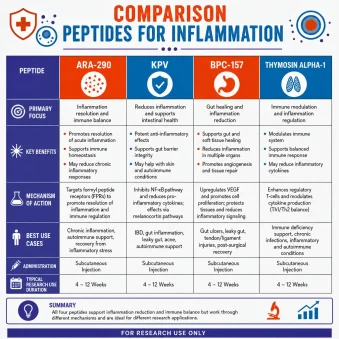
The comparison between BPC-157 and TB-500 is one of the most often discussed topics in the peptide research community, and grasp the differences between these two healing peptides shapes how the wolverine stack combination is discussed. While both peptides promoted tissue repair in animal models, they differ greatly in their origin, mechanism of action, and best uses.
Table 5: BPC-157 vs TB-500 Head-to-Head Comparison
| Feature | BPC-157 | TB-500 (Thymosin Beta-4) |
|---|---|---|
| Origin | Derived from human gastric juice protein | Synthetic fragment of Thymosin Beta-4 |
| Amino Acids | 15 amino acids (pentadecapeptide) | 43 amino acids |
| Primary Mechanism | VEGFR2 angiogenesis, NO modulation | Actin regulation, cell migration |
| Healing Focus | Localized tissue repair, gut healing | Systemic healing, cardiac tissue |
| Main Research Focus | Tendons, gut, ligaments, nerves | Muscles, heart, widespread inflammation |
| Oral Stability | Stable in gastric acid (oral viable) | Degrades orally |
| Half-Life | <30 minutes | ~2 hours |
| Routes Studied | Oral, subcutaneous, intramuscular | Subcutaneous, intramuscular only |
| WADA Status | Banned (S0 — 2022) | Banned (S0 — 2022) |
BPC-157 research centres on localized tissue repair in tendons, ligaments and the gut tract, through the VEGFR2-mediated angiogenesis mechanism described above. Its stability in gastric acid is why it has been studied by mouth as well as by injection. TB-500, on the other hand, works through actin polymerization control and cell migration, and its research focus is systemic healing, cardiac tissue repair and inflammation in rodent models.
TB-500 has a longer half-life than BPC-157 and degrades in the digestive tract.
BPC-157 and TB-500 combined
The pairing of BPC-157 with TB-500 is often called the wolverine stack, after the Marvel Comics character known for regrowth. It combines a peptide studied mainly for local tissue repair with one studied for cell migration. No study has tested the two together.
Why Combine BPC-157 and TB-500?
The rationale offered for the combination rests on the two mechanisms. BPC-157 has been studied for localized healing through VEGFR2-mediated angiogenesis, and TB-500 for actin regulation and cell migration. Whether the two add to each other has not been tested.
What is known about the combination
No study has tested BPC-157 and TB-500 together, so there is no established amount or schedule for the combination. What the published single-compound studies measured is in the section "What the BPC-157 studies measured" below. PrymaLab supplies the blend for laboratory research only.
BPC-157 TB-500 Blend Products
Some suppliers offer pre-mixed BPC-157 TB-500 blend products that combine both peptides in a single vial, so the ratio of BPC-157 to TB-500 is fixed at manufacture. Also, BPC-157 TB-500 capsules are available from some vendors, though the oral uptake of TB-500 is questionable since it lacks BPC-157's stability in gastric acid.
Is BPC-157 Legal? Regulatory Status in 2026
The question "is BPC-157 legal" has become increasingly complex as control bodies around the world have begun addressing the growing use of research peptides. The legal status of BPC-157 varies by country, intended use, and control framework, and it has undergone major changes in recent years that anyone considering this peptide should understand.
FDA Classification (United States)
In September 2023, the U.S. Food and Drug Use classified BPC-157 as a Category 2 bulk drug substance, meaning it does not meet the agency's current safety criteria for use in compounded drugs. This classification effectively prevents compounding pharmacies from legally producing BPC-157 forms for patient use under Section 503A and 503B of the Federal Food, Drug, and Cosmetic Act.
BPC-157 remains available for research purposes, but its use in human treatment contexts exists in a control gray area. The FDA's decision was based on the limited human safety data available rather than evidence of specific harm.
WADA & Athletic Competition
The World Anti-Doping Agency (WADA) added BPC-157 to its prohibited list in 2022 under the S0 Unapproved Substances category, which covers any pharmacological substance not addressed by other sections of the prohibited list and not now approved for human treatment use by any governmental control health authority. This means BPC-157 is prohibited for competitive athletes subject to WADA testing.
International Regulatory Landscape
Outside the United States, BPC-157's legal status varies much. In many countries, it falls into a control gap — not explicitly approved for human use but not mainly prohibited for research or personal use either. Australia's Treatment Goods Use (TGA) has taken a stricter approach, classifying peptides including BPC-157 as prescription-only substances.
In the European Union, BPC-157 is often available for research purposes but is not approved as a pharmaceutical product. The specific regulations of each jurisdiction apply.
Where to Buy BPC-157: Quality & Sourcing Guide
Finding a reliable source is key when considering where to buy BPC-157, as the unregulated nature of the research peptide market means product quality varies dramatically between suppliers. The difference between a high-purity BPC-157 product and a contaminated or underdosed one can mean the difference between usable research data and wasted money. The following rules will help you assess BPC-157 for sale from many sources.
What to Look for in a BPC-157 Supplier
The most important factor when buying BPC-157 is the certificate of analysis (COA): check that it matches the lot number on the vial, that it reports peptide identity and purity (look for =98%) and, where tested, the absence of contaminants like endotoxins, heavy metals and residual solvents, and that it can be verified. PrymaLab tests every lot in its own laboratory (RP-HPLC purity, LC-MS identity), and its certificates can be checked at prymalab.net/testing/verify. Under PrymaLab's third-party testing guarantee, if any independent laboratory finds the wrong compound or less than the stated purity or amount, the order is refunded and the test reimbursed. Beyond COAs, look for suppliers that use proper cold-chain shipping (peptides degrade in heat) and have transparent manufacturing practices.
BPC-157 Cost & Pricing
The BPC-157 cost often ranges from $30 to $80 per 5 mg vial, depending on the supplier, purity level, and salt form (acetate vs. arginate). Best BPC-157 capsules often cost $40–$90. Pre-mixed BPC-157 TB-500 blend vials often run $60–$120. Be cautious of prices that seem too good to be true, as greatly below-market pricing often shows compromised purity or underdosed products. Conversely, extremely high prices do not necessarily guarantee superior quality — always check that the certificate matches the lot number on the vial and can be verified, regardless of price point.
?? Medical & Legal Disclaimer
This article is provided for educational and informational purposes only and does not constitute medical advice, diagnosis, or treatment recommendations. BPC-157 is classified as a research peptide and is not FDA-approved for human treatment use. The FDA classified BPC-157 as a Category 2 bulk drug substance in September 2023. WADA prohibits BPC-157 under the S0 Unapproved Substances category.
PrymaLab supplies BPC-157 for laboratory research use only, not for use in people. The data presented here describe published studies.
What the BPC-157 studies measured
The rat work from the Sikiric group, reviewed in Seiwerth et al. 2021 (Frontiers in Pharmacology 12:627533), covers tendon, ligament, muscle and gastric-lesion models, with the peptide given by intraperitoneal injection or in drinking water from shortly after injury to the end of each model. Staresinic et al. 2003 (Journal of Orthopaedic Research 21(6):976-983) studied transected Achilles tendons in rats and assessed healing at days 1, 4, 7, 10 and 14. Rat amounts are set per kilogram of body weight and do not convert to human figures by simple scaling, and no controlled human trial has established an amount for any use. The Wolverine stack guide covers the combination with TB-500.
PrymaLab supplies the BPC-157 capsules and BPC-157 nasal spray, the preloaded BPC-157 pen and TB-500 5mg vials for laboratory research only.
Frequently Asked Questions About BPC-157 Benefits
Below are the most often asked questions about BPC-157, covering research findings, side effects, the combination with TB-500, and legal status. Each answer is based on the current body of lab research and available human data.
What is BPC-157 used for in research?
BPC-157 is studied mainly in rat models of tendon and ligament transection, muscle crush injury, chemically induced stomach and colon lesions, and blood vessel damage. Secondary lines of research cover the brain-gut axis, dopamine and serotonin systems, and organ protection after toxic insults. Human data are limited to small pilot reports, so it remains a research compound rather than a treatment.
What did the BPC-157 studies measure?
Rat studies from the Sikiric group gave the peptide by intraperitoneal injection or in drinking water from shortly after injury to the end of each model, and measured healing of tendon, ligament, muscle and gastric lesions; the transected Achilles tendon study of Staresinic et al. (2003) assessed healing at days 1, 4, 7, 10 and 14. No human trial has established an amount for any use.
What are the side effects of BPC-157?
Published toxicology in rats and dogs reported no dose-limiting toxicity at the levels tested, and the rat literature rarely reports adverse effects. Human reports are anecdotal. There are no controlled human safety trials, so long-term effects, drug interactions and effects on existing tumours are unknown. That gap is the main safety concern.
Is BPC-157 legal?
In the United States BPC-157 is legal to buy and sell as a research chemical, but it is not FDA approved for any use and cannot be marketed as a drug or supplement. In 2023 the FDA placed it in Category 2 of the interim 503A bulk drug substances list, the category for substances that may present significant safety risks, citing immunogenicity for certain routes, peptide-impurity and characterisation complexities, and limited safety information; FDA's current Category 2 document carries BPC-157 among nominations that were withdrawn rather than on the active list, and it has not been added to Category 1, so it is still not a substance a compounding pharmacy may use. The World Anti-Doping Agency prohibits it under section S0 for tested athletes.
Does BPC-157 work orally?
In rat models, BPC-157 given by mouth, either by stomach tube or dissolved in drinking water, produced effects on gastric lesions and on some systemic injury models, which is why it is described as stable in gastric juice. No human oral study has been published. PrymaLab supplies BPC-157 capsules alongside lyophilized vials for laboratory research.
? Key Takeaways: What You Need to Know About BPC-157
- BPC-157 is a 15-amino-acid synthetic peptide derived from human gastric juice with over 100 preclinical studies supporting its regenerative properties
- Animal-model findings include tendon repair, gut healing, anti-inflammation, and neuroprotection, linked to VEGFR2-mediated angiogenesis and nitric oxide modulation
- No human amount has been established: the published figures are rat amounts per kilogram, and no dose-finding trial exists
- BPC-157 is unusually stable in gastric acid, which is why it has been studied by mouth as well as by injection in rats
- No lethal dose was identified in preclinical safety studies; human side-effect reports are anecdotal
- The wolverine stack (BPC-157 + TB-500) has not been tested as a combination in any study
- Only 3 small human pilot studies exist — large-scale clinical trials are needed to confirm preclinical findings
- FDA Category 2 classification (2023) and WADA ban (2022) reflect regulatory caution, not evidence of harm
- Check the certificate: it should match the lot number on the vial and be verifiable

Explore Research-Grade Peptides
PrymaLab offers research-grade BPC-157 and TB-500. Every lot is tested in PrymaLab's own laboratory (RP-HPLC purity, LC-MS identity), and certificates can be checked at prymalab.net/testing/verify.
Browse Our Peptide Collection ?References & Further Reading
The following peer-reviewed sources informed this article. All claims are based on published lab and clinical research.
- McGuire, C., Waugh, A., & Garza, I. (2025). "Regeneration or Risk? A Narrative Review of BPC-157 for Musculoskeletal Healing." Cureus, 17(1), e77937. PubMed
- Sikiric, P., et al. (2018). "Brain-gut Axis and Pentadecapeptide BPC 157: Theoretical and Practical Implications." Current Neuropharmacology, 16(5), 566–583. PubMed
- Sikiric, P., et al. (2022). "Stable Gastric Pentadecapeptide BPC 157 and Wound Healing." Frontiers in Pharmacology, 13, 813045. Frontiers in Pharmacology article on DOI 10.3389/fphar.2021.627533
- Xu, C., et al. (2020). "BPC 157 Does Not Cause Toxicity in Preclinical Safety Evaluation." Regulatory Toxicology and Pharmacology, 114, 104665. doi:10.1016/j.yrtph.2020.104665
- Lee, E. & Padgett, B. (2021). "Intra-Articular Injection of BPC 157 for Knee Pain: A Pilot Study." Journal of Orthopaedic Research. PubMed
- Lee, E., et al. (2024). BPC 157 for Interstitial Cystitis: A Pilot Clinical Study." Urology. PubMed
- Lee, E. & Burgess, A. (2025). "Intravenous BPC 157 Safety in Humans: A Pilot Study." Clinical Pharmacology. Europe PMC
- Sikiric, P., et al. (2016). "Pentadecapeptide BPC 157 — from Laboratory to Clinical Trials." Medical Science Monitor, 22, 3612–3622. PubMed
- Tkalcevic, V.I., et al. (2007). "Enhancement by PL 14736 of Granulation and Collagen Organization in Healing Wounds and the Potential Role of Egr-1 Expression." European Journal of Pharmacology, 570(1-3), 212–221. doi:10.1016/j.ejphar.2007.05.072
- U.S. Food and Drug Administration. (2023). "Bulk Drug Substances Used in Compounding Under Section 503B — Category 2 List." FDA.gov
- World Anti-Doping Agency. (2022). "The 2022 Prohibited List — International Standard." WADA-AMA.org
- Gwyer, D., Wragg, N.M., & Wilson, S.L. (2019). "Gastric pentadecapeptide body protection compound BPC 157 and its role in accelerating musculoskeletal soft tissue healing." Cell and Tissue Research, 377(2), 153–159. doi:10.1007/s00441-019-03016-8
Formats stocked for the compounds in this article
BPC 157 + TB500: BPC 157 5mg + TB500 5mg and Wolverine Stack (BPC-157 + TB-500) 20mg preloaded 3ml pen. Every listing is supplied for laboratory research use with a batch certificate of analysis.