

Where Do You Get US Made Peptides? A 2026 Guide to Trusted Online Sources
If you are asking where do you get peptides that are pure, potent, and produced under transparent quality standards, the safest answer is: from US made peptide suppliers that publish a current Certificate of Analysis (COA), validate purity with HPLC, and ship lyophilized vials cold. This 2026 guide shows you exactly how to verify us made peptides, navigate a peptides list with confidence, and avoid the hidden risks of cheap third-party resellers.
Editorial & research disclaimer: This article is for educational and informational purposes only and is not medical advice. Many peptides referenced here, including GLP-1 peptides for sale and semaglutide peptides for sale, are sold for research purposes only and may not be approved for human therapeutic use in your jurisdiction. PrymaLab sells peptides for laboratory research use only, not for use in people. Verify local regulations before purchasing.

Quick Answer
Where do you get peptides safely? Buy peptides online only from US-based peptide suppliers that publish a recent Certificate of Analysis with 99%+ HPLC purity, lyophilize their vials in cleanroom facilities, and ship temperature-controlled. Avoid overseas peptide vendors with extreme discounts, missing COAs, or photocopied test results. US made peptides keep batch quality consistent.
Then check that the certificate matches the lot number on the vial and can be verified. PrymaLab tests every lot in its own laboratory (RP-HPLC purity, LC-MS identity), and its certificates can be checked at prymalab.net/testing/verify. Under its third-party testing guarantee, if any independent laboratory finds the wrong compound or less than the stated purity or amount, the order is refunded and the test reimbursed.
Where do you get peptides you can trust? From US made peptide suppliers with transparent COAs, HPLC purity verification, and validated lyophilization — not from rock-bottom overseas listings.
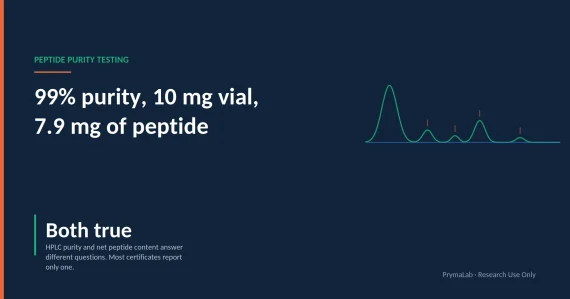
Verify, don't assume. A 99%+ purity score, a certificate that matches the lot number on your vial and can be verified, and a clean HPLC chromatogram are your three non-negotiable checks.
Storage matters. Peptides degrade with heat and light, so vials are kept cold and reconstituted vials refrigerated.
PrymaLab emphasizes domestic sourcing and education, and the team at prymalab.net publishes resources to help you choose responsibly.
What Are Peptides and Where Do You Get Them?
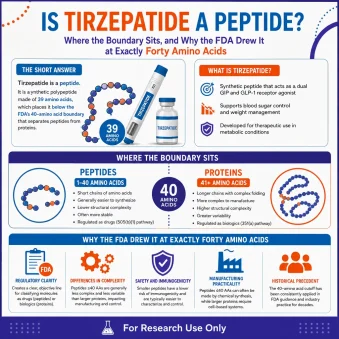
Peptides are short chains of 2 to 50 amino acids that act as biological signaling molecules — tiny instructions that tell your cells to repair tissue, release hormones, regulate appetite, or rebuild collagen. If you are new to this and asking what are peptides and where do you get them, the short version is: peptides occur naturally in your body, in food, and as synthesized research compounds, and you get research-grade peptides from specialized US peptide suppliers, not random marketplaces. So where do you get peptides from in practice? The honest answer is: from a small, vetted shortlist of US peptide manufacturers, distributors, and direct-to-researcher vendors who can prove batch quality on demand. For background on the molecule itself, see our deep dive on what a peptide is.
The next question is where to buy. The internet is flooded with websites offering these molecules — some are reputable peptide distributors with cleanroom production, and some are gray market peptide shops shipping from unregulated facilities. Purity and safety vary wildly from one click to the next, which is exactly why this guide focuses on us made peptides and the verification steps that separate trustworthy peptide sources from dangerous ones.
Why "Made in the USA" Matters: The Hidden Dangers of Third-Party Peptide Resellers
Searching online reveals a wild west of price tags. You may encounter listings for semaglutide peptides for sale or GLP-1 peptides for sale at suspiciously low prices, often from offshore drop-shippers. Seeing a seemingly identical vial for a fraction of the cost can be tempting. However, that steep discount usually hides a lack of quality control. Choosing high-purity us made peptides is less about paying a premium for a label and more about knowing that the material in the vial is what the label says.
Keeping that biological code intact requires incredibly strict manufacturing environments that overseas third-party peptide retailers rarely maintain. A crucial step in this production process is lyophilization, a highly controlled freeze-drying technique that removes water to stabilize the delicate molecules so they do not degrade before reaching your doorstep. Just as you might look for clean-label ingredients in functional foods to avoid hidden synthetic fillers, you need that same uncompromising transparency in your peptide kits. US-based manufacturing ensures that every single batch undergoes this exact, sterile preservation process, so that the vial you receive today matches the one you ordered last month.
Why HPLC Testing Is Non-Negotiable in Real Peptide Sciences
Proving that a vial contains nothing but pure, uncorrupted molecules requires an advanced validation tool called HPLC testing. High-Performance Liquid Chromatography sounds heavily scientific, but it essentially acts like a microscopic sorting machine that separates and identifies every single compound inside the vial. If a facility cuts corners, this test will catch the leftover impurities from the manufacturing process. When you source compounds from trusted domestic hubs of peptide sciences, they use this testing method to show that the vial contains the labelled peptide at the stated purity.
| Factor | US Made Peptides (Verified) | Offshore Third-Party Resellers |
|---|---|---|
| Manufacturing standards | Cleanroom GMP-style facilities, validated lyophilization | Often unverified; sterility & environment unclear |
| Purity testing | HPLC + mass spec, 99%+ purity reported | COA missing, blurry, outdated, or self-reported |
| Certificate verification | Certificate matches the lot number on the vial and can be verified with the issuing lab | Rare; certificates often cannot be checked |
| Shipping & storage | Cold-chain, refrigerated where required | Ambient shipping; degradation risk high |
| Batch traceability | Batch number on vial matches COA & date | Generic labels; no batch link |
| Customer support | US-based, transparent, accountable | Anonymous or offshore; minimal accountability |
How to Verify a Peptide Supplier with a Certificate of Analysis
Knowing that HPLC testing exists is helpful, but learning how to independently verify it puts the control completely back in your hands. This is where COA verification comes into play. The Certificate of Analysis is essentially the lab report card the manufacturer must show before you ever make a purchase. To read a COA like a pro, you only need to look for a few crucial details.
- Purity score of 99% or higher. Anything below 98% is a yellow flag for research peptides; below 95% is a hard pass.
- A recent testing date on a certificate that matches the batch number on your vial and can be verified, ideally within the last 12 months.
- Clear HPLC and mass spec readouts that confirm both purity (no extra peaks of contaminants) and identity (the molecular weight matches the labeled peptide).
- Endotoxin and bioburden screening where the research application calls for it.
- Lot/batch number cross-reference — the number on the vial must match the COA, every time.
If a supplier refuses to share this document, or if the test results look like they were poorly photocopied from three years ago, that is an immediate red flag to walk away. PrymaLab tests every lot in its own laboratory (RP-HPLC purity, LC-MS identity), and its certificates can be checked at prymalab.net/testing/verify. Under its third-party testing guarantee, if any independent laboratory finds the wrong compound or less than the stated purity or amount, the order is refunded and the test reimbursed. Buyers can also send a sample to an independent laboratory. Resources like prymalab.net are built to help you navigate these quality standards.
Red Flags That Disqualify a Peptide Source Instantly
- Prices that are 60–90% below the US market average for the same molecule.
- No COA available, or only a generic "purity certificate" with no chromatogram.
- Testing dates that pre-date the batch number on your vial.
- Anonymous ownership, no US business address, no real customer support channel.
- Claims that GLP-1 peptides for sale or semaglutide peptides for sale are "FDA-approved for weight loss" like Wegovy or Ozempic while shipping research-only vials.
- Mixing consumer marketing language with research-only labeling on the same listing.
Choosing from a peptides list: what each category is studied for
Once you have secured pure, lab-verified molecules, the question becomes which one. A useful peptides list is not a top-10 chart — it is a map of biological pathways. Below is a research-oriented overview of categories commonly discussed by peptide vendors and educators. None of this is medical advice; legality and approval status vary by region.
| Category | Examples | Signals / Pathways | Research Areas |
|---|---|---|---|
| GLP-1 / metabolic | Semaglutide, Tirzepatide | Insulin sensitivity, satiety, gastric emptying | Metabolic and appetite research; weight management in clinical trials |
| Tissue repair | BPC-157, TB-500 | Angiogenesis, fibroblast activity, gut lining | Tendon, gut and soft-tissue repair in animal models |
| Skin / aesthetic | GHK-Cu (copper peptide), Matrixyl-class | Collagen synthesis, copper signaling, antioxidant tone | Skin and collagen research, topical formulations |
| Growth hormone secretagogues | CJC-1295, Ipamorelin, Sermorelin | Pulsatile GH release, IGF-1 modulation, sleep depth, recovery | GH release and body composition research |
| Immune / thymic | Thymogen, Thymosin alpha-1 | Immune signaling & modulation | Immune signaling research |
For deeper reading on individual molecules, see our analysis of BPC-157 benefits and safety, our overview of the TB-500 5mg research peptide, and the educational page on Thymogen. If your interest is metabolic, our overview of peptides and weight loss walks through GLP-1-class compounds in more detail.
Peptide kits, copper peptides and storage
Many buyers ask whether peptide kits are safer than buying components separately. A kit bundles a lyophilized vial with a diluent and other supplies, which reduces the chance of using incompatible or non-sterile components. The kit format does not, however, guarantee quality; the vial inside still needs to come from a US peptide supplier with a valid COA, cleanroom lyophilization, and cold-chain shipping.
Copper peptides such as GHK-Cu, and ingredients like palmitoyl pentapeptide-4, are another common entry point, studied mainly in skin and collagen research.
Collagen is the scaffolding that keeps skin firm. Copper peptide signaling has been studied for its effect on cells' own collagen production and on angiogenesis, the formation of new blood vessels.
Storage decides whether a peptide keeps its potency. Lyophilized peptides degrade if exposed to excessive heat or light, and reconstituted vials are kept refrigerated. Our companion guide on oral vs. injectable peptide delivery covers the mechanics and trade-offs.
Reminder: Where do you get collagen peptide supplements versus injectable peptides? Collagen peptides are food-grade powders sold as dietary peptide supplements through retail channels. Research peptides such as BPC-157, GHK-Cu, or GLP-1 analogs are different products entirely and should be sourced from dedicated US peptide suppliers under research-only labeling.
Peptide Distributors vs. Peptide Retailers vs. Peptide Shops: What's the Difference?
The words "peptide distributors," "peptide retailers," "peptide vendors," and "peptide shops" often get used interchangeably online, but they describe different roles in the supply chain. Knowing the difference helps you decide where to buy peptides online and how to evaluate any source you find.
- Peptide manufacturers: The labs that actually synthesize peptides via solid-phase peptide synthesis (SPPS) and lyophilize them. The most rigorous US made peptides start here.
- Peptide distributors: Larger operations that purchase from manufacturers in bulk and resell to retailers, clinics, or research customers. Quality is only as good as the manufacturer they choose.
- Peptide retailers / peptide vendors: Direct-to-consumer or direct-to-researcher websites. Quality varies enormously; this is where COA verification matters most.
- Peptide shops: Often a casual term for small online storefronts, sometimes drop-shipping from offshore sources. Highest variance, lowest accountability — verify obsessively before you purchase peptides here.
Regardless of which tier you buy from, the verification checklist does not change: COA + HPLC + lyophilization + cold-chain + batch traceability. If any of those five are missing, the label on the website does not matter. For a starting frame of reference on what reputable storefronts look like, browse the curated selection on prymalab.net as a benchmark for transparency standards.
Where do you get peptides you can actually trust?
PrymaLab focuses on US made peptides and transparent COAs: every lot is tested in its own laboratory, and certificates can be checked at prymalab.net/testing/verify.
Explore PrymaLabFrequently Asked Questions
Where do you get peptides that are safe and high quality?
The safest place to get peptides online is from US-based peptide suppliers that publish a current Certificate of Analysis with HPLC purity above 99 percent, use sterile lyophilization, and issue certificates that match the lot number on the vial and can be verified. Avoid offshore resellers with extreme discounts and missing or outdated COAs. PrymaLab tests every lot in its own laboratory and publishes certificates that can be checked at prymalab.net/testing/verify.
What are US made peptides, and why do they matter?
US made peptides are amino-acid compounds synthesized and packaged in domestic facilities under strict cleanroom standards. They matter because the manufacturing environment determines purity, potency, and consistency. Domestic peptide distributors typically use validated lyophilization and HPLC purity testing with certificates tied to each lot, reducing the risk of contaminants, mislabeling, or batch-to-batch variability common with cheap offshore peptide retailers.
How do I verify a peptide supplier with a COA?
Before you buy peptides online, ask for the Certificate of Analysis and check three details: a purity score of 99% or higher, a recent test date that matches the batch on your vial, and a certificate that can be verified with the laboratory that issued it. Buyers can also send a sample to an independent laboratory. Look for HPLC chromatograms; if a supplier refuses to share a COA or shows a blurry, undated photocopy, treat that as an immediate red flag.
How do I read a peptides list?
Read it as a map of research areas: GLP-1 peptides (such as semaglutide) in metabolic research, BPC-157 in tissue repair models, GHK-Cu in skin and collagen research, and CJC-1295 in growth hormone research. Top-10 charts say little about the evidence behind each.
Where do you get GLP-1 peptides for sale or semaglutide peptides for sale legally?
GLP-1 peptides for sale and semaglutide peptides for sale are typically distributed by US peptide vendors as research-only compounds, not consumer drugs. Legitimate suppliers clearly label products for research use, require age verification, and provide a COA with HPLC purity and identity confirmation. For human therapeutic use, GLP-1 medications like Ozempic are prescription drugs that should be obtained through a licensed clinician via a regulated pharmacy — not a research peptide shop.
Where do you get collagen peptide supplements versus injectable peptides?
Collagen peptides are food-grade powders sold as dietary supplements in retail and grocery channels. Where do you get injectable peptides for research? From dedicated US peptide suppliers that ship lyophilized vials with a COA and storage instructions. Always confirm the product category, intended use, and legal classification in your region before purchase.
Where do you get peptides for weight loss safely?
For therapeutic GLP-1 weight-loss medications such as semaglutide or tirzepatide, work with a licensed clinician through a regulated pharmacy. For research-only metabolic peptides, choose US made peptides from peptide distributors that publish HPLC purity above 99 percent, ship cold, and provide batch-specific COAs.
Are peptide kits safer to buy?
Peptide kits that bundle a lyophilized vial with a diluent and other supplies reduce the chance of using incompatible or non-sterile components. The kit format does not guarantee quality, however. Verify that the vial inside still has a current COA, was produced via cleanroom lyophilization, and ships from a US-based facility before assuming the kit is research-grade.
What are peptides and where do you get them if you are new to this?
Peptides are short chains of amino acids that act as biological signaling molecules influencing metabolism, repair, immunity, and skin. If you are new and asking what are peptides and where do you get them, start with education: understand the molecule and its evidence base. Then choose a US peptide supplier with transparent COAs, HPLC validation, and lyophilized storage. PrymaLab focuses on education plus research-grade sourcing for exactly this audience.
References & Further Reading
- U.S. Food and Drug Administration. Compounding and the FDA: Questions and Answers. FDA.gov. Accessed 2026.
- Lau, J.L., & Dunn, M.K. (2018). Therapeutic peptides: Historical perspectives, current development trends, and future directions. Bioorganic & Medicinal Chemistry, 26(10), 2700–2707.
- Pichereau, C., & Allary, C. (2005). Therapeutic peptides under the spotlight. EJB Electronic Journal of Biotechnology, 8(1).
- USP General Chapter <1225>. Validation of Compendial Procedures (HPLC method validation principles). United States Pharmacopeia.
- European Medicines Agency. Guideline on Manufacture of the Finished Dosage Form. EMA, 2017.
- Wishart, D.S., et al. (2018). DrugBank 5.0: A major update to the DrugBank database. Nucleic Acids Research, 46(D1), D1074–D1082.
- National Institutes of Health, Office of Dietary Supplements. Dietary Supplements: What You Need to Know. NIH ODS, 2024.
Internal references on PrymaLab: What is a peptide? · Peptides and weight loss · Oral peptide delivery · BPC-157 benefits & safety · TB-500 5mg peptide · Thymogen peptide.
Final disclaimer: This article is for educational purposes only. Many compounds discussed — including BPC-157, TB-500, GHK-Cu, CJC-1295, and certain GLP-1 analogs — are sold in the United States for research purposes only and are not approved by the FDA for human therapeutic use. Statements about peptide effects have not been evaluated by the FDA. Nothing here should be interpreted as a recommendation to purchase, possess, or self-administer any controlled or regulated substance.
PrymaLab sells peptides for laboratory research use only. Verify the legal status of any compound in your jurisdiction. PrymaLab does not endorse any specific peptide vendor mentioned in this article and assumes no responsibility for third-party products.