Description
What Is GW-501516 (Cardarine)?
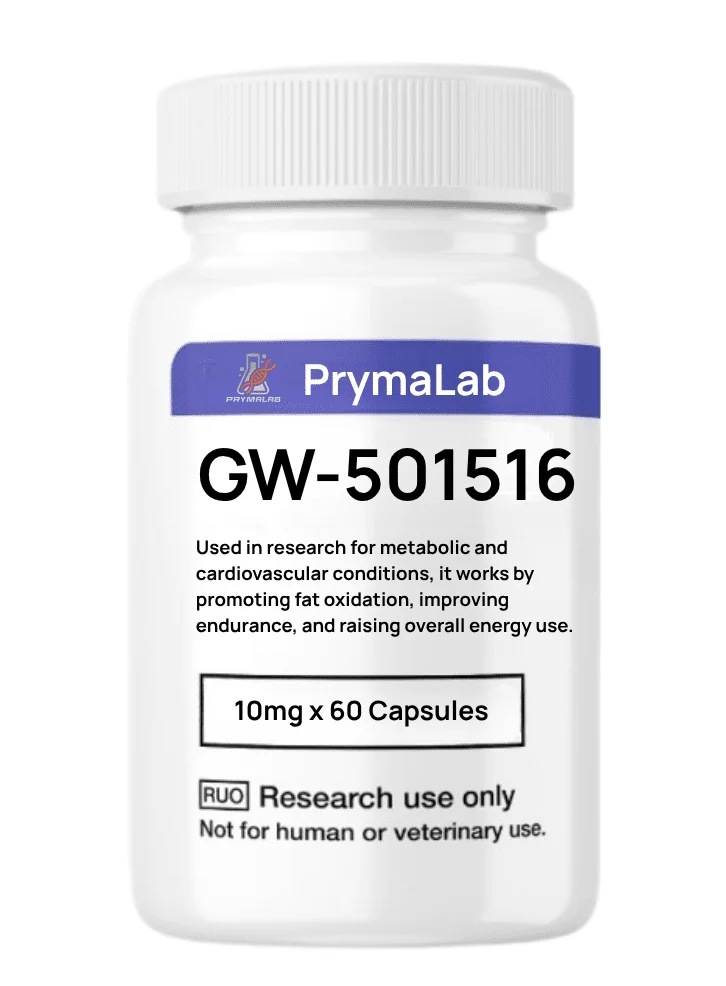
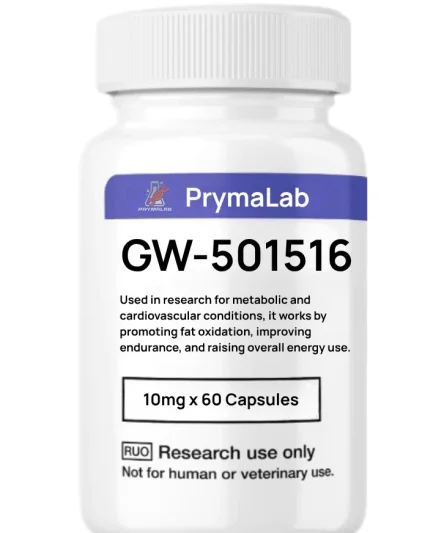
GW-501516, widely known as cardarine, is a synthetic peroxisome proliferator-started receptor delta (PPARδ) agonist originally developed through a collaboration between GlaxoSmithKline and Ligand Pharmaceuticals in the 1990s. Cardarine is not a SARM despite frequent miscategorization; it is a selective nuclear hormone receptor agonist that starts PPARδ to reprogram cellular body function toward fatty acid oxidation and enhanced endurance capacity.
GW-501516 showed notable body effects in lab models, including increased fatty acid catabolism, improved insulin response, elevated HDL cholesterol, and dramatic endurance boost in exercise studies. The compound’s oral uptake, favorable pharmacokinetic profile with a half-life of about 16 to 24 hours, and non-hormonal mechanism of action have sustained its popularity in body research. Cardarine acts at the transcriptional level, upregulating genes involved in lipid body function, energy-cell biogenesis, and oxidant muscle fiber recruitment.
Key Features and Specifications
| Specification |
Detail |
| Product Name |
GW-501516 (Cardarine) |
| Dosage |
10 mg per capsule |
| Quantity |
60 capsules per bottle |
| Form |
Oral capsule |
| CAS Number |
317318-70-0 |
| Cell-level Formula |
C21H18F3NO3S2 |
| Cell-level Weight |
453.50 g/mol |
| Purity |
≥99% (HPLC verified) |
| Testing |
Third-party HPLC and MS test |
| Storage |
Room heat, cool dry place, away from light |
| Classification |
PPARδ agonist (non-hormonal) |
Mechanism of Action: How GW-501516 Works
GW-501516 starts PPARδ, a ligand-started nuclear receptor that functions as a transcription factor regulating genes involved in fatty acid transport, beta-oxidation, and energy homeostasis. Upon binding to PPARδ, cardarine forms a heterodimer with retinoid X receptor (RXR) and binds to peroxisome proliferator response elements (PPREs) in the promoter regions of target genes, upregulating expression of CPT1, ACADM, PDK4, and UCP3 among others.
This transcriptional reprogramming shifts cellular energy use from glucose toward fatty acid oxidation, effectively training cells to preferentially burn fat for fuel. In skeletal muscle, GW-501516 promotes the conversion of fast-twitch glycolytic fibers toward slow-twitch oxidant fibers, a transformation that largely increases endurance capacity. Lab studies in mice showed a 68 percent increase in running endurance and a 75 percent increase in running time to exhaustion.
The body effects of cardarine extend beyond skeletal muscle. In hepatocytes, PPARδ start reduces lipogenesis and increases fatty acid oxidation, adding to improved lipid profiles. GW-501516 can elevate HDL cholesterol by 16 to 79 percent while reducing LDL cholesterol, triglycerides, and fasting insulin levels in both lab and early clinical studies.
Reported Research Applications and Benefits
Endurance and exercise physiology research represents the most studied use for GW-501516. The compound’s power to enhance oxidant capacity without needing physical training stimulus has attracted large interest from researchers studying body reprogramming, exercise mimetics, and fatigue resistance mechanisms. Studies document increased energy-cell density, elevated citrate synthase activity, and enhanced oxygen consumption rates in treated muscle tissue.
Lipid body function research has showed that cardarine greatly improves blood lipid profiles, making it a valuable tool for studying dyslipidemia, body syndrome, and heart risk tuning. Fat oxidation studies confirm that GW-501516 increases whole-body fat use both at rest and during exercise, with measurable reductions in adipose tissue mass in lab models.
Insulin response research has shown that PPARδ start by cardarine improves glucose tolerance and reduces insulin resistance in diet-induced obesity models. These body effects occur independently of body weight changes, suggesting direct transcriptional tuning of insulin signaling pathways.
GW-501516 Dosage Information for Research
| Protocol |
Dosage |
Duration |
Notes |
| Standard research dose |
10–20 mg/day |
8–12 weeks |
Most often studied range |
| Beginner protocol |
10 mg/day |
8 weeks |
Assess response at baseline |
| Advanced protocol |
20 mg/day |
8–12 weeks |
No more hormonal suppression |
| Timing |
Once daily, morning |
— |
16–24 hour half-life |
Because GW-501516 does not interact with the androgen receptor or any hormonal axis, it does not cause testosterone suppression and does not need post-cycle therapy. This non-hormonal mechanism makes cardarine one of the most straightforward compounds to incorporate into both standalone and mix research protocols.
GW-501516 vs Ostarine: Key Differences
| Parameter |
GW-501516 (Cardarine) |
Ostarine (MK-2866) |
| Class |
PPARδ agonist |
SARM (androgen receptor modulator) |
| Main effect |
Fat oxidation and endurance |
Lean mass preservation |
| Hormonal impact |
None |
Mild testosterone suppression |
| PCT needed |
No |
Possibly at higher doses |
| Lipid effects |
Improves HDL, lowers LDL |
May lower HDL |
| Half-life |
16–24 hours |
~24 hours |
| Stacking compatibility |
Excellent (non-hormonal) |
Good (track suppression) |
Storage and Handling Instructions
Store GW-501516 capsules at controlled room heat between 20°C and 25°C (68°F to 77°F) in the original sealed container. Protect from direct sunlight, too much heat, and moisture. Capsules should remain sealed until use. Under proper storage conditions, GW-501516 capsules keep full potency for at least 24 months from the date of manufacture.
Why Choose PrymaLab GW-501516 Cardarine Capsules
Every batch of PrymaLab GW-501516 undergoes rigorous third-party testing by independent, accredited laboratories using HPLC for purity finding and mass spectrometry for structural identity confirmation. Each shipment includes a batch-specific Certificate of Test documenting ≥99% purity, heavy metal screening, residual solvent test, and microbial testing results.
PrymaLab delivers precise 10 mg dosing through pharmaceutical-grade encapsulation, ensuring the reproducibility essential for controlled research. GMP-compliant manufacturing, full lot traceability, and free priority shipping on domestic orders provide researchers with a reliable, high-quality supply chain.
Frequently Asked Questions About GW-501516
How long does cardarine take to work in research settings?
Body effects of GW-501516 begin at the transcriptional level within hours of use, with measurable changes in fatty acid oxidation gene expression detectable within 24 to 48 hours. Functional endurance gains and lipid profile changes often become apparent within one to two weeks of daily dosing in lab models.
Is GW-501516 a SARM?
No. GW-501516 (cardarine) is a PPARδ agonist, not a selective androgen receptor modulator. It does not bind to androgen receptors and does not influence testosterone, estrogen, or any hormonal axis. The frequent miscategorization of cardarine as a SARM stems from its commercial co-marketing alongside actual SARMs, but its mechanism is entirely distinct.
Does GW-501516 require post-cycle therapy?
No. Because GW-501516 operates through PPARδ start rather than androgen receptor tuning, it does not suppress testosterone or any endogenous hormone. Post-cycle therapy is not needed after cardarine use regardless of dose or cycle length. This characteristic makes it an ideal stacking candidate with hormonal compounds.
Can GW-501516 be combined with SARMs in research?
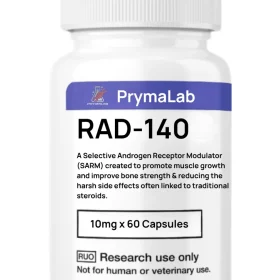
GW-501516 is often combined with SARMs such as RAD-140 and ostarine in published mix research protocols. Its non-hormonal mechanism complements the anabolic effects of SARMs without compounding hormonal suppression. The ostarine and cardarine stack is one of the most widely studied SARM-PPARδ agonist mixes.
What is the half-life of GW-501516?
The plasma half-life of GW-501516 is about 16 to 24 hours based on pharmacokinetic data, supporting once-daily oral dosing in research protocols. Steady-state levels are often achieved within three to five days of consistent daily use.
Quality Assurance and Testing
PrymaLab enforces strict quality standards for all GW-501516 products. Each batch is tested by independent third-party laboratories using HPLC purity test, mass spectrometry identity confirmation, heavy metal screening, residual solvent testing, and microbial assessment. Batch-specific Certificates of Test accompany every order, providing full transparency into product quality. Our pharmaceutical research-grade standards ensure that every capsule meets the specifications needed for reproducible scientific study.
Research Disclaimer
GW-501516 (cardarine) is sold strictly for laboratory research and scientific study purposes only. This product is not intended for human consumption, veterinary use, or treatment use. GW-501516 has not been approved by the FDA or any control agency for medical use. Purchasers must be qualified researchers affiliated with accredited institutions or licensed research organizations. By buying this product, you confirm that it will be used exclusively in accordance with all applicable local, state, and federal regulations governing research materials.










14 reviews for GW-501516 (Cardarine) (10mg/capsule) 60 Capsules