Description
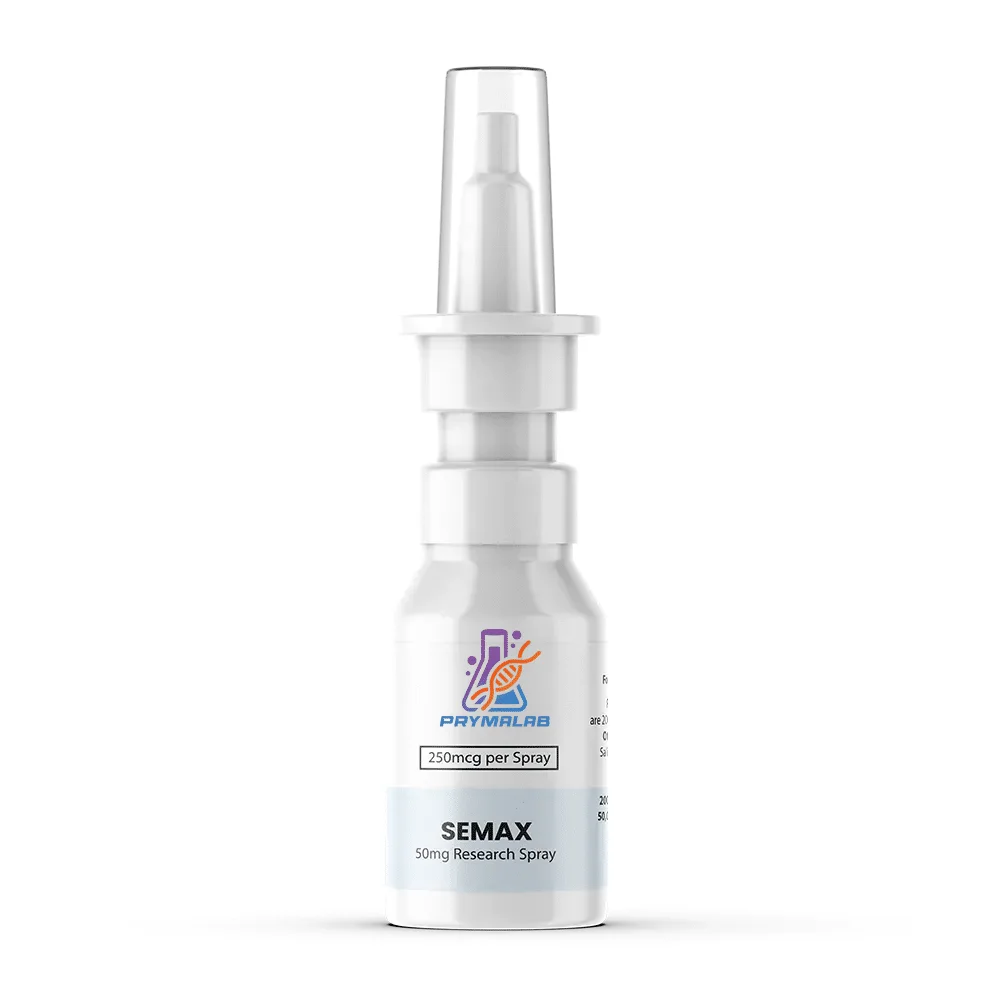
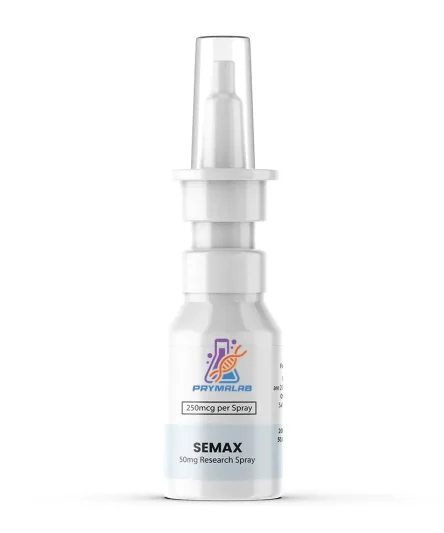
Buy Semax Nasal Spray — ACTH 4-10 Research Peptide (MEHFPGP)
What Is Semax Nasal Spray?
Semax nasal spray is a synthetic heptapeptide research compound. It is derived from the ACTH 4-10 fragment of adrenocorticotropic hormone (ACTH). Its amino acid sequence — Met-Glu-His-Phe-Pro-Gly-Pro (MEHFPGP) — gives it the molecular formula C37H51N9O10S and a molar mass of 813.93 g/mol (CAS 80714-61-0). Unlike full-length ACTH, Semax has no hormonal activity. Instead, it acts on neurotrophin signaling pathways. That makes it one of the most studied neuropeptides in cognitive and neuroprotection research.
Semax was first described in 1991. In 2011 it was added to Russia’s List of Vital and Essential Drugs under ATC code N06BX. Because it is poorly absorbed by mouth, it is administered either as a nasal spray or by subcutaneous injection. Each batch of PrymaLab Semax Nasal Spray is produced in a certified peptide manufacturing facility. It is then verified by third-party HPLC and mass-spectrometry analysis to confirm identity, purity, and concentration.
Mechanism of Action: How Semax Works
Semax exerts its effects through at least four interconnected mechanisms. These set it apart from conventional stimulants and nootropics. Understanding these pathways helps clarify why Semax peptide nasal spray draws such intense research interest.
BDNF and TrkB Upregulation
Semax’s best-documented mechanism is its ability to raise brain-derived neurotrophic factor (BDNF) and its main receptor, TrkB, in the hippocampus. BDNF is a key regulator of synaptic plasticity, long-term potentiation, and neuronal survival. Laboratory studies show Semax raises hippocampal BDNF expression sharply within hours. The effect lasts well beyond the peptide’s short plasma half-life, which suggests downstream transcriptional changes rather than simple receptor saturation.
Dopaminergic and Serotonergic Activation
Semax activates both dopaminergic and serotonergic transmission in cortical and limbic regions. In laboratory models, this dual monoaminergic engagement is linked with sustained attention, working-memory consolidation, and mood stabilization. It does this without the receptor desensitization seen with direct dopamine agonists. The peptide’s interaction with these systems appears modulatory rather than directly agonistic. That may explain the favorable tolerability seen in animal studies.
Melanocortin Receptor Interaction
As an ACTH 4-10 analog, Semax may interact with the melanocortin receptors MC4 and MC5. MC4 receptors are found across the hypothalamus, cortex, and limbic system. They are involved in cognitive function, energy homeostasis, and neuroprotection. MC5 receptors play roles in exocrine gland function and immune modulation. Laboratory evidence suggests that Semax’s interaction with these receptors adds to its neuroprotective and anti-inflammatory effects in ischemic injury models.
Enkephalinase Inhibition
Semax blocks enkephalinase enzymes — mainly neprilysin and related neutral endopeptidases. These enzymes normally degrade endogenous neuropeptides, including enkephalins and substance P. By preserving these ligands, Semax may amplify the brain’s own pain-modulatory and stress-adaptive systems. This mechanism is thought to add to the anxiolytic-like effects seen in rodent models of chronic stress.
Semax Benefits: What the Preclinical Research Shows
The following Semax benefits come from peer-reviewed laboratory and early clinical literature. All findings are in research contexts. PrymaLab sells Semax exclusively for laboratory and research purposes. It is not intended for human therapeutic use.
Cognitive Performance and Memory
Multiple rodent studies have shown that Semax improves acquisition and retention in spatial memory tasks, including the Morris Water Maze and radial arm maze. The effect correlates strongly with hippocampal BDNF upregulation and appears dose-dependent in the 25–100 mcg/kg range in animal models. Notably, cognitive enhancement effects have been seen both in healthy animals and in models of cognitive impairment caused by ischemia or neurotoxin exposure.
Neuroprotection in Ischemic Models
Semax has been studied as a neuroprotective agent in animal models of focal cerebral ischemia. Studies using middle cerebral artery occlusion (MCAO) models found that Semax reduced infarct volume, preserved blood-brain barrier integrity, and blunted inflammatory cytokine cascades. These findings led to Semax’s inclusion in Russian clinical protocols for stroke rehabilitation — the context in which it appears on Russia’s essential medicines list.
Attention and Focus
Laboratory data show that Semax reduces distractibility and improves performance consistency on sustained-attention tasks in rodent models. This effect is linked to dopaminergic modulation in the prefrontal cortex, a region central to executive function. Researchers studying attention-deficit models have used Semax as a reference compound to explore non-stimulant cognitive enhancement mechanisms.
Anxiolytic-Like Effects
In elevated plus-maze and open-field tests — standard rodent anxiety models — Semax showed anxiolytic-like effects at doses that did not cause sedation or motor impairment. The mechanism appears to involve both serotonergic modulation and enkephalinase inhibition. Together these preserve endogenous opioid tone without activating opioid receptors directly.
Nerve Regeneration and Recovery
Semax has been studied in peripheral nerve injury models. Its ability to upregulate BDNF and other neurotrophins in damaged tissue suggests possible use as a recovery-support compound in experimental nerve crush and transection protocols. Russian researchers have also studied its role in protecting the optic nerve after ischemic damage.
Semax Dosage: Research Protocols and Concentration Guide
The Semax nasal spray dosage protocols below come strictly from published laboratory research and existing human clinical trial data from Russian studies. They are provided for research reference only. PrymaLab does not prescribe or recommend dosing for human use.
Standard Research Concentrations
| Concentration |
Volume per Spray |
Semax per Spray |
Total per Vial (10 mL) |
| 0.1% (1 mg/mL) |
0.1 mL |
100 mcg |
10 mg |
| 0.5% (5 mg/mL) |
0.1 mL |
500 mcg |
50 mg |
| 1.0% (10 mg/mL) |
0.1 mL |
1,000 mcg |
100 mg |
Animal Model Reference Doses
| Model |
Species |
Dose Range |
Route |
Duration |
| Cognitive enhancement |
Rat |
25–100 mcg/kg |
Intranasal |
7–14 days |
| Neuroprotection (MCAO) |
Rat |
50–200 mcg/kg |
Intranasal / SC |
Single to 7 days |
| Anxiolytic assessment |
Rat/Mouse |
25–50 mcg/kg |
Intranasal |
Acute / 5 days |
| BDNF upregulation |
Rat |
50 mcg/kg |
Intranasal |
1–7 days |
Storage and Handling
Semax peptide is supplied freeze-dried or in solution, depending on the product. Solution forms should be stored at 2–8°C (refrigerated) and protected from light. Freeze-dried powder is stable at -20°C for extended periods. Once reconstituted, the solution is typically stable for 4–6 weeks under refrigeration. Avoid repeated freeze-thaw cycles. All handling should follow standard laboratory protocols for research peptides.
Semax vs Selank: Key Differences for Researchers
Semax and Selank are often compared in the research peptide literature. Both are synthetic neuropeptides developed in Russia, both are administered intranasally, and both influence cognitive and anxiolytic endpoints. However, their mechanisms, main targets, and research uses differ considerably.
| Feature |
Semax |
Selank |
| Sequence |
Met-Glu-His-Phe-Pro-Gly-Pro |
Thr-Lys-Pro-Arg-Pro-Gly-Pro |
| Origin Peptide |
ACTH 4-10 analog |
Tuftsin analog |
| Molecular Formula |
C37H51N9O10S |
C33H57N11O9 |
| CAS Number |
80714-61-0 |
129954-34-3 |
| Main Mechanism |
BDNF upregulation, dopaminergic/serotonergic activation |
GABAergic modulation, enkephalinase inhibition |
| Main Research Focus |
Cognitive enhancement, neuroprotection, attention |
Anxiety modulation, immune function, stress response |
| Regulatory Status (Russia) |
Prescription drug — essential medicines list |
Prescription drug — approved anxiolytic |
| FDA Status (US) |
Not approved — unscheduled |
Not approved — unscheduled |
| Administration |
Intranasal, subcutaneous |
Intranasal, intravenous |
| Research Stack Use |
Often paired with Selank for cognitive + anxiolytic coverage |
Often paired with Semax for cognitive + anxiolytic coverage |
The two peptides are often used together in laboratory protocols precisely because their mechanisms are paired rather than overlapping. Semax’s dominant profile is cognitive activation via BDNF and dopaminergic pathways. Selank’s dominant profile is anxiolytic and immunomodulatory via GABAergic modulation. PrymaLab supplies both compounds to qualified researchers.
Semax Side Effects: Safety Profile in Preclinical Literature
Semax side effects reported in laboratory animal studies are usually mild and transient. Acute toxicity studies in rodents, using doses far above research-relevant ranges, found no signs of organ toxicity or mortality. The most commonly noted findings in animal models are mild transient excitability at high doses, brief nasal mucosal irritation at the instillation site, and minor changes in locomotor activity during the first hour after use.
Published animal literature reports no evidence of dependence, withdrawal, or receptor downregulation at standard research doses. Unlike direct dopamine agonists, Semax’s modulatory mechanism does not appear to trigger compensatory receptor downregulation with repeated use in rodent models. Long-term safety data in humans is limited to the Russian clinical literature, which is outside the scope of PrymaLab’s research supply context.
Important: PrymaLab Semax Nasal Spray is supplied strictly for in vitro and in vivo laboratory research. It is not intended for human consumption, therapeutic use, or self-experimentation. Researchers should review all applicable institutional and regulatory requirements before use.
Where Can I Buy Semax Nasal Spray for Research?
If you are asking “where can I buy Semax nasal spray” for legitimate research, you can buy Semax nasal spray directly from PrymaLab. We ship research-grade Semax to qualified researchers who confirm their intended research use at checkout. Every bottle of Semax Nasal Spray is third-party tested, so you know exactly what each bottle of Semax nasal spray contains before it reaches your bench.
When you buy Semax nasal spray from PrymaLab, each order includes a batch-specific Certificate of Analysis, storage instructions, and full lot traceability. We offer 0.1%, 0.5%, and 1.0% concentrations, so researchers can match the bottle of Semax nasal spray to their specific model and protocol. In the United States, Semax is not scheduled under the Controlled Substances Act and is not approved by the U.S. Food and Drug Administration for any indication, so it is sold for laboratory research use only.
PrymaLab Quality Assurance
Every bottle of Semax Nasal Spray from PrymaLab is manufactured under strict quality-control protocols built for serious laboratory research. Our quality assurance covers three checkpoints: synthesis verification, analytical testing, and packaging integrity.
- HPLC Purity Testing: Each batch is tested by high-performance liquid chromatography to verify peptide purity of ≥98%. The HPLC Certificate of Analysis is available with every order.
- Mass Spectrometry Confirmation: Identity is confirmed by ESI-MS or MALDI-TOF mass spectrometry, verifying that the molecular weight matches the theoretical value of 813.93 g/mol for Semax (C37H51N9O10S).
- Sterility and Endotoxin: Solution forms are tested for sterility and bacterial endotoxin levels to ensure suitability for in vivo animal research protocols.
- Third-Party Verification: Independent laboratory testing is conducted outside our production facility to remove confirmation bias and ensure objective quality reporting.
- Lot Traceability: Every bottle carries a unique lot number traceable to raw material sourcing, synthesis batch, and analytical records — supporting GLP-aligned documentation requirements.
Frequently Asked Questions About Semax Nasal Spray
What is Semax and what is it used for in research?
Semax is a synthetic heptapeptide (7 amino acids) derived from the ACTH 4-10 fragment. Its sequence is Met-Glu-His-Phe-Pro-Gly-Pro (MEHFPGP), and its CAS number is 80714-61-0. In laboratory research, it is mainly studied for its ability to upregulate BDNF in the hippocampus, modulate dopaminergic and serotonergic pathways, and provide neuroprotection in ischemic injury models. It is used in research contexts only. It is not approved for human therapeutic use by the U.S. Food and Drug Administration.
How does Semax nasal spray work?
Semax nasal spray works through four main mechanisms. First, it raises BDNF and TrkB receptor expression in the hippocampus, supporting synaptic plasticity. Second, it activates dopaminergic and serotonergic transmission in cortical and limbic regions. Third, it may interact with the melanocortin receptors MC4 and MC5. Fourth, it blocks enkephalinase enzymes, preserving endogenous neuropeptide activity. Intranasal delivery lets the peptide bypass the blood-brain barrier via olfactory transport routes, which speeds its central nervous system effects in animal models.
What is the difference between Semax and Selank?
Semax is an ACTH 4-10 analog that mainly upregulates BDNF and activates dopaminergic pathways, making it a cognitive-enhancement and neuroprotection research tool. Selank is a tuftsin analog (CAS 129954-34-3) that mainly modulates GABAergic transmission and immune function, making it an anxiolytic and stress-response research compound. Both are synthetic Russian neuropeptides delivered intranasally, but their mechanisms are paired, not overlapping. Many researchers use both in parallel protocols to cover cognitive and anxiolytic endpoints.
What concentration of Semax nasal spray should be used in animal research?
In published laboratory studies, Semax is most often administered to rodents at 25–100 mcg/kg for cognitive-enhancement models and 50–200 mcg/kg for neuroprotection models. PrymaLab offers Semax Nasal Spray in 0.1% (1 mg/mL), 0.5% (5 mg/mL), and 1.0% (10 mg/mL) concentrations. The right concentration and volume depend on the specific animal model, body weight, and research protocol. Researchers should calculate doses from the published literature relevant to their model.
How should Semax nasal spray be stored?
Semax solution forms should be refrigerated at 2–8°C and protected from light. Once opened, the solution is typically stable for 4–6 weeks under proper refrigeration. Freeze-dried Semax powder is stable at -20°C for 12–24 months when stored desiccated. Avoid repeated freeze-thaw cycles, which can degrade the peptide and reduce HPLC purity. Every bottle of Semax Nasal Spray includes storage instructions on the label and in the accompanying Certificate of Analysis.
Where can I buy Semax nasal spray, and is it legal?
You can buy Semax nasal spray for research directly from PrymaLab. In the United States, Semax is not scheduled under the Controlled Substances Act and is not approved by the U.S. Food and Drug Administration for any indication. It may legally be purchased and possessed for legitimate laboratory research. Semax is a prescription drug in Russia, where it has been used clinically since the 1990s. Researchers outside the US should verify the legal status in their jurisdiction before ordering. PrymaLab sells Semax exclusively for research purposes to qualified buyers who confirm intended research use at checkout.
What peptides are commonly used alongside Semax in research?
The most common research pairing is Semax and Selank. Together they cover cognitive enhancement (Semax via BDNF/dopamine) and anxiolytic pathways (Selank via GABA/enkephalin). Other peptides often studied alongside Semax in neuroprotection protocols include Cerebrolysin-adjacent compounds, Dihexa, and various BDNF-mimetic peptides. PrymaLab supplies a full catalog of neuropeptides to support multi-compound research programs.
Research Disclaimer
All PrymaLab products, including Semax Nasal Spray, are intended exclusively for in vitro laboratory research and in vivo animal studies conducted by qualified researchers in appropriate institutional settings. These products are not approved by the U.S. Food and Drug Administration, or any equivalent regulatory authority, for human therapeutic use. They are not intended to diagnose, treat, cure, or prevent any disease or medical condition. Not for human consumption. Not for sale to minors. Researchers are solely responsible for compliance with all applicable federal, state, and local regulations governing the acquisition, storage, and use of research compounds.










14 reviews for Semax Nasal Spray