Description
What Is AC-262 (Accadrine)?
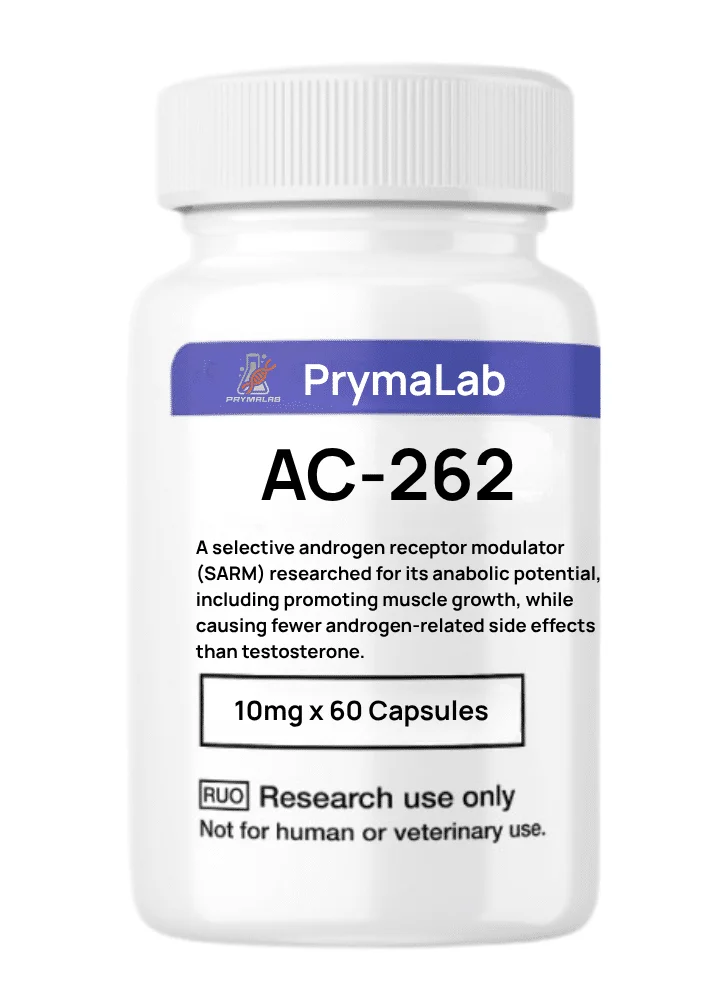
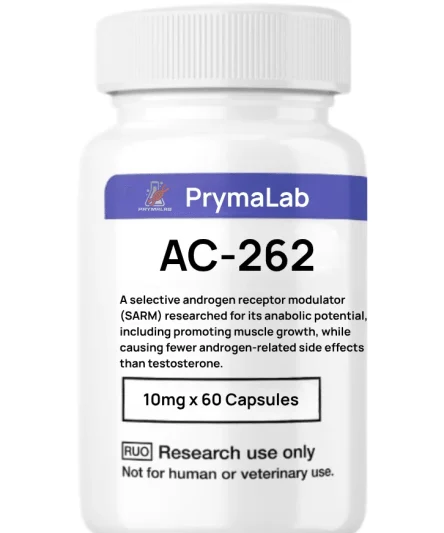
AC-262, also known as accadrine or AC-262,536, is a non-steroidal selective androgen receptor modulator (SARM) developed by Acadia Pharmaceuticals. The compound shows roughly 66 percent of the anabolic potency of testosterone with only 27 percent of its androgenic activity. That selectivity ratio has made it a compound of major interest in tissue-selective androgen signaling research.
Preclinical studies show that accadrine binds to the androgen receptor with a Ki of 5 nM, placing its affinity in the same range as established SARMs while offering a milder overall pharmacological profile. In castrated rats, the compound restored levator ani muscle weight to near-intact levels at doses that produced only marginal increases in prostate gland weight — confirming strong tissue selectivity. It has also shown neuroprotective activity in Alzheimer’s disease models, reducing the effects of DHT-induced androgen receptor breakdown and limiting amyloid-beta buildup in early cell culture studies.
Key Features and Specifications
| Specification |
Detail |
| Product Name |
AC-262 (Accadrine) |
| Dosage |
10 mg per capsule |
| Quantity |
60 capsules per bottle |
| Form |
Oral capsule |
| CAS Number |
870888-46-3 |
| Molecular Formula |
C18H18N2O |
| Molecular Weight |
278.35 g/mol |
| Purity |
≥99% (HPLC verified) |
| Testing |
Third-party HPLC and MS analysis |
| Storage |
Room temperature, cool dry place, away from light |
| Classification |
Non-steroidal SARM |
Mechanism of Action: How AC-262 Works
The compound acts as a partial agonist at the androgen receptor. It activates AR-mediated transcription in skeletal muscle and bone while producing largely reduced signaling in the prostate gland and seminal vesicles. As a partial agonist, accadrine competes with the body’s own androgens for receptor binding but triggers only a submaximal transcriptional response — which is part of why its overall profile is milder than that of full-agonist SARMs.
In muscle tissue, the compound increases expression of anabolic genes including MyoD, myogenin, and IGF-1, promoting protein synthesis and myofiber hypertrophy. It also influences the hypothalamic-pituitary-gonadal (HPG) axis: laboratory studies show reductions in luteinizing hormone at higher doses, indicating dose-dependent suppressive potential that is generally milder than what is seen with more potent SARMs such as RAD-140 or LGD-4033.
Neuroprotective research has found that the compound modulates androgen receptor activity in neuronal tissue, possibly guarding against neurodegenerative processes. These findings, though preliminary, have opened an additional research avenue beyond the muscle and bone applications typically studied for SARMs.
Reported Research Applications and Benefits
Lean mass research has shown consistent anabolic effects in castrated animal models, with the compound restoring muscle mass at doses that produce minimal androgenic activity. This milder profile makes accadrine especially valuable for studies examining the lower end of the SARM dose-response curve, and for protocols where minimizing hormonal disruption is a design priority.
Neuroprotection is a growing area of research for this compound. Early data suggest it reduces androgen receptor breakdown in neuronal cells exposed to toxic stimuli, and in vitro models of Alzheimer’s disease have shown reduced amyloid-beta plaque formation after treatment. This combination of anabolic and neuroprotective properties is unusual among characterized SARMs.
Prostate research has used the compound’s tissue selectivity to study partial-agonist approaches to androgen receptor modulation that preserve musculoskeletal benefits while sparing the prostate gland. Comparative SARM studies often include AC-262 as a reference compound for examining the relationship between binding affinity, agonist effect, and tissue selectivity.
AC-262 Dosage Information for Research
| Protocol |
Dosage |
Duration |
Notes |
| Standard research dose |
10–30 mg/day |
8–12 weeks |
Based on laboratory scaling |
| Beginner protocol |
10 mg/day |
8 weeks |
Conservative starting point |
| Advanced protocol |
20–30 mg/day |
8–12 weeks |
Dose-dependent suppression |
| Timing |
Once daily, morning |
— |
Consistent daily use |
AC-262 vs Ostarine: Key Differences
| Parameter |
AC-262 (Accadrine) |
Ostarine (MK-2866) |
| AR binding (Ki) |
5 nM |
3.8 nM |
| Anabolic potency |
~66% of testosterone |
~50% of testosterone |
| Androgenic potency |
~27% of testosterone |
~30% of testosterone |
| Agonist type |
Partial agonist |
Partial agonist |
| Neuroprotective data |
Yes (preliminary) |
Limited |
| Development stage |
Preclinical |
Phase II clinical trials completed |
| Suppression potential |
Mild |
Mild |
One key difference is development stage. Ostarine has progressed through human clinical trials (including completed Phase II studies), whereas accadrine remains a preclinical compound that has not yet entered clinical trials. For researchers, that means the available evidence for this compound comes from in vitro and animal work rather than human data.
Storage and Handling Instructions
Store the capsules at a controlled room temperature between 20°C and 25°C (68°F to 77°F) in the original sealed container, protected from light, heat, and moisture. Under these conditions, the capsules retain full potency for at least 24 months from the date of manufacture.
Why Choose PrymaLab AC-262 Accadrine Capsules
Every batch of PrymaLab accadrine undergoes independent third-party testing by accredited laboratories, using HPLC for purity determination and mass spectrometry for identity confirmation. Each order includes a batch-specific Certificate of Analysis documenting ≥99% purity, heavy-metal screening, residual-solvent analysis, and microbial testing. Pharmaceutical-grade encapsulation ensures precise 10 mg dosing, and free priority shipping is included on all domestic orders.
Frequently Asked Questions About AC-262
What is the primary advantage of AC-262 over more potent SARMs?
The compound offers meaningful anabolic activity — about 66 percent of testosterone’s potency — while producing only 27 percent of its androgenic effects. That favorable selectivity ratio, combined with milder suppression of the HPG axis, makes accadrine well suited to research protocols where minimizing hormonal disruption is a primary design consideration.
Does AC-262 have neuroprotective properties?
Preliminary research suggests it protects neuronal cells against androgen receptor breakdown and reduces amyloid-beta buildup in cell culture models relevant to Alzheimer’s disease. These neuroprotective effects still need further validation, but they represent a research avenue rarely associated with other SARMs.
How does AC-262 compare to RAD-140 in terms of potency?
RAD-140 shows considerably higher anabolic potency, with a 90:1 anabolic-to-androgenic ratio and stronger AR binding affinity. However, accadrine produces milder hormonal suppression and a more conservative overall profile, making it better suited to research designs that call for lower-intensity androgen receptor modulation.
Does AC-262 require post-cycle therapy?
At lower research doses of 10 mg per day, the compound generally produces minimal HPG axis suppression. Higher doses and longer durations may warrant PCT considerations. Baseline and endpoint hormone panels are recommended in all research protocols, to objectively assess suppression and guide recovery strategies.
What purity should researchers expect from AC-262?
Research-grade material should test at ≥99% purity by HPLC. PrymaLab provides a batch-specific Certificate of Analysis with every order, documenting purity, identity, and full contaminant screening performed by independent accredited laboratories.
Quality Assurance and Testing
PrymaLab maintains pharmaceutical research-grade quality standards across all accadrine products. Each batch is independently tested using HPLC purity analysis, mass spectrometry identity confirmation, heavy-metal screening, residual-solvent testing, and microbial assessment. A batch-specific Certificate of Analysis accompanies every order for full analytical transparency.
Research Disclaimer
AC-262 (accadrine) is sold strictly for laboratory research and scientific study purposes only. This product is not intended for human consumption, veterinary use, or therapeutic use. It has not been approved by the FDA or any regulatory agency for medical use, and it has not been evaluated in human clinical trials. Purchasers must be qualified researchers affiliated with accredited institutions or licensed research organizations. By purchasing this product, you confirm it will be used exclusively in accordance with all applicable local, state, and federal regulations governing research materials.
Only logged in customers who have purchased this product may leave a review.








14 reviews for AC-262 (Accadrine) 10mg Capsules