-
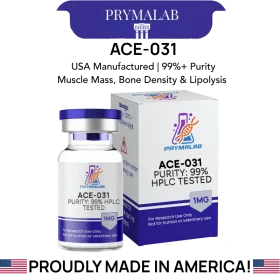
ACE-031 1MG
$129.99 or subscribe for $109.99/mo This product has multiple variants. The options may be chosen on the product page -
Sale!

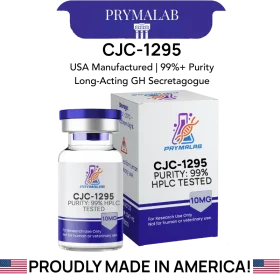
CJC-1295 (NO DAC) 10MG
$44.99 or subscribe for $34.99/mo This product has multiple variants. The options may be chosen on the product page -
Sale!
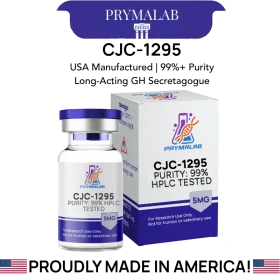
CJC-1295 (NO DAC) 5MG
$24.99 or subscribe for $22.99/mo This product has multiple variants. The options may be chosen on the product page -
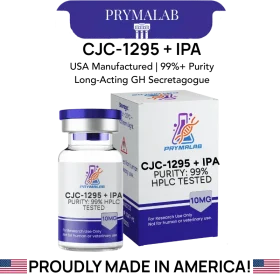
CJC-1295 (no DAC), Ipamorelin 10mg (Blend)
$59.99 or subscribe for $49.99/mo This product has multiple variants. The options may be chosen on the product page -
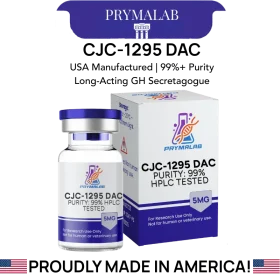
CJC-1295 DAC 5MG
$38.99 or subscribe for $32.99/mo This product has multiple variants. The options may be chosen on the product page -
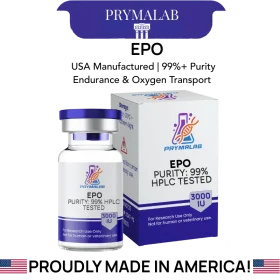
EPO (Erythropoietin) 3000IU
$59.99 or subscribe for $49.99/mo This product has multiple variants. The options may be chosen on the product page -
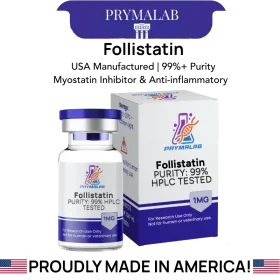
Follistatin 344 1mg
$99.99 or subscribe for $84.99/mo This product has multiple variants. The options may be chosen on the product page -
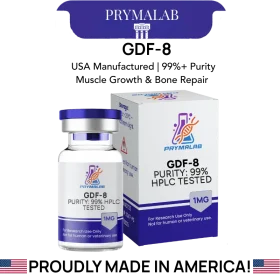
GDF-8 1mg
$54.99 or subscribe for $45.99/mo This product has multiple variants. The options may be chosen on the product page -
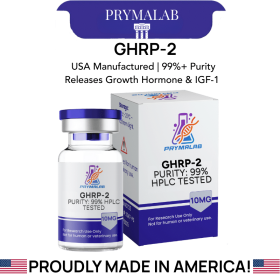
GHRP-2 10mg
$24.99 or subscribe for $20.99/mo This product has multiple variants. The options may be chosen on the product page -
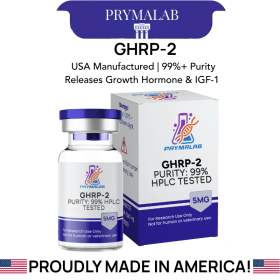
GHRP-2 5mg
$18.99 or subscribe for $15.99/mo This product has multiple variants. The options may be chosen on the product page -
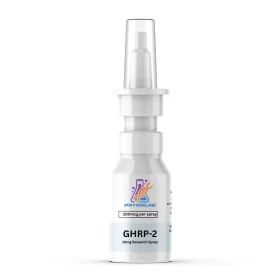
GHRP-2 Nasal Spray
$59.99 or subscribe for $49.99/mo This product has multiple variants. The options may be chosen on the product page -
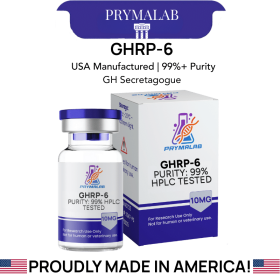
GHRP-6 10mg
$28.99 or subscribe for $23.99/mo This product has multiple variants. The options may be chosen on the product page -
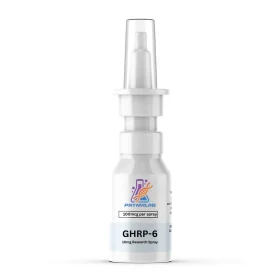
GHRP-6 10mg Nasal Spray
$54.99 or subscribe for $45.99/mo This product has multiple variants. The options may be chosen on the product page -
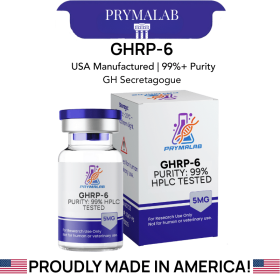
GHRP-6 5mg
$18.99 or subscribe for $15.99/mo This product has multiple variants. The options may be chosen on the product page -
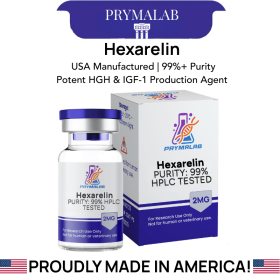
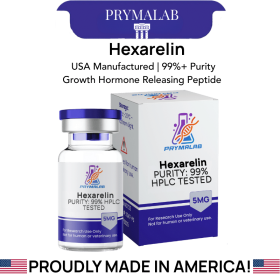
Hexarelin 2mg
$29.99 or subscribe for $24.99/mo This product has multiple variants. The options may be chosen on the product page -
Hexarelin 5mg
$44.99 or subscribe for $37.99/mo This product has multiple variants. The options may be chosen on the product page -
Hexarelin 5mg Nasal Spray
$59.99 or subscribe for $50.99/mo This product has multiple variants. The options may be chosen on the product page -
IGF-1 DES Nasal Spray
$219.99 or subscribe for $186.99/mo This product has multiple variants. The options may be chosen on the product page -
IGF-1 LR3 Nasal Spray
$89.99 or subscribe for $75.99/mo This product has multiple variants. The options may be chosen on the product page -
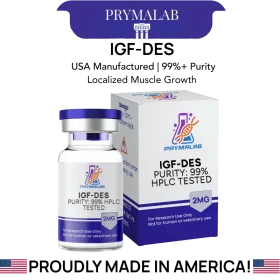
IGF-DES 2mg
$149.99 or subscribe for $124.99/mo This product has multiple variants. The options may be chosen on the product page -
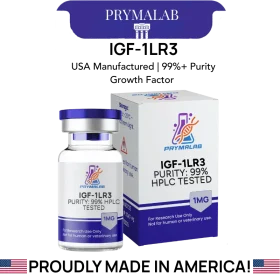
IGF1 LR3 1MG
$54.99 or subscribe for $44.99/mo This product has multiple variants. The options may be chosen on the product page -
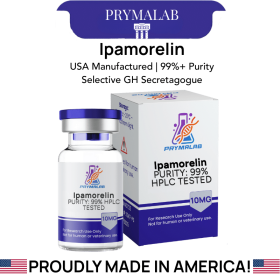
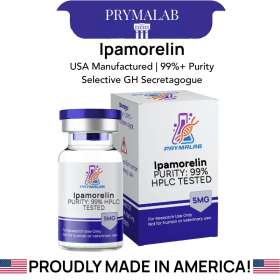
Ipamorelin 10mg
$49.99 or subscribe for $41.99/mo This product has multiple variants. The options may be chosen on the product page -
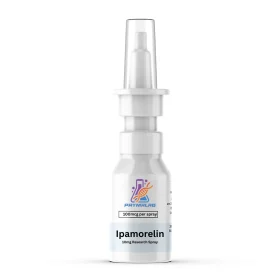
Ipamorelin 10mg Nasal Spray
$59.99 or subscribe for $49.99/mo This product has multiple variants. The options may be chosen on the product page -
Ipamorelin 5mg
$29.99 or subscribe for $24.99/mo This product has multiple variants. The options may be chosen on the product page -
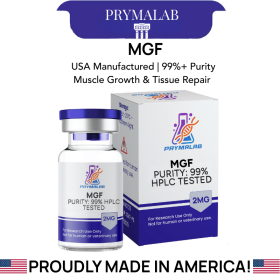
PEG-MGF (Mechano Growth Factor) 2mg
$49.99 or subscribe for $41.99/mo This product has multiple variants. The options may be chosen on the product page -
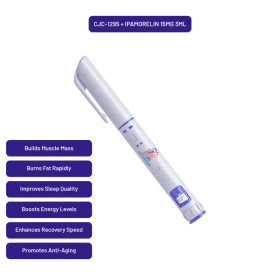
Preloaded Autoinjector | CJC-1295 (No DAC) + Ipamorelin | 3ml Pen | 15mg
$99.99 or subscribe for $84.99/mo This product has multiple variants. The options may be chosen on the product page -
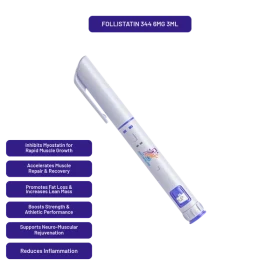
Preloaded Autoinjector | Follistatin 344 | 3ml Pen | 6mg
$499.99 or subscribe for $424.99/mo This product has multiple variants. The options may be chosen on the product page -
Preloaded Autoinjector | GHRP-2 | 3ml Pen | 10mg
$59.99 or subscribe for $49.99/mo This product has multiple variants. The options may be chosen on the product page -
Preloaded Autoinjector | GHRP-6 | 3ml Pen | 10mg
$59.99 or subscribe for $49.99/mo This product has multiple variants. The options may be chosen on the product page -
Sale!
Preloaded Autoinjector | IGF-DES | 3ml Pen | 1mg/ml
Original price was: $79.99.$64.99Current price is: $64.99.
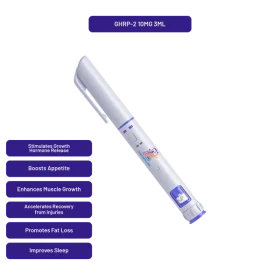
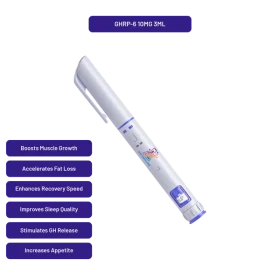
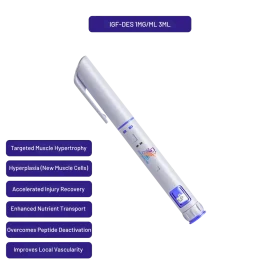
Two mechanisms · one axis · why the distinction decides the experiment
Growth hormone peptides are routinely presented as a single category, and they are two. One class binds the growth hormone releasing hormone receptor. The other binds the growth hormone secretagogue receptor, a completely separate protein originally identified through a synthetic ligand and only later matched to its natural counterpart. This page sets out which compounds sit where, and why an experiment that ignores the split cannot interpret its own result.
Specification Table
| Property | Value |
|---|---|
| Class 1 receptor | GHRHR, growth hormone releasing hormone receptor, a class B G-protein coupled receptor |
| Class 1 endogenous ligand | Growth hormone releasing hormone, 44 residues |
| Class 1 compounds in this range | Sermorelin, tesamorelin, CJC-1295 |
| Class 2 receptor | GHS-R1a, growth hormone secretagogue receptor type 1a |
| Class 2 endogenous ligand | Ghrelin, identified in 1999, after the receptor |
| Class 2 compounds in this range | Ipamorelin, GHRP-2, hexarelin, and the non-peptide MK-677 |
| Why the receptors were found in that order | Synthetic secretagogues were characterised first, the receptor was cloned in 1996, and its natural ligand was identified three years later |
| Downstream axis compounds | IGF-1 LR3, IGF-DES and MGF act below the pituitary rather than at it |
| Negative regulator in this range | GDF-8, myostatin, which is a TGF-beta family ligand and not a growth hormone axis compound |
| Pulsatility | Endogenous secretion is pulsatile, which is why continuous and intermittent exposure are not interchangeable in a study design |
| Selectivity note | Ipamorelin is the most selective compound in class 2. GHRP-2 and hexarelin show additional activity at other pituitary outputs |
| Page type | Category hub, not a product page |
| Schema page type | CollectionPage |
| Cornerstone content | Yes |
| Meta robots | index, follow |
| Regulatory status | Tesamorelin holds an approved human formulation in the United States. No other compound in this category does |
What Separates the Two Classes of Growth Hormone Peptides?
The division across growth hormone peptides is a receptor, and everything else follows from it.
Class one compounds bind GHRHR, the receptor for growth hormone releasing hormone. They are structural analogues of a 44-residue hypothalamic peptide, and they work by occupying the same site it does.
Sermorelin is the first 29 residues of that natural sequence, which turned out to be the shortest fragment retaining full activity. Tesamorelin is that fragment with a trans-3-hexenoyl group attached to the amino terminus, which slows enzymatic degradation. CJC-1295 extends the same idea with substitutions that resist dipeptidyl peptidase cleavage.
Class two compounds bind GHS-R1a, a different receptor on a different gene, coupling through a different intracellular pathway.
The history here is unusual and it explains why the category is confused. Synthetic secretagogues were characterised in the 1970s and 1980s before anyone knew what receptor they were hitting. The receptor was cloned in 1996. Its natural ligand, ghrelin, was identified in 1999, three years after the receptor it binds.
So class two compounds are not analogues of anything. They were found first and the biology was assembled around them afterwards.
The practical consequence is that the two classes are not interchangeable and their effects are not additive in any simple way. They converge on the same output through separate upstream routes.
A study using a class one and a class two compound together is running a receptor interaction experiment whether or not it was designed as one.
Why Does Selectivity Differ Within Class Two?
The secretagogue compounds are frequently listed as equivalents and they are not, because their off-target activity at the pituitary differs substantially.
Ipamorelin is the selective member. Published characterisation reports growth hormone release without the accompanying rises in adrenocorticotropic hormone and prolactin that the earlier compounds produce.
GHRP-2 is more potent at the primary output and less clean. Published work reports measurable increases in cortisol and prolactin alongside it.
Hexarelin is the most potent of the three and the least selective, and it also shows the most pronounced receptor desensitisation on repeated exposure.
That desensitisation is a design problem rather than a footnote. A compound whose response falls across a time course produces data that look like an effect wearing off when what is actually happening is a receptor becoming unresponsive.
MK-677 sits in this class mechanistically while not being a peptide at all. It is a non-peptide small molecule that binds the same receptor, and its half-life is measured in many hours rather than minutes, which changes the exposure profile completely.
Selecting among growth hormone peptides on potency alone is the most common error in this category, since potency and selectivity move in opposite directions across the series.
An experiment needing a clean single-output readout and an experiment needing maximum stimulus require different compounds. No amount of concentration adjustment converts one into the other.
Where Do the IGF-1 Axis Compounds Fit?
Three compounds in this range act below the pituitary rather than at it, and grouping them with the secretagogues obscures what they do.
Growth hormone released from the pituitary acts largely through insulin-like growth factor 1, produced mainly in the liver in response to it.
IGF-1 LR3 is a modified form of that mediator, carrying an arginine substitution at position three and a thirteen-residue amino-terminal extension. Those changes sharply reduce its affinity for the binding proteins that normally sequester circulating IGF-1.
The point of that modification is availability rather than potency, since a larger free fraction is present when less of it is bound.
IGF-DES is the same mediator missing its first three residues, a truncation that occurs naturally in some tissues and alters binding protein interaction differently again.
MGF is a splice variant of the IGF-1 gene with a distinct carboxy-terminal extension, described in the literature in the context of mechanical loading of muscle tissue.
None of these compounds requires a functioning pituitary to act, which is precisely why they are not substitutes for the secretagogues and cannot be compared with them in the same assay without care.
GDF-8, listed in this category, is a further step removed. It is myostatin, a TGF-beta family ligand acting as a negative regulator of muscle mass. It belongs to a different signalling family entirely.
One more compound in this range sits outside both classes. AOD-9604 is the 176-191 fragment of human growth hormone rather than a secretagogue or an IGF-1 axis peptide, so it does not raise endogenous GH and does not act at the GH receptor the way the parent hormone does. It is stocked here only as a metered nasal spray.
Why Does Pulsatility Change the Experiment?
Endogenous growth hormone secretion is not continuous, and this is the fact most often lost when a study is designed around convenience.
Release occurs in discrete bursts, largest during slow-wave sleep, separated by intervals during which circulating concentration falls close to the assay floor.
The pattern is not incidental. Published work indicates that target tissues respond differently to pulsatile and to continuous exposure at the same integrated amount, and that some transcriptional responses depend on the pattern rather than on the total.
A compound with a short half-life delivered intermittently approximates the natural pattern. A compound with a long half-life delivered on the same schedule does not, because concentration never returns to baseline between exposures.
That is the substantive difference between the peptide secretagogues and MK-677, and it is larger than any difference in potency between them.
A single time-point measurement is therefore close to uninterpretable here. A sample drawn at an arbitrary moment is sampling a waveform at an unknown phase.
Serial sampling with deconvolution analysis is the established approach, and it is considerably more work than one blood draw.
Any figure in this category reported without a sampling schedule attached should be read as incomplete rather than as a result.
What Should Be Verified Before Ordering?
Several checks in this category catch problems that a general peptide certificate does not surface.
For CJC-1295, establish whether the material carries the drug affinity complex modification. Two distinct compounds circulate under similar names and their half-lives differ by orders of magnitude, which makes them non-substitutable in any time-resolved experiment.
For tesamorelin, confirm the amino-terminal acylation is present, since the unmodified fragment is sermorelin and the two are frequently conflated in listings.
For IGF-1 LR3, confirm both modifications are present. A certificate reporting only the mass cannot distinguish the intended compound from partially modified material without the sequence data to support it.
For any compound in this category, ask whether the disulfide bonding state was confirmed where the sequence contains more than one cysteine, since scrambled isomers share a mass with correctly folded material.
Check the calculated mass against the observed mass yourself rather than accepting the certificate summary, which catches transcription errors.
Ask about net peptide content, which for the basic sequences in this category can represent a correction well above twenty percent.
Storage for this range is unremarkable in lyophilized form and consequential in solution, where the larger sequences aggregate over time and the smaller ones adsorb to container walls.
Where a compound is stocked as a pen or a spray, the solution-state clock started at manufacture rather than at receipt, and fill date becomes the field worth asking about.
One further check applies across the whole class. Several of these compounds are supplied as acetate rather than trifluoroacetate salts, and the two carry different masses, so a certificate that omits the counterion leaves the reconstitution arithmetic incomplete.
The correction is not trivial for the shorter sequences here, where a single counterion can account for a tenth of the vial mass or more.
What Is HGH, and How Do These Peptides Relate to It?
Every compound in this category is defined by its relationship to one protein, so the protein is where the explanation has to start.
HGH, human growth hormone, is a 191-residue protein released from pituitary somatotrophs in pulses, most of them during deep sleep.
Synthetic HGH exists as a drug. Somatropin is recombinant human growth hormone, written rhGH, and that synthetic growth hormone is the approved article rather than anything on this page.
Approved indications for somatropin cover growth hormone deficiency in children and adults, Turner syndrome, Prader-Willi syndrome, idiopathic short stature and growth failure in chronic kidney disease.
Those approvals are for HGH itself. None extends to a peptide that prompts the body to release its own HGH, which is the distinction the whole category rests on.
Class one binds the GHRH receptor, mimicking the growth hormone-releasing factors. Class two binds the ghrelin receptor, and those are the growth hormone-releasing peptides.
GHRP-1, GHRP-2, GHRP-4 and GHRP-6 are the original hexapeptide series in that second class, developed from met-enkephalin analogs before the ghrelin receptor was identified at all.
GHRP-6 is the most studied and the most likely to produce hunger, since ghrelin receptor agonism drives appetite alongside HGH release.
GHRP-4 sits in the same series with a much thinner published record than GHRP-2 or GHRP-6, and a GHRP-4 result should not be inferred from its better-studied relatives.
Ibutamoren, also called MK-677, is not a peptide at all. It is an orally active non-peptide ghrelin receptor agonist, which is why it appears beside these despite the structural difference.
Somatostatin is the brake on the whole system, and no compound in this category addresses that arm.
Downstream, raised growth hormone levels increase IGF-1 levels from the liver, and most reported effects on protein synthesis and muscle protein synthesis are IGF-1 mediated rather than direct.
An amino acid sequence is what separates these compounds from one another, and in several cases a two-residue difference changes selectivity substantially. A few amino acids decide which receptor a compound engages, which is why GHRP-4 and GHRP-6 behave differently despite sharing a series.
What Do the Performance Claims Rest On?
The claims attached to this category are consistent across vendors and thinner than they look.
Reported effects on lean mass, muscle growth and body composition follow from HGH and IGF-1 axis biology rather than from trials of these particular compounds.
Fat loss, fat burning and reduced visceral fat come from the same place. Growth hormone is lipolytic and that is established, while whether a secretagogue produces a meaningful change in fat metabolism in a healthy adult is not.
Tesamorelin is the exception worth naming, since it holds an approved indication for visceral fat reduction and has trial data behind it.
Sleep quality has the most mechanistic support of the softer claims, since HGH release is tied to slow-wave sleep and several of these compounds affect it.
Effects on skin elasticity, tissue repair, mental clarity and cholesterol profile are asserted widely with no controlled data behind them.
Glucose is the counterweight nobody advertises. Growth hormone opposes insulin, so raising it can worsen insulin resistance and reduce insulin sensitivity, and that tradeoff is documented rather than theoretical.
Anabolic steroids act through an entirely different receptor, and grouping them with peptides for muscle growth confuses two unrelated mechanisms.
Searches for the best peptides for muscle growth return this category constantly. No head-to-head trial establishes a ranking, so any such list is opinion wearing the clothes of data.
HGH peptide therapy as marketed means a clinic prescribing these off-label or supplying compounded preparations, usually by subcutaneous injection.
Synthetic peptides sold that way sit outside the somatropin approvals entirely, and HGH deficiency is a diagnosis requiring testing rather than a description of feeling tired.
BPC-157 and GLP-1 drugs turn up in the same clinic menus and share no mechanism with the growth hormone axis.
Every compound in this category is prohibited in sport, so use for athletic performance is an anti-doping rule violation regardless of format.
Published Literature
Selected references on the two receptor classes, on ghrelin identification and on secretion pattern.
- Howard AD, Feighner SD, Cully DF, et al. A receptor in pituitary and hypothalamus that functions in growth hormone release. Science. 1996;273(5277):974-977. https://doi.org/10.1126/science.273.5277.974
- Kojima M, Hosoda H, Date Y, Nakazato M, Matsuo H, Kangawa K. Ghrelin is a growth-hormone-releasing acylated peptide from stomach. Nature. 1999;402(6762):656-660. https://doi.org/10.1038/45230
- Raun K, Hansen BS, Johansen NL, et al. Ipamorelin, the first selective growth hormone secretagogue. Eur J Endocrinol. 1998;139(5):552-561. https://doi.org/10.1530/eje.0.1390552
- Veldhuis JD, Roemmich JN, Richmond EJ, et al. Endocrine control of body composition in infancy, childhood, and puberty. Endocr Rev. 2005;26(1):114-146. https://doi.org/10.1210/er.2003-0038
Frequently Asked Questions
What are growth hormone peptides?
Compounds acting on the growth hormone axis, divided into two classes by receptor. One class binds the GHRH receptor, acting as structural analogues of a 44-residue hypothalamic peptide and occupying the same site it does. The other binds GHS-R1a, a separate receptor identified through synthetic ligands before its natural counterpart was known.
What is the difference between a GHRH analogue and a secretagogue?
They bind different receptors on different genes and signal through different intracellular pathways. Sermorelin, tesamorelin and CJC-1295 are GHRH analogues. Ipamorelin, GHRP-2, hexarelin and MK-677 act at GHS-R1a. They converge on the same pituitary output by two entirely separate upstream routes, which is why they are not interchangeable.
Why was the secretagogue receptor found before its natural ligand?
Synthetic secretagogues were characterised through the 1970s and 1980s without their target being known. The receptor was cloned in 1996 and ghrelin, the endogenous ligand, was identified in 1999. The class is therefore not modelled on any natural compound.
Which secretagogue is the most selective?
Ipamorelin. Published characterisation reports growth hormone release without the accompanying adrenocorticotropic hormone and prolactin increases that GHRP-2 and hexarelin produce. Potency and selectivity move in opposite directions across that series.
Is MK-677 a peptide?
No. It is a non-peptide small molecule that binds the same GHS-R1a receptor. Its half-life is measured in many hours rather than minutes, which produces a continuous exposure profile rather than a pulsatile one.
Where do IGF-1 LR3 and IGF-DES act?
Below the pituitary. They are modified forms of the mediator through which growth hormone largely acts, so they do not require pituitary output and are not substitutes for secretagogues in any comparison.
What does the LR3 modification do?
An arginine substitution at position three combined with a thirteen-residue amino-terminal extension sharply reduces affinity for the binding proteins that normally sequester circulating IGF-1, leaving a larger free fraction available.
Is GDF-8 a growth hormone peptide?
No. GDF-8 is myostatin, a TGF-beta family ligand acting as a negative regulator of muscle mass. It sits in a different signalling family and is listed in this category by application rather than by mechanism.
Why does pulsatility matter?
Endogenous secretion occurs in discrete bursts separated by intervals near the assay floor. Published work indicates target tissues respond differently to pulsatile and continuous exposure at the same integrated amount, so pattern is a variable rather than a detail.
Can a single blood sample measure this axis?
Not usefully. A sample drawn at an arbitrary moment is sampling a waveform at an unknown phase. Serial sampling with deconvolution analysis is the established approach and no single time point substitutes for it.
What should be verified for CJC-1295?
Whether the drug affinity complex modification is present. Two compounds circulate under similar names with half-lives differing by orders of magnitude, which makes them non-substitutable in any time-resolved study.
Does any compound here hold an approved formulation?
Tesamorelin holds an approved human formulation in the United States. No other compound in this category does, in any jurisdiction, and material supplied here is for laboratory research only regardless.
What is the difference between HGH and these peptides?
HGH is the hormone itself, a 191-residue protein released from the pituitary gland. These compounds act upstream, prompting the pituitary gland to release its own HGH. Somatropin, recombinant HGH, is the approved drug; a secretagogue is not.
What is somatropin approved for?
Growth hormone deficiency in children and adults, Turner syndrome, Prader-Willi syndrome, idiopathic short stature and growth failure in chronic kidney disease. Those approvals cover synthetic HGH itself and extend to nothing in this category.
How do GHRP-2, GHRP-4 and GHRP-6 differ?
They are the original hexapeptide series binding the ghrelin receptor. GHRP-6 is the most studied and the most likely to drive hunger. GHRP-4 has a much thinner record, so its behaviour should not be inferred from its better-studied relatives.
Is ibutamoren a peptide?
No. Ibutamoren, or MK-677, is an orally active non-peptide ghrelin receptor agonist. It appears alongside the growth hormone-releasing peptides because it hits the same receptor, not because it shares their structure.
Do these compounds build muscle or burn fat?
Reported effects on lean mass, muscle growth and fat loss follow from HGH and IGF-1 axis biology rather than from trials of these compounds. Tesamorelin is the exception with approved visceral fat data. Anabolic steroids act through a different receptor entirely.
What is the documented downside?
Glucose handling. Growth hormone opposes insulin, so raising HGH can worsen insulin resistance and reduce insulin sensitivity. That tradeoff is documented rather than theoretical, and it rarely appears in marketing for HGH peptide therapy.
Compliance Statement
Growth hormone peptides are sold exclusively for laboratory research use. They are not a drug, food, or cosmetic product, and they are not a dietary product of any kind. They are not approved by the FDA or any comparable authority for human or veterinary use, tesamorelin holds an approved human formulation in the United States but material supplied here is not that product and is not manufactured to pharmaceutical standards, and no other compound in this category holds approval in any jurisdiction. These products are not intended to diagnose, treat, cure, or prevent any disease. They must not be given to humans or animals. Purchase is restricted to qualified researchers and institutions operating within applicable laws. All handling is the responsibility of the purchasing laboratory.
All 37 products in the Growth Hormone & Performance Peptides range
Every listing states its quantity, concentration and format and carries a batch certificate of analysis. Products are supplied for laboratory research only.
- ACE-031 1MG
- CJC-1295 (No DAC) + Ipamorelin 15mg preloaded 3ml pen
- CJC-1295 (no DAC), Ipamorelin 10mg (Blend)
- CJC-1295 (NO DAC) 5MG
- CJC-1295 (NO DAC) 10MG
- CJC-1295 DAC 5MG
- EPO (Erythropoietin) 3000IU
- Follistatin 344 1mg
- Follistatin 344 6mg preloaded 3ml pen
- GDF-8 1mg
- GHRP-2 5mg
- GHRP-2 10mg
- GHRP-2 10mg preloaded 3ml pen
- GHRP-2 Nasal Spray
- GHRP-6 5mg
- GHRP-6 10mg
- GHRP-6 10mg Nasal Spray
- GHRP-6 10mg preloaded 3ml pen
- Hexarelin 2mg
- Hexarelin 5mg
- Hexarelin 5mg Nasal Spray
- IGF-1 DES Nasal Spray
- IGF-1 LR3 Nasal Spray
- IGF-DES 1mg/ml preloaded 3ml pen
- IGF-DES 2mg
- IGF1 LR3 1MG
- IGF1 LR3 1mg/ml preloaded 3ml pen
- Ipamorelin 5mg
- Ipamorelin 10mg
- Ipamorelin 10mg Nasal Spray
- PEG-MGF (Mechano Growth Factor) 2mg
- Pryma SUPER Human Blend
- Sermorelin 5mg
- Sermorelin 6mg preloaded 3ml pen
- Sermorelin 10mg
- Tesamorelin 10mg
- Tesamorelin 10mg preloaded 3ml pen