15% fall discount applied automatically at checkoutFree USA shipping over $100Free worldwide shipping over $200Credit/debit checkout disabled for updates
Sign in 0

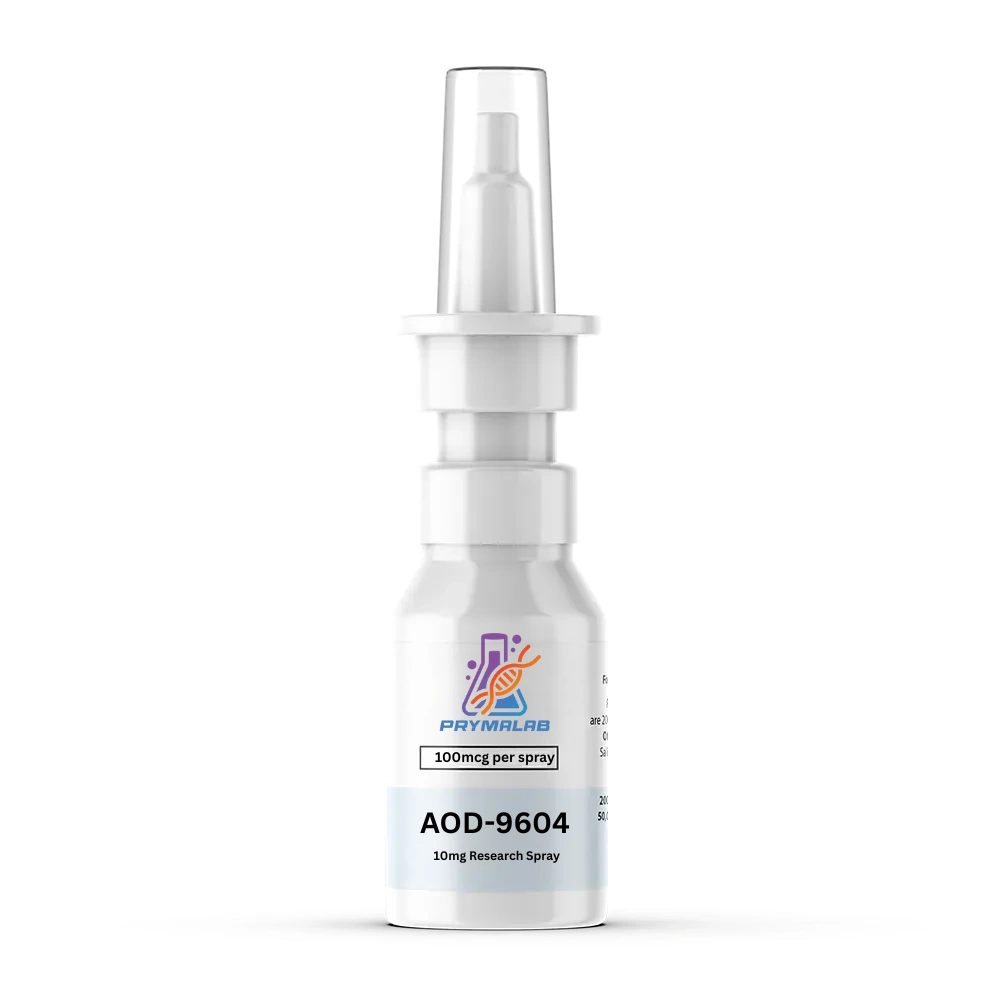
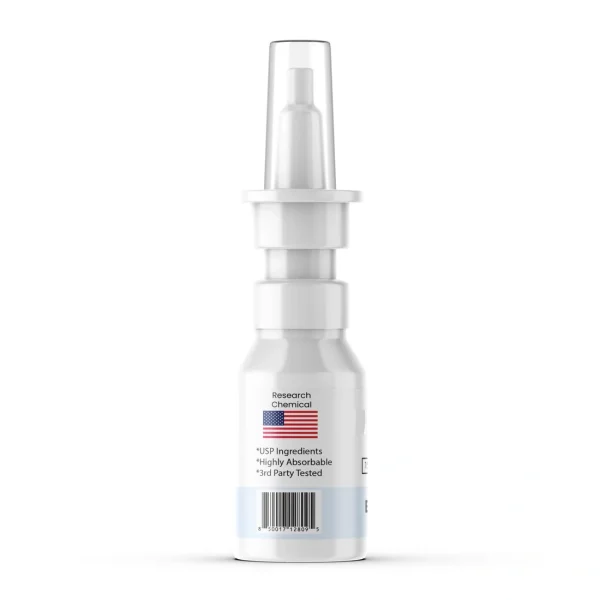
AOD9604 10mg Nasal Spray

(5 customer reviews)

$119.99 or subscribe for $101.99/mo

AOD9604 nasal spray supplies the 16-residue analogue of the human growth hormone C-terminal fragment, CAS 221231-10-3, in a metered solution format. Its single disulfide bond is the feature that governs handling. Laboratory research use only.

Description

PrymaLab · Research Use Only

AOD-9604 Nasal Spray

YLRIVQCRSVEGSCGF · CAS 221231-10-3 · 1815.1 Da

AOD9604 nasal spray supplies a 16-residue synthetic peptide, CAS 221231-10-3, molecular weight 1815.1, as a metered aqueous solution. It corresponds to residues 176 to 191 of human growth hormone with a tyrosine added at the amino terminus, and it carries one internal disulfide bond that determines almost everything about how it must be handled. The same molecule is listed elsewhere as HGH Frag 176-191 and sold across the fat loss peptide category, which is a commercial description rather than a chemical one.

Specification Table

AOD-9604 verified chemical and format data
Property Value
Compound AOD-9604
CAS number 221231-10-3
Molecular formula C78H123N23O23S2
Molecular weight 1815.1 g/mol
Residue count 16
Single-letter sequence YLRIVQCRSVEGSCGF
Parent region Residues 176 to 191 of human growth hormone
Modification Tyrosine added at the amino terminus, absent from the native fragment
Disulfide bond One, between the cysteines at positions 7 and 14
Ring size formed 8 residues enclosed by the disulfide
Structural consequence A cyclic region flanked by short linear tails. Not a fully linear peptide
Originating programme Monash University, Melbourne
Chromophore Tyrosine at position 1 and phenylalanine at position 16. 280 nm absorbance applies
Oxidation-prone residues Two cysteines, which are already paired
Also listed as HGH Frag 176-191, AOD 9604 peptide, AOD-9604 nasal spray
Format Metered nasal spray, solution state
Physical state Aqueous solution, supplied ready to use
Reconstitution required None. Supplied in solution, so no bacteriostatic water is added
Route used in the published record Oral and parenteral, including subcutaneous injection. Not nasal
Purity Per lot-specific certificate of analysis
Storage 2-8°C, protected from light. Do not freeze
Regulatory status No approved human or veterinary formulation in any jurisdiction
Food and supplement status Not a dietary product. A generally recognized as safe determination published for an oral nutraceutical ingredient does not extend to this product

Why Does the Disulfide Bond Govern AOD9604 Nasal Spray Handling?

One covalent bond between two cysteine side chains determines the shape of this molecule, and in a solution-state format that bond is the thing most likely to go wrong.

The cysteines sit at positions 7 and 14, enclosing an eight-residue loop with short linear tails on either side.

That loop is not decoration. A cyclic region holds the enclosed residues in a defined arrangement, and the linear form with free thiols samples a much wider set of shapes.

Disulfide bonds are not permanent in aqueous solution. Thiol-disulfide exchange proceeds continuously, and the rate rises sharply with pH because the reactive species is the deprotonated thiolate.

With only two cysteines the intramolecular alternatives are limited. But the intermolecular ones are not. Two molecules can pair across each other to form a dimer, and larger oligomers follow from there.

Reduction to the free-dithiol form is the other route, and it opens the ring entirely.

A dry powder is largely protected from all of this. An aqueous solution held for months at refrigerator temperature is not, which is the central format consideration for this compound.

Trace transition metals catalyse thiol chemistry sharply. So metal contamination matters here in the same way it does for glutathione.

It is worth being precise about what a scrambled or reduced preparation actually is, because the language around this is often loose.

A reduced molecule is not a degraded fragment. Every residue is still present and the sequence is unchanged, so nothing has been lost in the ordinary sense.

What has changed is the three-dimensional arrangement, and for a constrained peptide that arrangement is a substantial part of the molecular identity.

A dimer is a further step again, since two intact chains are now covalently joined into a species with roughly twice the mass and quite different behaviour.

How Is the Disulfide State Verified?

This is the specific certificate question for this compound, and it is one that a standard purity figure does not address.

The oxidised form with an intact disulfide and the reduced form with two free thiols differ by two daltons, since reduction adds two hydrogens.

Two daltons is resolvable by a decent mass spectrometer but is easily lost in a nominal-mass report. So the resolution and the reported figure both matter.

A dimer formed by intermolecular pairing sits near twice the monomer mass, around 3,628. That is unmissable if anyone looks for it.

Ellman’s reagent gives a direct answer on free thiol content, exactly as it does for glutathione, and a correctly folded preparation should return essentially none.

That assay is cheap, fast and specific to the failure mode, which makes it the single most useful test available for this molecule.

Size exclusion chromatography detects the dimer and higher oligomers, which reversed-phase purity under denaturing conditions may miss.

Asking a supplier for free thiol content and for a size exclusion trace is more informative than asking for a higher purity percentage.

One further point is worth making about how AOD9604 nasal spray should be sampled for any of these tests.

Thiol chemistry is concentration dependent. So a sample drawn from a nearly empty bottle is not equivalent to one drawn from a full one.

Headspace grows as the bottle empties, which increases oxygen exposure per unit volume and shifts the equilibrium over the working life of the product.

Testing at the start and at the end of a study is therefore more informative than testing once, and the difference between the two readings is itself a useful number.

What Is the Relationship to the Parent Hormone?

The compound is a fragment of a much larger protein, and the fragment relationship is the whole reason it exists as a separate entity.

Human growth hormone is a 191-residue protein. This peptide corresponds to its last 16 residues, from position 176 to 191.

A tyrosine has been added at the amino terminus that is not present in the native fragment, which is the modification the compound name encodes.

Work at Monash University in the 1990s reported that the C-terminal region of the hormone could be separated from other regions in terms of the activities attributed to them.

That separation claim is the entire premise of the compound, and it is a structure-activity argument rather than a potency argument.

The fragment does not fold as the parent protein does. A 16-residue peptide with one disulfide has a local structure, not a protein tertiary fold.

That means results obtained with the intact hormone do not transfer here, and results obtained here do not speak to the hormone as a whole.

Anyone citing growth hormone literature in support of a statement about this fragment is citing a different molecule. The fragment literature is much smaller.

What Does the Published Work on AOD9604 Actually Report?

The record on this fragment is small, old and almost entirely animal work, so it is worth setting out what is in it rather than what the market around it implies.

Ng and Bornstein reported in 1978 that synthetic C-terminal fragments of the hormone produced a hyperglycaemic response in animals, which is where interest in this region began.

That paper is about blood sugar levels rather than about fat. Anyone offering it as fat loss evidence has not read it.

Heffernan and colleagues reported in 2001 that chronic treatment of obese mice with a modified C-terminal fragment increased fat oxidation and produced weight loss. Every fat loss claim attached to this compound traces back to that one study, and the weight loss reported in it belongs to mice.

The proposed mechanism there is a rise in lipolysis, the breakdown of stored triglycerides inside adipocytes, together with a fall in lipogenesis. The argument is that the fragment can inhibit lipogenesis while raising fat breakdown, so fat storage falls as lipolysis rises. That is what the mouse data was read to support.

Beta-3 adrenergic receptors are implicated in the rodent lipolytic activity, and the reported change in body composition in those animals is a loss of fat mass rather than a change in how much they ate.

So appetite suppression is not the proposed route here, which separates this fragment from most of what the weight management category contains.

Whether beta-3 adrenergic receptor behaviour in mouse fat transfers to human adipose tissue metabolism is the question that programme never closed.

Metabolic Pharmaceuticals took the compound into early clinical trials for obesity treatment during the 2000s. The oral programme did not separate from placebo on the endpoint it was powered for, and development stopped.

A later paper by Moré and colleagues describes the molecule as a nutraceutical ingredient and reports metabolic and safety data supporting a GRAS determination for an oral food application.

That generally recognized as safe position concerns a swallowed ingredient. It says nothing about an unapproved aqueous solution sprayed into a nose, and it is not an approval.

The structure-activity argument behind the whole compound is that the fat metabolism effects of the parent hormone can be separated from its growth effects.

Growth signalling by the intact hormone runs largely through GH receptors and downstream insulin-like growth factor-1 production. The claim for this fragment is that it does not raise IGF-1 the way the whole hormone does.

Reported IGF-1 levels in the animal work support that separation. It is the most defensible statement in the file and it is a negative one rather than a positive one.

Effects on insulin sensitivity and on glucose intolerance are reported inconsistently across a small number of studies, which is reason to treat any statement about insulin resistance here as unsettled.

A separate line of work looked at the fragment in cartilage rather than in fat, on the reasoning that a molecule affecting lipid metabolism in one tissue might do something different in another.

Early-phase work in osteoarthritis of the knee has been reported, with cartilage repair and joint health as the stated interest. That work is preliminary and its results are not established.

Cartilage regeneration is a stronger word than anything in that record supports, and it appears in vendor copy far more often than it appears in journals. The same goes for joint repair, which reads as a promise where the joint health work is still early.

Two search terms attach to this compound constantly and deserve a direct answer. Headaches and nausea are the adverse events most often asked about.

Both appear at low rates in the human trial record for the oral programme. Those numbers describe swallowed capsules at stated doses under monitoring.

Nothing in them applies to a laboratory handling a solution that no authority has approved, and this product must not be given to anyone.

How Does 1815 Daltons Affect the Nasal Route?

Molecular weight is the strongest predictor of transnasal transport, and this compound sits above the region where it works well.

That decline steepens near 1,000 daltons, the point where passage between epithelial cells stops being an efficient route.

At 1815.1 daltons this compound is above that transition, larger than Kisspeptin-10 at 1,302 and considerably larger than Melanotan II at 1,024.

It remains far smaller than the two IGF analogues in this range at roughly 7,371 and 9,111, so it sits in the middle of the spray catalogue rather than at either extreme.

Being above the threshold means the delivered fraction is smaller and the variance between applications is wider, which raises the replicate count an experiment needs.

The cyclic region may help. A disulfide-constrained loop is more compact than a linear chain of equal mass, and hydrodynamic radius governs paracellular passage rather than mass itself.

That is a prediction rather than a measurement, since intranasal pharmacokinetic data for this compound is not established in the published record.

The published work on this molecule used parenteral and oral routes. The figures in it describe those routes.

What Should a Certificate of Analysis Contain?

The useful fields for this compound differ from the generic panel, and two of them are specific to the disulfide.

Measured mass against 1815.1, with the instrument resolution stated so that a two dalton difference would have been visible.

Free thiol content, ideally by DTNB, which directly reports whether the disulfide is intact.

Size exclusion or a non-reducing chromatographic trace showing monomer percentage, which is what detects intermolecular dimers.

Purity by reversed-phase chromatography with the gradient stated. The tyrosine and phenylalanine give a genuine chromophore, so 280 nanometre detection is meaningful here.

Sequence stated explicitly, since a trade name carries no chemical information and this compound is a fragment among many fragment analogues.

Counterion identity, quoted together with net peptide content. At 1815.1 daltons a single trifluoroacetate at 114 is roughly 6 percent of the associated mass.

Water content matters less for a solution-state product than for a powder, but the fill concentration and the date it was measured both do.

Does AOD9604 Nasal Spray Need Reconstitution?

No. This product is supplied as an aqueous solution already at its fill concentration, so nothing has to be reconstituted before it is used.

That one sentence answers the question asked most often about it, and it removes a step where a great deal goes wrong.

Most research peptides ship as lyophilized peptides in a sealed peptide vial. The buyer adds bacteriostatic water, swirls rather than shakes, and records whatever concentration results.

Every one of those steps can introduce error. A freeze-dried powder weighed at 10mg is not 10mg of peptide once counterion and residual water are subtracted, and a volume added by eye is not a volume.

A solution-state format moves that arithmetic to the manufacturer. That is an advantage where the fill concentration is stated and verified, and a liability where it is not.

The trade runs the other way on stability. A powder held dry is largely protected from the thiol chemistry described above. A solution held for months at refrigerator temperature is not.

So the reconstitution question is really a question about which risk a given experiment can better tolerate, and the answer is not the same for every study.

The published work used oral dosing and subcutaneous injection. Injectable peptides carry their own record of injection site reactions, none of which bears on a spray.

That does not make the nasal route validated. It makes it uncharacterised, which is a different thing.

This is a research chemical supplied for laboratory research use only. Like any research peptide sold on those terms, it is not reconstituted, not injected, and not given to anyone.

How Does the Fragment Compare With Other Cyclic Compounds Here?

Three compounds in this spray range carry a covalently closed ring, and comparing them shows how differently the same idea can be implemented.

This compound closes its ring with a disulfide between two cysteines. That is a redox-active bond that can be reduced or exchanged in solution.

Melanotan II closes its ring with a lactam bond between an aspartate side chain and a lysine side chain, which is an amide and therefore not redox-active at all.

That difference is the whole stability story between them, and a lactam ring survives conditions that open a disulfide ring without difficulty.

The trade is synthetic rather than functional. Forming a lactam bridge requires orthogonal side-chain protection and a dedicated cyclisation step, where a disulfide forms by air oxidation.

For a buyer the consequence is that the two compounds need different certificate questions despite looking structurally similar on a diagram.

Free thiol content is the question here and cyclic-to-linear ratio is the question there, and neither is answered by a purity percentage.

Where a formulation contains any reducing agent, that matters enormously for this compound and not at all for the lactam-closed one.

How Does AOD9604 Differ From the Peptides It Is Sold Alongside?

This compound is rarely discussed on its own. It appears in catalogues and forum threads beside a specific group of other molecules, and the grouping is commercial rather than chemical.

CJC-1295, sermorelin and tesamorelin are growth hormone secretagogues. A growth hormone secretagogue acts upstream, prompting release of the hormone itself, and raises IGF-1 as a consequence.

This fragment does the structurally opposite thing. It is a piece of the hormone rather than a trigger for it, which is why the two groups do not belong in one sentence despite sharing a shelf.

MOTS-c is a mitochondrial-derived peptide studied in metabolic disorders, unrelated here in sequence and in origin.

BPC-157 and GHK-Cu are the usual companions in a peptide stack sold for recovery, with BPC-157 discussed for tissue repair and GHK-Cu for skin beside hyaluronic acid in cosmetic formulations.

None of those four shares this compound’s C-terminal sequence, its parent protein or its disulfide, so a certificate for one says nothing about another. A BPC-157 certificate in particular answers no question asked on this page.

What they share is a market. Search results for AOD 9604 peptide are dominated by bodybuilding forums, peptide therapy clinics and stack guides rather than by primary sources. Peptide research on this fragment is thin enough that the forums outrank it.

The label anti-obesity peptide, applied to this molecule throughout that market, comes from the 2001 mouse study rather than from any regulator, and it has never survived a human trial.

Claims about abdominal fat specifically, and about reducing inflammation, do not appear in the primary record for this fragment at all.

The useful comparison for a laboratory is not which peptide is best. It is which of them has a published intranasal pharmacokinetic profile, and across this group the answer is none.

How Should the Spray Be Stored and Recorded?

Storage here is a thiol chemistry problem layered on top of the usual solution-state concerns.

Keep the bottle between 2 and 8 degrees Celsius, in the dark, and do not freeze it.

Freeze-thaw concentrates solute at the ice boundary, and concentration is precisely what accelerates intermolecular disulfide pairing.

Avoid metal contact and note whether the formulation contains a chelating agent, since trace copper and iron catalyse thiol-disulfide exchange.

A pH check is worth running periodically. Exchange accelerates as pH rises because the thiolate is the reactive species, so an alkaline drift shortens usable life.

Inspect the solution before use, since visible haze suggests oligomerisation has progressed beyond the soluble stage.

Absence of haze does not rule out dimer formation, which requires size exclusion chromatography to detect.

Note the lot, the stated concentration, the opening date, the storage temperature, how the solution looked each time it was used, and the actuation count.

Published Literature

Selected references verified against the publisher record.

  1. (‘Ng FM, Bornstein J. Hyperglycemic action of synthetic C-terminal fragments of human growth hormone. Am J Physiol. 1978;234(5):E521-E526.’, ‘https://doi.org/10.1152/ajpendo.1978.234.5.E521’)
  2. (‘Heffernan MA, Thorburn AW, Fam B, et al. Increase of fat oxidation and weight loss in obese mice caused by chronic treatment with human growth hormone or a modified C-terminal fragment. Int J Obes Relat Metab Disord. 2001;25(10):1442-1449.’, ‘https://doi.org/10.1038/sj.ijo.0801740’)
  3. (‘Gill H, Mugridge KG, Ng FM. Recombinant human growth hormone and its C-terminal fragments. Mol Cell Biochem. 1997;171(1-2):1-8.’, ‘https://doi.org/10.1023/A:1006834106533’)
  4. (‘Hogg PJ. Disulfide bonds as switches for protein function. Trends Biochem Sci. 2003;28(4):210-214.’, ‘https://doi.org/10.1016/S0968-0004(03)00057-4’)

Frequently Asked Questions

What is AOD9604 nasal spray?

A metered aqueous solution of a 16-residue peptide, CAS 221231-10-3, molecular weight 1815.1, corresponding to residues 176 to 191 of human growth hormone with an added amino-terminal tyrosine. Laboratory research use only.

Why does the disulfide bond matter?

Because it encloses an eight-residue loop and holds those residues in a defined arrangement. The reduced form with free thiols samples a much wider set of shapes, so the bond determines the molecular geometry.

Are disulfide bonds permanent in solution?

No. Thiol-disulfide exchange proceeds continuously in aqueous solution, and the rate rises sharply with pH because the reactive species is the deprotonated thiolate.

What can go wrong specifically?

Reduction to the free-dithiol form, which opens the ring, and intermolecular pairing between two molecules to form a dimer, with larger oligomers following. Trace metals catalyse both.

How is the disulfide state verified?

By free thiol content, ideally using DTNB, which returns essentially none for a correctly folded preparation. The oxidised and reduced forms differ by only two daltons, which a nominal-mass report loses.

What detects the dimer?

Size exclusion chromatography, or a non-reducing chromatographic trace reporting monomer percentage. The dimer sits near 3,628 daltons, which is unmissable if anyone looks for it.

What is the relationship to growth hormone?

This peptide is the last 16 residues of the 191-residue protein, with a tyrosine added at the amino terminus that is not present in the native fragment.

Does hormone literature transfer to it?

No. A 16-residue peptide with one disulfide has local structure rather than a protein tertiary fold, so results with the intact hormone do not transfer here and results here do not speak to the hormone as a whole.

How does its size affect nasal transport?

At 1815.1 daltons it sits above the roughly 1,000 dalton transition, larger than Kisspeptin-10 at 1,302 but far smaller than the IGF analogues here. The delivered fraction is smaller and more variable.

Does the ring help?

Possibly. A disulfide-constrained loop is more compact than a linear chain of equal mass, and hydrodynamic radius governs paracellular passage rather than mass itself. This is a prediction, not a measurement.

What should a certificate contain?

Measured mass against 1815.1 with resolution stated, free thiol content, a monomer percentage from size exclusion, purity with the gradient stated, the explicit sequence, and counterion with net peptide content.

Why avoid freezing?

Because freeze-thaw concentrates solute at the ice boundary, and concentration is exactly what accelerates intermolecular disulfide pairing between molecules.

Does AOD9604 nasal spray need reconstitution?

No. It is supplied as an aqueous solution at its fill concentration, so no bacteriostatic water is added and nothing is reconstituted. Products shipped as lyophilized peptides in a peptide vial do require that step; this one does not.

What did the human clinical trials show?

Metabolic Pharmaceuticals ran the compound in early trials for obesity treatment during the 2000s. The oral programme did not separate from placebo on its powered endpoint and development stopped. Headaches and nausea appear at low rates in that record.

Does it raise IGF-1?

Reported IGF-1 levels in the animal work do not rise as they do with the intact hormone, which signals through GH receptors and downstream insulin-like growth factor-1. That separation is the premise of the compound and it is a negative finding rather than a positive one.

Is it approved, or generally recognized as safe?

It is approved nowhere for human or veterinary use. A GRAS determination has been published for an oral nutraceutical ingredient application, which concerns a swallowed food ingredient and does not extend to an unapproved solution sprayed into a nose.

How does it compare with CJC-1295 or BPC-157?

CJC-1295, sermorelin and tesamorelin are growth hormone secretagogues that act upstream and raise IGF-1. This is a fragment of the hormone rather than a trigger for it. BPC-157, GHK-Cu and MOTS-c share none of its peptide sequence or parent protein.

Compliance Statement

AOD9604 nasal spray is sold exclusively for laboratory research use. It is not a drug, food, or cosmetic product, and it is not a dietary product of any kind. It is not approved by the FDA or any comparable authority for human or veterinary use, no approved human or veterinary formulation exists in any jurisdiction, intranasal pharmacokinetic data for this compound is not established, and the published work used parenteral and oral routes. This product is not intended to diagnose, treat, cure, or prevent any disease. It must not be given to humans or animals. Purchase is restricted to qualified researchers and institutions operating within applicable laws. All handling is the responsibility of the purchasing laboratory.

Other formats of AOD9604

AOD9604 is also stocked as AOD9604 5MG, AOD-9604 6mg preloaded 3ml pen and HGH Fragment 176-191 10mg preloaded 3ml pen. Each listing states its own quantity and concentration, and the pen and vial comparison explains what changes between formats.
Additional information

Weight N/A
Dimensions N/A

5 reviews for AOD9604 10mg Nasal Spray

  1. Spencer Sanders
    August 2, 2026
    Tested good
    Had this order sent off to Janoshik for testing and it just came back with a perfect on the endotoxin testing and a purity of 99.97%. I will be shoppi...More
    Had this order sent off to Janoshik for testing and it just came back with a perfect on the endotoxin testing and a purity of 99.97%. I will be shopping here from now on, no vendor that I trust has better pricing.
    Helpful? 0 0
    Damon Gray
    August 2, 2026
    Thanks.
    Shipping was slow but everything came as it should.
    Helpful? 0 0
    Paula Harper
    August 1, 2026
    quality on point!
    test came back 99.71%. Will be back fs
    Helpful? 0 0
    Beverly Jones
    August 1, 2026
    Already seeing results!
    Shipping was slow but after only a week I am already seeing amazing results. Thank you.
    Helpful? 0 0
    Curtis Harper
    July 30, 2026
    will be back
    thanks
    Helpful? 0 0

Only logged in customers who have purchased this product may leave a review.

Peptide Research Articles

Bacteriostatic water depiction

Bacteriostatic Water Peptide Science: Why It Matters in Reconstitution & Research

Bacteriostatic water peptide science is the foundation of safe, accurate peptide reconstitution. This 2026 guide covers bacteriostatic water composition, how to reconstitute peptides using a peptide reconstitution calculator and peptide dosage calculator, bacteriostatic water vs sterile water differences, peptide storage best practices, and a 10-step reconstitution protocol. Expert insights from PrymaLab.

wolverine blend article vial

Peptides for Injury Recovery: The Wolverine Stack Peptide Guide (BPC-157 + TB-500)

The Wolverine stack peptide combines BPC-157 and TB-500 for research into tendon, ligament, and joint recovery. This 2026 guide covers BPC-157 peptide where to buy responsibly, BPC 157 peptide side effects, peptides for tendon repair, peptides for joint recovery, peptides for elbow pain, and the BPC-157 TB-500 peptide blend scientific research. Expert insights from PrymaLab.

are peptides healthy

Are Peptides Good for You? A Complete 2026 Guide

Are peptides good for you? This comprehensive 2026 guide explores peptide therapy benefits, safety, side effects, and how peptides work in the body. Learn about peptide health benefits, research findings, and what you need to know before considering peptide therapy. Expert insights from PrymaLab.

Ovagen peptide capsules for liver health with dosage cycling chart showing 10-20 day protocols repeated 2-3 times per year

Ovagen Peptide Guide: Uses, Research, Safety & Buying Info

Ovagen peptide is a short-chain liver bioregulator developed at the St. Petersburg Institute of Bioregulation and Gerontology under Professor Vladimir Khavinson. It contains the AC-3 peptide complex (glutamic acid and aspartic acid) designed to target hepatocyte gene expression for liver cell repair, bile production, and detoxification. This guide covers dosing protocols, cycling schedules, side effects, a head-to-head comparison with NAC, milk thistle, TUDCA, and BPC-157, cost analysis ($120-360 per year), and how to verify genuine Ovagen products online.

GHK-Cu peptide vial and syringe with dosage chart showing injection protocols for skin rejuvenation and hair growth

GHK-Cu Peptide: Benefits, Dosage, Side Effects & Complete Research Guide (2026)

GHK-Cu peptide is a naturally occurring copper tripeptide that modulates over 4,000 human genes involved in collagen synthesis, wound healing, and tissue regeneration. This comprehensive guide covers injection dosage protocols, clinical research on skin rejuvenation and hair growth, side effects, safety data, and how to reconstitute GHK-Cu 50mg vials. Includes dosage charts, comparison tables, and 10 frequently asked questions answered by a peptide research specialist.

Sermorelin dosage guide for anti-aging muscle growth and weight loss showing GHRH analog pituitary stimulation

Sermorelin Dosage Guide 2025: Complete Protocol for Anti-Aging, Muscle Growth & Weight Loss

Sermorelin acetate is a growth hormone-releasing hormone (GHRH) analog that stimulates natural GH production from the pituitary gland. This comprehensive dosage guide covers protocols for anti-aging, muscle growth, weight loss, and sleep optimization — along with side effects, before-and-after timelines, and comparisons to HGH and ipamorelin.

Customer reviews

4.60
Based on 5 reviews
5
60%
3
4
40%
2
3
0%
0
2
0%
0
1
0%
0
Spencer Sanders
August 2, 2026
Tested good
Had this order sent off to Janoshik for testing and it just came back with a perfect on the endotoxin testing and a purity of 99.97%. I will be shoppi...More
Had this order sent off to Janoshik for testing and it just came back with a perfect on the endotoxin testing and a purity of 99.97%. I will be shopping here from now on, no vendor that I trust has better pricing.
Helpful? 0 0
Damon Gray
August 2, 2026
Thanks.
Shipping was slow but everything came as it should.
Helpful? 0 0
Paula Harper
August 1, 2026
quality on point!
test came back 99.71%. Will be back fs
Helpful? 0 0
Beverly Jones
August 1, 2026
Already seeing results!
Shipping was slow but after only a week I am already seeing amazing results. Thank you.
Helpful? 0 0
Curtis Harper
July 30, 2026
will be back
thanks
Helpful? 0 0
24/7 Online support

support@prymalab.net info@prymalab.net

Money back guarantee

30 Day return window. Satisfaction guaranteed or your money back.

FREE shipping and return

All orders over %150 in value will receive free shipping.