

Tesamorelin Cost in 2026: Pricing, Approval Status and Research

Tesamorelin cost ranges from $150 to $300 per month through compounding pharmacies, while the brand-name Egrifta SV can exceed $3,085 per month without insurance. As the only FDA-approved peptide mainly showed for visceral fat reduction, tesamorelin occupies a unique position among growth hormone secretagogues, with Phase 3 trial data behind its approved use.
Article Overview
- What tesamorelin is and how this GHRH analog targets visceral belly fat through the pituitary gland
- Exact tesamorelin cost breakdowns for brand-name Egrifta SV, compounded peptides, and research-grade options
- What the Phase 3 trials and the prescribing information cover
- A head-to-head comparison of tesamorelin vs sermorelin vs ipamorelin across potency, cost, and side effects
- What clinical trial results showed for visceral fat and body composition
- How approved, compounded and research-grade tesamorelin differ, and what to check on a certificate of analysis
Table of Contents
Tesamorelin cost ranges from $150 to $300 per month through compounding pharmacies, while the brand-name Egrifta SV costs $3,085 or more for a 30-day supply. In the Phase 3 clinical trials, visceral abdominal fat fell by 12% to 20% over 26 weeks in responders.
This guide covers tesamorelin pricing, approval status, trial findings, tesamorelin side effects, and how it compares to sermorelin and ipamorelin in 2026.
What tesamorelin is and how this GHRH analog targets visceral belly fat through the pituitary gland
Exact tesamorelin cost breakdowns for brand-name Egrifta SV, compounded peptides, and research-grade options
What the Phase 3 trials and the prescribing information cover
A head-to-head comparison of tesamorelin vs sermorelin vs ipamorelin across potency, cost, and side effects
What clinical trial results showed for visceral fat and body makeup
How approved, compounded and research-grade tesamorelin differ, and what to check on a certificate of analysis
What Is Tesamorelin and How Does It Work?
Tesamorelin is a synthetic analog of growth hormone-releasing hormone (GHRH or GRF) composed of all 44 amino acids found in natural human GHRH, plus a trans-3-hexenoic acid group that makes it more potent and resistant to enzymatic breakdown than the body's own GHRH (Ferdinandi et al., 2007). Developed by Theratechnologies Inc. and sold under the brand name Egrifta SV, tesamorelin got FDA approval in November 2010 for reducing excess abdominal fat in adults with human immunodeficiency virus (HIV)-linked lipodystrophy. It remains the only FDA-approved medication mainly showed for visceral fat reduction in this population.
The growing interest in tesamorelin among researchers and clinicians extends well beyond its original HIV sign, often leading to comparisons with other peptides such as AOD-9604. Some clinics prescribe compounded tesamorelin off-label, outside the approved indication.
This guide sets out how tesamorelin works, what it costs, and how it compares with sermorelin, ipamorelin and AOD-9604.
What Is Tesamorelin's Mechanism of Action?
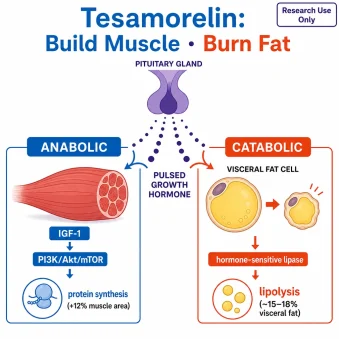
Tesamorelin works by binding to GHRH receptors on the anterior pituitary gland, triggering the natural synthesis and pulsatile release of endogenous growth hormone (GH) into the bloodstream (Dhillon, 2011). This distinguishes it from direct GH injections, which bypass the pituitary entirely and can suppress the body's own hormone production over time. By boosting the pituitary rather than replacing its function, tesamorelin preserves the hypothalamic-pituitary axis and keeps the body's natural feedback mechanisms.
Once growth hormone levels rise, the liver responds by producing more insulin-like growth factor 1 (IGF-1), a key mediator of GH's anabolic and body effects on proteins and lipids. The mix of elevated GH and IGF-1 drives two main processes relevant to body makeup. First, lipolysis increases — very in visceral adipose tissue, the metabolically active fat surrounding internal organs in the abdomen.
Growth hormone has specific lipolytic properties that target visceral fat cells, promoting the breakdown of stored triglycerides (Benedini et al., 2008). Second, anabolic processes like protein synthesis accelerate, which may support lean muscle maintenance and growth.
Importantly, tesamorelin does not greatly affect under-skin fat — the subcutaneous fat layer just beneath the skin, unlike some targeted belly fat injections. Its effects concentrate on the deeper visceral fat deposits linked with elevated heart risk, reduced insulin sensitivity, and body syndrome.
Is Tesamorelin FDA Approved?
Yes. The U.S. Food and Drug Use approved tesamorelin (brand name Egrifta) in November 2010 for the reduction of excess abdominal fat in HIV-infected adults with lipodystrophy (FDA, 2010). The approval was based on two large Phase 3 randomized controlled trials — LIPO-010 (N=412) and CTR-1011 (N=404) — which showed statistically major reductions in visceral adipose tissue compared to placebo at 26 weeks (Falutz et al., 2007; Falutz et al., 2010).
Egrifta SV, the current form, got approval in October 2019. A newer form called Egrifta WR has also been approved. These two forms are not interchangeable because they differ in preparation and storage requirements. Note that tesamorelin is FDA-approved mainly for HIV-linked lipodystrophy and is not approved for general weight loss.
Off-label prescriptions from compounding pharmacies and telehealth clinics operate outside this specific FDA indication.
What Off-Label Uses Are Being Studied?
While the FDA sign is limited to HIV lipodystrophy, researchers and clinicians have been studying tesamorelin's possible benefits across several areas. A 2014 study published in JAMA found that tesamorelin reduced hepatic (liver) fat by a relative 40% compared to a 27% increase in the placebo group among HIV-positive adults with abdominal fat buildup (Stanley et al., 2014). This finding has sparked interest in tesamorelin as a possible intervention for non-alcoholic fatty liver disease in broader populations, though this use remains investigational.
More research has explored tesamorelin's effects on body makeup beyond visceral fat. A second test of the pivotal Phase 3 trials found that tesamorelin responders experienced major increases in trunk skeletal muscle density and lean muscle area over 26 weeks, suggesting gains in muscle quality alongside fat reduction (Adrian et al., 2019).
Ongoing clinical trials are studying tesamorelin's possible effects on cognition, liver swelling, and diabetic retinopathy in people living with HIV, with results expected to further define the peptide's treatment possible.
Claims made for off-label use, such as better energy, sleep quality or skin elasticity, have no Phase 3 evidence behind them; the trial evidence concerns visceral fat in HIV-associated lipodystrophy.
How Much Does Tesamorelin Cost in 2026?
Tesamorelin cost varies dramatically depending on whether you are buying brand-name Egrifta SV, compounded tesamorelin through a telehealth clinic, or research-grade peptides.
What Is the Average Tesamorelin Cost Per Month?
The average tesamorelin cost per month falls between $150 and $300 when got through a licensed compounding pharmacy, which represents the most common access pathway for off-label use in 2026. Brand-name Egrifta SV is greatly more expensive at about $3,085 per 30-day supply — translating to more than $37,000 annually — and is often reserved for FDA-approved use in HIV-linked lipodystrophy with insurance coverage or manufacturer help programs.
Here is a breakdown of current tesamorelin price tiers across the three main access pathways:
| Access Tier | Monthly Cost | Annual Cost | Typical Use Case |
|---|---|---|---|
| Egrifta SV (Brand) | $3,085+ | $37,000+ | HIV lipodystrophy with insurance/copay assistance |
| Compounded Telehealth | $150–$300 | $1,800–$3,600 | Off-label prescriptions |
| Research-Grade Peptides | $36–$79/vial | Not applicable | Laboratory research only (not for human use) |
The Egrifta cost at retail pharmacy prices can be prohibitive without insurance. However, Theratechnologies offers the Thera Patient Support program (1-833-238-4372), which may reduce out-of-pocket costs to as little as $0 to $50 per month for commercially insured patients who qualify. Specialty pharmacies that distribute Egrifta can also help patients navigate prior authorization requirements.
What Factors Affect Tesamorelin Pricing?
Several variables influence the final tesamorelin price you will pay. The source of your prescription matters most: brand-name pharmaceutical products carry the highest cost due to research and growth recoupment, control compliance, and distribution through specialty pharmacy networks. Compounding pharmacies can produce tesamorelin at greatly lower cost because they prepare custom forms based on personal prescriptions, avoiding the overhead linked with commercial drug manufacturing and marketing.
Prescription details also affect cost, since compounding pharmacies prepare tesamorelin to a prescriber's specification. Geographic location plays a role as well: telehealth peptide clinics based in different states may charge varying consultation fees, and compounding pharmacy prices differ by region.
Is Tesamorelin Covered by Insurance?
Insurance coverage for tesamorelin remains limited and situation-dependent. Most commercial insurance plans will consider coverage for brand-name Egrifta SV only when prescribed for its FDA-approved sign — HIV-linked lipodystrophy — and almost always need prior authorization. The prescribing physician often must document the patient's HIV diagnosis, evidence of excess abdominal fat buildup, and failure of other interventions before the insurer will approve coverage.
For off-label use in non-HIV patients seeking fat loss or body makeup gains, insurance coverage is exceptionally rare. These patients often pay out of pocket through telehealth clinics and compounding pharmacies. Medicare and Medicaid coverage varies by state but follows similar patterns, mainly covering the FDA-approved sign with records requirements.
Patients prescribed Egrifta SV for its approved use should contact the Thera Patient Support program and their specialty pharmacy to explore copay help cards, manufacturer rebates, and patient help programs that can largely reduce monthly costs. Some patients have successfully reduced their monthly out-of-pocket expense from thousands of dollars to under $50 through these programs.
Formulations, Storage and Trial Duration
The approved product and the clinical trials are described here by formulation and design. The Egrifta SV prescribing information sets out the approved regimen, which is not reproduced in this article.
What Formulations Exist?
Each Egrifta SV vial contains 2 mg of freeze-dried tesamorelin powder, supplied with Sterile Water for Injection in the kit (FDA Prescribing Data, 2025). Compounding pharmacies prepare tesamorelin to a prescriber's specification, and no controlled trial has tested compounded preparations. Research-grade tesamorelin is a lyophilised powder sold for laboratory research only.
Did the Trials Include Women?
The pivotal clinical trials included both male and female participants, though the study populations were predominantly male (about 87% in the pooled test) due to the demographics of HIV-linked lipodystrophy (Adrian et al., 2019). Tesamorelin is classified as Pregnancy Category X: it is contraindicated in pregnancy because of possible harm to the fetus and its tendency to cause glucose intolerance (Patel et al., 2011).
How Is Tesamorelin Stored?
Freeze-dried tesamorelin powder should be stored in the refrigerator at 36°F to 46°F (2°C to 8°C) and should never be frozen. For laboratory work, a lyophilised peptide is dissolved in a suitable diluent; the resulting solution should be clear and colorless with no visible particles, and a cloudy or discolored solution should be discarded (MedlinePlus, 2025). Once dissolved, the solution should also be refrigerated. Keep all vials away from direct light and heat.
How Long Did the Trials Run?
In the pivotal clinical trials, participants got tesamorelin for 26 weeks (about 6 months) during the main effect phase, with some continuing into a 52-week safety extension (Falutz et al., 2008).
One important finding from the clinical trials is that the effect of tesamorelin was not permanent. Upon discontinuation, visceral adipose tissue tended to reaccumulate, often returning to pre-treatment levels within months (Falutz et al., 2010).
Tesamorelin vs Sermorelin vs Ipamorelin: How They Compare
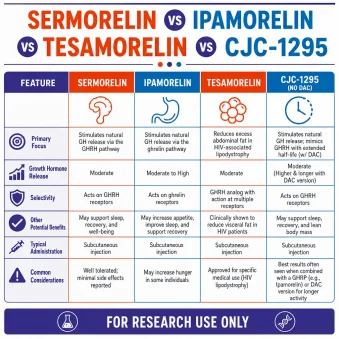
Choosing between tesamorelin, sermorelin, and ipamorelin — the three most popular growth hormone-boosting peptides — needs grasp their distinct mechanisms, evidence bases, and practical factors. They differ in mechanism, evidence base and regulatory status.
How Do These Three Peptides Compare?
The following comparison table provides a side-by-side overview of tesamorelin vs sermorelin vs ipamorelin across the factors that matter most:
| Feature | Tesamorelin | Sermorelin | Ipamorelin |
|---|---|---|---|
| Peptide Class | GHRH analog | GHRH analog | GH Secretagogue (ghrelin receptor agonist) |
| Amino Acids | 44 + hexenoic acid | 29 | 5 |
| Mechanism | Stimulates GHRH receptors on pituitary | Stimulates GHRH receptors on pituitary | Activates ghrelin (GHS) receptors |
| Half-Life | 26–38 minutes | 10–20 minutes | ~2 hours |
| FDA Status (2026) | Approved (Egrifta, 2010) | Discontinued (Geref, 2008) | Not approved |
| GH Release Pattern | Strong, sustained pulsatile | Moderate, natural pulsatile | Fast, selective burst |
| Main Research Focus | Visceral fat in HIV lipodystrophy | Pituitary function testing (discontinued) | Selective GH release |
| Clinical Evidence | Strong (Phase 3 RCTs, N=800+) | Moderate (earlier trials) | Limited (preclinical + small studies) |
| Side Effect Profile | Moderate (edema, joint pain, ISR) | Mild (headache, flushing, ISR) | Mild (nausea, headache, ISR) |
| Monthly Cost (Compounded) | $150–$300 | $100–$300 | $100–$250 |
How Do Potency and Targeted Effects Compare?
Tesamorelin is the most potent of the three peptides for visceral fat reduction, backed by the strongest clinical evidence base. Its modified 44-amino-acid structure makes it more resistant to enzymatic breakdown than sermorelin's shorter 29-amino-acid chain, resulting in a longer tesamorelin half life (26–38 minutes vs 10–20 minutes) and stronger growth hormone release per dose (Ferdinandi et al., 2007).
The Phase 3 clinical trials showed a consistent 12% to 20% reduction in visceral adipose tissue at 26 weeks, a level of evidence that neither sermorelin nor ipamorelin can match.
Sermorelin, while operating through the same GHRH receptor pathway as tesamorelin, produces a more moderate and gradual growth hormone response. It was before FDA-approved as Geref Diagnostic for assessing pituitary function in children with growth hormone deficiency, but the manufacturer discontinued it in 2008 for commercial reasons — not safety concerns (Prakash & Goa, 1999).
Ipamorelin operates through an entirely different pathway by starting ghrelin receptors (GHS-R) rather than GHRH receptors. This results in a rapid, selective burst of growth hormone release without greatly affecting cortisol, prolactin, or other pituitary hormones (Raun et al., 1998). Ipamorelin vs tesamorelin comparisons show that ipamorelin's longer half-life of about two hours provides a more sustained GH rise per dose.
Tesamorelin and ipamorelin are sometimes combined because they act through two separate receptors, the GHRH receptor and the ghrelin receptor. No Phase 3 trial has tested the combination.
How Do Side Effect Profiles Compare?
In clinical studies all three peptides were generally well tolerated, but their side effect profiles differ in important ways. Tesamorelin side effects are the most documented due to its extensive clinical trial program. The most common reactions include pain in the arms and legs, muscle pain (myalgia), joint pain (arthralgia), peripheral edema (swelling of the hands, feet, and ankles), and administration-site reactions such as redness, itching, and bruising (FDA Prescribing Data, 2025).
Serious but less common concerns include elevated IGF-1 levels needing blood tracking, fluid retention (or water retention) that can manifest as carpal tunnel syndrome, increased blood glucose levels or HbA1c, and a theoretical increased risk of cancer reactivation in HIV-positive patients.
Sermorelin's side effect profile is often milder, with the most often reported reactions being administration-site irritation, headaches, dizziness, flushing, and occasional changes in blood sugar. Allergic reactions are rare but possible.
Ipamorelin often produces the mildest side effects of the three, which is consistent with its highly selective receptor binding that avoids boosting cortisol or prolactin pathways. Reported side effects include mild nausea, transient headache, fatigue, and administration-site discomfort.
What the Tesamorelin Trials Found
The data on tesamorelin come mainly from controlled trials that measured changes over 26 weeks.
What Do Clinical Studies Show?
The strongest evidence for tesamorelin's effect comes from the pooled test of the two pivotal Phase 3 trials, which enrolled a combined 816 HIV-positive adults with excess abdominal fat (Falutz et al., JCEM 2010). Participants randomized to tesamorelin experienced a mean visceral adipose tissue reduction of about 15% compared to placebo at 26 weeks, with personal responders achieving reductions of 12% to 20% or more. About 70% of tesamorelin-treated patients met the clinically meaningful threshold of at least 8% VAT reduction and were classified as "responders."
Beyond visceral fat, the clinical data reveals several more body makeup changes. A 2019 second test found that tesamorelin responders experienced statistically major increases in trunk skeletal muscle density across all four major muscle groups, as well as increases in lean muscle mass (Adrian et al., 2019). These gains in muscle quality occurred alongside the fat reduction, suggesting tesamorelin's effects on body makeup are multifaceted rather than limited to tesamorelin fat loss alone.
The JAMA-published study by Stanley and colleagues (2014) showed that tesamorelin reduced hepatic fat by a relative 40% in treated patients compared to a 27% increase in the placebo group. Tesamorelin also improved triglyceride-to-HDL cholesterol ratios and other heart risk markers in several analyses, though these body endpoints were second outcomes.
Over What Time Frame Were Changes Measured?
The Phase 3 trials measured their main endpoint at 26 weeks, and peak visceral fat reduction was reported around that time. Growth hormone and IGF-1 levels rose before changes in body composition were measured. Tesamorelin acts mainly on visceral fat rather than on overall body weight.
What Are the Known Tesamorelin Side Effects?
The tesamorelin side effects documented in clinical trials and post-marketing surveillance include both common and serious adverse reactions.
The most often reported adverse effects from the Phase 3 trials include administration-site reactions (redness, itching, pain, swelling, and bruising), pain in the arms and legs, muscle pain, joint pain, and peripheral edema manifesting as swelling in the hands, feet, ankles, or lower legs. Tingling or numbness in the hands and wrists — possibly showing fluid retention affecting the carpal tunnel — has also been reported. Gut symptoms like nausea, vomiting, and heartburn occur in some patients, along with night sweats (FDA Prescribing Data, 2025; MedlinePlus, 2025).
Serious side effects that need medical attention include signs of severe allergic reaction (widespread rash, hives, facial or throat swelling, difficulty breathing, rapid heartbeat, or fainting), major fluid retention, and persistent rise in blood glucose levels. Tesamorelin raises IGF-1 levels, and elevated IGF-1 needs blood tracking. Elevated IGF-1 is linked with theoretical concerns about cancer risk, and the prescribing data includes a warning about possible new cancer growth or reactivation in HIV-positive patients.
The long-term heart safety of tesamorelin has not been fully set up, which is noted in the FDA prescribing data. Growth hormone rise in critically ill patients (those recovering from major surgery, serious trauma, or respiratory failure) has been linked with increased mortality.
How Tesamorelin Is Supplied in 2026
Tesamorelin reaches the market through three channels with different legal status: the approved product, compounded preparations and research-grade material.
Do You Need a Prescription for Tesamorelin?
Yes. Tesamorelin prescription requirements apply in the United States. Brand-name Egrifta SV and Egrifta WR are distributed exclusively through specialty pharmacies and need a valid prescription from a licensed healthcare provider. For the FDA-approved sign of HIV-linked lipodystrophy, the prescribing physician must often document the diagnosis and treatment rationale for insurance prior authorization.
For off-label use, compounded tesamorelin also needs a prescription. Telehealth clinics prescribe it off-label, with consultation fees often ranging from $50 to $200 on top of $150 to $300 per month for the compounded product.
Research-grade tesamorelin is sold for laboratory research only and is not intended for human use. It is not made to pharmaceutical manufacturing standards, so its identity and purity rest on the supplier's testing.
What Should a Certificate of Analysis Show?
For research-grade material, check that the certificate of analysis matches the lot number on the vial and can be verified, and that it reports identity by mass spectrometry and purity by HPLC, the usual quality control methods. PrymaLab tests every lot in its own laboratory (RP-HPLC purity, LC-MS identity), and its certificates can be checked at https://prymalab.net/testing/verify/. Its third-party testing guarantee refunds the order and reimburses the test if any independent laboratory finds the wrong compound or less than the stated purity or amount.
Red flags include a supplier that cannot provide a certificate, a certificate with no lot number, and marketing language that promises guaranteed or rapid results.
What Are the Risks of Unverified Material?
Without pharmaceutical manufacturing controls, research peptides may contain impurities, breakdown products, incorrect amounts, or even entirely different compounds than what is listed on the label. Studies analyzing peptides bought from online research vendors have found major variability in purity and potency, with some products containing less than half of the stated peptide content. Research-grade tesamorelin is not for human use.
Frequently Asked Questions
How much does tesamorelin cost per month?
Tesamorelin cost per month ranges from $150 to $300 through compounding pharmacies with a valid prescription, which is the most common access pathway for off-label use. Brand-name Egrifta SV costs about $3,085 per 30-day supply at retail, though copay help programs can reduce this to $0 to $50 for eligible patients with commercial insurance covering the HIV lipodystrophy sign.
What did the Phase 3 trials measure?
Visceral adipose tissue at 26 weeks in HIV-positive adults with excess abdominal fat. In the pooled analysis, visceral fat fell by about 15% relative to placebo, with responders reaching reductions of 12% to 20% or more. The prescribing information sets out the approved regimen; it is not reproduced here.
How does tesamorelin compare to sermorelin?
Tesamorelin is more potent than sermorelin for visceral fat reduction due to its longer half-life (26–38 minutes vs 10–20 minutes) and greater resistance to enzymatic breakdown. Tesamorelin is FDA-approved and supported by large Phase 3 trials, while sermorelin was discontinued commercially in 2008. Both are GHRH analogs, but tesamorelin contains 44 amino acids versus sermorelin's 29, and monthly costs are comparable at $150 to $300 compounded.
What are the side effects of tesamorelin?
The most common tesamorelin side effects include administration-site reactions (redness, itching, pain), pain in the arms and legs, muscle and joint pain, and peripheral edema (swelling in hands, feet, ankles). Serious but less common side effects include elevated IGF-1 levels needing tracking, increased blood glucose, fluid retention causing carpal tunnel symptoms, and allergic reactions. Long-term heart safety has not been fully set up.
Is tesamorelin FDA approved?
Yes. Tesamorelin got FDA approval in November 2010 under the brand name Egrifta for reducing excess abdominal fat in HIV-infected adults with lipodystrophy. The current Egrifta SV form was approved in October 2019, and a newer Egrifta WR form is also available. The FDA approval is mainly for HIV-linked lipodystrophy, not general weight loss.
How is tesamorelin sold?
The approved product, Egrifta SV, is a prescription drug distributed through specialty pharmacies. Compounded tesamorelin also needs a prescription, often through telehealth clinics. Research-grade tesamorelin is sold for laboratory research only; check that its certificate of analysis matches the lot number on the vial and can be verified.
Over what time frame did the trials measure changes?
The Phase 3 clinical trials measured main outcomes at 26 weeks (about 6 months), when visceral adipose tissue had fallen by 12% to 20% in responders.
Has tesamorelin been studied with ipamorelin?
No Phase 3 trial has tested the combination. The two act through separate receptors, tesamorelin at the GHRH receptor and ipamorelin at the ghrelin (GHS) receptor, which is the rationale offered for combining them; growth hormone release through each pathway has been studied separately.
Does tesamorelin need to be refrigerated?
Yes. Freeze-dried tesamorelin powder must be stored in the refrigerator at 36°F to 46°F (2°C to 8°C) and should never be frozen. Once dissolved, the solution should also be refrigerated. Keep all vials protected from direct light and heat.
What is the tesamorelin half-life?
Tesamorelin has an elimination half-life of 26 to 38 minutes, with a reported bioavailability of about 4% or less. By comparison, sermorelin has a shorter half-life of 10 to 20 minutes, while ipamorelin's half-life is about 2 hours, allowing for more sustained growth hormone rise per dose.
Key Takeaways
- Tesamorelin cost ranges from $150 to $300 per month through compounding pharmacies — significantly less than brand-name Egrifta SV at $3,085+/month
- Clinical trials showed 12% to 20% visceral fat reduction at 26 weeks in responders
- Tesamorelin is the only FDA-approved peptide for visceral fat reduction, backed by Phase 3 RCTs enrolling 800+ participants
- Compared to sermorelin and ipamorelin, tesamorelin has the strongest clinical evidence for visceral fat reduction, with a moderate side effect profile
- The Phase 3 trials measured peak visceral fat reduction at around 26 weeks
- Research-grade tesamorelin is for laboratory research only; check that its certificate matches the lot number on the vial and can be verified
- Tesamorelin raises IGF-1, and elevated IGF-1 and blood glucose were among the safety concerns reported
- Ready to Learn More About Peptide Therapy?
- Explore our library of evidence-based peptide guides and research reviews.
Ready to Learn More About Peptide Therapy?
Explore our library of evidence-based peptide guides and research reviews.
Browse All ArticlesReferences
- Falutz J, Allas S, Blot K, et al. Metabolic effects of a growth hormone-releasing factor in patients with HIV. N Engl J Med. 2007;357:2359-2370. doi:10.1056/NEJMoa072375
- Falutz J, Allas S, Mamputu JC, et al. Long-term safety and effects of tesamorelin in HIV patients with abdominal fat accumulation. AIDS. 2008;22:1719-1728. doi:10.1097/QAD.0b013e32830a5058
- Falutz J, Potvin D, Mamputu JC, et al. Effects of tesamorelin in HIV-infected patients with abdominal fat accumulation: a randomized placebo-controlled trial. J Acquir Immune Defic Syndr. 2010;53:311-322. doi:10.1097/QAI.0b013e3181cbdaff
- Falutz J, Mamputu JC, Potvin D, et al. Effects of tesamorelin (TH9507): pooled analysis of two phase 3 trials. J Clin Endocrinol Metab. 2010;95:4291-4304. doi:10.1210/jc.2010-0490
- Stanley TL, Feldpausch MN, Oh J, et al. Effect of tesamorelin on visceral fat and liver fat in HIV-infected patients. JAMA. 2014;312:380-389. doi:10.1001/jama.2014.8334
- Adrian S, Scherzinger A, Sanyal A, et al. Tesamorelin decreases muscle fat and increases muscle area in adults with HIV. J Frailty Aging. 2019;8(3):154-159. doi:10.14283/jfa.2018.45
- Dhillon S. Tesamorelin: a review of its use in HIV-associated lipodystrophy. Drugs. 2011;71(8):1071-1091. doi:10.2165/11202240-000000000-00000
- Spooner LM, Olin JL. Tesamorelin: a GHRF analogue for HIV-associated lipodystrophy. Ann Pharmacother. 2012;46:240-247. doi:10.1345/aph.1Q629
- Ferdinandi ES, Brazeau P, High K, et al. Non-clinical pharmacology and safety evaluation of TH9507. Basic Clin Pharmacol Toxicol. 2007;100(1):49-58. doi:10.1111/j.1742-7843.2007.00008.x
- Benedini S, Terruzzi I, Lazzarin A, Luzi L. Recombinant human growth hormone: rationale for use in HIV-associated lipodystrophy. BioDrugs. 2008;22(2):101-112. doi:10.2165/00063030-200822020-00003
- Prakash A, Goa KL. Sermorelin: a review of its use in the diagnosis and treatment of children with idiopathic GH deficiency. BioDrugs. 1999;12(2):139-157. doi:10.2165/00063030-199912020-00007
- Raun K, Hansen BS, Johansen NL, et al. Ipamorelin, the first selective growth hormone secretagogue. Eur J Endocrinol. 1998;139:552-561. doi:10.1530/eje.0.1390552
- Sigalos JT, Pastuszak AW. The safety and efficacy of growth hormone secretagogues. Sex Med Rev. 2018;6(1):45-53. doi:10.1016/j.sxmr.2017.02.004
- Sinha DK, et al. Beyond the androgen receptor: GH secretagogues in body composition management. Transl Androl Urol. 2020;9(S2):S149-S159. doi:10.21037/tau.2019.11.30
- Patel A, Gandhi H, Upaganlawar A. Tesamorelin: a hope for ART-induced lipodystrophy. J Pharm Bioallied Sci. 2011;3(2):319-320. doi:10.4103/0975-7406.80763
- Egrifta SV Full Prescribing Information. U.S. Food and Drug Administration. Revised 2025. accessdata.fda.gov
- Tesamorelin Injection. MedlinePlus Drug Information. U.S. National Library of Medicine. Revised July 2025. medlineplus.gov
Medical Disclaimer
This article is provided for informational and educational purposes only and does not constitute medical advice. The data contained herein is not intended to diagnose, treat, cure, or prevent any disease or health condition. Tesamorelin and related compounds are prescription drugs or research chemicals subject to applicable laws and regulations. Research-grade peptides sold by PrymaLab are for laboratory research use only and are not for human consumption.
Formats stocked for the compounds in this article
Tesamorelin: Tesamorelin 10mg and Tesamorelin 10mg preloaded 3ml pen. Every listing is supplied for laboratory research use with a batch certificate of analysis.