Ipamorelin: mechanism, research findings and safety
Ipamorelin: what the literature supports
Ipamorelin’s human data come from pharmacology studies of single doses given by weight and from clinical trials run by a drug company for post-operative bowel recovery, both under medical supervision. The figures found on clinic sites are not from those studies; they are practitioner protocols, and this page does not repeat them. The receptor pharmacology and the published numbers are covered in the CJC-1295 and ipamorelin guide. PrymaLab supplies ipamorelin for laboratory research only.
Overview
This guide explains how Ipamorelin acts on the pituitary gland to release growth hormone, what the published studies measured, and what is known about its selectivity for growth hormone over cortisol and prolactin. No human dose has been established, and the figures quoted on clinic sites are practitioner protocols rather than study results. Safety, side effects, legal status and sourcing are covered at the end.What Is Ipamorelin? An Overview
Ipamorelin is a synthetic peptide that belongs to the growth hormone-releasing peptide (GHRP) family. It specifically triggers the pituitary gland to release a natural GH pulse. This peptide is distinct in how it stimulates growth hormone without significantly affecting cortisol levels, which is the selectivity it was designed for. Ipamorelin is appreciated for its targeted mechanism of action. Unlike some other peptides like GHRP-2 or GHRP-6, it has a refined and selective approach. This reduces the risk of unwanted side effects. There are several key features of Ipamorelin:- Growth Hormone Release: Acts on the pituitary gland.
- Minimal Side Effects: Low impact on cortisol and prolactin.
- Selectivity: Designed against cortisol and prolactin release.
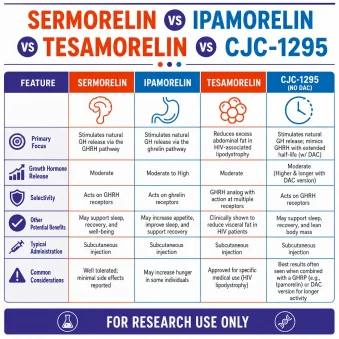
 Research interest in the peptide’s effect on muscle growth comes from the growth hormone pulse it produces. It is often discussed alongside sermorelin, which acts on the GHRH receptor instead.
How Ipamorelin Works in the Body
Ipamorelin mimics ghrelin, which is a natural hormone, to stimulate the pituitary gland, which releases growth hormone; the protein synthesis and tissue effects studied downstream follow from that and from the rise in growth hormone and IGF-1. The reported selectivity is for growth hormone release over other pituitary hormones, which is what distinguishes it within its class. Once Ipamorelin enters the system, it binds to ghrelin receptors. This stimulates a cascade of hormonal activities that enhance growth hormone levels. The peptide’s effect on growth hormone is rapid in the published pharmacology, and muscle and fat endpoints have not been measured in a controlled human trial. Here’s a brief outline of Ipamorelin’s action:- Receptor Binding: Mimics ghrelin to bind receptors.
- Growth Hormone Release: Raises measured growth hormone.
- Selective Action: Limits extra hormonal fluctuations.
What the ipamorelin research reports
Ipamorelin is studied for growth hormone release through the ghrelin receptor. What the published pharmacology reports is a growth hormone pulse with little effect on cortisol and prolactin, which is the selectivity the compound was designed for. The claims made for it on clinic and vendor pages, including fat loss, faster healing, skin rejuvenation and better sleep, do not come from controlled human trials of ipamorelin. What the literature supports:- Growth hormone release after administration
- Little change in cortisol and prolactin
- No controlled human trial of body composition endpoints

CJC 1295 and ipamorelin: why they are discussed together
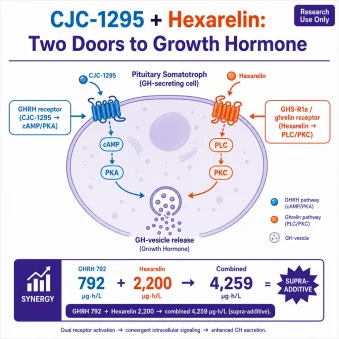
Pairing CJC 1295 with Ipamorelin is discussed because the two act on different receptors. CJC 1295 is a growth hormone-releasing hormone (GHRH) analog, while ipamorelin acts on the ghrelin receptor. No human trial has tested the pair for the outcomes claimed for it on clinic sites, and no human dose has been established for either compound. The receptor pharmacology and the published figures are set out in the CJC-1295 and ipamorelin guide, and the general evidence question for research peptides is covered in our note on long-term safety data.
Handling in the lab
Research-grade ipamorelin is supplied as a lyophilized powder. In the laboratory it is dissolved in a suitable diluent, and the concentration of the solution is the mass of peptide divided by the volume added. The vial is swirled rather than shaken, because shaking can damage the peptide structure.- Form: lyophilized powder in a sealed vial
- Dissolving: a suitable diluent, swirled until clear
- Concentration: mass of peptide divided by volume of diluent
- Storage: powder cold and out of the light; solutions refrigerated
Safety and reported side effects
Human safety data for ipamorelin are limited to the pharmacology studies and company trials described above, both run under medical supervision. The effects reported in that setting were mild, and headache and dizziness are the ones most often mentioned.- Reported effects: headache, dizziness, local reactions
- Long-term data: none published
- Approval status: not approved for human use in any jurisdiction
Where the safety data run out
There are no safety data for Ipamorelin in pregnancy, in nursing, in children or in people with existing health conditions, and no controlled long-term study in any population. Interactions have not been characterised either, including with other research peptides such as BPC-157.- No data: pregnancy, nursing, children
- No data: long-term administration in any group
- No data: interactions with other peptides
Record keeping and sourcing
For laboratory work, the useful practices are documentary rather than promotional: record the lot number, the diluent and the concentration alongside every result, and keep material from a supplier that issues a certificate for the lot in hand. Counterfeit and mislabelled material is the main practical risk in this market, which is what a lot-matched certificate addresses.- Records: lot number, diluent, concentration
- Sourcing: suppliers who issue a certificate for the lot
- Verification: certificate matches the vial and can be checked
Legal Status, Sourcing, and Quality Considerations
Ipamorelin is not FDA-approved for medical use, and its legal status varies by jurisdiction. It is sold as a research chemical, and PrymaLab supplies it for laboratory research use only. Low-quality and counterfeit material is the practical risk when sourcing research peptides. Material from suppliers that issue a certificate for the lot in hand reduces that risk. Key Sourcing Tips:- Legal status varies by jurisdiction
- Select reputable and well-reviewed suppliers
- Verify product quality and authenticity
Conclusion: what the record shows
Ipamorelin has a clear receptor mechanism and a thin human record: pharmacology studies, company trials that did not lead to approval, and no long-term data. The gap between that record and the claims made for the compound is the main thing to take from this guide, and the same question for related peptides is covered in our other research references.About the Author
 Name: Michael Phelps
Title: Marketing Director & Biochemistry Specialist at Prymalab
Michael is an Air Force veteran and the Marketing Director at Prymalab. With a specialized background in biochemistry and over 10 years in the biotech industry, he applies military-grade precision to research standards and quality control. Michael is dedicated to bridging the gap between complex scientific studies and practical application, providing accurate, science-backed information on peptide research, including work on Ipamorelin.
Frequently Asked Questions
What did the ipamorelin studies measure?
The human data come from pharmacology studies of single administrations given by body weight and from company trials in post-operative bowel recovery, which measured growth hormone release and recovery endpoints under medical supervision. No human dose has been established, and the schedules quoted on clinic sites are practitioner protocols rather than study results. The detail is in our peptides for injury recovery overview and the CJC-1295 guide linked above.What does this guide cover?
It covers the receptor pharmacology, what the published studies measured, the reported side effects, the legal status and the limits of the evidence for ipamorelin.What is known about ipamorelin safety?
The published human record is limited to the pharmacology studies and company trials described above. This guide sets out the side effects reported there, the absence of long-term data, and the fact that the compound is not approved for human use.Who is this guide written for?
It is written for readers researching peptide mechanisms, published findings, reported side effects and evidence quality.Formats stocked for the compounds in this article
Ipamorelin: Ipamorelin 5mg and Ipamorelin 10mg Nasal Spray. CJC-1295 (No DAC) + Ipamorelin: CJC-1295 (No DAC) + Ipamorelin 15mg preloaded 3ml pen. Every listing is supplied for laboratory research use with a batch certificate of analysis.