Description
What Is Chonluten Peptide?
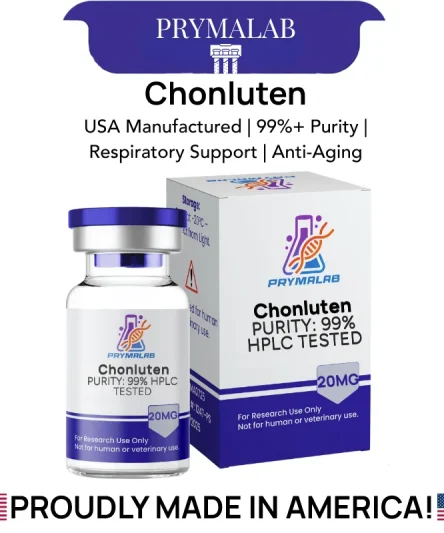
Chonluten peptide is a synthetic tripeptide bioregulator with the amino acid sequence Glu-Asp-Gly (EDG), incorporating glutamyl-aspartyl-glycine, developed by Professor Vladimir Khavinson and the St. Petersburg Institute of Bioregulation and Gerontology as part of the Khavinson bioregulator peptide program. Chonluten belongs to the class of short control peptides known as bioregulator peptides — a group of Khavinson peptides and short peptide bioregulators that are low-cell-level-weight compounds showing tissue-specific gene expression tuning at natural levels. Chonluten’s target tissue is the bronchopulmonary system, where it has been studied for its capacity to restore normal gene expression patterns in the extracellular matrix, respiratory epithelial cells, and bronchial tissue in lab and clinical gerontology research models.
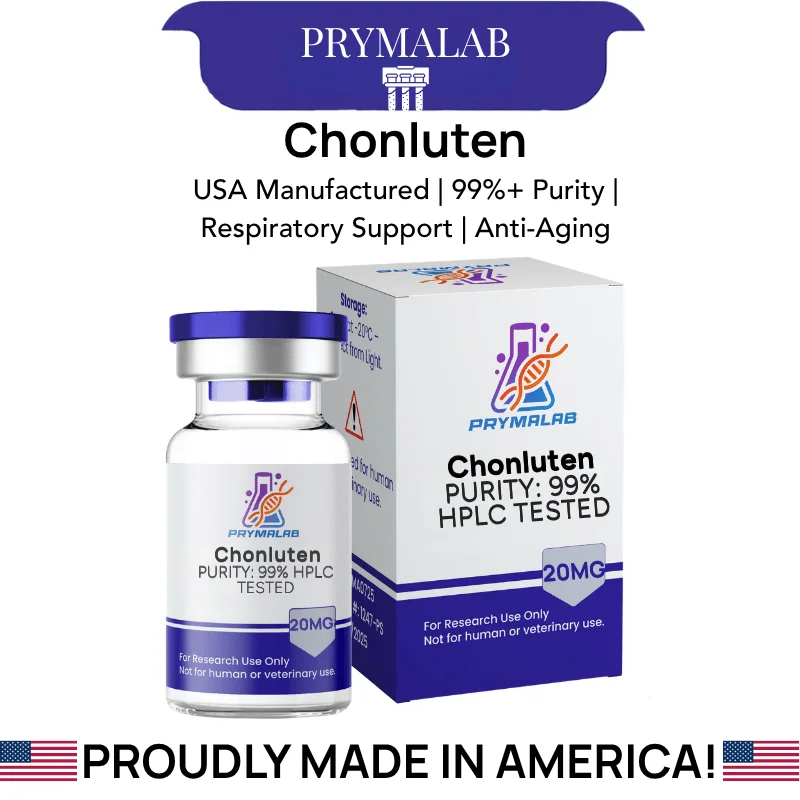
Unlike conventional pharmaceutical compounds that act through receptor agonism or enzyme blocking, Khavinson bioregulator peptides such as chonluten operate through direct interaction with specific DNA sequences in the promoter regions of target genes. This epigenetic mechanism of action — tuning transcription and potentially influencing DNA methylation rather than blocking or starting receptors — represents a fundamentally different approach to tissue function restoration that has been the subject of over four decades of research at the St. Petersburg Institute. PrymaLab Chonluten 20mg is manufactured to high purity standards and supplied exclusively for qualified lab research uses, maintaining the quality expected of premium research peptides.
Chonluten 20mg: Key Specifications
| Specification |
Detail |
| Compound |
Chonluten (EDG tripeptide bioregulator, also known as glutamyl-aspartyl-glycine or T-34 tripeptide) |
| Sequence |
Glu-Asp-Gly (EDG) |
| Quantity |
20mg |
| Target Tissue |
Bronchopulmonary system (bronchi, lungs, respiratory epithelium) |
| Class |
Khavinson bioregulator peptide (short control peptide) |
| Purity |
≥98% (HPLC-verified per batch) |
| Testing |
HPLC, mass spectrometry, identity check |
| Form (lyophilized powder) |
Freeze-dried powder |
| Storage |
Store at −20°C desiccated; protect from light |
| Intended Use |
Lab research only — not for human or veterinary treatment use |
How Chonluten Works: Bioregulator Mechanism of Action
Chonluten operates through the Khavinson model of peptide bioregulation, in which short peptides (2–4 amino acids) interact with specific paired DNA sequences and histone proteins in gene promoter regions, tuning the transcription of genes key to tissue-specific function. This mechanism was first proposed by Khavinson and Anisimov in the early 2000s and has since been supported by cell-level biology studies showing direct peptide-DNA binding and interactions with histone proteins in cell-free and in vitro systems.
Epigenetic Gene Expression Modulation
Research published by the St. Petersburg Institute shows that chonluten selectively tunes the expression of genes, such as c-fos, STAT1, MAPK, and HSP70 (heat shock protein 70), involved in bronchopulmonary tissue homeostasis.
Respiratory Tissue Specificity
Among the Khavinson bioregulator peptide family, chonluten shows preferential activity in bronchial and pulmonary lung tissues. Lab studies have examined chonluten’s effects on bronchial epithelial cell gene expression, the health of local endothelial cells, mucin and mucus production control, oxidative stress, anti-swelling cytokine tuning in response to bacterial lipopolysaccharide (LPS), and respiratory epithelial barrier integrity. The tissue specificity of short bioregulator peptides is hypothesized to derive from the paired matching between the peptide’s amino acid sequence and specific DNA motifs enriched in the promoter regions of tissue-specific genes — a selectivity mechanism analogous to transcription factor-DNA recognition but operating through much smaller cell-level entities.
Chonluten Peptide Benefits: What Research Shows
The following research context reflects published lab and clinical gerontology literature from the Khavinson research program. PrymaLab Chonluten 20mg is supplied exclusively for research purposes and is not intended for treatment use.
Bronchopulmonary Function in Aging Models
Chonluten has been studied in gerontological models examining age-related decline in respiratory function and lung capacity. Khavinson’s research group reported that use of chonluten in aged animal models was linked with normalization of bronchial epithelial cell function, improved mucociliary clearance markers, and restoration of respiratory gene expression profiles toward patterns saw in younger animals. These findings position chonluten within the broader bioregulation hypothesis — that short peptides can restore tissue-specific gene expression patterns that deteriorate during natural aging.
Anti-inflammatory Respiratory Effects
Lab studies have examined chonluten’s effects on swelling signaling in bronchial tissue models. Research from the St. Petersburg Institute shows tuning of pro-swelling cytokine expression, including pro-inflammatory cytokines, anti-inflammatory proteins, cyclooxygenase-2 (COX-2) levels, and the activity of antioxidant enzymes like superoxide dismutase (SOD) in respiratory epithelial cells, including effects on monocyte recruitment, macrophage activation, and interleukin-6 (IL-6) and tumor necrosis factor (TNF-α) pathways. These anti-swelling properties, which may involve mechanisms like TNF tolerance and the modulation of inflammatory pathways, are consistent with the broader bioregulator hypothesis that peptide-mediated gene expression normalization reduces the chronic low-grade swelling (inflammaging) linked with tissue aging.
Respiratory Epithelial Barrier Integrity
The integrity of the respiratory epithelial barrier is key to airway and lung defense against pathogens and environmental insults, and declines with natural aging.
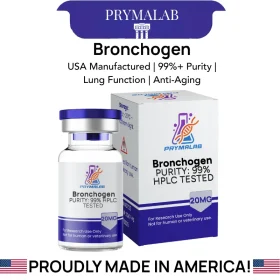
Chonluten vs. Bronchogen: Respiratory Bioregulator Comparison
PrymaLab offers two Khavinson bioregulator peptides targeting the respiratory system. The following table summarizes the key distinctions for researchers selecting between them.
| Feature |
Chonluten (EDG) |
Bronchogen (AED) |
| Sequence |
Glu-Asp-Gly |
Ala-Glu-Asp |
| Main Target |
Bronchopulmonary system broadly |
Bronchial mucosa mainly |
| Research Focus |
Respiratory epithelial gene expression, anti-aging, and asthma models |
Bronchial mucosal repair, COPD models |
| Gene Expression |
Broader respiratory gene profile tuning |
Targeted bronchial mucosal genes |
| Clinical Context |
Gerontological respiratory decline models |
Chronic bronchitis and COPD research models |
| Combined Use |
Studied alongside Bronchogen for full respiratory support |
Studied alongside Chonluten for full respiratory support |
How to Store and Handle PrymaLab Chonluten 20mg
- Store freeze-dried at −20°C. Keep the sealed vial in a dedicated laboratory freezer, desiccated and protected from light. Freeze-dried chonluten peptide is stable for 24+ months under these conditions.
- Allow vial to reach room heat before opening. Removing a cold vial and immediately opening it can introduce condensation moisture that degrades the peptide.
- Reconstitute with appropriate sterile solvent. Use sterile water, sterile saline, or another solvent appropriate for your research protocol. Add solvent slowly along the vial wall to avoid foaming.
- Use mixed solution within 2–4 weeks. Store mixed peptide at 2–8°C. Mark the mixing date on the vial label.
- Avoid repeated freeze-thaw cycles. If the full quantity will not be used in a single session, aliquot the mixed solution into single-use portions before freezing, though the product is not intended for subcutaneous injection in humans.
- Retain the Certificate of Test and Certificate of Analysis. Record the lot number and keep the COA for the duration of your research for traceability and data integrity purposes.
Why Choose PrymaLab Chonluten 20mg?
Frequently Asked Questions About Chonluten Peptide
What is chonluten and what class of compounds does it belong to?
Chonluten is a synthetic tripeptide with the sequence Glu-Asp-Gly (EDG), or H-Glu-Asp-Gly-OH belonging to the Khavinson bioregulator peptide class. Bioregulator peptides are short (2–4 amino acid) compounds developed by Professor Vladimir Khavinson at the St. Petersburg Institute of Bioregulation and Gerontology that show tissue-specific gene expression tuning. Chonluten’s target tissue is the bronchopulmonary system, rather than the gastrointestinal tract, and it has been studied in lab and gerontological research models for over two decades; notably, it is not classified as a dietary supplement.
What are the reported chonluten peptide benefits in research?
Published research from the Khavinson program reports that chonluten peptide benefits include normalization of respiratory gene expression patterns in aged tissue models, tuning of swelling cytokines in bronchial tissue, gain of mucociliary clearance markers, and restoration of respiratory epithelial barrier integrity. All reported benefits are from lab and gerontological research settings and do not represent treatment claims.
How does chonluten differ from bronchogen?
Both chonluten (EDG) and bronchogen (AED), which contains asparagine in its sequence, are Khavinson respiratory bioregulator peptides, but they differ in amino acid sequence and research focus. Chonluten has been studied for broader bronchopulmonary gene expression tuning and anti-aging respiratory effects, while bronchogen targets bronchial mucosal repair and has been studied more mainly in asthma, chronic bronchitis, and COPD research models. Some research protocols use both peptides together for full respiratory tissue support.
How should chonluten 20mg be stored?
Store freeze-dried chonluten at −20°C, desiccated and protected from light, where it is stable for 24+ months. After mixing with sterile solvent, store at 2–8°C and use within 2–4 weeks. Avoid repeated freeze-thaw cycles. Aliquot mixed solution into single-use portions if the full quantity will not be used in one session.
What purity and testing standards does PrymaLab apply?
PrymaLab Chonluten 20mg is verified at ≥98% purity by reverse-phase HPLC and identity-confirmed by mass spectrometry. Each batch ships with a unique lot number and Certificate of Test. All testing is conducted by independent analytical laboratories to ensure unbiased quality check and full supply chain traceability for research records purposes.
Research Disclaimer
For Research Use Only. PrymaLab Chonluten 20mg is intended exclusively for qualified lab research use by trained laboratory professionals. This product is not intended for human consumption, treatment use, veterinary treatment, or any use outside controlled research environments. Chonluten has not been approved by the FDA or any equivalent control authority for treatment use. All research uses described on this page are drawn from published lab and gerontological literature. Researchers are solely responsible for ensuring compliance with all applicable institutional and control requirements.
Only logged in customers who have purchased this product may leave a review.











14 reviews for Chonluten Peptide 20mg