Description
This ARA-290 nasal spray supplies cibinetide, a synthetic 11-amino-acid linear peptide corresponding to a sequence within helix B of erythropoietin, carrying an N-terminal pyroglutamate and weighing about 1257 Da (CAS 1208243-50-8). The design question behind it is the interesting part: erythropoietin has tissue-protective effects that appear separable from its blood-forming effects, and this peptide is an attempt to isolate the first from the second. Whether that separation holds is a receptor question, and that is where this page starts. Supplied for laboratory research use only.
Two receptors, and why the distinction is the whole compound
Erythropoietin signals through a homodimer of the erythropoietin receptor, EPOR paired with itself. That is the complex responsible for driving red blood cell production. Cibinetide is built to avoid it.
The target instead is the innate repair receptor, abbreviated IRR and also described as the tissue-protective receptor, a heterocomplex of the EPO receptor EPOR with the beta-common receptor CD131, also called CSF2RB. Same EPOR subunit, different partner, different downstream consequence. The peptide is reported to bind the heterocomplex selectively while leaving the EPOR homodimer alone, which is the basis for describing it as a non-erythropoietic EPO derivative. The N-terminal pyroglutamate, a cyclized glutamine, is part of what confers that selectivity along with structural rigidity.
For in-vitro work this has a direct consequence that is easy to get wrong. A cell line expressing EPOR alone is not a model for this peptide. CD131 has to be present for the heterocomplex to form, so confirming expression of both subunits in your system is a prerequisite rather than a nicety. A negative result in an EPOR-only line tells you nothing about the compound. That single point separates a well-designed experiment from a wasted one, and it is the reason I would not treat cibinetide and erythropoietin as interchangeable probes in any assay.
Where the receptor idea came from
The separation this peptide depends on was not invented for it. Work by Brines, Cerami and colleagues reported in PNAS in 2004 that erythropoietin mediates tissue protection through a heteroreceptor of the erythropoietin receptor and the common beta subunit, distinct from the receptor driving red cell production. That finding is what made a non-erythropoietic tissue-protective agent conceivable, and the same group named the complex the innate repair receptor.
Independent work continues to test whether the beta-common receptor is genuinely required. A 2024 study reported that ARA290 mediates brain tissue protection through the beta-common receptor in mice with cerebral ischemic stroke, which is the kind of receptor-dependency experiment that makes a selectivity claim testable rather than assumed. Related work in experimental autoimmune neuritis examined inflammation suppression and tissue protection with an EPO-derived non-erythropoietic peptide.
The mechanisms under study
The proposed activity of this small peptide splits into two strands, and they are measured differently.
The first concerns the anti-inflammatory properties attributed to this synthetic peptide. Engaging the tissue-protective receptor is reported to reduce pro-inflammatory cytokines, dampen microglial activation in nervous tissue and macrophage activation elsewhere, and limit the damage that follows ischemia/reperfusion injury. Downstream effects described in the literature include preserved mitochondrial function, reduced fibrosis, and angiogenesis or blood vessel growth in tissue repair contexts, which is why the compound turns up in wound healing and regenerative medicine discussions.
The second concerns nerves directly. Nerve damage of the small unmyelinated variety is what small fiber neuropathy describes, and the interest in nerve regeneration and nerve repair follows from that. There is also work on peripheral nociceptors and on the TRPV1 channel, the receptor that responds to capsaicin and heat and sits at the start of many pain pathways. That connection is why the compound gets described as having analgesic properties in some writing, though calling it an analgesic imports a clinical claim the evidence does not carry. Neuroprotective effects and tissue protection are the umbrella terms most of this work is filed under.
Beyond the two named indications, the receptor logic has been applied across a range of autoimmune conditions and inflammatory disease models. Published or discussed contexts include multiple sclerosis and its animal model experimental autoimmune encephalomyelitis, inflammatory bowel disease and experimental colitis, systemic lupus erythematosus, and diabetic retinopathy. Those are model systems and disease contexts, not demonstrated outcomes for this compound, and none is claimed here.
Where the clinical record stands
Cibinetide reached human trials, and the honest summary is that it has not finished the job. It has been evaluated in Phase 2 studies, including work in sarcoidosis-associated small fiber neuropathy and in diabetic neuropathy, and it holds orphan designation for sarcoidosis-associated small fiber neuropathy. It has not received FDA approval and has not completed Phase 3 registration trials.
The most cited study is a randomized, double-blind pilot in sarcoidosis patients with small fiber neuropathy symptoms, published by Dahan and colleagues and indexed at PMID 23168581. It was small, 36 patients over 28 days, and reported improvements in cold and heat pain thresholds and in thermal sensory limen, with symptoms tracked using a small fiber neuropathy screening list and function assessed by the 6-minute walk test. Sarcoidosis-associated SFN, to use the abbreviation that runs through this literature, remains the indication the compound is furthest along in, and it holds orphan drug designation for it.
A follow-on study reported increased corneal nerve fiber density measured by in vivo confocal microscopy, with corneal nerve fiber area as a related measure. That matters because it is a structural endpoint rather than a symptom score: nerve pain and chronic neuropathic pain are self-reported, and an imaging measure of nerve fibres is not. Separately, a Molecular Medicine study examined metabolic control and neuropathic symptoms in type 2 diabetes, where diabetic neuropathy is the relevant complication and HbA1c and insulin sensitivity are the metabolic health measures reported alongside symptom scores.
One monitoring point follows directly from the receptor argument. Because the whole premise is that this peptide avoids the erythropoietic receptor, studies check that it has not produced hematopoietic effects, and hematocrit on a complete blood count, usually written CBC, is the measurement that tests it. A comprehensive metabolic panel typically runs alongside. If you are evaluating claims about this compound, an unchanged hematocrit is the evidence that the selectivity held.
Read those with the sample sizes in mind. A 36-patient pilot generating several nominally significant endpoints is a reason to run a larger trial, not a result to build conclusions on.
The current activity picture is thin as well. As of 2026 there are no active trials registered on ClinicalTrials.gov for ARA-290 or cibinetide. Orphan designation gets cited on vendor pages as though it were evidence that a compound works. It is a regulatory incentive status for rare-disease development, not a finding. Treat the designation and the Phase 2 data as what they are: reason to keep studying a mechanism, not proof of an effect.
None of that weakens the peptide as a research tool. A selective ligand for a defined receptor heterocomplex is useful precisely because it lets you interrogate that complex, and that value does not depend on a clinical outcome.
ARA-290 nasal spray specifications
Core identity data for this ARA-290 peptide nasal spray. Quote the CAS number and the peptide length in your methods section rather than the product name.
| Compound | ARA-290, generic name cibinetide |
| Class | Synthetic 11-amino-acid linear peptide |
| Derived from | Helix B of erythropoietin |
| N-terminus | Pyroglutamate (cyclized glutamine) |
| Molecular weight | Approximately 1257 Da |
| CAS number | 1208243-50-8 |
| Molecular target | Innate repair receptor: EPOR and CD131 (CSF2RB) heterocomplex |
| Not a target | EPOR homodimer (the erythropoietic receptor) |
| Regulatory status | No FDA approval; orphan designation for sarcoidosis-associated small fiber neuropathy |
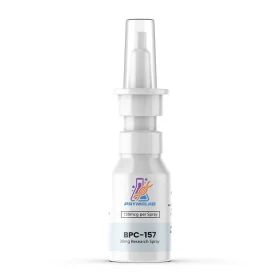
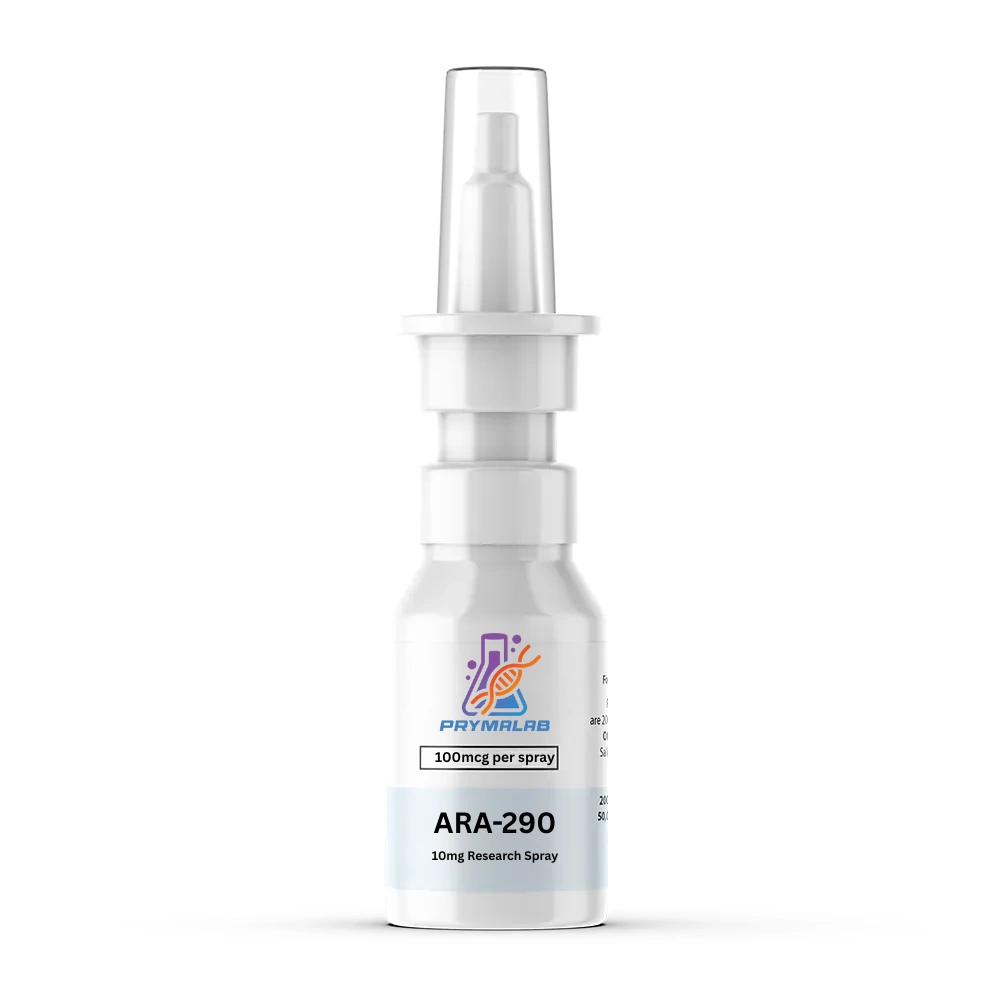
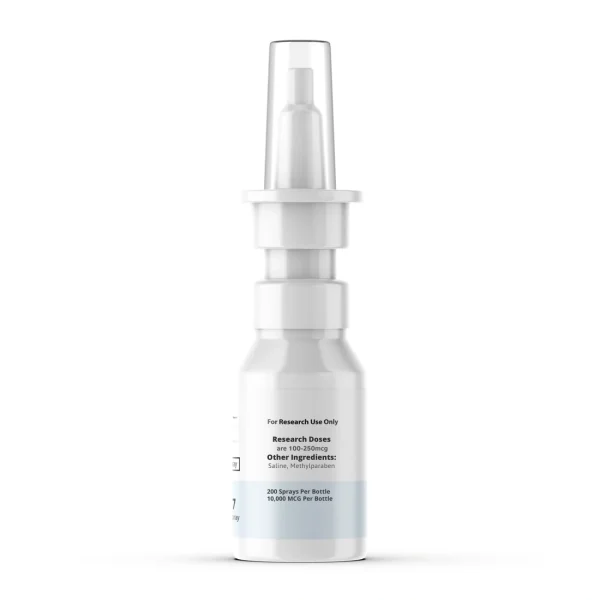
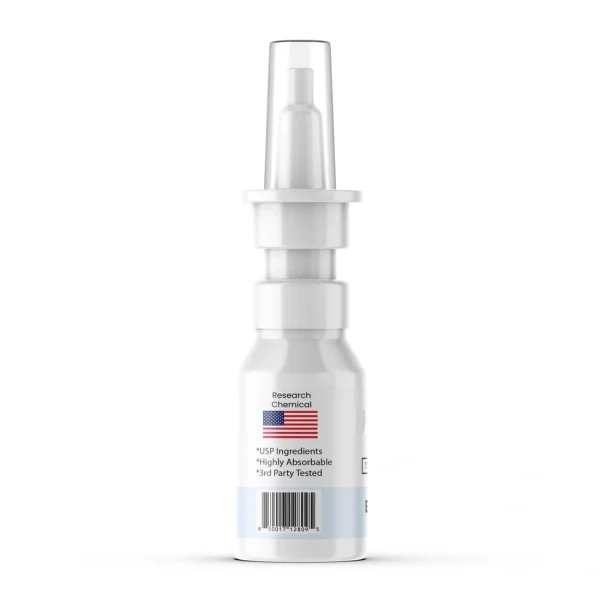
| Format | Metered spray bottle |
| Analytical verification | Reversed-phase HPLC for purity, mass spectrometry for identity, independent third-party testing |
| Classification | Research chemical. In-vitro laboratory use only. Not for human or veterinary use. |
Designing a clean cibinetide experiment
Three controls make cibinetide in vitro research interpretable, and their absence is the most common weakness in work with this compound.
First, receptor expression. Verify EPOR and CD131 in your model by qPCR or protein detection rather than trusting a catalogue description. The heterocomplex requirement makes this non-optional.
Second, an erythropoietin comparator. Running full-length EPO alongside the peptide is what demonstrates that a response is heterocomplex-driven rather than generic EPOR signalling. If both produce the same effect through the same pathway in your system, the selectivity claim is not doing any work for you.
Third, a readout matched to the biology. This is an anti-inflammatory and tissue-repair mechanism, so cytokine panels by ELISA or multiplex, apoptosis and viability assays under a stress challenge, and migration or repair assays are the relevant endpoints. Proliferation alone in unstressed cells is a poor test of a cytoprotective mechanism, because there is nothing to protect against.
ARA-290 storage and handling
Cibinetide is a short linear peptide with no cysteine, so it avoids disulfide problems entirely, and the N-terminal pyroglutamate blocks the free amine that would otherwise be a degradation entry point. Compared with most peptides on this catalogue it is relatively stable.
What still applies: keep it cold, sealed and out of light, and work from single-use aliquots rather than freezing and thawing one container repeatedly. The sequence carries several charged residues including glutamates and an arginine, so solubility and behaviour in solution are sensitive to pH and ionic strength, and an assay buffer that drifts will change results before anything else does.
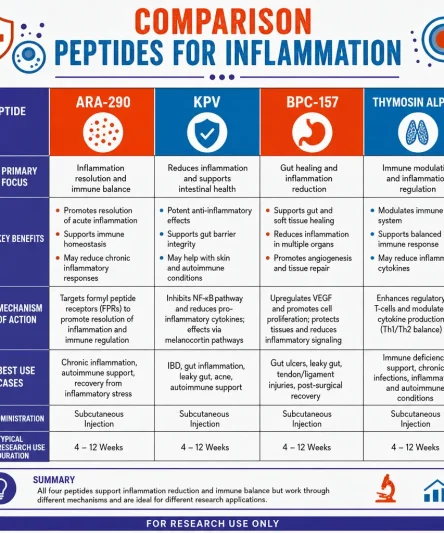
On formats, this material is listed variously as an ARA-290 peptide vial and as an ARA-290 nasal spray, and lyophilized peptide presentations require reconstitution before use, usually with bacteriostatic water. Record the diluent, because it is a variable another laboratory cannot reconstruct. Its short half-life in a biological matrix is worth planning around for the same reason it matters with any small peptide. Related compounds sold alongside it for repair research, including BPC-157 and thymosin beta-4, act through entirely different mechanisms, so a comparison between them tells you about the experiment rather than about a shared pathway. Everything here is supplied for laboratory research use.
Adsorption deserves attention here because the working concentrations in receptor and cytokine assays are low. Low-binding plasticware costs nothing and removes a source of variance that otherwise looks like a potency shift between experiments. Sensible ARA-290 storage and handling is mostly about removing these small, invisible losses.
How this material is characterized
An 11-residue peptide is straightforward to verify, which means weak documentation on it has no excuse. Reversed-phase HPLC establishes purity and mass spectrometry confirms identity near 1257 Da. Because the N-terminal pyroglutamate is a specific modification rather than a default, it is worth confirming that the material carries it rather than the open-chain glutamine form, since that residue is tied to the selectivity the compound is bought for. This ARA-290 nasal spray is supplied under the same verification PrymaLab applies across its research peptides, HPLC and MS confirmation plus independent third-party testing. No specific lot figures are asserted here; request the certificate of analysis for the lot you receive.
For broader background on peptide research and related compounds, see the PrymaLab Research Library.
Frequently asked questions
What is ARA-290?
ARA-290, generic name cibinetide, is a synthetic 11-amino-acid peptide derived from helix B of erythropoietin, about 1257 Da, with an N-terminal pyroglutamate. It targets the innate repair receptor rather than the erythropoietic receptor. Material supplied here is a research chemical for in-vitro laboratory use only.
What is the innate repair receptor?
It is a heterocomplex of the erythropoietin receptor EPOR with the beta-common receptor CD131 (CSF2RB). It is distinct from the EPOR homodimer that drives red blood cell production, and it is the complex cibinetide is designed to engage selectively.
Why does ARA-290 not stimulate red blood cell production?
Because it is reported to bind the EPOR and CD131 heterocomplex rather than the EPOR homodimer responsible for erythropoiesis. The N-terminal pyroglutamate contributes to that selectivity, which is the basis for describing it as a non-erythropoietic EPO derivative.
What cells are appropriate for cibinetide in vitro research?
Cells expressing both EPOR and CD131, verified rather than assumed. An EPOR-only line cannot form the heterocomplex, so a negative result in such a model says nothing about the compound. Running full-length erythropoietin as a comparator is the control that demonstrates selectivity.
Is ARA-290 nasal spray approved for human use?
No. This material is a research chemical for in-vitro laboratory use only and is not intended for human or veterinary use. Cibinetide has been studied in Phase 2 trials and holds an orphan designation, but it has no FDA approval. Nothing here is medical advice.
Ordering and compliance
Every PrymaLab research compound ships from the United States and is sold research-use-only. This ARA-290 nasal spray is supplied for in-vitro laboratory research, is not intended for human or veterinary use, is not a drug or supplement, and has not been evaluated by the FDA for the research-chemical context. Verify the legal status of any research compound in your jurisdiction before ordering. Certificates of analysis are available on request for the lot you receive.


5 reviews for ARA-290 10mg Nasal Spray