Description
PrymaLab · Research use only
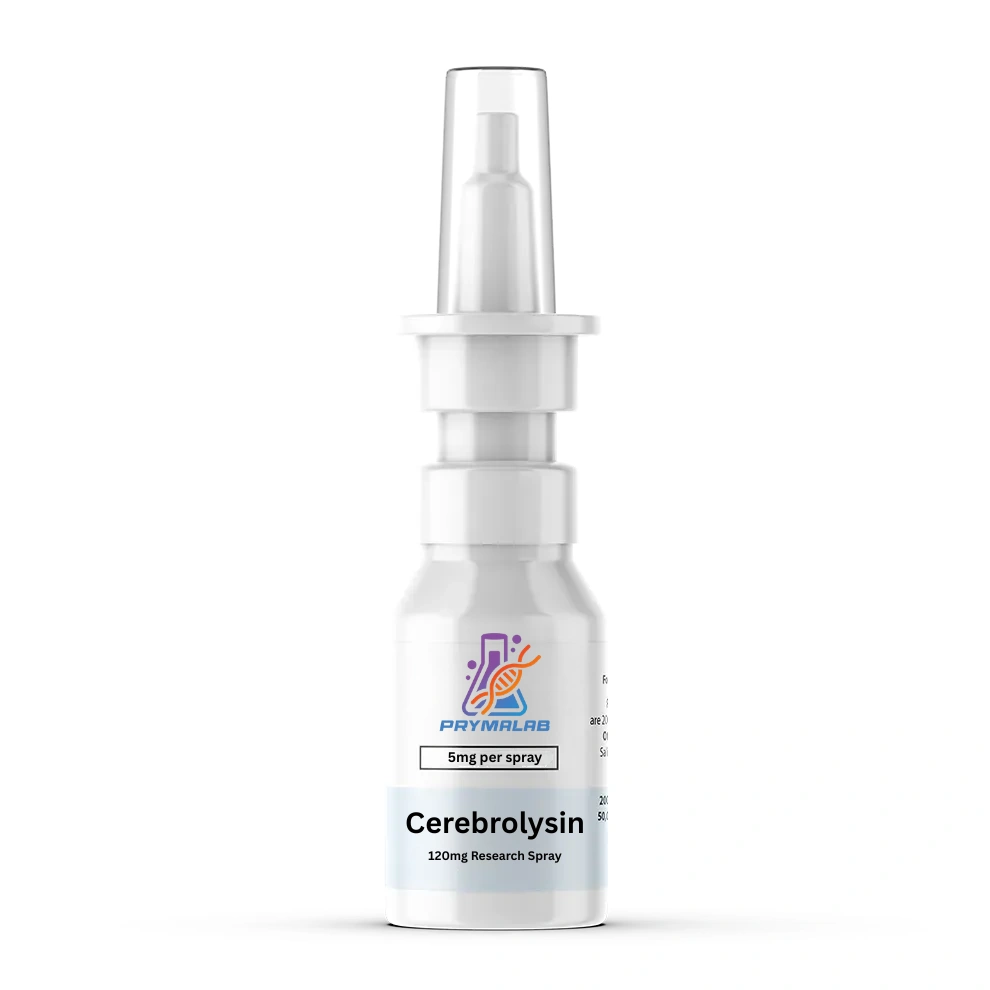
Cerebrolysin 120mg Nasal Spray
Porcine brain peptide hydrolysate in bacteriostatic water, 120 mg per spray bottle
Cerebrolysin is a peptide preparation, not a single compound: an enzymatic hydrolysate of purified porcine brain proteins made up of short peptides and free amino acids. This listing is a nasal spray holding 120 mg of the hydrolysate in preserved bacteriostatic water, in a metered spray bottle. The Cerebrolysin literature concerns the licensed medicinal solution in cell, animal and stroke trial work, and none of it used the nasal route.
Specifications
| Property | Value |
|---|---|
| Compound | Cerebrolysin Porcine brain peptide hydrolysate; a peptide preparation, not a single compound |
| CAS number | 12656-61-0 |
| Molecular formula | Not applicable (mixture) |
| Theoretical mass | Peptide fraction below 10 kDa (mostly 1–5 kDa) plus free L-amino acids (about 75% of nitrogen) |
| Sequence / structure | Standardised enzymatic hydrolysate of purified porcine brain proteins: low-molecular-weight peptides plus free L-amino acids. No single sequence; identity is established by LC-MS peptide mapping against the in-house reference. |
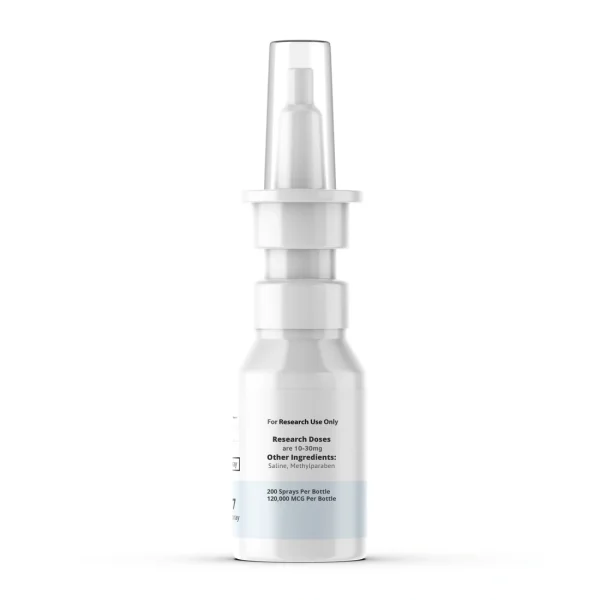
| Contents | Cerebrolysin: 120 mg per bottle (≤ 1.2% w/v) |
| Form | Sterile aqueous solution in bacteriostatic water (0.9% benzyl alcohol), supplied in a metered nasal spray bottle |
| Storage, sealed | Store at 2–8 °C, protected from light; do not freeze |
| Safety data sheet | PL-SDS-035 |
What is in the bottle
Each bottle holds 120 mg of porcine brain peptide hydrolysate as a sterile solution in bacteriostatic water with 0.9% benzyl alcohol as preservative. The safety data sheet gives the hydrolysate concentration as 1.2% w/v or less. It is the same class of material as the Cerebrolysin 60 mg vial: peptides below 10 kDa, mostly 1 to 5 kDa, with free L-amino acids, identified by LC-MS peptide mapping. The hydrolysate is not classified as hazardous; benzyl alcohol carries warnings for harm if swallowed or inhaled, serious eye irritation and skin sensitisation.
Store the bottle upright and capped at 2 to 8 °C, protected from light, and never freeze it. A solution containing free amino acids and peptides is a ready nutrient source for microbes, which is one reason the preservative and cold storage matter; general guidance is in peptide storage and stability.
What the research covers
The Cochrane review describes Cerebrolysin as a mixture of low-molecular-weight peptides and amino acids from porcine brain with potential neuroprotective properties, widely used for acute ischaemic stroke in Russia, Eastern Europe, China and other Asian and post-Soviet countries1. Its reported actions come from cell and animal models: a 2012 review summarised less β-amyloid deposition and tau phosphorylation in dementia models, and smaller infarcts, fewer apoptotic cells and more neurogenesis in stroke models2. Every trial in that record used the licensed solution by parenteral routes.
The nasal route has its own literature. Illum’s 2002 review discussed nasal delivery of conventional drugs and peptides and the finding that drugs can travel directly from the nose to the brain along the olfactory pathway, with examples of proof of concept in people3. That review concerns defined drugs. The PrymaLab guide found no trial of intranasal Cerebrolysin in humans or animals, and for a mixture of hundreds of peptides of different sizes there is no single molecule whose uptake could be measured.
None of the research cited here tested a spray, a freeze-dried hydrolysate or PrymaLab material. The Cerebrolysin research guide sets out the trial record in full, including where the meta-analyses disagree.
How each lot is tested
Every lot is tested in PrymaLab’s own laboratory in Ashland, Kentucky before release: RP-HPLC for purity, LC-MS for identity, Karl Fischer titration for water, LAL for endotoxin and USP <71> for sterility. Published certificates are listed on the results page and can be checked by number and key on the verify page. The certificate covers the peptide lot used to fill the bottle, not the finished solution. These are in-house results from PrymaLab Analytical, not an independent test, and the lab is not accredited to ISO 17025. The third-party testing guarantee on this page still applies: if any independent laboratory finds the wrong compound, or less than the stated purity or amount, the order is refunded and the cost of the test is reimbursed.
Frequently asked questions
Is the spray the same material as the 60 mg vial?
It is the same kind of porcine brain peptide hydrolysate, dissolved in bacteriostatic water instead of freeze-dried. The vial is stored dry at 2 to 8 °C; the spray holds 120 mg in solution, also at 2 to 8 °C, and must never be frozen.
Has Cerebrolysin been studied as a nasal spray?
No trial in people or animals is known. The Cerebrolysin studies used the licensed solution by parenteral routes, and the nasal delivery review cited here concerns drugs in general, so this format has no findings of its own.
What does the certificate cover for the spray?
It covers the hydrolysate lot used to fill the bottles, not the finished solution. That lot is identified by LC-MS peptide mapping and tested for water, endotoxin and sterility; the testing section explains where to check a certificate by number and key.
Is the spray the licensed Cerebrolysin medicine?
No. The licensed product is a solution for parenteral use made by its manufacturer and has no nasal form. This bottle is research material sold for laboratory use only, not approved by the FDA, and must not be given to people or animals.
References
- Ziganshina LE, Abakumova T, Hoyle CH. Cerebrolysin for acute ischaemic stroke. Cochrane Database Syst Rev. 2020;7(7):CD007026. DOI · PubMed
- Masliah E, Díez-Tejedor E. The pharmacology of neurotrophic treatment with Cerebrolysin: brain protection and repair to counteract pathologies of acute and chronic neurological disorders. Drugs Today (Barc). 2012;48 Suppl A:3-24. DOI · PubMed
- Illum L. Nasal drug delivery: new developments and strategies. Drug Discov Today. 2002;7(23):1184-9. DOI · PubMed
Research use only
For laboratory research use only. Cerebrolysin 120mg Nasal Spray is not a drug, food, cosmetic or dietary supplement, is not approved by the FDA or any comparable authority for human or veterinary use, and must not be given to people or animals. It is sold to qualified researchers and institutions, and the buyer is responsible for lawful handling and disposal.







1 review for Cerebrolysin 120mg Nasal Spray