Description
What Is RAD-150 (TLB 150)?
RAD-150, also known as TLB 150 or TLB 150 benzoate, is an esterified derivative of RAD-140 (testolone). It is created by attaching a benzoate ester group to the parent SARM molecule. This modification transforms RAD-140 into a prodrug with improved in vivo stability, potentially better oral bioavailability, and an extended duration of action compared to the unmodified parent compound.
The esterification strategy mirrors the approach used in classical steroid chemistry, where ester groups prolong absorption and extend the elimination half-life of the active compound. Upon ingestion, endogenous esterases cleave the benzoate moiety, releasing active RAD-140 into systemic circulation. The result is a SARM that delivers the same tissue-selective androgen receptor activation as testolone but with a modified pharmacokinetic profile that may offer more sustained plasma levels and greater anabolic efficiency per dose. RAD-150 retains the non-steroidal chemical structure and high selectivity ratio of its parent compound while providing a longer-acting formulation.
Unlike anabolic steroids, which bind non-selectively to androgen receptors throughout the body, RAD-150 — like other androgen receptor modulators SARMs — is designed to target skeletal muscle and bone tissue while sparing androgenic tissues such as the prostate and skin. This tissue selectivity is the defining characteristic that distinguishes SARMs from conventional anabolic steroids in research contexts.
Key Features and Specifications
| Specification |
Detail |
| Product Name |
RAD-150 (TLB 150) |
| Dosage |
10 mg per capsule |
| Quantity |
60 capsules per bottle |
| Form |
Oral capsule |
| CAS Number |
1208070-53-4 |
| Molecular Formula |
C27H20ClN5O4 |
| Molecular Weight |
513.93 g/mol |
| Purity |
≥99% (HPLC verified) |
| Testing |
Third-party HPLC and MS analysis |
| Storage |
Room temperature (20–25°C), cool dry place, protected from light |
| Classification |
Esterified non-steroidal SARM (prodrug) |
Chemical Structure and Classification
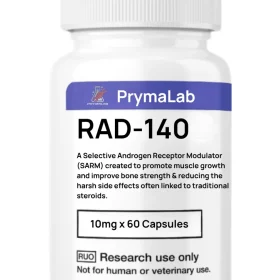
The chemical structure of RAD-150 (TLB 150) is defined by the addition of a benzoate ester group to the RAD-140 core. This modification increases the molecular weight from 393.83 g/mol (RAD-140) to 513.93 g/mol, increases lipophilicity, and alters the rate of metabolic conversion. Importantly, this chemical structure change does not affect the intrinsic activity at the androgen receptor — the pharmacological outcomes depend entirely on the released RAD-140 metabolite.
RAD-150 is classified as a non-steroidal selective androgen receptor modulator (SARM). A common research question is whether RAD 150 a steroid — the answer is no. Unlike anabolic steroids, RAD-150 lacks the characteristic four-ring steroidal backbone. Its mechanism depends on selective receptor binding rather than systemic hormonal activity, which is why it belongs to the same research class as other androgen receptor modulators SARMs.
Mechanism of Action: How RAD-150 Works
RAD-150 functions as a prodrug of RAD-140. After oral administration, the benzoate ester bond is hydrolyzed by endogenous carboxylesterases in the gastrointestinal tract and liver, liberating the active RAD-140 molecule. Once released, testolone binds to androgen receptors in muscle and bone tissue as a full agonist, while acting as an antagonist or partial agonist in androgenic tissues such as the prostate — preserving the tissue-selective profile of the parent compound.
The esterification alters pharmacokinetic properties in several key ways. The benzoate group increases lipophilicity, potentially enhancing membrane permeability and oral absorption. The requirement for enzymatic cleavage before the active compound enters systemic circulation creates a sustained-release effect, producing more gradual peak plasma levels and an extended elimination phase compared to unmodified RAD-140.
Once liberated, the active RAD-140 component drives activation of androgen receptors in target tissues, recruiting tissue-specific coactivator proteins that upregulate anabolic gene expression in myocytes and osteoblasts. This activation of androgen receptor signalling promotes protein synthesis in skeletal muscle tissue, supporting the increased muscle mass outcomes observed in preclinical androgen receptor studies. The compound does not undergo aromatization to estrogen, maintaining the same estrogen-neutral profile as its parent compound.
Reported Research Applications and Benefits
Extended-duration anabolic research represents the primary application of RAD-150 relative to its parent compound. The modified pharmacokinetic profile may reduce peak-to-trough plasma fluctuations, providing more consistent androgen receptor occupancy throughout the dosing interval — a key variable in research designs where stable receptor engagement is essential to outcome measurements.
Comparative pharmacokinetic studies between RAD-150 and RAD-140 allow investigators to assess how ester modifications affect absorption, tissue distribution, receptor binding kinetics, and downstream anabolic outcomes. Research into lean muscle mass accretion with RAD-150 leverages the potent anabolic mechanisms characterized in RAD-140 studies, adding the variable of modified drug release kinetics. Studies examining increased muscle mass and protein synthesis in androgen-responsive cell lines represent core applications in this research domain.
Prodrug design research uses RAD-150 as a model system for ester-based modification of non-steroidal SARMs, examining how structural changes to the parent molecule affect in vivo stability, first-pass hepatic metabolism, and overall pharmacological efficiency. All such work is conducted strictly for research purposes in controlled laboratory settings.
RAD-150 Dosage Information for Research
The following RAD 150 dosage ranges reflect protocols reported in preclinical and observational research contexts. These figures are provided for informational purposes for qualified researchers only and do not constitute dosing recommendations for human use.
| Protocol |
Dosage |
Duration |
Notes |
| Standard research dose |
10–20 mg/day |
8–12 weeks |
Comparable to RAD-140 dosing protocols |
| Beginner protocol |
10 mg/day |
8 weeks |
Conservative starting dose for new research |
| Advanced protocol |
20 mg/day |
8–12 weeks |
Higher androgenic suppression expected |
| Timing |
Once daily, morning |
— |
Extended half-life relative to RAD-140 |
Potential Side Effects and Safety Considerations
Because RAD-150 releases RAD-140 as its active metabolite, researchers should anticipate the same profile of potential side effects associated with the parent compound. The known side effects of RAD-150 in preclinical contexts include androgenic suppression of the hypothalamic-pituitary-gonadal axis, potential hepatic stress at higher doses or extended durations, and the possibility of testosterone suppression with prolonged use.
Unlike anabolic steroids, RAD-150 does not aromatize to estrogen, so estrogen-related side effects such as gynecomastia are not typically observed in research models. However, the potential side effects of androgenic suppression remain relevant for research protocol design, particularly regarding recovery timelines and biomarker monitoring.
Post Cycle Therapy (PCT) Considerations
Research protocols involving RAD-150 commonly incorporate post cycle therapy PCT planning due to the compound’s androgenic suppression profile. Because RAD-150 releases RAD-140 as its active metabolite, it carries the same suppressive potential as the parent compound. Research protocols lasting eight weeks or longer often incorporate post cycle therapy using SERMs to support hormonal axis recovery. Full blood panels before and after research protocols are recommended for all subjects. Proper post cycle therapy PCT planning is an integral part of responsible SARM research protocol design.
RAD-150 vs RAD-140: Key Differences
| Parameter |
RAD-150 (TLB 150) |
RAD-140 (Testolone) |
| Structure |
Benzoate ester prodrug |
Parent compound |
| Active metabolite |
RAD-140 (after ester hydrolysis) |
RAD-140 (direct) |
| Lipophilicity |
Higher (ester group) |
Standard |
| Onset to peak |
Slower, more gradual |
Standard absorption |
| Duration of action |
Extended (prodrug mechanism) |
~60 hours (primates) |
| Molecular weight |
513.93 g/mol |
393.83 g/mol |
| Research maturity |
Preclinical only |
Phase I clinical trials |
| CAS Number |
1208070-53-4 |
1182367-47-0 |
Storage and Handling Instructions
Store RAD-150 capsules at controlled room temperature between 20°C and 25°C (68°F to 77°F) in the original sealed container. Protect from direct sunlight, excessive heat, and moisture. Under recommended storage conditions, RAD-150 capsules maintain full potency for at least 24 months from the date of manufacture. Avoid prolonged exposure to temperatures above 30°C.
Why Choose PrymaLab RAD-150 TLB 150 Capsules
Every batch of PrymaLab RAD-150 undergoes independent third-party testing by accredited laboratories using HPLC for purity verification and mass spectrometry for structural identity confirmation, including verification of the intact ester bond. Each order includes a batch-specific Certificate of Analysis documenting ≥99% purity, heavy metal screening, residual solvent analysis, and microbial testing results. Pharmaceutical-grade encapsulation ensures precise 10 mg dosing per capsule, and free priority shipping is included on qualifying domestic orders.
Frequently Asked Questions About RAD-150 (TLB 150)
What is the difference between RAD-150 and RAD-140?
RAD-150 is a TLB 150 benzoate ester prodrug of RAD-140. The ester group is cleaved after absorption, releasing the active RAD-140 molecule. The key differences are pharmacokinetic: RAD-150 may offer enhanced oral absorption due to increased lipophilicity and an extended duration of action due to the sustained-release effect of ester hydrolysis.
Does RAD-150 convert to RAD-140 in the body?
Yes. RAD-150 is a prodrug that requires enzymatic hydrolysis to release its active component. Endogenous carboxylesterases in the GI tract and liver cleave the benzoate ester bond, liberating RAD-140 (testolone) into systemic circulation. All downstream pharmacological effects are mediated by the released RAD-140 molecule.
Does RAD-150 require post-cycle therapy?
Yes. Because RAD-150 releases RAD-140 as its active metabolite, it carries the same suppressive potential as the parent compound. Research protocols lasting eight weeks or longer typically incorporate post cycle therapy PCT using SERMs. Comprehensive blood panels before and after research protocols are recommended for all research subjects.
Is RAD-150 more potent than RAD-140?
RAD-150 is not inherently more potent than RAD-140 because the active molecule is identical once the ester is cleaved. The differences lie in pharmacokinetics: RAD-150 may deliver more sustained plasma levels and potentially improved bioavailability, which could enhance overall anabolic efficiency per dose. This may translate to greater lean muscle mass accretion efficiency in research models without changing the intrinsic potency at the androgen receptor.
What is the half-life of RAD-150?
The precise plasma half-life of RAD-150 has not been established in published clinical pharmacokinetic studies. Based on the ester prodrug mechanism, RAD-150 is expected to have an extended duration of action compared to RAD-140 (which has a ~60-hour half-life in primates), as the ester hydrolysis step creates a sustained-release profile that delays peak plasma concentrations.
Quality Assurance and Testing
PrymaLab maintains rigorous quality standards for all RAD-150 products. Each batch is independently tested using HPLC purity analysis with verification of the intact ester bond, mass spectrometry identity confirmation, heavy metal screening, residual solvent testing, and microbial assessment. Batch-specific Certificates of Analysis are provided with every order for complete analytical transparency.
Research Disclaimer
RAD-150 (TLB 150) is sold strictly for laboratory research and scientific study purposes only. This product is not intended for human consumption, veterinary use, or therapeutic application. RAD-150 has not been approved by the FDA or any regulatory agency for medical use in humans. Purchasers must be qualified researchers affiliated with accredited institutions or licensed research organizations. By purchasing this product, you confirm that it will be used exclusively in accordance with all applicable local, state, and federal regulations governing research materials.








14 reviews for RAD-150 (TLB-150) 5mg Capsules