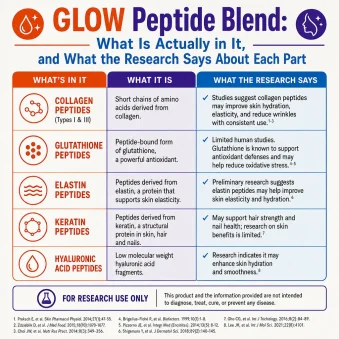


Collagen Peptides Versus Collagen: Which Is Better? [2026 Guide]
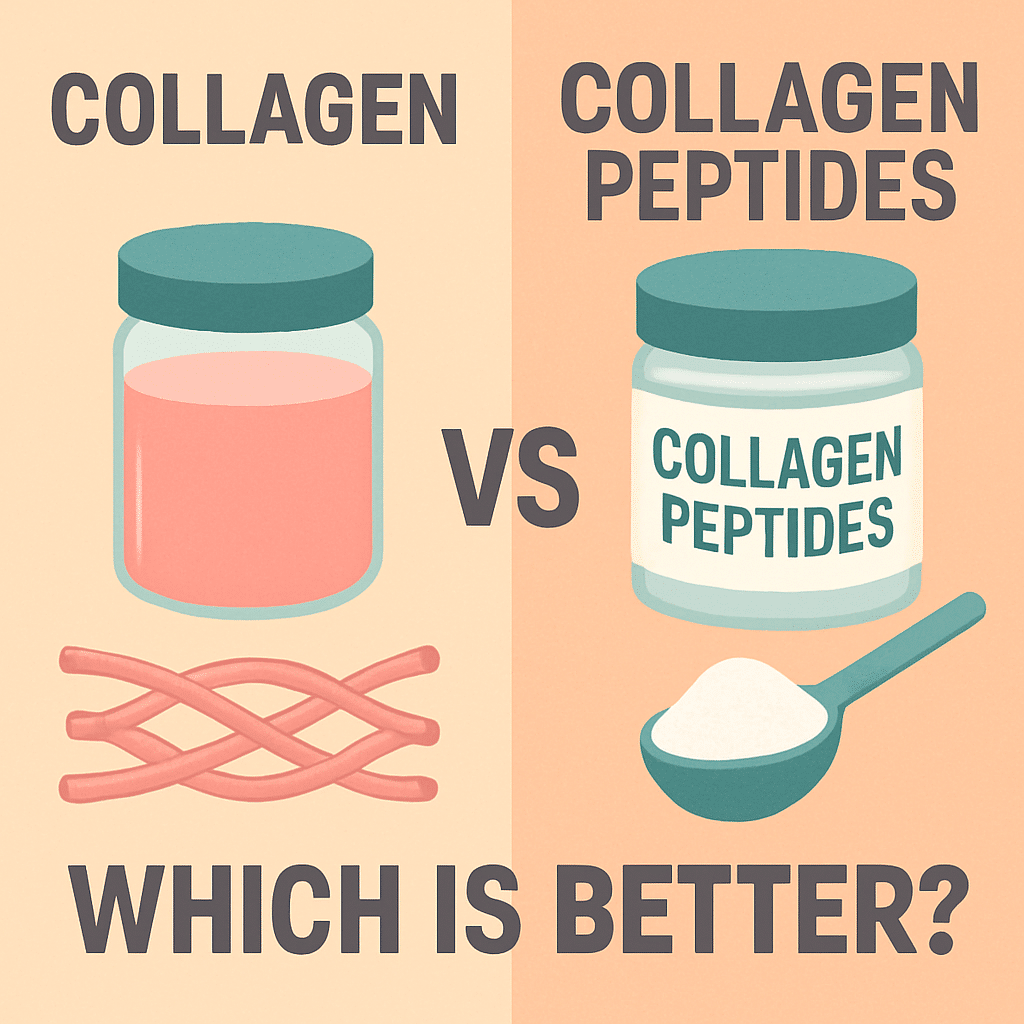
Collagen and collagen peptides are the same protein in different forms. Collagen is the large, intact structural protein that holds skin, bones, and connective tissue together. Collagen peptides (also called hydrolyzed collagen) are that same protein, broken by enzymes into smaller fragments. Those fragments dissolve easily in liquids and absorb well in the gut. So when the question is collagen peptides versus collagen, the peptide form wins for almost every practical supplement goal — skin, joints, bones, and hair. This guide explains the science. It compares marine, bovine, and multi-collagen sources, reviews the top brands (Vital Proteins, Orgain, Live Conscious, Bubs, Sports Research, NativePath), and answers the key question: do collagen supplements actually work?
Educational Content Notice
This article is for educational purposes only. It is not medical advice.
Quick Overview: Collagen Peptides Versus Collagen At a Glance
Everything you need in 60 seconds
- Collagen: Intact triple-helix protein (~300,000 Da). Poor solubility, limited absorption.
- Collagen peptides (hydrolyzed): The same protein cut into 2,000–5,000 Da fragments. Soluble, absorbable, clinically tested.
- Winner for supplements: The peptide form — unless you're cooking gelatin desserts.
- Top sources: Marine (fish, type I), bovine (cow, types I & III), multi-collagen (bovine + marine + chicken + eggshell).
- What trials measured: Skin elasticity and hydration, joint pain and bone density, in trials lasting 8 weeks to 12 months.
- Best brands 2026: Vital Proteins, Orgain, Live Conscious, Bubs Naturals, Sports Research, NativePath, Ancient Nutrition.
- Side effects: Mild, mostly GI. No strong evidence of liver or kidney harm at the amounts studied.
What Is Collagen? Structure and Function
Collagen is the most abundant protein in the human body. It makes up roughly 30% of total protein mass. It forms the main structural scaffold of skin, bones, tendons, ligaments, cartilage, blood vessels, and the gut lining. Native collagen is a large, rope-like triple helix. Three polypeptide chains wind tightly around one another, rich in the amino acids glycine, proline, and hydroxyproline.
There are at least 28 identified types of collagen. Four account for most of what supplements target:
- Type I (~90% of body collagen): Skin, tendons, bones, teeth, fascia. Most associated with anti-aging, wrinkle reduction, and skin elasticity.
- Type II: Cartilage and joints. Central to osteoarthritis research.
- Type III: Found with Type I in skin, blood vessels, and organs. Supports skin firmness and elasticity.
- Types V and X: Minor but important — Type V in hair and placenta, Type X in cartilage mineralization and bone formation.
Whole, native collagen is what you get from bone broth, chicken skin, or unprocessed gelatin. It is a high molecular weight protein (~300 kDa). In this native form, it is too large to be absorbed intact across the intestinal wall. Your digestive system first breaks it into smaller fragments, using gastric acid and pancreatic proteases. That biological reality is the whole reason "collagen peptides" exist as a supplement category.
Key insight: Native collagen and the hydrolyzed peptide form are not two different substances. They are two forms of the same protein, differing mainly in molecular weight and solubility.
What Are Collagen Peptides (Hydrolyzed Collagen)?
Collagen peptides — also called hydrolyzed collagen or collagen hydrolysate — are short chains of amino acids made by breaking down native collagen. The process is enzymatic hydrolysis. It uses food-grade proteolytic enzymes (typically alcalase, papain, or bromelain) to cut the long chains into peptides averaging 2,000–5,000 Daltons. That is roughly 1/50th to 1/100th the size of the parent protein.
This size reduction has three important consequences.
- Cold solubility. Native collagen and gelatin dissolve only in hot water and gel when cooled. The hydrolyzed form dissolves instantly in cold water, coffee, smoothies, or juice. That is why it dominates the supplement market.
- Improved digestibility. The smaller peptides bypass much of the gastric digestion step. They reach the small intestine ready for final breakdown and absorption.
- Bioactive signaling. A fraction of the peptides — notably prolyl-hydroxyproline (Pro-Hyp) and hydroxyprolyl-glycine (Hyp-Gly) — are absorbed intact into the bloodstream. These di- and tri-peptides peak in plasma within 1–2 hours. They appear to prompt fibroblasts in the skin and chondrocytes in cartilage to ramp up their own collagen synthesis.
So what are collagen peptides good for? The short answer: they work in two ways. First, they supply amino acid building blocks — glycine, proline, and hydroxyproline. Second, they act as signaling molecules that tell connective tissue cells to make more collagen. This dual mechanism is why controlled trials show measurable benefits that plain whey or casein protein does not.
Peptide vs protein terminology: "Peptides" are chains of fewer than 50 amino acids; "proteins" are longer. Hydrolyzed collagen sits squarely in the peptide range. Gelatin, by contrast, is partially hydrolyzed collagen — longer chains that still gel, and not quite a peptide powder.
Collagen Peptides Versus Collagen: Key Differences
So in the debate of collagen peptides versus collagen, which is better? For oral supplementation, the hydrolyzed peptide form is superior in nearly every practical way. Here is a side-by-side comparison.
| Feature | Collagen (Native / Gelatin) | Collagen Peptides (Hydrolyzed) |
|---|---|---|
| Molecular weight | ~300,000 Da (native); ~50,000+ Da (gelatin) | 2,000–5,000 Da |
| Water solubility | Hot water only; gels on cooling | Cold-soluble; no gelling |
| Bioavailability | Variable; dependent on digestion | Up to 90% absorbed within 6 hours |
| Typical use | Bone broth, gummies, desserts, cooking | Supplement powder mixed into coffee, smoothies, water |
| Clinical research | Limited human trials | Extensive RCTs for skin, joints, bones |
| Taste & texture | Noticeable; can thicken liquids | Nearly tasteless and odorless |
The practical bottom line is simple. For skin, joint and bone outcomes, most of the trial evidence uses the hydrolyzed peptide form. Native collagen from bone broth still provides amino acids and trace minerals. But it is less consistent, harder to standardise, and less well-studied for specific outcomes.
There is one exception where un-hydrolyzed collagen has a small edge. Undenatured type II collagen (UC-II) has shown benefit for osteoarthritis knee pain in trials. It works through an oral tolerance immune mechanism, not an amino-acid-supply mechanism. This is a niche case. For general benefits, hydrolyzed peptides remain the primary category.
Collagen Peptide Research: Skin, Joints, Bones, and Gut
Across hundreds of published studies, collagen peptide findings cluster into four well-replicated areas: skin, joints, bones, and — with more emerging evidence — gut and muscle.
1. Skin: Elasticity, Hydration, and Wrinkles
A 2023 systematic review and meta-analysis in the Journal of Cosmetic Dermatology pooled 26 randomized controlled trials (1,721 participants). It found that oral supplementation produced significant improvements in skin hydration, elasticity, and wrinkle depth after 8–12 weeks.
The mechanism: absorbed Pro-Hyp and Hyp-Gly dipeptides are detected in human skin after oral intake. There they appear to boost fibroblast production of the body's own collagen and hyaluronic acid.
2. Joints: Osteoarthritis and Activity-Related Pain
Multiple RCTs in athletes and people with mild knee osteoarthritis show a clear pattern. Over 12–24 weeks, the peptides reduced joint pain scores and improved mobility in these trials. A 2023 meta-analysis in Amino Acids concluded that supplementation offered moderate, clinically meaningful benefits for joint pain when used consistently.
3. Bones: BMD and Fracture Risk
The landmark 2018 König trial studied postmenopausal women with low bone mineral density. It found that 12 months of specific collagen peptides significantly increased BMD in the spine and femoral neck versus placebo. A 4-year follow-up showed the gains held.
4. Hair, Nails, and Connective Tissue
Evidence here is lower quality but encouraging. Small trials report faster nail growth, fewer split ends, and less brittleness after 8–24 weeks. For hair growth specifically, the data is limited and should be viewed cautiously.
5. Gut Health, Muscle Mass, and Metabolic Markers
The glycine and glutamine content has driven interest in gut-lining repair, especially in leaky gut and IBS research. Human trial data is still early-stage. For muscle mass, collagen is not a complete protein — it lacks tryptophan. So it should not replace whey, casein, or another complete protein for muscle building. It can, however, complement a higher-protein diet.
What the trials support: In healthy adults, trials lasting 8–12 weeks or longer reported improvements in skin, joint and bone measures; evidence in other areas is weaker.
Marine vs Bovine vs Multi-Collagen
The three dominant collagen peptide sources on the market are bovine, marine, and multi-collagen blends. Each has a distinct amino acid profile, collagen type distribution, and best-use case.
Bovine Collagen
Bovine collagen comes from the hides, bones, and connective tissue of cattle — ideally grass-fed, pasture-raised. It delivers mainly Type I and Type III collagen. That makes it an excellent all-around choice for skin, hair, nail, and joint support.
- Best for: General anti-aging, skin, bone, and joint support
- Profile: Neutral taste, highly mixable, widely studied
- Sourcing note: Look for grass-fed, pasture-raised, Brazilian or European sources with lot-specific test results that can be verified
Marine Collagen
Marine collagen comes from the skin and scales of fish — typically wild-caught cod, snapper, or tilapia. It is almost entirely Type I collagen, with a smaller average peptide size than bovine. Some research suggests this means slightly faster absorption.
- Best for: Skin-focused goals, pescatarian and halal-compliant diets
- Profile: May have a mild fishy aftertaste in cheaper brands; premium products are neutral
- Sourcing note: Wild-caught and sustainably sourced is the gold standard
Multi-Collagen Blends
Multi-collagen blends combine collagen from several sources — typically bovine, marine, chicken, and eggshell membrane. This delivers a broader spectrum of collagen types (I, II, III, V, and X). It has become one of the fastest-growing segments in the category.
- Best for: Users wanting full-spectrum coverage for skin + joints + bones + cartilage
- Profile: Versatile, but watch for low per-source amounts in cheap blends
- Example products: Ancient Nutrition Multi Collagen Protein, Orgain Multi Collagen, Live Conscious Beyond Collagen
| Type | Primary Collagen Types | Best Use Case | Average Peptide Size |
|---|---|---|---|
| Bovine | I, III | Skin, bone, all-around | 3,000–5,000 Da |
| Marine | I | Skin-focused, pescatarian | 2,000–3,000 Da |
| Multi (blend) | I, II, III, V, X | Full-spectrum, joint + skin combo | Mixed |
| Chicken (Type II) | II | Cartilage, joint-specific | Variable |
Best Collagen Peptide Brands Reviewed (2026)
The market is crowded with hundreds of brands, but a handful consistently lead on quality, transparency, and clinical relevance. Below is an honest look at the most-searched brands — Vital Proteins, Orgain, Live Conscious, Bubs Naturals, Sports Research, NativePath, and Ancient Nutrition. The comparison is based on sourcing, testing, per-serving content, and price.
| Brand | Source | Collagen per Serving | Standout Feature |
|---|---|---|---|
| Vital Proteins Collagen Peptides | Grass-fed bovine | 20 g | Most-reviewed brand; NSF-certified; widely available at Costco |
| Orgain Collagen Peptides | Grass-fed bovine | 20 g | Often includes probiotics; USDA-Organic options |
| Live Conscious Beyond Collagen | Multi (bovine, marine, chicken, eggshell) | 9–10 g | All 5 collagen types; added vitamin C & hyaluronic acid |
| Bubs Naturals Collagen Peptides | Grass-fed, pasture-raised bovine | 20 g | Single-ingredient; Informed Sport tested; charitable model |
| Sports Research Collagen Peptides | Grass-fed bovine | 11 g | Clean-label; keto & paleo certified |
| NativePath Collagen Peptides | Grass-fed bovine | 10 g | Physician-formulated; marketed for women over 40 |
| Ancient Nutrition Multi Collagen | Multi (bovine, marine, chicken, eggshell) | 9–10 g | Full collagen spectrum; added probiotics in some SKUs |
Where to Buy: Costco and Cost-per-Gram
For price-conscious shoppers, Costco is hard to beat. The Vital Proteins Costco-exclusive large tub consistently delivers the lowest cost per gram of any mainstream brand. It often runs 30–40% below Amazon or direct-to-consumer pricing. Bubs Naturals and Sports Research also offer subscription discounts that close the gap.
What to look for in a quality brand:
- Grass-fed, pasture-raised, or wild-caught sourcing clearly disclosed
- A certificate of analysis that matches the lot number on the product and can be verified
- Short ingredient list — ideally just collagen, or collagen plus a few functional additions (vitamin C, hyaluronic acid)
- Transparent country of origin (Brazil, the U.S., and the EU are most common)
Collagen Powder vs Pills: Which Is Better?
The powder vs pills debate has a clear practical winner: powder. The reason is quantity. The trials cited here used gram amounts of hydrolyzed collagen, while a single collagen capsule holds roughly 500–1,000 mg (0.5–1 g). Matching one 10 g powder scoop takes 10 to 20 capsules, at a much higher cost.
| Format | Collagen per Unit | Cost per 10g | Convenience | Best For |
|---|---|---|---|---|
| Powder | 10–20 g per scoop | $0.30–$1.00 | Requires mixing | Lowest cost per gram |
| Capsules / pills | 0.5–1 g per capsule | $3–$6 equivalent | Grab-and-go | Specialty formulas (e.g., UC-II) |
| Liquid / RTD | 5–10 g per bottle | $2–$4 | Most convenient | On-the-go users willing to pay premium |
| Gummies | ~2.5 g per serving | $4–$8 equivalent | Pleasant to take | Lowest collagen content per serving |
Is collagen powder better than pills? Powder carries far more collagen per unit than a capsule. The exception is undenatured Type II collagen (UC-II), which is studied in capsule form for osteoarthritis.
Bottom line: Powder carries the most collagen per unit and the lowest cost per gram. Gummies and ready-to-drink beverages carry less per serving.
What the collagen trials measured
The trials cited in this guide gave hydrolyzed collagen by mouth for 8 weeks to 12 months and measured skin hydration, elasticity and wrinkle depth, joint pain and WOMAC scores, nail growth, and bone mineral density by DEXA. Amounts differed between trials and outcomes, and published evidence does not show a clinically meaningful difference by time of day for skin and joint outcomes. One study looked at timing around activity: Shaw and colleagues (2017) reported that vitamin C–enriched gelatin given before intermittent activity augmented collagen synthesis.
The peptides dissolve cleanly in both hot and cold liquids.
Do Collagen Supplements Work? Evidence Review
The honest answer to "do collagen supplements work?" is this: yes, for specific outcomes in trials, with modest effects. The strongest evidence is for skin and joint endpoints. Evidence for hair growth, gut health, and muscle mass is weaker.
What the Meta-Analyses Show
- Skin (2023 meta-analysis, 26 RCTs, n=1,721): Significant gains in hydration, elasticity, and wrinkle depth after 8 weeks.
- Osteoarthritis (2023 meta-analysis, Amino Acids): Moderate reduction in joint pain; clinically meaningful improvement in WOMAC scores.
- Bone mineral density (König 2018 RCT + follow-up): 12 months of specific collagen peptides significantly increased BMD in the spine and femoral neck of postmenopausal women.
- Athletic performance / injury (multiple 2022–2024 trials): Collagen combined with loading exercise appears to reduce activity-related joint pain and may speed tendon and ligament adaptation.
Where the Evidence Is Weaker
- Hair growth: Anecdotal reports outnumber rigorous trials, and no trial has shown dramatic regrowth.
- Gut lining / leaky gut: Mechanistically plausible (glycine, glutamine), but large human RCTs are lacking.
- Weight loss / metabolism: No meaningful direct effect. Any satiety benefit comes from protein content in general, not collagen specifically.
When changes appeared in trials
In the trials above, skin hydration and elasticity changes were measured from about 4–8 weeks, wrinkle depth and joint pain changes by 8–12 weeks, and bone density changes only after 6–12 months on DEXA scans.
Honest summary: Collagen peptides are one of the better-supported supplement categories for skin, joint, and bone goals. But they are not a miracle: the measured effects were modest and built up over 2–12 months.
Side Effects and Safety
In the trials cited here, side effects of collagen peptides were mild and uncommon. The U.S. Food and Drug Administration and most international regulators classify hydrolyzed collagen as Generally Recognized as Safe (GRAS). Side effects do occur in a minority of users.
Common (Mild) Side Effects
- Feeling of fullness or mild bloating
- Mild digestive upset (more often at high intakes)
- Unpleasant taste or aftertaste (more common with marine collagen)
- Heartburn in sensitive individuals
Liver and Kidney Concerns
Search interest in collagen side effects on the liver and kidneys is high. For healthy adults, though, the concern is largely misplaced.
- Liver: There is no meaningful evidence of liver damage at the amounts studied. A few case reports exist, but they did not establish causation, and other supplements were present.
- Kidneys: Collagen is a protein. Like any protein, very high intake may add to nitrogen waste load, which matters most in advanced chronic kidney disease (CKD Stage 3b+).
Allergy and dietary considerations
- Fish, shellfish or egg allergies: marine collagen, and multi-collagen with eggshell membrane, come from these sources
- Halal, kosher or vegan diets: bovine and porcine collagen may not comply; marine collagen is often pescatarian-acceptable; no commercial vegan "true collagen" exists (only plant-based collagen boosters)
- Calcium content: some marine and eggshell-based products contain notable calcium
Contamination and Quality Concerns
Independent testing (ConsumerLab, Clean Label Project) has occasionally flagged collagen products for heavy metals — particularly arsenic, cadmium, and lead in marine-sourced products. That is why lot-specific test results and transparent sourcing matter: check that a certificate matches the lot number on the product and can be verified.
Bottom line on safety: In the published record, side effects were mild, rare and transient, and there is no meaningful evidence of liver or kidney damage at the amounts studied.
Key Takeaways
- Same substance, different form. Native collagen and the hydrolyzed peptide form are the same protein at different molecular weights. The peptides are cold-soluble and highly bioavailable, and they are the form nearly all clinical research used.
- What the trials found. Multiple RCTs and meta-analyses reported significant gains in skin elasticity, skin hydration, wrinkle depth, joint pain, and bone mineral density over 8–12 weeks or longer.
- Content matters more than brand. Check the collagen content per serving and that any certificate matches the product lot and can be verified.
- Powder carries the most per unit. A capsule holds 0.5–1 g; UC-II, studied in capsules for osteoarthritis, is the exception.
- Marine vs bovine vs multi: Marine = skin-focused, smaller peptides; bovine = all-around, most studied; multi = full spectrum of collagen types.
- Side effects are mild and rare. No strong evidence of liver or kidney damage at the amounts studied.
- Trial timelines. Skin and joint changes were measured after 8–12 weeks, bone density changes after 6–12 months on DEXA.
Medical Disclaimer
This article is for educational and informational purposes only. It does not constitute medical advice, diagnosis, or treatment. Collagen peptides are sold as dietary supplements and have not been evaluated by the U.S. Food and Drug Administration for the treatment or prevention of any disease. Prymalab and the author do not endorse self-treatment of serious medical conditions with dietary supplements.
Frequently Asked Questions
What is the difference between collagen and collagen peptides?
Collagen is the intact, high molecular weight structural protein (~300,000 Da) found naturally in skin, bones, tendons, and cartilage. Collagen peptides — also called hydrolyzed collagen — are the same protein broken by enzymes into short chains of 2,000–5,000 Da. The peptides are cold-soluble, nearly tasteless, and absorbed much more efficiently than intact collagen. That is why nearly all clinical research uses the peptide form.
Are collagen peptides the same as hydrolyzed collagen?
Yes. "Collagen peptides," "hydrolyzed collagen," and "collagen hydrolysate" all describe the same product: native collagen cut by enzymes into short, low-molecular-weight chains. Gelatin is a partially hydrolyzed form — longer chains that still gel. It sits chemically between native collagen and fully hydrolyzed peptides.
Do collagen peptides actually work?
Yes, for specific outcomes. A 2023 meta-analysis of 26 randomized controlled trials found significant gains in skin hydration, elasticity, and wrinkle depth. Separate meta-analyses support moderate improvements in osteoarthritis pain and postmenopausal bone mineral density. Trial results appeared after at least 8–12 weeks (bone outcomes took 6–12 months). Evidence for hair growth, gut repair, and weight loss is weaker.
What is the best collagen peptide brand in 2026?
There is no single "best" brand, but strong choices include Vital Proteins (most-researched, widely available), Bubs Naturals (single-ingredient, Informed Sport tested), Sports Research (clean label), Orgain (often added probiotics), Live Conscious Beyond Collagen and Ancient Nutrition Multi Collagen (full-spectrum blends), and NativePath (physician-formulated). Whatever the brand, check the collagen content per serving and that any certificate matches the product lot and can be verified.
Is marine collagen better than bovine collagen?
Not universally. Marine collagen is almost entirely Type I with a smaller average peptide size, which suits skin-focused goals and pescatarian diets. Bovine collagen delivers Types I and III, is more extensively studied, and costs less per gram — making it the better all-around choice. Multi-collagen blends are best if you want Types I, II, III, V, and X together for skin, joint, and bone support combined.
How were collagen amounts studied?
Trials varied by outcome: specific bioactive marine peptides were studied for skin, bovine peptides for joints and athletic recovery, and specific peptides for postmenopausal bone density over 12 months. Very high intakes were not linked with extra benefit and may increase GI side effects.
How long have collagen trials run?
The longest controlled trial cited here, a 12-month postmenopausal bone study, reported no safety concerns. The measured effects depend on ongoing collagen synthesis signaling and typically reversed over weeks to months after stopping.
Do collagen peptides have side effects on the liver or kidneys?
In healthy adults at the amounts studied, there is no meaningful evidence of liver or kidney damage. Rare case reports exist but do not establish causation, and most involved multi-ingredient products. Added protein of any kind matters most in advanced chronic kidney disease (Stage 3b or higher) and pre-existing liver disease.
Is collagen powder better than pills?
Powder carries far more collagen per unit. A single capsule holds roughly 0.5–1 g, so matching one 10 g powder scoop takes 10–20 capsules, at a higher cost. The one exception is undenatured Type II collagen (UC-II), which is studied in capsule form specifically for osteoarthritis.
Can collagen peptides build muscle?
Not effectively on their own. Collagen is not a complete protein — it lacks the essential amino acid tryptophan and is low in leucine, the main muscle protein synthesis trigger. For muscle building, whey, casein, soy, or a mixed-protein blend is superior. Collagen can complement a complete-protein diet and may support the connective tissue (tendons, ligaments) that muscle attaches to.
How long did collagen trials take to show changes?
Skin hydration and nail growth changes appeared by 4–8 weeks in trials; wrinkle depth, elasticity and joint measures by 8–12 weeks; bone density changes on DEXA scans took 6–12 months.
Can I get collagen from food instead of supplements?
Partially, but inefficiently. Bone broth, slow-cooked meat with skin and connective tissue, chicken feet, and gelatin-based foods provide native collagen and amino acid building blocks. However, the collagen content per serving varies widely. A cup of bone broth may contain 5–10 g of collagen but very few of the specific bioactive dipeptides found in hydrolyzed powders. Hydrolyzed collagen is the form nearly all of the clinical research used.

Explore more peptide research
Explore Prymalab's curated peptide and longevity guides, built from the latest clinical research.
Explore Prymalab GuidesRelated reading
References
- Paul, C., Leser, S., & Oesser, S. (2019). Significant amounts of functional collagen peptides can be incorporated in the diet while maintaining indispensable amino acid balance. Nutrients, 11(5), 1079. View collagen peptide amino acid balance study on PubMed
- de Miranda, R. B., Weimer, P., & Rossi, R. C. (2021). Effects of hydrolyzed collagen supplementation on skin aging: A systematic review and meta-analysis. International Journal of Dermatology, 60(12), 1449–1461. View hydrolyzed collagen and skin aging meta-analysis on PubMed
- Pu, S. Y., Huang, Y. L., Pu, C. M., et al. (2023). Effects of oral collagen for skin anti-aging: A systematic review and meta-analysis. Nutrients, 15(9), 2080. View oral collagen skin anti-aging review on PubMed
- König, D., Oesser, S., Scharla, S., Zdzieblik, D., & Gollhofer, A. (2018). Specific collagen peptides improve bone mineral density and bone markers in postmenopausal women — a randomized controlled study. Nutrients, 10(1), 97. View collagen peptides and bone mineral density study on PubMed
- Zdzieblik, D., Oesser, S., Baumstark, M. W., Gollhofer, A., & König, D. (2015). Collagen peptide supplementation in combination with resistance training improves body composition and increases muscle strength in elderly sarcopenic men. British Journal of Nutrition, 114(8), 1237–1245. View collagen peptides and resistance training study on PubMed
- García-Coronado, J. M., Martínez-Olvera, L., Elizondo-Omaña, R. E., et al. (2019). Effect of collagen supplementation on osteoarthritis symptoms: A meta-analysis of randomized placebo-controlled trials. International Orthopaedics, 43(3), 531–538. View collagen supplementation and osteoarthritis meta-analysis on PubMed
- Shaw, G., Lee-Barthel, A., Ross, M. L., Wang, B., & Baar, K. (2017). Vitamin C–enriched gelatin supplementation before intermittent activity augments collagen synthesis. American Journal of Clinical Nutrition, 105(1), 136–143. View vitamin C and gelatin collagen synthesis study on PubMed
- Lugo, J. P., Saiyed, Z. M., & Lane, N. E. (2016). Efficacy and tolerability of an undenatured type II collagen supplement in modulating knee osteoarthritis symptoms. Nutrition Journal, 15, 14. View undenatured type II collagen osteoarthritis study on PubMed
- Hexsel, D., Zague, V., Schunck, M., Siega, C., Camozzato, F. O., & Oesser, S. (2017). Oral supplementation with specific bioactive collagen peptides improves nail growth and reduces symptoms of brittle nails. Journal of Cosmetic Dermatology, 16(4), 520–526. View collagen peptides and brittle nails study on PubMed
- Iwai, K., Hasegawa, T., Taguchi, Y., et al. (2005). Identification of food-derived collagen peptides in human blood after oral ingestion of gelatin hydrolysates. Journal of Agricultural and Food Chemistry, 53(16), 6531–6536. View food-derived collagen peptides absorption study on PubMed
- Khatri, M., Naughton, R. J., Clifford, T., Harper, L. D., & Corr, L. (2021). The effects of collagen peptide supplementation on body composition, collagen synthesis, and recovery from joint injury and exercise: A systematic review. Amino Acids, 53(10), 1493–1506. View collagen peptides and exercise recovery review on PubMed
- U.S. Food and Drug Administration. (2024). Generally Recognized as Safe (GRAS) — Hydrolyzed Collagen. FDA GRAS Notice Inventory. View FDA GRAS notice for hydrolyzed collagen